Destinations / North America
Lake Louise, Canada travel guide
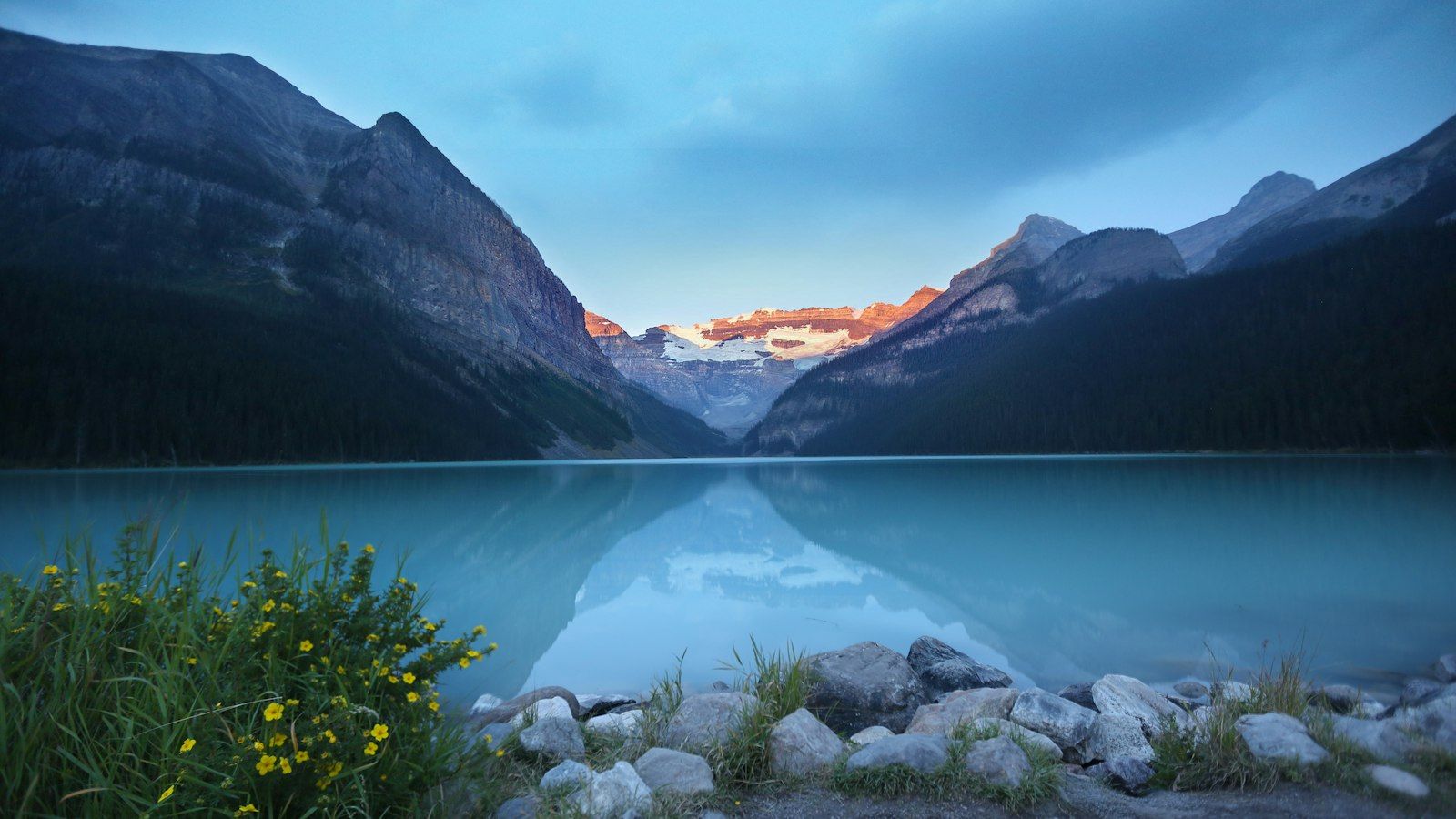
A tiny Rockies hamlet beside two famous turquoise lakes, with century-old tea houses up the trails, glaciers on the skyline and shuttles that do the driving for you.
- Best time to visit: Mid-June to September, plus January to March for snow
- Daily budget (budget traveller): $110 to $470 USD
- Ideal trip length: 4 to 7 days
Lake Louise is barely a village. It has a small shopping centre, a youth hostel, a petrol station and a few lodges strung along the Bow River in Banff National Park. Four kilometres uphill sits the lake itself, a sheet of milky turquoise under the Victoria Glacier, with the Fairmont Chateau at one end and trailheads at the other. Fourteen kilometres south is Moraine Lake, the one from the old Canadian twenty-dollar note, now reached only by shuttle or licensed operator. Solo travellers do well here. The best things are free or cheap: tea house hikes, lakeshore walks and glacier views. Shuttles and buses mean you can skip the car for much of the trip, and the hostel is one of the most sociable in the Rockies. The catch is demand. Summer beds, shuttle seats and parking go fast, so planning matters more than almost anywhere in Canada. Come in June to September for hiking, mid to late September for golden larches, or winter for skiing and skating on the frozen lake.
Lake Louise is a national park hamlet of around a thousand residents, and almost everything a visitor wants lies within 15km of the Samson Mall car park. The lake is 4km up the hill, Moraine Lake is 14km south, the ski resort and summer gondola are across the highway, and Yoho National Park starts at the Great Divide just west. It is not a town in the Banff sense. There are a few restaurants, one small grocery, no nightlife to speak of and very few cheap beds. What it does offer is the best day hiking in the Rockies straight from the door, and you can walk most of it without a car. A dorm bed at the HI hostel, a tea house lunch for under CA$30 and a shuttle seat for CA$12.75 keep a solo budget sensible in a place where a lakeside hotel room can top CA$1,000.
The system takes some learning. From mid-May to mid-October, Parks Canada shuttles leave from the Park and Ride at the ski resort, not the village, and every ticket includes the Lake Connector between Lake Louise and Moraine Lake. Some seats go on sale in mid-April and the rest open 48 hours ahead at 8am Mountain Time, so set an alarm. Moraine Lake Road is closed to private cars. Lakeshore parking costs CA$42 a day in season and is usually full by early morning. Roam Transit's Route 8X runs from Banff all year. For Yoho and the Icefields Parkway, hire a car for a couple of days or join a tour.
Seasons here are extreme. The lakes are usually frozen until late May or early June, the tea houses open in early June and close in early October, and the larches turn gold for two or three weeks in mid to late September. July and August bring warm days, cold nights, afternoon thunderstorms and the biggest crowds. Winter runs from November to April, with temperatures that can drop below -25°C, a ski resort that usually opens in early November, and a skating rink on the lake. Whatever the month, start early. At 7am Lake Louise feels like a remote alpine lake. At 11am it feels like an airport.
Lake Louise itinerary
Arrive and settle into the village
Morning: Land at Calgary (YYC). Take the Brewster Express coach (around CA$100-130, check times) or collect a hire car for the 2-hour drive west on Highway 1. Buy your Parks Canada pass online or at the gate.
Afternoon: Check in at the HI Lake Louise Alpine Centre. Walk the flat Bow River Loop (about 7km) to stretch your legs, then buy bear spray, snacks and cash from Samson Mall.
Evening: Dinner and a pint at Bill Peyto's Café in the hostel. Check the weather and the Parks Canada trail reports, and book tomorrow's shuttle if seats have just been released.
Lake Agnes Tea House and the Big Beehive
Morning: Leave the village by 6:30am on the Louise Creek Trail (about 3km, 45-60 minutes uphill) to reach the lakeshore before the crowds. Climb past Mirror Lake to the Lake Agnes Tea House (about 3.5km, 400m up) for its 8am opening. Pay in cash.
Afternoon: Continue around Lake Agnes to the Big Beehive (about 1.5km more, roughly an hour there and back) for the view down onto Lake Louise. Descend to the lakeshore and climb the short path to Fairview Lookout.
Evening: Stay by the water as the day-trippers leave. If you have found canoe partners, rent one (CA$180 an hour plus GST per canoe). Then walk back down to the village for dinner.
Moraine Lake and Larch Valley
Morning: Take an early Parks Canada shuttle from the Park and Ride at the ski resort (CA$12.75 plus a CA$3.50 booking fee; book 48 hours ahead at 8am). Climb the Rockpile for the Ten Peaks view before 9am.
Afternoon: Hike to Larch Valley (about 4.3km each way) and on to Sentinel Pass if you are fit. Check for group-size restrictions first, and join other hikers at the trailhead if one is in force. Consolation Lakes is the easier option.
Evening: Take the Lake Connector to Lake Louise (the last one leaves Moraine Lake at about 6pm), then the shuttle back to the Park and Ride. Have a casual dinner in the village.
Plain of Six Glaciers and the gondola
Morning: Be at the lakeshore by 8am and walk the Plain of Six Glaciers trail (about 5.3km each way, gentle until the final climb). Carry on past the tea house to the lookout below the Victoria Glacier.
Afternoon: Stop at the tea house on the way down for soup and cake, cash only. Then ride the Lake Louise Gondola (CA$65, 9am to 4:30pm in season) and watch for grizzlies on the slopes below.
Evening: Treat yourself to fondue at the Walliser Stube in the Fairmont, or save money with a hostel dinner and an early night.
Yoho: Emerald Lake and Takakkaw Falls
Morning: Drive or join a tour west over the Kicking Horse Pass into British Columbia. Stop at the Natural Bridge, then walk the 5km loop around Emerald Lake while it is still calm.
Afternoon: Take the Yoho Valley Road (seasonal, with tight switchbacks) to Takakkaw Falls, and stop at the Spiral Tunnels viewpoint on the way back. Check that the road is open before you go.
Evening: Eat in Field, where Truffle Pigs Bistro is the local favourite (check opening days), or head back to Lake Louise for sunset at the lakeshore.
Icefields Parkway to Peyto Lake
Morning: Drive north on the Icefields Parkway, with stops at Herbert Lake and the Crowfoot Glacier viewpoint. Reach Bow Lake by 8:30am while the water is still glassy.
Afternoon: Walk the short paved trail from Bow Summit to the Peyto Lake viewpoint (about 40km north of Lake Louise). Continue to Mistaya Canyon if you have time. Pack lunch and fill up with fuel first, as services are very limited.
Evening: Return to Lake Louise. Go up to the lakeshore after 7pm, when the crowds have gone, for the evening light on the Victoria Glacier.
Bow Valley Parkway and Johnston Canyon
Morning: Take the Bow Valley Parkway east and stop at Morant's Curve to watch for trains. Walk Johnston Canyon to the Lower Falls and on to the Upper Falls (about 2.7km one way) on catwalks bolted to the canyon walls.
Afternoon: Continue to Banff for lunch. Check Parks Canada for any seasonal closures on the parkway first. Then head back to Calgary airport, about 90 minutes from Banff.
Evening: Fly out, or spend a night in Banff or Calgary if your flight leaves the next morning.
Best neighbourhoods
- Lake Louise Village: The hamlet beside the Trans-Canada Highway, built around Samson Mall with its grocery, café, bakery and gear shop. Home to the HI hostel and most mid-range lodges, the Roam bus stop and the Louise Creek Trail up to the lake.
- Lake Louise Lakeshore: The famous view, the Fairmont Chateau, the canoe boathouse and the trailheads for Lake Agnes, the Beehives and the Plain of Six Glaciers. Beautiful at dawn and dusk, packed from mid-morning in summer.
- Moraine Lake: The Valley of the Ten Peaks, 14km south of the village. No private cars are allowed on the road, there is one seasonal lodge, and the Rockpile viewpoint and Larch Valley trail start here.
- Field (Yoho National Park): A small railway village 27km west in British Columbia, with a handful of guesthouses and a bistro. It is a quieter, often cheaper base for Emerald Lake and Takakkaw Falls.
- Banff: A proper town about 58km south-east with far more beds, bars and restaurants. Roam's Route 8X express bus links it to Lake Louise in about an hour, so it works as a cheaper base for day trips.
Must-do experiences
- Hike to the Lake Agnes Tea House: Climb about 3.5km and 400m past Mirror Lake to a log tea house that has been serving hikers since 1905. Bring cash, get there for the 8am opening, then push on to the Big Beehive for the view straight down onto Lake Louise.
- Stand on the Moraine Lake Rockpile: Take the Parks Canada shuttle or a licensed operator to Moraine Lake and scramble up the short Rockpile trail for the classic view of the Ten Peaks over blue-green water.
- Walk the Plain of Six Glaciers: Follow the lakeshore and climb gently to a 1924 stone tea house beneath the Victoria Glacier, with avalanches crackling off the cliffs in early summer. Continue to the lookout beyond for the full glacier view.
- Ride the Lake Louise Gondola: The summer gondola at the ski resort climbs to about 2,100m over prime grizzly habitat. Sightings are common, and the top looks across the valley to the lake and the Victoria Glacier.
- Paddle a red canoe on Lake Louise: The Fairmont boathouse rents canoes that seat up to three. It is expensive, so team up with people from the hostel, and go early or late when the wind drops and the queue is shorter.
- Spend a day in Yoho National Park: Cross into British Columbia for Emerald Lake, the Natural Bridge and the 300m-plus plunge of Takakkaw Falls, all within about 40 minutes' drive of Lake Louise.
- Drive the Icefields Parkway to Peyto Lake: Head north past the Crowfoot Glacier and Bow Lake to Bow Summit, where a short paved path leads to the wolf-head-shaped Peyto Lake viewpoint.
- Skate on the frozen lake in winter: From roughly December to March the Fairmont clears a rink on Lake Louise, with the glacier as a backdrop. Add a day at the Lake Louise Ski Resort, one of the biggest in Canada.
Hidden gems
- The Louise Creek Trail, a forested 3km climb from the village to the lakeshore that saves you a shuttle and skips the road
- Fairview Lookout, a short, steep path from near the boathouse to a viewpoint over the lake and the Chateau that most day-trippers never find
- The Bow River Loop, a flat riverside walk of about 7km through the village, ideal for a jet-lagged first afternoon or a rest day
- Consolation Lakes, an easier 3km trail from Moraine Lake to two quiet tarns under rockfall slopes, far calmer than the Larch Valley switchbacks
- Morant's Curve on the Bow Valley Parkway, a bend in the railway named after the Canadian Pacific photographer Nicholas Morant, where freight trains snake along the river under the peaks
Daily budget
- Accommodation: budget CA$65-130 / night (HI hostel dorm bed), mid-range CA$300-500 (lodge double in summer), splurge CA$900+ (Fairmont Chateau Lake Louise, Post Hotel & Spa, Moraine Lake Lodge). Prices roughly double between April and July. Book summer and larch season months ahead. Expect 5% GST plus Alberta's 4% tourism levy on top of the room rate. Banff and Canmore have more beds and lower prices.
- Food: budget CA$45-70 / day (grocery breakfast, bakery lunch, hostel café dinner), mid-range CA$100-160 (café lunch, sit-down dinner with a drink), splurge CA$250+ (Post Hotel dining room, Walliser Stube fondue). There is only one small grocery in Samson Mall, so stock up in Banff or Calgary if you can. A pot of tea at the Lake Agnes Tea House is about CA$16 and a sandwich about CA$12. Restaurant tips run 15-20%.
- Transport: budget CA$15-45 / day (Parks Canada shuttle CA$12.75 + CA$3.50 booking fee, Roam 8X CA$12.50 one way), mid-range CA$100-180 (hire car plus fuel and CA$42 lakeshore parking), splurge CA$300+ (private transfer from Calgary, private sunrise operators). The Roam Super Pass (CA$30 in summer 2026) covers the 8X to and from Banff plus the Lake Connector. Hire cars are cheapest at Calgary airport. A Calgary airport coach to Lake Louise is roughly CA$100-130 one way.
- Activities: budget CA$12-30 / day (park pass, free trails, tea house snack), mid-range CA$65-200 (gondola CA$65, shared canoe), splurge CA$300+ (guided hikes, multiple paid activities). Adult daily park admission is CA$12.25, or CA$83.50 for an annual Discovery Pass. Canoes are CA$180 an hour plus GST for non-guests, cards only, and up to three people can share one. Admission was free in summer 2026 under the Canada Strong Pass, so do not assume that repeats.
- Drinks & nightlife: budget CA$10-25 (one pint at the hostel café or a lodge bar), mid-range CA$40-80 (two cocktails at a lodge lounge), splurge CA$120+ (lakeview drinks at the Fairmont). There is no nightlife, just a quiet pint after a big hike. The drinking age in Alberta is 18. Liquor stores and Banff's bars are better value, and most hikers are in bed by 10pm.
Where to stay
- Social hostel in Lake Louise Village (CA$65-130 / night (dorm bed)): HI Lake Louise Alpine Centre is a timber-built hostel with dorms, private rooms, a self-catering kitchen and Bill Peyto's Café. It is a few minutes' walk from Samson Mall and the Louise Creek Trail, and full of other solo hikers.
- Boutique hotel in Lake Louise Lakeshore (CA$300-600 / night): Deer Lodge is a heritage log lodge a short walk from the lake, the boathouse and the trailheads. You can be first at Lake Agnes without needing a shuttle.
- Apartment in Lake Louise Drive, between village and lake (CA$350-600 / night): Lake Louise has very few true apartments. The closest option is a cabin with a kitchenette at Paradise Lodge & Bungalows, open seasonally, where cooking your own meals offsets the summer prices.
- Splurge in Lakeshore, Moraine Lake or the village (CA$900-2,000+ / night): Fairmont Chateau Lake Louise for lake views and early canoe access, Moraine Lake Lodge for the Ten Peaks after the shuttles stop, or the Post Hotel & Spa in the village for its dining room and quiet riverside luxury.
What to eat
- Tea house soup and biscuits: hot soup, tea biscuits with jam and a pot of loose-leaf tea at Lake Agnes or the Plain of Six Glaciers, cooked without mains electricity and carried up by staff
- Alberta beef or bison burger: the province's signature meat, on most menus in the village and at the lodges
- Saskatoon berry pie: a prairie berry a bit like a blueberry with an almond note, turned into pies, jams and crumbles
- Poutine: chips, cheese curds and gravy, the post-hike fuel of choice at casual cafés and the hostel
- Butter tarts and Nanaimo bars: two Canadian bakery classics, perfect as trail snacks from the village bakery
- Swiss cheese fondue: a nod to the Swiss mountain guides who led the first climbs here, served at the Walliser Stube in the Fairmont
Day trips
- Yoho National Park: Emerald Lake and Takakkaw Falls (About 35-45 minutes west of Lake Louise): A 5km loop around Emerald Lake, the Natural Bridge on the Kicking Horse River, the Spiral Tunnels railway viewpoint and Takakkaw Falls, one of Canada's highest waterfalls. Lunch in the railway village of Field. Drive west on Highway 1 or join a licensed day tour. The Yoho Valley Road to Takakkaw Falls is seasonal, usually from late June to early autumn, and its switchbacks do not suit long vehicles. Your park pass covers Yoho.
- Icefields Parkway: Bow Lake and Peyto Lake (About 35-40km north of Lake Louise): The start of one of the world's great mountain roads, past Herbert Lake, the Crowfoot Glacier, Bow Lake and the Bow Summit viewpoint over Peyto Lake. Add Mistaya Canyon if you have time. Drive Highway 93 north or join a tour. There is almost no mobile signal and very limited fuel, so fill up in Lake Louise, pack food and allow extra time for wildlife jams.
- Lake O'Hara (About 15km west of Lake Louise, then an 11km access road): A jewel of a high basin in Yoho with turquoise lakes, alpine meadows and some of the best day hikes in the Rockies. Numbers are tightly limited to protect it. The access road is closed to private vehicles. Seats on the Parks Canada bus go through an advance reservation draw, or you can walk the 11km road each way. Check the Parks Canada Yoho page for the season and booking dates.
- Banff and Johnston Canyon (Banff is about 58km south-east and Johnston Canyon about 35km along the Bow Valley Parkway): Walk the catwalks of Johnston Canyon to its Lower and Upper Falls, stop at Morant's Curve, then spend the afternoon in Banff for the town, the Banff Gondola or the Upper Hot Springs. Roam Route 8X links Lake Louise and Banff all year (CA$12.50 adult one way). Johnston Canyon is easiest by car or tour. Check Parks Canada for seasonal travel restrictions on the Bow Valley Parkway.
When to visit
- Summer (Late June - August): 18-24°C days, 3-8°C nights, afternoon thunderstorms, snow possible on high passes. Crowds: Very heavy, especially July and August weekends. Peak hiking. Every trail and both tea houses are open, the lakes are at their bluest, and the shuttles run every 30 minutes. Book beds and shuttle seats as soon as they open, and be on the trail by 7am.
- Larch season and early autumn (September - mid-October): 8-16°C days, frosty mornings, first snow likely by October. Crowds: Heavy in mid to late September for the larches, then dropping fast. The locals' favourite. The larches in Larch Valley and around Moraine Lake turn gold in mid to late September. Expect group-size rules on some trails. The tea houses close in early October and the shuttles stop on 12 October.
- Winter (November - March): -5 to -15°C days, nights down to -25°C or colder, steady snow. Crowds: Moderate, busy at Christmas and weekends at the ski resort. Skiing at Lake Louise Ski Resort, skating on the cleared rink on the lake, and snowshoeing at the lakeshore. Moraine Lake Road is closed. Winter tyres are essential and avalanche terrain covers many summer trails.
- Spring shoulder (April - mid-June): 0-15°C, lakes frozen until late May or June, slushy trails. Crowds: Low to moderate, rising from the May long weekend. The cheapest time for beds, but the most awkward for hiking. The ice usually breaks up in early June and avalanche risk lingers on higher trails. The Lake Louise shuttle starts in mid-May and Moraine Lake opens on 1 June.
Entry rules for your passport
Visa rules for Canada depend on the passport you travel on. Check the official source before you book: Immigration, Refugees and Citizenship Canada
Getting there
Calgary International Airport (YYC) is about 185km and 2 hours' drive east of Lake Louise on the Trans-Canada Highway. Direct flights arrive from London, Amsterdam, Frankfurt and most major North American hubs. Brewster Express runs coaches from the arrivals hall to Lake Louise. Expect roughly CA$100-130 one way, a last departure in the mid-afternoon in summer and fewer services in winter, so check the timetable. Banff Airporter only goes as far as Banff, but you can connect there to Roam's Route 8X express (CA$12.50 adult one way, about an hour). If you want to see Yoho and the Icefields Parkway, hiring a car at the airport is often easiest for a week-long trip. Park it in the village and use the shuttles for the lakes. Rideshare apps link Calgary and the Bow Valley for less. In season, the luxury Rocky Mountaineer train from Vancouver also calls at Lake Louise. US citizens need only a passport. Most other visa-exempt visitors need a CA$7 eTA before flying, and everyone else needs a visitor visa, so check the official Government of Canada site.
Getting around
Lake Louise Village sits beside the Trans-Canada Highway, and the lakeshore is about 4km uphill by road or by the Louise Creek Trail. From mid-May to mid-October, Parks Canada runs reservable shuttles from the Lake Louise Park and Ride at the ski resort to the lakeshore and, from 1 June, to Moraine Lake. Every ticket includes the Lake Connector shuttle between the two lakes. Moraine Lake Road is closed to private vehicles, so you need a Parks Canada shuttle, a licensed commercial operator or a Moraine Lake Lodge booking. Lakeshore parking is paid in season and fills early. Roam Transit's Route 8X express links Banff with the village and the lakeshore all year, and in summer its Super Pass includes the Lake Connector. For Yoho, the Icefields Parkway and the Bow Valley Parkway you will want a hire car or a tour, as there is no public transport. Roads are good but wildlife crossings are frequent, and winter driving needs proper winter tyres.
Safety
Lake Louise is very safe for solo travellers. Crime is rare, and the real hazards are wildlife and weather. This is grizzly and black bear country: carry bear spray and know how to use it, make noise on trails, and respect Parks Canada closures and group-size restrictions, which often apply to Larch Valley and other trails in summer and autumn. Stay at least 100m from bears and 30m from elk, which can be aggressive during the spring calving and autumn rut. Mountain weather turns fast, even in July, so carry warm layers, a waterproof jacket and enough water. Mobile signal drops out on most trails. Tell someone your route, and check the Parks Canada trail reports before you set off. In winter and spring, snow and avalanche terrain cover many summer trails, so stick to the lakeshore and groomed routes unless you have training. Never feed wildlife. It is illegal, and fines are heavy.
Solo travel tips
- Base yourself at the hostel: The HI Lake Louise Alpine Centre is the social heart of the village, full of solo hikers, climbers and seasonal workers. The common room is the easiest place in the Rockies to find someone to split a canoe, share a hire car to Yoho or make up a group for Larch Valley.
- Set an alarm for shuttle seats: Parks Canada releases the remaining shuttle seats 48 hours ahead at 8am Mountain Time, and the early slots go in minutes. Book Moraine Lake as your first stop, since the Lake Connector will get you to Lake Louise afterwards. Expect to wait 30 minutes or more on busy afternoons.
- Walk instead of queueing: The Louise Creek Trail climbs from the village to the lakeshore in under an hour, so you never need a shuttle or parking for Lake Louise itself. Start at first light and you will have the lake almost to yourself.
- Respect the group rules: Parks Canada often requires hikers to stay in tight groups of four or more on Larch Valley, Sentinel Pass and some other trails when bears are active. Solo hikers simply team up at the trailhead. Ask the people next to you, and they will usually say yes.
- Safety for solo travellers: Crime is not the issue here. Bears, cold and getting lost are. Carry bear spray on your hip rather than in your pack, tell the hostel desk or a friend your route, pick popular trails at busy times, and turn back if the cloud comes down. Download offline maps before you leave the village.
- Cash for the mountains: The tea houses have no mains electricity and patchy or no card payment, so carry Canadian cash. The canoe boathouse is the opposite and only takes cards. ATMs are limited to the village and the lodges, so withdraw cash in Banff or Calgary.
Cultural etiquette
- Lake Louise lies in Treaty 7 territory, on the traditional lands of the Stoney Nakoda, Blackfoot and Tsuut'ina peoples. The Stoney name for the lake is often given as Ho-run-num-nay, 'lake of the little fishes'.
- Give wildlife real space: at least 30m from elk, deer and sheep, and 100m from bears. Stay in your car at roadside bear jams, and never feed animals.
- Flying drones in Canada's national parks is not allowed without a permit, so leave yours at home.
- Stay on marked trails and on the Rockpile path at Moraine Lake. Do not build rock stacks or pick wildflowers, and pack out all your litter, including fruit peel.
- On narrow trails, uphill hikers have the right of way. Step aside for horses on the Plain of Six Glaciers and Lake Agnes trails.
- Tip 15-20% in restaurants and bars and a dollar or two per drink. Tea houses have tip jars, and the staff carry supplies up the mountain.
- Queue patiently for shuttles and the boathouse, and say hello on the trail. A friendly 'hi' also warns wildlife you are there.
Frequently asked questions
How do I get from Calgary airport to Lake Louise?
Calgary International Airport (YYC) is about 185km and 2 hours' drive from Lake Louise on the Trans-Canada Highway. Brewster Express runs scheduled coaches from the airport arrivals hall to Lake Louise, at around CA$100 to CA$130 one way. Schedules are seasonal, so check times. You can also take the Banff Airporter to Banff and connect to Roam's Route 8X bus, or hire a car at the airport if you plan to visit Yoho and the Icefields Parkway.
How many days do I need in Lake Louise?
Three days covers Lake Louise, the Lake Agnes Tea House and Moraine Lake. Five days adds the Plain of Six Glaciers, the gondola and a day in Yoho. A week lets you add the Icefields Parkway and the Bow Valley Parkway, and gives you a spare day for bad weather.
When is the best time to visit Lake Louise?
Mid-June to mid-September is best for hiking, once the lakes have thawed and the tea houses are open. Mid to late September brings golden larches and fewer crowds, but colder mornings. The Parks Canada shuttles stop in mid-October and Moraine Lake Road closes for winter. From December to March you get skiing, skating on the lake and deep cold.
Can I drive to Moraine Lake?
No. Moraine Lake Road has been closed to private vehicles since 2023. In season (June to mid-October) you can reach it on the Parks Canada shuttle from the Lake Louise Park and Ride, on the Lake Connector from Lake Louise, with a Roam Super Pass from Banff, or with a licensed commercial operator. Parks Canada also runs an early Alpine Start shuttle for sunrise.
Do I need a car in Lake Louise?
Not for the lakes. You can walk the Louise Creek Trail from the village to the lakeshore, use the Parks Canada shuttles or Roam Route 8X, and hike from there. A car or tour makes sense for Yoho, the Icefields Parkway and Johnston Canyon, which have no public buses.
Do I need a park pass?
Yes. Anyone who stops in Banff National Park needs Parks Canada admission. In 2026 the adult daily pass is CA$12.25, and the Discovery Pass, valid for a year at Parks Canada sites nationwide, is CA$83.50. It pays for itself after about seven days. Shuttle tickets, parking and canoe rental are separate costs.
Is Lake Louise safe for solo female travellers?
Yes. Crime is very low and the hostel and trails are full of solo hikers. The main risks are bears, weather and getting lost without signal. Carry bear spray, hike popular trails at busy times if you are alone, tell someone your plan, and turn back if the weather changes.
What entry rules apply to travellers visiting Canada in 2026?
US citizens need only a valid passport. Most other visa-exempt travellers, including British, EU, Australian and New Zealand passport holders, need an Electronic Travel Authorization (eTA) to fly to Canada, which costs CA$7 on the official government site. Other nationalities need a visitor visa, and since May 2026 some previously visa-required nationals can apply for an eTA instead. Avoid third-party sites that add fees, and always confirm current rules on the official Government of Canada (IRCC) website before you book.
Tours and activities in Lake Louise | Lake Louise in 2 days | Lake Louise in 3 days | Lake Louise in 4 days | Lake Louise in 5 days | Lake Louise in 7 days
Can't decide? Compare Lake Louise with...
Joy Plus home | Destinations | Itineraries | Activities | Flights | Budget planner | Calendar | Map | Blog | Lifetime access