Destinations / Asia
Lake Toba, Indonesia travel guide
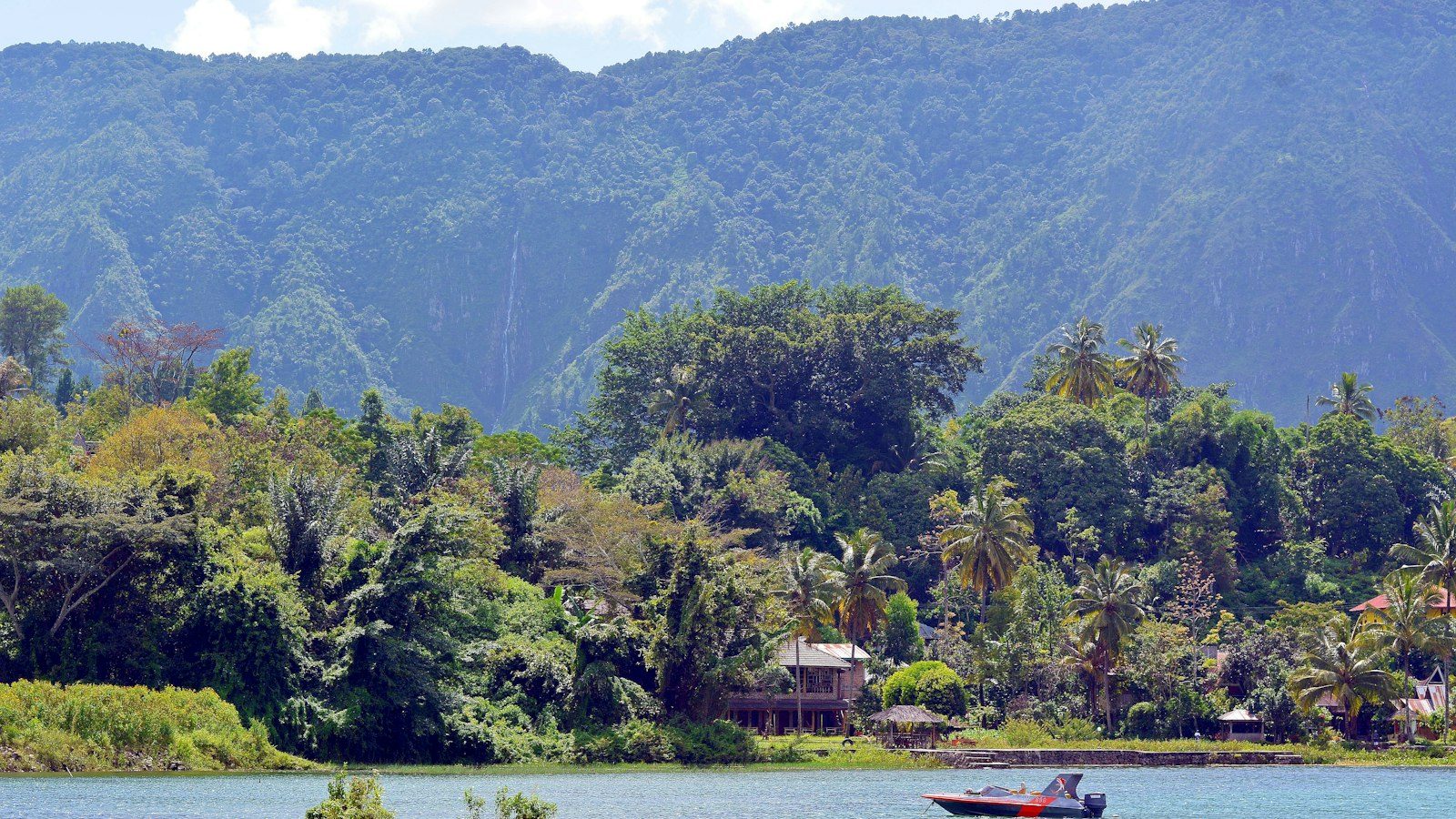
A huge volcanic lake in the highlands of North Sumatra, with an island in the middle nearly the size of Singapore. You swim off guesthouse jetties in Tuktuk, ride a scooter past Batak villages and carved stone tombs, and spend cool evenings over grilled fish and a glass of palm wine.
- Best time to visit: June to August
- Daily budget (budget traveller): $25 to $110 USD
- Ideal trip length: 4 to 7 days
Lake Toba fills the crater of a supervolcano that erupted about 74,000 years ago in the highlands of North Sumatra. It is roughly 100km long and around 500m deep, and in the middle sits Samosir, an island nearly the size of Singapore. Most travellers stay in Tuktuk, a small peninsula on Samosir's east coast lined with guesthouses, cafés and swimming jetties. From Medan it takes four to five hours by road, then a 45-minute ferry. Silangit airport, which has direct flights from Jakarta, is about two hours away. This is Toba Batak country. Most people are Christian, the churches are full on Sundays and the villages still have tall, saddle-roofed rumah bolon houses, carved stone tombs and the stone chairs where kings once held trials. Life here is slow. You swim in the cool lake, hire a scooter to ride around the island, watch the Sigale-gale puppet dance in Simanindo and soak in the hot springs at Pangururan. The lake sits at around 900m, so the air is fresh and the nights are cool. Tuktuk is quieter than it was in its backpacker heyday, and a few places look tired. Even so, cheap lake-view rooms, ferries that cost a dollar or two and very friendly locals make it one of the easiest and cheapest places in Indonesia to spend a solo week.
Lake Toba is the largest volcanic lake in the world, a 100km-long caldera left by a supereruption about 74,000 years ago. Samosir, the island in the middle, was pushed up from the lake floor afterwards and is now home to farming villages, churches and Batak graves painted in bright colours. This is the homeland of the Toba Batak, who have their own language, music and customs. Their greeting, 'Horas!', is shouted at you from motorbikes and porches. Most visitors stay in Tuktuk, on a small peninsula on Samosir's east coast. It was a busy backpacker stop in the 1980s and 1990s and is quieter today, which suits a solo trip. A lake-view room, a swim off the jetty and a plate of fish curry need not cost much more than $25 a day.
Getting here takes some effort, but it is simple. Most people fly into Kualanamu near Medan and take a shuttle, bus or private car to Parapat, then the passenger boat across to Tuktuk. Allow most of a day. The faster option is a direct flight from Jakarta to Silangit, about two hours south of Parapat. Once you are here, walk around Tuktuk and use a scooter, an ojek or a car with a driver for the rest of Samosir. Base yourself on Tuktuk for swimming and cafés. Add a night in Pangururan for the hot springs, Bukit Holbung and Lake Sidihoni on the island's quieter west side.
Timing matters more than you might think. June to August is usually the driest and clearest time, while the heaviest rain falls from about September to December. Christmas and New Year fill every room, as families return from Jakarta and beyond. Sundays are for church, so some shops close and the museum shows may not run. At around 900m, days are warm but nights are cool, so bring a jumper. The pace is slow, the people are warm and English is limited outside guesthouses, so a few words of Indonesian go a long way. If you want nightlife, go to Bali. If you want a quiet lake, mountains all round and time to read on a jetty, stay here.
Lake Toba itinerary
Arrive and cross the lake
Morning: Fly into Kualanamu near Medan and take the DAMRI shuttle (about IDR 100,000) or a shared car towards Parapat. Or fly from Jakarta to Silangit.
Afternoon: Walk down to Tigaraja jetty and catch a passenger boat to Tuktuk (about IDR 25,000). Tell the crew your guesthouse name and get off at its jetty.
Evening: Have a first swim, watch the light fade on the mainland cliffs and eat ikan arsik at your guesthouse.
Tuktuk, Tomok and the stone chairs
Morning: Swim early, then walk south to Tomok to see King Sidabutar's tomb. Wear the ulos you are lent and leave a small donation.
Afternoon: Hire a scooter or take an ojek north to Ambarita and Huta Siallagan (about IDR 10,000). Look inside the old houses and hear the story of the stone chairs.
Evening: Back in Tuktuk, find a lapo with live music, try a glass of tuak and get an early night.
Simanindo and the north coast
Morning: Ride north to the Huta Bolon Museum in Simanindo for the 10:30 Sigale-gale dance (about IDR 50,000 with the show). Avoid Sunday.
Afternoon: Follow the coast road past rice fields and painted tombs. Stop for mie gomak at a roadside warung and a swim at a quiet beach near Simanindo.
Evening: Ride back to Tuktuk before dark. Dinner and a drink on a jetty.
Over to Pangururan
Morning: Pack a small bag and ride across or around the island to Pangururan. Stop at Lake Sidihoni on the central plateau if the road is dry.
Afternoon: Soak in the hot springs on the slopes of Pusuk Buhit, then drive up towards the Tele viewing tower for the view over the western caldera.
Evening: Spend the night in a simple homestay in Pangururan. Eat at the warungs near the market.
Bukit Holbung and back
Morning: Go to Bukit Holbung early for soft light and empty trails over the green ridges. Bring water and a jacket.
Afternoon: Ride back to Tuktuk along the coast road, stopping at weaving villages to see ulos being made on the loom.
Evening: Watch the sunset from your jetty and treat yourself to a proper dinner at one of the Tuktuk cafés.
Sipiso-piso waterfall
Morning: Take an early boat to Parapat and meet a car and driver arranged by your guesthouse. Drive around the north of the lake to Sipiso-piso, about three hours.
Afternoon: Look out from the rim over the 120m drop and the lake, then walk down the steep steps to the base if your legs allow (entry about IDR 10,000).
Evening: Drive back to Parapat in time for a boat, or stay over in Parapat and cross in the morning. Check the last boat time before you leave.
Slow morning and depart
Morning: Have a last swim and a Lintong coffee on the jetty, then settle your bill in cash.
Afternoon: Take the boat to Parapat and continue by shuttle or car to Kualanamu or Silangit. Leave plenty of time for traffic.
Evening: Fly on, or spend a night in Medan before your next stop.
Best neighbourhoods
- Tuktuk: The small peninsula on Samosir's east coast where most travellers stay. It has a ring road lined with guesthouses, cafés, scooter rental shops and little jetties for swimming. It is quiet, friendly and easy to walk around, and most rooms look straight over the water to the mainland cliffs.
- Tomok: The main ferry village just south of Tuktuk, home to the tomb of King Sidabutar and a long lane of souvenir and snack stalls. It is busy with Indonesian day trippers by day and very local at night. Stay here if you want to be close to the car ferries from Ajibata.
- Ambarita: A village a few kilometres north of Tuktuk, known for the stone chairs and old houses of Huta Siallagan. There are a few homestays, a small market and ATMs. It is a good, cheap base if you have a scooter and want a less touristy feel.
- Parapat: The mainland lake town where the buses from Medan arrive and the boats leave for Samosir. It is a busy Indonesian holiday resort with hotels, restaurants and a market, but it has less charm than Tuktuk. It is useful if you arrive too late for the last passenger boat.
- Pangururan: Samosir's main town on the west coast, joined to the mainland by a short bridge. It has hot springs, a big market and roads up to Pusuk Buhit and the Tele viewpoint. Stay a night here to see Bukit Holbung and Lake Sidihoni without a long ride back in the dark.
Must-do experiences
- Swim off the Tuktuk jetties: Most guesthouses on Tuktuk have their own jetty or a few steps down into the lake. The water is clear, deep and cool, and swimming is free. Go in the morning when the lake is flat, and stay close to the shore, as there are no lifeguards.
- Sit in the stone chairs at Huta Siallagan: In Ambarita, a ring of stone chairs and a table under a big tree mark where the Siallagan king held trials. Entry is about IDR 10,000, and guides offer to explain the history for a bit more. Look inside the old rumah bolon houses too.
- Watch the Sigale-gale dance in Simanindo: The Huta Bolon Museum in Simanindo, at the island's northern tip, holds traditional Batak dance shows with the wooden Sigale-gale puppet, usually at 10:30 and 11:45. Entry with the show costs about IDR 50,000, and visitors are often invited to join the last dance. Shows are fewer or cancelled on Sundays.
- Visit the tomb of King Sidabutar in Tomok: A carved stone sarcophagus several centuries old sits at the top of the souvenir lane in Tomok. You are lent an ulos cloth to wear as a mark of respect, and a small donation is expected. Walk there from Tuktuk in under an hour or take a scooter.
- Ride a scooter around Samosir: Scooters cost about IDR 100,000 to 150,000 a day from guesthouses and rental shops in Tuktuk. The coast road passes rice fields, churches, Batak graves and fishing villages, and the loop to Pangururan and back takes a full day. Only ride if you are confident, and wear a helmet.
- Walk the hills of Bukit Holbung: Bare, rolling green ridges on Samosir's south-west side drop steeply towards the lake. A small fee gets you onto the walking trails, and the view at sunrise or late afternoon is one of the best on the lake. It is a long ride from Tuktuk, so pair it with a night in Pangururan.
- Soak in the hot springs at Pangururan: Sulphurous springs on the slopes of Pusuk Buhit, just across the bridge from Pangururan, feed simple pools run by local families. Entry is cheap, usually a few thousand rupiah. Go late in the day, when the air cools and the lake turns gold below you.
Hidden gems
- Lake Sidihoni, a small lake on top of Samosir's central plateau, so you are looking at a lake on an island in a lake
- The trail behind Tuktuk up to Simangande waterfall, which you can see from the village after heavy rain
- The Tele viewing tower on the mainland road above Pangururan, with a wide view over the whole western side of the caldera
- Weaving villages on Samosir where women still make ulos cloth on backstrap looms, with pieces for sale straight from the weaver
- Tuktuk at 6am, when mist sits on the water and the only sound is fishermen paddling out in narrow wooden boats
Daily budget
- Accommodation: budget $8-15 / night (simple guesthouse room), mid-range $30-60 (lakeside cottage with hot water), splurge $100+ (resort room or Taman Simalem). Single rooms are cheap and dorms are rare. Prices jump at Christmas, New Year and Indonesian holidays. Hot water and wifi vary, so check before booking.
- Food: budget $6-10 / day (mie gomak, nasi campur, warung fish), mid-range $15-25 (café breakfasts and guesthouse dinners), splurge $35+ (resort dining and imported wine). Warung meals cost about IDR 20,000 to 40,000, and Western dishes in Tuktuk cafés cost more. Most of the meat is pork, so ask if you need halal food.
- Transport: budget $2-9 / day (walking, ferries, scooter), mid-range $15-30 (car or ojek for part of a day), splurge $55-65 (private car Medan to Parapat). The Parapat to Tuktuk boat is about IDR 25,000. Scooters are IDR 100,000 to 150,000 a day plus fuel. The DAMRI shuttle from Kualanamu airport to Ajibata is about IDR 100,000.
- Activities: budget $0-5 / day (swimming, Huta Siallagan at about IDR 10,000, hot springs), mid-range $5-15 (Simanindo dance show, guides, Holbung), splurge $40+ (private boat or full day with driver and guide). The Simanindo museum with the dance show costs about IDR 50,000. Sipiso-piso waterfall is around IDR 10,000 plus parking. Small donations are expected at tombs.
- Drinks & nightlife: budget $1-4 (a glass of tuak or a Bintang), mid-range $8-15 (a few beers at a lakeside bar), splurge $25+ (cocktails and imported spirits). A large Bintang is about IDR 35,000 to 50,000 in cafés. Nightlife means live Batak music in a lapo or a quiet beer on a jetty.
Where to stay
- Backpacker guesthouse in Tuktuk ($8-15 / night): Long-running, family-run places such as Liberta Homestay and Bagus Bay have simple rooms, restaurants and a social feel. They are cheap, close to the jetties and good for meeting other travellers.
- Lakeside cottage in Tuktuk waterfront ($30-60 / night): Cottages such as Tabo Cottages sit right on the water with gardens, private jetties and Batak-style roofs. You get hot water, a good breakfast and a swim straight from your room.
- Homestay in Pangururan or Ambarita ($10-25 / night): Small family homestays put you in a working village, away from the tourist strip. They are handy for Holbung, Sidihoni and the hot springs, and very cheap.
- Splurge in Northern rim near Merek ($100-200+ / night): Taman Simalem Resort sits high on the northern edge of the caldera, with big views, gardens and its own farm. It is far from Tuktuk but close to Sipiso-piso.
What to eat
- Ikan arsik: carp or goldfish cooked in a yellow turmeric sauce with andaliman, the tingling Batak pepper. It is the classic Toba dish
- Naniura: raw lake fish cured in lime juice and spices, sometimes called Batak ceviche. Ask around, as only some places make it
- Mie gomak: thick noodles in a spicy coconut curry or fried, a cheap breakfast or lunch from roadside warungs
- Babi panggang and saksang: roast pork and spicy minced pork, everywhere in this mostly Christian area. Parapat has more halal options
- Tuak: sweet, slightly sour palm wine, served in a lapo (Batak bar) where locals often sing in the evening
- Sumatran coffee from the Lintong highlands south of the lake, and banana pancakes for breakfast in the Tuktuk cafés
Day trips
- Sipiso-piso waterfall (At the northern tip of the lake, about 3 hours from Tuktuk by road): One of Indonesia's tallest waterfalls drops about 120m from the caldera wall, with the lake stretching away behind it. A steep stairway leads to the base, and the climb back up is tough. Arrange a car and driver through your guesthouse, starting with an early boat to Parapat. Entry is about IDR 10,000 plus parking. Go early, before clouds roll in.
- Pangururan, Pusuk Buhit and Tele (About 1.5 hours by scooter from Tuktuk, on Samosir's west coast): Hot springs, the sacred mountain of Pusuk Buhit, where Batak tradition says the first Batak came down to earth, and the Tele viewpoint above the western caldera. Bukit Holbung and Lake Sidihoni are nearby. Ride across or around the island by scooter, or hire a car with a driver. Stay a night in Pangururan to avoid riding back after dark.
- Balige (On the southern shore, about 2 hours from Parapat and close to Silangit airport): A busy Batak market town with a traditional-style market hall, the T.B. Silalahi Center museum of Batak culture and quiet lakefront spots. It is a good stop on the way to or from Silangit. Take a car or minibus from Parapat or Silangit, or combine it with your airport transfer. Check the market days before you go.
When to visit
- Early year (January - March): 18-27°C, mixed sun and showers, cool nights. Crowds: Low, busier during Chinese New Year and Lebaran holiday weeks. Quiet and cheap, with green hills. Expect some rain most days, but rarely all day.
- Shoulder (April - May): 19-28°C, warm days and afternoon storms. Crowds: Low to moderate. A good, quiet time for scooter trips and walks. Plan rides for the morning before the clouds build.
- Dry season (June - August): 18-27°C, mostly dry and clear, chilly evenings. Crowds: Moderate, busy in late June and July school holidays and around 17 August. The best weather for Holbung, Sipiso-piso and swimming. Book ahead for holiday weekends.
- Wet season (September - December): 18-26°C, frequent heavy rain from about October. Crowds: Quiet until Christmas, then very busy until New Year. Fine for a slow, cheap stay, but views can be hidden in cloud. Avoid late December unless you book early.
Entry rules for your passport
Visa rules for Indonesia depend on the passport you travel on. Check the official source before you book: Indonesia Directorate General of Immigration
Getting there
There is no airport on the lake itself. Most visitors fly into Kualanamu International Airport near Medan, which has flights from Jakarta, Bali, Kuala Lumpur and Singapore. From Kualanamu, a DAMRI shuttle runs to Ajibata jetty for about IDR 100,000, and a private car to Parapat costs around IDR 900,000 to 1,000,000 for the three to four hour drive. Public buses from Medan take about five hours. You can also take the train from Medan to Pematangsiantar and a minibus on to Parapat. A quicker option is Silangit airport, about 76km from Parapat. Citilink, Indonesia AirAsia and Super Air Jet fly direct from Jakarta in about two hours, with fares often starting around $65 to $100 USD one way. Shuttles and shared cars meet flights. From Parapat, passenger boats leave Tigaraja jetty for Tuktuk roughly every hour until the early evening, costing about IDR 25,000 and taking about 45 minutes. Larger car ferries run from Ajibata to Tomok and Ambarita until later at night. If you drive, you can also reach Samosir over the bridge at Pangururan.
Getting around
Tuktuk is small enough to walk, and you can reach Tomok on foot in under an hour. To see the rest of Samosir, most travellers hire a scooter from their guesthouse or a rental shop for about IDR 100,000 to 150,000 a day. Roads are mostly paved but narrow and steep in places, and you will meet buses, buffalo and potholes. Bring an international driving permit with a motorcycle category, as your travel insurance may not cover you without one. If you do not ride, ask your guesthouse for an ojek (motorbike taxi) or a car with a driver. Local minibuses run along the coast road between Tomok, Ambarita, Simanindo and Pangururan, but they are slow and irregular. Ride-hailing apps work in Parapat but are patchy on Samosir. Passenger boats run between Tigaraja jetty in Parapat and Tuktuk roughly every hour from around 8am to the early evening for about IDR 25,000, and they drop you at your guesthouse jetty. Cheaper local boats and larger car ferries cross from Ajibata to Tomok and Ambarita, and the car ferries run until later at night. Samosir is also joined to the mainland by a short bridge at Pangururan.
Safety
Lake Toba is safe and relaxed, and crime against visitors is rare. The main risks are on the roads and in the water. Scooter accidents are the most common problem, so wear a helmet, ride slowly on steep bends and avoid riding after dark. The lake is deep and cool, and there are no lifeguards, so do not swim far out alone or after drinking. Tuak is stronger than it tastes. Some cafés still sell 'magic mushroom' omelettes, but Indonesia's drug laws are extremely strict, so stay away from them. The area is volcanic and earthquakes do happen, so know the way out of your room. Tap water is not safe to drink, so use refill stations or boiled water. On the ferries, keep your bag close and do not pay touts at the jetty. The emergency number is 112. Hospitals on Samosir are basic, and serious cases go to Medan, so travel insurance with medical evacuation is essential.
Solo travel tips
- Stay on Tuktuk: Everything you need is in walking distance, the jetties are on your doorstep and other travellers are easy to find. It is also where boats from Parapat drop you.
- Arrive before the last boat: Passenger boats from Parapat stop in the early evening. Leave Medan by late morning, or plan to use the later car ferries from Ajibata to Tomok and a short ride on.
- Carry enough cash: ATMs on Samosir are few and unreliable, and almost nothing takes cards. Withdraw enough in Medan or Parapat for several days and keep a backup stash.
- Ride only if you are confident: Roads are steep, narrow and shared with trucks and animals. If you are new to scooters, hire a car with a driver for long days and split the cost with other travellers.
- Safety for solo travellers: The real risks are scooter crashes, swimming alone in deep water and strong tuak. Ride in daylight, swim near the shore and tell your guesthouse where you are going.
- Meet people in a lapo: Batak bars come alive in the evening with guitars and harmonies, and locals love to include visitors. Guesthouse dinners and shared rides to Holbung are other easy ways to meet people.
Cultural etiquette
- Greet people with 'Horas!', the all-purpose Batak hello. 'Mauliate' means thank you in Batak, and 'terima kasih' works everywhere.
- At royal tombs such as King Sidabutar's, wear the ulos cloth you are offered and leave a small donation.
- Sunday is for church in this mostly Christian area. Keep noise down near churches, and expect some shops and shows to be closed.
- Cover your shoulders and knees in villages, churches and markets. Swimwear is for the jetty, not the road.
- Ask before photographing people, especially at funerals or family ceremonies, which you may come across on Samosir.
- Take your shoes off before entering a home, and use your right hand to give and receive things.
- Bargain politely for souvenirs and ulos cloth, but remember that a few thousand rupiah means more to the seller than to you.
Frequently asked questions
How do I get to Lake Toba and over to my guesthouse?
Most people fly into Kualanamu airport near Medan. A DAMRI shuttle runs from the airport to Ajibata jetty for about IDR 100,000, and a private car to Parapat costs around IDR 900,000 to 1,000,000 for the three to four hour drive. Public buses from Medan take about five hours. Another option is to fly from Jakarta to Silangit airport, about two hours from Parapat. From Tigaraja jetty in Parapat, passenger boats run to Tuktuk roughly every hour until the early evening for about IDR 25,000. Tell the crew your guesthouse and they will drop you at its jetty.
How many days do I need at Lake Toba?
Three nights covers Tuktuk, Tomok, Huta Siallagan and a scooter ride to Simanindo. Five nights lets you add Pangururan, the hot springs, Bukit Holbung and Lake Sidihoni at a gentle pace. A week works if you want to slow right down or add Sipiso-piso waterfall and Balige.
When is the best time to visit Lake Toba?
June to August is usually the driest and clearest time, with warm days and cool nights. Indonesian school holidays and the 17 August national holiday make some weekends busy. September to December is the wettest stretch. Christmas and New Year are very busy, as Batak families come home from all over Indonesia. January to May is mixed, with some rain but few visitors.
Do I need a scooter on Samosir?
Not for Tuktuk, which you can walk around, or for Tomok, which is under an hour away on foot. To see Simanindo, Pangururan, Holbung and Sidihoni, a scooter is by far the easiest option at about IDR 100,000 to 150,000 a day. If you are not a confident rider, hire a car and driver or an ojek through your guesthouse instead. Do not learn to ride here.
Can I swim in Lake Toba?
Yes. Most Tuktuk guesthouses have a jetty or steps into the lake, and the water is clear and refreshingly cool. It gets deep very quickly and there are no lifeguards, so stay near the shore and swim with someone around if you can. Avoid areas near fish farms and busy jetties.
Are there ATMs and can I pay by card?
There are a few ATMs on Tuktuk and in Ambarita and Tomok, but they sometimes run out of cash or go offline. Bring a good supply of rupiah from Medan or Parapat. Cards are accepted only at larger hotels, so expect to pay cash for rooms, food, scooters and boats.
Is Lake Toba safe for solo female travellers?
Yes, generally. Tuktuk is small, friendly and used to foreign visitors, and many guesthouses are family-run. Dress a little more modestly away from your guesthouse, take care with tuak in the lapo bars and avoid riding a scooter alone on empty roads after dark. Let your guesthouse know your plans when you go exploring.
What entry rules apply to Indonesia in 2026?
Many nationalities, including UK, US, Canadian and Australian citizens, can get a 30-day visa on arrival or e-VOA for IDR 500,000, extendable once. A rise to IDR 750,000 online and IDR 1,000,000 on arrival was announced in August 2026, but no start date had been confirmed, so check before you fly. Everyone must also fill in the free All Indonesia arrival card in the three days before arrival. Your passport needs at least six months' validity, and you need proof of onward travel. Confirm the details on the official Indonesian immigration website and check your government's travel advice.
More about Lake Toba
- Solo Travel Southeast Asia Itinerary 2026: 2, 3 and 4 Week Overland Routes
- Best Coworking Spaces in Bali 2026: Prices, Areas and Visas
Tours and activities in Lake Toba | Lake Toba in 2 days | Lake Toba in 3 days | Lake Toba in 4 days | Lake Toba in 5 days | Lake Toba in 7 days
Joy Plus home | Destinations | Itineraries | Activities | Flights | Budget planner | Calendar | Map | Blog | Lifetime access