Destinations / Africa
Lamu, Kenya travel guide
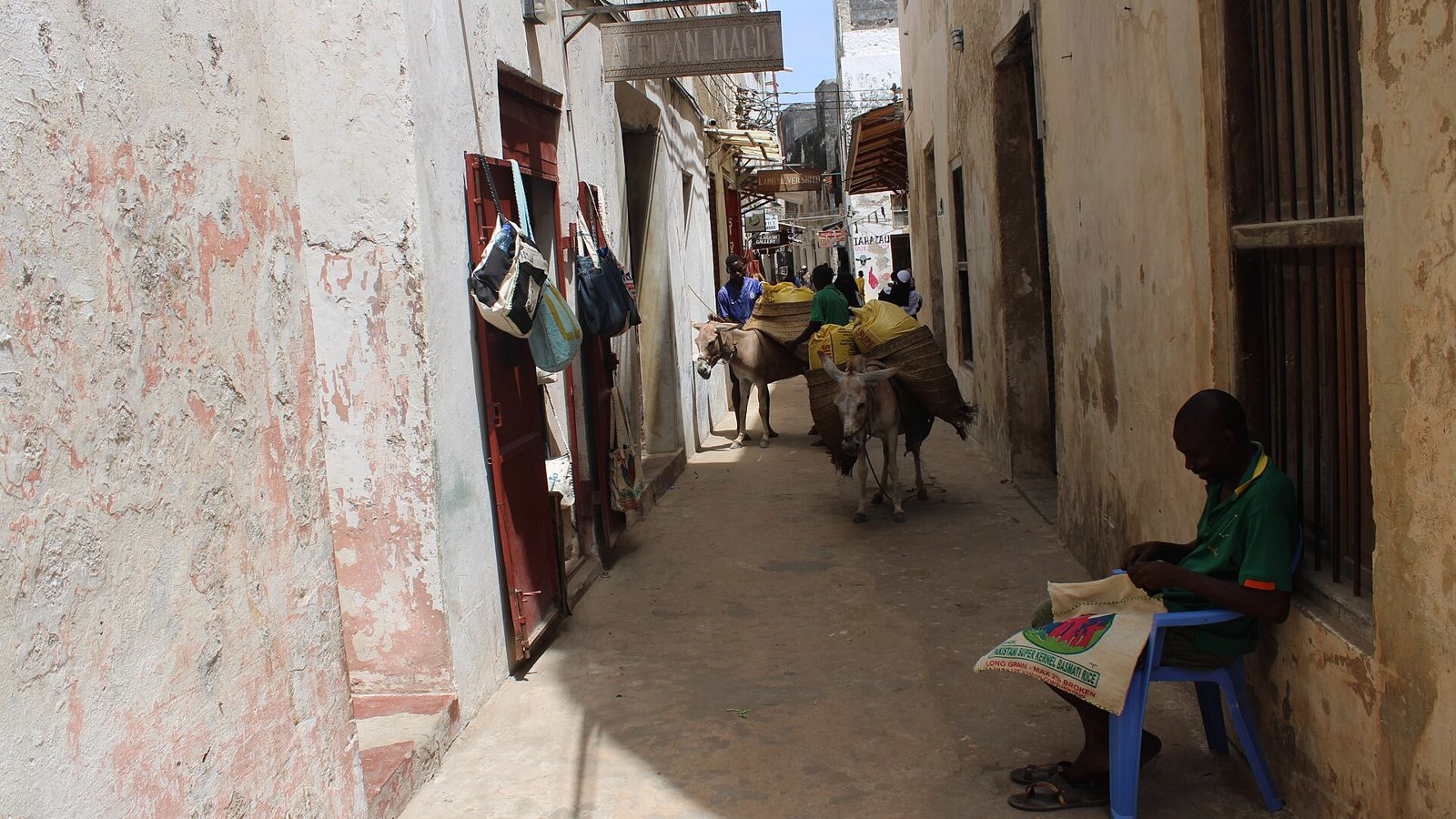
An old Swahili stone town on a small island off Kenya's northern coast, with almost no cars. Donkeys carry the loads, dhows sail the channel at sunset, and a long, empty beach runs past the village of Shela.
- Best time to visit: December to March and late October to November
- Daily budget (budget traveller): $40 to $160 USD
- Ideal trip length: 4 to 7 days
Lamu is a small island in the Lamu Archipelago, close to Kenya's border with Somalia. Its old town is often called the oldest continuously inhabited Swahili settlement in East Africa, and it is a UNESCO World Heritage Site. The island has almost no cars. Coral-stone houses with carved wooden doors line lanes too narrow for anything wider than a donkey, and the seafront fills with dhows, ferries and men unloading mangrove poles. Most visitors fly to Manda Island from Nairobi, then take a short boat ride across the channel. From Lamu Town you can walk or take a boat to Shela, a quieter village at the edge of a beach about 12km long backed by sand dunes. Life here is slow, Muslim and conservative. The call to prayer sets the rhythm of the day, and the town wakes up properly after the afternoon heat. Spend your days in the museums and the fort, on sunset dhow trips, on the beach and at the dhow-building yards across the island. Lamu is not the cheapest part of Kenya. Flights cost money and the boutique hotels are expensive. Still, simple guesthouses, cheap street food and shared boats keep a solo trip affordable.
Lamu Town has been a trading port for centuries, linking Africa with Arabia, India and beyond. The old town looks much as it did in the 1800s. It is a tight grid of coral-stone houses, carved doors, small mosques and lanes barely wider than a laden donkey. It is a UNESCO World Heritage Site and still a working town where most people are Muslim and speak Swahili. Fishermen, boat builders and porters keep the seafront busy from dawn. Most visitors come for a few days of beach and sunset dhows. Stay longer and you see a different side: the square at dusk with coffee sellers and old men playing bao, Friday prayers, a wedding procession through the lanes. It is not the cheapest place in Kenya, but simple guesthouses, local food and shared boats keep costs reasonable.
Getting here means flying. Jambojet runs a daily direct flight from Nairobi's JKIA to Manda airport, from about KSh 9,500 one way. Safarilink and Skyward Express fly from Nairobi Wilson. From the airport, a short boat ride takes you to Lamu Town or Shela. Buses run from Mombasa to Mokowe on the mainland, but UK advice is to avoid road travel in this part of the county. Once you are on the island, you walk. Stay in the old town for culture, food and cheap rooms, or in Shela for the beach and a quieter, more polished feel. Boats link the two, and you can also walk along the shore in under an hour.
Timing shapes the trip. December to March is hot, dry and calm, the best time for swimming and sailing. The short rains in late October and November are usually light, and the Lamu Cultural Festival, with dhow and donkey races, normally falls in late November. April to June is the long rainy season, and many places close. July to September brings strong winds and rougher seas. During Ramadan, which falls in February and March in 2027, the town is quiet in the daytime and comes alive after dark. Lamu Island and Manda Island are the only parts of Lamu County not covered by the UK's warning against all travel, so check your own government's advice before you book.
Lamu itinerary
Arrive and find your feet
Morning: Fly from Nairobi to Manda airport and take the boat across to Lamu Town. Let your host or a porter show you through the lanes to your room.
Afternoon: Rest through the heat, then walk the seafront from the jetties to the Donkey Sanctuary and back.
Evening: Coffee in Mkunguni Square at dusk, then mishkaki and fresh juice from the seafront stalls.
Museums and the old town
Morning: Visit the Lamu Museum on the waterfront ($10, paid through eCitizen) before it gets hot, then the fort on the main square.
Afternoon: Get lost in the lanes of Langoni, look in at the Swahili House Museum and buy chai and mahamri from a bakery.
Evening: Take a shared sunset dhow down the channel (about $15 to $30 USD). Dinner of samaki wa kupaka in town.
Shela Beach and the dunes
Morning: Walk the shore path to Shela at low tide (40 to 50 minutes), then explore the village lanes and the old mosque.
Afternoon: Swim and read on Shela Beach near the village end. Climb the dunes for views over the channel when the heat drops.
Evening: Sundowner on the Peponi terrace, then a boat back to town or a simple dinner in Shela.
Dhow snorkelling day
Morning: Set off on a shared full-day dhow trip to the reefs off Manda Island. Confirm the route, the price and the life jackets the night before.
Afternoon: Snorkel, fish and eat grilled fish on a beach while the crew cooks. Bring sun cover, as there is little shade.
Evening: An early night after the sun, or a quiet juice on a rooftop terrace.
Takwa ruins and Manda
Morning: Take a boat up the mangrove creek to the Takwa ruins at high tide and walk among the baobabs and old walls.
Afternoon: Stop at a Manda beach facing Shela for a swim and lunch, then cross back.
Evening: Dinner at a seafront restaurant such as Bush Gardens. Agree the price of any lobster first.
Matondoni and Kipungani
Morning: Go by boat or with a local guide to Matondoni to watch dhows being built by hand. Ask before you photograph people.
Afternoon: Carry on to Kipungani for mangroves, a quiet beach and a fishing village lunch, then sail back towards town.
Evening: Last walk through the square and the lanes after evening prayers, when the town is at its liveliest.
Slow morning and depart
Morning: Have a final swim at Shela or breakfast on a rooftop, then buy kikoi cloth or carved wood from the craft shops.
Afternoon: Take the boat to Manda airport about an hour before your flight. Check flight times the day before, as schedules change.
Evening: Arrive in Nairobi, or carry on to Mombasa or Malindi.
Best neighbourhoods
- Old town and the seafront: The heart of Lamu Town, running from the jetties along the waterfront to Mkunguni Square and the fort. You have the museums, the boats, the banks and most of the cafés within a few minutes' walk. The seafront is busy and loud with touts in the daytime. The lanes behind it are quieter but can feel like a maze at first.
- Langoni: The southern half of the old town, built up around the Riyadha Mosque. It is more residential and more local, with small shops, bakeries and the cheapest guesthouses. It suits you if you want to see everyday Lamu, but dress conservatively and expect early calls to prayer.
- Shela: A village about 3km south of town, at the start of the long beach and dunes. It has whitewashed lanes, smart Swahili house rentals, the Peponi Hotel and a more international crowd. It is the best base if you want a beach, but rooms cost more and food choices are fewer than in town.
- Manda Island: The island across the channel, home to the airport, a few beach lodges facing Shela and the Takwa ruins. It is very quiet and good for a splurge stay, but you depend on boats for everything, including dinner in town.
- Matondoni and Kipungani: Two villages on the west and south-west of Lamu Island. Matondoni is known for building dhows by hand, and Kipungani is a fishing village with mangroves and a couple of lodges. You visit rather than stay here, normally by boat or with a local guide.
Must-do experiences
- Get lost in the old town: Walk the lanes early in the morning, when shutters open and donkeys start their rounds. Look out for the carved doors, the plaster niches inside the old stone houses and the small mosques. Finish in Mkunguni Square, where men drink bitter coffee from conical pots in the shade.
- Visit the Lamu Museum and the fort: The museum is in a grand old house on the waterfront and covers Swahili life, dhows and the ceremonial siwa horns. The fort on the main square was built in the early 1800s and was a prison until 1984. Visitors from outside Africa pay $10 per site, through eCitizen only, not in cash.
- Sail a dhow at sunset: Captains along the seafront and in Shela offer two-hour sunset trips down the channel for around $15 to $30 USD per person on a shared boat. Agree the price, the route and whether drinks are included before you set off.
- Walk Shela Beach and the dunes: The beach stretches for about 12km south of Shela, with very few people beyond the first stretch. Climb the dunes behind it for views over the channel. Go in the morning or late afternoon, and do not wander too far on your own.
- Take a dhow snorkelling trip: Full-day trips sail across to the reefs off Manda Island, with fishing, snorkelling and a grilled fish lunch on a beach, for about $30 to $60 USD per person on a shared boat. Ask where the boat is going, because some trips leave the areas covered by UK government advice.
- See the Takwa ruins: On Manda Island, the remains of a Swahili town abandoned around the 1600s sit among baobabs and scrub. Boats go up the mangrove creek at high tide, so let the tide set your timing. Entry is a separate National Museums of Kenya fee, paid through eCitizen.
- Watch the dhow builders at Matondoni: In this village on the west side of the island, families still build dhows by hand from mangrove and hardwood. There is no museum and no fee. Go by boat or with a guide, and ask before you take photos of people working.
Hidden gems
- The Donkey Sanctuary on the northern seafront, a free yard where the town's working donkeys are treated for free and visitors are welcome
- The Swahili House Museum, a restored old merchant's house in the back lanes that shows how a stone house was built around light, air and privacy
- The German Post Office Museum, a small reminder that Germany ran a post office in Lamu in the 1880s, before the British took control of the coast
- The Shela dunes at sunrise, when the sand is cool and you can see across the channel to Manda before anyone else is up
- The coffee sellers in Mkunguni Square at dusk, pouring tiny cups of kahawa chungu for a few shillings while the town comes back to life
Daily budget
- Accommodation: budget $15 to $30 USD / night (simple guesthouse room), mid-range $70 to $150 USD (Swahili house hotel in town or Shela), splurge $300+ USD (Peponi Hotel or a Manda beach lodge). Prices peak over Christmas and New Year and during the cultural festival. Some hotels add levies on top. Many places close or offer discounts from April to June.
- Food: budget $10 to $15 USD / day (mahamri and chai, local rice dishes, street snacks), mid-range $25 to $45 USD (café lunch and a seafood dinner), splurge $70+ USD (lobster, hotel dining and drinks). A plate of biryani or fish with rice costs a few dollars in local cafés. Lobster and crab are priced by size, so agree the price first.
- Transport: budget $2 to $5 USD / day (walking, shared boats), mid-range $10 to $25 USD (private boats to Shela or Manda), splurge $150 to $250 USD (one-way flight to Nairobi booked late). The airport boat costs a few hundred shillings shared or about KSh 1,500 to 2,000 private. Jambojet fares start around KSh 9,500 one way if booked early.
- Activities: budget $10 to $20 USD / day (beach, walking, one museum at $10), mid-range $20 to $40 USD (sunset dhow, museums, Takwa), splurge $60+ USD (full-day private dhow with snorkelling). Since May 2026, visitors from outside Africa pay $10 per adult for the Lamu Museum, the fort, the Swahili House and the German Post Office, or $40 for all four. You pay through eCitizen, not in cash.
- Drinks & nightlife: budget $2 to $5 USD (fresh juice and coffee), mid-range $10 to $25 USD (a few drinks at Petley's or Peponi), splurge $40+ USD (cocktails at a Shela or Manda hotel). Lamu is mostly dry. Alcohol is sold in only a few hotels and bars, and nightlife means rooftops, juice bars and the square in the evening.
Where to stay
- Social hostel in Old town and Langoni ($15 to $30 USD / night): Lamu has no big party hostels. Instead, small budget guesthouses in old stone houses offer cheap rooms, fans or air conditioning and shared rooftop terraces where travellers meet. Ask about mosquito nets and water supply before you book.
- Boutique hotel in Seafront, Lamu Town ($100 to $200 USD / night): Restored Swahili houses on or near the waterfront, such as Lamu House, have plunge pools, rooftop views and the jetty on the doorstep. You get comfort without losing the old town feel.
- Apartment in Shela ($60 to $150 USD / night): Rooms or whole floors in Swahili house rentals give you a roof terrace, a kitchen or a cook, and the beach five minutes away. Expect steep stairs and check whether airport boat transfers are included.
- Splurge in Shela or Manda Island ($300 to $600+ USD / night): Peponi Hotel sits on the waterfront at the start of Shela Beach, with a famous terrace bar. The lodges on Manda Island facing Shela add privacy and their own beach, with boats to town.
What to eat
- Samaki wa kupaka: fish grilled and then simmered in a coconut and tamarind sauce, the classic coastal dish, at most local restaurants
- Biryani and pilau: spiced rice from small local cafés, often only on certain days or at lunchtime, and very cheap
- Mahamri and chai: lightly sweet coconut doughnuts with spiced tea, the standard local breakfast from bakeries and stalls
- Grilled fish and seafood: fish, octopus and lobster from seafront spots such as Bush Gardens. Agree the price of lobster and crab before it is cooked
- Street snacks: mishkaki (meat skewers), viazi karai (spiced fried potatoes) and samosas from evening stalls along the seafront
- Fresh juices: tamarind, passion fruit, mango and sugarcane from juice bars in town, as alcohol is hard to find outside a few hotels
Day trips
- Takwa ruins, Manda Island (About 30 to 45 minutes by boat from Lamu Town): The ruins of a Swahili town abandoned around the 1600s, with a mosque, houses and a pillar tomb among baobabs. The trip up the mangrove creek is half the fun. Book a boat with a captain you trust and go at high tide, as the creek is too shallow at low water. Entry is a separate National Museums of Kenya fee paid through eCitizen.
- Matondoni (About 30 to 40 minutes by boat from Lamu Town): A village on the west side of Lamu Island where families still build dhows by hand from mangrove and hardwood. It is free to visit and gives a good look at island life outside town. Go by boat with a captain or local guide, or combine it with Kipungani on a half-day trip around the island. Ask before you take photos.
- Shela and the dunes (About 3km south of Lamu Town, 40 to 50 minutes on foot or 10 to 15 minutes by boat): A pretty village at the start of a beach about 12km long, backed by high dunes. It is the best spot on the island for swimming and sunset drinks. Walk the shore path from town at low tide, or take a shared or private boat from the seafront. Take a boat back after dark rather than walking.
When to visit
- Dry season (December - March): 29-33°C, hot, sunny and humid, calm sea. Crowds: Moderate, busiest over Christmas and New Year. The classic time to come. Best for swimming, snorkelling and sailing. Book Christmas rooms early, and expect a quieter, slower town during Ramadan in early 2027.
- Long rains (April - June): 27-30°C, heavy showers, very humid, May is the wettest month. Crowds: Very low. Cheap, green and empty, but many hotels and restaurants close, and boat trips can be cancelled. Only worth it if you want deep quiet and low prices.
- Windy season (July - September): 25-29°C, breezy and less humid, rough sea. Crowds: Low to moderate, with some European summer visitors. Pleasant for walking the town, but strong winds make snorkelling poor and boat crossings choppy. Good value.
- Short rains and festival time (October - November): 27-31°C, mostly sunny with short showers. Crowds: Moderate, busy in late November. A good alternative to the dry season. The Lamu Cultural Festival usually runs in late November, so book well ahead if you want to see it.
Entry rules for your passport
Visa rules for Kenya depend on the passport you travel on. Check the official source before you book: Kenya Directorate of Immigration Services
Getting there
Lamu's airport is on Manda Island, just across the channel from Lamu Town. Jambojet flies daily from Nairobi's main airport, JKIA, in about 75 to 80 minutes, with fares from around KSh 9,500 (roughly $75 USD) one way if you book early. Safarilink and Skyward Express fly from Nairobi Wilson, sometimes stopping at Malindi, for roughly $100 to $200 USD. From the airport, walk a few minutes to the jetty, where boats meet every flight. A shared boat to Lamu Town or Shela costs a few hundred shillings, and a private boat costs about KSh 1,500 to 2,000. Buses run from Mombasa to Mokowe in 7 to 10 hours for about KSh 1,500 to 1,700, and a public boat crosses from Mokowe to town. However, UK advice is to fly rather than travel by road through this part of the county. Before you fly into Kenya, get your eTA and the compulsory Kenyan travel health insurance online.
Getting around
Lamu Town has no proper roads and almost no cars, so you walk almost everywhere. Crossing the old town from the northern jetties to Langoni takes about 15 minutes, but the lanes are narrow and confusing at first. Give way to donkeys, which carry everything from water to building blocks. To get to Shela, walk about 3km along the shore path, which takes 40 to 50 minutes and is easiest at low tide, or take a boat. Shared boats along the channel cost a few hundred shillings at most, and a private boat to Shela costs roughly $8 to $15 USD. Agree the price before you get in. A few motorbike taxis use the inland track between town and Shela, but boats are more pleasant. Everything else, including Manda Island, the airport, Takwa and Matondoni, means a boat. Captains and 'beach boys' on the seafront will offer trips all day long. Ask your guesthouse to recommend a captain you can trust. Check that the boat has life jackets and let someone know your plans.
Safety
Lamu Town and Shela are generally calm, and violent crime against visitors is rare. The bigger picture matters, though. The UK government advises against all travel to Lamu County except Lamu Island and Manda Island. It also advises flying to Manda airport rather than travelling by road, and there is a general risk of terrorism across Kenya. Read your own government's advice before you book and check that your insurance covers where you plan to go. On the ground, the main problems are pushy touts, overpriced boat trips and the occasional scam. Use recommended captains and agree prices up front. Do not walk far along Shela Beach or the dunes alone, especially at dusk. Lamu is in a malaria area, so get medical advice before you go and use repellent and nets. Do not drink the tap water. Kenya reported an imported Ebola case in October 2026, so check the latest health advice. The emergency numbers are 999 and 112.
Solo travel tips
- Stay in town first: The old town is cheaper, easier for meeting people and close to the boats, food and museums. Move to Shela for a night or two at the end if you want beach time.
- Pick one captain: Find a captain your guesthouse trusts and book all your trips with them. You will pay fair prices, get proper safety kit and avoid haggling every morning on the seafront.
- Work with the heat and prayer times: Do your walking and sightseeing early, rest through the early afternoon, and head out again after the late afternoon prayer, when the town wakes up.
- Eat where locals eat: Small cafés in Langoni serve biryani, pilau and fish for a few dollars. Save hotel restaurants and lobster for one good dinner.
- Safety for solo travellers: Read your government's advice, fly rather than travel by road and stay on Lamu and Manda islands. Avoid lonely parts of the beach and dunes, and take a boat to Shela after dark.
- Join a shared dhow: Shared sunset and snorkelling trips are cheaper and the easiest way to meet other travellers. Rooftop terraces in guesthouses are good for conversation in the evenings, too.
Cultural etiquette
- Greet people with 'jambo' or the more respectful 'salaam aleikum', and say 'asante' (thank you). A little Swahili goes a long way.
- Dress modestly in town. Cover your shoulders and knees, and keep swimwear for the beach and boats.
- Ask before you photograph people, especially women. Many will say no, and that should be respected.
- During Ramadan, do not eat, drink or smoke in public in the daytime. Many cafés open only after sunset.
- Do not enter mosques unless you are invited, and keep your voice down outside them at prayer times.
- Public displays of affection and drunkenness are frowned upon. Drink only in hotels and licensed bars.
- Agree prices for boats, porters and guides before you start, and tip crews and good guides a few hundred shillings.
Frequently asked questions
How do I get to Lamu and from the airport to my room?
Fly. Jambojet has daily direct flights from Nairobi's main airport, JKIA, to Manda airport in about 75 to 80 minutes, with fares from around KSh 9,500 (roughly $75 USD) one way. Safarilink and Skyward Express fly from Nairobi Wilson, sometimes stopping at Malindi. From the airport, it is a short walk to the jetty. A shared boat to Lamu Town or Shela costs a few hundred shillings, and a private one costs about KSh 1,500 to 2,000. Many hotels include the transfer, and someone will usually walk you to your door.
How many days do I need in Lamu?
Three nights covers the old town, the museums, a sunset dhow and a day on Shela Beach. Four to five nights lets you add a snorkelling trip, the Takwa ruins and Matondoni without rushing. A week works if you want to slow right down, which is what Lamu does best.
When is the best time to visit Lamu?
December to March is hot, dry and calm, with the best sea for swimming and dhow trips. Late October and November are also good, and the Lamu Cultural Festival usually runs in late November. Check the exact dates closer to the time. April to June brings the long rains, and many hotels close or cut their prices. July to September is cooler but windy, and the sea is rougher.
Are there really no cars on Lamu?
Almost none. A handful of official vehicles exist, and a few motorbikes use the track to Shela, but the old town is walking and donkeys only. Bring luggage you can carry, or a bag with straps, because porters or donkeys may need to take it through lanes too narrow for anything with wheels. Tipping a porter a couple of hundred shillings is normal.
Where can I swim in Lamu?
Not in Lamu Town, where the channel is busy with boats. Head to Shela Beach, which stretches for about 12km south of the village and has the best swimming near the village end. There are also beaches on Manda Island across the channel. Currents can be strong further out and there are no lifeguards, so swim near other people. The calmest water is from December to March.
Can I visit the other islands in the archipelago?
Lamu and Manda islands are easy by boat. UK government advice covers only those two islands, though, and advises against all travel to the rest of Lamu County, including Pate, Kiwayu and the mainland. Snorkelling trips sometimes stop at islets outside that area, so ask the captain for the exact route. Check your own government's advice and your insurance before going further.
Is Lamu safe for solo female travellers?
Generally yes, and many women travel here alone. It is a conservative Muslim town, so cover your shoulders and knees, and expect plenty of attention from touts and 'beach boys' on the seafront and in Shela. A firm, polite no usually works. Use captains your guesthouse recommends, avoid empty stretches of beach and the dunes on your own, and take a boat rather than walking to Shela after dark.
What entry rules apply to Kenya in 2026?
Most visitors need an Electronic Travel Authorisation (eTA) before they fly. You apply at etakenya.go.ke, and a standard single-entry eTA costs $30. Many African nationals are exempt. Since October 2026, most visitors staying less than 12 months must also buy Kenya's government travel health insurance for about $44, or around $48 with fees, through the eTA or eCitizen portal. Your own travel insurance does not replace it. Your passport needs at least six months' validity. Rules are changing fast, so check official Kenyan sites and your government's advice before you go.
Tours and activities in Lamu | Lamu in 2 days | Lamu in 3 days | Lamu in 4 days | Lamu in 5 days | Lamu in 7 days
Joy Plus home | Destinations | Itineraries | Activities | Flights | Budget planner | Calendar | Map | Blog | Lifetime access