Destinations / North America
Lunenburg, Canada travel guide
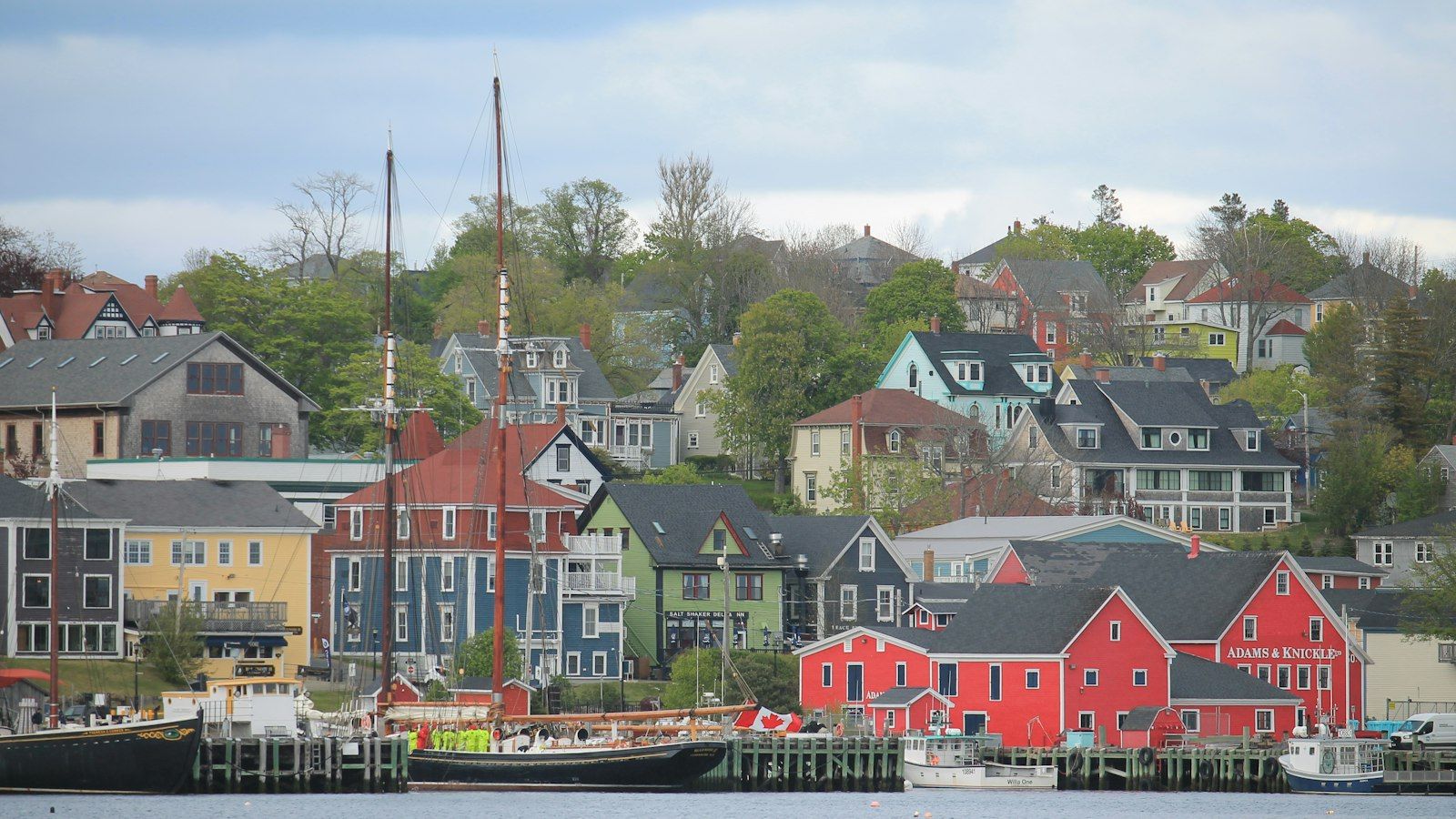
A brightly painted UNESCO fishing town on Nova Scotia's South Shore, home port of the Bluenose II, with sea caves, rocky coves and a serious haddock habit.
- Best time to visit: June to early October
- Daily budget (budget traveller): $120 to $345 USD
- Ideal trip length: 4 to 7 days
Lunenburg sits on a steep hillside above its harbour, about 100km southwest of Halifax, and looks like someone took a paint chart to a 1700s British town plan. It was laid out in 1753 for Protestant settlers from Germany, Switzerland and France, and the original grid of narrow streets survives almost intact. That is why Old Town Lunenburg is on the UNESCO World Heritage List. This is still a working fishing and boatbuilding town of about 2,500 people. The Fisheries Museum of the Atlantic fills the red sheds on the wharf, and the Bluenose II, the schooner on the Canadian dime, ties up next door when she is home. For a solo traveller, Lunenburg is compact, safe and easy to walk. The South Shore around it is the real draw: the sea caves at the Ovens, the fishing hamlet of Blue Rocks, the three churches of Mahone Bay and the granite of Peggy's Cove. Most of it runs on a summer season, so timing matters, and a car for a day or two makes the trip much easier.
Lunenburg has about 2,500 residents, one UNESCO-listed street grid and a waterfront that still smells of salt and diesel. It was founded in 1753 on land the Mi'kmaq called Merligueche, and settled by Protestants from Germany, Switzerland and Montbéliard. The British laid out a tight grid of streets running straight up a steep hill, and it is still there. So are hundreds of wooden houses painted in colours you would not dare at home. The town made its money from the Grand Banks fishery and from building the schooners that worked it, including the Bluenose, which never lost an International Fishermen's Race and now appears on the Canadian dime. You can do the Old Town in a day. The reason to stay longer is the South Shore around it: sea caves, empty beaches, fishing hamlets and a coastline that gets wilder the further you drive from Halifax.
Plan the trip around three things: the season, the Bluenose II and a car. Almost everything runs from late May to October. The Fisheries Museum opens in late May, and the schooner sails from June to September, but only when she is in port, so check her schedule before booking anything. Lunenburg works best as a single base for four to seven nights, with day trips by car to the Ovens, Hirtle's Beach, Mahone Bay, the LaHave River and Peggy's Cove. The Maritime Bus Halifax Connector gets you to town without driving, but it does not run every day. A sensible solo plan is to arrive by bus, walk the town for two days, then hire a car for the coast and drop it at Halifax airport on your way out.
Lunenburg is not a budget destination. Nova Scotia has no dorm hostels outside Halifax, rooms in the Old Town start at around CA$130 to CA$190 in season, and a plate of fish and chips with a pint comes to about CA$35 once you add tax and tip. You can still keep costs down. Camp on Blockhouse Hill, eat a big lunch at a fish shack instead of an expensive dinner, and spend your days on trails and beaches that cost nothing. The town is also very easy to do alone. Bar seats at the Salt Shaker and the Knot Pub fill with chatty locals and other travellers, the museum's retired fishermen will talk all afternoon, and nobody blinks at a table for one. If you want nightlife, go to Halifax. If you want chowder, sea air and a sunset over a painted harbour, stay right here.
Lunenburg itinerary
Arrive and find the harbour
Morning: Land at Halifax Stanfield (YHZ). Either pick up a hire car and drive about 1 hour 20 minutes via Highways 102 and 103, or take Halifax Transit route 320 into downtown Halifax.
Afternoon: Bus travellers catch the Maritime Bus Halifax Connector from downtown at 3:55pm on its running days (check the timetable). Check in, then wander down Montague Street to the waterfront.
Evening: Haddock fish and chips or fish tacos at The Knot Pub on Dufferin Street. Walk back along Bluenose Drive as the harbour lights come on.
Fisheries Museum and the Old Town
Morning: Fisheries Museum of the Atlantic when it opens at 9:30am (about CA$15). Board the vessels on the wharf and chat to the heritage interpreters, many of them former fishermen.
Afternoon: Self-guided Old Town walk up Lincoln, Pelham and Cumberland streets, St John's Anglican Church and the Lunenburg Academy on the hill. Finish with a tasting at Ironworks Distillery (check opening days).
Evening: Climb Blockhouse Hill for sunset over the painted town. Chowder and a harbour view at the Salt Shaker Deli on Montague Street.
Bluenose II and Blue Rocks
Morning: If she is in port, take the 9:30am two-hour harbour sail on the Bluenose II (about CA$110, booked ahead). If she is away, visit the museum's Boat Shop on Burma Road (weekdays 11am to 4pm).
Afternoon: Drive or cycle about 10 minutes east to Blue Rocks. Wander the fishing sheds and slate ledges, or join a guided paddle around the sheltered inlets.
Evening: Back in town for mussels and a pint at the Grand Banker Bar & Grill. Free open-deck tours on the Bluenose II often run into the evening when she is in port.
Ovens sea caves and Gaff Point
Morning: Check the tide table, then drive about 20 minutes to Ovens Natural Park near Riverport (opens 8:30am, roughly CA$12 to CA$15). Walk the cliff-top trail and take the stairs down to Cannon Cave.
Afternoon: Continue to Hirtle's Beach in Kingsburg. Walk the sand and the Gaff Point loop, about 6 to 7km return and 2 to 2.5 hours. Wear long trousers for ticks.
Evening: Fish and chips from The South Shore Fish Shack, eaten on the waterfront. Early night.
Mahone Bay and Chester
Morning: Drive about 15 minutes to Mahone Bay. Photograph the three waterfront churches from across the water in the morning light, then browse the craft shops on Main Street.
Afternoon: Carry on about 25 minutes to Chester for a harbour walk among the yachts and old summer houses, then head back along the coast road.
Evening: Dinner at the Old Fish Factory Restaurant on the Lunenburg waterfront, or a bar seat at the Knot Pub for live music in summer.
LaHave River and the back roads
Morning: If it is Thursday, start at the Lunenburg Farmers' Market. Then drive via Riverport to East LaHave and cross on the small LaHave cable ferry (a few minutes, small toll).
Afternoon: Lunch at the LaHave Bakery, then drive on towards the LaHave Islands and Crescent Beach for a long beach walk.
Evening: Final night in town. Splurge on a seafood dinner, then take one last walk up Blockhouse Hill.
Peggy's Cove and fly out
Morning: Check out early and drive about 1 hour 15 minutes to Peggy's Cove. See the lighthouse and granite before the tour buses arrive, and stay off the dark wet rocks.
Afternoon: Drive about an hour to Halifax Stanfield, drop the car and fly out. Bus travellers take the 8:45am Halifax Connector to Halifax and Halifax Transit 320 to the airport, and skip Peggy's Cove.
Evening: Fly out, or spend a final night in Halifax if your flight leaves early the next day.
Best neighbourhoods
- Old Town: The UNESCO grid of steep streets climbing from the harbour, lined with 18th and 19th century wooden houses painted red, yellow and teal. Lincoln, Pelham and Cumberland streets hold the inns, galleries and St John's Anglican Church.
- Waterfront and Montague Street: The working edge of town. Bluenose Drive runs past the Fisheries Museum and the Bluenose II wharf, while Montague Street just above has most of the restaurants, pubs and harbour-view patios.
- Blockhouse Hill: The high ground on the western edge of town, with the visitor information centre, a campground and the best free view over the Old Town and harbour. Come up at sunset.
- Blue Rocks: A tiny fishing hamlet about 10 minutes' drive east of town, with weathered sheds, lobster traps and grey slate ledges. Quiet, photogenic and a good place to paddle the sheltered inlets.
- Riverport and Kingsburg: The headlands across Lunenburg Bay, home to the Ovens sea caves, Hirtle's Beach and the Gaff Point trail. Rural, windy and best reached by car.
Must-do experiences
- Spend a morning at the Fisheries Museum of the Atlantic: Three floors of exhibits in the red waterfront sheds cover the Grand Banks fishery, rum-running and the Bluenose races, with an aquarium and vessels you can board on the wharf. Adult entry is about CA$15, and it runs from late May to late October.
- Sail on the Bluenose II: When she is in port between June and September, the replica racing schooner runs two-hour harbour sails, usually at 9:30am and 1:30pm, for about CA$110. Free open-deck tours run on many in-port days too. Check the schedule, as she spends weeks away.
- Walk the UNESCO Old Town grid: Loop up and down the hill on Lincoln, Pelham and Cumberland streets to see the painted houses and the 'Lunenburg bump' dormers over the front doors. Stop at St John's Anglican Church, rebuilt after a fire in 2001.
- Explore the sea caves at Ovens Natural Park: A privately run park near Riverport with a cliff-top trail of about 1.5km return and staircases down into the caves, including the booming Cannon Cave. Go at low tide, and bring cash or a card for the entry fee of roughly CA$12 to CA$15.
- Drive out to Blue Rocks: Follow the coast road east to this fishing hamlet for slate ledges, fishing sheds and calm water. Early morning light is best, and it is a lovely spot to kayak if you have your own or book a local outfitter.
- Taste rum at Ironworks Distillery: A small-batch distillery in an old blacksmith's shop near the waterfront, making rum, fruit brandies and liqueurs. Drop in for a tasting and check the opening days, which shorten outside summer.
- Day trip to Mahone Bay: The neighbouring town, about 15 minutes away, is famous for three churches side by side on the waterfront. Wander the craft shops on Main Street, and come in early autumn for the scarecrow festival.
- Stand on the granite at Peggy's Cove: The lighthouse village is about 1 hour 15 minutes away and fits neatly on the way back to Halifax airport. Admire the waves from the viewing areas and stay well back from the black rocks.
Hidden gems
- The Gaff Point trail from Hirtle's Beach, a walk of roughly 6 to 7km return along a long sandy beach and out onto a wild, wind-shaped headland with almost nobody on it
- The Fisheries Museum's off-site Boat Shop at 14 Burma Road, open on weekdays from 11am to 4pm, where traditional wooden boatbuilding keeps going
- Blockhouse Hill at sunset, a free lookout above the visitor centre with the whole painted Old Town and the harbour spread out below
- The Lunenburg Academy, an 1895 wooden schoolhouse in black and white on the hill above town, best seen from the cemetery paths around it
- The LaHave River cable ferry, a short and cheap crossing that ends near the LaHave Bakery, famous for its sourdough and sticky buns
- The Lunenburg Farmers' Market on Thursday mornings at the community centre, the place to find local sausage, sauerkraut, berries and baking (check current hours)
Daily budget
- Accommodation: budget CA$45-60 / night (tent pitch on Blockhouse Hill) or CA$130-190 (motel or B&B room), mid-range CA$190-300 (Old Town inn with harbour view), splurge CA$300-450+ (Mariner King Inn suite, Lunenburg Arms). There are no hostels. Most inns quote room rates for one or two people, so solos pay full price. Add 14% HST. Book July and August well ahead, and expect many places to close from November to March.
- Food: budget CA$50-70 / day (bakery breakfast, fish shack lunch, groceries), mid-range CA$90-140 (pub lunch, sit-down seafood dinner), splurge CA$180+ (tasting menus, lobster, wine). Fish and chips costs about CA$20-28, and chowder about CA$14-22. Make lunch your big meal. The Thursday farmers' market and the town's grocery store keep breakfast cheap. Tip 15-20% at sit-down places.
- Transport: budget CA$0-20 / day (walking), plus about CA$45-60 one way on the Maritime Bus to Halifax, mid-range CA$70-120 (compact hire car in season, plus fuel), splurge CA$200+ (private airport transfer or guided coast tour). The Halifax Connector bus runs on limited days, so check the timetable. Hire cars at Halifax airport are cheapest booked early. Fuel is priced per litre. The LaHave cable ferry is a small toll.
- Activities: budget CA$0-20 / day (trails, beaches, Blockhouse Hill, Old Town), mid-range CA$15-40 (Fisheries Museum CA$15, Ovens about CA$12-15), splurge CA$110+ (Bluenose II harbour sail, guided kayak). Fisheries Museum adult entry is CA$15, and a CA$30 season pass covers repeat visits. A Bluenose II sail is about CA$110 including taxes, while open-deck tours are free. Peggy's Cove, Hirtle's Beach and Gaff Point are free.
- Drinks & nightlife: budget CA$10-20 (one local pint or a liquor store beer), mid-range CA$30-60 (distillery tasting, a few pints), splurge CA$80+ (cocktails and wine with dinner). A pint is roughly CA$8-10 before tip. Nightlife means pubs with live music, especially in summer and during the Folk Harbour Festival in August. Most kitchens close by 9pm.
Where to stay
- Social hostel in Blockhouse Hill (CA$45-60 / night (tent pitch, check current rates)): Lunenburg has no dorm hostel. The cheapest solo option is a tent pitch at the Lunenburg Visitor Information Centre & Campground on Blockhouse Hill, open roughly mid-May to mid-October, with harbour views and a five-minute walk to town. Campers swap tips at the picnic tables.
- Boutique hotel in Waterfront and Montague Street (CA$180-300 / night): Smugglers Cove Inn on Montague Street is open year-round, a few steps from the harbour, the Fisheries Museum and the best restaurants. Rum Runner Inn, open April to November, is another central option with quayside views.
- Apartment in Old Town or Blue Rocks (CA$150-260 / night): Holiday rentals in restored Old Town houses and fishermen's cottages towards Blue Rocks give you a kitchen. Cooking market sausage, eggs and seafood cuts the food bill, and longer stays often get a weekly discount.
- Splurge in Old Town (CA$300-450+ / night plus HST): The Mariner King Inn on King Street, an 1830 building run with the Lunenburg Arms Hotel & Spa, has the most stylish suites in the historic centre. You can book a treatment at the Lunenburg Arms spa on Pelham Street.
What to eat
- Haddock fish and chips: the South Shore's standard lunch, crisp and flaky, with The South Shore Fish Shack on Montague Street a local favourite at roughly CA$20 to CA$28 a plate
- Seafood chowder: a creamy bowl of haddock, scallops, mussels and potato that every pub serves; the Salt Shaker Deli's harbour-view version is a reliable choice
- Lunenburg pudding: a spiced pork sausage from the town's German-speaking settlers, fried for breakfast or eaten cold with mustard, sold by local butchers and at the Thursday market
- Solomon Gundy: pickled herring with onion, an old settler staple served on crackers and still found on menus and in local shops
- Sausage and sauerkraut: the town's German roots on a plate, best tried as the Knot Pub's Knotwurst and Kraut with hot peppers
- Hodge podge: a late-summer stew of new potatoes, beans, carrots and peas simmered in cream and butter, mostly on menus in July and August
- Blueberry grunt: wild Nova Scotia blueberries stewed under steamed dumplings, a classic dessert when the berries come in from late July
Day trips
- Mahone Bay and Chester (About 15 minutes to Mahone Bay, then about 25 minutes more to Chester by car): Mahone Bay's three churches side by side on the waterfront are among the most photographed views in Nova Scotia, and Main Street is full of craft shops and cafés. Chester is a quieter yachting village with old summer houses and harbour walks. Easiest by car. The Maritime Bus Halifax Connector also stops at Mahone Bay and Chester on its running days, but timings make a return day trip awkward.
- Peggy's Cove (About 1 hour 15 minutes by car): A tiny fishing village on bare granite with the most famous lighthouse in Canada. Arrive early or late to avoid tour coaches, and stay well back from the dark, wet rocks where waves regularly knock people over. Drive via Highway 103 and Route 333, ideally on your way to Halifax airport. Guided coastal tours from Halifax also combine Peggy's Cove with Lunenburg and Mahone Bay.
- LaHave River and the LaHave Islands (About 30 to 40 minutes by car via Riverport): Cross the LaHave River on a small cable ferry, eat lunch at the much-loved LaHave Bakery, then explore the low islands and long beaches towards Crescent Beach. It is quiet and very local. By car only. The ferry crossing takes a few minutes and costs a small toll per vehicle, so check the current fare and timetable, especially in bad weather.
When to visit
- Spring (April - May): 5-15°C, cool and damp, frequent fog, cold sea. Crowds: Very low. Quiet and cheap, and many inns reopen in April, but it is still chilly and attractions are only just waking up. The Fisheries Museum opened on 23 May in 2026. Good for walkers who don't mind layers.
- Summer (June - August): 17-25°C, fog banks in June, warmest and sunniest in late July and August. Crowds: High in July and August, plus cruise and coach day-trippers. Everything is open, the Bluenose II sails from 1 June, and hodge podge and blueberries are on menus. Book rooms and schooner sails weeks ahead, and expect peak prices.
- Autumn (September - October): 10-20°C, clearer skies, colour peaks around mid-October. Crowds: Moderate in September, dropping through October. The best balance. Warm sea, fewer people, Bluenose II sailing until the end of September and the museum open into late October. Watch for post-tropical storms in September.
- Winter (November - March): -6 to 3°C, snow, ice and strong winds. Crowds: Almost none. Most attractions and many restaurants close, and the steep streets ice up. Worth it only for the cosy, local feel or the Lighting of the Vessels on the waterfront in late November (27 November in 2026).
Entry rules for your passport
Visa rules for Canada depend on the passport you travel on. Check the official source before you book: Immigration, Refugees and Citizenship Canada
Getting there
Halifax Stanfield International Airport (YHZ) is the gateway, about 110 to 115km and 1 hour 20 to 25 minutes from Lunenburg by car via Highways 102 and 103. Air Canada, WestJet and Porter fly in from across Canada, with connections from the US and transatlantic routes, some of them seasonal. Most visa-exempt travellers need a CA$7 eTA before flying, while US citizens need only a passport. Check canada.ca. Hire cars are available at the airport. Without a car, take Halifax Transit route 320 to downtown Halifax, then the Maritime Bus Halifax Connector, which stops at Hubbards, Chester, Mahone Bay and the Lunenburg Esso. It runs on limited days, usually Sunday, Monday, Wednesday and Friday, leaving Lunenburg County around 8:45am and downtown Halifax around 3:55pm, with extra summer services in some years. One-way fares are roughly CA$45 to CA$60, so check maritimebus.com. Private car services also run door-to-door transfers, but get a quote first. Driving from the US, the seasonal CAT ferry links Bar Harbor, Maine, with Yarmouth, about 3 hours' drive from Lunenburg.
Getting around
The Old Town is small enough to walk end to end in 15 minutes, but the streets are very steep, so take sensible shoes. There is no town bus for visitors. Maritime Bus runs the Halifax Connector between Halifax and Lunenburg County, stopping at the Lunenburg Esso, Mahone Bay, Chester and Hubbards, but it only runs on certain days, usually Sunday, Monday, Wednesday and Friday, with some extra summer services, so check the timetable. The rest of the South Shore, including the Ovens, Hirtle's Beach, Blue Rocks and Peggy's Cove, really needs a car. Hiring one in Halifax for the whole trip, or for two or three coast days, is the most practical option. Canada drives on the right, and you should watch for deer on rural roads at dusk. Taxis are scarce, so book ahead. Cycling is possible on the quieter coast roads, but expect hills and narrow verges.
Safety
Lunenburg is a very safe small town and violent crime against visitors is rare, including for women travelling alone. The real hazards are natural. At Peggy's Cove and other exposed shores, waves can sweep people off wet black rocks, so stay on the dry, pale granite and well back from the water. The Atlantic is cold even in August, and currents can be strong at open beaches with no lifeguards. Ticks carrying Lyme disease are common across Lunenburg County, so wear long trousers on trails, use repellent and check yourself afterwards. Fog can roll in quickly, so carry a layer and take care driving. Late summer and autumn bring hurricane season, and post-tropical storms can hit Nova Scotia, so follow local weather warnings. In winter, the steep Old Town streets turn icy. For emergencies, dial 911.
Solo travel tips
- Hire a car for the coast days only: You don't need a car to walk the Old Town, but you do for the Ovens, Gaff Point, LaHave and Peggy's Cove. Arrive by Maritime Bus, walk for two days, then hire a car for the rest and drop it at Halifax airport. Watch for deer on rural roads at dusk.
- Check the Bluenose II schedule before anything else: The schooner spends weeks away in Halifax and other ports, and decks close on maintenance days, usually Mondays. Look at the official schedule before you fix your dates, book the 9:30am sail early, and treat the free open-deck tours as your backup.
- Eat at the bar: The Salt Shaker Deli and the Knot Pub both have bar seating that suits solo diners, and the staff and locals are happy to talk. Make lunch your main meal at a fish shack, because dinners on Montague Street add up fast once you add 14% HST and a tip.
- Time the coast with the tide and the fog: The Ovens sea caves are best at low tide, and Gaff Point is best on a clear day, so check a tide app and the forecast each morning. June fog can hide everything until noon. Mornings at Peggy's Cove and Blue Rocks beat the crowds.
- Safety for solo travellers: Lunenburg is very safe at any hour. The risks are outdoors: rogue waves on wet rocks, cold water, ticks on trails and fog on the roads. Tell your host where you are hiking, stay on the pale dry granite at Peggy's Cove, and check yourself for ticks after every walk.
- Find company fast: Join a guided walk or a group kayak trip, ask the museum interpreters for their fishing stories, and go to live music nights at the pubs. In August, the Lunenburg Folk Harbour Festival fills the town with music and makes it very easy to meet people.
Cultural etiquette
- Say hello. Nova Scotians are friendly and chatty, and a 'morning' to the person next to you at the bar or on the wharf goes a long way.
- Respect the working waterfront. Don't climb on fishing boats, lobster traps or gear, and keep out of the way of crews loading and unloading.
- Lunenburg is in Mi'kma'ki, the ancestral territory of the Mi'kmaq. You will hear land acknowledgements at events, and it is worth learning a little of that history alongside the settler story.
- Many Old Town houses are private homes. Photograph from the street, don't walk into gardens, and don't block traffic on the narrow lanes.
- Tip 15 to 20% at sit-down restaurants and bars, and remember that 14% HST is added on top of most menu prices.
- Dress modestly and keep quiet inside St John's Anglican Church and other churches, which are still active parishes.
- Small-town hours apply. Kitchens often close by 8 or 9pm, many places shut a day or two a week, and much of the town closes for winter, so check before you go.
Frequently asked questions
How do I get from Halifax Stanfield Airport to Lunenburg?
The airport is about 110 to 115km from Lunenburg, roughly 1 hour 20 minutes by car via Highways 102 and 103, so hiring a car at the airport is the simplest option. Without a car, take Halifax Transit route 320 to downtown Halifax, then the Maritime Bus Halifax Connector to the Lunenburg Esso stop. It only runs on certain days, so check the timetable. Private car services also do the trip, but get a quote first because it is not cheap.
How many days do I need in Lunenburg?
Two full days covers the Old Town, the Fisheries Museum and a Bluenose II sail. Four to seven days lets you add the Ovens sea caves, Blue Rocks, Hirtle's Beach, Mahone Bay, the LaHave River and Peggy's Cove at an easy pace, using Lunenburg as your base.
When is the best time to visit Lunenburg?
June to early October is the main season, when the museum, inns and restaurants are open and the Bluenose II sails. July and August are warmest and busiest. September is the sweet spot, with clearer weather and fewer people. Early October brings autumn colour, but some places begin to close. Winter is cold and quiet, and many businesses close.
Do I need a car in Lunenburg?
Not for the town itself, which is compact and walkable. For the coast you do. The Ovens, Hirtle's Beach, Blue Rocks, the LaHave ferry and Peggy's Cove are all a drive away, and there is no public transport to them. Many solo travellers hire a car for two or three days and walk the rest of the time.
Can I sail on the Bluenose II?
Yes, when she is in her home port. In 2026 she offers two-hour harbour sails from June to September, usually at 9:30am and 1:30pm, for about CA$110 per adult including taxes. She often sails to Halifax and other ports, and decks close on maintenance days, which are usually Mondays. Book online in advance and check the official schedule before planning your day around her.
Is Lunenburg safe for solo female travellers?
Yes. Lunenburg is a quiet, friendly small town with very low crime, and solo women generally feel comfortable walking around at night. The main precautions are practical: let someone know your plans when you hike remote trails, stay off wet rocks on the coast, and drive carefully in fog and after dark on rural roads.
Can I use cards everywhere, and how does tipping work?
Cards and tap payments are accepted almost everywhere, including small cafés and the Ovens park, but carry a little cash for market stalls and small ferries. Displayed prices usually exclude Nova Scotia's 14% HST, which is added at the till. In restaurants, tip 15 to 20% on the pre-tax bill.
What entry rules apply to travellers visiting Canada in 2026?
Most visa-exempt travellers, including UK, EU and Australian citizens, need an Electronic Travel Authorization (eTA) to fly to or through Canada. It costs CA$7 when you apply on the official site and is usually valid for up to five years or until your passport expires. US citizens need only a valid passport. Some other nationalities need a visitor visa, and eligibility rules changed in 2026. Avoid third-party sites that charge extra, and always confirm the current requirements on the official Government of Canada website (canada.ca) before you book.
Tours and activities in Lunenburg | Lunenburg in 2 days | Lunenburg in 3 days | Lunenburg in 4 days | Lunenburg in 5 days | Lunenburg in 7 days
Joy Plus home | Destinations | Itineraries | Activities | Flights | Budget planner | Calendar | Map | Blog | Lifetime access