Destinations / Europe
Lyon, France travel guide
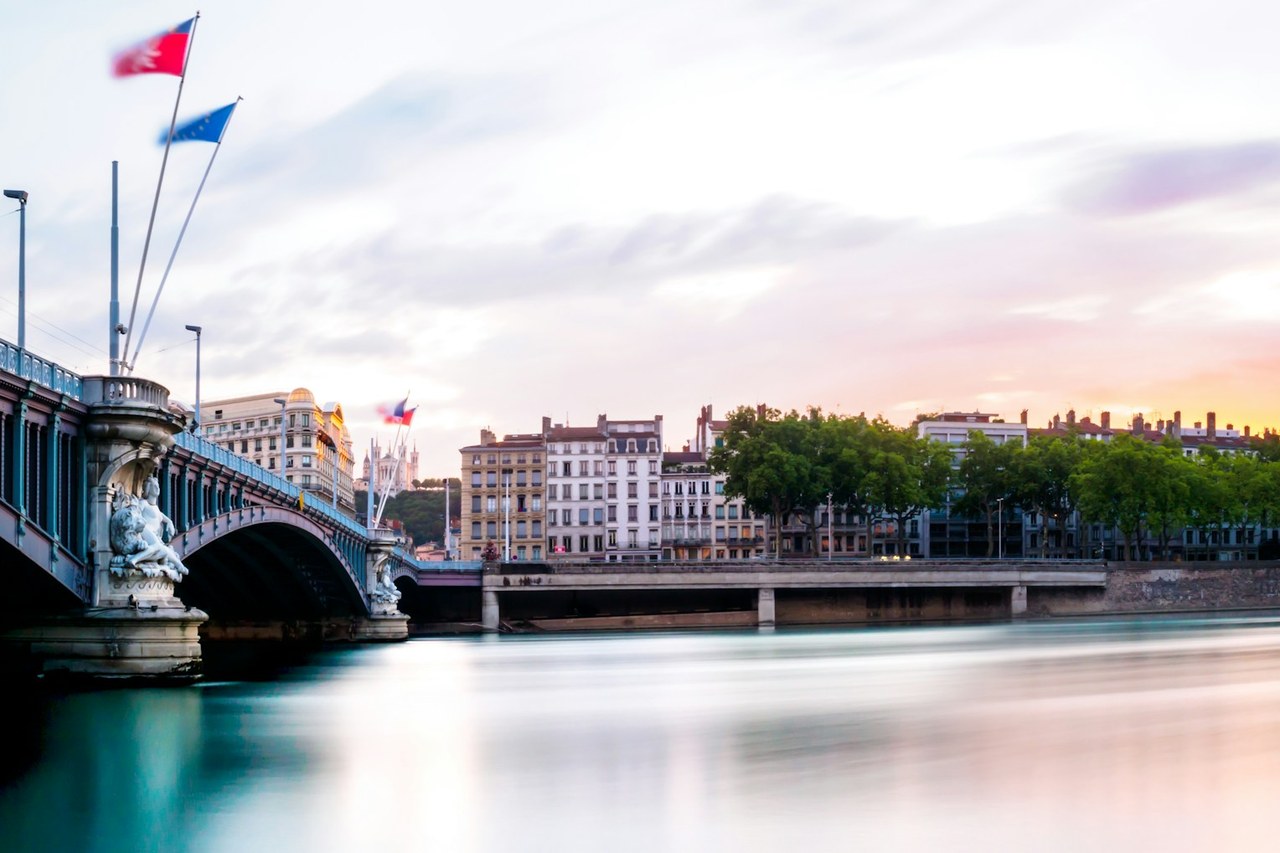
France's gastronomic capital: Renaissance alleyways, Michelin stars, and the best food market in Europe.
- Best time to visit: April-June and September-October
- Daily budget (budget traveller): $80 to $140 USD
- Ideal trip length: 3 to 4 days
Lyon is where France eats best. Two rivers, a hilltop basilica, and a medieval old town of secret covered passages (traboules) hide bistros, wine caves, and silk-weaving courtyards. The old town is a UNESCO World Heritage site, and the bouchon tradition is the heart of its food culture. Joy Plus maps the markets, the restaurants, and the viewpoints so you taste Lyon without the tourist-menu traps.
Lyon is the city French people mean when they say the food is better somewhere else. Two rivers, the Rhône and the Saône, squeeze a peninsula of grand squares and shopping streets, with a Renaissance old town on one bank and the silk-weavers' hill of Croix-Rousse on the other. Above it all sits the white wedding cake of Fourvière basilica. It is a city of 2,000 years, once the capital of Roman Gaul, and it wears that lightly. You can cross the centre on foot in 40 minutes, and you will rarely do it in under four hours because something edible keeps getting in the way.
The food is the point, and it runs on two tracks. There is the grand tradition: Paul Bocuse, the Mères lyonnaises who cooked for the city's silk barons, La Mère Brazier still holding two Michelin stars. And there is the bouchon, the smoky, checked-tablecloth bistro serving quenelles, andouillette, tablier de sapeur and a 46cl pot of Beaujolais for the price of a cocktail elsewhere. Lyon also has more traboules, covered passages that cut through buildings between streets, than any city in Europe. Silk workers used them to move bolts of cloth out of the rain. Many are open to walk through today, and finding them is the best free game in town.
A few honest warnings. Lyon shuts down on Sunday and Monday more than a tourist expects, and many bouchons close for two to three weeks in August. Good tables need booking three or four days out, and the famous ones weeks ahead. Half the bouchons on Rue Mercière are tourist traps with laminated menus. This guide points you to the real ones, to the right hour at Les Halles, to the traboules worth the detour, and to three day trips that earn the train fare.
How many days in Lyon?
For Lyon, we recommend 3 to 4 days. With more time, add a day trip to Pérouges.
| Trip length | What you'll see | Itinerary |
|---|---|---|
| 2 days | Bellecour and Terreaux; Vieux Lyon, traboules and Fourvière | Lyon in 2 days |
| 3 days · Recommended | Adds: Les Halles and Croix-Rousse | Lyon in 3 days |
| 4 days · Recommended | Adds: Beaujolais wine villages | Lyon in 4 days |
| 5 days | Adds: Confluence and Tête d'Or | Lyon in 5 days |
| 7 days | Adds: Annecy day trip; Saône market | Lyon in 7 days |
Lyon itinerary
Arrive, Bellecour and Terreaux
Morning: Land at LYS, Rhônexpress tram to Part-Dieu (30 min, about €19). Metro B to Saxe-Gambetta, change to D for Bellecour. Drop bags, coffee and a praline brioche at a local boulangerie.
Afternoon: Cross Place Bellecour (one of the largest open squares in Europe, find the Petit Prince statue). Walk Rue de la République to Place des Terreaux and the Bartholdi fountain. Musée des Beaux-Arts if it's not Tuesday (closed), about €8.
Evening: Dinner at Café Comptoir Abel (25 rue Guynemer), quenelles and gratin in a 1928 dining room. Book ahead. Walk the Saône quays afterward.
Vieux Lyon, traboules and Fourvière
Morning: Metro D to Vieux Lyon. Saint-Jean cathedral at opening, the astronomical clock chimes at noon, 2pm, 3pm and 4pm. Walk the Longue Traboule from 54 rue Saint-Jean to 27 rue du Bœuf, then the Tour Rose.
Afternoon: Lunch at Daniel et Denise (36 rue Tramassac), menu about €30-38. Funicular F2 up to Fourvière. Basilica (free), Roman theatres and the Lugdunum museum (€4, or €7 with a temporary exhibition, closed Mondays), then down through Jardin du Rosaire.
Evening: Dinner at Le Garet (7 rue du Garet), a proper local bouchon, closed weekends. Nightcap on Rue Saint-Jean's quieter end.
Les Halles and Croix-Rousse
Morning: Arrive at Les Halles Paul Bocuse (102 cours Lafayette) around 9am, open Tuesday to Saturday plus Sunday morning, closed Monday. Breakfast at the stalls, Mère Richard's Saint-Marcellin, Maison Sibilia's saucisson.
Afternoon: Standing lunch of oysters and white wine at the market. Metro C to Croix-Rousse. Mur des Canuts mural, Maison des Canuts (silk workshop, rue d'Ivry), Cour des Voraces staircase at 9 place Colbert.
Evening: Dinner at Daniel et Denise Croix-Rousse (156 rue de Cuire). Then rue Sainte-Catherine's bar strip, back down the hill.
Beaujolais wine villages
Morning: Train from Part-Dieu to Villefranche-sur-Saône (about 30 min, €8-10). Local bus or taxi to Oingt, one of France's most beautiful villages, golden stone, vineyards all round.
Afternoon: Lunch in Oingt, then a tasting at a small cave in the Pierres Dorées villages. Many close from noon to 2pm, so check hours. Last train back by early evening.
Evening: Dinner at Chez Hugon (12 rue Pizay), a tiny, much loved bouchon near Terreaux. Book days ahead.
Confluence and Tête d'Or
Morning: Tram T1 to Confluence. Musée des Confluences (86 quai Perrache), open Tuesday to Sunday, about €9-12. The glass-and-steel building is worth the walk alone.
Afternoon: Lunch at La Sucrière's riverside terrace. Grab a Vélo'v and ride the Berges du Rhône 5km north to Parc de la Tête d'Or (free, free zoo, rowing boats).
Evening: Dinner at Le Bouchon des Filles (20 rue Sergent Blandan), a lively, friendly spot near Croix-Rousse. Book.
Annecy day trip
Morning: First train from Part-Dieu to Annecy (about 2h, €25-35 booked ahead). Old Town canals, Palais de l'Isle, market stalls on Sunday, Tuesday and Friday.
Afternoon: Walk the lakeside to Jardins de l'Europe, swim at Plage d'Annecy-le-Vieux if it's warm, tartiflette lunch in the old town.
Evening: Train back. Late dinner at Brasserie Georges (30 cours de Verdun, Perrache), open since 1836, big plates, huge room.
Saône market and depart
Morning: Marché Saint-Antoine on the Saône quays, open Tuesday to Sunday mornings until about 1pm. Buy tarte aux pralines, cheeses, coussins de Lyon from Voisin.
Afternoon: Last stop at Bernachon (42 cours Franklin Roosevelt) for a Palet d'Or and chocolate. Pick up bags.
Evening: Metro to Part-Dieu, Rhônexpress to LYS. Allow 90 minutes, the tram runs about every 15 minutes.
Best neighbourhoods
- Vieux Lyon: The Renaissance old town: cobbled lanes, traboules, and the highest concentration of bouchons.
- Presqu'île: The peninsula between the rivers: Bellecour, the opera, and the best shopping streets.
- Croix-Rousse: The old silk-weavers' hill: village atmosphere, great views, and a buzzing local scene.
- Confluence: The modern district at the river meeting point: architecture, museums, and waterfront dining.
- Fourvière: The hill above the old town: the basilica, Roman theatres, and the best sunset panorama.
Must-do experiences
- Les Halles de Lyon Paul Bocuse: The city's legendary indoor food market: cheeses, wines, and stalls for a standing lunch.
- Traboules of Vieux Lyon: Secret Renaissance passageways between courtyards, some open to the public with a map.
- Basilica of Notre-Dame de Fourvière: The hilltop basilica with panoramic views over the city's red roofs and both rivers.
- Bouchon dinner: A traditional Lyonnais bistro: quenelles, andouillette, and cervelle de canut.
Hidden gems
- The Roman theatres on Fourvière, still used for the summer Nuits de Fourvière festival.
- A morning coffee and croissant at a local boulangerie on the slopes of Croix-Rousse.
- The Mur des Canuts, a giant trompe-l'oeil silk-weavers' mural in Croix-Rousse.
- A wine tasting in a cave à vin tucked under a traboule in Vieux Lyon.
Daily budget
- Accommodation: budget €28-45 / night (hostel dorm), mid-range €110-170 (boutique double), splurge €300+ (Cour des Loges, Villa Florentine). Presqu'île and Vieux Lyon cost the most. Croix-Rousse and Guillotière give better value, both on a metro line. Prices jump during Fête des Lumières.
- Food: budget €25-35 / day (boulangerie, Les Halles stalls, one lunch formule), mid-range €60-90 (bouchon dinner with a pot of wine), splurge €150-300 (La Mère Brazier, Paul Bocuse's Auberge du Pont de Collonges). The lunch formule (starter + main or main + dessert) is €19-26 at most bouchons, versus €30-38 for dinner menus. Lunch is the hack.
- Transport: budget About €7 / day (TCL 24h ticket), mid-range €10-15 (TCL plus a Vélo'v and one Uber), splurge €60+ (private driver to Beaujolais). Single tickets are about €2.20 and the funicular is included. Buy in the TCL app. Walk the Presqu'île and Vieux Lyon, use the metro for Croix-Rousse and Confluence.
- Activities: budget €10-20 / day (traboules, basilica, Tête d'Or, one museum), mid-range €35-60 (Lugdunum, Confluences, Beaujolais tasting), splurge €120-180 (market-to-table cooking class, private wine tour). Traboules, the basilica, the Roman theatres' grounds and Parc de la Tête d'Or are free. The Lyon City Card (about €29 for 24h) pays off only if you hit three or more museums.
- Drinks & nightlife: budget €10-15 (a pot of Beaujolais or a bar-counter pint), mid-range €25-40 (wine bar plus a Rue Sainte-Catherine crawl), splurge €80+ (rooftop cocktails and a late club at Le Sucre). A pot lyonnais is a 46cl bottle, €10-15 at a bouchon. Beer is €5-7 a half-pint on terraces, cheaper at the bar.
Where to stay
- Social hostel in Vieux Lyon / Fourvière slope (€28-45 / night): HI Lyon Vieux Lyon on Montée du Chemin Neuf, near the funicular and old town. Dorms and privates, a bar and easy mixing with other solo travellers.
- Boutique hotel in Vieux Lyon (€140-220 / night): Collège Hôtel on Place Saint-Paul, school-themed rooms, quiet square, steps from the Saône and the cathedral. Book early for Fête des Lumières.
- Apartment in Croix-Rousse (€70-115 / night): Old canut apartments with 4m ceilings and mezzanines, near the Croix-Rousse market and metro C. Real village feel, best value for 5+ nights.
- Splurge in Vieux Lyon / Fourvière (€300-500 / night): Cour des Loges in four Renaissance houses, or Villa Florentine on the Fourvière hill with a terrace over the city. Pool, spa and a Michelin-style breakfast.
What to eat
- Quenelles de brochet (pike dumplings) in Nantua sauce
- Salade lyonnaise with lardons and a poached egg
- Cervelle de canut (herbed fromage blanc)
- A praline tart from a local pâtisserie
Day trips
- Beaujolais (Oingt and the Pierres Dorées) (About 45 min by car, 1h15 by train and bus): Rolling vineyards, golden-stone villages like Oingt, and tastings at small family caves. Beaujolais Nouveau arrives the third Thursday of November. Train from Part-Dieu to Villefranche-sur-Saône, about €8-10 each way, then local bus or taxi. A rental car for the day from about €45 is simpler.
- Pérouges (35km, 25 min by train plus a short transfer): A walled medieval village with cobbled lanes and film-set streets. Try the galette de Pérouges, a sugar tart, at the Ostellerie du Vieux Pérouges. Train from Part-Dieu to Meximieux-Pérouges, about €7 each way, then a 2km walk or taxi (about €12).
- Annecy (About 2h by train): Canals, a lake the colour of glass and a postcard old town. Long as a day trip but worth it, tartiflette for lunch, lakeside swim in summer. Direct train from Part-Dieu, €25-35 each way booked ahead. FlixBus is as low as €8-15 each way.
When to visit
- Spring (April - June): 14-25°C, bright days, a few sharp showers. Crowds: Moderate, building toward June. The best window. Terraces open, Croix-Rousse is green, and Nuits Sonores (late May) and Nuits de Fourvière (June onward) start. Pack a light rain jacket.
- Summer (July - August): 28-36°C, heatwaves are common, hot and still in the centre. Crowds: Fewer locals, steady tourists. Hot, and many bouchons and small restaurants close for part of August. Fine for Roman theatre concerts and Saône-side evenings, rough for hill climbs at 3pm.
- Autumn (September - October): 12-24°C, golden light, occasional mist on the rivers. Crowds: Moderate, quiet by late October. The locals' pick. Harvest in the Beaujolais, game and mushrooms on bouchon menus, and the city is back to full speed after the August break.
- Winter (November - March): 1-10°C, foggy mornings, grey but dry-ish. Crowds: Low, except Fête des Lumières (around 8 December, four nights). Cheapest rooms and the coziest bouchons. Fête des Lumières is spectacular but doubles hotel prices and fills the old town, so book months ahead or avoid those four nights.
Entry rules for your passport
Visa rules for France depend on the passport you travel on. Check the official source before you book: European Commission: Schengen visa policy
Getting there
Lyon-Saint Exupéry airport (LYS) is 25km east of the centre. The Rhônexpress tram runs to Part-Dieu in about 30 minutes, every 15 minutes, for about €19 one way. An Uber or taxi to the centre is €55-70. There is also a TGV station at the airport, handy for onward trains. By rail, Paris Gare de Lyon to Lyon Part-Dieu takes about 2 hours, €25-100 depending on when you book, so reserve three months out. Marseille is 1h40, Geneva about 2 hours. Part-Dieu is the modern hub on metro B. Perrache is closer to Confluence and Presqu'île on metros A and tram T1. FlixBus is cheaper and slower.
Border checks: non-EU visitors (other than Swiss, Norwegian, Icelandic, Liechtenstein, Andorran, Monegasque, San Marinese and Vatican citizens, and holders of an EU residence permit or long-stay visa) are registered in the EU's Entry/Exit System (EES) instead of getting a passport stamp. On your first crossing, officers take your photo and/or fingerprints, so allow extra time at passport control. ETIAS, the planned travel authorisation, is not in operation yet, so don't pay any website for one.
Getting around
Lyon's centre is walkable and the Vieux Lyon-Fourvière funicular is part of the public transport network. The metro, trams, and buses are clean and efficient; a day pass covers everything including the funicular. Vélo'v bike share is great for riverside rides. Taxis and Uber are affordable for late nights.
Safety
Lyon is very safe, including for solo travellers at night in the old town and Presqu'île. Standard precautions: watch belongings in crowded markets and on public transport. The Croix-Rousse hill is steep; wear comfortable shoes. Summer heat can be intense in July and August.
Solo travel tips
- Eat at the counter, not the corner table: Bouchons will seat singles at the zinc counter or shared tables. Ask for 'une place au comptoir' and the chat with staff is free. Book even for one, and aim for the lunch formule.
- Look for the Gnafron sticker: The 'Authentique Bouchon Lyonnais' label shows the puppet Gnafron raising a glass. It's the city's real-bouchon marker and quick filter for tourist traps, especially on Rue Mercière.
- Hostel pick: HI Lyon Vieux Lyon: The Auberge de Jeunesse on Montée du Chemin Neuf sits on the Fourvière slope, steps from the funicular. Dorms, a bar and a mixed crowd of solos and school groups. Check recent reviews before you book.
- Respect the traboules: They are real residential passages. Walk quietly, close doors behind you, no flash photography on stairwells. Don't linger before 8am or after 7pm. Some are only open during daylight.
- Solo women travellers: Lyon is safe, including at night in Vieux Lyon, Presqu'île and Croix-Rousse. Take Uber or Bolt after the metro stops around midnight, and be alert around Perrache and Part-Dieu stations late, plus quieter quays after dark.
- Find your tribe at Les Halles and a cave: Join a Saturday market tour, a cooking class or a wine bar tasting. Counter seats and shared tables at Les Halles are the easiest way to end up trading recommendations with locals over oysters.
Cultural etiquette
- Say 'Bonjour' when you walk into any shop, café or restaurant, and 'Merci, au revoir' leaving. Skipping it is read as rude.
- Service is included (service compris). Round up or leave €1-3 at a sit-down meal, nothing at a café counter, and don't tip 15-20%.
- Lunch is 12-2pm, dinner 7:30-10pm. Kitchens close hard at 2pm and 10pm, and turning up at 3pm gets you a sandwich.
- Ask for 'une carafe d'eau' and tap water is free. Bread is free too. Don't ask for ketchup or substitutions at a bouchon.
- Andouillette (tripe sausage) is an acquired taste and rated AAAAA by its fan club. If you don't know it, ask before ordering.
- Traboules are people's front hallways. Keep voices down, shut doors, and don't block stairwells with tripods.
- Many shops and restaurants close Sunday and Monday. Check opening hours and book ahead, especially for lunch.
Frequently asked questions
How many days do you need in Lyon?
Three to four days covers the old town, the food market, a bouchon dinner, Fourvière, Croix-Rousse, and a day trip to the Beaujolais wine region.
Is Lyon good for solo travellers?
Yes. The bouchon counters are built for solo diners, the old town is safe and walkable, and the food market is a sociable place to graze alone.
When is the best time to visit Lyon?
Spring (April-June) and autumn (September-October) are ideal for walking and outdoor dining. December is magical for the Fête des Lumières light festival.
How much does a trip to Lyon cost?
Budget around $80 to $140 USD per person per day, covering a hostel bed or simple room, local transport, two or three meals out and an activity or entry ticket. You can go lower with markets and free walking tours, or far higher with boutique hotels and private guides.
What should I eat in Lyon?
Start with Quenelles de brochet (pike dumplings) in Nantua sauce, Salade lyonnaise with lardons and a poached egg, Cervelle de canut (herbed fromage blanc). Eating where locals queue is the simplest rule, and markets are usually the cheapest and best introduction to the food in Lyon.
How much does a solo trip to Lyon cost?
Budget on roughly $80-$140 USD per day in Lyon as a solo traveller. That covers a hostel bed or simple room, local food, getting around and a couple of paid sights. Mid-range comfort with private rooms, sit-down dinners and the odd tour runs closer to double, while shoestring travellers who cook and stick to street food can come in under it.
Is Lyon safe for solo female travellers?
Lyon is generally a comfortable place to travel solo, including for women, as long as you use normal city sense. Lyon is very safe, including for solo travellers at night in the old town and Presqu'île. Standard precautions: watch belongings in crowded markets and on public transport. The Croix-Rousse hill is steep; wear comfortable shoes. Summer heat can be intense in July and August.
How do you get around Lyon?
Lyon's centre is walkable and the Vieux Lyon-Fourvière funicular is part of the public transport network. The metro, trams, and buses are clean and efficient; a day pass covers everything including the funicular. Vélo'v bike share is great for riverside rides. Taxis and Uber are affordable for late nights.
More about Lyon
Tours and activities in Lyon | Lyon in 2 days | Lyon in 3 days | Lyon in 4 days | Lyon in 5 days | Lyon in 7 days
Can't decide? Compare Lyon with...
Joy Plus home | Destinations | Itineraries | Activities | Flights | Budget planner | Calendar | Map | Blog | Lifetime access