Destinations / Asia
Macau, China (SAR) travel guide
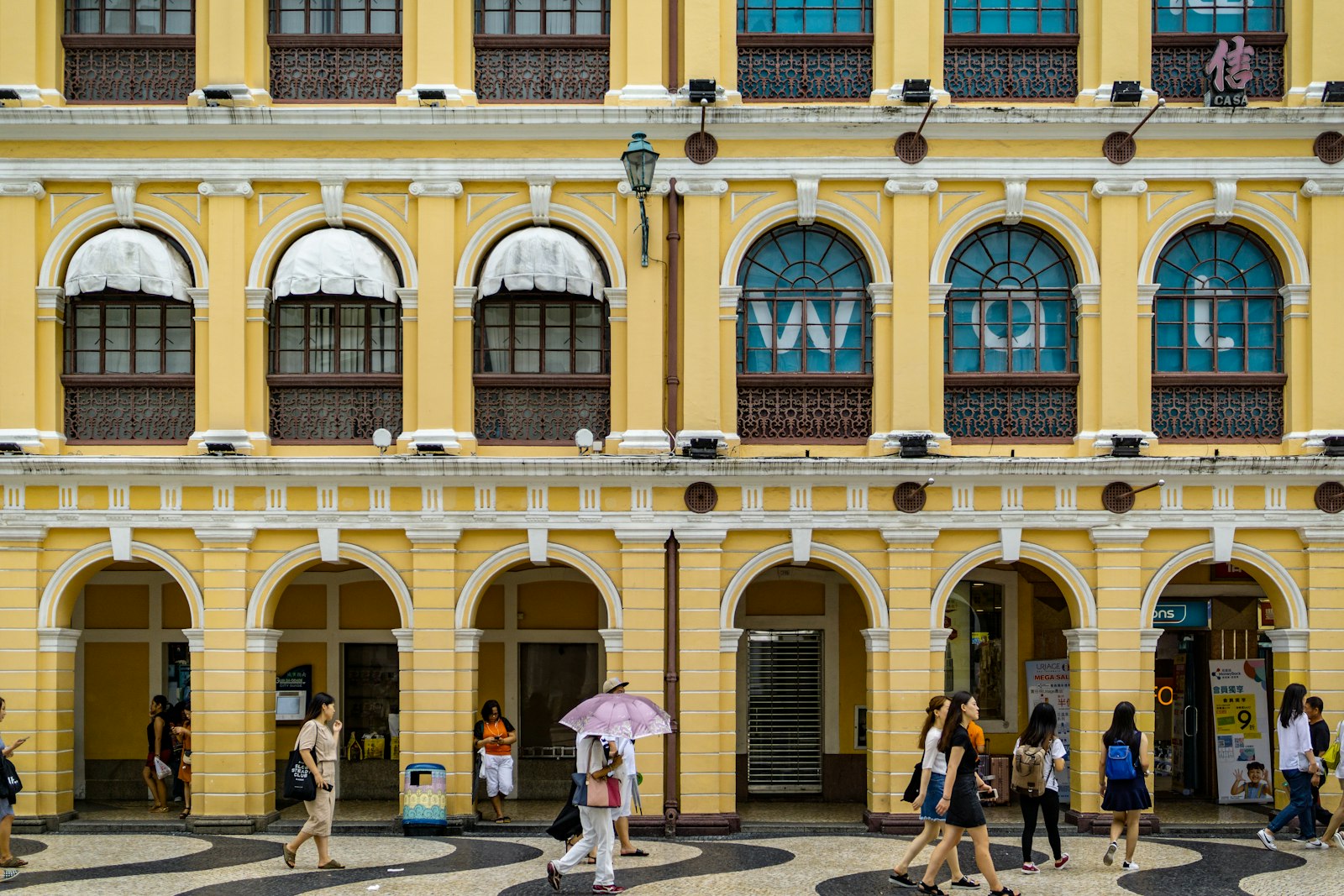
Asia's Las Vegas with a Portuguese soul, where colonial heritage meets glittering mega-casinos.
- Best time to visit: October-December
- Daily budget (budget traveller): $60 to $150 USD
- Ideal trip length: 1 to 2 days
Macau is a one-of-a-kind blend of East and West, a former Portuguese colony where 400-year-old churches, pastel mansions and cobbled squares sit beside the largest casino strip on earth. Now a Chinese Special Administrative Region, it pairs a UNESCO-listed historic centre with Cotai's neon mega-resorts, plus a celebrated fusion cuisine. Compact and easy to navigate, it makes a dazzling day or overnight trip from Hong Kong. Joy Plus balances Macau's two worlds, the atmospheric old town and the glittering Cotai strip, into one smooth plan.
Macau is 33 square kilometres of contradictions. You can stand on the wave-patterned limestone of Senado Square, where Portuguese craftsmen laid the pavement in a style copied from Lisbon, and twenty minutes later be riding a free shuttle past a half-scale Eiffel Tower. Portugal handed the territory back to China on 20 December 1999. Today it runs as a Special Administrative Region with its own currency (the pataca), its own border, and street signs in blue-and-white tile that read Rua da Felicidade and Travessa do Armazém Velho. The historic centre has been UNESCO-listed since 2005, with 22 historic buildings and eight squares. The casino floors beyond it earn several times what the Las Vegas Strip does.
Think of Macau as four places stitched together. The peninsula holds the old town, the temples, the forts and the best Macanese kitchens. Taipa is the village island, with pastel lanes, pork chop buns and Our Lady of Carmel church. Cotai is the reclaimed strip between Taipa and Coloane, where the Venetian, Parisian, Wynn Palace and Galaxy stand shoulder to shoulder, and where most of the free spectacle lives. Coloane is the green, sleepy south, with Lord Stow's original bakery, a black-sand beach and hiking trails. The food is the real hook. Macanese cooking grew out of 400 years of Portuguese, Goan, Malay and Cantonese kitchens swapping ideas, which gave the world African chicken, minchi and the egg tart's blistered, caramelised top.
Most people do this city badly. They take the 9am ferry from Hong Kong, hit the Ruins of St. Paul's with every other tour group, lose two hours to a casino, and leave on the 6pm boat. Stay at least one night, and ideally three. Be at the Ruins before 9:30am, use the free resort shuttles instead of taxis, eat lunch between 12 and 2pm when the set menus run, and keep Cotai for after dark, when the facades light up and the day-trippers have gone. The seven days below are generous, since the core of Macau fits into two. The extra days add Coloane's quiet side, a proper Taipa evening and one big day trip.
How many days in Macau?
For Macau, we recommend 1 to 2 days. With more time, add a day trip to Zhuhai or Guangzhou.
| Trip length | What you'll see | Itinerary |
|---|---|---|
| 2 days · Recommended | Senado Square and the Ruins; Barra, temples and the Macau Tower | Macau in 2 days |
| 3 days | Adds: Cotai, the glittering strip | Macau in 3 days |
| 4 days | Adds: Taipa Village at a slow pace | Macau in 4 days |
| 5 days | Adds: Hong Kong day trip | Macau in 5 days |
| 7 days | Adds: Coloane, tarts and the beach; Last tarts | Macau in 7 days |
Macau itinerary
Arrive, Senado Square and the Ruins
Morning: Take the 7:30am TurboJET from Hong Kong Macau Ferry Terminal (Sheung Wan) to the Outer Harbour, 60 minutes. Take bus 3 or 3A (MOP 6) to Senado Square and drop bags. Breakfast at Yee Shun Milk Company, ginger milk pudding for around MOP 30.
Afternoon: Walk Senado Square to St. Dominic's Church, then climb to the Ruins of St. Paul's (free crypt and Museum of Sacred Art behind the facade). Continue up to Monte Fort, open 7am to 7pm and free, then drop into the Macao Museum inside (MOP 15, closed Mondays).
Evening: Dinner at Fat Siu Lau on Rua da Felicidade, roast pigeon from around MOP 120. Walk back through Senado Square when the lights come on and hit the sack early.
Barra, temples and the Macau Tower
Morning: A-Ma Temple at 7am when the incense smoke is thick and the worshippers outnumber tourists. Walk down to Lilau Square and the Moorish Barracks, then Mandarin's House at 10am (free, closed Wednesdays).
Afternoon: Late lunch at A Lorcha on Rua do Almirante Sérgio (African chicken or bacalhau, closed Tuesdays) or Restaurante Litoral next door. Take a bus or taxi to the foot of Guia Hill (walking from Barra takes 40 to 50 minutes) and climb to Guia Fortress and the lighthouse by 4pm, a 15 minute walk up.
Evening: Macau Tower observation deck at sunset (about MOP 208, open until 8pm, skip the Skywalk unless you want the adrenaline). Dinner at Clube Militar de Macau, a Portuguese set menu around MOP 350, book ahead.
Cotai, the glittering strip
Morning: Free Venetian shuttle from the Outer Harbour or Border Gate to Cotai. Walk the Venetian's indoor canals and ceilings, add a gondola ride if you want the cheesy photo (extra charge). Cross to the Parisian and decide on the Eiffel Tower deck.
Afternoon: Wynn Palace SkyCab cable car (free) and the flower gardens in the lobby, then the Galaxy Macau Diamond lobby. Rest your feet over a MOP 80-120 food court lunch inside the Venetian.
Evening: Watch the free Wynn Performance Lake show as lights come on, then Studio City's Golden Reel Ferris wheel (around MOP 100-130). Take the free shuttle back, and remember casino floors forbid photos.
Taipa Village at a slow pace
Morning: Bus 26A or the LRT to Taipa Village. Pork chop bun at Tai Lei Loi Kei (around MOP 40) and almond cookies on Rua do Cunha. Walk the Taipa Houses Museum along the waterfront.
Afternoon: Our Lady of Carmel church, then the short Taipa Grande Trail climb for a view across to Cotai's towers. Mid-afternoon rest.
Evening: Dinner at Antonio on Rua dos Clérigos (Portuguese, around MOP 350 per head). Late drink at a Rua do Cunha bar.
Hong Kong day trip
Morning: 9am Cotai Water Jet from Taipa Ferry Terminal to Sheung Wan, 60 minutes. Dim sum and a walk through Man Mo Temple.
Afternoon: Peak Tram to Victoria Peak, then Central escalators and a Star Ferry across the harbour (HK$ 6 or so).
Evening: Symphony of Lights at 8pm from the Tsim Sha Tsui waterfront. Return ferry by 10pm, and check the last sailing since it varies by operator and weekday.
Coloane, tarts and the beach
Morning: Bus 25 or 26 from Taipa to Coloane Village. Lord Stow's Bakery from 7am for warm egg tarts (about MOP 12), then the Chapel of St. Francis Xavier and the tile-lined village square.
Afternoon: Bus to Hac Sa black-sand beach. Long lunch at Fernando, clams and chicken, around MOP 400 per head. It takes no bookings, so arrive by noon or expect to queue, especially at weekends.
Evening: Back to Taipa for a quiet dinner. Coffee at Café Nga Tim in Coloane if you stayed late, and keep the shuttle schedule in mind.
Slow morning, last tarts, depart
Morning: Wonton noodles at Wong Chi Kei on Senado Square (MOP 55-70). Pick up Koi Kei almond cookies for the flight, and a last egg tart at Margaret's Café e Nata if you have the room.
Afternoon: Last wander through Largo da Companhia de Jesus or Sam Kai Vui Kun temple. Collect your bags.
Evening: Bus AP1 (MOP 6) to Macau airport, or the free hotel shuttle to the Outer Harbour for the evening ferry to Hong Kong.
Best neighbourhoods
- Historic Centre (Senado Square): The UNESCO heart of pastel colonial buildings, churches and squares.
- Ruins of St. Paul's: The iconic church facade and the lively streets leading up to it.
- Cotai Strip: The reclaimed land packed with mega-resorts and casinos.
- Taipa Village: The charming old quarter of food stalls, temples and colourful lanes.
- Coloane: The quiet, green far south with beaches and the original Lord Stow's egg tarts.
Must-do experiences
- Visit the Ruins of St. Paul's: See Macau's most iconic landmark, a 17th-century church facade.
- Wander Senado Square: Stroll the wave-patterned plaza and colonial old town.
- Eat a Portuguese egg tart: Try the famous pastel de nata at Lord Stow's in Coloane.
- Explore the Cotai Strip: Marvel at the lavish themed mega-resorts and casinos.
- Climb Monte Fort: Take in old-town views from the historic hilltop fortress.
- Discover Taipa Village: Graze the food street and explore the pastel lanes.
Hidden gems
- The colourful Portuguese lanes and food street of Taipa Village.
- Quiet Coloane Village and the original Lord Stow's egg-tart bakery.
- The candy-coloured Taipa Houses Museum on the waterfront.
- Free, lavish attractions inside the Cotai resorts, indoor canals, shows and gardens.
Daily budget
- Accommodation: budget MOP 250-450 / night (hostel bed or small guesthouse room), mid-range MOP 900-1,500 (boutique or 4-star Cotai midweek), splurge MOP 2,500+ (Wynn Palace, Morpheus, Raffles at Galaxy). Rates swing wildly. Sunday to Thursday is up to 60% cheaper than Friday and Saturday. Hotels charge per room, so solo travellers pay the full price.
- Food: budget MOP 150-220 / day (tea restaurants, pork chop bun, egg tarts, wonton noodles), mid-range MOP 300-500 (one sit-down Macanese dinner), splurge MOP 1,200+ (Robuchon au Dôme or Jade Dragon, 3 Michelin stars). Egg tarts are about MOP 12, a pork chop bun about MOP 40, wonton noodles around MOP 55-70. Many Portuguese restaurants run lunch set menus at roughly half the dinner price.
- Transport: budget MOP 20-40 / day (buses at MOP 6, free resort shuttles), mid-range MOP 50-100 (LRT, buses, one taxi), splurge MOP 300+ (private car, or a private helicopter charter to Hong Kong). Buses want exact change, MOP 6 per ride on most routes, and give no change. Free casino shuttles cover the ferry terminals, border gates and Cotai. Taxis start at MOP 21 and add a surcharge for crossing to Coloane.
- Activities: budget MOP 0-80 (St. Paul's, Monte Fort, A-Ma, free resort shows, Macao Museum at MOP 15), mid-range MOP 100-300 (Venetian gondola, Eiffel Tower deck or Macau Tower observation deck), splurge MOP 1,000+ (Macau Tower Skywalk at MOP 788 or bungy at MOP 3,088, a stage show). Most churches, forts and temples are free. Government museums are free on the 15th of each month, so check the Cultural Affairs Bureau listings.
- Drinks & nightlife: budget MOP 30-60 (convenience store beer, tea restaurant iced lemon tea), mid-range MOP 100-200 (two cocktails in Taipa or a hotel bar), splurge MOP 500+ (Cotai hotel bar, a high-limit table session). Free drinks only come with gambling, so don't sit at a table just for a beer. Taipa Village bars are the most relaxed, and cocktails at casino-resort bars run MOP 120+.
Where to stay
- Social hostel in Historic Centre / Senado Square (MOP 250-450 / night): Macau has very few true hostels, so look at guesthouses and dorm-style rooms in old buildings around Avenida de Almeida Ribeiro and Rua da Felicidade. You are a five minute walk from the Ruins, the best noodle shops and the bus hub. Expect basic rooms, shared bathrooms and a lot of noise. Check recent reviews before booking.
- Boutique hotel in Barra (MOP 1,400-2,400 / night): Pousada de São Tiago sits inside a 17th-century fortress chapel at the harbour's southern tip. Quiet, atmospheric and a short walk from A-Ma Temple and the best Macanese restaurants. Book midweek for the best rates.
- Apartment in Taipa Village (MOP 600-1,000 / night): Serviced apartments and aparthotels around Rua do Regedor give you a kitchenette, a washing machine and the village's food street downstairs. Macau restricts private short-term rentals, so book through established aparthotel operators. Best value for 4+ nights.
- Splurge in Cotai Strip (MOP 2,500-6,000+ / night): Wynn Palace, Morpheus at City of Dreams or Raffles at Galaxy Macau. Huge rooms, pool decks, free show access and a walkable cluster of restaurants. Midweek rates drop sharply, weekends do not.
What to eat
- Portuguese egg tarts (pastel de nata)
- Macanese minchi, a comforting spiced minced-meat dish
- Portuguese-style African chicken
- Pork chop bun from Taipa Village
Day trips
- Hong Kong (60 min by ferry): Dim sum, the Peak Tram, the Star Ferry and the harbour light show. It works as a long day trip but is better with an overnight. Start early to beat the commuter crowds. Cotai Water Jet from Taipa Ferry Terminal or TurboJET from the Outer Harbour, around HK$ 192-212 each way by day, HK$ 242 at night. The HZMB shuttle bus is cheaper (about HK$ 65) but slower with two border checks.
- Zhuhai (10 min across the border): Mainland China next door. Gongbei markets, the seafront promenade at Lovers' Road and cheaper food and massages. Check visa rules before you go, as many nationalities need a visa or an eligible visa-free exemption. Bus 3 or a free casino shuttle to the Border Gate (Portas do Cerco), then walk across to Gongbei Port. Bring your passport and allow 30-60 minutes for queues.
- Guangzhou (1 hr by intercity rail): A real Chinese megacity with Cantonese food, the Canton Tower and Shamian Island's colonial streets. Long but doable with an early start, and again subject to China visa rules. Cross to Zhuhai at Gongbei, then take the intercity train to Guangzhou South, roughly RMB 70 each way. Book through 12306 or Trip.com.
When to visit
- Spring (March - May): 18-27°C, humid, fog and drizzle common in March and April. Crowds: Moderate, busy around Easter and Labour Day (1 May). Pleasant but damp. Mist can flatten the Cotai skyline views, so pack a light rain jacket. Hotel rates are decent midweek.
- Summer (June - September): 27-33°C, heavy humidity, afternoon downpours, typhoon risk in August and September. Crowds: Moderate, mainland family tourists peak July and August. Sticky and hot, but the resorts are freezing inside and hotel deals are good. A signal 8 typhoon halts buses and ferries for a day, so keep flexibility. The fireworks contest runs September to October.
- Autumn (October - December): 18-28°C, drier, clearer skies, low humidity. Crowds: Very heavy 1-7 October (Golden Week) and Grand Prix weekend in mid-November, calmer in December. The best window overall. Walkable weather, the Macau Grand Prix and the Light Festival from December. Avoid Golden Week completely, since rooms triple in price. Aim for late November or early December.
- Winter (January - February): 10-18°C, dry, grey days, cold wind off the harbour. Crowds: Low, except Chinese New Year week (6 February in 2027), which is chaos. Locals' pick. Cheapest rooms of the year outside the New Year week, uncrowded old town and egg tarts that taste better in the cold. Bring a jacket, since hotels and casinos are over-air-conditioned in every season.
Entry rules for your passport
Visa rules for Macau depend on the passport you travel on. Check the official source before you book: Macao Public Security Police Force
Getting there
Most visitors arrive from Hong Kong by ferry. TurboJET (Hong Kong Macau Ferry Terminal in Sheung Wan, MTR Sheung Wan exit D) and Cotai Water Jet (also from Sheung Wan) run to Macau's Outer Harbour or Taipa Ferry Terminal roughly every 30 to 60 minutes through the day (TurboJET mostly to the Outer Harbour, Cotai Water Jet to Taipa) and take about 60 minutes, around HK$ 192-212 economy by day (weekend fares at the top end) and HK$ 242 at night. Air passengers at Hong Kong International Airport can take the SkyPier ferry to Macau without clearing Hong Kong immigration. The Hong Kong-Zhuhai-Macau Bridge shuttle bus (Hong Kong Port to Macau Port) takes roughly 45 minutes plus two immigration checks and costs HK$ 65 or so. Macau International Airport (MFM) is on Taipa and has regional flights from Taipei, Seoul, Bangkok, Manila and Singapore. Bus AP1 to the Border Gate or Taipa Ferry Terminal is MOP 6, and a taxi to Cotai is about MOP 50-70, to the peninsula MOP 80-100. Most casino resorts also run free shuttles from the airport and ferry terminals. Bring your passport at every crossing.
Getting around
Macau is compact and one of its best secrets is the free shuttle-bus network run by the casinos, which loop between the ferry terminals, airport, border gates and the major resorts, you can hop on even if you're not gambling, making them a great way to get across town for nothing. Public buses are cheap and cover everywhere else, payable by MacauPass card or contactless. The historic centre is best explored on foot. The Light Rapid Transit (LRT) connects Taipa, Cotai and the ferry terminal, has crossed to Barra, on the peninsula near the old town, since 2023, and has had a branch to Hengqin since 2024.
Safety
Macau is extremely safe, with very low violent crime and a strong security presence, especially in and around the casinos, it's excellent for solo travellers, including women, day and night. The main concerns are petty pickpocketing in crowded tourist spots and at the ferry terminals, and the obvious risk of gambling losses, set a firm budget if you play. Watch for loan sharks and avoid unofficial money-changers near casinos. Traffic is busy, so cross carefully, and bring your passport, as Macau is a separate immigration zone from mainland China and Hong Kong.
Solo travel tips
- Share the table: Tea restaurants and noodle shops seat strangers together when busy. Sit down, nod, order by pointing. You will end up trading dish recommendations with a local in minutes.
- Free shuttles are your solo transport: The casino shuttles loop between the ferry terminals, border gates and every major resort. You do not need to gamble, and nobody checks. Learn which resort runs the shuttle to your next stop and save MOP 60-100 a day in taxis.
- Base yourself in Taipa Village: It is walkable, has real restaurants, and sits between the peninsula and Cotai. Mid-range rooms run MOP 600-1,000 and it feels like a neighbourhood, not a theme park.
- Set a loss limit before you enter a casino: You must be 21 and carry your passport. Decide the amount you can afford to lose, say MOP 200, take only that in cash, and leave your card in the hotel. Slots are quieter and cheaper than tables.
- Solo female travellers: Macau is one of Asia's safest places for women alone, day and night, thanks to dense CCTV and casino security. Buses run until around midnight, so take a metered taxi afterwards. Uber does not operate here. Watch bags at ferry terminals and on crowded Senado Square.
- Find your tribe on a food tour: Small-group Macanese food tours, 3 to 4 hours at roughly MOP 500-800, are the easiest way to meet other travellers and to learn what you are eating. Or hang out at Lord Stow's courtyard in Coloane, where the egg-tart queue does the introductions.
Cultural etiquette
- Macau is not mainland China in daily life. Locals speak Cantonese first and Mandarin second, while English and Portuguese are far less common. Say m goi (thanks for service) and do jeh (thanks for a gift) and you will get warmer service.
- Tipping is mostly built in. Restaurants add a 10% service charge, so leave nothing more. Round up taxis, and give MOP 10-20 to hotel porters.
- Casinos are strict. You must be 21 or over, carry your passport, and not photograph or film gaming floors. Staff will stop you. Do not touch the cards at baccarat tables, and ask before photographing dealers.
- At temples like A-Ma, keep quiet near incense areas, dress modestly, step over thresholds rather than on them, and do not point your feet at altars.
- Never stick chopsticks upright in a rice bowl. It looks like funeral incense. Lay them across the bowl or on the rest.
- Queue properly for egg tarts and bakeries, and do not skip the line. Do share tables in tea restaurants when it is busy, since that is normal.
- Most shops open late morning and many restaurants close mid-afternoon. Lunch is 12 to 2pm, dinner 6:30 to 9:30pm. Show up in between and you may find the kitchen shut.
Frequently asked questions
How many days do you need in Macau?
One full day is enough to see the highlights, the historic centre with the Ruins of St. Paul's and Senado Square, plus a taste of the Cotai casino strip. An overnight stay, however, lets you experience the resorts after dark, explore charming Taipa and Coloane villages, and savour the food scene without rushing. Many people visit Macau as a day trip from Hong Kong, just an hour away by ferry, but staying a night reveals a more relaxed, atmospheric side once the day-trippers leave.
Do you need a visa to visit Macau?
Most nationalities, including citizens of the US, UK, EU, Canada and Australia, can enter Macau visa-free for 30 to 180 days, depending on nationality, as it's a Special Administrative Region with its own immigration policy separate from mainland China. This means you don't need a Chinese visa to visit Macau itself. However, always carry your passport, as you'll clear immigration when arriving from Hong Kong or the mainland. Check your specific nationality's allowance before travelling, and ensure your passport has sufficient validity.
How do you get to Macau from Hong Kong?
The most popular way is the high-speed ferry, which takes about an hour from the Hong Kong Macau Ferry Terminal in Sheung Wan to Macau's Outer Harbour or Taipa terminals, with regular departures through the day. Alternatively, you can cross the Hong Kong-Zhuhai-Macau Bridge by shuttle bus, a scenic 40-minute drive over one of the world's longest sea bridges. Both options require passing through immigration, so bring your passport. Scheduled helicopter flights between the two cities ended in September 2026; only private charters remain.
Is Macau just about casinos?
Not at all. While Macau is the world's biggest gambling hub and the Cotai strip's mega-resorts are spectacular, the city has a rich non-gaming side. Its UNESCO-listed historic centre showcases 400 years of Portuguese colonial heritage, from the Ruins of St. Paul's to cobbled squares and baroque churches. There's also a celebrated Macanese-Portuguese fusion food scene, charming old villages in Taipa and Coloane, hilltop forts, museums, gardens and free resort attractions, making it a great destination even for non-gamblers.
When is the best time to visit Macau?
October to December is the best time, offering pleasant, cooler temperatures, lower humidity and clear skies, ideal for walking the historic centre. Spring (March to May) is mild but can be humid and foggy. Summer (June to September) is hot, very humid and falls within typhoon season, which can disrupt ferries. Winter is cool and comfortable. Try to avoid major Chinese holidays like Golden Week and Chinese New Year, when Macau is swamped with mainland visitors and prices spike sharply.
Is Macau expensive?
It can be, but it's flexible. Luxury resort hotels, fine dining and casino spending can make Macau pricey, but budget travellers can keep costs down. The free casino shuttle buses provide transport at no cost, many of the best attractions, the historic centre, churches and squares, are free to explore, and street food like egg tarts and pork chop buns is cheap and delicious. Staying in Taipa rather than on the strip and eating at local spots makes a Macau trip surprisingly affordable.
What food is Macau famous for?
Macau is renowned for its Macanese cuisine, a unique fusion of Portuguese and Chinese flavours developed over centuries. Signature dishes include Portuguese-style African chicken, minchi (spiced minced meat with potatoes), and Portuguese egg tarts (pastel de nata), best enjoyed at Lord Stow's in Coloane. Don't miss the famous pork chop bun, almond cookies and jerky from Taipa Village's food street. The city is also a UNESCO Creative City of Gastronomy, with everything from Michelin-starred restaurants to humble, beloved street stalls.
Tours and activities in Macau | Macau in 2 days | Macau in 3 days | Macau in 4 days | Macau in 5 days | Macau in 7 days
Can't decide? Compare Macau with...
Joy Plus home | Destinations | Itineraries | Activities | Flights | Budget planner | Calendar | Map | Blog | Lifetime access