Destinations / Europe
Makarska, Croatia travel guide
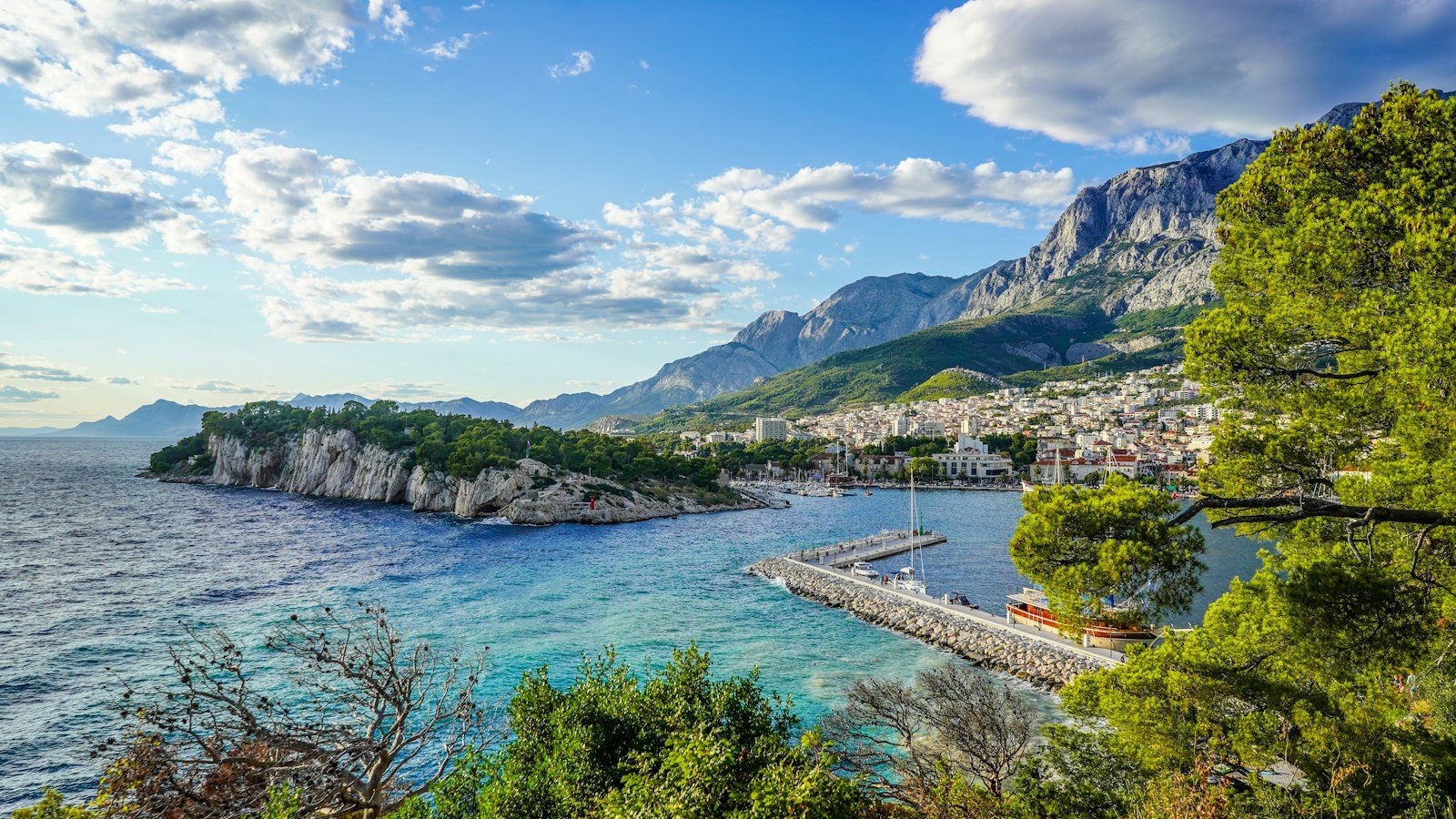
A lively Dalmatian beach town in a horseshoe bay below the bare limestone wall of Biokovo. You swim off long pebble beaches, walk pine paths to quieter coves and ride a winding mountain road up to a glass skywalk high above the sea.
- Best time to visit: Late May to June and September
- Daily budget (budget traveller): $65 to $215 USD
- Ideal trip length: 4 to 7 days
Makarska is the main town on the Makarska Riviera, a 60km strip of pebble beaches and pine woods between Split and the Neretva delta. It is about 1 hour 15 minutes from Split by bus, and the setting is the reason to come. The town curls around a sheltered harbour, the Sveti Petar peninsula closes the bay on one side and the grey cliffs of Biokovo rise almost straight up behind the rooftops. The old centre is small, with a stone square around St Mark's Church, a palm-lined Riva and a pedestrian street called Kalalarga. Most people come for the long town beach and the clear water, but the mountain is just as good. You can hike up to Vošac, drive or take a tour to the Biokovo Skywalk, or follow forest paths to coves like Nugal. Makarska gets very busy in July and August, when it is one of the busiest party towns on the Dalmatian coast. Still, cheap buses along the riviera, free beaches, a ferry to Brač and plenty of private rooms make it a good base for a solo traveller who wants sea and mountain in one trip.
Makarska is a town of about 13,000 people on a horseshoe bay in central Dalmatia, and it is the capital of the riviera that takes its name. Behind it, the Biokovo range rises to 1,762m at Sveti Jure, one of the highest peaks in Croatia, close enough that the mountain seems to lean over the town. For centuries Makarska was a small trading port under Venetian and then Ottoman influence. Today it lives mostly from tourism, and its population swells many times over in summer. Day visitors usually see the Riva and the beach. Stay a few nights and you get the better side of it: an empty Kačić Square at 7am, a swim off Sveti Petar before breakfast, a walk in the cool on the mountain and grilled fish by the harbour at night. It is not the cheapest part of Croatia in August, but free beaches, cheap buses and bakery food keep costs down.
Getting here is easy. Buses from Split take about 1 hour 15 minutes, with frequent departures and fares from around €8, and Split airport is roughly 1.5 hours away by road. Buses from Dubrovnik take about three hours and cross Bosnia at Neum. The Jadrolinija ferry links Makarska with Sumartin on Brač all year. Once you are here, walk. The centre and the beach are flat and close together. Base yourself near the Riva for restaurants and nightlife, by the beach for easy swims or on the Osejava side for quieter nights. Use local buses for Brela and Tučepi, and a tour or a hire car for Biokovo.
Timing makes a big difference. Late May, June and September bring warm sea, open mountain roads and space on the beach. July and August are hot and crowded, with loud nights, and rooms cost the most. From mid-autumn the town empties, many places close and the Biokovo road shuts for the winter, usually from late November. Makarska is safe, many people speak good English and German, and summer evenings are lively rather than calm. If you want clubs and beach bars, July is your month. If you want a swim, a mountain walk and a glass of Plavac Mali on the Riva, come in June or September.
Makarska itinerary
Arrive and find your feet
Morning: Take a morning bus from Split (about 1 hour 15 minutes). Drop your bag and walk down to the Riva for a coffee.
Afternoon: Wander Kačić Square, St Mark's Church and the lanes around Kalalarga, then have a first swim at the town beach.
Evening: Walk out to Sveti Petar for sunset over Brač, then eat grilled squid by the harbour.
Biokovo Skywalk
Morning: Take an early tour up the Biokovo road to the Skywalk (park entry €10-15), while the air is clearer and cooler. Many tours carry on to Sveti Jure.
Afternoon: Back in town, visit the Malacological Museum in the Franciscan monastery (€6, cash) before it closes, then swim off the rocks on Sveti Petar.
Evening: Dinner at a konoba in the old town, such as Kalalarga. Order peka a day ahead if you want it.
Osejava and Nugal
Morning: Walk east past the monastery into Osejava forest park, then follow the cliff path to Nugal (30 to 40 minutes). Bring water and snacks.
Afternoon: Swim and laze under the cliffs, then walk on to Tučepi and take a local bus back, or walk back the way you came.
Evening: An easy night on the Riva with a glass of Pošip, or try the clubs if it is high summer.
Hike to Vošac
Morning: Start at dawn from the upper town and climb through the stone hamlet of Makar to Vošac (1,421m), allowing about three to four hours. Carry at least two litres of water.
Afternoon: Rest at the top, then come down via the Kotišina botanical garden for the views. Cool off with a long swim.
Evening: Bakery pastries, a market picnic or a cheap pizza. You will sleep well.
Brela and Punta Rata
Morning: Take a local bus to Brela (about 15 to 25 minutes) and walk down to Punta Rata, the pine-backed beach with the famous rock offshore.
Afternoon: Follow the seafront path south through the pines towards Baška Voda, stopping to swim in empty coves along the way.
Evening: Bus back from Baška Voda, then eat Makarana torta on the Riva.
A day on Brač
Morning: Take the ferry from the Riva to Sumartin (about 50 minutes, €4-6.50), or in summer an excursion boat to Bol and Zlatni Rat.
Afternoon: In Sumartin, swim and walk the small harbour. In Bol, walk the pine promenade to Zlatni Rat and swim. Check your return boat before you go.
Evening: Back across the channel at sunset. Have a farewell fish dinner, asking the price per kilo first.
Slow morning and depart
Morning: Have a last early swim at the town beach, then visit the Vepric shrine or the market on the square.
Afternoon: Catch an afternoon bus to Split or Dubrovnik. Check times the day before and sit on the right-hand side for sea views going north.
Evening: Arrive in Split or Dubrovnik, or carry on to your next stop.
Best neighbourhoods
- Old town and the Riva: The heart of Makarska, set around Kačić Square and St Mark's Church, with the harbourfront Riva and the Kalalarga shopping street a few steps away. Cafés, restaurants, the market and the Brač ferry are all within a short walk. Summer nights are loud until late, so look for a room on a back lane if you sleep lightly.
- Donja Luka and the town beach: The long strip of hotels, apartments and beach bars that runs northwest from the centre along the main pebble beach. You can be in the water five minutes after waking up, and the old town is a 10 to 20 minute walk along the promenade. It is practical and sunny, but the beach is packed in high summer.
- Osejava and the east side: The quieter end of town past the Franciscan monastery, where the pine woods of Osejava forest park begin. The coast path to Nugal beach starts here, and the rooms are a little calmer than on the Riva. You are still only about 10 minutes on foot from Kačić Square.
- Upper town above the main road: The residential streets climbing the slope above the coast road, full of family-run apartments and rooms to rent. Prices are lower and many places have balcony views over the bay, but you will walk up steep streets after every swim. It suits you if you are hiking on Biokovo, as the trails to Makar and Kotišina start close by.
- Tučepi: A smaller resort about 4km southeast, with a long beach, big hotels and a seafront promenade. Local buses link it with Makarska in about 15 minutes, and you can also walk via Nugal. It suits you if you want a calmer base with easy access to Makarska's nightlife.
Must-do experiences
- Stand on the Biokovo Skywalk: The glass horseshoe platform hangs out over a cliff at 1,228m, with views down to Makarska and across to Brač and Hvar. Park entry is €10 in April, May and October and €15 from June to September, and timed tickets are sold online. Without a car, take a tour from town.
- Swim from the town beach: The main beach runs for about 2km northwest from the centre, with fine pebbles, pine shade at the back and clear water. It is free, and sunbeds cost extra. Go early in the morning or after 5pm in summer, when the families have gone home for lunch or dinner.
- Walk out to Sveti Petar: Follow the harbour to the wooded peninsula that closes the bay. A path loops through the pines to a small lighthouse and the little chapel of St Peter. Rocky spots along the way are good for swimming, and the sunsets over Brač are the best in town.
- Linger on Kačić Square: The main square is set around St Mark's Church and a statue of the 18th-century Franciscan poet Andrija Kačić Miošić. The morning market sets up nearby. Have a coffee on the square, then wander the old lanes behind it towards the Riva.
- Take the forest path to Nugal: From the east end of town, walk through Osejava forest park and along the cliff path to Nugal, a pebble cove under steep rock walls. It takes about 30 to 40 minutes, and the last part is steep and loose. Nugal is popular with naturists, and there are no facilities, so bring water.
- Hike up to Vošac: Climb from town through the stone village of Makar to the summit of Vošac at 1,421m, where a small mountain hut and a cross look straight down on Makarska. Allow about three to four hours up. Start at dawn in summer, carry plenty of water and use proper shoes.
- See the shell collection: The Malacological Museum in the Franciscan monastery holds more than 3,000 shells from the Adriatic and the tropics. Adult entry is €6, paid in cash at the door. Opening hours change with the season and it is closed on Sundays, so check before you go.
Hidden gems
- The Kotišina botanical garden on the slope above town, a small, free garden of Biokovo plants set around an old fortress ruin with wide views over the bay
- The Vepric shrine just north of the centre, a quiet open-air sanctuary modelled on Lourdes, with a grotto and paths shaded by pines
- The tiny pebble coves along the Osejava path between the monastery and Nugal, which are often empty early in the morning
- The stone hamlet of Makar on the hiking trail above town, with old houses, dry-stone walls and a view down over the rooftops
- The Sveti Petar lighthouse at dawn, when the bay is still and the first light catches the cliffs of Biokovo
Daily budget
- Accommodation: budget €25-45 / night (hostel dorm), mid-range €80-150 (private apartment or 3-star hotel), splurge €220+ (Hotel Park or a sea-view suite). Prices roughly double in July and August. A small per-night tourist tax is added. Single rooms are scarce in summer, so book June to September early.
- Food: budget €18-28 / day (bakery breakfast, burek, market picnic), mid-range €35-60 (café lunch and a konoba dinner), splurge €80+ (whole fish by the kilo, peka, wine). Restaurant mains cost roughly €14-28 and a pizza about €10-14. Whole fish is priced by the kilo and peka needs ordering ahead. Prices are rough guides.
- Transport: budget €0-8 / day (walking, local buses), mid-range €10-25 (buses plus the Brač ferry), splurge €45-70 (Biokovo Skywalk tour with pick-up). The Split bus starts at about €8 one way. Local buses to Tučepi or Brela cost about €3-5. The Brač ferry is about €4-6.50 for foot passengers.
- Activities: budget €0-10 / day (beaches, forest paths, shell museum at €6), mid-range €10-30 (Biokovo park ticket at €10-15, boat trips), splurge €50+ (Cetina rafting, island boat tours). Biokovo entry is €10 in April, May and October and €15 from June to September, with timed tickets sold online. The shell museum takes cash only.
- Drinks & nightlife: budget €5-10 (a beer or glass of wine on the Riva), mid-range €15-30 (a few drinks at a beach bar), splurge €50+ (cocktails and club entry). A coffee costs about €2-3 and a beer €4-6. Clubs charge entry on big nights in July and August, and drinks there cost more.
Where to stay
- Social hostel in Upper town, near the bus station (€25-45 / night (dorm)): Hostel Makarska is the town's main budget option, with dorms and a social feel. It is handy for buses and a short walk downhill to the Riva and the beach.
- Boutique hotel in Riva (€110-220 / night): Hotel Biokovo stands on the harbourfront promenade, with the old town, the ferry and the restaurants on the doorstep. Sea-facing rooms look across the bay to Sveti Petar.
- Apartment in Donja Luka and the upper town (€70-140 / night): Private apartments and rooms are everywhere and give you a kitchen and often a balcony. Those near the beach are flat and handy, while those higher up are cheaper but steep.
- Splurge in Osejava (€220-450+ / night): Hotel Park sits at the quiet east end of the beach by the Osejava woods, with a pool, spa and sea views. The old town is about 10 minutes away on foot.
What to eat
- Peka: lamb, veal or octopus slow-cooked with potatoes under an iron bell in the embers. Most konobas need you to order it a few hours or a day ahead
- Grilled fish and black risotto: bream, sea bass or squid at harbour restaurants and konobas such as Kalalarga. Whole fish is sold by the kilo, so ask the price first
- Pašticada: beef slow-braised in wine and prunes, served with gnocchi, the classic Dalmatian Sunday dish
- Makarana torta: the town's own rich almond cake with a hint of maraschino and orange, sold in cake shops and some restaurants
- Burek and soparnik: flaky pastries and the thin chard pie from the Split hinterland, the cheapest breakfast or lunch from a bakery
- Plavac Mali and Pošip: the local red and white wines from the Dalmatian islands and coast, usually a few euros a glass
Day trips
- Brela and Punta Rata (About 14km north of Makarska, 15 to 25 minutes by bus): Pine woods running right down to white pebble beaches, with Punta Rata and the little pine-topped Kamen Brela rock the best known. A seafront path links Brela with Baška Voda. Take a Promet Makarska or other coast bus north towards Split for about €4-5 and get off at Brela. Walk down to the sea, then return from Brela or Baška Voda. Check the last bus back.
- Brač island (About 50 minutes by ferry to Sumartin, longer by excursion boat to Bol): Croatia's third-largest island. Sumartin is a quiet stone village, while Bol has Zlatni Rat, the famous shifting spit of pebbles reaching into the channel. Take the Jadrolinija ferry from the Riva to Sumartin for about €4-6.50 each way. For Bol and Zlatni Rat, an excursion boat from Makarska is easier in summer, as buses across the island are limited.
- Omiš and the Cetina canyon (About 37km north, roughly 45 minutes by bus): A small town at the mouth of the Cetina river, wedged between cliffs and once a pirate base. You can climb to the Mirabela or Starigrad fortresses or join a rafting or canyoning trip upstream. Take any coast bus towards Split and get off at Omiš. Rafting and canyoning tours often pick up from the Makarska Riviera in summer. Book a day or two ahead.
When to visit
- Spring (April - May): 16-24°C, mild and fresh, sea cool until late May. Crowds: Low, busier at Easter and on May weekends. Great for hiking Biokovo before the heat, and the Skywalk ticket is cheaper. Swimming is for the brave until late May, and some beach bars are still closed.
- Early summer (June): 25-29°C, sunny, sea around 22-24°C. Crowds: Moderate, rising towards the end of the month. Probably the best month. Long evenings, warm water and room on the beach, with every boat and tour running.
- High summer (July - August): 30-34°C, hot and dry, sea up to about 26°C. Crowds: Very busy, especially in August. Best for nightlife and warm water, but the beach is packed, rooms cost the most and Biokovo is very hot at midday. Book ahead and do everything early or late.
- Autumn and winter (September - March): September 22-27°C, then cooling to 8-14°C in winter, with bura and jugo winds. Crowds: Moderate in September, very quiet from October. September is the local favourite, with warm sea and calmer streets. Winter is cheap and peaceful, but many places close and the mountain road shuts.
Entry rules for your passport
Visa rules for Croatia depend on the passport you travel on. Check the official source before you book: European Commission: Schengen visa policy
Getting there
Makarska has no airport. The nearest is Split, about 85km away and roughly 1.5 hours by road. Dubrovnik is about three hours south. From Split airport, take the shuttle bus into Split bus station and change, or book a shared or private transfer. Buses run frequently between Split and Makarska. FlixBus, Arriva and Promet Makarska are among the operators, and the trip takes about 1 hour 10 minutes to 1 hour 30 minutes, with fares from around €8. In summer, book a day ahead. Buses from Dubrovnik take about three hours and cross Bosnia and Herzegovina at Neum, so keep your passport with you. Direct buses also run from Zagreb, which is a long day. By sea, Jadrolinija's car ferry links Sumartin on Brač with the Riva all year. It takes about 50 minutes to an hour, with around three sailings a day in winter and up to seven in summer. If you drive, leave the A1 motorway at Zagvozd and go through the Sveti Ilija tunnel to the coast. The A1 is a toll road, and central Makarska has little parking in summer.
Border checks: non-EU visitors (other than Swiss, Norwegian, Icelandic, Liechtenstein, Andorran, Monegasque, San Marinese and Vatican citizens, and holders of an EU residence permit or long-stay visa) are registered in the EU's Entry/Exit System (EES) instead of getting a passport stamp. On your first crossing, officers take your photo and/or fingerprints, so allow extra time at passport control. ETIAS, the planned travel authorisation, is not in operation yet, so don't pay any website for one.
Getting around
Makarska's centre is compact and flat along the water, so you will walk almost everywhere. It takes about 15 to 20 minutes from the far end of the town beach to Kačić Square. The upper town is steep. Promet Makarska and other companies run regular buses along the coast road to Tučepi, Podgora, Baška Voda and Brela from the bus station on the main road above the centre. Short hops cost about €3 to €5, and you usually buy your ticket at the station or from the driver. Evening services are thin, so check the last bus back. The Brač ferry leaves from the harbour on the Riva. Biokovo Nature Park is hard to reach without a car. Most solo travellers book a tour from town, which includes the timed park ticket. In summer, parking in central Makarska is scarce and mostly paid, so leave a hire car at your accommodation if you can. Taxis wait near the bus station and the Riva, but agree the fare first or use an app such as Uber or Bolt.
Safety
Makarska is safe, and violent crime against visitors is rare. In July and August it is a party town, so watch your drink, keep your bag closed on the crowded Riva and in clubs, and keep an eye on your things on the beach. The bigger risks are heat, sun and the mountain. Biokovo is bare limestone with little shade and no water on most trails, and the weather can change fast at the top. Start early, carry two litres of water, tell someone your route and turn back if the bura wind picks up. On the coast, watch for sea urchins on rocky entries and keep clear of boat lanes near the harbour. The path to Nugal is steep and slippery. Tap water is safe to drink. The EU emergency number is 112. EU travellers should carry an EHIC and UK travellers a GHIC, and everyone else needs travel insurance with medical cover.
Solo travel tips
- Choose your side of town: Stay near the Riva for restaurants and nightlife, by the beach for easy swims and around Osejava for quiet nights. In July and August, the difference in noise is big.
- Go up Biokovo early: Morning slots on the Skywalk have clearer views, cooler air and fewer cars on the road. Book your timed ticket or tour a few days ahead in summer.
- Carry water on the mountain: Biokovo is limestone and scrub with almost no shade or springs. Take two litres, a hat and a snack, even for short walks, and start before the heat.
- Eat cheaply by the market: Bakery burek, fruit from the market and a picnic on Sveti Petar keep food costs low. Save the per-kilo fish and the peka for one good dinner.
- Safety for solo travellers: The main risks are heat, sun, steep paths and late nights. Watch your drink in clubs, stay on the lit promenade after dark and tell someone your route before a hike.
- Meet people on a tour or at the hostel: Skywalk tours, boat trips and Cetina rafting days are easy ways to meet other travellers. The hostel, the beach bars and the Riva at sunset are good places to start a conversation.
Cultural etiquette
- Greet people with 'dobar dan' (good day) and say 'hvala' (thank you). A few words of Croatian go a long way.
- Cover up when you leave the beach. Walking through town, shops or restaurants in swimwear is frowned upon, and several Dalmatian towns fine people for it.
- Dress modestly in St Mark's, the Franciscan monastery and the Vepric shrine, with covered shoulders, and keep quiet if a service is on.
- Keep the noise down in residential streets late at night. Many apartments sit right above the lanes, and locals are tired of rowdy groups.
- Ask the price of whole fish per kilo before you order, and order peka well ahead.
- Rounding up or leaving about 10% for good restaurant service is appreciated, though not compulsory.
- Take your rubbish with you from the beaches and mountain paths, and never light fires on Biokovo, as wildfires are a real risk in summer.
Frequently asked questions
How do I get to Makarska and from the bus station to my room?
Most people come from Split by bus. Departures are frequent, the journey takes about 1 hour 10 minutes to 1 hour 30 minutes and fares start at around €8 one way. Book a day ahead in July and August. Makarska's bus station is on the main road above the centre, and the Riva is about 10 minutes downhill on foot. Rooms in the upper town can be a steep walk with luggage, so ask your host for exact directions or a pick-up.
How many days do I need in Makarska?
Three nights covers the town, the beach, Sveti Petar, Nugal and a Biokovo Skywalk trip. Four to five nights lets you add the hike to Vošac, a bus to Brela and the ferry to Brač. A week works if you want slow beach days or extra trips to Omiš and the Cetina canyon.
When is the best time to visit Makarska?
Late May, June and September are the best months. The sea is warm, the Biokovo road is open and the crowds are lighter. July and August are hot, crowded and loud at night, and rooms cost the most. From November to March the town is very quiet. Many restaurants and bars close, and the park road usually shuts for winter.
How do I visit the Biokovo Skywalk without a car?
Book a tour from Makarska. Minibus, tuk-tuk and jeep tours run from spring to autumn and usually include the park ticket and pick-up in town, with prices starting at roughly €45 to €70. If you drive yourself, buy a timed ticket online in advance, because the park limits how many vehicles can enter. The road is narrow, steep and has a lot of hairpins, so allow about 45 to 60 minutes each way.
Can I take the ferry to Brač from Makarska?
Yes. Jadrolinija's car ferry runs from the Riva to Sumartin on the eastern tip of Brač all year. The crossing takes about 50 minutes to an hour, and foot passengers pay roughly €4 to €6.50 depending on the season. There are about three sailings a day in winter and up to seven in summer. Sumartin is a quiet village, and buses across the island are limited. If you want Zlatni Rat beach at Bol, a summer excursion boat from Makarska is usually easier.
Where can I swim in Makarska?
The long pebble town beach northwest of the centre is free and has showers, bars and sunbeds to rent. For rocks and pines, walk out to Sveti Petar. For a wilder cove, take the forest path to Nugal, which is popular with naturists. Brela's beaches, including Punta Rata, are a short bus ride north, and Tučepi is a short bus ride south.
Is Makarska safe for solo female travellers?
Yes. The Riva and the town beach are busy and well lit until late in summer, and locals are used to visitors. The usual party-town care applies. Watch your drink, arrange how you will get home after a night out and use the lit promenade rather than the forest paths after dark. Do not hike Biokovo alone without telling someone your route.
What entry rules apply to Croatia in 2026?
Croatia is in the EU, the eurozone and the Schengen area. Many non-EU visitors, including those from the UK, US, Canada and Australia, can stay visa-free for up to 90 days in any 180-day period across Schengen. The EU's Entry/Exit System has been fully running since 10 April 2026 and records non-EU travellers' fingerprints and photos at the external border. ETIAS was expected in late 2026, but no start date had been announced by late October, so check before you travel. The coast bus to Dubrovnik crosses Bosnia and Herzegovina at Neum, so keep your passport handy.
Tours and activities in Makarska | Makarska in 2 days | Makarska in 3 days | Makarska in 4 days | Makarska in 5 days | Makarska in 7 days
Can't decide? Compare Makarska with...
Joy Plus home | Destinations | Itineraries | Activities | Flights | Budget planner | Calendar | Map | Blog | Lifetime access