Destinations / Europe
Marseille, France travel guide
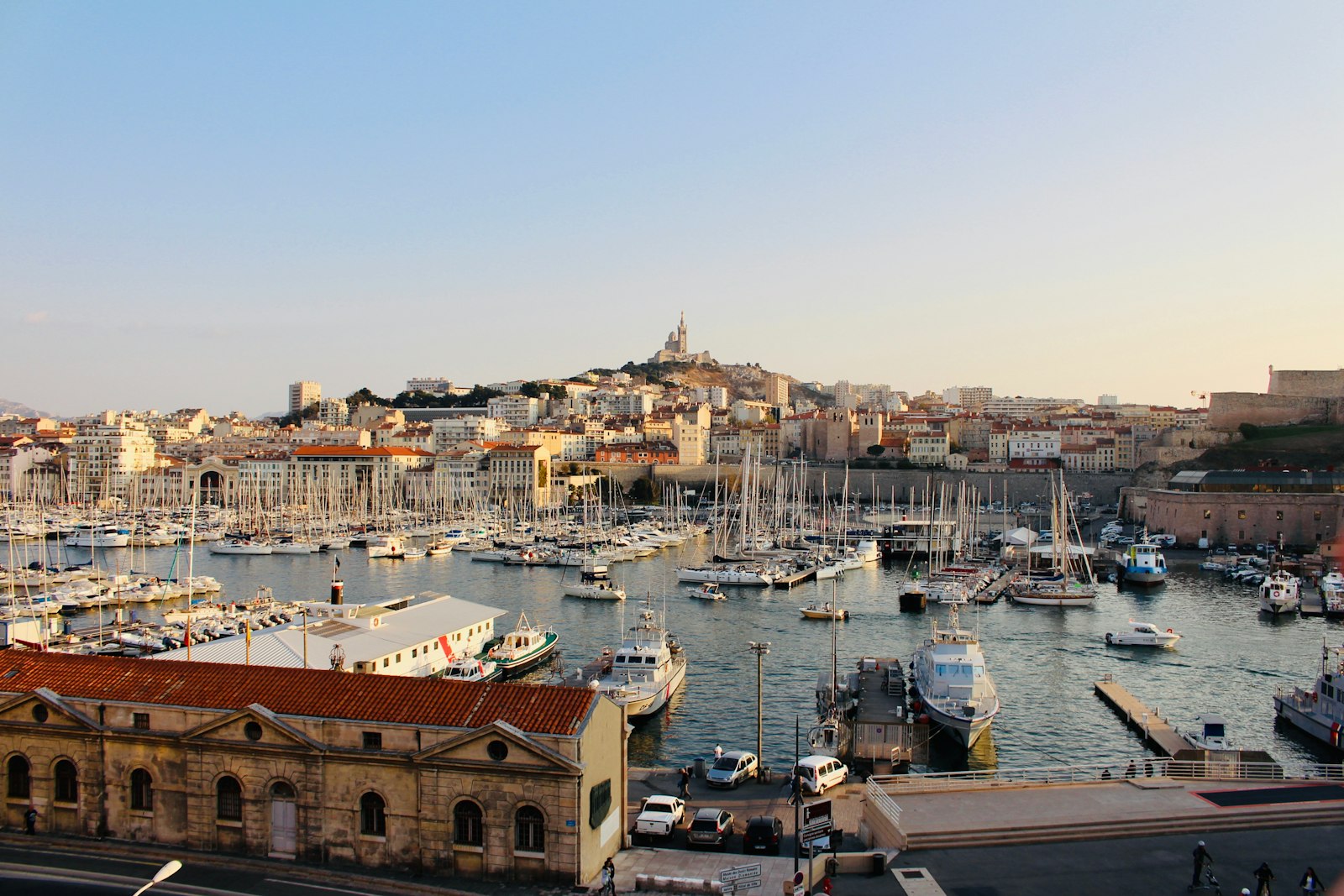
France's gritty, sun-soaked port city: a buzzing old harbour, turquoise calanques and bold Mediterranean flavours.
- Best time to visit: May-June and September-October
- Daily budget (budget traveller): $90 to $150 USD
- Ideal trip length: 2 to 3 days
Marseille is France's oldest city and its most exhilarating, a sun-bleached Mediterranean port with a multicultural soul, a buzzing old harbour and the staggering turquoise inlets of the Calanques on its doorstep. Rougher and realer than the Riviera glamour up the coast, it rewards travellers who lean into its energy. Joy Plus shapes the Vieux-Port, the panoramic basilica and the calanques into an easy, sun-soaked itinerary.
Marseille does not do polite. It has been a working port for 2,600 years, and it still smells like one: diesel, fried fish, coffee, sun cream, and a faint note of pastis at 11am. The Vieux-Port is a rectangle of masts with a mirrored canopy over the quay, and within ten minutes of arriving you will have been shouted at by a fishmonger, offered a boat ride, and nearly run over by a scooter. That is the sales pitch. People who want a tidy Riviera postcard go to Nice. People who want a city with a pulse come here.
The geography is the real trick. Limestone cliffs drop straight into water so blue it looks edited, and you can reach them on a city bus. You can swim off a rock at Malmousque before lunch, climb to Notre-Dame de la Garde for the view over every rooftop, and still be eating panisses on the Vieux-Port by sunset. The old quarter of Le Panier is steep and painted, Cours Julien is plastered in street art, and the MuCEM sits on the sea like a lace box beside a 17th-century fort. The city is hilly, the sun is relentless, and the mistral can blow your hat to Corsica.
Be realistic about the grit. Marseille has a rougher reputation than other French cities, and some of it is earned: bag-snatching around Saint-Charles station and the Vieux-Port, litter in the lower Canebière, a few northern districts you will never need. But the visitor core is lively, walkable and mostly relaxed, and the food is some of the best value in France, from €5 falafel in Noailles to a bouillabaisse that actually justifies its price. Come for three days, stay five if you want the calanques properly, and bring comfortable shoes.
How many days in Marseille?
For Marseille, we recommend 2 to 3 days. With more time, add a day trip to Aix-en-Provence.
| Trip length | What you'll see | Itinerary |
|---|---|---|
| 2 days · Recommended | Vieux-Port and Le Panier; Notre-Dame de la Garde, Corniche and Vallon des Auffes | Marseille in 2 days |
| 3 days · Recommended | Adds: MuCEM, the Docks and Cours Julien | Marseille in 3 days |
| 4 days | Adds: Calanques from the Marseille side | Marseille in 4 days |
| 5 days | Adds: Cassis and Port-Pin | Marseille in 5 days |
| 7 days | Adds: Château d'If and the Frioul islands; Corbusier | Marseille in 7 days |
Marseille itinerary
Arrive, Vieux-Port and Le Panier
Morning: Land at MRS, take the navette to Saint-Charles (30 to 50 min, €15), then metro M1 to Vieux-Port. Drop bags, coffee on the Quai du Port at La Caravelle, and keep your bag zipped on the station steps.
Afternoon: Walk the quay, then climb into Le Panier via Montée des Accoules. Poke around the Vieille Charité courtyard (free) and the painted lanes. Buy navettes at Four des Navettes on Rue Sainte.
Evening: Dinner at Le Café des Épices or a cash-only pizza at Chez Etienne (arrive 7pm, no bookings). One pastis on Place de Lenche, then bed.
Notre-Dame de la Garde, Corniche and Vallon des Auffes
Morning: Bus 60 from the Vieux-Port up to Notre-Dame de la Garde, free and open from 7am. Go early for the best light and the best view in the city.
Afternoon: Walk down to Malmousque and swim off the rocks. Bring water shoes. Then bus 83 along Corniche Kennedy to the Vallon des Auffes.
Evening: Dinner at Chez Fonfon (book the bouillabaisse, ~€70-85) or lighter at Chez Jeannot. Watch the sun drop behind the bridge.
MuCEM, the Docks and Cours Julien
Morning: MuCEM at opening (closed Tuesdays), cross the footbridge to Fort Saint-Jean, then wander to the Cathédrale de la Major.
Afternoon: Walk the Docks and Villa Méditerranée, then metro M2 to Cours Julien and its stairs of murals. Mint tea or coffee on a terrace.
Evening: Dinner at a Cours Julien bistro, then a gig or drinks at Le Molotov or the bars on La Plaine. Cours Julien is lively until 1am.
Calanques from the Marseille side
Morning: Metro M2 to Rond-Point du Prado, then bus 19 to Madrague de Montredon and bus 20 on to Callelongue (45 min to an hour). Check the fire-risk map the night before.
Afternoon: Hike toward Marseilleveyre, swim from the rocks, and eat a picnic from Noailles market. Carry 2 litres of water per person, there is no shade.
Evening: Bus back, shower, then late dinner at Chez Madie Les Galinettes on the Vieux-Port.
Cassis and Port-Pin
Morning: TER from Saint-Charles to Cassis (20 min, about €6). Shuttle to the village, or walk 35 minutes.
Afternoon: Take the boat from Cassis harbour past three calanques (45 min, about €24) or hike 25 minutes to Port-Miou. Lunch on grilled fish and a glass of local white.
Evening: Train back, falafel at Chez Yassine in Noailles, early night.
Château d'If and the Frioul islands
Morning: Take the RTM Frioul If boat from the Vieux-Port (Quai des Belges) to Château d'If (20 min, €26 return covering both If and Frioul). Entry is around €7.
Afternoon: Continue to Frioul, hike to a quiet cove, swim, and picnic. Check the return boat times before you wander.
Evening: Back on the port, sunset drinks, then dinner at Miramar if you missed bouillabaisse, or pizza near the Opéra.
Corbusier and depart
Morning: Metro to Rond-Point du Prado and a 15-minute walk to Le Corbusier's Cité Radieuse. Visit the rooftop terrace and the little shops. Coffee in the lobby.
Afternoon: Last stroll in Noailles market for olives, spices and sweets, then collect bags.
Evening: Metro to Saint-Charles and the airport shuttle, every 20 minutes through the evening.
Best neighbourhoods
- Vieux-Port: The historic old harbour at the city's heart, lined with cafés, the morning fish market and boats to the islands.
- Le Panier: The oldest quarter, a maze of colourful, art-filled lanes climbing above the port.
- La Joliette & Les Docks: The regenerated waterfront with the MuCEM museum, the Cathédrale de la Major and design shops.
- Cours Julien: The bohemian, street-art-covered district full of bars, music venues and independent shops.
Must-do experiences
- Notre-Dame de la Garde: Climb to the hilltop basilica for the best panoramic view over the whole city and sea.
- Calanques National Park: Hike or take a boat to the dazzling turquoise limestone inlets between Marseille and Cassis.
- Vieux-Port & fish market: Soak up the harbour, watch the morning catch sold quayside and ride the ferry across the port.
- MuCEM & Le Panier: Tour the striking waterfront museum, then get lost in the old town's painted lanes.
Hidden gems
- A boat trip to the Château d'If, the island prison of The Count of Monte Cristo.
- Sunset drinks at the Vallon des Auffes, a tiny postcard fishing cove tucked under a bridge.
- The street art and indie bars of the Cours Julien neighbourhood after dark.
- Swimming off the rocks at the Anse de Malmousque between the centre and the calanques.
Daily budget
- Accommodation: budget €30-50 / night (hostel dorm), mid-range €110-180 (boutique double), splurge €320+ (InterContinental Hôtel-Dieu, Le Petit Nice). Prices jump on summer weekends and OM home match days. Vieux-Port rooms book out 4 to 6 weeks ahead in July.
- Food: budget €25-35 / day (panisses, falafel, boulangerie), mid-range €55-85 (lunch formule + bistro dinner), splurge €130+ (bouillabaisse at Chez Fonfon, L'Epuisette, or Le Petit Nice at €300+). Lunch formules are €16-24. A proper bouillabaisse is €65-90 per person and should be pre-ordered a day ahead.
- Transport: budget €6.70 / day (RTM 24h pass), mid-range €12-20 (pass + TER to Cassis), splurge €60+ (Uber to Sormiou, private boat hire). Metro, tram, bus and the Vieux-Port ferry all share one RTM ticket. A single ride is €2 (€2.50 bought on the bus), a 24h pass €6.70 and 10 trips €16.
- Activities: budget €10-15 / day (Notre-Dame de la Garde free, Fort Saint-Jean free, one small museum), mid-range €35-60 (MuCEM €11, calanques boat ~€30, Château d'If), splurge €120+ (guided sea kayak in the calanques, private sailing). MuCEM is free on the first Sunday of the month and closed Tuesdays. The Vieille Charité museums close Mondays.
- Drinks & nightlife: budget €10-14 (pastis at a bar, beer at Cours Julien), mid-range €30-45 (Cours Julien and La Plaine crawl), splurge €80+ (hotel rooftop cocktails + late club). A pastis is €3.50-5, a pint €4.50 at Cours Julien and €6-7 on the Vieux-Port. Cocktails run €11-15.
Where to stay
- Social hostel in Vieux-Port / Noailles (€28-50 / night): Vertigo Hostel, mixed dorms and privates, a short walk to the harbour and an easy metro ride to the rest of the city. Best for solo travellers and first-timers.
- Boutique hotel in Vieux-Port (€110-230 / night): La Résidence du Vieux-Port, a 1950s harbourfront hotel with balconies over the water. Hôtel Hermes is a cheaper option nearby with a rooftop terrace.
- Apartment in Le Panier or Cours Julien (€70-120 / night): Real streets, shuttered windows and neighbours who say bonjour. Perfect for stays of 4+ nights with a kitchen for market food.
- Splurge in Le Panier or Corniche Kennedy (€320-650 / night): InterContinental Hôtel-Dieu, an 18th-century hospital turned grand hotel overlooking the port, or Le Petit Nice on the Corniche for sea-edge luxury and three Michelin stars.
What to eat
- Bouillabaisse, the city's iconic saffron fish stew
- Panisses, crisp chickpea fritters sold by the seafront
- Navettes, orange-blossom boat-shaped biscuits
- Fresh oysters and rosé on the Vieux-Port
Day trips
- Cassis and Calanque d'En-Vau (20 min by train): A pastel fishing harbour with white wine, plus the best-known calanques. Take the boat past En-Vau, Port-Pin and Port-Miou, or hike 25 minutes to Port-Miou from the village. TER from Saint-Charles, about €6 each way, then a shuttle bus or 35-minute walk from the station. Cassis boat tours are about €24 for 45 minutes.
- Aix-en-Provence (35 to 45 min by bus): Plane-tree boulevards, fountains and Cézanne's studio. Visit the Atelier Cézanne, stroll Cours Mirabeau, and shop the morning market on Place Richelme. Express bus from the Saint-Charles bus station, every 10 to 15 minutes, about €6 each way. TER trains also run, about 40 minutes.
- Château d'If and the Frioul islands (20 min by boat): The island prison from The Count of Monte Cristo, plus rocky coves on Frioul for swimming and picnics. Go early to avoid the tour boats. RTM Frioul If boat from the Vieux-Port (Quai des Belges), €17.70 return to one island or €26 return to both. Château d'If entry is about €7.
When to visit
- Spring (April - June): 15-26°C, mostly sunny, windy spells, sea 14-19°C. Crowds: Building, very manageable. The best all-round window. Perfect hiking weather in the calanques, terraces open, and no heat wall. May and early June are the sweet spot.
- Summer (July - August): 28-34°C, dry, bright, sea 22-24°C. Crowds: Heavy, cruise ships and French holidaymakers. Best for swimming, worst for hiking. Calanques trails often shut for fire risk, and Sugiton needs a free online reservation. Start at 7am or don't start.
- Autumn (September - October): 20-28°C, warm sea, occasional violent storms in October. Crowds: Moderate, dropping after mid-September. The local favourite. The sea is warmest in September, the beaches thin out, and the light turns gold. Check the forecast before big hikes.
- Winter (November - March): 5-14°C, dry and sunny, mistral can bite. Crowds: Low. Cheapest rooms, empty calanques, and over 2,800 hours of sun a year. Pack a windbreaker and book bouillabaisse without worrying about it.
Entry rules for your passport
Visa rules for France depend on the passport you travel on. Check the official source before you book: European Commission: Schengen visa policy
Getting there
Marseille Provence Airport (MRS) is 27km northwest in Marignane. The navette (line A1, formerly bus 91) runs to Saint-Charles station in about 30 to 50 minutes, every 10 to 20 minutes, for €15 single or €26 return. Alternatively take the free shuttle to Vitrolles Aéroport station, then a TER train to Saint-Charles for about €5. A taxi is roughly €60 to €65 and Uber or Bolt about €40 to €55. By train, the TGV from Paris Gare de Lyon takes about 3h15 to 3h30 (from €30 in advance), Lyon is 1h40, and Nice about 2h30. FlixBus uses the Saint-Charles bus station. Saint-Charles itself has big steps, lots of luggage and lots of pickpockets, so be alert on arrival.
Border checks: non-EU visitors (other than Swiss, Norwegian, Icelandic, Liechtenstein, Andorran, Monegasque, San Marinese and Vatican citizens, and holders of an EU residence permit or long-stay visa) are registered in the EU's Entry/Exit System (EES) instead of getting a passport stamp. On your first crossing, officers take your photo and/or fingerprints, so allow extra time at passport control. ETIAS, the planned travel authorisation, is not in operation yet, so don't pay any website for one.
Getting around
Marseille has a metro, tram and extensive bus network (RTM) on one ticket, plus a handy ferry across the Vieux-Port. The centre is walkable but very hilly, so save your legs with the metro between districts. Buses and boats reach the calanques, and trains link Cassis and Aix-en-Provence in well under an hour. A day pass is good value.
Safety
Marseille has a tougher reputation than most French cities, but the tourist areas are generally fine and it's manageable for solo travellers who stay alert. Pickpocketing and bag-snatching are the main risks around the Vieux-Port, on the metro and near the main station (Saint-Charles). Avoid the northern quarters, keep valuables hidden, and use normal city caution at night.
Solo travel tips
- Drink at the bar, not the table: Order a pastis or a glass of rosé at the counter of a neighbourhood bar. Say bonjour to the barman, and you will be in a conversation about OM or the mistral within minutes.
- Hostel pick: Vertigo Hostel: A short walk from the Vieux-Port and metro, with mixed dorms and a sociable common room. Good for meeting people heading to the calanques.
- Watch your bag at Saint-Charles: The station steps, the metro platforms and the Vieux-Port are the main bag-snatch zones. Wear your bag in front, never leave a phone on a café table, and be sharp when you arrive laden.
- Solo hiking rules in the calanques: Tell your hostel where you are going, carry 2 litres of water, and check the fire-risk map the evening before. Never hike alone on a hot afternoon, there is almost no shade and phone signal is patchy.
- Solo female travellers: Marseille is manageable alone, but expect catcalling on the Canebière and around Saint-Charles. Late at night, avoid walking through Belsunce and Noailles alone, share Bolt or Uber rides, and stay on the lit stretches of the Vieux-Port and Cours Julien.
- Find your people on the water: Sea kayak tours in the calanques and day boats to Cassis are full of solo travellers. The Vieux-Port terraces at 6pm are another easy place to strike up a conversation.
Cultural etiquette
- Say bonjour before any request, in a shop, a bar or a bakery. Skipping it reads as rude, not efficient.
- Service is included (service compris), so tipping is optional. Round up a euro or two at cafés and leave €3-5 for a good sit-down dinner.
- Bouillabaisse is a ritual. Order a day ahead, expect the broth first and the fish served separately, and do not ask for it a la carte at 9pm.
- Pastis is poured with water on the side. Add the water yourself, five parts to one, and never ask for it with Coke.
- Do not wear a Paris Saint-Germain shirt anywhere near the Vélodrome. Olympique de Marseille is a religion.
- Lunch is 12-2pm, dinner 7:30-10pm. Many restaurants close between services and on Sundays or Mondays, so check before walking up a hill.
- Topless sunbathing is normal on city beaches, but swimming from rocks needs shoes, and please take your litter with you.
Frequently asked questions
How many days do you need in Marseille?
Two days covers the Vieux-Port, Notre-Dame de la Garde, Le Panier and the MuCEM. A third day is ideal for the Calanques National Park or a trip to Cassis or Aix-en-Provence, both a short train ride away.
Is Marseille safe for solo travellers?
Marseille is rougher than most French cities but the tourist areas are generally safe for solo travellers who stay alert. The main risks are pickpocketing and bag-snatching around the Vieux-Port, the metro and the main station. Avoid the northern quarters and use normal city caution at night.
When is the best time to visit Marseille?
May to June and September to October bring warm, sunny weather without the peak-summer crowds and heat. July and August are hot and busy but ideal for swimming, while winter is mild, quiet and good value, though the mistral wind can be chilly.
Is Marseille worth visiting?
Yes. Marseille is gritty, multicultural and full of energy, with a buzzing old port, hilltop views, superb seafood and the spectacular Calanques on its doorstep. It's more authentic and affordable than the polished Riviera resorts further along the coast.
How do I get to the Calanques from Marseille?
You can reach the Calanques by boat tour from the Vieux-Port, by bus to the trailheads such as Luminy or Callelongue, or by train to Cassis at the eastern end. Hiking between the inlets is popular, but check fire-risk closures in summer and bring plenty of water. On summer days the Sugiton calanque also requires a free reservation, booked online in advance.
Is Marseille expensive to visit?
Marseille is more affordable than Paris or the Riviera. Panisses, street food and house wine are cheap, transport is inexpensive, and many highlights like the basilica and Le Panier are free. A proper bouillabaisse, however, is a pricey sit-down splurge.
How do I get from Marseille Airport to the city?
A shuttle bus runs from Marseille Provence Airport to the central Saint-Charles station in about 30 to 50 minutes, or you can take a train via Vitrolles station. Taxis and ride-hailing take around 25 minutes but cost considerably more.
More about Marseille
Tours and activities in Marseille | Marseille in 2 days | Marseille in 3 days | Marseille in 4 days | Marseille in 5 days | Marseille in 7 days
Can't decide? Compare Marseille with...
Joy Plus home | Destinations | Itineraries | Activities | Flights | Budget planner | Calendar | Map | Blog | Lifetime access