Destinations / Asia
Mirissa, Sri Lanka travel guide
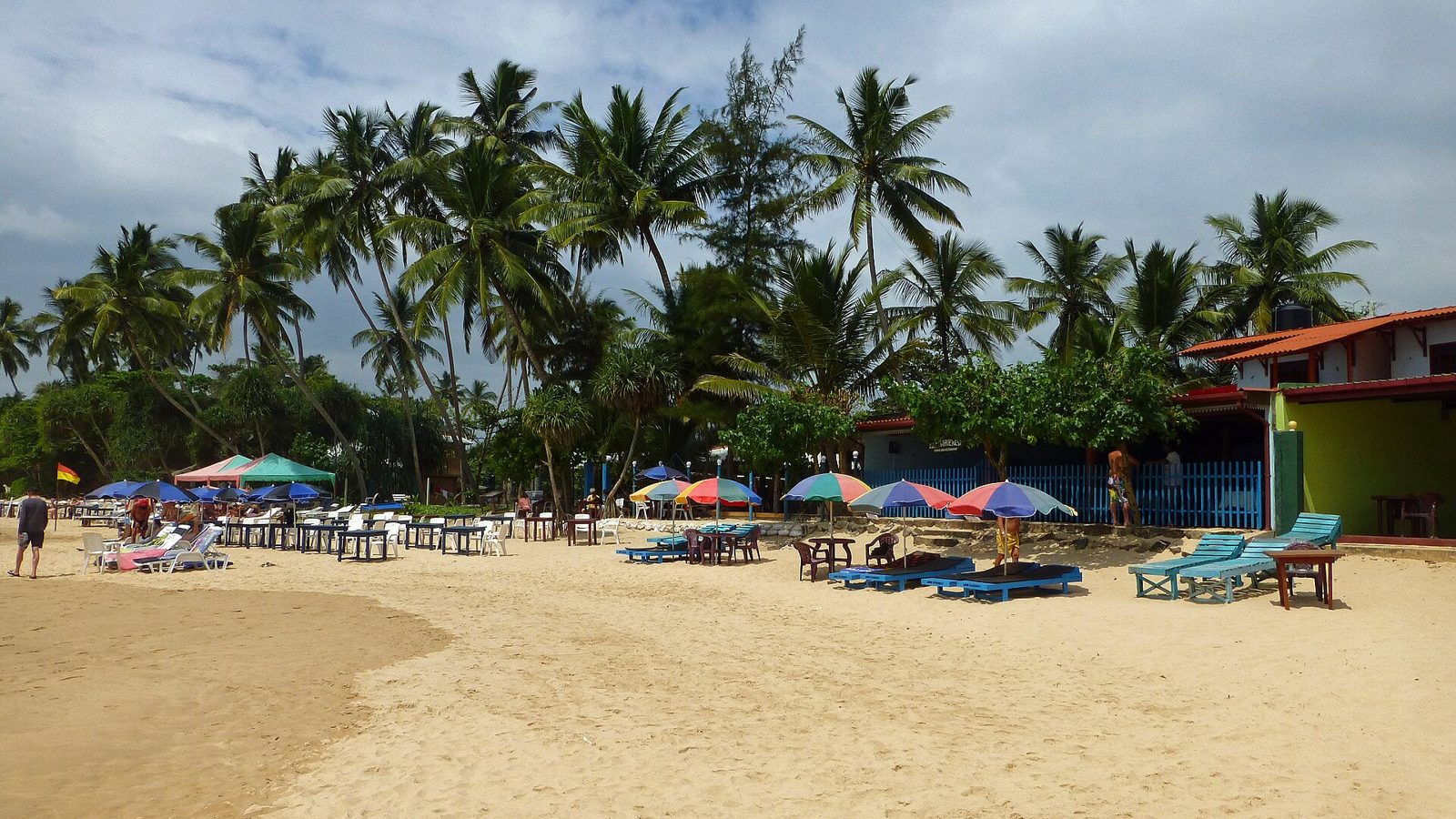
A small fishing town on a curved bay on Sri Lanka's south coast. You go out at dawn to look for blue whales, wade over to Parrot Rock at low tide and eat grilled fish on the sand as the sun drops behind the palms.
- Best time to visit: December to April
- Daily budget (budget traveller): $30 to $130 USD
- Ideal trip length: 4 to 7 days
Mirissa is a small fishing town on Sri Lanka's south coast, about 150km from Colombo and halfway between Galle and Matara. The town itself is short and simple. A busy main road runs above a curved, sandy bay, and between the two there is a strip of guesthouses, cafés and beach restaurants. The harbour sits at the western end, and boats leave from there every morning in season to look for blue whales, sperm whales and dolphins. That is what most people come for, but they often stay longer than they meant to. Wade out to Parrot Rock at low tide, climb Coconut Tree Hill for the palm-framed view everyone photographs, snorkel with turtles off the main beach and pick a fish for the grill at a beach restaurant after dark. Mirissa is not quiet any more. The main strip gets busy from December to April, and some bars play loud music late on weekends. From May to October the southwest monsoon brings big seas and many places close. Even so, cheap guesthouse rooms, rice and curry for a few dollars, frequent local buses and an easy social scene make it one of the simplest places on the island to spend a slow week alone.
Mirissa is a fishing town of a few thousand people on the bulge of Sri Lanka's south coast, where the island points towards the open Indian Ocean. The continental shelf drops away close to shore here, so whales feed within a short boat ride of the harbour, and that is how a sleepy village became a fixture on every Sri Lanka route. The bay itself is short and curved, with Parrot Rock in the shallows at one end and the palm-covered headland of Coconut Tree Hill beyond it. Most visitors stop for a night or two for the whales. Stay longer and you get the better version: the harbour at dawn, a turtle snorkel before the boats churn up the water, a nap through the midday heat and fish grilled on the sand after dark. It is no longer a secret, but a dorm bed, rice and curry and local buses still keep it cheap.
Getting here is easy. Express trains from Colombo Fort run along the coast to Weligama in about 3 hours for a few hundred rupees, and the stretch past Galle runs right beside the sea. Air-conditioned expressway buses reach Matara faster, and a private car from the airport takes around 3 hours. Once you are here, walk or take tuk-tuks. Base yourself on the main strip for the social scene, near Coconut Tree Hill for quieter nights or by the harbour for early boats and cheap rooms. Use the frequent coast buses for Weligama, Galle Fort, Matara and the beaches further east.
Timing shapes the trip. December to April is dry and sunny, with calm seas, daily whale trips and the beach at its busiest. November is a softer start to the season, with fewer people and some rain. From May to October the southwest monsoon brings heavy surf and grey days. Swimming gets dangerous, whale boats mostly stop and many restaurants close, but rooms drop in price. On Poya days, at every full moon, alcohol is not sold and bars go quiet. Mirissa is relaxed and mostly safe, and English is widely spoken in tourist businesses. Nights range from quiet dinners to loud beach parties. If you want the party, it is here. If you want a whale at dawn and an early night, you can have that too.
Mirissa itinerary
Arrive and find your feet
Morning: Take an early train from Colombo Fort to Weligama (about 3 hours), sitting on the right-hand side for sea views. Take a tuk-tuk to Mirissa and drop your bag.
Afternoon: Walk the length of the main beach from the harbour to Parrot Rock. Have a first swim in the middle of the bay and a king coconut in the shade.
Evening: Check the tide and cross to Parrot Rock for sunset if it is low. Then pick a fish for the grill at one of the beach restaurants.
Whales at dawn
Morning: Be at the harbour by 6:30am for a shared whale-watching trip ($30 to $60 USD, November to April). Take seasickness tablets the night before and bring a hat and sunscreen.
Afternoon: Back on land around midday. Eat rice and curry, then sleep through the heat. Later, have a gentle swim or a dip in the rock pool near Parrot Rock.
Evening: Kottu and a sweet banana roti at Dewmini Roti Shop, then an early night or a drink on the sand.
Coconut Tree Hill and Secret Beach
Morning: Walk up Coconut Tree Hill before 8am for an empty grove and soft light. Then snorkel with turtles off the main beach while the water is calm.
Afternoon: Walk or take a tuk-tuk to Secret Beach. Hire a mask, explore the rocks and lie in the shade with a book.
Evening: Brunch-style dinner or a smoothie bowl at Shady Lane, then sunset back on the headland.
Surf day in Weligama
Morning: Take a bus or tuk-tuk to Weligama and book a beginner lesson ($20 to $35 USD) on the soft waves of the bay.
Afternoon: Lunch in a Weligama café, then rent a board for another hour or walk the beach to look out at Taprobane Island.
Evening: Take the bus a few stops west to see the stilt fishermen around Koggala and Ahangama at sunset, then head back to Mirissa by bus or tuk-tuk.
Galle Fort
Morning: Take a local bus west to Galle (about an hour). Walk the Dutch-built ramparts of the fort before the heat builds.
Afternoon: Wander the old streets, the lighthouse and the shops and cafés in old colonial houses. Have lunch inside the walls.
Evening: Watch the sunset from the ramparts by the lighthouse, then take a bus or train back east to Weligama or Mirissa.
East to Matara, Dondra and Hiriketiya
Morning: Take a bus east to Matara. Walk over the footbridge to the little temple on Paravi Duwa island and see the small Dutch Star Fort.
Afternoon: Carry on to Dondra Head, the island's southernmost point, and its tall white lighthouse. Then take a tuk-tuk or bus to the horseshoe bay of Hiriketiya for a swim.
Evening: Bus or tuk-tuk back to Mirissa. Have a farewell seafood dinner on the beach, or rice and curry if it is a Poya day.
Slow morning and depart
Morning: Have a last swim and walk the harbour as the fishing boats come in. Breakfast with egg hoppers or fresh fruit.
Afternoon: Take a tuk-tuk to Weligama for the afternoon train to Colombo, or arrange a car to the airport. Check train times the day before.
Evening: Arrive in Colombo, or carry on to your next stop in the hills or along the coast.
Best neighbourhoods
- Main beach strip: The centre of Mirissa, a row of guesthouses, hostels and beach restaurants along the sand between the harbour and Parrot Rock. You get the snorkelling spots, the evening fish grills and most of the bars. It is lively until late in season, so choose a place set back from the beach if you want to sleep before midnight.
- Coconut Tree Hill and Secret Beach: The eastern end of the bay, beyond Parrot Rock, where the land rises into the headland with the famous palm grove. You will find smaller guesthouses, a few boutique hotels and quieter lanes. It is the best base for sunrise walks and a calmer swim, and the main strip is 10 to 15 minutes away on foot.
- Harbour and the Matara Road: The western end of town, around the fishing harbour where the whale boats leave, plus the busy main road above the beach. It is less pretty, but rooms are cheaper, the bus stops are right outside and there are local shops and roti stalls. It is practical if you plan an early boat trip or lots of bus days.
- The hills behind the beach: Small lanes climbing inland from the main road into jungle and cinnamon gardens, with villas, yoga retreats and family-run homestays. It is green, cool in the evenings and very quiet. You will need a short tuk-tuk ride or a steep walk to reach the beach, especially after dark.
- Weligama: A larger town on a wide, shallow bay about 6km west, known for beginner surfing. It has surf camps, hostels and a working train station. Local buses and tuk-tuks link it to Mirissa in 10 to 15 minutes. It suits you if surfing comes first and you want a few more cafés and a bit more choice.
Must-do experiences
- Go whale watching at dawn: Boats leave Mirissa harbour around 6:30am from November to April. Shared trips cost roughly $30 to $60 USD, including breakfast and water. Blue whales are most reliable from December to March. Pick an operator that keeps its distance from the animals, and take seasickness tablets the night before.
- Wade over to Parrot Rock: This rocky islet sits in the shallows of the main beach, and a short staircase takes you to the top for a view across the bay. It is free. Cross only at low tide, as waves can reach chest height when the tide comes in. Sunset is the busiest time.
- Climb Coconut Tree Hill: A grove of palms on a headland at the eastern end of the bay, and one of the most photographed spots in Sri Lanka. Entry is free, though the land is privately owned. Go before 8am for an empty hill, or at sunset for the colours. Wear proper shoes for the steep path.
- Snorkel with turtles off the main beach: Green turtles feed close to the rocks near the main beach. Hire a mask for a few hundred rupees or join a guided snorkel from about $25 USD. Watch, don't touch, and never feed them. Go in the morning, when the water is calmer and clearer.
- Spend an afternoon at Secret Beach: A small, rock-sheltered cove beyond Coconut Tree Hill. It is quieter than the main beach and has a simple bar and snorkel gear for hire. Reach it on foot along the road, or along the shore at low tide. The rock pools are calmest in the dry season.
- Learn to surf in Weligama: The wide bay at Weligama has soft, slow waves that are ideal for beginners. Boards rent cheaply by the hour on the beach, and a group lesson costs roughly $20 to $35 USD. It is a 10 to 15 minute bus or tuk-tuk ride from Mirissa.
- Eat fish on the sand after dark: In season, beach restaurants lay out the day's catch on ice each evening. You choose a fish and it is grilled and priced by weight. Expect around $12 to $25 USD for a meal with sides. Ask the price per kilo before they cook it.
Hidden gems
- The natural rock pool near Parrot Rock, a calm patch of seawater that is good for a dip when the open beach has stronger currents
- Mirissa fishing harbour just after dawn, when the boats unload tuna and the auctions start, before the whale boats leave
- Taprobane Island in Weligama Bay, the tiny island with its old villa, best seen from the beach at dusk
- Weherahena temple near Matara, with a huge seated Buddha and painted tunnels underneath, rarely busy with foreign visitors
- Curd and treacle (kiri pani) from roadside stalls on the Matara Road, buffalo curd in clay pots sold with dark kithul syrup
Daily budget
- Accommodation: budget $8 to $15 USD / night (hostel dorm), mid-range $35 to $80 USD (guesthouse or boutique room), splurge $300+ USD (Cape Weligama or a private villa). Prices jump from mid-December to mid-January. Mid-range and upmarket places often add a 10% service charge plus taxes. Book December to March early, especially for single rooms.
- Food: budget $8 to $15 USD / day (rice and curry, kottu, roti, fruit), mid-range $20 to $35 USD (café brunch and a beach dinner), splurge $50+ USD (grilled lobster or a big seafood platter with drinks). Rice and curry at a local place costs a couple of dollars. Tourist restaurant mains are about $5 to $10 USD. Seafood is priced by weight, so ask first. Prices are rough guides.
- Transport: budget $1 to $4 USD / day (walking, local buses), mid-range $5 to $15 USD (tuk-tuks and a train day trip), splurge $50 to $90 USD (private car to or from Colombo). The train from Colombo Fort to Weligama costs about Rs 550 in second class. Expressway buses to Matara cost roughly Rs 1,300 to Rs 1,600. Agree tuk-tuk fares before you set off.
- Activities: budget $0 to $5 USD / day (beaches, Parrot Rock, Coconut Tree Hill, snorkel hire), mid-range $25 to $60 USD (shared whale trip, turtle snorkel tour or surf lesson), splurge $150+ USD (private whale boat or a diving package). Parrot Rock, Coconut Tree Hill and Secret Beach are free. Snorkel gear rents for about Rs 500 to Rs 1,000 a day. Shared whale trips run from November to April only.
- Drinks & nightlife: budget $3 to $6 USD (a large Lion beer from a shop or a local bar), mid-range $10 to $25 USD (a few drinks at a beach bar), splurge $40+ USD (cocktails and a beach party night). A king coconut costs about Rs 200 and a large beer in a beach bar roughly Rs 900 to Rs 1,200. No alcohol is sold on Poya (full moon) days, and most bars close.
Where to stay
- Social hostel in Main beach strip ($8 to $15 USD / night (dorm)): Hangover Hostels Mirissa is a lively hostel close to the beach, with dorms, a bar and organised activities. It is an easy place to find people to share a whale trip or a night out with.
- Boutique hotel in Between Parrot Rock and Coconut Tree Hill ($60 to $120 USD / night): Morning Star is a well-reviewed small hotel in a quieter spot between Parrot Rock and Coconut Tree Hill. Both landmarks and the main beach are a short walk away.
- Guesthouse in Side lanes off the Matara Road ($20 to $45 USD / night): Family-run guesthouses with fans or air conditioning, often with a home-cooked breakfast. Your hosts can book whale boats and tuk-tuks at fair prices. Check how far the room is from the beach bars.
- Splurge in Weligama headland ($500 to $1,000+ USD / night): Cape Weligama is a clifftop resort with private villas, a crescent-shaped infinity pool and huge ocean views. It is 10 to 15 minutes by car from Mirissa, so you get serious luxury close to the beach.
What to eat
- Rice and curry: a plate of rice with four or five vegetable, dhal and fish curries from a local lunch place for a few dollars, the best-value meal in town
- Kottu roti: chopped flatbread stir-fried with vegetables, egg or chicken on a hot plate. Dewmini Roti Shop is a long-running favourite for kottu and sweet rotis
- Grilled seafood by weight: tuna, red snapper, prawns or lobster at the beach restaurants in the evening. Ask the price per kilo first
- Hoppers: bowl-shaped rice-flour pancakes, best as egg hoppers with sambol, usually sold in the evening
- Isso wade: crunchy lentil fritters topped with whole prawns, sold from carts and small stalls along the coast
- King coconut (thambili) from a roadside stall in the day, then a cold Lion beer or arrack cocktail on the beach at sunset
Day trips
- Galle Fort (About 35km west, roughly an hour by bus): A UNESCO-listed walled town built by the Portuguese and Dutch, with ramparts, a lighthouse and old streets full of cafés and small shops. Walking around the walls is free and best at sunset. Take any westbound local bus along the coast road to Galle bus station, opposite the fort. Trains from Weligama also run to Galle. Come back by bus, as they run until evening.
- Weligama, Koggala and the stilt fishermen (6km to 20km west along the coast): Beginner surfing on the soft waves of Weligama Bay, then the famous stilt fishermen near Koggala and Ahangama. These days, many stilt fishermen pose for photos and ask for a tip, so agree on it first. Hop on westbound local buses and get off where you want, or hire a tuk-tuk for a few hours and agree the price and stops before you set off.
- Matara, Dondra Head and Hiriketiya (About 12km to 30km east): The island temple on Paravi Duwa and the Dutch Star Fort in Matara, then Sri Lanka's southernmost point and its tall lighthouse at Dondra. End the day at Hiriketiya, a small horseshoe bay with gentle surf and laid-back cafés. Take an eastbound bus to Matara, then local buses or a tuk-tuk to Dondra and on to Dickwella for Hiriketiya. A tuk-tuk for the whole day is easier and still fairly cheap if you agree the price first.
When to visit
- Early season (November): 27-30°C, humid, with afternoon showers and calming seas. Crowds: Low to moderate, building towards December. A good shoulder month with lower prices. Whale trips start, though the sea can still be lumpy, and rain is common.
- Peak dry season (December - March): 28-31°C, sunny and dry, sea calm and warm. Crowds: Busy, very busy over Christmas, New Year and in January. The best months for the beach and whales, with blue whales most reliable now. Book rooms ahead, especially single rooms over the holidays.
- Late season (April): 29-32°C, hot and sticky, with occasional storms. Crowds: Moderate, with a local rush around Sinhala and Tamil New Year in mid-April. Still good for the beach and whales, with fewer foreign visitors. The heat is intense in the middle of the day, so start early.
- Southwest monsoon (May - October): 27-30°C, frequent rain, strong winds and big surf. Crowds: Quiet, many places closed. Cheap and green, but swimming is risky and whale trips are rare. Come only if you want peace and low prices. The east coast is better at this time.
Entry rules for your passport
Visa rules for Sri Lanka depend on the passport you travel on. Check the official source before you book: Sri Lanka Department of Immigration and Emigration
Getting there
The nearest international airport is Bandaranaike (CMB), north of Colombo, about 3 hours by road via the expressways. No train or direct bus runs from the airport to the south. A pre-booked car to Mirissa costs roughly $60 to $90 USD, and a car is the only sensible option if you land late at night. By train, first get to Colombo Fort. From there, express trains run along the coast to Weligama about six times a day, roughly between 6am and 4pm. The trip takes about 3 hours and costs around Rs 550 in second class or Rs 280 in third. Then take a short tuk-tuk to Mirissa. By bus, air-conditioned expressway coaches run from Makumbura in Colombo to Matara in just over 2 hours for roughly Rs 1,300 to Rs 1,600. From Matara, it is 20 to 30 minutes back west by local bus or tuk-tuk. The slow coastal bus, route 02, from Colombo to Matara costs under $2 USD but takes 4 to 5 hours. Every visitor needs an ETA from eta.gov.lk before flying.
Getting around
Mirissa is small enough to walk. The main beach runs about 1.5km from the harbour to Parrot Rock, and Coconut Tree Hill is 10 to 15 minutes further on foot. The main road has no pavement for long stretches and fast traffic, so take care, especially after dark. Tuk-tuks wait all along the road. Short hops in town cost around Rs 300 to Rs 500, and Weligama costs about Rs 800 to Rs 1,200. Agree the fare before you get in. PickMe and Uber work on parts of the coast, but coverage in Mirissa is patchy. Local buses run every few minutes along the Galle to Matara road and stop on demand. Short rides cost well under a dollar, and Galle takes about an hour. Scooters rent for roughly Rs 2,000 to Rs 3,000 a day, but you need an International Driving Permit plus a local endorsement, and the roads are chaotic. The nearest proper train station is Weligama, about 6km west.
Safety
Mirissa is generally safe, and violent crime against visitors is rare. The main risks are the sea and the road. Rip currents are strong, especially at the ends of the bay and from May to October, when red flags often fly and there may be no lifeguards. Swim where locals swim and never go in drunk or alone after dark. On the Matara Road, buses and tuk-tuks drive fast and close to the edge, so walk facing traffic and use a torch at night. Petty theft happens on the beach, so do not leave phones on the sand while you swim. Dengue is present, so use repellent in the evening. Tap water is not safe to drink, so stick to filtered or bottled water. Whale boats can be very rough, and seasickness is common. For police, call 119. For an ambulance, call 1990 (Suwa Seriya). You need travel insurance with medical and evacuation cover.
Solo travel tips
- Stay a little off the main strip: Rooms right on the beach can be loud until late in season. A place five minutes up a side lane or near Coconut Tree Hill gives you sleep and keeps the beach close.
- Book whales for your second day: Trips get cancelled when the sea is rough. Booking early in your stay leaves room to rebook, and your guesthouse will know which operators are running.
- Learn the tide times: Parrot Rock and the shore route to Coconut Tree Hill and Secret Beach are easy at low tide and risky at high tide. Check a tide app each morning and plan around it.
- Eat where the locals eat: Rice and curry at lunch, kottu at night and fruit from roadside stalls keep food costs very low. Save the beach seafood grill for one or two good dinners.
- Safety for solo travellers: The main risks are rip currents, the busy road and late nights on the beach. Swim near other people, walk facing traffic with a torch and get your guesthouse to call a known tuk-tuk driver after dark.
- Meet people in the water: Shared whale boats, group surf lessons in Weligama and hostel family dinners are easy ways to meet people. Sunset on Parrot Rock is also a natural place to start a conversation.
Cultural etiquette
- Greet people with 'ayubowan' (may you live long), palms together, and say 'istuti' (thank you). A smile goes a long way.
- Cover up away from the beach. Walking through town or into shops in swimwear is frowned upon, and topless sunbathing is illegal.
- Cover your shoulders and knees and take off your shoes and hat at temples. Walk clockwise around stupas.
- Never pose for photos with your back to a Buddha statue, and keep Buddha tattoos covered. Both can cause serious offence and even refusal of entry.
- Respect Poya days at each full moon. Alcohol is not sold, bars close and temples are busy.
- Use your right hand to give, receive and eat. Ask before photographing fishermen, monks or people at work.
- Bargain politely for tuk-tuks and at stalls, but not in shops with fixed prices. Leave coral and turtles alone, and take your rubbish off the beach.
Frequently asked questions
How do I get to Mirissa and from the station to my room?
The cheapest scenic option is the train from Colombo Fort to Weligama. About six express trains run a day, taking roughly 3 hours for around Rs 550 in second class or Rs 280 in third. From Weligama, a tuk-tuk to Mirissa takes 10 to 15 minutes and costs about Rs 800 to Rs 1,200. Faster air-conditioned expressway buses run from Makumbura in Colombo to Matara in just over 2 hours for roughly Rs 1,300 to Rs 1,600. Then take a local bus or tuk-tuk back west. A private car from Colombo or the airport costs roughly $50 to $90 USD.
How many days do I need in Mirissa?
Two or three nights covers a whale trip, Parrot Rock, Coconut Tree Hill and some turtle snorkelling. Four or five nights lets you add surf lessons in Weligama and a day in Galle Fort. A week works if you want to slow down and explore east to Matara, Dondra Head and Hiriketiya.
When is the best time to visit Mirissa?
December to April is the dry season on the south coast. The sea is calmer, the beach is at its best and whale trips run daily, with blue whales most reliable from December to March. November is a good shoulder month with fewer people, though showers are common. From May to October the southwest monsoon brings rough seas, strong currents and more rain. Whale trips mostly stop and some places close, but rooms are much cheaper.
Is whale watching in Mirissa worth it, and how do I pick a boat?
For most people, yes. Sightings are common in season, and the dawn trip is a real highlight. Shared boats cost about $30 to $60 USD and trips can last 4 to 6 hours, depending on how far out the whales are. Choose an operator with good recent reviews that mentions keeping a respectful distance and limiting the number of boats around each whale. Skip any 'swim with whales' trips. Take seasickness tablets, a hat, sunscreen and a waterproof layer.
Is it safe to swim at Mirissa?
In the dry season, the middle of the main beach is usually fine for strong swimmers, but currents can be strong at either end and around the rocks. Watch for red flags and ask your guesthouse or a lifeguard about the day's conditions. From May to October the sea is often too rough to swim. The rock pool near Parrot Rock and the sheltered parts of Secret Beach are calmer options.
How do I get around Mirissa and the south coast?
Walk in town and use tuk-tuks for short hops, agreeing the fare first. For longer trips, local buses along the coast road are cheap, frequent and stop almost anywhere. Wave one down and pay the conductor. Trains from Weligama run west to Galle and Colombo and east to Matara. Hiring a scooter needs an International Driving Permit and a local endorsement, and traffic is intense, so only do it if you are an experienced rider.
Is Mirissa safe for solo female travellers?
Mostly, yes. Plenty of women travel here alone, and the main strip is busy in the evenings in season. Expect some unwanted attention from men on the beach, and be firm and walk away if someone keeps pushing. Watch your drink at beach parties, avoid the dark stretches of sand and road late at night, and ask your guesthouse to call a known tuk-tuk driver after dark. Cover your shoulders and knees away from the beach and in temples.
What entry rules apply to Sri Lanka in 2026?
Every visitor needs an Electronic Travel Authorisation (ETA) before arrival, applied for at eta.gov.lk. Since 25 May 2026, the 30-day, double-entry tourist ETA has been free for nationals of 40 countries, including the UK, US, Canada, Australia and most of the EU. Others pay around $50 USD. Use only the official site, as copycat sites charge extra. Your passport should be valid for at least six months, and you may be asked for an onward ticket. Check official Sri Lankan government sources and your own government's travel advice before you go.
Tours and activities in Mirissa | Mirissa in 2 days | Mirissa in 3 days | Mirissa in 4 days | Mirissa in 5 days | Mirissa in 7 days
Can't decide? Compare Mirissa with...
Joy Plus home | Destinations | Itineraries | Activities | Flights | Budget planner | Calendar | Map | Blog | Lifetime access