Destinations / Europe
Monemvasia, Greece travel guide
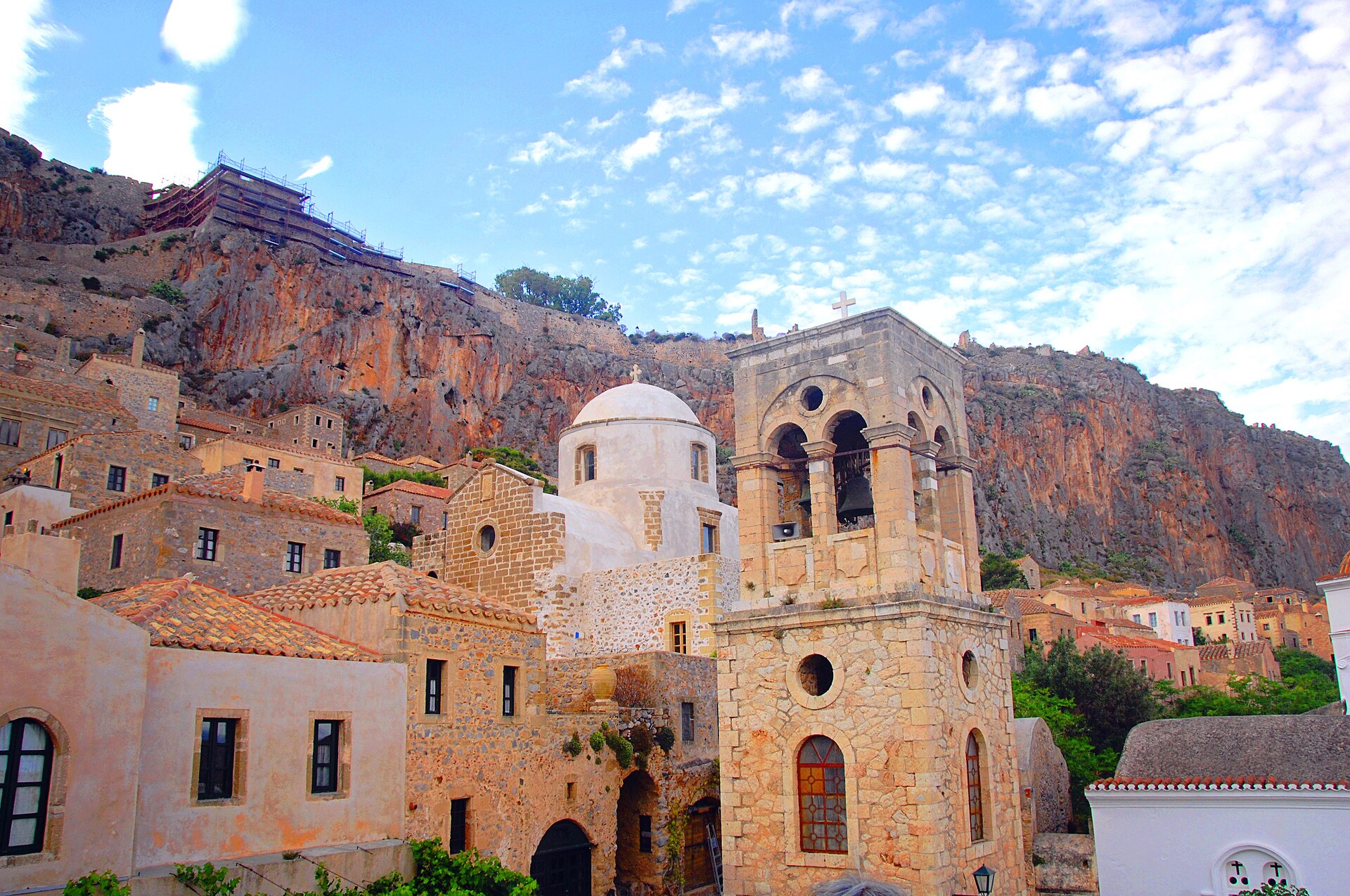
A walled medieval town on a huge rock joined to the mainland by one causeway, where you walk lanes with no cars, climb to a Byzantine church on the cliff edge and swim off the old sea walls.
- Best time to visit: April to June and September to October
- Daily budget (budget traveller): $75 to $325 USD
- Ideal trip length: 3 to 7 days
Monemvasia is a huge rock off the southeast coast of the Peloponnese, about four hours' drive from Athens. One causeway and a short bridge join it to the mainland. Its name means 'single entrance', and it fits. You reach the walled Lower Town through one narrow gate in the wall, and no cars are allowed inside. Inside are stone houses, old churches, small squares and steps going down to the sea. Above it, a steep zigzag path climbs to the Upper Town. That is a ruined plateau with the 12th-century church of Agia Sofia on the cliff edge. Only a few dozen people live inside the walls all year. Most locals live across the water in Gefyra, the mainland village, which has the bus stop, the shops, cheaper rooms and fish tavernas facing the rock. Monemvasia is busy on summer days with coach tours and cruise passengers. By evening they have gone, and the lanes go quiet. For a solo traveller it is safe, easy to walk and good value outside August if you sleep in Gefyra.
Monemvasia was cut off from the mainland by an earthquake in ancient times. Later it became a refuge from invasions and then a rich Byzantine and Venetian trading port. Its sweet wine was shipped across Europe as Malvasia, or Malmsey in English. Today the walled Lower Town has been carefully restored. Boutique guesthouses, small tavernas and shops fill the old houses, while the Upper Town above is a field of ruins with one church still standing. Most visitors come for an afternoon. Stay overnight and the place changes. Early morning means an empty main square, a swim off the sea wall before breakfast and the Upper Town to yourself. In the evening, tour buses leave and the lanes go quiet. Sleeping in Gefyra on the mainland keeps costs down. Rooms there cost a fraction of those inside the walls, and you can walk across in 20 minutes.
Getting here takes some effort. KTEL Lakonias buses from Athens take around 5.5-6 hours and often change at Sparti. Driving from Athens takes about four hours via Corinth, Tripoli and Sparti. Kalamata airport, with summer flights from many European cities, is roughly 175km away. Once you arrive, you will not need transport for the town itself. The castle shuttle runs from the causeway in summer, and everything inside the walls is on foot. For the region's other highlights, such as Simos beach on Elafonisos, Kastania Cave and the Byzantine ruins of Mystras, hire a car for a few days. Buses do not really reach them.
Timing matters more than you might expect. In July and August the rock gets crowded, rooms inside the walls book up months ahead and the Upper Town climb is punishing after mid-morning. Late spring and September are best, with warm seas and long evenings but none of the heat. Easter is a big event in Monemvasia, with services and processions through the Lower Town, and rooms fill. In winter the town is moody and quiet, but many businesses inside the walls close. Monemvasia is safe and easy for solo travellers. Locals in the tourist trade speak English, distances are short and a seat at a taverna on your own is completely normal.
Monemvasia itinerary
Arrive and first walk through the gate
Morning: Take the morning KTEL bus from Kifissos in Athens. Expect around 5.5-6 hours, often with a change at Sparti. Buy water and snacks before you leave.
Afternoon: Check in to your room in Gefyra and get cash and groceries. Then walk the causeway to the castle gate, which takes about 20 minutes, or take the shuttle in summer.
Evening: Wander the main lane and the square at dusk. Dinner at To Kanoni or Matoula, then walk back across the causeway with a torch.
Upper Town and Agia Sofia
Morning: Be at the foot of the Upper Town path by 8am. Climb the zigzag path, which takes 20-30 minutes, explore the ruins and visit Agia Sofia if it is open that day.
Afternoon: Come down for a long lunch in the Lower Town. Then visit the Archaeological Collection on the main square, unless it is a Tuesday, and Christos Elkomenos church.
Evening: Rest in the heat of the afternoon. Sunset dinner at Taverna Asterias or Skorpios in Gefyra, facing the rock.
Sea swims and the lighthouse
Morning: Swim off the rocks by the Portello sea gate while the water is calm, then coffee on a terrace.
Afternoon: Walk east past Panagia Chrysafitissa to the lighthouse at the tip of the rock. On the way back, stop at Yannis Ritsos's birthplace by the gate.
Evening: Head out to Pori beach for a late swim, or rest in Gefyra. Book a hire car for the next three days.
Gerakas and a wine tasting
Morning: Drive about 30 minutes north to Gerakas. Walk the quayside along its long inlet and look over the wetland.
Afternoon: Fish lunch in Gerakas, then a tasting at Monemvasia Winery (Tsimbidis) on the way back. Tours have run from Tuesday to Saturday, so check first.
Evening: Back to Gefyra. A cheap gyros supper and an early night.
Kastania Cave and Neapoli
Morning: Drive south to Kastania Cave, about an hour away. Guided tours run on the half hour and cost €7, but open days change by season, so confirm on kastaniacave.gr.
Afternoon: Continue to Neapoli for lunch on the seafront and a swim from its long beach.
Evening: Drive back before dark on the winding roads. Supper in the Lower Town, where it is quiet.
Elafonisos and Simos beach
Morning: Drive about 40 minutes to Pounta and take the 10-minute ferry to Elafonisos. It costs about €2 per person and €12-13 per car each way, and you pay at the pier. Go early in summer.
Afternoon: Swim at Simos, a pair of sandy bays back to back. Lunch at a taverna in Elafonisos village.
Evening: Catch a ferry back before the last sailing and drive home. Farewell drink in the Lower Town.
Mystras on the way out
Morning: Check out early and drive about 1.5 hours to Mystras. Walk its Byzantine churches and palace before the heat. It has been around €20 in high season.
Afternoon: Lunch in Mystras village or Sparti, then drive on to Athens, which takes about three hours, or to Kalamata airport.
Evening: Drop the car and connect onwards. If you do not have a car, take the KTEL bus back from Gefyra instead.
Best neighbourhoods
- Lower Town (Kato Poli): The walled town on the south side of the rock, entered through the main gate. It has the main square with Christos Elkomenos church, guesthouses in restored stone houses, Matoula and To Kanoni for dinner, and sea access near the Portello gate. Cobbles and steps everywhere, and no wheeled traffic at all.
- Gefyra: The mainland village at the end of the causeway, also called Nea Monemvasia. The KTEL bus stops here, and there are pharmacies, ATMs, supermarkets, simple rooms and waterfront tavernas such as Taverna Asterias and Skorpios. It is practical, cheaper and about 20 minutes' walk from the castle gate.
- Upper Town (Ano Poli): The ruined plateau at the top of the rock, reached by a steep stone path from the Lower Town. Nobody lives here. It is for walking among ruins, cisterns and walls, and seeing Agia Sofia. Free to enter, with views over the whole coast.
- Pori and the north coast: The coast north of Gefyra, with Pori, a long sand and shingle beach a short drive or longish walk from the village. There are rooms and studios along this road. It is quieter than Gefyra, with shallow water for easy swims, but you will want a car or a bike.
- Agios Stefanos hills: Olive country a few kilometres inland from Gefyra, home to Kinsterna Hotel, an old mansion turned luxury hotel. This is a splurge base for quiet, pools and estate food, and you will need a car or taxis to reach the rock.
Must-do experiences
- Walk in through the single gate: Cross the causeway on foot from Gefyra, which takes about 20 minutes, and go through the tunnel gate into the Lower Town. Turn off the main lane, Ritsou, as soon as you can. The side lanes, arches and small chapels are where the town is most rewarding.
- Climb to Agia Sofia and the Upper Town: The zigzag path up the cliff takes 20-30 minutes, is uneven and has no railings in places. At the top, the octagonal Byzantine church of Agia Sofia stands on the cliff edge. Entry is free but the church keeps limited hours, commonly Friday to Monday in the morning and early afternoon, so check before you climb.
- Swim off the sea walls by the Portello: Below the Lower Town walls, the small Portello sea gate leads to rocks and ladders into deep, clear water. It is the most memorable swim in town. Go in the morning when it is calmer, and wear sandals for the rocks.
- Walk to the lighthouse: Follow the lane east past Panagia Chrysafitissa and out of the walls to the lighthouse at the tip of the rock. It is an easy, quiet walk with open sea on one side. The small lighthouse has had seasonal opening hours, so treat any visit inside as a bonus.
- See the main square and the Archaeological Collection: Christos Elkomenos church faces the old mosque, which now holds a small Archaeological Collection of Byzantine finds. Entry is a few euros, and it has been closed on Tuesdays. It takes about 30 minutes and explains the town's past as a trading port.
- Taste Malvasia wine: Monemvasia gave its name to the old Malvasia (Malmsey) wines. Try a glass with dinner, or book a tasting at Monemvasia Winery (Tsimbidis), about 10km away, which has run tours from Tuesday to Saturday. You will need a car or taxi.
- Watch the rock at sunset from Gefyra: From the Gefyra waterfront, the rock turns orange and then the Lower Town lights come on. Take a table at a fish taverna or just sit on the harbour wall. It is the best view of Monemvasia, because from inside you cannot see it.
Hidden gems
- The small square in front of Panagia Chrysafitissa at the eastern end of the Lower Town, with a bell tower and open sea views and few people after lunch
- The house where the poet Yannis Ritsos was born, just inside the main gate, marked by a statue of him, and his grave in the cemetery outside the walls
- The quiet lanes running along the inside of the sea wall, where you can look down at the water through old gun openings
- Gerakas, a tiny fishing harbour about 20km north at the end of a long, fjord-like inlet, with a couple of tavernas and a wetland behind it
- The view from the Upper Town's far side, away from Agia Sofia, where you are likely to be alone with the ruins and the cisterns
Daily budget
- Accommodation: budget €40-70 / night (simple room or studio in Gefyra), mid-range €100-180 (guesthouse inside the walls), splurge €300+ (Kinsterna Hotel or top suites in the Lower Town). There are no hostels. Studios in Gefyra often have kitchenettes. Prices roughly double in August, and rooms inside the walls sell out early for summer and Easter.
- Food: budget €20-35 / day (bakery breakfasts, gyros, one taverna meal), mid-range €40-70 (café lunch and a full taverna dinner with wine), splurge €90+ (fish by the kilo, hotel dining). Lower Town restaurants cost more than Gefyra's. Taverna mains are around €12-20, fresh fish is priced by the kilo and house wine by the carafe is cheap. Supermarkets are in Gefyra. Prices are rough guides, so check.
- Transport: budget €0-3 / day (walking, castle shuttle), mid-range €40-60 (small hire car plus fuel), splurge €80+ (taxis to day trips). The bus from Athens costs roughly €25-30 each way. The shuttle to the gate is about €1.10-1.50, and a taxi to the gate around €4-5. Hire-car prices jump in August.
- Activities: budget €0-10 / day (free Lower and Upper Town, sea swims), mid-range €15-30 (Kastania Cave, wine tasting, ferry fares), splurge €50+ (guided kayak trip or private tour). Kastania Cave is €7, the Elafonisos ferry about €2 per person and €12-13 per car each way, and the Archaeological Collection a few euros. Mystras has been around €20 in high season, so check the official site.
- Drinks & nightlife: budget €5-10 (a beer or coffee by the sea), mid-range €15-30 (cocktails on a terrace in the Lower Town), splurge €50+ (good wine with a long dinner). Nightlife means a few bars in the Lower Town and Gefyra, plus late dinners. Freddo espresso costs roughly €3-4 and cocktails around €10-12.
Where to stay
- Social hostel in Gefyra (€40-70 / night): Monemvasia has no hostels. The closest thing is a simple family-run room (domatia) in Gefyra, where hosts are often chatty and helpful. It is cheap, near the bus, ATMs and supermarkets, and 20 minutes' walk from the gate.
- Boutique hotel in Lower Town (€100-180 / night): Malvasia Hotel has rooms spread across restored stone houses inside the walls. You get vaulted ceilings, sea views from some rooms and the lanes to yourself at night.
- Apartment in Gefyra or Pori (€50-90 / night): Studios with kitchenettes along the Gefyra waterfront and the road towards Pori beach keep food costs down. They also have easier parking if you are hiring a car.
- Splurge in Agios Stefanos hills (€300-600+ / night): Kinsterna Hotel is a restored old mansion among olive groves, with pools, spa and estate-grown food. It is a few minutes' drive from Gefyra.
What to eat
- Amygdalota: soft almond sweets dusted with icing sugar and flavoured with rosewater, sold in bakeries and shops in the Lower Town
- Fresh fish and grilled octopus at the Gefyra waterfront tavernas, priced by the kilo, so ask before you order
- Siglino: Lakonian smoked and salted pork, served on its own or cooked with eggs or in pies
- Lalagides: thin strips of fried dough with honey, a traditional Lakonian treat, especially around holidays
- A glass of Malvasia or local Lakonian white with dinner at Matoula or To Kanoni in the Lower Town
- Bougatsa or tiropita from a Gefyra bakery for a cheap breakfast before the causeway walk
Day trips
- Elafonisos and Simos beach (About 32km to Pounta, then a 10-minute ferry): A small, flat island with Simos, a double bay of pale sand and clear water that is often called one of Greece's best beaches. The village has fish tavernas around a little harbour. It is busy in August, so go early. Drive to Pounta and take the frequent ferry, which costs about €2 per person and €12-13 per car each way, paid at the pier. Without a car, a taxi to Pounta is pricey, so share one or combine buses via Neapoli.
- Kastania Cave (About an hour's drive south, 17km from Neapoli): A cave about 3 million years old, packed with stalactites and stalagmites, seen on a 500m guided route. Tours take about 30-40 minutes and photos are not allowed. You need a car. Tickets are €7 at the door and cannot be booked. Open days change by month, with fewer in winter, so check kastaniacave.gr before you drive.
- Mystras (About 100km northwest, roughly 1.5 hours by car): A ruined Byzantine town climbing a hillside above Sparti, with frescoed churches, monasteries and a palace. It is a UNESCO World Heritage Site and needs half a day. Drive, or take a bus to Sparti and a taxi or local bus to the site. Entry has been around €20 in high season and less in winter. It fits well on your way back to Athens or Kalamata.
When to visit
- Spring (April - May): 17-25°C, sunny spells, sea still cool until late May. Crowds: Low to moderate, with a big spike at Greek Easter. Wildflowers on the rock, comfortable climbing weather and good room prices. Book well ahead if your dates include Easter.
- Early summer (June): 25-30°C, dry, sea warming up. Crowds: Moderate, with busier weekends. The best all-round month. Long days, swimmable water and everything open, but without the August crowds.
- High summer (July - August): 29-35°C, very hot and dry, occasional strong winds. Crowds: Very busy, especially in August and on cruise days. Lively evenings and warm seas, but book early and climb before 10am. The liberation festival around 23 July brings fireworks over the rock.
- Autumn and winter (September - March): September-October 20-28°C, winter 9-16°C with rain and wind. Crowds: Quiet from October, very quiet in winter. September and October are the locals' pick, with warm seas and calm lanes. From November, many places inside the walls close and the shuttle runs less, but it is cheap and peaceful.
Entry rules for your passport
Visa rules for Greece depend on the passport you travel on. Check the official source before you book: European Commission: Schengen visa policy
Getting there
Most travellers fly into Athens International Airport (ATH). From the airport, take the X93 bus or a taxi to Kifissos bus station, where KTEL Lakonias buses leave for Monemvasia. There are usually two or three a day, the trip takes around 5.5-6 hours and often involves a change at Sparti, and fares are roughly €25-30. Tickets can be bought online at ktel-lakonias.gr, usually about a month ahead. Buses arrive in Gefyra on the mainland. Driving from Athens is about 320km and four hours via Corinth, Tripoli and Sparti on toll motorways, then country roads. In summer, Kalamata International Airport (KLX) has flights from many European cities and is about 175km away, roughly 2.5-3 hours by hire car. Neapoli, about 30km south, has ferries to Kythira, and a taxi there costs around €30. From Gefyra, walk 20 minutes across the causeway to the castle gate, take the summer shuttle for about €1.10-1.50, or a taxi for around €4-5. Cars cannot enter the walled town.
Border checks: non-EU visitors (other than Swiss, Norwegian, Icelandic, Liechtenstein, Andorran, Monegasque, San Marinese and Vatican citizens, and holders of an EU residence permit or long-stay visa) are registered in the EU's Entry/Exit System (EES) instead of getting a passport stamp. On your first crossing, officers take your photo and/or fingerprints, so allow extra time at passport control. ETIAS, the planned travel authorisation, is not in operation yet, so don't pay any website for one.
Getting around
Inside the walls you walk. Cars cannot go past the gate, and the lanes are cobbled, sloping and full of steps, so a backpack is easier than a wheeled case. Between Gefyra and the castle gate it is about 1.5km and roughly 20 minutes on foot along the causeway road. A small municipal shuttle bus runs from the Gefyra end of the causeway to the gate for about €1.10-1.50, roughly every 30 minutes in summer. Service is reduced or patchy outside the high season. A taxi from Gefyra to the gate costs around €4-5. Drivers can drop luggage at the gate but cannot park there. Parking along the causeway road fills up in summer, so use the large free car park on the Gefyra side. For day trips to Gerakas, Kastania Cave, Elafonisos or Mystras, a hire car makes life much simpler. Local KTEL buses are infrequent and mostly run to Molaoi, Sparti and Neapoli. A planned lift to the Upper Town was still under construction and not running in July 2026, so plan to walk up.
Safety
Monemvasia is very safe, and crime against visitors is rare. The main risks are physical. The cobbles and steps are polished smooth and get slippery, especially after rain, so wear shoes with grip. The Upper Town path is steep and exposed, with no railings in places, and the plateau has open cisterns and crumbling walls, so stay on paths and do not go up in the dark. In July and August temperatures can pass 35°C. Climb before 10am, carry water and use the shade. When swimming off the rocks, use the ladders, watch for sea urchins and do not swim alone in rough water. Summer is wildfire season in the Peloponnese. Follow any 112 alerts on your phone, and never light fires or throw cigarettes outside. Roads to Kastania and Mystras are winding and narrow, so drive slowly. Gefyra has pharmacies and a health centre, and serious cases go to larger hospitals such as Sparti, so travel insurance is essential.
Solo travel tips
- Split your stay: Spend most nights in a Gefyra studio and one or two inside the walls. You save money, but you still get the quiet evenings and sunrise in the Lower Town.
- Climb early, and on an open day: Plan the Upper Town for a cool morning when Agia Sofia is open, often Friday to Monday. The ruins are free and always there, but the church is the highlight.
- Pack light: There are no cars or trolleys inside the walls, just cobbles and steps. A backpack or small soft bag will save your arms and temper.
- Hire a car for the region: Buses link Gefyra with Sparti, Molaoi and Athens, but not with the beaches and caves. Three days of car hire opens up Elafonisos, Kastania and Mystras.
- Eat in Gefyra for company: The waterfront tavernas are lively and local, and sitting alone with a view of the rock is normal. Ask what fish came in that day and the price per kilo.
- Safety for solo travellers: The real risks are slippery stones, heat and the exposed Upper Town path. Wear grippy shoes, carry water, avoid the climb after dark and take a torch for the causeway at night.
Cultural etiquette
- Say 'kalimera' (good morning), 'kalispera' (good evening) and 'efcharisto' (thank you). A greeting when you walk into a small shop is expected.
- Dress modestly to enter churches, with shoulders and knees covered. Some churches lend wraps, but carry a light scarf anyway.
- Many churches in the Lower Town are still in use. Keep your voice down, do not use flash and do not walk in during a service.
- The Lower Town is people's home. Do not climb on walls or roofs, or step onto private terraces for photos.
- Lunch runs late and dinner often starts after 8.30pm. Bread and water may appear with a small charge on the bill, which is normal.
- Easter is the biggest event of the year. If you are here then, join the crowds respectfully and expect late nights, fireworks and full tavernas.
- Do not take stones, tiles or fragments from the Upper Town. It is a protected archaeological site.
Frequently asked questions
How do I get to Monemvasia from Athens without a car?
Take a KTEL Lakonias bus from Kifissos bus station in Athens. There are usually two or three departures a day, and many involve a change at Sparti. The trip takes around 5.5-6 hours and costs roughly €25-30. Book online at ktel-lakonias.gr, as tickets usually go on sale about a month ahead. Buses stop in Gefyra, then you walk 20 minutes across the causeway or take the shuttle or a taxi to the castle gate.
How many days do I need in Monemvasia?
Two full days cover the Lower Town, the Upper Town climb, a sea swim and sunset from Gefyra. Three to four days lets you slow down and add Pori beach and the lighthouse walk. With a week and a hire car you can add Elafonisos, Kastania Cave, Gerakas and Mystras. A day trip from Athens is possible but very tiring, and you miss the quiet evenings.
When is the best time to visit Monemvasia?
April to June and September to October bring warm weather, swimmable seas from late May and fewer day-trippers. July and August are hot and busy, and rooms inside the walls book out early. In winter it is quiet and often windy or wet, and many Lower Town guesthouses, shops and tavernas close, though some stay open, especially at weekends.
Does it cost anything to visit the castle town and Agia Sofia?
No. The Lower Town and the Upper Town are free to enter, and Agia Sofia has also been free. The church keeps limited opening days, commonly Friday to Monday from 8:30am to 3:30pm, so check locally. The small Archaeological Collection on the main square charges a few euros and has been closed on Tuesdays.
Should I stay inside the walls or in Gefyra?
Inside the walls is the memorable choice. You get stone rooms, quiet lanes at night and sunrise without the crowds, but prices are higher and you will be carrying bags up steps. Gefyra is cheaper and closer to the bus, shops and ATMs, and it has the best view of the rock. On a tight budget, sleep in Gefyra and spend one splurge night inside the walls.
Is there a lift or cable car to the Upper Town?
A passenger lift project funded by the Ministry of Culture has been under way for years. In July 2026 it was still being built and was not running. For now the only way up is the steep stone path, which takes about 20-30 minutes. If you have mobility problems, the Lower Town alone is still well worth the trip.
Is Monemvasia safe for solo female travellers?
Yes. It is small, calm and used to visitors, and the Lower Town feels safe late into the evening. The usual sense applies: the causeway road is dark between Gefyra and the gate at night, so carry a torch or take a taxi, and tell your host if you are heading up to the Upper Town alone.
What entry rules apply to Greece in 2026?
Greece is in the Schengen Area. Many non-EU visitors, including UK, US, Canadian and Australian citizens, can stay up to 90 days in any 180 days without a visa. The EU Entry/Exit System now registers non-EU travellers at the border with fingerprints and a photo. The ETIAS travel authorisation is planned but not yet required for most visitors, so check the official EU sites and your government's travel advice before you go.
Tours and activities in Monemvasia | Monemvasia in 2 days | Monemvasia in 3 days | Monemvasia in 4 days | Monemvasia in 5 days | Monemvasia in 7 days
Joy Plus home | Destinations | Itineraries | Activities | Flights | Budget planner | Calendar | Map | Blog | Lifetime access