Destinations / Europe
Mont Saint-Michel, France travel guide
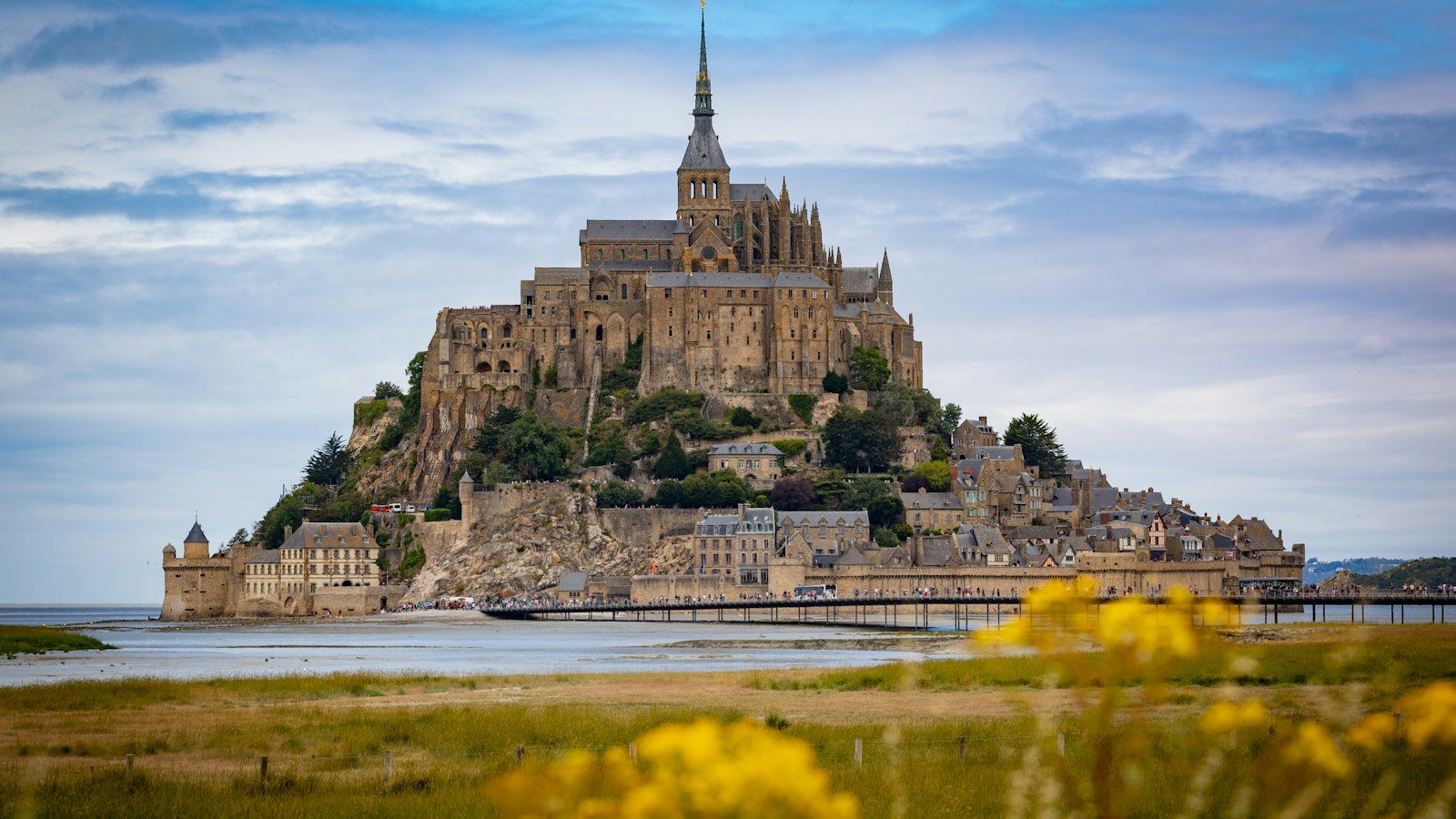
A Gothic abbey on a granite tidal island in one of Europe's widest bays, where the tide sets your schedule and the best hours start once the day-trippers leave.
- Best time to visit: May to June and September to October
- Daily budget (budget traveller): $80 to $280 USD
- Ideal trip length: 3 to 5 days
Mont Saint-Michel is a granite island about a kilometre off the Normandy coast with an abbey on top. Below the abbey, a single steep lane of shops and inns winds up between ramparts. Only a couple of dozen people live here, but around three million people visit every year. Nearly all of them come between 10am and 5pm, so solo travellers should plan around those hours. Stay nearby, arrive early, come back after dark, and you get a quiet medieval village and a bay lit by the setting sun. The village is free to enter day and night, and you only pay for the abbey and for parking. The bay has one of the largest tidal ranges in Europe. On a spring tide the water races in across sands that a guide will walk you across barefoot on a calmer day. Base yourself in La Caserne or Pontorson for the Mont, then move to walled Saint-Malo for oysters in Cancale and the coast path. You can do it all by train, coach and on foot.
Mont Saint-Michel has an official population of 23 and more than 60 listed buildings, all packed onto a granite island where a bishop of Avranches founded a sanctuary in 708. The abbey grew upwards for centuries, served as a prison after the Revolution, and is now a national monument with a small monastic community still holding services. Below it, the Grande Rue is a single climbing lane of inns and souvenir shops. In the middle of a summer day it is shoulder to shoulder. At 8am or 9pm it is nearly empty. The village is free to enter at any hour, so how much you enjoy the Mont depends on when you go.
For a solo traveller, the trick is to sleep close. La Caserne, the hotel strip by the Couesnon dam, is 2.5km away on foot or 12 minutes on Le Passeur, the free shuttle. Pontorson, 9km inland, has the railway station, the family hostel and the cheapest dinners. Keolis Armor coaches link the Mont with Rennes for Paris trains and with Saint-Malo, the best second base. Saint-Malo has a walled city, tidal islands, crêperies and a proper bar scene, and Cancale's oyster stalls and the GR34 coast path are a bus ride away. You do not need a car for any of it, except perhaps one day on the Normandy side of the bay for Genêts and Avranches.
The tide matters here. The bay has one of the biggest tidal ranges in Europe, and on spring tides the sea surrounds the Mont and laps at the end of the causeway. At low tide the sands stretch for kilometres, and licensed guides lead barefoot crossings from Genêts past the islet of Tombelaine. Check the tide table before you plan anything, from the crossing to a sunset walk out to the Grand Bé in Saint-Malo. Spring and autumn give the best mix of light, tides and space. July and August bring the crowds, and winter brings wind, cheap rooms and free abbey Sundays.
Mont Saint-Michel itinerary
Arrive and walk in over the passerelle
Morning: TGV from Paris Montparnasse to Rennes (about 2 hours), then the Keolis Armor coach from Rennes bus station to the Le Verger stop (about 1h15, from about €15 one way). Buy the coach ticket online, because it is not sold on board.
Afternoon: Drop bags at La Caserne, or take the Pontorson shuttle (€4.30, pay the driver) to L'Étape du Mont. Then skip Le Passeur and walk the 2.5km out along the road and passerelle as the Mont grows in front of you.
Evening: Stay as the coaches leave. Walk the ramparts from the Tour du Nord at sunset, then eat a galette inside the walls. Le Passeur runs back until about midnight.
The abbey at opening, the village after
Morning: Be at the abbey door for opening, 9am from May to August and 9:30am the rest of the year. Tickets are €13 or €16 depending on season. Book a timed slot and allow 1.5 to 2 hours for the church, cloister and Merveille.
Afternoon: Lunch away from the Grande Rue, then the Église Saint-Pierre and the side lanes. At low tide, walk round the base of the rock to the Chapelle Saint-Aubert, keeping close to the island.
Evening: Shuttle to La Caserne. Watch the floodlit Mont from the Barrage du Couesnon viewing deck, then have pré-salé lamb for dinner.
Guided barefoot crossing of the bay
Morning: The tide sets the start time. Get to Genêts on the Normandy side (about 30 minutes by car or taxi) and meet Chemins de la Baie or Découverte de la Baie. The classic crossing is about 7km one way, roughly 3.5 hours, past Tombelaine.
Afternoon: Arrive at the foot of the Mont and rinse off. If you drove, book a round trip or a formula with a bus back to Genêts. Late lunch in Beauvoir.
Evening: Easy night. Check tomorrow's Saint-Malo coach time and pack.
Saint-Malo walls and the Grand Bé
Morning: Keolis Armor coach from the Mont to Saint-Malo (about an hour). Winter service can be one return a day, Monday to Saturday, so check. Drop bags inside the walls.
Afternoon: Walk the full rampart circuit around intra-muros, about 2km and free, and look into the Cathédrale Saint-Vincent.
Evening: If the tide is out, cross the sands to the Grand Bé for sunset and check the posted return time. Galettes and cider inside the walls.
Cancale oysters and the GR34
Morning: BreizhGo bus from Saint-Malo to Cancale (roughly 30 to 40 minutes, check the timetable). Walk down to the Port de la Houle.
Afternoon: A dozen oysters from the producer stalls (about €6 to €10) on the sea wall, then the GR34 coast path north to the Pointe du Grouin, around 1.5 to 2 hours each way.
Evening: Bus back to Saint-Malo. Sunset walk along the Sillon beach, then moules marinières.
Dinard across the Rance
Morning: Cross the estuary to Dinard on the seasonal boat bus (about 10 minutes, check it is running) or by bus over the Rance tidal barrage.
Afternoon: Walk the Promenade du Clair de Lune and the coast path towards Saint-Énogat past Belle Époque villas. Picnic on the rocks.
Evening: Back to Saint-Malo for a terrace drink within the walls and a final crêperie dinner.
Fort National at low tide, train home
Morning: At low tide, walk out to Fort National. Check the tide and opening times, which vary. Buy a warm kouign-amann from a bakery inside the walls.
Afternoon: TGV from Saint-Malo to Paris Montparnasse, about 2.5 hours direct, or longer with a change at Rennes.
Evening: Arrive in Paris or connect onward. Keep a day's buffer before any long-haul flight.
Best neighbourhoods
- Le Mont (Grande Rue and the ramparts): The village inside the walls, entered through the Porte de l'Avancée. One steep lane of inns, crêperies and souvenir shops climbs to the abbey. Sleeping here costs more, but the evenings and early mornings are empty and silent.
- La Caserne: The hotel strip on the mainland about 2.5km south of the Mont, next to the Couesnon dam and the stops for Le Passeur, the free shuttle. It has the most rooms, a supermarket, and views of the Mont from many windows.
- Beauvoir: A small village just south of La Caserne along the D976, with guesthouses, a couple of restaurants and quieter nights. You can walk or cycle to the Mont along the riverside path.
- Pontorson: The market town about 9km inland with the railway station, the cheapest beds including L'Étape du Mont family hostel, bakeries and bars where locals actually eat. A paid shuttle and a cycle path along the Couesnon connect it to the Mont.
- Saint-Malo intra-muros: The walled corsair city about 50km west in Brittany. Free rampart walks, tidal islands, crêperies and a proper evening scene make it the best second base for a solo traveller.
- Cancale: The oyster port on the Brittany side of the bay, where producer stalls on the Port de la Houle sell oysters by the dozen with the Mont on the horizon.
Must-do experiences
- Be at the abbey door at opening: Climb to the abbey for the first slot of the day, before the coach groups arrive. You will have the cloister, refectory and the three levels of the Merveille almost to yourself. Allow 1.5 to 2 hours.
- Walk the ramparts at sunset: Stay after 6pm, when the village empties. Walk the walls from the Tour du Nord, where the bay turns copper and the floodlights come on.
- Cross the bay barefoot with a licensed guide: Join a guided crossing from Genêts over the sand flats and through knee-deep river channels, past the islet of Tombelaine, to the foot of the Mont. Never attempt it alone.
- Arrive on foot over the passerelle: Skip the shuttle once and walk the 2.5km from La Caserne along the road and the pier-like bridge. The Mont gets bigger with every step.
- Watch a spring tide come in: On the highest tides, check dates with the tourist office, the sea surrounds the Mont and covers the end of the causeway. Watch it from the ramparts or the dam, not from the sand.
- Eat oysters on the quay at Cancale: Buy a dozen opened oysters from the producer stalls at the Port de la Houle market and eat them on the sea wall facing the bay.
- Circle Saint-Malo's walls and walk out to the Grand Bé: Walk the free rampart circuit of the walled city, then cross the sands at low tide to the tidal island where Chateaubriand is buried.
Hidden gems
- The viewing deck on the Barrage du Couesnon at La Caserne, a free spot to watch the dam release water and see the Mont floodlit at night
- The Chapelle Saint-Aubert, a tiny chapel on a rock at the northwest foot of the Mont, reached at low tide by walking round the base of the island
- The cycle path along the Couesnon from Pontorson to the Mont, roughly 9km of flat riverside riding with the abbey in view nearly the whole way
- The Jardin des Plantes in Avranches, a free hilltop garden with one of the best long views of the Mont across the bay
- The GR34 coast path from Cancale to the Pointe du Grouin, with cliffs, coves and a view back across the bay to the Mont
- Morning Lauds in the abbey church, a free service open to worshippers before the abbey opens to visitors, where you hear the building as it was meant to be heard
Daily budget
- Accommodation: budget €30-70 / night (family hostel bed or room in Pontorson, budget chain hotel), mid-range €110-200 (La Caserne hotel, Saint-Malo intra-muros room), splurge €280+ (Mont-view rooms at Le Relais Saint-Michel, a night inside the walls in summer). L'Étape du Mont in Pontorson has generally opened from about April to October, so check dates. Rooms inside the walls are small and sell out early in summer. Prices in Saint-Malo jump in July and August.
- Food: budget €25-40 / day (bakery breakfast, galette lunch, supermarket dinner), mid-range €50-80 (set-menu lunch, pré-salé lamb dinner, cider), splurge €120+ (omelette at La Mère Poulard, seafood platter in Cancale). Prices inside the walls run 20 to 40 percent above Pontorson or Beauvoir. A galette complète costs about €10 to €14. Cancale oysters at the producer stalls are about €6 to €10 a dozen. Lunch is served roughly 12pm to 2pm and dinner 7pm to 9:30pm.
- Transport: budget €0-10 / day (Le Passeur is free, Pontorson shuttle €4.30, walking and cycling), mid-range €15-40 (Keolis Armor coach from about €15 one way, BreizhGo buses, bike hire), splurge €70+ (hire car plus car park, taxis). Official parking costs roughly €14 to €28 per 24 hours depending on season, with the first 30 minutes free and free evening parking outside summer. Check current rates on montsaintmichel.gouv.fr. Keolis tickets must be bought before boarding.
- Activities: budget €13-20 / day (abbey €13-16, free ramparts, free dam deck), mid-range €30-50 (guided bay crossing €15-36, Scriptorial in Avranches), splurge €100+ (private guide, specialist night or dawn crossings). The abbey is free for under-18s and for EU 18 to 25-year-olds, and free for everyone on the first Sunday of each month from November to March. Crossing prices vary by route and length, so confirm when you book.
- Drinks & nightlife: budget €5-12 (a bolée of cidre or a beer), mid-range €15-35 (wine with dinner, a Calvados), splurge €50+ (Champagne at a Saint-Malo terrace). The Mont goes very quiet after dark, which is part of its appeal. For bars and late terraces, head to Saint-Malo intra-muros. A bottle of Normandy cider from a Pontorson supermarket costs a few euros.
Where to stay
- Social hostel in Pontorson (€30-70 / night): L'Étape du Mont is a family hostel in the old youth hostel building, about 500m from Pontorson station, with dorms, private rooms, a kitchen and a bar. It sits beside the cycle path along the Couesnon to the Mont. It has generally opened from around April to October, so check dates.
- Boutique hotel in Le Mont (Grande Rue) (€160-300 / night): Auberge Saint-Pierre is a half-timbered inn on the Grande Rue inside the walls. Sleeping here gives you the empty lanes after dark and a short walk up to the abbey at opening.
- Apartment in Saint-Malo intra-muros (€80-150 / night): A studio inside the walls gives you a kitchen for market food, the ramparts on your doorstep and the city's bars a few minutes' walk away. It is the most sociable second base in the bay.
- Splurge in La Caserne (€250-450+ / night): Le Relais Saint-Michel has rooms and terraces looking straight across the salt meadows at the Mont, with the shuttle stop close by. Wake up to sunrise on the abbey without leaving bed.
What to eat
- Omelette de la Mère Poulard: the famous whisked omelette cooked over a wood fire inside the walls. It is theatrical and expensive, so check the menu first
- Agneau de pré-salé: AOP salt-meadow lamb from sheep that graze the bay's salt marshes, served roasted or as a gigot at restaurants around La Caserne and Pontorson
- Galette complète with a bolée of cidre: a buckwheat pancake with ham, cheese and egg, the cheapest proper meal in the bay at about €10 to €14
- Cancale oysters: hollow creuses from about €6 to €10 a dozen at the producer stalls, or the rarer native flat oysters for a few euros more
- Moules marinières with frites: mussels from the bay steamed in white wine and shallots, a staple in Saint-Malo and Cancale bistros
- Kouign-amann: Breton butter-and-sugar pastry from any good bakery in Saint-Malo, best eaten warm
- Teurgoule: slow-baked Normandy rice pudding with cinnamon, often on set menus around the bay
Day trips
- Saint-Malo (About 50km west, roughly an hour by Keolis Armor coach): A walled corsair city with a free rampart circuit, the tidal islands of the Grand Bé and Fort National, wide beaches and the best eating and drinking in the bay. Better as a two or three-night base than a day trip. Keolis Armor coach from the Le Verger stop. Winter service can be one return a day, Monday to Saturday, so book online. Saint-Malo station has TGVs to Paris and Rennes.
- Cancale and the Pointe du Grouin (About 15km east of Saint-Malo): Producer stalls at the Port de la Houle sell oysters for about €6 to €10 a dozen, eaten on the sea wall. Then follow the GR34 coast path to the cliffs of the Pointe du Grouin, with views back across the bay to the Mont. BreizhGo bus from Saint-Malo (roughly 30 to 40 minutes, check the timetable). The coast path from the port to the Pointe du Grouin takes about 1.5 to 2 hours each way.
- Avranches and Genêts (About 22km northeast of the Mont on the Normandy side): The Scriptorial museum in Avranches displays manuscripts from the abbey's medieval library, and the free Jardin des Plantes looks straight across the bay to the Mont. Genêts is the classic starting point for guided crossings. This is the one trip where a hire car or taxi helps. Combine it with a guided crossing from Genêts and check museum opening days before you go.
When to visit
- Spring (March - May): 8-17°C, showery and breezy, lengthening days. Crowds: Moderate, busy at Easter and on May bank holidays. Good value with lively skies. The March equinox brings some of the year's biggest tides. From May the abbey opens earlier, at 9am. Pack a proper waterproof.
- Summer (June - August): 17-23°C, longest days, occasional heat and sea fog. Crowds: Very heavy from mid-July to late August. June is excellent. July and August are only worth it if you sleep close and see the Mont early and late. Book abbey slots, rooms and bay crossings ahead. Evening visits to the illuminated abbey have run in recent summers, so check the dates.
- Autumn (September - October): 11-19°C, mild, with clearer light and more rain by late October. Crowds: Moderate in September, quieter in October. The locals' favourite. The September equinox tides are spectacular, the crossings are still running and the sea is warm enough for a paddle. Abbey prices drop to the low-season rate from October.
- Winter (November - February): 4-10°C, windy, wet and short days. Crowds: Low apart from Christmas week. Atmospheric and cheap, with the village almost to yourself. The abbey is free on the first Sunday of each month from November to March. The Pontorson hostel and some restaurants close, and Saint-Malo coaches are reduced, so plan your transport.
Entry rules for your passport
Visa rules for France depend on the passport you travel on. Check the official source before you book: European Commission: Schengen visa policy
Getting there
Most travellers arrive via Paris. Take the TGV from Paris Montparnasse to Rennes (about 2 hours), then a Keolis Armor coach from Rennes bus station to the Le Verger stop next to the shuttle square and tourist information centre (about 1h15). Coaches run daily including Sundays and are timed to connect with Paris trains, so a long day trip from Paris is possible. Fares start at about €15 one way and €25 return, and tickets must be bought before boarding. Alternatively, take the train to Pontorson and the shuttle bus to the Mont (€4.30, cash or card to the driver). In recent summers SNCF has sold a through fare from Paris that includes the Pontorson shuttle, so check when booking. Keolis Armor also runs a Saint-Malo to Mont line, reduced in winter. From the UK, Brittany Ferries sails from Portsmouth to Saint-Malo, and Rennes airport is about 60km away. Drivers park in the official car parks about 2.7km from the Mont and take the free Le Passeur shuttle.
Border checks: non-EU visitors (other than Swiss, Norwegian, Icelandic, Liechtenstein, Andorran, Monegasque, San Marinese and Vatican citizens, and holders of an EU residence permit or long-stay visa) are registered in the EU's Entry/Exit System (EES) instead of getting a passport stamp. On your first crossing, officers take your photo and/or fingerprints, so allow extra time at passport control. ETIAS, the planned travel authorisation, is not in operation yet, so don't pay any website for one.
Getting around
The Mont itself is car-free. The official car parks sit about 2.7km away on the mainland and are open 24 hours. From there, Le Passeur, a free shuttle, runs roughly every 12 minutes from about 7:30am to midnight and stops a few hundred metres from the walls. You can also walk or cycle the passerelle, and bikes park free. Pontorson's railway station is linked to the Mont by a shuttle bus costing €4.30 a ride, paid in cash or by card to the driver, with timetables tied to the trains. Keolis Armor runs direct coaches to the Le Verger stop from Rennes (about 1h15, daily) and from Saint-Malo (fewer departures, as little as one return a day Monday to Saturday in winter). Buy tickets online, because they are not sold on board. Saint-Malo, Cancale and Dinard are linked by regional BreizhGo buses and, seasonally, by boat. A hire car only really helps for reaching Genêts and Avranches on the Normandy side of the bay.
Safety
The village is very safe, including for women travelling alone, and violent crime against visitors is rare. In the summer crowds on the Grande Rue, pickpockets are the main risk, so keep your phone and wallet zipped away. The real danger is the bay. Tides come in fast over very flat sand, rivers shift channels, and there are patches of quicksand. Never walk out onto the sands without a licensed guide, even when it looks firm and close. The same applies to Saint-Malo's tidal islands, so check the posted tide times before crossing to the Grand Bé or Fort National. The village lanes and abbey stairs are steep, uneven and slippery when wet, so wear proper shoes. The bay is exposed to wind and rain in every season, so carry a waterproof. After midnight, when the shuttle stops, the walk back to La Caserne is long and dark, so carry a torch or plan your return.
Solo travel tips
- Sleep close, visit at the edges of the day: Most visitors arrive between 10am and 5pm. Be on the ramparts at sunset and at the abbey door at opening, and you will see a different, quieter Mont. La Caserne and Beauvoir are walkable, and Le Passeur runs until about midnight.
- Read the tide table before anything else: Crossings, the Chapelle Saint-Aubert, the Grand Bé and Fort National all depend on the tide. Pick up a printed table from the tourist information centre or check online each evening and plan the next day around it.
- Join a crossing to meet people: Guided bay walks mix solos, couples and families in a group of strangers for three or four hours, barefoot in the mud. It is the easiest place in the bay to start a conversation, and many people end up at lunch together afterwards.
- Eat in Pontorson and Beauvoir: The Mont's restaurants charge for the view. Galettes, set lunches and lamb are noticeably cheaper inland, and Pontorson has supermarkets for picnic supplies. Treat one meal inside the walls as your splurge.
- Buy coach tickets online and screenshot them: Keolis Armor coaches do not sell tickets on board, and in winter the Saint-Malo line can drop to one return a day. Book ahead, download the timetable, and keep confirmations offline because mobile signal on the Mont can be patchy.
- Safety for solo travellers: The area is very safe. The risks are the sea, slippery cobbles and crowds. Never walk onto the sands without a guide, wear grippy shoes on the stairs, keep valuables zipped in summer, and carry a torch if you walk back to La Caserne after the shuttle stops.
Cultural etiquette
- Say 'Bonjour' when you walk into any shop, café or hotel, and 'Merci, au revoir' when you leave. Skipping it reads as rude in France.
- The abbey is still a working religious community. Services are open to worshippers, with Mass at 12:15pm Tuesday to Saturday and 11:30am on Sunday, so keep quiet and keep phones away during them.
- Dress sensibly for the abbey church. Shoulders covered and no beachwear is the respectful default, even in summer.
- Restaurant kitchens keep fixed hours, typically about 12pm to 2pm and 7pm to 9:30pm. Arrive late and you may only find crêpes.
- Service is included in French bills. Rounding up or leaving a euro or two for good service is appreciated but not expected.
- Respect the salt meadows and the bay. Stay on paths, keep away from grazing sheep, and never take a dog or drone onto the sands without checking the rules.
- Many small shops and restaurants in Pontorson and Saint-Malo close on Sunday afternoons and Mondays outside summer, so plan your meals.
Frequently asked questions
How do I get from Paris to Mont Saint-Michel without a car?
The simplest route is the TGV from Paris Montparnasse to Rennes (about 2 hours), then the Keolis Armor coach from Rennes bus station to the Le Verger stop by the Mont (about 1h15, from about €15 one way). The coaches are timed to connect with Paris trains, and you need to buy the ticket before boarding. You can also take the train to Pontorson and the €4.30 shuttle bus, which suits you if you are sleeping at the Pontorson hostel.
How many days do I need at Mont Saint-Michel?
One night is the minimum to see the Mont without crowds, at sunset and again at the morning opening. Two or three days lets you add a guided bay crossing and the dam, and you can see the Mont at different tides. Five days or more lets you add Saint-Malo, Cancale and the coast path.
When is the best time to visit Mont Saint-Michel?
May to June and September to October give long-ish days, mild weather and fewer crowds than July and August. The biggest spring tides fall around the equinoxes in March and September, which are good months for tide watching. Winter is cold, windy and quiet, and the abbey is free on the first Sunday of each month from November to March.
How much does the abbey cost, and should I book?
In 2026 adult tickets are €13 in low season and €16 in high season, which runs from spring to the end of September. Entry is free for under-18s and for 18 to 25-year-old EU citizens and long-term non-EU residents of France. Book a timed slot online in summer, and check opening hours on the official abbey site. The village and ramparts are free.
Can I walk across the bay on my own?
No. Strong tides, shifting river channels and quicksand make the bay genuinely dangerous, and local authorities advise never going out alone. Book a licensed guide such as Chemins de la Baie or Découverte de la Baie in Genêts. Adult prices start at roughly €15 to €20, and longer or night crossings cost more.
Is it worth sleeping on the Mont itself?
If your budget allows one night, yes. Inside the walls you get the empty lanes after dark and the abbey door at opening without a shuttle ride. Rooms are pricier and small, and you carry your bags up steep cobbles. La Caserne and Beauvoir are cheaper and still close enough to walk back from an evening on the ramparts.
Is Mont Saint-Michel safe for solo female travellers?
Yes. The village, La Caserne, Pontorson and Saint-Malo are all low-crime and easy to navigate alone. Usual precautions apply. Watch your bag in summer crowds, avoid the unlit causeway late at night once the shuttle stops, and never walk onto the sands without a guide.
What are the 2026 entry rules for France?
France is in the Schengen Area. Since April 2026, non-EU travellers have been registered in the EU Entry/Exit System on their first entry, with fingerprints and a face photo instead of a passport stamp, so allow extra time at the border. The €20 ETIAS travel authorisation for visa-exempt visitors such as UK and US citizens had not started operating as of early November 2026, and it will have a transition period once it launches. The 90 days in any 180 rule still applies. Rules can change, so always confirm on the official France-Visas site (france-visas.gouv.fr) and the EU's travel-europe.europa.eu portal before you book.
Tours and activities in Mont Saint-Michel | Mont Saint-Michel in 2 days | Mont Saint-Michel in 3 days | Mont Saint-Michel in 4 days | Mont Saint-Michel in 5 days | Mont Saint-Michel in 7 days
Can't decide? Compare Mont Saint-Michel with...
Joy Plus home | Destinations | Itineraries | Activities | Flights | Budget planner | Calendar | Map | Blog | Lifetime access