Destinations / Asia
Mount Bromo, Indonesia travel guide
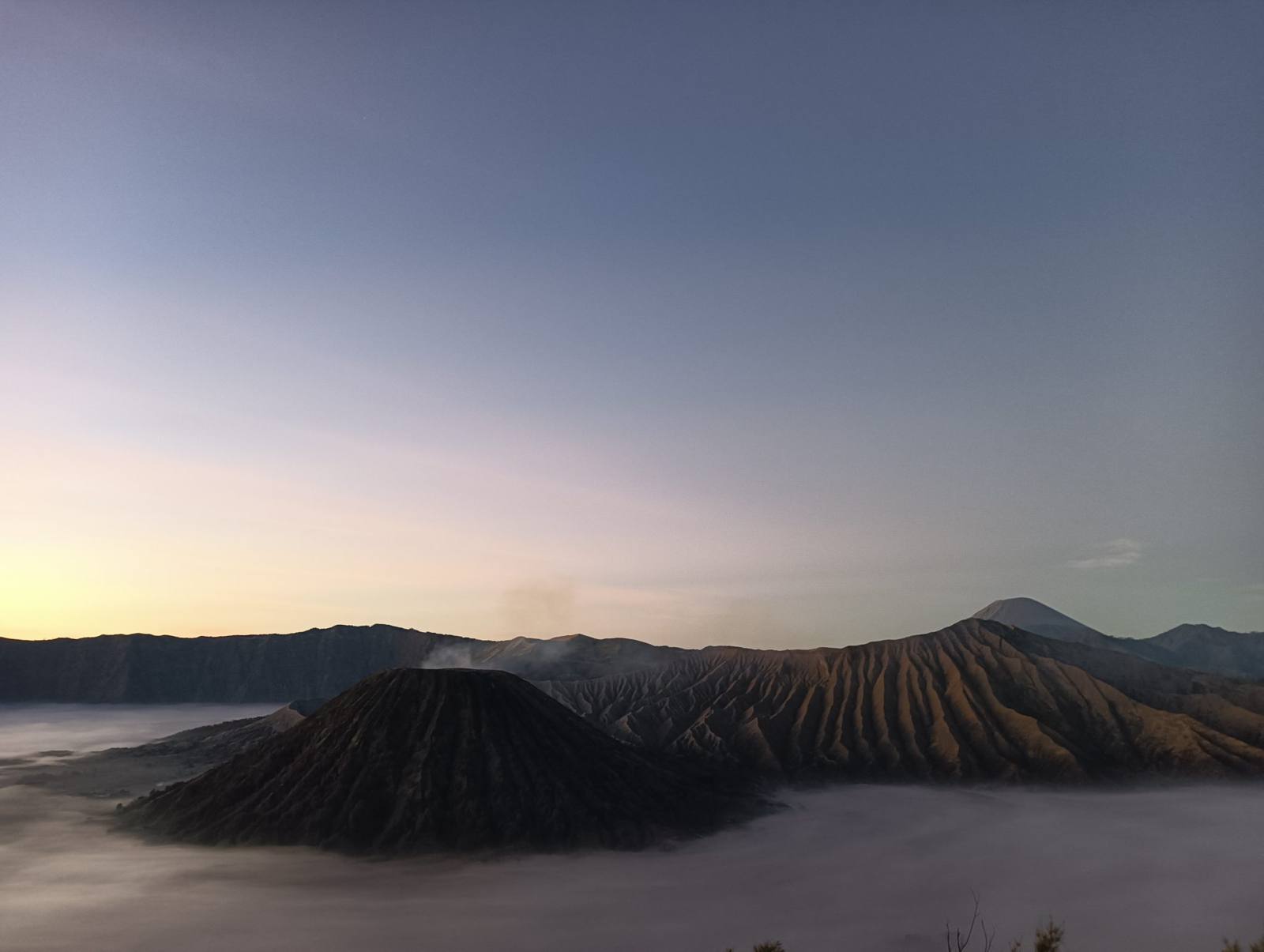
A smoking volcano in a vast sand-filled caldera, where you wake at 3am for sunrise over the craters, cross the Sea of Sand at dawn and warm up afterwards with sweet coffee in a Tengger mountain village.
- Best time to visit: April to October
- Daily budget (budget traveller): $35 to $160 USD
- Ideal trip length: 2 to 5 days
Mount Bromo is a small, active volcano in East Java. It sits inside the Tengger Caldera, a much older crater about 10km across, and is surrounded by a flat plain of grey volcanic sand called the Sea of Sand. Next to it stands the ribbed cone of Mount Batok, and on clear mornings Semeru, Java's highest peak, puffs smoke on the horizon behind them. This is the view people come for, usually at sunrise from the caldera rim. The whole area is part of Bromo Tengger Semeru National Park and is home to the Tenggerese, a Hindu community who farm the steep slopes and treat Bromo as sacred. Most visitors rush through on an overnight tour from Surabaya, Malang or Bali. Stay a few nights in Cemoro Lawang instead and you get quiet rim walks at dusk, cold starry nights, potato fields on impossible slopes and the sand plain without the jeep convoy. It is cheap apart from the park fee, simple rather than comfortable, and very cold at night. Bromo is also a live volcano. It erupted on 5 November 2026, and access to the crater changes with its alert level, so check the latest status before you go.
Bromo is the most famous of the volcanoes inside the Tengger Caldera, a huge ancient crater in East Java whose floor is a flat plain of volcanic sand. Bromo itself is only about 2,329m high, smaller than the caldera walls around it, but it is constantly steaming and sometimes erupts, as it did on 5 November 2026. The classic picture, taken at sunrise from Penanjakan on the rim, shows Bromo smoking beside the neat cone of Batok, with Semeru behind. Most people see it on a rushed overnight tour. Base yourself in Cemoro Lawang for two or three nights instead and you can do the sunrise jeep one morning, walk the sand on another and spend the evenings on the rim when the crowds have gone. Apart from the national park fee, it is cheap. Rooms are basic, hot water is not guaranteed and the nights are cold.
Logistics take some care. Park tickets for foreigners cost IDR 255,000 per person per day and are sold online only, so buy one for each day you plan to be inside the park. Trains run to Probolinggo, and from there a shared minibus climbs to Cemoro Lawang when it fills up, usually by mid-afternoon. Inside the park, jeeps do the sunrise circuit for roughly IDR 600,000-900,000 per vehicle, which is affordable once it is split between four to six people. Your guesthouse can arrange a shared seat. The Pasuruan side, via Wonokitri, is closer to Penanjakan, and the Malang side, via Tumpang, links up with Ranu Pani and the Semeru trail.
Check the conditions as well as the calendar. The dry season, roughly April to October, gives the clearest mornings, and July and August are cold and busy. The park closes for Tenggerese ceremonies, including Yadnya Kasada, which shut it from 30 May to 2 June 2026. Fires closed it from early August 2026, and Penanjakan did not reopen until 23 October. Then Bromo erupted on 5 November, and the alert level stayed at Level II with a 1km exclusion zone around the crater. None of this means you should stay away, but you do need flexible dates and a spare morning. Bromo is not a party place. It suits early nights, alarms at 3am and big views that are worth the cold.
Mount Bromo itinerary
Train to Probolinggo and up to the rim
Morning: Take a morning train to Probolinggo from Surabaya or further afield. Grab a short ride to Bayuangga terminal and find the Cemoro Lawang minibus waiting outside.
Afternoon: Ride up for about 90 minutes and check in. Buy your park tickets on the official site for each day you plan to enter, and ask your guesthouse about a shared sunrise jeep.
Evening: Walk the rim path at dusk for your first view over the Sea of Sand. Have rawon or nasi pecel at a warung, then go to bed early.
Sunrise jeep and the Sea of Sand
Morning: Leave around 3.30am for Penanjakan 1 or King Kong Hill. Watch the light come up on Bromo, Batok and Semeru, then drive down to the sand and walk to Pura Luhur Poten. Stay outside the 1km crater exclusion zone.
Afternoon: Continue to the savanna and Pasir Berbisik, then return by late morning. Sleep off the early start and have a late lunch in the village.
Evening: Hot ginger tea on the rim, an early dinner and swapped photos with your jeep-mates.
Bukit Mentigen and the farm villages
Morning: Walk up Bukit Mentigen for a quieter sunrise without a jeep. Check whether you need a park ticket for the day before you go.
Afternoon: Stroll down through the terraced fields to Ngadisari, watch farmers at work and stop for coffee and fried potatoes.
Evening: Sunset walk along the rim, then dinner at Cafe Lava or a warung near the jeep stand.
Madakaripura waterfall and down to Sukapura
Morning: Check out and take a driver or ojek down towards Sukapura, then on to Madakaripura. Wade up the canyon to the waterfall, carrying your phone in a dry bag.
Afternoon: Lunch nearby, then check in to a warmer, greener base in Sukapura or Wonokerto, such as Yoschi's Guest House.
Evening: A hot shower and a proper night's sleep at a lower altitude. Arrange tomorrow's jeep to Ranu Pani.
Across the caldera to Ranu Pani
Morning: Take a jeep back up through Cemoro Lawang, across the Sea of Sand and past the Jemplang viewpoint to Ranu Pani. One-way jeeps have been listed at about IDR 600,000. Your park ticket is needed for this crossing.
Afternoon: Walk around the lake and on to Ranu Regulo, and ask locals about conditions on the Semeru trail, which is often closed.
Evening: Simple homestay dinner in Ranu Pani. It is colder up here, so layer up.
Ranu Pani to Malang
Morning: Mist on Ranu Regulo at dawn, then a jeep or arranged car down through Tumpang to Malang.
Afternoon: Check in to Malang and wander the Alun-Alun area and the old Dutch-era streets. Visit the painted houses of Kampung Warna-Warni Jodipan.
Evening: Dinner at Toko Oen, a café dating from the colonial era, or bakso from a street stall.
Malang and onwards
Morning: A slow breakfast and a last coffee. Visit a market for snacks to take with you.
Afternoon: Fly out from Malang's airport, or take a train back to Surabaya, Yogyakarta or Banyuwangi for the Ijen crater.
Evening: Onward travel. If you are heading to Ijen, sleep near Banyuwangi for an early start.
Best neighbourhoods
- Cemoro Lawang: The village right on the caldera rim at about 2,200m and the main base for independent travellers. It has guesthouses, Cafe Lava Hostel, Lava View Lodge, a jeep stand, warungs and the path down onto the Sea of Sand. It is cold, basic and has the best location around.
- Ngadisari: The Tengger village just below Cemoro Lawang, with the park entrance gate, homestays and terraced potato and cabbage fields. It is a little cheaper and quieter than the rim, and a short ojek ride or a steep walk from the action.
- Sukapura and Wonokerto: Lower villages on the Probolinggo road, warmer and greener, with comfortable resorts such as Jiwa Jawa Resort Bromo and long-running guesthouses such as Yoschi's Guest House. Good for a softer landing or a base for Madakaripura waterfall, but you need a jeep or driver for sunrise.
- Wonokitri and Tosari: The Pasuruan side of the park, on the northwest approach. It is the closest base for Penanjakan 1 and Seruni Point, and it sees fewer foreign backpackers. It suits travellers arriving from Surabaya or Pasuruan by car.
- Ranu Pani: A high farming village on the southern side by a small lake, and the start of the Semeru trail. It is quiet and cold, with simple homestays and Ranu Regulo lake a short walk away. It is reached by jeep across the Sea of Sand or from Malang via Tumpang.
Must-do experiences
- Watch sunrise from the caldera rim: Penanjakan 1 is the classic viewpoint, with Bromo, Batok and Semeru lined up below you. King Kong Hill and Bukit Cinta are closer to Cemoro Lawang and slightly less crowded. Jeeps leave around 3am to 3.30am. Wrap up, because it can be near freezing while you wait.
- Cross the Sea of Sand: Walk or ride a horse across the grey sand plain from Cemoro Lawang towards Bromo in the early morning, with Batok towering beside you. Allow about 45 minutes each way on foot. Cover your face if the wind picks up the ash.
- See Bromo's crater from a safe distance: In normal times you climb about 250 concrete steps to the smoking crater rim. After the 5 November 2026 eruption, visitors must stay at least 1km from the active crater, marked by posts on the ground. Check the current alert level before you go and never pass the markers.
- Visit Pura Luhur Poten: The Tenggerese Hindu temple sits alone on the sand at the foot of Bromo, built from dark volcanic stone. It is the focus of the Yadnya Kasada ceremony. Look from the outside unless you are invited in, and dress modestly.
- Ride out to the savanna and Whispering Sands: The southern part of the caldera has the rolling grassland nicknamed Teletubbies Hill and the stretch of sand called Pasir Berbisik. Most jeep packages include both. Parts of the savanna burned in the 2026 fires, so expect some blackened slopes while it recovers.
- Walk the rim at Cemoro Lawang at dusk: When the day-trippers leave, the rim path above the village goes quiet. Watch the light fade over Batok and the sand, then head to a warung for a hot drink before the cold sets in.
- Day trip to Madakaripura waterfall: A tall, curtain-like waterfall in a narrow green canyon below Bromo, linked in legend with the Majapahit general Gajah Mada. You wade through the river and get soaked, so bring a dry bag. Avoid it after heavy rain because of flash floods.
Hidden gems
- Bukit Mentigen, a small hill a short walk from Cemoro Lawang with sunrise views over the caldera and far fewer jeeps than Penanjakan
- Seruni Point on the Wonokitri side, a stepped viewpoint with flower gardens and a good angle on Batok and Bromo
- The Jemplang viewpoint on the road to Ranu Pani, where the rim looks down over the southern savanna
- Ranu Regulo, a quiet lake near Ranu Pani with a small campsite, misty at dawn and a peaceful contrast to the crater crowds
- The terraced vegetable fields around Ngadisari, where farmers work slopes so steep they look vertical, best seen on a slow morning walk
Daily budget
- Accommodation: budget IDR 150,000-300,000 / night (dorm or basic guesthouse), mid-range IDR 500,000-1,200,000 (private room with hot water and rim views), splurge IDR 2,000,000+ (Jiwa Jawa Resort Bromo, Plataran Bromo). Cemoro Lawang rooms are simple, and hot water and heating vary. Book ahead for July, August and Indonesian holidays. Ask for extra blankets.
- Food: budget IDR 80,000-150,000 / day (warungs and street snacks), mid-range IDR 200,000-350,000 (guesthouse restaurant meals), splurge IDR 500,000+ (resort dining in Sukapura). A warung plate of rice and vegetables costs roughly IDR 15,000-35,000. Food at the viewpoints and in hotel restaurants costs more. Prices are rough guides, so check.
- Transport: budget IDR 50,000-200,000 / day (shared minibus, share of a jeep), mid-range IDR 300,000-700,000 (private ojek trips, Grab car from Probolinggo), splurge IDR 900,000+ (private jeep or private driver). Probolinggo minibuses run at about IDR 50,000 per person when full. A whole minibus is about IDR 700,000. Sunrise jeeps from Cemoro Lawang cost roughly IDR 600,000-900,000 per vehicle.
- Activities: budget IDR 255,000-300,000 / day (park ticket plus village fee), mid-range IDR 400,000-600,000 (park ticket, jeep share, horse ride), splurge IDR 1,000,000+ (private jeep, guided Ranu Pani or Madakaripura trip). Foreigners pay IDR 255,000 per day for the park, bought online, plus a village fee of about IDR 35,000 via Cemoro Lawang. Rest days outside the park cost nothing.
- Drinks & nightlife: budget IDR 10,000-40,000 (coffee, ginger tea), mid-range IDR 50,000-150,000 (beer at a guesthouse), splurge IDR 250,000+ (drinks at a resort). There is no nightlife to speak of. Beer is available at some guesthouses but not everywhere, as this is a conservative area. Most people are asleep by 9pm before a 3am start.
Where to stay
- Social hostel in Cemoro Lawang (IDR 150,000-400,000 / night): Cafe Lava Hostel sits right by the rim, with dorms and simple rooms, a busy café and plenty of other travellers to share sunrise jeeps with.
- Boutique hotel in Cemoro Lawang (IDR 900,000-1,800,000 / night): Lava View Lodge sits at the edge of the caldera, with views over the Sea of Sand, a warm restaurant and an easy walk to the sand path at dawn.
- Apartment in Ngadisari or Wonokerto (IDR 250,000-600,000 / night): Family homestays and guesthouses such as Yoschi's Guest House give you a room or cottage with a local feel and cheaper rates. You need a jeep or ojek for sunrise.
- Splurge in Sukapura (IDR 2,000,000-5,000,000+ / night): Jiwa Jawa Resort Bromo or Plataran Bromo, for proper heating, hot water, good food and mountain views, with the hotel arranging your sunrise jeep.
What to eat
- Rawon: East Java's dark beef soup coloured with keluak nuts, served with rice, bean sprouts and a salted egg, ideal after a freezing sunrise
- Nasi jagung: rice made from ground corn, a Tengger staple often served with vegetables, salted fish and sambal
- Nasi pecel: rice with blanched vegetables under a spicy peanut sauce, a cheap breakfast at most warungs
- Bakso: meatball soup from carts and small stalls, warming and filling for a few dollars
- Kentang Tengger: local potatoes grown on the caldera slopes, fried or boiled and sold as snacks around Cemoro Lawang
- Wedang jahe and kopi tubruk: hot ginger drink and thick, sweet Javanese coffee, sold at the viewpoints before dawn
Day trips
- Madakaripura waterfall (About 45-60 minutes by road from Cemoro Lawang, less from Sukapura): A tall waterfall in a narrow, fern-lined canyon, where water pours from the rock walls all around you. The approach involves wading and getting wet, and legend links it with Gajah Mada. Hire a driver or ojek from Cemoro Lawang or Sukapura, often combined with the trip down to Probolinggo. Local guides at the car park lead the walk for a fee. Skip it after heavy rain.
- Ranu Pani and Ranu Regulo (About 1-1.5 hours by jeep across the Sea of Sand from Cemoro Lawang): A high farming village and two small lakes at the start of the Semeru trail. It is quiet and misty, and a world away from the sunrise crowds. Book a jeep through your guesthouse. One-way trips from Cemoro Lawang have been listed at around IDR 600,000 and return trips at around IDR 1,100,000 per vehicle. Alternatively, come up from Malang via Tumpang. Ranu Regulo has its own national park fee.
- Penanjakan and Seruni Point (Pasuruan side) (About 30-45 minutes by jeep from Cemoro Lawang, or close to Wonokitri): The highest rim viewpoints on the northwest side, with the classic three-volcano line-up. Penanjakan reopened on 23 October 2026 after fire restrictions. Most sunrise jeeps include Penanjakan or the nearby King Kong Hill. Ask to go to Penanjakan 1 if that is the one you want. From the Pasuruan side, jeeps leave from Wonokitri and Tosari.
When to visit
- Early dry season (April - June): Days 15-20°C, nights 5-10°C, mostly clear mornings. Crowds: Moderate, with spikes on Indonesian holidays and weekends. A good window, with green slopes and clearer skies. Check Yadnya Kasada dates, because the park closes for several days around the ceremony.
- Peak dry season (July - August): Days 14-19°C, nights can fall to near freezing at the viewpoints. Crowds: Busy, with international summer holidays and domestic visitors. The most reliable sunrises and the coldest nights. Book rooms ahead and bring serious warm layers.
- Late dry season (September - October): Dry, dusty and windy, days 15-20°C. Crowds: Moderate. Often clear, but this is peak fire season. Fires closed the park in September 2023 and from August to October 2026, so keep your dates flexible.
- Wet season (November - March): Days 15-20°C, frequent afternoon rain, cloudy mornings. Crowds: Quiet outside Christmas, New Year and long weekends. Cheaper and greener, but many sunrises are lost to cloud. Stay at least two nights for a second try. The park also closes for Nyepi in March.
Entry rules for your passport
Visa rules for Indonesia depend on the passport you travel on. Check the official source before you book: Indonesia Directorate General of Immigration
Getting there
The nearest big airport is Juanda International (SUB) in Surabaya, with domestic links across Indonesia and some international flights. Malang's smaller airport has domestic flights from Jakarta and other cities. From Surabaya, trains to Probolinggo take about two hours. Trains also arrive from Yogyakarta and from Banyuwangi in the east, and fares roughly run IDR 100,000-350,000 depending on route and class. From Probolinggo station, take a short ride to Bayuangga bus terminal, where shared minibuses to Cemoro Lawang leave from outside when full, for about IDR 50,000 per person and around 90 minutes. Grab cars and private drivers cost more but save waiting. From Malang, jeeps and drivers go via Tumpang, and from Surabaya or Pasuruan you can reach Wonokitri on the Pasuruan side. Many tours also run overland from Bali via Ijen, which means very long days. Buy your park e-ticket online before you reach the gate.
Getting around
Most people use jeeps inside the park. A sunrise jeep from Cemoro Lawang to the viewpoint, the crater area, the savanna and Pasir Berbisik costs roughly IDR 600,000-900,000 per vehicle in 2026 listings, and takes four to six people. Your guesthouse can put you in a shared jeep, so you pay perhaps IDR 150,000-200,000. Shorter jeep packages and sunset trips cost less. From Cemoro Lawang you can also walk: the Sea of Sand and the rim path are both on foot, and King Kong Hill is a steep pre-dawn walk. Horse rides across the sand are offered at the bottom of the path, so agree a price first. Ojeks (motorbike taxis) link Cemoro Lawang, Ngadisari and Sukapura. To reach the mountain, a shared minibus leaves from outside Bayuangga bus terminal in Probolinggo. It costs around IDR 50,000 per person, but only goes when it is full, and most run before mid-afternoon. A whole minibus costs around IDR 700,000. Grab cars and private drivers also run up from Probolinggo, and some travellers hire a scooter in Probolinggo, but the road is steep and cold at night.
Safety
Bromo is an active volcano. It erupted on 5 November 2026 with an ash column of about 500m. The alert stays at Level II (Waspada), and there is a 1km exclusion zone around the active crater. Follow the boundary posts and rangers, and check the alert level with PVMBG or your guesthouse each day. Status can change quickly, and the park closes if it rises. Wildfires are the other big risk. Fires closed the whole park from 8 August 2026, and Penanjakan only reopened on 23 October. Never light fires, flares or cigarettes in the park. Altitude and cold matter too. Cemoro Lawang is about 2,200m, and sunrise viewpoints can drop close to freezing, so bring proper layers. Sulphur fumes and ash can irritate your lungs, so wear a mask if you have asthma. Jeep drivers go fast in the dark, so wear a seatbelt where there is one. Crime against tourists is rare, but touts at Probolinggo terminal have a poor reputation, so agree prices before you get in. Get travel insurance that covers volcanic disruption.
Solo travel tips
- Share a jeep through your guesthouse: Jeeps are priced per vehicle, so going alone is expensive. Ask your guesthouse the evening before to fit you into a group. Four to six people bring it down to around IDR 150,000-200,000 each.
- Give yourself two sunrise chances: Cloud, fog or a sudden closure can ruin a single morning. Stay at least two nights in Cemoro Lawang so you have a backup, and buy park tickets day by day.
- Check the volcano and the park every day: After the November 2026 eruption, the crater exclusion zone and park access can change quickly. Ask your guesthouse, follow official park announcements and never cross the marker posts.
- Catch the minibus early: The Probolinggo minibus leaves when it is full. Arriving by late morning gives you the best chance of sharing. After mid-afternoon you may need to pay for empty seats.
- Safety for solo travellers: The real risks are cold, the volcano and fire, not crime. Carry layers and a head torch, do not walk onto the sand alone in fog or darkness and tell your host where you are going.
- Bring cash and download maps: ATMs near the rim are scarce or unreliable, so withdraw in Probolinggo or Malang. Mobile signal is patchy in the caldera, so download offline maps and screenshot your e-tickets.
Cultural etiquette
- The Tenggerese are Hindu, unlike most of Java. Bromo and the Sea of Sand are sacred to them, so behave respectfully around the crater, the temple and offerings.
- Pura Luhur Poten is an active temple. Dress modestly, do not climb the walls and only enter if you are invited and properly dressed.
- Do not light fires, flares or smoke bombs, including for photos. A pre-wedding photoshoot flare started a huge fire in 2023, and fire rules are strictly enforced.
- Respect closures for ceremonies such as Yadnya Kasada, Nyepi and Karo. These are religious events, not tourist shows.
- Ask before photographing people, especially Tenggerese farmers and riders wrapped in sarongs. A smile and a nod usually works.
- Say 'terima kasih' (thank you) and 'permisi' (excuse me). Use your right hand to give and receive money.
- Bargain politely for horses, ojeks and minibuses, but agree the price before you start, not at the end.
Frequently asked questions
How do I get to Mount Bromo on my own?
Take a train to Probolinggo from Surabaya, Yogyakarta or Banyuwangi. Then get a short ride to Bayuangga bus terminal, where the shared minibus to Cemoro Lawang waits outside. It costs about IDR 50,000 per person and takes around 90 minutes. It leaves only when it is full, so arrive before early afternoon. Grab cars and private drivers are faster and cost more.
How much is the entry fee and where do I buy it?
Foreign visitors pay IDR 255,000 per person per day, on weekdays and weekends. Tickets are sold online only through the official site, bookingbromo.bromotenggersemeru.org, so buy before you arrive at the gate. If you enter via Cemoro Lawang, there is also a village fee, listed at about IDR 35,000 for foreigners, and a small vehicle fee for jeeps.
Is it safe to visit Bromo after the November 2026 eruption?
The park has stayed open, but Bromo erupted on 5 November 2026 and remains at Level II (Waspada). Visitors must keep at least 1km from the active crater, so the stairs to the rim are off limits for now. Sunrise viewpoints, the Sea of Sand and the savanna are generally still accessible. Check the current status before you travel, because the park closes if the alert level rises.
Do I need a tour?
No. Going independently is easy and cheaper. Stay in Cemoro Lawang, buy your ticket online and ask your guesthouse to fit you into a shared sunrise jeep. Tours from Malang, Surabaya or Bali save planning but mean very long drives and very little sleep.
When is the best time to visit Bromo?
The dry season, roughly April to October, gives the clearest sunrises. July and August are busiest and coldest. November to March brings cloud and rain, and many sunrises are hidden, but it is quieter. Dry months also bring fire risk, and the park closes for ceremonies such as Yadnya Kasada, which shut it from 30 May to 2 June in 2026.
How cold does it get and what should I wear?
Nights in Cemoro Lawang are often 5-10°C, and the sunrise viewpoints can feel close to freezing in July and August. Bring a warm jacket, a hat, gloves and thick socks. Locals rent jackets at the viewpoints, and Tenggerese men wrap themselves in sarongs against the cold.
Is Bromo good for solo female travellers?
Yes. Cemoro Lawang is small and used to backpackers, and sharing a jeep is a natural way to meet people. Book reputable guesthouses, agree transport prices before you set off and avoid walking alone onto the Sea of Sand in thick fog or darkness. Dress modestly in villages and near the temple.
What are the entry rules for Indonesia in 2026?
Many nationalities can get a visa on arrival or an e-Visa on Arrival online before travel, usually for 30 days, and your passport normally needs six months' validity. Rules and fees vary by nationality and change often, so check the official Indonesian immigration website and your own government's travel advice before booking.
More about Mount Bromo
- Solo Travel Southeast Asia Itinerary 2026: 2, 3 and 4 Week Overland Routes
- Best Coworking Spaces in Bali 2026: Prices, Areas and Visas
Tours and activities in Mount Bromo | Mount Bromo in 2 days | Mount Bromo in 3 days | Mount Bromo in 4 days | Mount Bromo in 5 days | Mount Bromo in 7 days
Joy Plus home | Destinations | Itineraries | Activities | Flights | Budget planner | Calendar | Map | Blog | Lifetime access