Destinations / Europe
Nafplio, Greece travel guide
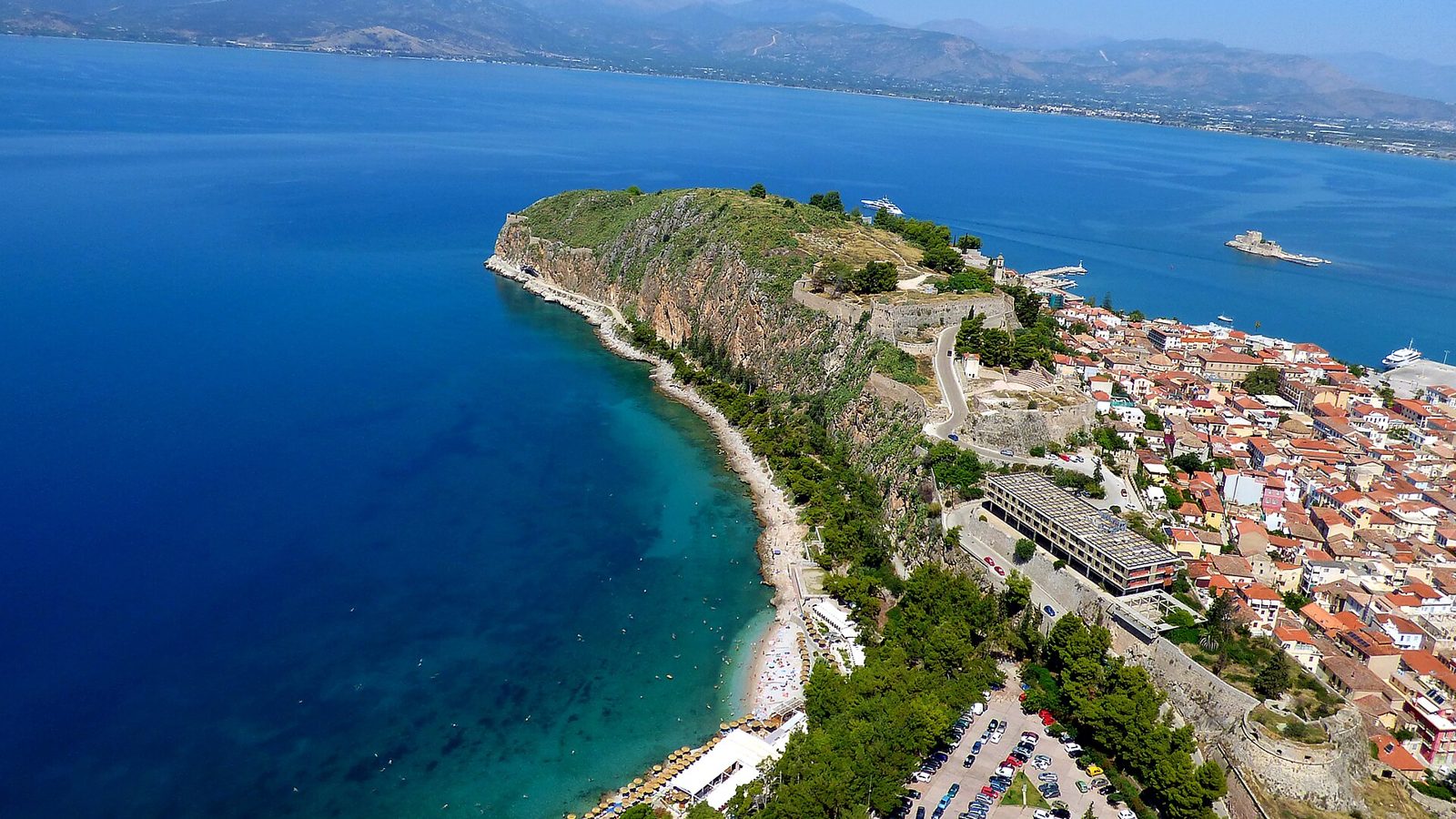
A Venetian and Ottoman harbour town in the Peloponnese, overlooked by a huge hilltop fortress. You climb the steps to Palamidi, take a small boat out to the island castle of Bourtzi and use the town as a base for the ancient sites at Mycenae and Epidaurus.
- Best time to visit: April to June and September to October
- Daily budget (budget traveller): $80 to $250 USD
- Ideal trip length: 3 to 5 days
Nafplio sits on the Argolic Gulf in the north-east Peloponnese, about two hours from Athens by bus. It was the first capital of modern Greece, from the 1820s until 1834, and it has the grand squares and neoclassical houses to show for it. Before that, the Venetians and the Ottomans each held it twice, and both left their mark: stone fortresses, a mosque turned parliament, fountains and narrow lanes with bougainvillea over the balconies. Three castles shape the town. Palamidi stands on a 216m crag above the old town. Acronauplia is the long rocky ridge behind the houses, and Bourtzi is the small fort on an islet in the harbour. The old town is flat, compact and mostly free of traffic, so you can walk everywhere. A promenade runs around the headland to Arvanitia, where people swim, and a path carries on to the sandy beach at Karathona. Greeks come here at weekends from Athens, and cruise passengers and coach tours arrive by day, so Nafplio can feel busy at midday. Stay the night and it changes. The lanes empty, the waterfront fills with locals out for their evening walk and the fortress walls turn gold at sunset. There are no real hostels, but simple guesthouses, cheap souvlaki and local buses to Epidaurus and Tolo keep a solo trip affordable.
Nafplio is often called the most beautiful town in mainland Greece, and it is hard to argue. It sits on a small peninsula in the Argolic Gulf. Fortresses rise on three sides, and the old town below is full of Venetian houses, Ottoman fountains and neoclassical mansions with iron balconies. From 1823 to 1834 it served as Greece's first capital after independence. The first governor, Ioannis Kapodistrias, was shot outside the Church of Agios Spyridon here in 1831. Many visitors see it in a couple of hours on a coach tour from Athens. Stay a few nights and you get the better version: Palamidi at opening time, a swim at Arvanitia before lunch, Bourtzi on the last boat and the waterfront full of local families after dark.
Getting here is easy. KTEL Argolida buses run from the Kifissos terminal in Athens roughly every one to two hours, taking 2 to 2.5 hours for about €14-16. Once you arrive, walk. The old town is flat and small, the promenade loops around the headland and almost everything is within 15 minutes on foot. Stay in Psaromachalas or near Syntagma Square for atmosphere, or in Pronoia for lower prices. For the big ancient sites nearby, check bus times carefully. Epidaurus has a few buses a day, and Mycenae only has a direct bus on summer weekdays, so a taxi or a day of car hire often saves a lot of hassle.
Timing matters here. Spring and autumn are ideal for climbing and walking around ruins, and the sea is warm from June to October. July and August bring heat above 30°C, crowds from Athens at weekends and the Epidaurus Festival, with ancient drama performed in the theatre on Friday and Saturday nights. Winter is calm, mild and cheap, with orange trees heavy with fruit across the plain, though site hours are shorter. Nafplio is very safe, English is widely spoken in tourist businesses and the evening walk along the water is a ritual worth joining. It is a good place to slow down between Athens and the rest of the Peloponnese.
Nafplio itinerary
Arrive and find your feet
Morning: Take a morning KTEL bus from Kifissos in Athens (about 2 to 2.5 hours). Drop your bag and walk to Syntagma Square for a coffee.
Afternoon: Wander the old town lanes up into Psaromachalas, then find the bullet mark at the Church of Agios Spyridon. Have a first swim at Arvanitia.
Evening: Walk the promenade around the headland at sunset, then have a souvlaki or taverna dinner and an ice cream in the old town.
Palamidi and Bourtzi
Morning: Climb the Palamidi steps at opening time (€20) while it is still cool. Walk the bastions for views over the gulf, then come down for a late breakfast.
Afternoon: Get out of the heat in the archaeological museum on Syntagma Square, then rest or swim at Arvanitia.
Evening: Take one of the last boats to Bourtzi (about €7 return plus €7 entry) for the classic view of the town at dusk.
Epidaurus
Morning: Take the morning KTEL bus to the theatre at Epidaurus (about 45 minutes). Check the return times the day before. Explore the theatre and the Sanctuary of Asclepius (€20).
Afternoon: Return to Nafplio for a late lunch and a lazy afternoon. Walk up to Acronauplia for the views.
Evening: In July and August, check whether a festival performance is on and book transport back. Otherwise, have dinner in Psaromachalas.
Mycenae and Tiryns
Morning: On summer weekdays, take the morning bus to Mycenae. At other times, take a taxi or hire a car. See the Lion Gate, the citadel and the Treasury of Atreus (€20).
Afternoon: Stop at Tiryns on the way back, a quieter Mycenaean citadel with massive walls about 5km from Nafplio. Swim back in town.
Evening: Have dinner in Pronoia with a carafe of Nemea red, then go back to the harbour for the evening walk.
Karathona and the coast path
Morning: Walk from Arvanitia along the coast path below Palamidi to Karathona beach (about 45 minutes to an hour). Take water and a hat.
Afternoon: Swim and have lunch at Karathona, then walk or take a taxi back. Visit the Peloponnese Folklore Foundation museum if you want some shade.
Evening: Find the Lion of Bavaria in Pronoia, then have a quiet dinner away from the harbour front.
Tolo beach day
Morning: Take the KTEL bus to Tolo (about 20 minutes) and claim a spot on the long sandy beach.
Afternoon: Lunch at a seafront taverna, swim again or walk to the far end of the bay.
Evening: Bus back to Nafplio for a final sunset on the promenade and a farewell fish dinner.
Slow morning and depart
Morning: Have an early swim at Arvanitia and a fresh orange juice in Syntagma Square before the coach groups arrive.
Afternoon: Buy Nemea wine, olive oil or a komboloi for home, then take an afternoon bus back to Athens. Buy your ticket the day before in summer.
Evening: Arrive in Athens, or carry on into the Peloponnese.
Best neighbourhoods
- Old town and Syntagma Square: The heart of Nafplio, set around the marble square with the archaeological museum in the old Venetian arsenal and the former mosque that housed Greece's first parliament. Cafés, tavernas and the shopping lanes are all here, and the waterfront is two minutes away. It stays lively until late, especially at weekends.
- Psaromachalas: The old fishermen's quarter at the western end of town, tucked under the cliffs of Acronauplia. It has steep, stepped lanes, whitewashed houses, cats and almost no shops. Expect plenty of stairs, but it is the quietest and prettiest part of the old town to stay in.
- Arvanitia and the promenade: The southern side of the headland, where the Palamidi steps begin and a cliffside path leads to the small pebbly beach at Arvanitia. Guesthouses on the slopes above have sea views and are close to swimming, and the old town is still only a short walk away.
- Pronoia: A residential area just east of the old town, at the foot of Palamidi. It has the Lion of Bavaria monument, a few bakeries and tavernas used mostly by locals, and some of the cheapest rooms. It is about 10 to 15 minutes' walk from Syntagma Square and handy for the road up to Palamidi.
- Tolo: A beach resort about 11km south-east, with a long sandy beach, hotels, rooms to rent and seafront tavernas. KTEL buses link it with Nafplio in about 20 minutes. It suits you if you want beach days first and history second, but it is quiet out of season.
Must-do experiences
- Climb to Palamidi fortress: The Venetians built Palamidi between 1711 and 1714, and the stone staircase up from Arvanitia is said to have 999 steps, though the real number is lower. Entry is €20, or €10 reduced, at the gate. Go at opening time to avoid the heat, or take a taxi to the upper car park and walk down.
- Take the boat to Bourtzi: Small boats leave the harbour for the island castle and take about 10 minutes. Expect about €7 for the return boat and €7 to enter the fort. The best views of the old town and Palamidi are from the water, so try for one of the last boats of the day.
- Walk the Arvanitia promenade: A flat path runs around the base of Acronauplia from the harbour to Arvanitia, with cliffs on one side and the gulf on the other. It is free and busy with locals at sunset. Carry on along the coast path to Karathona if you want a longer walk and a sandy beach.
- See Syntagma Square and the museum: The main square has the Venetian arsenal from 1713, which now houses the archaeological museum, and the old mosque where Greece's first parliament met. The museum's star piece is a Mycenaean bronze suit of armour. Check opening days and the current ticket price before you go, as both change with the season.
- Explore Acronauplia: The oldest of Nafplio's three fortresses sits on the ridge behind the old town. Parts of the walls and gates are free to wander, and the views over the harbour are excellent. Go up by the lanes from Psaromachalas or the lift by the Nafplia Palace hotel.
- Visit the theatre at Epidaurus: The 4th-century BC theatre is famous for its acoustics, and a coin dropped on the stage can be heard in the back rows. Entry is €20 and also covers the Sanctuary of Asclepius and the museum. KTEL buses from Nafplio take about 45 minutes but run only a few times a day.
- Walk through the Lion Gate at Mycenae: The Bronze Age citadel of Agamemnon lies about 25km north of Nafplio. It has Cyclopean walls, royal graves and the huge beehive tomb known as the Treasury of Atreus. Entry is €20 and includes the site museum. In summer a weekday bus goes there, but otherwise you will need a taxi or a tour.
Hidden gems
- The Lion of Bavaria in Pronoia, a large lion carved into the rock around 1840 in memory of Bavarian soldiers who died in an epidemic, with almost nobody there
- The bullet mark in the wall of the Church of Agios Spyridon, left when Greece's first governor, Ioannis Kapodistrias, was assassinated outside in 1831
- The steep lanes of Psaromachalas early in the morning, when the only sounds are cats, church bells and someone sweeping a doorstep
- The coast path from Arvanitia to Karathona, a rough track below the cliffs of Palamidi that most visitors never walk
- The small Komboloi Museum, devoted to Greek worry beads, where you can learn how to flick them properly and buy a string to take home
Daily budget
- Accommodation: budget €40-65 / night (simple guesthouse or pension room), mid-range €90-160 (boutique guesthouse or 3-star hotel), splurge €250+ (Nafplia Palace or a top old town suite). There are no real hostels, so a basic private room is the budget option. A climate resilience fee is added per room per night, and it is higher in summer and at better hotels. Book summer weekends early.
- Food: budget €20-30 / day (bakery breakfast, souvlaki, supermarket picnic), mid-range €40-60 (café lunch and a taverna dinner with wine), splurge €80+ (seafood by the kilo, good wine, dessert). A gyros pitta costs a few euros and taverna mains roughly €12-22. House wine by the carafe is cheap. Harbour-front places cost more than the back lanes.
- Transport: budget €0-8 / day (walking, local KTEL buses), mid-range €20-40 (a taxi to Palamidi or one site), splurge €50-80 (a car hire day or taxis to Mycenae and Epidaurus). Athens to Nafplio is about €14-16 each way. Local buses to Tolo, Epidaurus and Mycenae cost a few euros. A Bourtzi return boat is about €7.
- Activities: budget €0-20 / day (promenade, Acronauplia, beaches, Palamidi at €20), mid-range €20-40 (Mycenae or Epidaurus at €20 each, Bourtzi, museums), splurge €60+ (Epidaurus Festival tickets, guided tours, boat trips). Palamidi, Mycenae and Epidaurus now cost €20 each, so spread them out. Bourtzi is about €7 to enter plus the boat. Reduced tickets exist for some students and seniors.
- Drinks & nightlife: budget €4-8 (a freddo espresso or a beer in a back lane), mid-range €15-30 (a few drinks on the waterfront), splurge €40+ (cocktails at a terrace bar). A coffee costs about €2.50-4.50 and a glass of wine €4-6. Nightlife means bars and terraces around Syntagma Square and the harbour, not clubs.
Where to stay
- Budget guesthouse in Pronoia and the edges of the old town (€40-65 / night): Family-run pensions and simple rooms to rent give you a private room for close to hostel prices. Pronoia is cheaper and quieter, and the old town and Palamidi are both within walking distance.
- Boutique hotel in Old town and Psaromachalas (€90-180 / night): Restored mansions and small boutique guesthouses, such as Pension Marianna below Acronauplia, have character, rooftop views and helpful owners. You are steps from the square and the promenade.
- Apartment in Arvanitia slopes and the old town lanes (€70-140 / night): Small apartments give you a kitchen and a balcony, and the ones near Arvanitia are a few minutes from a swim. Check for stairs, air conditioning and the exact location before booking.
- Splurge in Acronauplia (€250-600+ / night): Nafplia Palace sits on the fortress ridge above town, with views of Bourtzi, sea-facing rooms and its own lift down to the old town. It is the classic Nafplio luxury stay.
What to eat
- Souvlaki and gyros: a pitta wrap from a grill near the bus station or in Pronoia is the cheapest filling meal in town at a few euros
- Gogges: small, hand-made Argolid pasta shaped like little ears, usually served with tomato sauce and grated cheese
- Grilled fish and fried calamari: served at tavernas around the harbour and in Tolo. Whole fish is priced by the kilo, so ask before you order
- Argolida oranges: the plain around Nafplio is full of citrus groves, so drink fresh orange juice at breakfast, especially in winter and spring
- Agiorgitiko from Nemea: the red wine grown just north of here, cheap by the carafe in tavernas and good to take home by the bottle
- Gelato from Antica Gelateria di Roma, an Italian-run ice cream shop in the old town that has become one of Nafplio's evening rituals
Day trips
- Mycenae (About 25km north of Nafplio, 30 to 45 minutes by road): The Bronze Age citadel of Agamemnon, with the Lion Gate, Cyclopean walls, royal grave circles and the vast beehive Treasury of Atreus. Combine it with Tiryns on the way back. On summer weekdays, a KTEL bus leaves Nafplio in the morning and returns around midday. At other times, buses stop at Fichti, about 3km away, so take a taxi, hire a car or join a tour. Entry is €20, including the museum.
- Ancient Epidaurus (About 30km east of Nafplio, 35 to 45 minutes by bus): The best-preserved ancient theatre in Greece, famous for its acoustics, plus the healing Sanctuary of Asclepius and a small museum. In summer, the Epidaurus Festival stages ancient drama here on Friday and Saturday nights. KTEL buses from Nafplio run a few times a day, so check the return times before you leave. Taxis and festival buses are options for evening shows. Entry is €20.
- Tolo (About 11km south-east of Nafplio, 20 minutes by bus): A relaxed beach resort with a long sandy bay, shallow water and plenty of tavernas. It is good for a lazy day after a run of fortresses and ruins. KTEL buses run regularly from Nafplio's bus station, especially in summer, for a few euros. A taxi takes about 15 minutes.
When to visit
- Spring (March - May): 16-26°C, sunny and fresh, sea cool until late May. Crowds: Moderate, busy at Greek Easter and on weekends. Great for Palamidi, Mycenae and Epidaurus, with wildflowers at the sites and comfortable walking weather. Swimming is for the brave before late May.
- Early summer (June): 25-31°C, hot and sunny, sea around 22-24°C. Crowds: Moderate, rising towards July. A strong pick. The sea is warm, the evenings are long and the Epidaurus Festival begins. Climb Palamidi early in the morning.
- High summer (July - August): 30-36°C, very hot and dry, sea up to about 27°C. Crowds: Busy, very busy at weekends and around mid-August. Good for beaches and festival nights, but rooms cost the most and the ancient sites are punishing at midday. Book ahead and plan sightseeing for early or late in the day.
- Autumn and winter (September - February): September 24-29°C, then cooling to 8-16°C in winter, with some rain. Crowds: Moderate in September and October, quiet from November. September and October are the locals' favourites, with warm water and calmer streets. Winter is cheap and peaceful, but site hours are shorter and beach places close.
Entry rules for your passport
Visa rules for Greece depend on the passport you travel on. Check the official source before you book: European Commission: Schengen visa policy
Getting there
Nafplio has no airport. The nearest is Athens International, about 2 hours away by car. From the airport, take the X93 bus to the Kifissos intercity terminal, then a KTEL Argolida bus to Nafplio. Buses run roughly every one to two hours from early morning to evening, take about 2 to 2.5 hours and cost around €14-16 one way. In central Athens, buses 051 from Omonia and 052 from Elaionas metro station connect with Kifissos. In Nafplio, buses stop on Andrea Syngrou Street at the edge of the old town. If you drive, the motorway from Athens via Corinth has tolls, and the old town has very limited parking, so leave the car at the large harbour car parks and walk in. Cruise ships anchor in the bay in season and bring passengers in by tender. From Nafplio, KTEL buses also run to Argos, Tripoli and on into the Peloponnese.
Border checks: non-EU visitors (other than Swiss, Norwegian, Icelandic, Liechtenstein, Andorran, Monegasque, San Marinese and Vatican citizens, and holders of an EU residence permit or long-stay visa) are registered in the EU's Entry/Exit System (EES) instead of getting a passport stamp. On your first crossing, officers take your photo and/or fingerprints, so allow extra time at passport control. ETIAS, the planned travel authorisation, is not in operation yet, so don't pay any website for one.
Getting around
Nafplio's old town is flat, compact and mostly closed to cars, so you will walk almost everywhere. It takes about 10 minutes to cross from the bus station to Psaromachalas. Expect lots of stairs if you stay below Acronauplia, and a long, sunny climb to Palamidi. Taxis wait near the bus station and are useful for the road up to Palamidi's upper gate, or for Mycenae and Epidaurus when buses do not fit. Agree the fare or check that the meter is running. KTEL Argolida runs regional buses from the station on Andrea Syngrou Street. Tolo has the most frequent service, and buses also run to Argos, Epidaurus and, on summer weekdays, Mycenae. Fares are a few euros, but timetables are thin, especially at weekends and in winter, so check them at the station. The Bourtzi boats leave from the harbour front. Renting a car for a day or two makes it much easier to see Mycenae, Tiryns and Epidaurus at your own pace.
Safety
Nafplio is very safe, and violent crime against visitors is rare. Watch your bag in crowded lanes when cruise and coach groups are in town and on busy buses to Athens. The real risks are heat, sun and slippery stone. The Palamidi steps have little shade, so climb early, take water and wear shoes with grip. Polished marble in the old town gets slick after rain. At Arvanitia and other rocky spots, watch for sea urchins and swim near other people. In summer, take heatwave warnings seriously and avoid the ancient sites in the middle of the day. Tap water is generally treated, but many locals drink bottled, so ask your host. The emergency number is 112, and the tourist police are on 171. EU travellers should carry an EHIC and UK travellers a GHIC, and everyone else needs travel insurance with medical cover.
Solo travel tips
- Stay in Psaromachalas or near the square: You can walk everywhere, the lanes are lively in the evening, and getting home after dinner takes a few minutes. If you hate stairs, ask exactly how many steps lead to your room.
- Beat the heat and the coaches: Coach tours and cruise groups crowd the old town from late morning to mid-afternoon. Do Palamidi and the ancient sites early, rest at midday and come out again for the evening.
- Plan the sites around the buses: Buses to Epidaurus and Mycenae are few, and some run only on summer weekdays. Lock in those days first, or share a taxi with other travellers you meet.
- Spread out the €20 tickets: Palamidi, Mycenae and Epidaurus now cost €20 each. Balance them with free days on the promenade, Acronauplia and the beaches, and eat souvlaki on site days.
- Safety for solo travellers: The main risks are heatstroke on Palamidi, slippery steps and swimming alone off rocks. Carry water, swim where others are swimming and stay off the Karathona path after dark.
- Join the evening walk: Locals stroll the waterfront and the promenade every evening. Join them, sit at a kafeneio on the square, or book a small-group food or wine tour to meet people.
Cultural etiquette
- Say 'kalimera' (good morning) or 'yia sas' (hello) when you walk into a shop or taverna, and 'efharisto' (thank you) when you leave.
- Cover your shoulders and knees in churches, and keep your voice down if a service is on.
- Do not walk around the old town or into shops in swimwear. Cover up when you leave the beach.
- Dinner starts late, often from 9pm. Tavernas may look empty at 7pm, and that is normal.
- Ask the price of whole fish per kilo before you order, so the bill does not surprise you.
- Round up or leave around 5-10% for good table service. It is appreciated but not expected.
- Do not climb on walls or touch fragile stonework at Mycenae, Epidaurus or the fortresses, and follow the guards' instructions.
Frequently asked questions
How do I get to Nafplio from Athens?
KTEL Argolida buses leave from the Kifissos bus terminal in Athens, roughly every one to two hours from early morning to evening. The trip takes about 2 to 2.5 hours and costs around €14-16 one way. From Athens airport, take the X93 bus to Kifissos. In Nafplio, the bus stops on Andrea Syngrou Street at the edge of the old town, and most guesthouses are within a 10 to 15-minute walk. On Friday evenings and Sunday afternoons in summer, buy your ticket ahead.
How many days do I need in Nafplio?
Two nights covers the old town, Palamidi, Bourtzi and the Arvanitia promenade. Three to five nights lets you add Epidaurus, Mycenae and Tiryns, plus a beach day at Karathona or Tolo. A week works if you want to slow down, swim most afternoons and take in a performance at the Epidaurus Festival in summer.
When is the best time to visit Nafplio?
April to June and September to October are best. It is warm enough to swim from late May, and you can climb Palamidi and walk the ancient sites without the worst of the heat. July and August are very hot and busy with Greek holidaymakers, especially at weekends. Winter is mild and quiet, with cheap rooms, though some beach tavernas close and site hours are shorter.
Can I visit Mycenae and Epidaurus without a car?
Yes, but plan around the buses. KTEL runs a few buses a day from Nafplio to the Epidaurus theatre, taking about 45 minutes. In summer, a weekday bus goes to Mycenae in the morning and comes back around midday. At other times, buses only reach the village of Fichti, about 3km away. Taxis or a day of car hire are much easier for combining both sites. Entry is €20 at each.
How much does Palamidi cost and how hard is the climb?
Entry to Palamidi is €20, or €10 reduced, paid at the gate. The stone staircase from Arvanitia has several hundred steep steps and almost no shade, so it can take 20 to 40 minutes depending on your fitness and the heat. Go at opening time, take water, or get a taxi to the upper gate and walk down the steps afterwards.
Where can I swim in Nafplio?
The nearest spot is Arvanitia, a small pebbly beach with rocky platforms just below the promenade, about 10 minutes' walk from the old town. For sand, walk the coast path or the road to Karathona, about 3 to 4km away, or take a KTEL bus to Tolo, about 20 minutes away. All are free, though sunbeds in summer cost extra.
Is Nafplio safe for solo female travellers?
Yes. It is one of the most relaxed towns in Greece to visit alone. The old town and the harbour stay lit and busy late into the evening, and families walk the promenade after dark. Take normal care with drinks in bars, agree taxi fares in advance and avoid the coast path to Karathona after dark.
What entry rules apply to Greece in 2026?
Greece is in the EU and the Schengen area. Many non-EU visitors, including those from the UK, US, Canada and Australia, can stay visa-free for up to 90 days in any 180-day period across Schengen. The EU's Entry/Exit System has been fully running since April 2026 and records non-EU travellers' fingerprints and photos on arrival. The ETIAS travel authorisation had no confirmed start date as of early November 2026. Check official EU and Greek government sites and your own government's travel advice before you travel.
Tours and activities in Nafplio | Nafplio in 2 days | Nafplio in 3 days | Nafplio in 4 days | Nafplio in 5 days | Nafplio in 7 days
Can't decide? Compare Nafplio with...
Joy Plus home | Destinations | Itineraries | Activities | Flights | Budget planner | Calendar | Map | Blog | Lifetime access