Destinations / Europe
Nazaré, Portugal travel guide
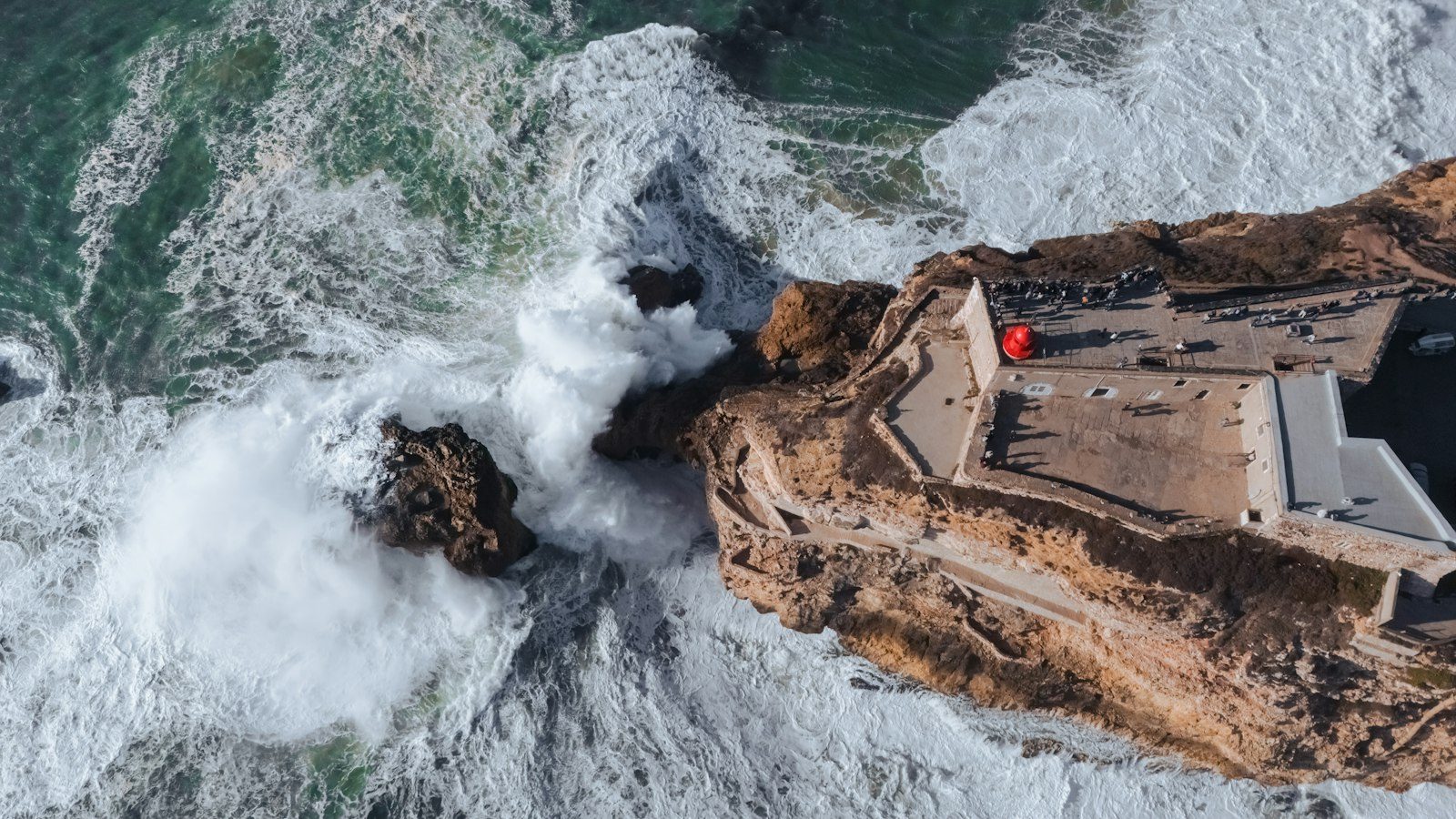
A fishing town on Portugal's Silver Coast with a wide sandy bay below a high clifftop village. In summer you swim off the long beach. In winter you stand at the old fort and watch some of the biggest waves ever surfed hit Praia do Norte.
- Best time to visit: June and September, or November to February for big waves
- Daily budget (budget traveller): $70 to $215 USD
- Ideal trip length: 3 to 5 days
Nazaré is on Portugal's Atlantic coast, about 120km north of Lisbon and just under two hours away by direct bus. The town has three parts. Praia is the lower town along a wide curve of sand. Sítio is the old village on a cliff about 110 metres above it. Pederneira is the original hilltop settlement to the south. An 1889 funicular normally links Praia and Sítio, although it is closed for work from November 2026. Nazaré is known for two very different things. In summer it is a busy family beach resort, with fish grilling on street barbecues, older women in layered skirts renting out rooms and fish drying on racks on the sand. From roughly October to March, swells funnelled by a huge underwater canyon break off Praia do Norte. Crowds gather at the Fort of São Miguel Arcanjo to watch surfers being towed into waves bigger than a house. It is cheaper than the Algarve or Lisbon, buses are easy and the monasteries at Alcobaça and Batalha and the walled town of Óbidos are close by, which makes it a good base for a solo traveller for a few days.
Nazaré grew up as a fishing town, and parts of it still feel that way. Fishing boats once launched straight off the sand and were hauled back up by oxen and teams of people. Older women still wear the traditional layered skirts, and fish still dries on wooden racks at the southern end of the beach. The three parts of town sit on three levels: Praia by the sea, Sítio on the cliff and Pederneira on the hill to the south. Since the early 2010s, Nazaré has also been world-famous for its giant waves. An underwater canyon around 5km deep runs right up to Praia do Norte and focuses winter swells into huge peaks. The 26.2-metre wave surfed by Sebastian Steudtner in 2020 is still recognised as the biggest ever ridden. Most visitors come for an afternoon on a tour from Lisbon. Stay a few nights and you can catch the fishing boats in the morning, watch a sunset from Pederneira and choose your own big-wave day.
Getting here is simple. Rede Expressos runs frequent direct buses from Lisbon's Sete Rios and Oriente stations, which take about 1 hour 40 minutes to 2 hours, plus slower services from Lisbon airport. Once you are here, walk. Praia is flat and compact, and Sítio is a steep climb up the cliff. The funicular is closed from November 2026, so use the town bus or the path until it reopens. Base yourself in Praia for the beach, restaurants and buses, or in Sítio if you mainly want the waves and quiet evenings. Regional buses make Alcobaça, Batalha, São Martinho do Porto and Óbidos easy day trips.
Timing shapes the trip. June and September bring sunshine, long days and room to breathe on the beach. July and August are hot, busy and the most expensive, especially around the town's festival in September. From October to March the beach empties, prices drop and the big waves start. You need some luck, because a good day depends on swell, wind and tide all working together. Winters are mild but often wet and windy, and some places close outside the season. Nazaré is safe and easy-going, and many people in tourism speak English. Nightlife means bars and seafront terraces rather than clubs. If you want wild water, fresh fish and a real working town, it is one of the best stops on this coast.
Nazaré itinerary
Arrive and find your feet
Morning: Take a morning Rede Expressos bus from Lisbon Sete Rios (about 1 hour 45 minutes). Drop your bag in Praia and have coffee and a pastel de nata near the seafront.
Afternoon: Walk the length of the beach to the harbour and see the fish-drying racks. Wander back through the narrow lanes behind Avenida da República.
Evening: Grilled sardines or a fish plate at a back-lane tasca such as A Tasquinha, then a walk along the lit promenade.
Sítio, the sanctuary and the fort
Morning: Go up to Sítio by funicular if it is running, or by bus or the steep path if not. Take in the view from the Suberco viewpoint, look into the Ermida da Memória and visit the Sanctuary.
Afternoon: Walk down to the Fort of São Miguel Arcanjo (about €2-3). See the surfboard display and the view over Praia do Norte, whatever the size of the waves.
Evening: Watch the sunset from the cliffs in Sítio, then have dinner up there or head back down to Praia.
Pederneira and local life
Morning: Look round the municipal market for fruit, cheese and fish, then climb to the old quarter of Pederneira.
Afternoon: Visit the Museu Dr. Joaquim Manso in Sítio to learn about the town's fishing history. In summer, spend the rest of the day on the beach.
Evening: Sunset from the Pederneira viewpoint, then seafood rice to share or a single caldeirada in Praia.
Alcobaça and Batalha
Morning: Take the bus to Alcobaça (about 20 minutes). Visit the monastery (€15) and see the tombs of Pedro and Inês in the free church.
Afternoon: Carry on to Batalha by bus or taxi to see its Gothic monastery (€15) and the Unfinished Chapels. Check return bus times before you go.
Evening: Back in Nazaré for a simple dinner and an early night.
São Martinho do Porto
Morning: Take a short bus ride south to São Martinho do Porto and walk round its round, sheltered bay.
Afternoon: Swim in the calm water in summer, or climb to the viewpoint above the bay mouth. Have a long lunch by the sand.
Evening: Bus back to Nazaré. In winter, check the swell forecast and plan your next morning at the fort.
A day in Óbidos
Morning: Take a bus to Óbidos (about 45 minutes to 1 hour, sometimes with a change). Walk the medieval walls early, before the tour groups arrive.
Afternoon: Wander the whitewashed lanes, try ginjinha in a chocolate cup and visit the bookshops in old churches.
Evening: Back in Nazaré for a farewell fish dinner on the seafront.
Big waves or a slow morning, then depart
Morning: In winter, if the swell is up, go to the fort early. In summer, have a last swim or a walk on the beach.
Afternoon: Buy some dried fish or convent sweets, then take an afternoon bus back to Lisbon. Check times the day before.
Evening: Arrive in Lisbon, or carry on to Coimbra or Porto.
Best neighbourhoods
- Praia: The lower town, between the beach and the hill. It has the seafront promenade on Avenida da República, the bus station, the market, most hotels and nearly all the restaurants. The narrow back lanes were the old fishermen's quarter. Most first-time visitors stay here. The seafront is loud on summer nights, so ask for a room on a side street if you sleep lightly.
- Sítio: The clifftop village above the north end of the beach, set around a big square with the Sanctuary of Our Lady of Nazaré. You get the Suberco viewpoint, souvenir stalls and the road down to the fort and Praia do Norte. It is calmer than Praia at night and closest to the big waves. Without the funicular, getting down to the beach means a steep walk or a bus.
- Pederneira: The oldest part of Nazaré, a quiet hilltop quarter at the southern end of town with a parish church and a viewpoint over the whole bay. It feels residential and local. It suits you if you want peace and views, but every trip to the beach means a walk downhill and back up.
- Praia back lanes: The grid of whitewashed streets just behind the seafront, between Avenida da República and the market. Small guesthouses, rooms let by local women and cheap tascas are packed in here. It is a good-value base where you can walk everywhere, with the beach a minute away, though it is less quiet than the name suggests in August.
- São Martinho do Porto: A small resort around an almost circular bay about 13km south, where the water is calm and shallow. It is quieter than Nazaré and much better for a gentle swim. Regular buses run between the two. It suits you if you want a sleepy base and are happy to come into Nazaré for the waves and the food.
Must-do experiences
- Watch the giant waves from the fort: Walk out to the Fort of São Miguel Arcanjo and its red lighthouse above Praia do Norte. Entry is about €2-3 and includes a small display of boards ridden by big-wave surfers. Big swells come mainly from October to March, so check a surf forecast and go in the morning, when the wind is often lighter.
- Look down from the Suberco viewpoint: The Miradouro do Suberco in Sítio gives the classic view straight down on to the beach and the red roofs of Praia. It is free and open all the time. Come for sunrise or late afternoon, when the light runs along the whole bay.
- Visit the Sanctuary of Our Lady of Nazaré: The baroque church on the main square in Sítio has tiled walls and a revered statue of the Virgin. Entry to the church is free, and a small fee of about €3 lets you see the area behind the altar. Next to the viewpoint, the tiny Ermida da Memória chapel marks the spot of the town's founding legend.
- Walk the beach and the fish-drying racks: Walk the length of Nazaré beach from the cliffs to the harbour. At the southern end, women still dry split horse mackerel and other fish on wooden racks in the sun, and you can buy a bag to snack on. The beach is free, and parasols are for hire in summer.
- Ride the funicular up to Sítio: The 1889 funicular runs 318 metres up the cliff, rising about 110 metres at a steep angle, and gives a great view as it goes. A single normally costs €2.50 and a return €4. It is closed from 9 November 2026, with no reopening date announced, so check before you plan around it. In the meantime, use the bus or walk.
- See the sunset from Pederneira: Climb up to the quiet old quarter at the south end of town and its viewpoint by the parish church. You get the whole bay, Sítio on its cliff and the sun dropping into the Atlantic, with hardly anyone else around. It is free and a nice change from the busy seafront.
- Learn the town's fishing history: The Museu Dr. Joaquim Manso in Sítio covers Nazaré's fishing boats, costumes and the hard lives of fishing families. Entry costs a few euros and it takes about an hour. It is a good stop on a windy or rainy winter day.
Hidden gems
- The south end of the beach near the harbour early in the morning, when fishing boats come in and the drying racks are being set out
- The Ermida da Memória, a tiny chapel on the cliff edge in Sítio with tiled walls, which most people walk straight past on their way to the viewpoint
- The path down from Sítio to the fort on a weekday in summer, when the waves are small, the lighthouse is quiet and the sea is a deep blue
- Praia do Norte on a calm evening, a wild, empty beach under the cliffs that feels nothing like the busy town beach
- The municipal market on a Saturday morning, with local fruit, cheese and fish and few tourists
Daily budget
- Accommodation: budget €25-45 / night (hostel dorm or simple room), mid-range €80-140 (guesthouse or 3-star hotel), splurge €170+ (sea-view room or spa hotel). Prices peak in July and August and on big-wave weekends. A tourist tax of €1 a night, for up to five nights, has been added since September 2026. Book summer single rooms early.
- Food: budget €18-28 / day (bakery breakfast, grilled sardines at a tasca, market picnic), mid-range €35-60 (café lunch and a sit-down fish dinner), splurge €80+ (seafood rice, barnacles, wine). A tasca fish plate costs about €10-15 and restaurant mains roughly €14-25. Shellfish and whole fish are sold by weight, so ask before ordering. Prices are rough guides.
- Transport: budget €0-5 / day (walking, town bus), mid-range €8-20 (regional buses to Alcobaça or Óbidos), splurge €40+ (taxis or a hire car for the monasteries). The Lisbon bus costs around €5-15 one way, depending on how early you book. When it runs, the funicular costs €2.50 single or €4 return.
- Activities: budget €0-5 / day (beach, viewpoints, the fort at about €2-3), mid-range €15-30 (Alcobaça or Batalha at €15 each, museums), splurge €50+ (surf lessons, guided big-wave tours, boat trips). Alcobaça and Batalha cost €15 each for adults, with 50% off for those aged 13 to 24 and over 65. The church at Alcobaça is free to enter.
- Drinks & nightlife: budget €4-8 (a beer or glass of wine at a tasca), mid-range €15-25 (a few drinks at a seafront bar), splurge €40+ (cocktails and late nights in summer). A coffee costs about €1-1.50 and a glass of house wine €2.50-4. Nightlife is mainly bars along the seafront in summer, and it is very quiet in winter.
Where to stay
- Social hostel in Praia back lanes (€25-45 / night (dorm)): A handful of small hostels and surf houses sit in the lanes behind the seafront, a minute from the beach and close to the bus station. They are the cheapest beds in town and a good way to meet surfers and other travellers.
- Boutique hotel in Praia seafront (€110-220 / night): Hotel Mar Bravo is right on the seafront at the north end of the beach, with sea-view rooms and its own restaurant. The cliff, the path to Sítio and the town centre are all close.
- Apartment in Praia and Pederneira (€60-120 / night): Rooms and small apartments let by local families give you a kitchen and a quieter feel. Check how far uphill they are, as places in Pederneira and Sítio mean a steep climb back from the beach.
- Splurge in Pederneira (€150-300+ / night): Miramar Hotel & Spa sits above the town with views over the bay, a pool and a spa. It is quieter than the seafront but still within walking distance of the beach.
What to eat
- Grilled sardines: a plate of sardinhas assadas on bread with salad and potatoes, cheapest and best in summer at simple tascas such as A Tasquinha
- Caldeirada: the local fish and potato stew, cooked slowly with tomato and peppers and made for sharing, though many places serve a single portion
- Peixe seco: sun-dried horse mackerel or other fish from the racks on the beach, eaten grilled or as a salty snack
- Arroz de marisco: soupy seafood rice served in a pot, usually for two, so ask whether they do a half portion. Taberna d'Adélia is a popular choice
- Percebes and clams: goose barnacles and amêijoas à Bulhão Pato with garlic and coriander. Barnacles are sold by weight, so ask the price first
- Pastéis de nata and convent sweets: a custard tart with your morning coffee, plus egg-and-almond sweets from Alcobaça down the road
Day trips
- Alcobaça and Batalha monasteries (Alcobaça about 13km inland, Batalha about 30km): Two of Portugal's great Gothic monasteries, both UNESCO World Heritage Sites. Alcobaça has the tombs of Pedro and Inês and huge cloisters. Batalha has fine carved stonework and the roofless Unfinished Chapels. Take a bus from Nazaré to Alcobaça, about 20 minutes, then a bus or taxi on to Batalha. Each monastery costs €15 for adults, with 50% off for those aged 13 to 24. Check return times before you set off.
- São Martinho do Porto (About 13km south, 20 minutes by bus): A small resort around an almost round, sheltered bay with calm, shallow water. It is the best place nearby for an easy swim, and the clifftop viewpoint over the bay mouth is lovely at sunset. Regional buses run several times a day from Nazaré bus station. Fares are a few euros. In summer, you can walk part of the way along the coast on quiet roads and tracks.
- Óbidos (About 45km south, 45 minutes to 1 hour by bus): A walled medieval town with whitewashed houses, a castle and bookshops set in old churches. It is busy at midday, so get there early or stay into the late afternoon. Take a bus from Nazaré, sometimes with a change in Caldas da Rainha. Allow most of a day and check the last bus back.
When to visit
- Spring (March - May): 15-21°C, mixed sun and showers, sea cold at 14-16°C. Crowds: Low, busier at Easter and on sunny weekends. Good for walking, day trips and cheap rooms. Late big swells are possible in March. Too cold for most swimmers.
- Early summer (June): 20-25°C, mostly sunny, sea around 16-18°C. Crowds: Moderate, building towards the end of the month. One of the best months. Long evenings, the beach not yet packed and sardine season starting.
- High summer (July - August): 23-28°C, sunny with morning sea mist, sea up to about 19°C. Crowds: Very busy, especially in August and at weekends. Great beach atmosphere, but rooms cost the most and the seafront is crowded. Book early and get out to the bays or the monasteries.
- Autumn and winter (September - February): September 20-25°C, then 10-16°C with rain and strong wind. Crowds: Moderate in September, quiet in winter except on big-wave days. September is the locals' pick. From October the big waves start, and November to February gives the best chance of a monster day. Rooms are cheap, but some places close.
Entry rules for your passport
Visa rules for Portugal depend on the passport you travel on. Check the official source before you book: European Commission: Schengen visa policy
Getting there
There is no airport in Nazaré. The nearest is Lisbon, about 120km south, and Porto is about 2.5 hours away by road. Rede Expressos runs frequent direct buses from Lisbon Sete Rios and some from Gare do Oriente. They take about 1 hour 40 minutes to 2 hours, and fares range from around €5 if you book early to roughly €12-15 on the day. There are also buses from Lisbon airport, which take about 2.5 hours, though some involve a change. Buy tickets online for summer weekends. Buses also link Nazaré with Leiria, Coimbra and Porto. Trains are not practical, as the Oeste line station at Valado dos Frades is a few kilometres inland with slow, infrequent services. If you drive, the A8 from Lisbon takes around 1.5 hours. Parking is easier in winter, but on big-wave days the roads near the fort fill up early. Portuguese motorways have electronic tolls, so make sure your hire car has a transponder.
Border checks: non-EU visitors (other than Swiss, Norwegian, Icelandic, Liechtenstein, Andorran, Monegasque, San Marinese and Vatican citizens, and holders of an EU residence permit or long-stay visa) are registered in the EU's Entry/Exit System (EES) instead of getting a passport stamp. On your first crossing, officers take your photo and/or fingerprints, so allow extra time at passport control. ETIAS, the planned travel authorisation, is not in operation yet, so don't pay any website for one.
Getting around
Nazaré is small, and you will walk almost everywhere in Praia. The seafront from the bus station to the foot of the cliff takes about 15 minutes. The funicular between Praia and Sítio normally runs every 15 minutes from early morning to late at night, for €2.50 single or €4 return. It is closed from 9 November 2026, with no reopening date announced. While it is shut, use the town's urban bus service or walk the steep path and steps from the north end of the beach, which takes about 15 to 20 minutes up. The fort and lighthouse are about 15 minutes' walk downhill from the Sítio square. On big-wave days, roads and parking near the fort fill up, and police may close the road, so walk. Rede Expressos and regional buses leave from the bus station on Avenida do Município for Alcobaça (about 20 minutes), São Martinho do Porto, Leiria, Óbidos and Lisbon. Short hops cost a few euros. Taxis wait near the bus station and the market. Trains are not much use, as the nearest station at Valado dos Frades is a few kilometres inland with few services.
Safety
Nazaré is safe, and violent crime against visitors is rare. Watch your bag in summer crowds on the seafront and on big-wave days at the fort, when thousands of people squeeze on to the cliffs. The real danger is the sea. The beach shelves steeply, there are strong currents and rip tides, and Praia do Norte is very dangerous even on days that look calm. Swim only on the lifeguarded part of the main beach in summer and follow the flags. Never go down on to the rocks or the sand below the fort when big swells are running. Waves can surge much further up than you expect, and people have been swept away. Keep behind the barriers on the cliffs. Storm Kristin hit the town hard in January 2026, so some paths or seafront areas may still be under repair. Tap water is safe to drink. The EU emergency number is 112. EU travellers should carry an EHIC and UK travellers a GHIC, and everyone else needs travel insurance with medical cover.
Solo travel tips
- Stay in Praia: Praia puts the beach, the bus station, the market and most cheap food on your doorstep. Sítio is lovely but quiet at night, and harder to reach while the funicular is closed.
- Chase the swell, not the calendar: Big waves depend on the forecast. If you come in winter, book a flexible stay and keep two or three days open so you can go to the fort on the best morning.
- Respect the water: Swim only between the flags on the lifeguarded part of the main beach. Never go down on to the sand or rocks at Praia do Norte, even when it looks calm.
- Eat in the back lanes: Tascas a street or two back from the seafront serve cheaper, better fish than the promenade restaurants. Lunch set menus are the best value of the day.
- Safety for solo travellers: Crime is low. The main risks are the sea, crowded cliffs on big-wave days and walking unlit roads to the fort in the dark. Keep to the promenade and main streets at night in winter.
- Meet people at the fort or on a surf lesson: Big-wave days bring a friendly crowd of surf fans to the fort. In summer, a group surf lesson on the main beach or a hostel common room is an easy way to meet people.
Cultural etiquette
- Greet people with 'bom dia' (good morning) or 'boa tarde' (good afternoon) and say 'obrigado' if you are a man or 'obrigada' if you are a woman.
- Ask before photographing the older women in traditional skirts or the people working the fish racks. Many are happy to pose, but some expect a small purchase or tip.
- Cover up when you leave the beach. Walking through town or into the Sanctuary in swimwear is frowned upon.
- Dress modestly in churches, with covered shoulders, and keep quiet if a Mass is on.
- Ask the price of shellfish and whole fish by weight before you order, and send back bread or olives you did not ask for if you do not want to pay for them.
- Rounding up or leaving 5-10% for good table service is appreciated, though not expected.
- Stay behind the barriers on the cliffs on big-wave days and follow instructions from the police and lifeguards.
Frequently asked questions
How do I get to Nazaré and from the bus station to my room?
Most people take a Rede Expressos bus from Lisbon. Direct buses leave Sete Rios several times a day, and some also go from Gare do Oriente. The trip takes about 1 hour 40 minutes to 2 hours, and fares range from cheap advance deals of around €5 to roughly €12-15 nearer the time. There are also buses from Lisbon airport, which take about 2.5 hours. The bus station is on Avenida do Município, a few minutes' walk from the beach, so most rooms in Praia are within 10 minutes on foot. Sítio is a steep climb, and the funicular is closed from November 2026, so take a taxi if you have heavy bags.
How many days do I need in Nazaré?
Two nights covers the beach, Sítio, the fort and a sunset from Pederneira. Three to five nights lets you add Alcobaça, Batalha, São Martinho do Porto and Óbidos, and gives you a few days' leeway to catch a big swell in winter. A week works if you want slow beach days or plan to chase the waves.
When is the best time to visit Nazaré?
For the beach, June and September are best: warm, sunny and less crowded than July and August, when the town is packed and rooms cost the most. For the giant waves, come between October and March, especially November to February. The best days depend on the swell, so keep your plans flexible. Winter is mild but wet and windy, and some seasonal places close.
How do I see the big waves?
Watch a surf forecast for a large, long-period swell from the northwest, and head to the Fort of São Miguel Arcanjo above Praia do Norte. Arrive early, as the cliffs fill up fast on big days and parking disappears. Walk from Sítio, which takes about 15 minutes. Entry to the fort costs about €2-3, but you can also watch from the clifftops outside for free. Stay behind the barriers at all times.
Is the Nazaré funicular running?
Not at the moment. The town's municipal services closed the funicular from 9 November 2026 and have not yet given a reopening date. It also closed for maintenance in early 2026 and reopened at the end of March. When it runs, a single costs €2.50 and a return €4. While it is closed, use the local bus between Praia and Sítio or walk up the steep path from the north end of the beach.
Can I swim in Nazaré?
Yes, from about June to September, on the main town beach within the lifeguarded zones. The Atlantic is cold, often around 17-19°C even in summer, and the waves and currents can be strong, so follow the flags. Do not swim at Praia do Norte. For calm, shallow water, take the bus to São Martinho do Porto's sheltered bay.
Is Nazaré safe for solo female travellers?
Yes. It is a relaxed, friendly town, and the seafront stays lit and busy well into the evening in summer. In winter it gets very quiet after dark, so stick to the main streets and the promenade. Take normal care with drinks in bars and watch your bag in crowds. The biggest risk is the sea, not other people.
What entry rules apply to Portugal in 2026?
Portugal is in the EU and the Schengen area. Many non-EU visitors, including those from the UK, US, Canada and Australia, can stay visa-free for up to 90 days in any 180-day period across Schengen. The EU's Entry/Exit System records non-EU travellers' fingerprints and photos at the external border, and the ETIAS travel authorisation is due to follow, so check whether it has started before you travel. Nazaré also charges a tourist tax of €1 a night, for up to five nights, for guests aged 12 to 65. Confirm the rules on official EU and Portuguese government websites.
More about Nazaré
- What To Do in Lisbon for 7 Days: Itinerary with Sintra, Cascais and Évora
- Hidden Gems in Lisbon: Quiet Viewpoints, Museums, Gardens and Markets
Tours and activities in Nazaré | Nazaré in 2 days | Nazaré in 3 days | Nazaré in 4 days | Nazaré in 5 days | Nazaré in 7 days
Joy Plus home | Destinations | Itineraries | Activities | Flights | Budget planner | Calendar | Map | Blog | Lifetime access