Destinations / North America
New Orleans, United States travel guide
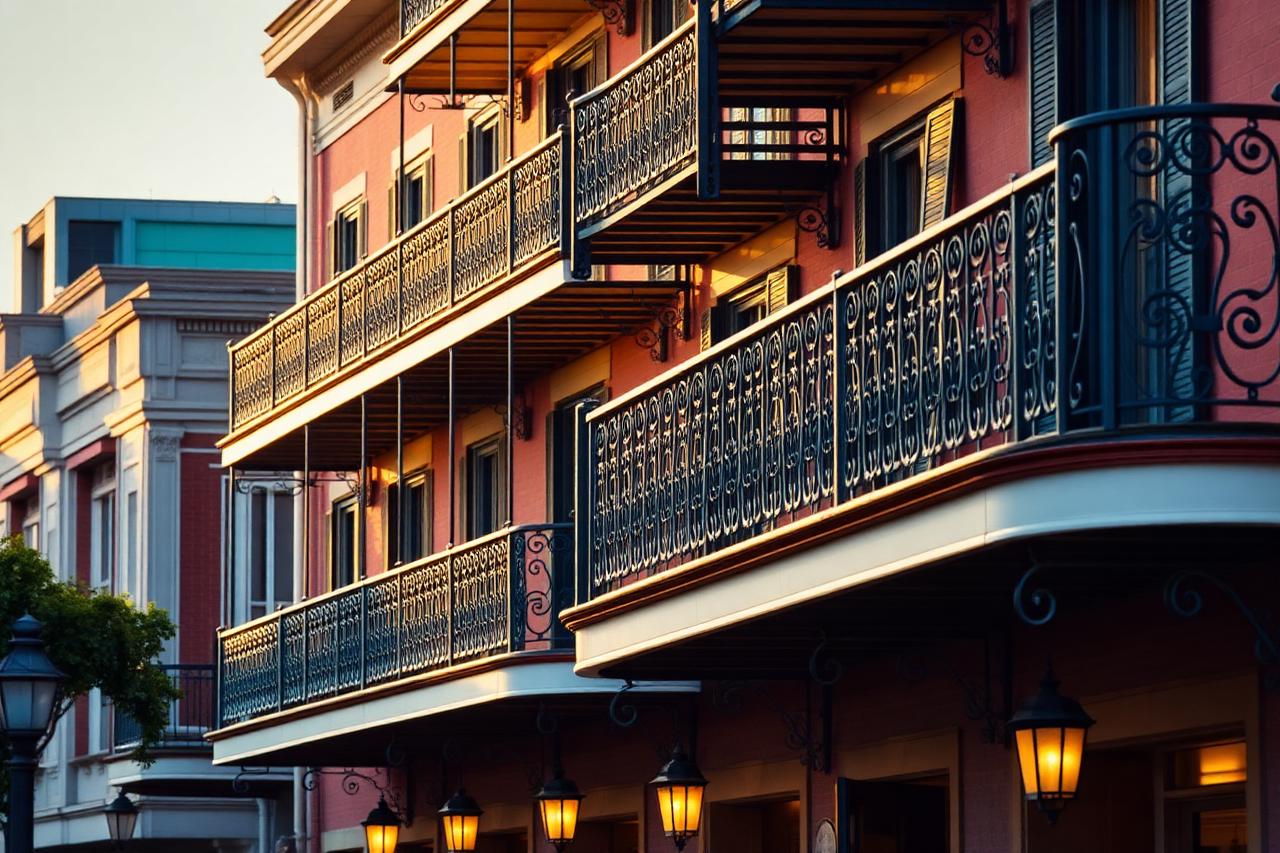
America's most soulful city, where jazz spills from French Quarter balconies and Creole cooking meets a one-of-a-kind cultural gumbo.
- Best time to visit: February-May (mild, festival season)
- Daily budget (budget traveller): $130 to $240 USD
- Ideal trip length: 3 to 4 days
There is nowhere else like New Orleans. French, Spanish, African and Caribbean influences fused into a city of wrought-iron balconies, brass bands on the street, voodoo lore and some of the best food in America. The French Quarter is the historic heart, but the real magic is in the music drifting from Frenchmen Street and the gumbo simmering in neighbourhood kitchens. Joy Plus balances the Quarter with the local Marigny and Garden District, times the streetcar rides, and finds the live-music and Creole spots that aren't tourist traps.
New Orleans is not a city you tick off. It sits in a bend of the Mississippi, below sea level and above the law of averages, and it has spent 300 years mixing French, Spanish, West African, Caribbean and Italian into one loud, sweaty, joyful thing. A funeral comes with a brass band. A Tuesday night can mean Rebirth Brass Band in a bar the size of your living room. Lunch can run three hours and nobody blinks. Bourbon Street is the least interesting street in the French Quarter, and the best version of the city is happening a few blocks away, on a porch, in a courtyard, or behind a po'boy counter.
The trick is to give each neighbourhood its own job. Do the French Quarter early, when the beignet queue is short, the balconies are dripping with ferns and the street sweepers are still hosing down last night. Spend your evenings on Frenchmen Street in the Marigny, where clubs like The Spotted Cat and d.b.a. run live sets nightly, many with no cover. Take the St Charles streetcar ($1.25, the oldest continuously operating streetcar line in the world) to the Garden District and Uptown. Then go north of Rampart to Treme, where brass-band jazz was born and the Backstreet Cultural Museum keeps the Mardi Gras Indian tradition alive. This guide runs on that rhythm: morning for walking, midday for eating, and a late start for music.
Be honest with yourself about the logistics. Summer is brutal, with a heat index regularly above 40°C (105°F), afternoon thunderstorms and hurricane season running June to November. Spring and late autumn are when the city shows off. Crime is real here, so take Uber or Lyft between neighbourhoods after dark and keep your phone out of your back pocket. Budget more than you think for food, because the best meals are not cheap, and most of the music is. Joy Plus sequences all of it by the clock, from the first beignet to the last set, so you spend your energy on the good stuff.
How many days in New Orleans?
For New Orleans, we recommend 3 to 4 days. With more time, add a day trip to Whitney Plantation or Barataria Preserve.
| Trip length | What you'll see | Itinerary |
|---|---|---|
| 2 days | French Quarter and a first brass set; Marigny, Bywater and Frenchmen Street | New Orleans in 2 days |
| 3 days · Recommended | Adds: St Charles streetcar, Garden District and Oak Street | New Orleans in 3 days |
| 4 days · Recommended | Adds: Treme, Congo Square and brass-band roots | New Orleans in 4 days |
| 5 days | Adds: Swamp day, Honey Island | New Orleans in 5 days |
| 7 days | Adds: City Park, Mid-City po'boys and Warehouse District; WWII Museum | New Orleans in 7 days |
New Orleans itinerary
Arrive, French Quarter and a first brass set
Morning: Land at MSY and take the RTA 202 airport express bus ($1.25) downtown, or a flat-rate taxi for $36. Drop bags, then beignets and a chicory café au lait at Café du Monde, standing in the queue before 9am. Walk the Moonwalk riverfront to Jackson Square and St. Louis Cathedral.
Afternoon: Half a muffuletta and a Pimm's Cup at Napoleon House (500 Chartres St). Wander Royal Street for galleries and antiques, then the Cabildo for Louisiana history.
Evening: Early dinner at Coop's Place (1109 Decatur St), rabbit and sausage jambalaya. Preservation Hall (726 St Peter St), book the 7:30pm or 8:45pm set ahead. End with a walk to Frenchmen Street and an Uber home.
Marigny, Bywater and Frenchmen Street
Morning: Brunch at Elizabeth's in Bywater (601 Gallier St), praline bacon is non-negotiable. Walk Crescent Park along the river, free and nearly empty.
Afternoon: Browse Euclid Records (3301 Chartres St), then wander the Marigny's colourful Creole cottages. Wine and a cheese plate in the courtyard at Bacchanal (600 Poland Ave), which has live music most evenings.
Evening: Burger and a baked potato at Port of Call (838 Esplanade Ave). Then Frenchmen Street: The Spotted Cat, d.b.a. and The Blue Nile, one drink and one set each. Tip the band.
St Charles streetcar, Garden District and Oak Street
Morning: Ride the St Charles streetcar from Canal Street to Washington Avenue (about 25 minutes). Walk the Garden District's mansions and oaks, then Lafayette Cemetery No. 1, closed for repairs since 2019 but open again for guided tours since October 2026 (book ahead with the Preservation Resource Center).
Afternoon: Lunch at Commander's Palace (1403 Washington Ave, about $60 for three courses, lunch Wednesday to Friday or jazz brunch at weekends, collared shirt and closed-toe shoes, jacket preferred) or red beans at Joey K's on Magazine Street. Browse Magazine Street's shops and vintage stores.
Evening: Streetcar to the Carrollton end, then dinner at Jacques-Imo's (8324 Oak St). Next door, The Maple Leaf Bar (8316 Oak St) has the Rebirth Brass Band on Tuesdays, check the schedule.
Treme, Congo Square and brass-band roots
Morning: Louis Armstrong Park and Congo Square, free. Then the Backstreet Cultural Museum for Mardi Gras Indian suits and brass-band history. Call ahead for hours.
Afternoon: Fried chicken at Willie Mae's Scotch House (2401 St Ann St), expect a line, it's worth it. Walk back through Treme's shotgun houses to St. Louis Cemetery No. 1, which requires a guided tour (around $25-30 through Save Our Cemeteries or licensed operators).
Evening: Local brass: Treme Brass Band at the Candlelight Lounge (925 N Robertson St) on Wednesdays. Check socials, schedules change.
Swamp day, Honey Island
Morning: Take a Honey Island Swamp tour near Slidell (about 40 minutes by car, tours with French Quarter pickup around $65-90). Two hours by boat through cypress and Spanish moss, with gators and herons.
Afternoon: Back in the city for a late lunch. Verti Marte (1201 Royal St) does a legendary overloaded po'boy, or Acme Oyster House (724 Iberville St) for oysters at the bar.
Evening: Slow night. Cocktails at the Carousel Bar in Hotel Monteleone, the bar actually rotates. Finish with a Sazerac, the city's official drink, at the Sazerac Bar in the Roosevelt.
City Park, Mid-City po'boys and Warehouse District
Morning: Canal streetcar to the City Park/Museum terminus. Coffee and beignets at Café du Monde in City Park, then the free Sculpture Garden next to the New Orleans Museum of Art and the live-oak groves.
Afternoon: Roast beef po'boy at Parkway Bakery & Tavern (538 Hagan Ave), dressed, with gravy. Walk Bayou St John in the afternoon light.
Evening: Dinner at Cochon (930 Tchoupitoulas St, Warehouse District), or Cochon Butcher next door for the cheaper counter version. Late set at Snug Harbor (626 Frenchmen St), tickets roughly $20-35.
Slow morning, WWII Museum, depart
Morning: Biscuits at Willa Jean (611 O'Keefe Ave). Walk to the National WWII Museum (945 Magazine St), opens at 9am, allow three hours, adult tickets $37.
Afternoon: A last half po'boy at Killer PoBoys (811 Conti St, in the back of the Erin Rose bar). Pick up pralines and hot sauce to carry home.
Evening: Uber to MSY, around $38-50, or the RTA 202 airport express bus for $1.25 if you're not in a rush.
Best neighbourhoods
- French Quarter: The historic core: balconied Creole townhouses, Jackson Square, Bourbon Street and the cathedral.
- Faubourg Marigny: Just downriver: colourful Creole cottages and Frenchmen Street, the city's real live-music strip.
- Garden District: Grand antebellum mansions, oak-lined avenues and the famous above-ground cemeteries.
- Treme: One of America's oldest Black neighbourhoods and the cradle of brass-band and jazz culture.
Must-do experiences
- French Quarter & Jackson Square: Wander the balconied streets, the cathedral and the riverfront; grab beignets at a classic cafe.
- Live music on Frenchmen Street: Skip Bourbon Street's chaos for Frenchmen's clustered clubs, where local brass and jazz bands play nightly.
- St Charles streetcar & Garden District: Ride the historic streetcar past mansions, then walk the Garden District. Lafayette Cemetery No. 1, closed for repairs since 2019, reopened for guided tours only in October 2026, so book one ahead with the Preservation Resource Center.
- Eat your way through Creole and Cajun: Gumbo, jambalaya, po'boys, crawfish and beignets, the dishes that define the city.
Hidden gems
- The Backstreet Cultural Museum in Treme, documenting Mardi Gras Indian and brass-band traditions.
- A second-line parade on a Sunday, the city's rolling street party with a brass band.
- The oak-shaded paths of City Park and the New Orleans Museum of Art.
- Frozen daiquiris and live brass at a neighbourhood bar away from the Quarter.
Daily budget
- Accommodation: budget $35-60 / night (hostel dorm), mid-range $150-250 (boutique or licensed rental), splurge $350+ (Hotel Monteleone, Soniat House). Taxes and fees add roughly 16 to 20% on hotels. Prices roughly double during Jazz Fest, Mardi Gras weekend and big football games.
- Food: budget $35-50 / day (po'boys, red beans, beignets), mid-range $70-110 (one proper sit-down dinner), splurge $200+ (Commander's Palace, Galatoire's, Brennan's). Half po'boys run $9-12 and are plenty. Monday is red beans and rice day all over town. Prices exclude about 10% sales tax.
- Transport: budget $3 / day (RTA Jazzy Pass 1-day), mid-range $15-30 (pass plus a couple of Ubers), splurge $60+ (private driver to Whitney Plantation or the swamp). A 3-day Jazzy Pass is $8. Single streetcar fares are $1.25. Don't rent a car, parking in the Quarter is a nightmare.
- Activities: budget $0-25 (Jackson Square, Crescent Park, free brass and a small museum), mid-range $50-90 (WWII Museum, swamp tour, Preservation Hall), splurge $150+ (private cemetery or cooking experience, Whitney Plantation tour with transport). Frenchmen Street clubs mostly charge no cover but expect you to tip the band $5-10 per set. Preservation Hall tickets run roughly $35-70 depending on seating.
- Drinks & nightlife: budget $15-25 (happy hour beers, one cocktail), mid-range $40-70 (Frenchmen Street crawl, $12-16 cocktails), splurge $100+ (Carousel Bar, Sazerac Bar, a cocktail dinner). To-go cups are legal in the Quarter, but plastic only, no glass. Pat O'Brien's Hurricane is about $14 and strong.
Where to stay
- Social hostel in CBD (Canal Street) ($35-60 / night): HI New Orleans on Canal Street, a renovated historic building with a big guest kitchen, a lounge and a café. The Canal streetcar stops outside and the French Quarter is a short walk.
- Boutique hotel in Faubourg Marigny ($140-240 / night): Frenchmen Hotel (417 Frenchmen St), a courtyard pool and the city's best live-music block at your door. A short walk to the Quarter. Ask for a courtyard-facing room to dodge the noise.
- Apartment in Bywater or Treme ($120-200 / night): A licensed short-term rental in a shotgun house or Creole cottage, with a porch, a kitchen and a real neighbourhood. New Orleans requires a permit number on every listing, so check it. Best value for stays of five nights or more.
- Splurge in French Quarter ($350-600 / night): Hotel Monteleone (214 Royal St) with the rotating Carousel Bar and a rooftop pool, or Soniat House for a quiet courtyard in a 19th-century Creole townhouse. Everything is walkable.
What to eat
- Gumbo and jambalaya, the Creole-Cajun classics
- A fried shrimp po'boy dressed with everything
- Beignets dusted in powdered sugar with chicory coffee
- Crawfish boil in season (spring)
Day trips
- Honey Island Swamp (40 min by car (Slidell)): Cypress swamp, Spanish moss, alligators, herons and a boat guide who grew up on the water. One of the cleanest wild swamps near the city. Drive I-10 east to Slidell, or book a tour with hotel pickup for around $65-90. Boat-only tours from the Slidell docks start at roughly $40-50.
- Whitney Plantation (1 hour by car): The only plantation museum in Louisiana that tells the story of slavery from the enslaved people's perspective. Heavy, essential and well done. Drive River Road, or book a small-group tour from the Quarter, typically $75-110. Admission is around $30. Allow three hours.
- Barataria Preserve (Jean Lafitte) (30 min by car (Marrero)): Free boardwalk trails through swamp and bayou, with alligators, turtles and birds. A good half-day for a quiet reset. Needs a car or a ride. Uber there is easy, but getting back can be slow. The visitor centre is open most days, and mornings are best for wildlife and cooler air.
When to visit
- Spring (March - May): 18-29°C (65-85°F), humid by May, regular thunderstorms. Crowds: Heavy in April and early May (French Quarter Fest, Jazz Fest across two long weekends in late April and early May). The best window. Crawfish season, patio weather, festival after festival. Book hotels three to four months out for Jazz Fest.
- Summer (June - August): 27-35°C (80-95°F), heat index above 40°C, daily storms. Crowds: Low, aside from Essence Fest in early July. Cheapest hotels and shortest lines, but the heat is punishing and hurricane season is open. Do museums and indoor music, walk only before 10am.
- Autumn (September - November): September 28-33°C and still stormy, October and November 18-27°C (65-80°F) and dry. Crowds: Moderate, Halloween and Saints home games spike prices. The locals' favourite season. From mid-October the humidity breaks, second-line season is in full swing and hotel rates soften. September is peak hurricane risk.
- Winter (December - February): 8-18°C (46-65°F), damp, the odd cold snap near freezing. Crowds: Low in December and January, enormous in the weeks before Mardi Gras (February 9 in 2027). Quiet and cheap in early winter, then Carnival season takes over. Parades roll for weeks, but hotels triple in price for the last weekend.
Entry rules for your passport
Visa rules for the United States depend on the passport you travel on. Check the official source before you book: U.S. Department of Homeland Security
Getting there
Louis Armstrong New Orleans International (MSY) is in Kenner, about 15 miles and 30 to 40 minutes from the French Quarter. The RTA 202 airport express bus runs to downtown for $1.25 and is the cheap option, though service ends in the evening, so check the last run. A taxi from the airport is a flat $36 for up to two passengers to downtown and the Quarter. Uber and Lyft usually run $35 to $55 with an airport surcharge. Shared airport shuttles are roughly $24 to $30 per person. By rail, Amtrak's City of New Orleans (from Chicago) and Crescent (from New York) arrive at Union Passenger Terminal on Loyola Avenue, a short walk from the Quarter. By road, I-10 and I-55 are the main routes, but you do not want a car in the Quarter.
Getting around
The French Quarter and Marigny are best explored on foot. The historic streetcars (St Charles, Canal and Riverfront lines) are scenic and cheap, covered by a Jazzy Pass. Uber and Lyft are widely available and useful at night. The airport is about 30 to 40 minutes from downtown by rideshare or the airport express bus. Avoid renting a car, as parking in the Quarter is a headache.
Safety
Tourist areas are lively but require street smarts: stay aware on Bourbon Street at night, keep to well-lit, busy streets, and use a rideshare rather than walking alone late between neighbourhoods. Petty crime and the occasional more serious incident occur, so don't flash valuables. Summers are hot and very humid, with afternoon storms and hurricane season risk.
Solo travel tips
- Eat at the bar: Napoleon House, Coop's Place, Cochon Butcher and Port of Call all have bar seats that serve full menus. Sit there, order the house special and you will be in conversation within ten minutes. New Orleanians are chatty.
- Frenchmen Street without a cover: Most clubs on Frenchmen (The Spotted Cat, d.b.a.) don't charge at the door. They run on tips and drinks. The Blue Nile sells advance and door tickets for many shows, so check each club's listing. Put $5 to $10 in the bucket per set and nobody will care that you came alone.
- Hostel pick: HI New Orleans: A renovated historic building on Canal Street with a big guest kitchen, a game room and a café, and the streetcar at the door. It's social without being a pub crawl hostel, and the dorm beds are some of the cheapest in town.
- Rideshare after dark, no exceptions: Walking from Frenchmen to the Quarter on busy streets is fine, but beyond Esplanade and Rampart, take an Uber or Lyft. A late ride costs $8 to $15 and is the cheapest insurance in the city. Keep your phone in a front pocket.
- Solo female travellers: New Orleans is social and welcoming, but it is also a late-night party town. Watch your drink (the Hand Grenade and Hurricane hide their strength), avoid empty side streets, share your location with someone, and skip Bourbon Street after midnight.
- Find your people at a class or a second line: The New Orleans School of Cooking (524 St Louis St) runs lunch demos for solo travellers. On Sundays in second-line season (roughly September to May), follow the brass band through the neighbourhoods, ask locals about the route and stay on the sidewalk.
Cultural etiquette
- Be friendly first. Greet people, say 'yes ma'am' and 'no sir', and make eye contact. The pace is slow and the courtesy is real.
- Tip big. 20% at restaurants, $1 to $2 per drink at bars, $5 to $10 per set to the band, and $5 to $10 to tour guides. Musicians live on tips.
- Respect second lines and Mardi Gras Indians. Stay out of the parade route, don't block the band, and ask before photographing suits or members.
- Learn a few street names: Tchoupitoulas is 'chop-ih-TOO-lus', Burgundy is 'bur-GUN-dee', Calliope is 'CAL-ee-ope'. Locals appreciate the effort.
- Don't climb on tombs or mark them. The cemeteries are sacred ground, and St. Louis Cemetery No. 1 is guided-tour only.
- To-go cups are legal in the Quarter, but plastic only, no glass, and don't walk into shops or restaurants with an open drink unless asked.
- Dress codes are real. Commander's Palace expects collared shirts, no shorts, and Galatoire's requires jackets for men after 5pm and on Sundays.
Frequently asked questions
How many days do you need in New Orleans?
Three to four days covers the French Quarter, the Garden District streetcar, live music on Frenchmen Street and the city's food, with time for City Park or a swamp tour.
Is New Orleans good for solo travellers?
Yes, with awareness. It's a friendly, social city full of music and food, but use rideshares at night and stick to busy, well-lit areas, as some streets feel unsafe after dark.
When is the best time to visit New Orleans?
February to May is ideal, with mild weather and festival season (Mardi Gras and Jazz Fest). Summers are hot, humid and stormy, with hurricane risk from June to November.
Is Bourbon Street or Frenchmen Street better for music?
Frenchmen Street, in the Marigny, is where locals go for genuine live jazz and brass bands in a string of small clubs. Bourbon Street is louder and more about party bars and crowds than serious music.
Is New Orleans safe for tourists?
The main tourist areas are lively and patrolled, but New Orleans has higher crime than many US cities. Stay alert on Bourbon Street at night, avoid quiet side streets alone after dark, and use rideshares between neighbourhoods.
How do I get from the airport to downtown New Orleans?
Rideshares and taxis reach the French Quarter in about 30 to 40 minutes. The airport express bus is much cheaper and takes about as long, but it stops on the edge of downtown, not in the Quarter. There's no direct train link to the airport.
What food is New Orleans famous for?
New Orleans is famous for Creole and Cajun cooking: gumbo, jambalaya, crawfish, po'boy sandwiches and sugar-dusted beignets with chicory coffee. The food alone is reason enough to visit.
Is New Orleans worth visiting?
Absolutely, nowhere else in the US feels like it: a unique blend of French, African and Caribbean culture, incredible food, live music everywhere, and a joyful, soulful spirit.
Do I need a visa or an ESTA to visit the United States?
Travellers from the 42 Visa Waiver countries, including most of the EU, the UK, Japan and Australia, do not need a visa for stays of up to 90 days but must get an ESTA online before travelling. It costs about $40 since 30 September 2025 and is valid for two years or until your passport expires. Apply at least 72 hours ahead on the official site, esta.cbp.dhs.gov, and avoid lookalike sites that charge more.
Tours and activities in New Orleans | New Orleans in 2 days | New Orleans in 3 days | New Orleans in 4 days | New Orleans in 5 days | New Orleans in 7 days
Can't decide? Compare New Orleans with...
- Miami vs New Orleans
- New Orleans vs Memphis
- New Orleans vs Nashville
- Savannah vs New Orleans
- New Orleans vs Austin
- Las Vegas vs New Orleans
- New York vs New Orleans
Joy Plus home | Destinations | Itineraries | Activities | Flights | Budget planner | Calendar | Map | Blog | Lifetime access