Destinations / Middle East
Nizwa, Oman travel guide
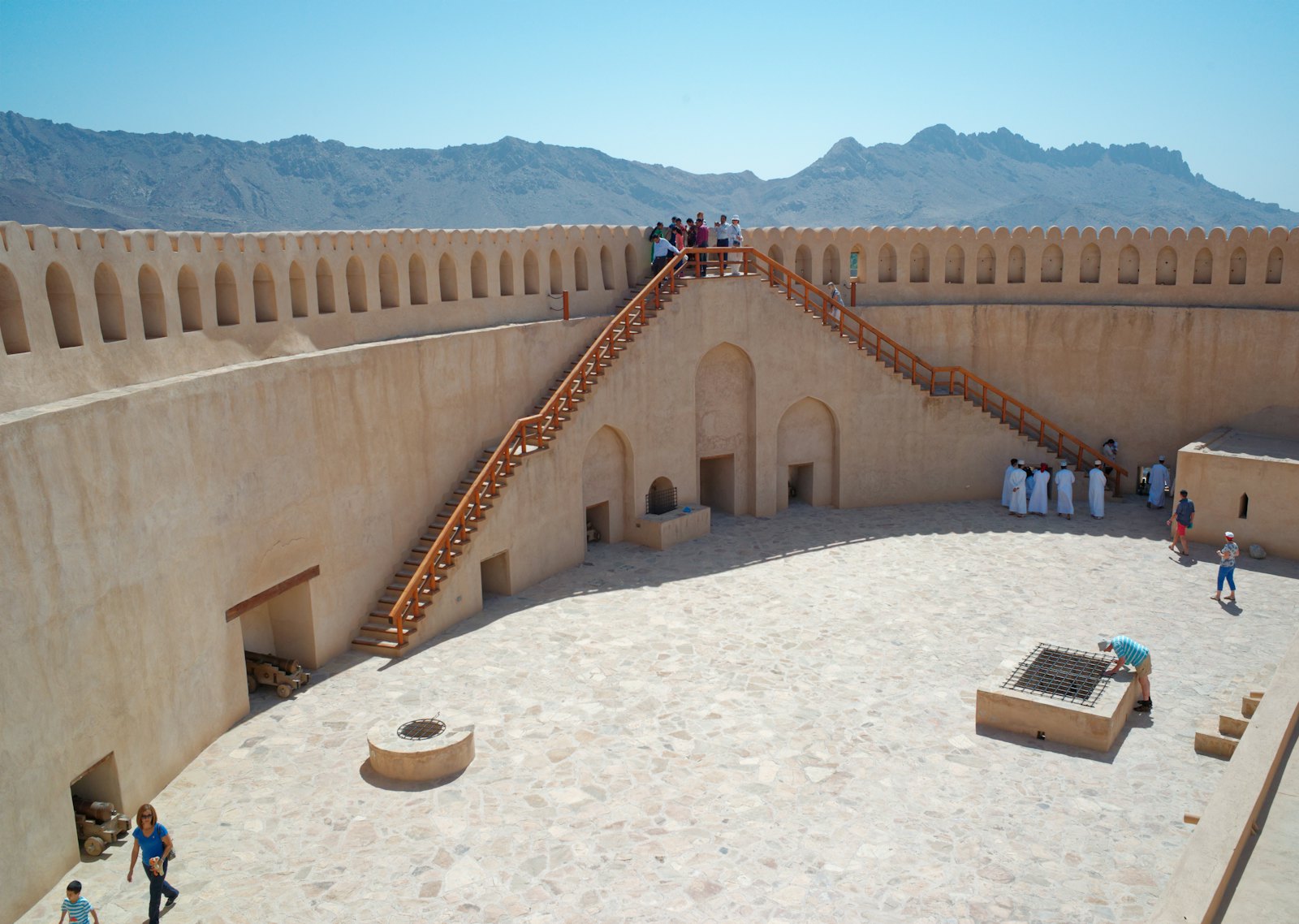
The old capital of Oman's interior, where a huge round fort looks over date palms, goats are auctioned on Friday mornings and the Hajar Mountains start just up the road.
- Best time to visit: October to April
- Daily budget (budget traveller): $65 to $520 USD
- Ideal trip length: 3 to 5 days
Nizwa is about 150 to 165km southwest of Muscat, roughly two hours on Route 15. For centuries it was the capital of Oman's interior, and it still feels like a working market town, not a museum. The centre is small. It has the 17th-century round fort, a restored souq selling silver, dates and halwa, and old mud-brick lanes running into the palm groves. On Friday mornings farmers parade goats and cattle in a ring beside the fort, and that is the reason many visitors time their trip around a Thursday night. Nizwa is also the best base for the interior. Bahla Fort and Jabrin Castle are less than an hour west. The mud villages of Al Hamra and Misfat al Abriyeen sit under the mountains, and both Jebel Shams and Jebel Akhdar are within day-trip range. Nizwa is not a backpacker town. There are no real hostels and buses are few, so most solo travellers hire a car. Still, food is cheap, people are welcoming and it is a very safe place to travel alone.
Nizwa was the capital of Oman's interior for long stretches of its history, and a centre of religious learning. Today it is a busy regional town of palm groves, traffic roundabouts and new suburbs, with a compact old centre. The 17th-century fort is the landmark. Its round tower rises above a souq that was restored in the 1990s but is still used for daily shopping. On Friday mornings the space beside it fills with farmers and livestock for the goat market. Nizwa is not a party town or a backpacker hub. There are no dorm hostels, alcohol is limited to a few hotels and most places close early. But rooms and meals are fairly cheap, the forts are good value and people are friendly to visitors travelling alone.
Logistics shape the trip. Muscat airport is about two hours away. Hiring a car there is the simplest option, and a small sedan for roughly OMR 12-20 a day covers most of the region. Mwasalat buses run from Azaiba via the airport about twice a day, but they are slow and often late. Stay in the old town or Harat Al Aqr if you want to walk to the fort and the Friday market, or on the Muscat road for big hotels with parking. If you arrive without a car, hotels can arrange drivers for day trips. Plan your Jebel Akhdar day around a 4x4, because the police checkpoint at Birkat Al Mouz turns back everything else.
Timing matters more than you might expect. Arrive on a Thursday so you are there for the goat market early on Friday. Remember that Friday and Saturday are the weekend, and that forts close for a few hours around Friday prayers. October to April is the comfortable season. Summer in Nizwa passes 40°C, and that is when the mountain plateaus come into their own. During Ramadan, expected to start in early February 2027, opening hours shrink and you should not eat or drink in public during daylight. Wherever you go, a little Arabic and modest clothes will get you a long way.
Nizwa itinerary
Arrive and find your feet in the old town
Morning: This plan assumes you arrive on a Thursday. Pick up a hire car at Muscat airport and drive about two hours on Route 15, or take the Mwasalat bus from Azaiba or the airport.
Afternoon: Check in near the old town, rest through the heat, then wander into the souq for dates, silver and a first taste of halwa.
Evening: Walk the lanes of Harat Al Aqr as the walls turn gold, then have a cheap dinner and a karak tea. Early night, because tomorrow starts at 7am.
Friday goat market and Nizwa Fort
Morning: Be at the goat market beside the fort by 7am and watch the bidding. At 8am go straight into Nizwa Fort (OMR 5), before it closes in the late morning for Friday prayers.
Afternoon: Lunch and a rest while the town is quiet for prayers. If you missed anything, the fort reopens around 1.30pm. Climb the round tower for views over the palms.
Evening: Drive or take a taxi to Falaj Daris and join local families walking along the channel. Dinner at Bin Ateeq for an Omani meal on floor cushions.
Bahla Fort and Jabrin Castle
Morning: Drive about 40 minutes west to Bahla Fort (OMR 4), a UNESCO site with huge mud walls. Bring some cash in case women are selling fresh bread inside.
Afternoon: Ten minutes on to Jabrin Castle (OMR 3). Take the audio guide and look up at the painted ceilings. Lunch in Bahla, then back to Nizwa before the late afternoon heat.
Evening: Coffee in Harat Al Aqr and a walk around the outside of the fort walls after dark.
Al Hamra, Misfat and Al Hoota Cave
Morning: Drive about 40 minutes to Al Hamra. Visit Bait al Safah to see bread and coffee made the traditional way, then walk the old mud-brick streets.
Afternoon: Take the guided tour of Al Hoota Cave (around 45 minutes, book online). Then climb the road to Misfat al Abriyeen and follow the falaj path down into the gardens.
Evening: Stay at a guesthouse in Misfat, such as Misfah Old House, for a home-cooked dinner on the roof, or drive back to Nizwa.
Jebel Shams and the Balcony Walk
Morning: Set off early for Jebel Shams. The road is paved most of the way, but the last stretch to Al Khitaym is steep. Start the Balcony Walk along the rim of Wadi Ghul by 8am.
Afternoon: Reach the abandoned village at the end of the path, rest in the shade and walk back. Allow three to four hours in total. Picnic at the canyon viewpoints.
Evening: Watch the sunset over the canyon before you drive down, or spend a cold night up at one of the mountain camps or lodges.
Jebel Akhdar and the Saiq Plateau
Morning: In a 4x4 or with a driver, head east to Birkat Al Mouz. Look at Bait al Redidah and the old village, then pass the police checkpoint and climb about 30km to the plateau.
Afternoon: Walk the terraced villages around Al Ayn and Ash Shirayjah, explore abandoned Wadi Bani Habib and look over the edge at Diana's Point. In spring, ask about rosewater distilling.
Evening: Drive down slowly in a low gear before dark. If your budget allows, stay the night on the mountain at Sahab Hotel or a resort instead.
Tanuf ruins and back to Muscat
Morning: A short drive northwest to the ruins of Tanuf for photos of the old mud houses in morning light. Or visit the Oman Across Ages Museum near Manah if you prefer the history indoors.
Afternoon: Buy halwa and dates in the souq to take home, then drive or bus back to Muscat. Allow plenty of time if you have a flight, because buses are often late.
Evening: Drop the car at the airport or check into Muscat for the night before you fly.
Best neighbourhoods
- Old town and souq: The fort, the souq and the blue-domed mosque sit together at the heart of Nizwa. This is where you will spend most of your time, and staying within walking distance means you can reach the Friday goat market at 7am without a car. It is busy by day and quiet after dark.
- Harat Al Aqr: The old mud-brick quarter just beside the fort. Some houses have been restored as guesthouses and small cafés, while others are still crumbling. It is the most atmospheric place to stay and lovely to wander at dusk.
- Firq: The southern part of town near the main highway junction, where the long-distance buses stop. It is modern and plain, with hotel apartments, supermarkets and cheap Indian and Turkish cafeterias. Rooms here are often cheaper, but you will need taxis or a car to reach the old town.
- Falaj Daris and the Muscat road: The northern side of Nizwa along the road towards Muscat, near the Falaj Daris irrigation channel. Larger hotels such as Falaj Daris Hotel and Golden Tulip Nizwa are here, with pools and parking. It is a practical base if you are driving.
- Al Hamra and Misfat al Abriyeen: About 40 minutes northwest of Nizwa, under the Jebel Shams massif. Stay in a village guesthouse such as Misfah Old House for terraced palm gardens, falaj channels and quiet nights. It is a good base for Jebel Shams and Al Hoota Cave.
Must-do experiences
- Climb the round tower of Nizwa Fort: The fort's great circular tower is reached by a narrow staircase through several defended doors, and the views over the palm groves are excellent. Entry is OMR 5 for adults. Allow two hours, and more if you read the museum displays.
- Watch the Friday goat market: Every Friday from about 7am, farmers lead goats, sheep and the odd cow around a ring beside the fort while buyers shout bids. It is free and over by mid-morning, so arrive early and ask before photographing people.
- Browse the souq for silver, dates and halwa: The restored souq has separate halls for dates, fish, meat and vegetables, plus stalls selling silver khanjars, pottery and frankincense. Try warm Omani halwa from a sweet shop before you buy a tub.
- See Bahla Fort and Jabrin Castle: Bahla Fort is a UNESCO World Heritage Site about 40km west, and entry is OMR 4 for tourists. Jabrin Castle is around 10 minutes further, with painted ceilings and an audio guide, and costs OMR 3. Together they make an easy morning.
- Walk through Misfat al Abriyeen: A mud-brick village built into the mountainside, with a falaj channel running through terraced date and banana gardens. Follow the marked path down to the palms, dress modestly and keep your voice down, because people live here.
- Do the Balcony Walk at Jebel Shams: Oman's highest mountain area has a rim path along the edge of Wadi Ghul, the so-called Grand Canyon of Oman, to an abandoned village. Allow three to four hours return. Start early and carry plenty of water.
- Drive up to Jebel Akhdar: The Saiq Plateau sits around 2,000m above Birkat Al Mouz, with terraced villages, walnut and pomegranate trees and, in spring, rose gardens. Police at the checkpoint only let 4x4 vehicles up, so hire one or book a driver.
Hidden gems
- Harat Al Aqr at dusk, when the mud walls glow orange and the lanes behind the fort are almost empty
- Falaj Daris, one of the aflaj irrigation channels on the UNESCO list, with a shaded park where local families picnic on weekend evenings
- The ruins of Tanuf, a mud village destroyed in the 1950s, about 20 minutes northwest of Nizwa with the mountains behind it
- The abandoned old village of Birkat Al Mouz, climbing up the slope behind the restored Bait al Redidah fort, worth an hour before you head up Jebel Akhdar
- Bait al Safah in Al Hamra, a restored family house where local women show visitors how bread, coffee and rosewater have traditionally been made
Daily budget
- Accommodation: budget OMR 15-25 / night (simple hotel apartment or village guesthouse), mid-range OMR 30-60 (heritage guesthouse or mid-range hotel with pool), splurge OMR 150+ (Alila or Anantara on Jebel Akhdar). There are no dorm hostels. Heritage houses in Harat Al Aqr and Misfat often include breakfast, and some include dinner. Book winter weekends and Gulf holidays early.
- Food: budget OMR 4-8 / day (cafeterias, shawarma, karak tea), mid-range OMR 10-20 (Omani restaurant meals and café stops), splurge OMR 35+ (resort dinners on the mountain). A shawarma or chapati wrap costs well under OMR 1, and a curry and rice at a cafeteria about OMR 2-4. Dates, halwa and fruit from the souq make cheap snacks.
- Transport: budget OMR 0-6 / day (walking, the bus, the odd taxi), mid-range OMR 15-25 (small hire car plus fuel), splurge OMR 40-80 (4x4 hire or a private driver). The Mwasalat bus from Muscat costs roughly OMR 2-4. Fuel is roughly OMR 0.23-0.24 a litre. A genuine 4x4 is compulsory for Jebel Akhdar.
- Activities: budget OMR 0-5 / day (goat market, souq, villages, hikes), mid-range OMR 8-15 (forts plus Al Hoota Cave), splurge OMR 60+ (guided hikes, private 4x4 tours). Nizwa Fort costs OMR 5, Bahla Fort OMR 4 and Jabrin Castle OMR 3 for tourists. Al Hoota Cave has been listed at around OMR 7 for foreign adults, so check before you go.
- Drinks & nightlife: budget OMR 1-3 (karak, fresh juice, kahwa), mid-range OMR 4-8 (café evenings in Harat Al Aqr), splurge OMR 15+ (a drink at a licensed hotel bar). Evenings mean juice bars, coffee and a stroll. Alcohol is only served at some licensed hotels and is expensive. Do not drink in public.
Where to stay
- Social hostel in Misfat al Abriyeen (OMR 20-40 / night): Nizwa has no real dorm hostels. The closest thing is a village guesthouse such as Misfah Old House, a restored mud-brick house with simple rooms and shared meals where solo travellers end up eating together.
- Boutique hotel in Old town and Harat Al Aqr (OMR 30-60 / night): Restored heritage houses such as Antique Inn put you a short walk from the fort, souq and goat market, with courtyard breakfasts and plenty of character.
- Apartment in Firq and the Muscat road (OMR 15-30 / night): Hotel apartments in the newer parts of town have kitchens, parking and lower prices, which suits a longer stay with a car. Check how far they are from the old town before you book.
- Splurge in Saiq Plateau, Jebel Akhdar (OMR 150-350+ / night): Alila Jabal Akhdar and Anantara Al Jabal Al Akhdar sit on the canyon edge at around 2,000m, with cool air and huge views. You will need a 4x4 or a resort transfer.
What to eat
- Omani halwa: a sticky, glossy sweet of sugar, ghee, rosewater, saffron and nuts. Nizwa is famous for it, and souq shops will let you taste before you buy.
- Kahwa and dates: cardamom-scented coffee served in small cups with a plate of local dates, offered almost everywhere as a welcome
- Shuwa: goat or lamb marinated in spices, wrapped in leaves and slow-cooked underground for a day or more. It is mostly made at Eid, but some restaurants serve it.
- Maqbous: spiced rice cooked with chicken, lamb or fish, the everyday Omani lunch
- Omani bread (khubz rakhal): paper-thin bread cooked on a hot plate, often with honey or egg. Women sometimes make it for visitors at Bahla Fort.
- A floor-seating Omani meal at Bin Ateeq, a long-running Omani restaurant, or karak tea and a cheap chapati wrap from a roadside cafeteria
Day trips
- Bahla Fort and Jabrin Castle (About 40km west of Nizwa, 30-40 minutes by road): Bahla is a huge mud-brick fort on the UNESCO list, surrounded by an old walled oasis. Jabrin is a 17th-century castle about 10 minutes away, known for its painted ceilings, carved doors and rooftop views. Drive west on Route 21, which is fine in a normal car. Entry is OMR 4 at Bahla and OMR 3 at Jabrin for tourists. Without a car, a taxi or hotel driver for a half day is the easiest option, so agree the price first.
- Al Hamra, Misfat al Abriyeen and Al Hoota Cave (About 35-45km northwest of Nizwa, 40-50 minutes by road): Al Hamra has one of the best-preserved old mud-brick towns in Oman, and Misfat is a mountain village with falaj-fed gardens. Al Hoota is Oman's only show cave, with a guided walk past stalactites and an underground lake. Drive yourself in a normal car. The road up to Misfat is steep but paved. Book Al Hoota Cave tours online, and check prices, which have been listed at around OMR 7 for foreign adults.
- Jebel Akhdar and the Saiq Plateau (About 30km east to Birkat Al Mouz, then a steep 30km climb, around 1 hour 15 minutes in total): The Green Mountain is a high plateau of terraced villages, walnut and pomegranate trees and spring roses, with deep canyon views. It is much cooler than Nizwa, which makes it a summer escape. A genuine 4x4 is compulsory past the Royal Oman Police checkpoint near Birkat Al Mouz, and you need your licence and car papers. Hire one, book a driver from Nizwa, or park at the checkpoint and arrange a transfer with your mountain hotel.
When to visit
- Autumn shoulder (October - November): 26-34°C by day, cooling at night. Crowds: Moderate, building towards November. A good time to go. The heat breaks, the mountains are pleasant for hiking and hotel prices have not yet hit their winter peak. Early October can still feel hot at midday.
- Winter (December - February): 12-25°C in Nizwa, near freezing at night on Jebel Shams. Crowds: Busiest, with European tour groups and holidays. The most comfortable weather for forts and souqs. Book mountain hotels early around Christmas and New Year, and pack a warm layer for nights at altitude.
- Spring (March - April): 24-35°C, getting hotter through April. Crowds: Moderate. The local pick. Roses bloom on Jebel Akhdar from about late March, and the villages distil rosewater. Check Ramadan and Eid dates, as opening hours change.
- Summer (May - September): 38-45°C in Nizwa, around 10°C cooler on the plateaus. Crowds: Quiet in town, busy on Jebel Akhdar with Gulf visitors. Tough for sightseeing in town. Start at dawn, rest at midday and spend more nights in the mountains. Pomegranates ripen on Jebel Akhdar in late summer.
Entry rules for your passport
Visa rules for Oman depend on the passport you travel on. Check the official source before you book: Oman Ministry of Foreign Affairs
Getting there
International flights land at Muscat International Airport (MCT), which has direct links to Europe, the Gulf and Asia. Nizwa is about 150 to 165km away, roughly two hours on Route 15, and most solo travellers hire a car at the airport. Mwasalat buses (routes 53 and 54) leave from Azaiba bus station in Muscat and stop at the airport. There are only about two departures a day in each direction, the trip takes roughly two and a half to three hours and delays of 30 to 60 minutes are common. Fares are roughly OMR 2-4 one way. Book online or at Azaiba, and get off at the souq stop near the fort. A taxi from Muscat costs around OMR 35-50. There is no train. Citizens of more than 100 countries, including the UK, can enter Oman visa-free for up to 14 days, and that stay cannot be extended. Others, or anyone staying longer, should apply for an eVisa through the Royal Oman Police before travelling.
Getting around
Nizwa's old town is walkable, but almost everything else needs wheels. There is no useful local bus network. Taxis wait near the souq and the bus stops, and short trips around town usually cost about OMR 2-5, so agree the price before you get in. Ride-hailing apps such as Otaxi work better in Muscat than in the interior. Most solo travellers hire a car, often picked up at Muscat airport. A small sedan costs roughly OMR 12-20 a day and is fine for Nizwa, Bahla, Jabrin, Al Hamra, Misfat and Al Hoota Cave. Fuel is cheap, at roughly OMR 0.23-0.24 a litre. Jebel Akhdar is different. A Royal Oman Police checkpoint near Birkat Al Mouz only lets four-wheel-drive vehicles past, and an SUV without 4WD will be turned back. A real 4x4 costs roughly OMR 25-45 a day. If you do not want to drive, hotels can arrange drivers and 4x4 tours, which are much cheaper if you share. Traffic drives on the right, roads are good and speed cameras are everywhere.
Safety
Nizwa is very safe, and crime against visitors is rare. The real risks are heat, roads and wadis. From May to September daytime temperatures often pass 40°C, so plan outdoor sightseeing for early morning and carry water everywhere. Drive carefully on mountain roads, use a low gear on the descents and watch for goats and camels on the road, especially at dusk. Rain is rare, but flash floods can fill wadis in minutes after storms, even if it is not raining where you are. Never drive into flowing water or camp in a wadi bed. On hikes such as the Balcony Walk, start early, tell someone your plan and do not walk near cliff edges in wind. Solo women are generally treated with respect, though some staring is normal. Dress modestly, sit in the back of taxis and use the family sections in restaurants if you prefer. Medical care in Nizwa is decent and Muscat has larger hospitals, but get travel insurance that covers hiking and driving.
Solo travel tips
- Stay near the fort: You can walk to the goat market at dawn, browse the souq in the cooler hours and wander Harat Al Aqr after dinner without driving. Bigger hotels on the Muscat road are comfortable but leave you dependent on a car.
- Arrive on a Thursday: The goat market only runs on Friday mornings, and it is the liveliest few hours in Nizwa. Remember that the fort closes for Friday prayers, so do the market and fort first and keep the afternoon for rest.
- Hire the right car for each day: A cheap sedan covers almost everything. If Jebel Akhdar is your only 4x4 day, book a driver or a shared tour for that day instead of paying for a 4x4 all week.
- Book a guesthouse that serves dinner: Heritage guesthouses in Harat Al Aqr and Misfat often serve shared meals. It is the easiest way to meet other travellers and local hosts in a town with almost no nightlife.
- Safety for solo travellers: The main risks are heat, mountain driving and flash floods. Hike early, carry at least three litres of water, tell your host your route and never cross a flooded wadi. Women should dress modestly and sit in the back of taxis.
- Download offline maps: Mobile signal drops on mountain roads and in deep wadis. Save offline maps, screenshot your bookings and keep your host's phone number handy in case you need directions.
Cultural etiquette
- Greet people with 'As-salaam alaykum' and say 'shukran' for thank you. A few words of Arabic are always welcome.
- Dress modestly everywhere, with shoulders and knees covered for everyone. Loose, long clothing is more comfortable in the heat anyway.
- Ask before photographing people, and never photograph women without clear permission. At the goat market, a nod and a smile before raising your camera goes a long way.
- Accept kahwa and dates if they are offered. Take your cup with your right hand, and gently shake it from side to side when you do not want a refill.
- Friday is the holy day. Expect closures around midday prayers, keep noise down near mosques and admire mosques from the outside unless you are clearly invited in.
- Villages such as Misfat are people's homes. Stay on the paths, do not enter gardens or falaj channels and do not fly drones without permission.
- During Ramadan, do not eat, drink or smoke in public during daylight, and expect shorter opening hours.
Frequently asked questions
How do I get from Muscat to Nizwa?
The easiest way is to hire a car at Muscat airport and drive about two hours on Route 15. Mwasalat runs buses from Azaiba bus station, with a stop at the airport. There are only about two departures a day, the trip takes around two and a half to three hours and delays are common. Fares are roughly OMR 2-4 one way. A taxi costs around OMR 35-50.
How many days do I need in Nizwa?
Two nights covers the fort, the souq and the Friday market. Three to five nights lets you add Bahla and Jabrin, Misfat al Abriyeen and Al Hoota Cave, and a mountain day at Jebel Shams or Jebel Akhdar. A week works well if you want to hike and move slowly.
Do I need a car, and do I need a 4x4?
You can see Nizwa town without a car, but day trips are hard on public transport. A normal sedan is fine for Bahla, Jabrin, Al Hamra, Misfat, Al Hoota Cave and the paved road towards Jebel Shams. For Jebel Akhdar you must have a genuine 4x4, because police at the Birkat Al Mouz checkpoint turn back other vehicles.
When is the Friday goat market and how does it fit with the fort?
The market starts at about 7am beside the fort and winds down by mid-morning. It is free. The fort opens at 8am but closes in the late morning on Fridays for prayers and reopens around 1.30pm, so go straight from the market to the fort, or come back in the afternoon.
When is the best time to visit Nizwa?
October to April is the comfortable season, with warm days and cool nights. December to February can be cold on the mountains, so pack layers. Late March to April is rose season on Jebel Akhdar. Summer is very hot in Nizwa itself, but the high plateaus are much cooler.
Do I need a visa for Oman in 2026?
Citizens of more than 100 countries, including the UK, can enter visa-free for up to 14 days, and that stay cannot be extended. In August 2026 Oman also introduced a free 14-day tourist visa for selected nationalities. For longer stays, apply for an eVisa through the Royal Oman Police website before you travel. Rules change, so check your own nationality's requirements before you book.
Is Nizwa safe for solo female travellers?
Yes. Oman is one of the easiest countries in the region to travel alone, and Nizwa is conservative but welcoming. Cover your shoulders and knees, wear loose clothing, sit in the back of taxis and expect some curious looks at the goat market, where most of the crowd is men. Harassment is uncommon.
Should I bring cash or cards?
Both. Hotels, larger restaurants and the forts usually take cards, but souq stalls, small cafeterias, taxis and village stalls prefer cash. There are plenty of ATMs in Nizwa, so withdraw rials in town and keep small notes for halwa, dates and bread.
Tours and activities in Nizwa | Nizwa in 2 days | Nizwa in 3 days | Nizwa in 4 days | Nizwa in 5 days | Nizwa in 7 days
Joy Plus home | Destinations | Itineraries | Activities | Flights | Budget planner | Calendar | Map | Blog | Lifetime access