Destinations / Africa
Nosy Be, Madagascar travel guide
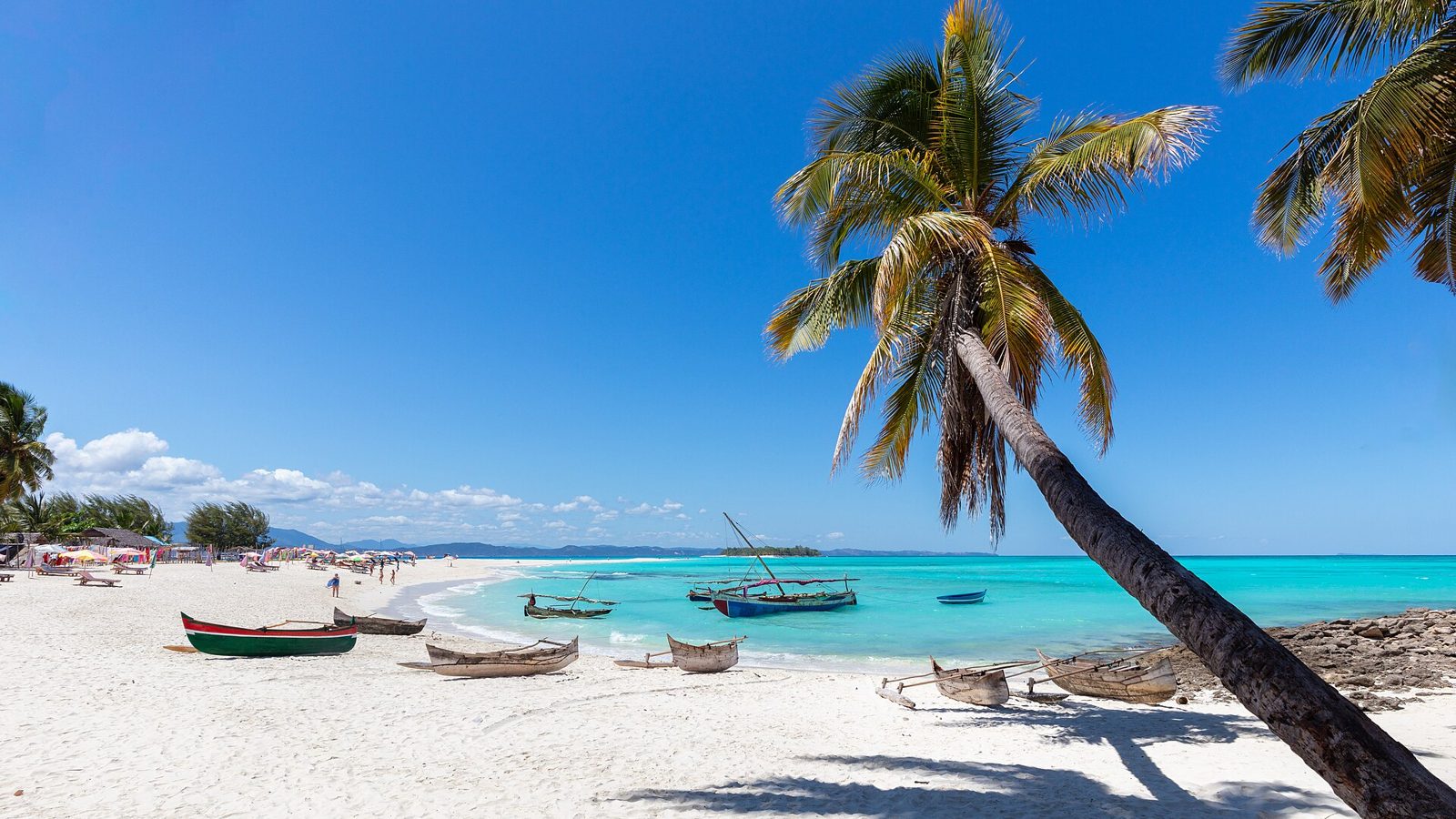
A green volcanic island off Madagascar's north-west coast, surrounded by reefs and smaller islands. You snorkel with turtles, walk through the forest at Lokobe looking for black lemurs and watch the sun go down over the Mozambique Channel from Mont Passot.
- Best time to visit: May to November
- Daily budget (budget traveller): $45 to $180 USD
- Ideal trip length: 5 to 7 days
Nosy Be is Madagascar's best-known beach island. It lies a few kilometres off the north-west coast, about an hour and a quarter by plane from Antananarivo. The island is hilly and green, with ylang-ylang plantations, crater lakes and, at Lokobe in the south-east, the last area of original forest. Hell-Ville (Andoany) is the main town, with the port, the market and the banks. Most visitors stay on the west coast around Ambatoloaka and Madirokely, where you find the dive centres, beach bars and cheaper guesthouses. Much of the appeal lies offshore. Boats leave every morning for Nosy Komba, where black lemurs live around the village, for the marine park at Nosy Tanikely and, further out, for the long sandbar at Nosy Iranja. Whale sharks feed in the channel from about September to December, and humpback whales pass through from July. Nosy Be costs more than mainland Madagascar, especially for boats and rooms, and people speak more French than English. Even so, a simple bungalow, tuk-tuk rides, cheap hotely meals and shared boat trips make it workable for a solo traveller on a modest budget.
Nosy Be, the 'big island' in Malagasy, is the largest of a cluster of islands in the Mozambique Channel off Madagascar's north-west coast. It has been the country's main beach destination for decades, and the airport is one of the busiest in Madagascar. That does not make it polished. The roads are patchy, power cuts happen and Hell-Ville still has the slightly worn look of an old colonial port. Most people come for a week of sun and sea, and that is the right way to see it. The island works best as a base. Every morning boats head out to lemurs on Nosy Komba, reefs at Tanikely, turtles at Sakatia and the sandbar at Iranja. Then you come back for grilled fish and a rum by the beach. It costs more than the mainland, but shared boats and simple bungalows keep it affordable.
Getting here usually means a domestic flight from Antananarivo, which takes about 1 hour 15 minutes. Book an early flight if you can, because schedules can change at short notice. Some international flights land directly at Fascene, from Johannesburg, Addis Ababa, Réunion and, in season, from Italy and Switzerland. The overland route goes from Diego Suarez or Ambanja to Ankify, followed by a 45-minute speedboat to Hell-Ville. Once you are here, tuk-tuks are the way to get around. Base yourself in Ambatoloaka for cheap rooms, nightlife and easy boat trips, Madirokely for something quieter or Andilana for the best beach. Carry cash in ariary. Card machines are rare outside mid-range hotels, and park fees, boats and tuk-tuks are all paid in notes.
Timing shapes the trip. The dry season from May to November brings sunshine and calm water, and from September to December you can add whale sharks. July and August are busy, and rooms and boats fill up. The rainy months from December to April are hot and humid, and cyclones are a risk from January to March. In that season, trips can be cancelled at short notice. Nosy Be is relaxed and generally safe in the main areas, but treat it like the rest of Madagascar. Avoid empty roads at night, take malaria seriously and get insurance that covers evacuation. French will help more than English. Learn a few words of Malagasy and you will be warmly received.
Nosy Be itinerary
Arrive and find your feet
Morning: Fly in from Antananarivo and take a tuk-tuk from Fascene to your guesthouse in Ambatoloaka or Madirokely. Agree the fare first.
Afternoon: Change money or use an ATM, then walk the beach and drop into a couple of dive centres to see which boat trips are running this week.
Evening: Grilled fish and rice at a beach grill in Ambatoloaka, then a rhum arrangé as the sun goes down.
Hell-Ville and the island loop
Morning: Hire a tuk-tuk for the day and start at the Hell-Ville market for fruit, spices and a sambos breakfast. Wander the old seafront.
Afternoon: Visit Lemuria Land and its ylang-ylang distillery (about 45,000 Ar), then the sacred banyan at Mahatsinjo, with a sarong over your legs.
Evening: Ride up Mont Passot for sunset over the crater lakes, then head back before full dark.
Nosy Komba and Nosy Tanikely
Morning: Join a group boat to Nosy Komba to see the black lemurs at Ampangorina and browse the village embroidery stalls.
Afternoon: Continue to the Tanikely marine park (40,000 Ar) to snorkel with turtles, then walk up to the lighthouse.
Evening: Back on Nosy Be for a quiet dinner in Madirokely and an early night.
Lokobe forest
Morning: Take a tuk-tuk to Ambatozavavy and a pirogue to Ampasipohy. Walk the forest with a local guide (park entry 55,000 Ar) looking for lemurs, chameleons and boas.
Afternoon: Have a village lunch in Ampasipohy and a swim from its beach before the pirogue back.
Evening: A slow evening at your guesthouse. Lokobe is hot and humid, and you will be tired.
Whale sharks or turtles
Morning: Between September and December, join an early whale shark trip (about $80-95). At other times, take a boat to Nosy Sakatia to snorkel with green turtles.
Afternoon: Lunch on a beach as part of the trip, then more snorkelling on the reef.
Evening: Watch the sunset from Ambatoloaka beach and swap stories with others from the boat.
Nosy Iranja
Morning: Set off early on a group day trip to Nosy Iranja, about 1.5 hours each way. Watch for dolphins on the crossing.
Afternoon: Walk the sandbar between the two islands at low tide, swim and climb to the lighthouse for the view. Lunch is usually included.
Evening: Back late afternoon. A simple dinner and plenty of water after a day in the sun.
Andilana and depart
Morning: Take a tuk-tuk to Andilana for a final swim at the island's best beach while the water is calm.
Afternoon: Lunch by the sand, then head to Fascene with plenty of time, as the drive takes a while and flights can change.
Evening: Fly to Antananarivo or carry on to your next stop.
Best neighbourhoods
- Ambatoloaka: The busiest beach village on the south-west coast and the usual base for independent travellers. It has dive centres, boat operators, budget guesthouses, seafood grills and most of the island's nightlife. It is noisy at weekends and the beach is not the prettiest, but it is the easiest place to find a shared boat trip.
- Madirokely and Ambondrona: The quieter beaches just north of Ambatoloaka, with mid-range bungalows, a few beach restaurants and calmer evenings. Ambatoloaka's bars and boat operators are a short walk or tuk-tuk ride away. It is a good compromise if you want to sleep well and still be close to the action.
- Hell-Ville (Andoany): The island's main town and port, with faded colonial buildings, the covered market, banks, ATMs and the boats to Nosy Komba and Ankify. Few travellers stay here, but it is practical for an early boat. The town feels like real Madagascar rather than a resort, and it is very quiet after dark.
- Andilana: The north-west tip of the island, with Nosy Be's best beach for swimming: a long curve of white sand and calm, clear water. It has a mix of all-inclusive resorts and small guesthouses. It is far from Hell-Ville and the airport, so plan on tuk-tuks or taxis to get anywhere.
- Nosy Komba: A small, steep island between Nosy Be and the mainland, with no cars. You get there by pirogue from Hell-Ville. Ampangorina village has craft stalls, lemurs and a few simple lodges. It is very peaceful once the day boats leave, but you depend on boats to get anywhere else.
Must-do experiences
- Walk with lemurs in Lokobe: Lokobe National Park protects the last original Sambirano forest on Nosy Be. Most visits start with a pirogue from Ambatozavavy to the village of Ampasipohy. Entry is 55,000 Ar for foreign adults (about $12), and you must take an accredited local guide. Look out for black lemurs, chameleons, boas and leaf-tailed geckos.
- Snorkel the reef at Nosy Tanikely: This small island in the middle of the bay became a marine park in 2010. You can see turtles, reef fish and coral in a few metres of water. Foreign adults pay 40,000 Ar (about $9), and the park is open from 7am to 4pm. Go early, before the tour boats arrive, and walk up to the lighthouse.
- Meet the black lemurs on Nosy Komba: Shared pirogues leave Hell-Ville from about 9am for roughly 20,000 Ar per person, and the crossing takes about 30 minutes. In Ampangorina village, guides walk you to see the lemurs for a small fee. Browse the embroidery and wood carvings, but do not feed the animals.
- Watch the sunset from Mont Passot: Mont Passot is the island's highest point. From the top you look over the crater lakes and out to the smaller islands. Hire a tuk-tuk for the late afternoon and agree on waiting time before you leave. The road is rough in places, so do not plan to walk back after dark.
- Swim with whale sharks in season: From about September to December, whale sharks feed in the plankton-rich water off Nosy Be. Full-day trips with responsible operators cost around $80 to $95 and often include snorkelling and lunch on a beach. Choose an operator that limits swimmers and bans touching. Sightings are never guaranteed.
- Spend a day on Nosy Iranja: Two islands joined by a long strip of white sand at low tide, about 1.5 hours by boat to the south-west. Group day trips cost about $70 to $120, usually including the boat, lunch and snorkel gear. Turtles nest here, and dolphins and whales are often seen on the crossing in season.
- Take a tuk-tuk loop around the island: Start at the Hell-Ville market, then visit the Lemuria Land park and its ylang-ylang distillery (about 45,000 Ar) and the huge sacred banyan at Mahatsinjo. A half-day tuk-tuk with waiting time costs roughly $30 to $40. Agree the route and price before you set off.
Hidden gems
- The sacred banyan tree at Mahatsinjo, a giant tree whose roots and branches cover a wide area, where you wrap a sarong around your legs and follow local rules at the shrine
- Ambanoro, the old trading village just east of Hell-Ville, with crumbling Indian and Swahili-era houses and almost no visitors
- The crater lakes around Mont Passot, seen from the quieter lower tracks, which are sacred to local people, so swimming is not allowed
- Ambatozavavy fishing village in the early morning, when the pirogues come in and the light is soft over Lokobe
- The south side of Nosy Tanikely late in the afternoon, when the day boats have gone and the turtles graze close to shore
Daily budget
- Accommodation: budget $20-35 / night (simple guesthouse room or bungalow), mid-range $60-120 (beach bungalow with air con), splurge $250+ (boutique resort or private island lodge). Single rooms are rare, so you usually pay for a double. Prices rise in July, August and over Christmas. Many cheaper places take only cash.
- Food: budget $8-15 / day (hotely meals, street snacks, market fruit), mid-range $20-35 (beach restaurant lunch and a seafood dinner), splurge $50+ (resort dining, lobster, wine). A hotely plate of rice and stew costs a couple of dollars. Beach restaurant mains are roughly $8-15. Imported wine is expensive.
- Transport: budget $3-10 / day (shared taxis, short tuk-tuk rides), mid-range $15-40 (tuk-tuk hire for half a day), splurge $60+ (private boat or driver for the day). The airport to Hell-Ville by tuk-tuk is about 30,000-50,000 Ar. The Ankify speedboat is around 20,000 Ar. Always agree fares before you set off.
- Activities: budget $5-15 / day (Nosy Komba pirogue, Tanikely or Lokobe fees), mid-range $50-100 (group island trip with lunch), splurge $100+ (Iranja, whale sharks or diving). Lokobe is 55,000 Ar for foreign adults plus a guide. Tanikely is 40,000 Ar. Whale shark trips run about $80-95 from September to December.
- Drinks & nightlife: budget $3-6 (a THB beer or rhum arrangé), mid-range $10-20 (a few drinks at a beach bar), splurge $30+ (cocktails at a resort bar). Ambatoloaka has the bars and clubs, which are busiest at weekends. Take a tuk-tuk home rather than walking dark roads.
Where to stay
- Budget guesthouse in Ambatoloaka ($20-35 / night): Simple rooms and bungalows a short walk from the beach, the dive centres and the seafood grills. This is the easiest base for finding shared boat trips and meeting other travellers.
- Beach bungalow in Madirokely and Ambondrona ($60-120 / night): Mid-range bungalows on quieter sand, with air con and a restaurant on site. Ambatoloaka's boats and bars are close, but nights are calmer.
- Village lodge in Nosy Komba ($50-150 / night): Small lodges in or near Ampangorina, reached only by boat. You have the lemurs and the beach to yourself once the day trippers leave, and it is a short boat ride to Tanikely.
- Splurge in Andilana or a private island ($250-600+ / night): Resorts at Andilana sit on the island's best beach, and lodges on Nosy Iranja or Nosy Komba, such as Tsara Komba, offer real seclusion. Transfers are usually arranged for you.
What to eat
- Grilled fish and seafood: whole fish, prawns or octopus cooked over coals at the beach grills in Ambatoloaka, often with rice and a spicy achard salad
- Romazava: the national dish of beef simmered with leafy greens and brèdes, served with a big mound of rice in any hotely
- Poulet or poisson coco: chicken or fish cooked in coconut milk, a speciality of the north-west coast
- Mofo gasy and sambos: rice-flour cakes and fried samosas from street stalls, a cheap breakfast near the Hell-Ville market
- Rhum arrangé and THB: rum steeped with vanilla, ginger or fruit, and the local THB beer, in every beach bar
- Tropical fruit from the market: mangoes, lychees and bananas, which are cheap and very good in season. Peel them yourself
Day trips
- Nosy Iranja (About 1.5 hours by boat south-west of Nosy Be): Two islands joined by a long strip of white sand that you can walk at low tide, with a turtle nesting beach and a lighthouse viewpoint. Many visitors find it the most beautiful place in the archipelago. Join a group day trip from Ambatoloaka or Andilana for about $70 to $120, usually including the boat, lunch and snorkel gear. Overnight trips with a beach camp are also available.
- Nosy Komba and Nosy Tanikely (About 30 minutes by pirogue from Hell-Ville, then 15 minutes on to Tanikely): Lemurs, craft stalls and a hill village on Nosy Komba, then the reef and turtles of the Tanikely marine park. It is the classic Nosy Be island day. Take a shared pirogue from Hell-Ville to Nosy Komba (about 20,000 Ar), or join a combined group trip for about $50 to $100. Tanikely costs 40,000 Ar for foreign adults and is open from 7am to 4pm.
- Nosy Sakatia (About 15 minutes by boat from the west coast): A small, quiet island known for green turtles grazing on the seagrass close to shore. The snorkelling is easy and shallow, and there is a fishing village to walk through. Book a group snorkel trip in Ambatoloaka or ask your guesthouse to arrange a boat from the west coast. Keep your distance from the turtles and never touch or chase them.
When to visit
- Early dry season (May - June): 24-30°C, mostly sunny, green after the rains. Crowds: Low to moderate. A great time for good-value rooms, lush scenery and calm seas. Cooler evenings, and boats are easy to join.
- Peak season (July - August): 23-29°C, dry and breezy, the coolest months. Crowds: Busy, with European summer holidays. Reliable weather and humpback whales start to appear, but prices peak. Book rooms and the Antananarivo flight well ahead.
- Whale season (September - November): 26-32°C, hot and sunny, seas usually calm. Crowds: Moderate. The locals' favourite. Whale sharks and humpbacks, warm clear water and fewer crowds than in summer. The best time for a solo trip.
- Rainy season (December - April): 27-33°C, humid, heavy showers and storms. Crowds: Busy at Christmas, then quiet. Cheap and green, and whale sharks are still around in December. Cyclones are possible from January to March, and boat trips are often cancelled.
Getting there
Most visitors fly into Fascene Airport (NOS), around 20 minutes by road from Hell-Ville. Madagascar Airlines and its domestic arm fly daily from Antananarivo in about 1 hour 15 minutes. Fares are roughly $120 to $250 one way, and schedules can change at short notice, so take an early flight and confirm the day before. International flights also link Nosy Be with Johannesburg, Addis Ababa and Réunion, and seasonal flights arrive from Milan and Zurich. At the airport, tuk-tuks and taxis wait outside. Expect about 30,000 to 50,000 Ar to Hell-Ville and 50,000 to 80,000 Ar to Andilana by tuk-tuk. Overland, travel from Diego Suarez or Ambanja by taxi-brousse to the port of Ankify. From there, a speedboat crosses to Hell-Ville in about 45 minutes for around 20,000 Ar. Slower car ferries also run. Cross in the morning, when the sea is calmer, and avoid the road and the boats after dark. Visas are available online or on arrival at Fascene.
Getting around
There are no proper public buses on Nosy Be. The island runs on tuk-tuks (bajaj) and old shared taxis. Shared taxis run along the main road between Hell-Ville and Ambatoloaka for a few thousand ariary. A private tuk-tuk from the airport to Hell-Ville costs about 30,000 to 50,000 Ar, and to Andilana about 50,000 to 80,000 Ar. Always agree the fare before you get in, and ask your guesthouse what the local rate is. Hiring a tuk-tuk for half a day with waiting time costs roughly $30 to $40. Scooters and quad bikes can be rented in Ambatoloaka, but the roads have potholes, dogs and few lights, so do not ride at night. You reach the other islands by boat. Shared pirogues leave Hell-Ville for Nosy Komba each morning, and dive centres and tour desks in Ambatoloaka run group trips to Tanikely, Sakatia and Iranja. Joining a group is far cheaper than hiring a boat alone. Wear a life jacket and avoid crossings in rough weather.
Safety
Nosy Be is one of the calmer places in Madagascar, and violent crime against visitors in tourist areas is rare. Petty theft does happen, so use your room safe, carry only what you need and do not walk alone on dark roads or empty beaches at night. Take a tuk-tuk instead. The UK government advises taking local advice before visiting beaches in northern Madagascar after opportunistic attacks. Book boats and dives with established operators, because unlicensed sellers in Ambatoloaka offer cheap trips with poor equipment. Malaria and dengue are present, so talk to a travel clinic about prophylaxis and use repellent and nets. Do not drink tap water. Medical care is basic and serious cases need evacuation, so travel insurance with medical evacuation cover is essential. Madagascar has had a military-led transitional government since October 2025. Things have calmed down, but avoid any demonstrations and follow the news. Cyclones can hit between January and March. The police emergency number is 117.
Solo travel tips
- Join group boats: A private boat for one person is expensive. Ask at dive centres and guesthouses in Ambatoloaka which trips already have people booked, and join them. Many operators will merge small groups.
- Carry ariary in small notes: Park fees, pirogues, tuk-tuks and hotely meals are all paid in cash. Large notes are hard to break in villages, so ask for smaller ones when you change money.
- Book the early flight: Domestic flights between Antananarivo and Nosy Be can be rescheduled at short notice. Take the first flight of the day and leave a spare day before any international connection.
- Agree every price first: Tuk-tuk drivers, boatmen and guides often quote high to visitors. Ask your host for the going rate, agree the price and what it includes before you set off, and pay at the end.
- Safety for solo travellers: The main risks are dark roads at night, boats without proper safety gear and malaria. Take tuk-tuks after sunset, choose operators with life jackets and use repellent every evening.
- Meet people on the water: Group snorkelling, dive and whale shark trips are the easiest way to meet other travellers here. The beach bars in Ambatoloaka are sociable in the evenings, especially at weekends.
Cultural etiquette
- Greet people with 'salama' and say 'misaotra' (thank you). French is widely spoken, so 'bonjour' and 'merci' also work.
- Respect fady, the local taboos. At sacred sites such as the Mahatsinjo banyan or the crater lakes, follow your guide, cover your legs and do not swim or point where it is forbidden.
- Dress modestly away from the beach. Swimwear in Hell-Ville or villages is not appropriate.
- Ask before photographing people, especially at markets and in villages, and accept a no with good grace.
- Bargain calmly and with a smile for crafts and transport, but remember that small amounts matter more to sellers than to you.
- Do not feed or touch the lemurs on Nosy Komba or elsewhere, even when guides encourage it.
- Madagascar has strict laws against the sexual exploitation of children. Report anything suspicious to the police or your hotel.
Frequently asked questions
How do I get to Nosy Be and from the airport to my room?
Most people fly into Fascene Airport (NOS) in the north-east of the island. Daily flights from Antananarivo take about 1 hour 15 minutes and cost roughly $120 to $250 one way. There are also international flights from Johannesburg, Addis Ababa and Réunion, plus seasonal flights from Europe. Outside the terminal, tuk-tuks charge about 30,000 to 50,000 Ar to Hell-Ville and more to the west coast beaches. Overland, a speedboat from Ankify on the mainland reaches Hell-Ville in about 45 minutes for around 20,000 Ar.
How many days do I need in Nosy Be?
Three days covers the island loop, Mont Passot and one boat trip to Nosy Komba and Tanikely. Five days lets you add Lokobe and either whale sharks or the turtles at Nosy Sakatia. A week gives you time for Nosy Iranja, a spare day in case of bad weather and a few slow beach days at Andilana.
When is the best time to visit Nosy Be?
May to November is the dry season, with sunny days and calmer seas. July and August are the busiest months, with European holidaymakers and higher prices. September to November is the pick for whale sharks and humpback whales. December to April is hot, humid and wet, and cyclones are possible from January to March, so some operators cut back their trips.
Can I swim with whale sharks?
Yes, in season. Whale sharks gather off Nosy Be from about late September to December, with the best chances in October and November. Full-day trips cost about $80 to $95 and usually include snorkelling and lunch on a beach. Pick an operator that keeps distance, limits the number of swimmers and does not chase the animals. Sightings are never guaranteed.
Can I visit Nosy Komba and Nosy Tanikely without a tour?
Yes. Shared pirogues leave Hell-Ville for Nosy Komba from about 9am, cost around 20,000 Ar and take 30 minutes. Tanikely is harder alone, because you need a boat, and private hire is expensive. Most solo travellers join a combined Komba and Tanikely group trip for about $50 to $100, which usually covers the boat, park fees, lunch and snorkel gear.
Is Nosy Be safe for solo female travellers?
Generally yes, especially in established areas such as Ambatoloaka, Madirokely and Andilana. Expect some attention and the odd persistent seller. Do not walk alone on dark roads or empty beaches at night, take tuk-tuks after dark, watch your drink in bars and book boats and guides through your guesthouse or a known operator.
What health precautions should I take?
Malaria and dengue are present, so see a travel clinic well before you go and use repellent, long sleeves and a net at dawn and dusk. Drink bottled or filtered water. Use strong reef-safe sunscreen, because boats rarely have shade. Medical facilities on the island are basic, and serious cases need evacuation, so get insurance that covers it.
What entry rules apply to Madagascar in 2026?
Most nationalities need a tourist visa, which you can get online as an eVisa or on arrival at Fascene or Antananarivo. Fees rose in February 2026 to about €30 for up to 15 days, €35 for 30 days, €40 for 60 days and €50 for 90 days, so check the official portal before you pay. Your passport should be valid for at least six months, and you may be asked for an onward ticket. Madagascar is run by a transitional government, so check your own government's travel advice before booking.
Tours and activities in Nosy Be | Nosy Be in 2 days | Nosy Be in 3 days | Nosy Be in 4 days | Nosy Be in 5 days | Nosy Be in 7 days
Joy Plus home | Destinations | Itineraries | Activities | Flights | Budget planner | Calendar | Map | Blog | Lifetime access