Destinations / Europe
Noto, Italy travel guide
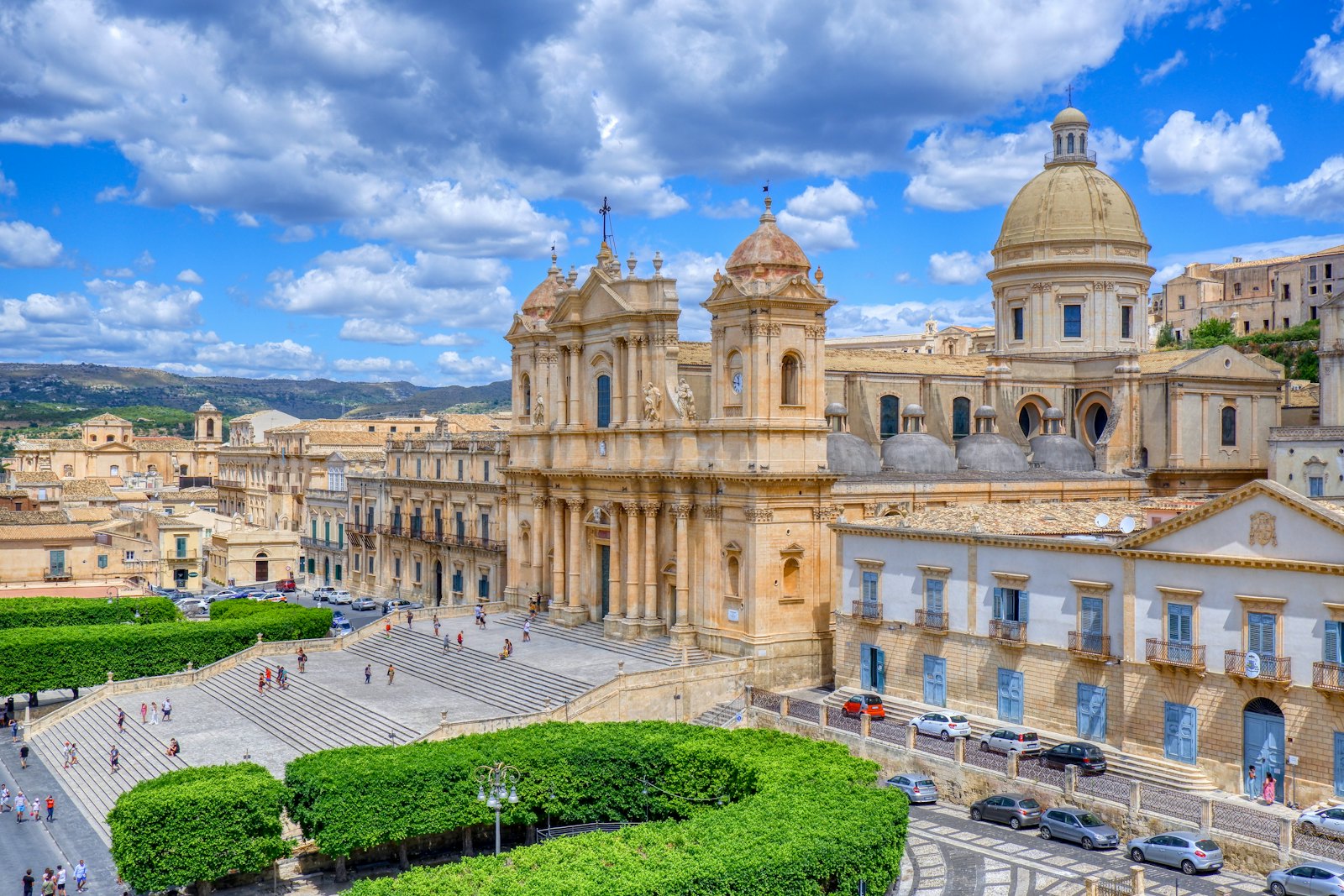
A golden baroque town rebuilt after the 1693 earthquake, with church steps to climb, almond granita for breakfast and wild beaches at Vendicari a short ride away.
- Best time to visit: April to June and September to October
- Daily budget (budget traveller): $75 to $485 USD
- Ideal trip length: 3 to 7 days
Noto sits on a hillside in south-east Sicily, about 30km south-west of Siracusa and a few kilometres inland from the Ionian coast. The old town was flattened by the earthquake of 1693. Instead of rebuilding on the ruins, the town was moved to a new site and laid out from scratch, all in the soft local limestone that turns honey-coloured in the late afternoon. The result is one of the most complete baroque towns in Europe, and since 2002 it has been part of the Val di Noto UNESCO World Heritage Site. Most of what you come for lies along one street, Corso Vittorio Emanuele: the cathedral at the top of its long staircase, Palazzo Ducezio opposite, and the carved balconies of Palazzo Nicolaci just round the corner. Many people see Noto in half a day from Siracusa. Stay a few nights and you see more: the stone glowing at sunset, the evening passeggiata, granita and brioche before the tour buses arrive, and easy trips to the Vendicari reserve, Marzamemi and the ruins of Noto Antica. It is small, safe and easy to walk round, and it works well for a solo traveller who does not mind a slower pace.
Noto is the showpiece of the Val di Noto, the group of south-east Sicilian towns rebuilt after the 1693 earthquake and listed together by UNESCO. The town was moved several kilometres from its old hilltop site and planned on a grid, with grand public buildings along the main street and noble palaces on the terraces above. Nearly everything is built from the same soft limestone, so the whole town turns honey-gold at sunset. About 24,000 people live here. In the daytime coaches from Siracusa and Taormina fill the Corso. By evening the town belongs to locals again, and that is when it is at its best. Stay a few nights and you get early granita at Caffè Sicilia, quiet church steps at sunset, the evening passeggiata and easy access to Vendicari's beaches and the old fishing village of Marzamemi.
Getting here is straightforward. Catania airport is about 90km away, and Interbus runs direct coaches to Noto in around an hour and a half. Siracusa is under an hour by bus or about 30 to 40 minutes by train. Once you are here, the centre is all on foot. Base yourself on or just above the Corso to walk everywhere, or near the Giardino Pubblico if you plan lots of bus trips. The tricky part is the countryside around Noto. Noto Antica, Villa del Tellaro and the Vendicari entrances have little or no public transport, so budget for a couple of taxis or rent a car for a day.
Timing matters more than you might think. Spring brings wild flowers, comfortable walking weather and the Infiorata in May, when Via Nicolaci is covered in a carpet of petals. Summer is hot, the beaches are crowded and evenings run late. September and early October are the sweet spot, with warm sea, fewer crowds and good light. Winter is mild and quiet, with flamingos on the Vendicari lagoons, but some restaurants close and coastal buses thin out. Remember the long lunch break: churches and palaces often close in the early afternoon. Noto is a place for early mornings, slow lunches and late evenings, not for rushing between sights.
Noto itinerary
Arrive and first walk on the Corso
Morning: Fly into Catania and take the Interbus coach from the airport to Noto, about 1 hour 25 minutes to 1 hour 40 minutes for roughly €8.40. Get off by the Giardino Pubblico.
Afternoon: Check in, then walk through Porta Reale and along the Corso. Rest in your room during the hot early afternoon, as many places close anyway.
Evening: Sit on the cathedral steps for sunset, join the passeggiata, then have an easy dinner at Trattoria del Carmine.
Baroque Noto in depth
Morning: Granita and brioche at Caffè Sicilia before 10am. Visit the cathedral, then Palazzo Ducezio across the square on the combined ticket (about €10).
Afternoon: Palazzo Nicolaci and its balconies on Via Corrado Nicolaci, then the Teatro Tina di Lorenzo. Long lunch, then a rest.
Evening: Climb the San Carlo al Corso bell tower (about €2.50) for golden light over the cathedral. Wine by the glass at Modica di San Giovanni.
Noto Alta and Noto Antica
Morning: Take a taxi, or a tour your host books, to the ruins of Noto Antica. Entry is free. Wander the old gateway and walls before the heat builds.
Afternoon: Back in town, climb to Noto Alta and the Chiesa del Crocifisso. Have lunch at a local bakery or a pizzeria.
Evening: The rooftop terrace of Santa Chiara if it is open late, then a stroll along quiet Via Cavour and dinner nearby.
Vendicari and Calamosche
Morning: Leave early by taxi or hire car for the central Vendicari entrance. Pay €3.50 by card and walk to the tuna fishery, the tower and the lagoons.
Afternoon: Walk or drive to Calamosche for a swim in the sheltered cove. Check first that the Calamosche entrance is open, as it closed in September 2026 after a tree fell. There is no shade, so bring water and food.
Evening: Shower off the salt, then gelato on the Corso and a light dinner. Book tomorrow's bus to Siracusa.
Day trip to Ortigia
Morning: Take the train (about 30 to 40 minutes) or an Interbus or AST bus (about 55 minutes, roughly €3.60) to Siracusa. Walk to Ortigia and the Piazza del Duomo.
Afternoon: Lunch near the Ortigia market, then the Fonte Aretusa and the seafront walls. Add the Neapolis archaeological park if you have energy.
Evening: Sunset on the Ortigia waterfront, then a late bus or train back. Check the last departure before you go.
Villa del Tellaro and Marzamemi
Morning: Taxi or car to Villa Romana del Tellaro for its mosaics (listed at €6, card only). On Sundays it closes in the early afternoon, so go early.
Afternoon: Continue to Marzamemi, or take the Interbus from Noto, which costs about €2.90 and takes about 35 minutes, more often in summer. Lunch near the old tuna fishery and swim nearby.
Evening: Aperitivo in Marzamemi's main piazza, then the bus back to Noto. Confirm the last bus, especially after mid-September.
Slow morning and leave
Morning: One last granita, this time at Dolceria Costanzo, and a final walk along the Corso while it is quiet.
Afternoon: Take the Interbus back to Catania airport. Allow plenty of time, as traffic around Catania can be slow.
Evening: Fly out, or spend a night in Catania or Siracusa before you go on.
Best neighbourhoods
- Corso Vittorio Emanuele: The main street and the heart of the baroque centre. It runs from Porta Reale past the cathedral, Palazzo Ducezio and the main churches, and it is lined with cafés, gelaterie and shops. Stay here to walk everywhere, but expect some noise on summer evenings.
- Via Cavour and Via Nicolaci: The streets just above the Corso. They are quieter, with palazzi, small B&Bs and restaurants, and Palazzo Nicolaci's famous balconies. It is a good base: two minutes from the main sights but calmer at night.
- Noto Alta: The upper town, a steep climb above the centre. It feels more residential, with the Chiesa del Crocifisso, local bakeries and cheaper rooms. The views over the rooftops are lovely, but the hill is hard work in July heat.
- Giardino Pubblico and Viale Principe di Piemonte: The leafy public gardens at the eastern end of the Corso, by Porta Reale. Intercity buses stop around here, so it is the most practical base if you plan lots of day trips by bus.
- Lido di Noto: Noto's beach suburb, also called Noto Marina, about 7km downhill. It has sandy beaches, beach clubs and holiday flats, and it is busy in summer and very quiet outside it. Seasonal buses run in summer, but you will want a car or bike for evenings.
Must-do experiences
- Climb the steps of Noto Cathedral: The Cattedrale di San Nicolò was finished in the 18th century. Its dome collapsed in 1996 and it reopened after rebuilding in 2007. Go early or late in the day for the best light on the façade. Sources disagree on whether there is a small entry fee, so carry a couple of euros in coins.
- See the balconies of Palazzo Nicolaci: On Via Corrado Nicolaci, six balconies rest on carved lions, horses, sirens and grotesque faces. Inside, the main floor and the ballroom are open to visitors for roughly €4, or as part of a combined ticket with Palazzo Ducezio and the Teatro Tina di Lorenzo.
- Climb the bell tower of San Carlo al Corso: A narrow spiral staircase leads to terraces with the best view of the cathedral and the Corso. Entry to the church is free and the climb has cost about €2.50. Go in the late afternoon when the stone turns gold.
- Have granita and brioche for breakfast: Caffè Sicilia on the Corso has been run by the same family since the 1890s and is known for its almond granita. Dolceria Costanzo is the other famous name. Arrive before 10am to get a table without a queue.
- Walk the coast at Vendicari: A protected stretch of dunes, salt pans and coves south of town, with a ruined tuna fishery, a Swabian tower and flamingos on the lagoons in the cooler months. Entry is €3.50, paid by card only. There is no shade, so bring water.
- Explore the ruins of Noto Antica: The old town on Monte Alveria was abandoned after 1693. Today you walk through a gateway into overgrown ruins of churches and walls with wide views of the hills. Entry is free, but there is no bus, so take a taxi, a tour or a hire car.
- Join the evening passeggiata: After dark the Corso fills with families, couples and teenagers walking up and down. Sit on the cathedral steps with a gelato and watch. It is the easiest way to feel part of the town on your own.
Hidden gems
- The rooftop terrace of the Chiesa di Santa Chiara on the Corso, a small paid climb with a view straight across to the cathedral, often quieter than San Carlo
- The Teatro Tina di Lorenzo on Piazza XVI Maggio, a small 19th-century theatre with red velvet boxes, included in the combined ticket
- Via Cavour at night, a calm, lamplit street of palazzi one block above the busy Corso
- Villa Romana del Tellaro, a small Roman villa a few kilometres south with 4th-century mosaics of hunting scenes, rarely crowded
- Calamosche, a small cove inside the Vendicari reserve reached by a dirt path of about 20 minutes, with calm water sheltered by two headlands
Daily budget
- Accommodation: budget €45-80 / night (simple B&B or room in Noto Alta), mid-range €100-180 (stylish B&B or small hotel near the Corso), splurge €300+ (palazzo suite or countryside resort). Noto has no well-known dorm hostels, so solo travellers usually stay in B&Bs or affittacamere. Prices jump in August and during the Infiorata. A local tourist tax is added per night.
- Food: budget €25-40 / day (bar breakfast, arancini, a pizza), mid-range €50-80 (trattoria lunch and dinner with wine), splurge €120+ (tasting menu at Ristorante Crocifisso). A granita and brioche costs a few euros. Expect a coperto (cover charge) of a few euros at sit-down restaurants. Rough prices, so check menus.
- Transport: budget €0-10 / day (walking and local buses), mid-range €30-60 (a taxi to Vendicari or Noto Antica), splurge €60-90 (car hire plus fuel and parking). The Interbus single to Catania airport has been about €8.40 and to Siracusa about €3.60. Taxis are limited and not cheap, so agree the fare before you set off.
- Activities: budget €0-10 / day (free streets, cathedral, Vendicari at €3.50), mid-range €10-25 (combined palazzo ticket, bell towers, Villa del Tellaro), splurge €150+ (private guide or full-day tour). The combined ticket for Palazzo Ducezio, Palazzo Nicolaci and the theatre has been around €10. Vendicari and Villa del Tellaro have taken cards only.
- Drinks & nightlife: budget €5-10 (a spritz or glass of wine at a bar), mid-range €15-30 (aperitivo and wine at a wine bar), splurge €50+ (cocktails at a hotel bar). Nightlife means aperitivo, the passeggiata and wine bars, not clubs. Bars stay open late in summer. A glass of Nero d'Avola is usually around €5-8.
Where to stay
- Social hostel in Noto Alta (€45-80 / night): Noto has no well-known dorm hostel. The cheapest choice is a simple B&B or affittacamere in the upper town, where rooms cost less and hosts often share tips over breakfast. Expect a steep walk home.
- Boutique hotel in Via Corrado Nicolaci (€250-450 / night): Seven Rooms Villadorata has a handful of rooms inside Palazzo Nicolaci itself, with views over the baroque rooftops and the sights on your doorstep.
- Apartment in Via Cavour or near the Giardino Pubblico (€60-120 / night): A small flat with a kitchen keeps food costs down and gives you space on a longer stay. Near the gardens you are close to the bus stops for day trips.
- Splurge in Countryside outside Noto (€500+ / night): Il San Corrado di Noto is a country estate among olive and almond groves, with a pool and quiet rooms. You will need a car or taxi to reach town.
What to eat
- Granita di mandorla: almond granita with a warm brioche, the classic summer breakfast, at Caffè Sicilia or Dolceria Costanzo
- Cannoli filled to order with sheep's ricotta, best from a pasticceria that fills them in front of you
- Pasta con le sarde or pasta alla Norma: sardines with wild fennel, or aubergine, tomato and salted ricotta, on most trattoria menus
- Arancini and scacce: fried rice balls and folded, stuffed flatbreads, cheap and filling for lunch on the move
- Pachino tomatoes and local olive oil: the small sweet tomatoes come from just down the coast and turn up in almost every salad
- Nero d'Avola and Moscato di Noto: the local red and the sweet dessert wine, worth trying by the glass at a wine bar such as Modica di San Giovanni on Via Nicolaci
Day trips
- Siracusa and Ortigia (About 35km north-east, 30 to 60 minutes): Ortigia is Siracusa's island old town, with a cathedral built around a Greek temple, the Fonte Aretusa spring, a morning market and seafront walks. The Neapolis archaeological park on the mainland has a Greek theatre and the Ear of Dionysius. A train (about 30 to 40 minutes, a few a day) or an Interbus or AST bus (about 55 minutes, roughly €3.60). Check the last departure back.
- Modica (About 40km west, around an hour): A baroque town tumbling down two sides of a gorge, famous for its grainy chocolate made with a cold process. Climb to the Duomo di San Giorgio and taste chocolate at one of the historic shops. Train from Noto station, with only a few departures a day, or a hire car. Check times carefully, because services are limited, especially on Sundays.
- Marzamemi (About 17km south, around 35 minutes by bus): A small fishing village built around an old tuna fishery, with a pretty main piazza, seafood restaurants and swimming spots nearby. It is lively on summer evenings and very quiet in winter. An Interbus bus from Noto costs about €2.90 single and takes about 35 minutes. Services are more frequent in summer, so check times outside July to mid-September.
When to visit
- Spring (March - May): 16-25°C, sunny with occasional showers, green countryside. Crowds: Moderate, busy around Easter and the Infiorata in mid-May. A lovely time for walking and sightseeing. The sea is still cool for swimming until late May. Book early if you want to be here for the Infiorata.
- Summer (June - August): 28-36°C, dry and hot, occasional scirocco. Crowds: High, peaking in August with Italian holidaymakers. Best for beaches and late nights on the Corso. Sightsee early and late, rest at midday and book rooms well ahead. Summer buses to the coast run more often.
- Autumn (September - October): 22-29°C, warm sea, the first rain in October. Crowds: Moderate in September, easing in October. The locals' pick. The sea is at its warmest, the light is soft and room prices start to fall. Check bus timetables, as summer services end in mid-September.
- Winter (November - February): 10-17°C, mild with some rainy spells. Crowds: Low, apart from Christmas and the feast of San Corrado in February. Quiet and cheap, with good birdwatching at Vendicari. Some restaurants and beach places close, Vendicari has shorter hours and coastal buses are limited.
Entry rules for your passport
Visa rules for Italy depend on the passport you travel on. Check the official source before you book: European Commission: Schengen visa policy
Getting there
The nearest major airport is Catania Fontanarossa (CTA), about 90km north. Interbus line IN01 runs from Catania airport through Siracusa to Noto, Pachino and Portopalo. It takes about 1 hour 25 minutes to 1 hour 40 minutes, and a single has cost about €8.40 and a return about €13. Buses also leave from Catania's central bus station. Comiso airport is the other option, but it has fewer flights and weaker connections. By train, you change at Siracusa, and the full trip from Catania takes roughly two hours for around €11. From Siracusa, Interbus and AST buses take about an hour and cost roughly €3.60, and the train is quicker, at around 30 to 40 minutes, but there are only a few trains a day. In Noto, buses stop around the Giardino Pubblico on Viale Principe di Piemonte and Via Pola, a short walk from the Corso. If you drive, the A18 motorway from Catania and Siracusa has an exit for Noto. Park outside the historic centre and walk in. Timetables change between summer and winter, so check them on the operators' websites before you travel.
Border checks: non-EU visitors (other than Swiss, Norwegian, Icelandic, Liechtenstein, Andorran, Monegasque, San Marinese and Vatican citizens, and holders of an EU residence permit or long-stay visa) are registered in the EU's Entry/Exit System (EES) instead of getting a passport stamp. On your first crossing, officers take your photo and/or fingerprints, so allow extra time at passport control. ETIAS, the planned travel authorisation, is not in operation yet, so don't pay any website for one.
Getting around
Noto's historic centre is compact and best explored on foot. The Corso is flat, but streets climb steeply towards Noto Alta, so wear good shoes. Intercity buses from Interbus and AST stop near the Giardino Pubblico on Viale Principe di Piemonte and Via Pola. They run to Siracusa (about 55 minutes, roughly €3.60), Catania and its airport, Pachino and, more often in summer, Marzamemi. Noto railway station is downhill from the centre, with a handful of trains a day to Siracusa (about 30 to 40 minutes) and west towards Modica and Ragusa. Seasonal buses to Lido di Noto have run from roughly June to September. Several of the best sights have no public transport: Noto Antica, Villa del Tellaro and the Vendicari entrances are easiest by taxi, tour, bike or car. Taxis are few, so ask your host to book them. Hiring a car for a day or two from Catania airport or Siracusa gives you the most freedom. Parts of the old centre have restricted traffic, so park outside and walk in.
Safety
Noto is a very safe small town, and violent crime against visitors is rare. The main risks are heat and sun. In July and August temperatures can pass 35°C, and the scirocco wind from Africa can make it hotter, so do the sights early and late, rest at lunchtime and carry water. Vendicari has no shade, no cafés inside the reserve and limited paths, so take at least 1.5 litres of water, a hat and sun cream. Church steps and marble paving get slippery in rain. At beaches and car parks, never leave bags visible in a car. Petty theft is more of a risk in Catania and around busy Siracusa than in Noto. Sea conditions change quickly, and some coves have no lifeguards, so check the flags and swim near other people. Driving on Sicilian country roads can be fast and unpredictable, so take it slowly. The emergency number is 112.
Solo travel tips
- Stay on or just above the Corso: You can walk to everything, including the bus stops, and you will not face a steep climb home after dinner. Via Cavour is a good balance of quiet and convenient.
- Plan around the lunch break: Churches and palazzi often close in the early afternoon. Do your sights from about 9am to 1pm and again from 4pm, and use the middle of the day for a long lunch and a rest.
- Share or book taxis early: There are not many taxis. Ask your host to book them for Noto Antica and Vendicari, and agree the fare first. Hostel-style tours or small group trips from Siracusa can be cheaper for one person.
- Carry a card and some cash: Vendicari and Villa del Tellaro have taken cards only, while small bars, bakeries and church fees may want cash. Keep both on you.
- Safety for solo travellers: Noto is calm and friendly. The real risks are heat, dehydration and isolated beaches. Carry water, tell someone where you are going if you walk a long way at Vendicari and book a taxi rather than walking unlit roads at night.
- Eat at the bar: Many cafés and wine bars are happy to serve you at the counter, which is quicker, cheaper and more sociable than a table for one. Check bus times online the night before, as timetables change by season.
Cultural etiquette
- Say 'buongiorno' when you walk into a shop or bar and 'buonasera' from mid-afternoon. A greeting before you ask anything goes a long way.
- Cover your shoulders and knees in churches, including the cathedral. Carry a light scarf in summer.
- Keep quiet during Mass, and do not wander around or take photos while a service is on.
- Many places close in the early afternoon. Do not knock on closed doors, just come back later.
- At a bar, pay at the till first and then order at the counter with your receipt. Standing is cheaper than sitting at a table.
- Italians eat late. Lunch runs until about 2:30pm and dinner rarely starts before 8pm, later in summer.
- Do not sit on or block the cathedral staircase during weddings or festivals, and keep the Infiorata petals untouched.
Frequently asked questions
How do I get from Catania airport to Noto?
Interbus runs a direct coach from Catania Fontanarossa airport to Noto on its Catania to Siracusa, Noto and Pachino line. It takes about 1 hour 25 minutes to 1 hour 40 minutes, and a single has cost about €8.40. The bus stops near the Giardino Pubblico, a short walk from the Corso. You can also take the train via Siracusa, but it takes around two hours with a change.
Can I visit Noto without a car?
Yes, for the town itself and the main day trips. Buses and trains link Noto with Siracusa, and buses run to Catania, Pachino and Marzamemi. You will need a taxi, a tour or a short car hire for Noto Antica, Villa del Tellaro and most Vendicari entrances. Many solo travellers hire a car for just one or two days.
How many days do I need in Noto?
One full day covers the baroque centre. Three days adds Vendicari and a trip to Ortigia in Siracusa. Five to seven days lets you slow down, add Noto Antica, Marzamemi, Modica and some beach time, and use Noto as a calm base for the south-east.
When is the best time to visit Noto?
April to June and September to October bring warm weather, good light and open beaches without the August crowds. The Infiorata flower festival on Via Nicolaci is held on a weekend in mid-May, and in 2026 it ran from 15 to 19 May. July and August are very hot and busy. Winter is mild and quiet, but buses to the coast run less often.
How much does it cost to visit Noto's sights?
Walking the centre is free. Palazzo Nicolaci has cost around €4, and a combined ticket for Palazzo Ducezio, Palazzo Nicolaci and the Teatro Tina di Lorenzo has been around €10. The San Carlo bell tower is about €2.50. Vendicari is €3.50 by card only, and Villa del Tellaro is listed at €6. Prices change, so check at the door.
Is Noto safe for solo female travellers?
Yes, it is one of the more relaxed places in Sicily to travel alone. The Corso stays busy and well lit until late in summer. Normal precautions apply: book taxis through your accommodation for late returns, keep your bag closed in crowds during festivals and avoid walking alone at isolated beaches after dark.
Are shops and churches open all day?
Not usually. Many churches, palazzi and small shops close for a long lunch, often from about 1pm to 3pm or 4pm, then reopen into the evening. Hours are often extended in summer. Plan indoor sights for the morning or late afternoon and keep the middle of the day for lunch and a rest.
What entry rules apply to Italy in 2026?
Italy is in the Schengen Area. Many non-EU visitors, including UK, US, Canadian and Australian passport holders, can usually stay up to 90 days in any 180 without a visa. The EU's Entry/Exit System now records fingerprints and a photo at the border, and the ETIAS travel authorisation is expected to start later. Rules vary by nationality, so check official EU and Italian government sources before you book.
More about Noto
Tours and activities in Noto | Noto in 2 days | Noto in 3 days | Noto in 4 days | Noto in 5 days | Noto in 7 days
Joy Plus home | Destinations | Itineraries | Activities | Flights | Budget planner | Calendar | Map | Blog | Lifetime access