Destinations / Europe
Óbidos, Portugal travel guide
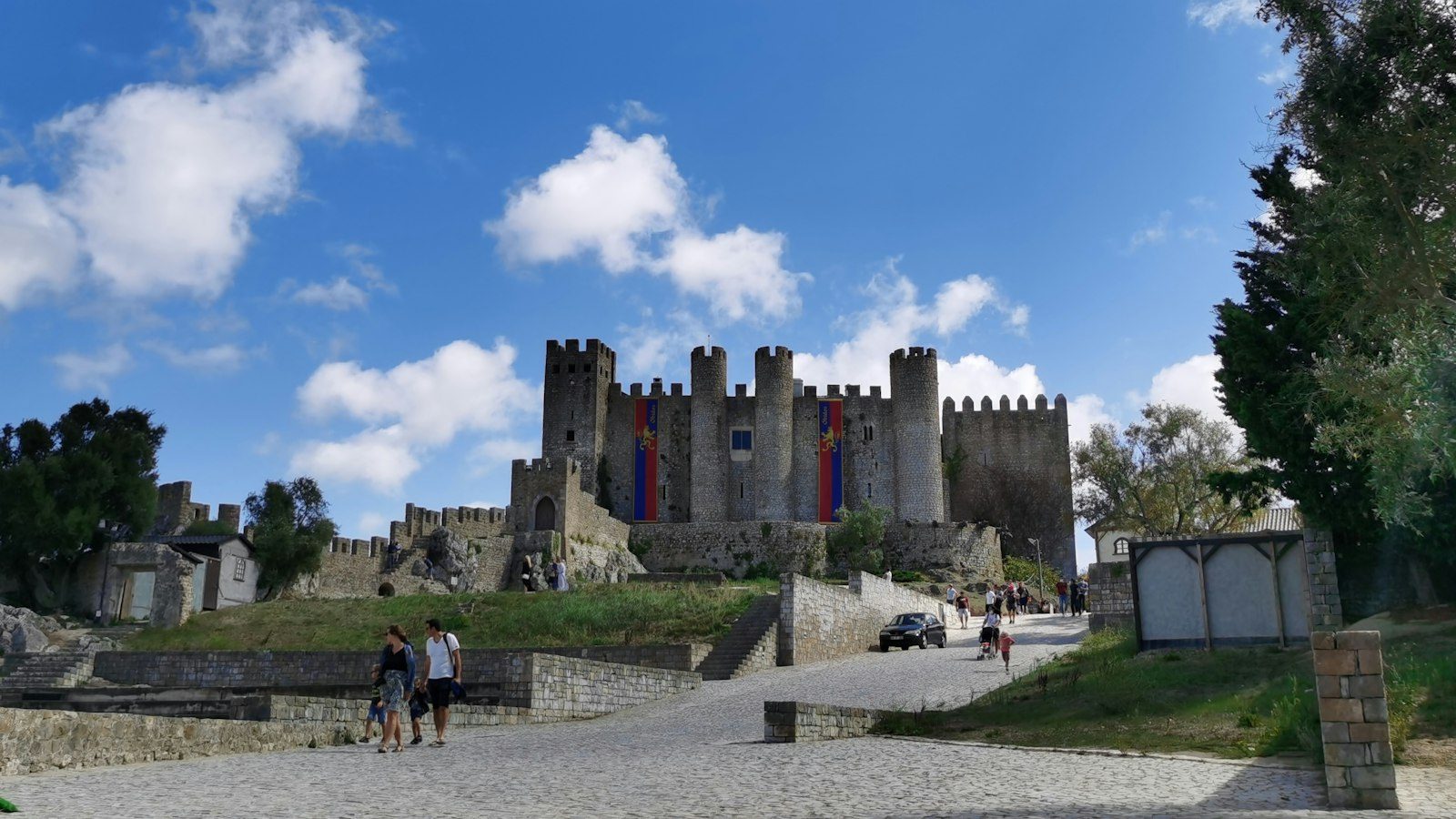
A whitewashed medieval town wrapped in a complete ring of walls, an hour north of Lisbon. You walk the ramparts, drink cherry liqueur from a chocolate cup and browse books in a converted church, then take the bus to the lagoon and the Atlantic coast.
- Best time to visit: April to June and September to October
- Daily budget (budget traveller): $65 to $215 USD
- Ideal trip length: 2 to 4 days
Óbidos sits on a low hill in Portugal's Oeste region, about an hour north of Lisbon by direct bus. For centuries, Portuguese kings gave it to their queens as a wedding present, and it still looks like a gift: white houses edged in blue and yellow, bougainvillea over doorways and a full circuit of medieval walls you can walk along for free. The castle at the top is now a hotel. Inside the walls the town is small and almost car-free, with one main street, Rua Direita, and a tangle of cobbled lanes around it. Óbidos is also a UNESCO City of Literature, and there are bookshops in unlikely places, including a church and an organic market. Most visitors come on a coach day trip and leave by late afternoon, so the town is at its best early in the morning and after dark. Stay a night or two to see it that way. Then use the buses and the slow local train to reach Caldas da Rainha, the Óbidos lagoon and the beaches at Foz do Arelho and Peniche. Rooms inside the walls are not cheap, but free walls, cheap ginja, good-value set lunches and short bus rides make it a manageable stop for a solo traveller.
Óbidos is one of the best-preserved walled towns in Portugal, a tight grid of white houses on a ridge above the farmland of the Oeste, with only a few hundred people living inside the walls. For centuries, Portuguese kings gave the town to their queens, and it was looked after accordingly. Today you see that history in the castle, now a hotel, the tiled gate, the churches and the complete ring of walls. Most visitors come for a few hours from Lisbon. Stay a night or two and you get the better version: Rua Direita empty at 8am, the walls at sunset, a ginja after dinner when the shops have shut. Rooms inside the walls cost more than in nearby towns, but the walls are free and the set lunches and ginjas are cheap, and you can stay more cheaply just outside the gate or in Caldas da Rainha.
Getting here is simple. The Rápida Verde bus from Lisbon's Campo Grande takes about an hour and stops right outside the walls, with the adult single fare at €9.45 from October 2026. Weekday buses are frequent, but weekend services drop sharply. The Linha do Oeste train also stops at Óbidos, but trains are slow and few, and the halt is a 20-minute walk below town. Once you are here, walk. The walled town takes 10 minutes to cross. Base yourself inside the walls for atmosphere, or just outside the gate for easier arrival and lower prices. Use the buses to Caldas da Rainha and Peniche, and connect through Caldas for the lagoon, Nazaré and Alcobaça.
Timing shapes the trip. Spring and autumn bring mild days, fewer coaches and the best light on the white walls. Summer is warm rather than scorching, thanks to the Atlantic, but the town is at its busiest, and in the second half of July the Medieval Market takes over the castle grounds. The Chocolate Festival fills March weekends, and from late November to early January the Christmas village brings crowds and higher room prices. Outside these events, winter is quiet, cheap and often rainy. Óbidos is very safe, and English is widely spoken in shops and restaurants. Evenings are quiet: a glass of wine, a ginja and a walk along empty lanes. If you want nightlife, go to Lisbon. If you want a walled town to yourself after dark, stay here.
Óbidos itinerary
Arrive and walk the walls
Morning: Take a morning Rápida Verde bus from Campo Grande in Lisbon (about an hour). Drop your bag and walk in through the tiled Porta da Vila.
Afternoon: Wander Rua Direita and the back lanes, then rest in Praça de Santa Maria with a coffee. Look inside the Igreja de Santa Maria.
Evening: Walk part of the walls in the golden hour once the coaches have gone, then have your first ginja in a chocolate cup and dinner inside the walls.
Books, churches and the aqueduct
Morning: Complete the full circuit of the walls early, while it is cool and empty. Then browse the Livraria de Santiago in its old church by the castle.
Afternoon: Have a set lunch outside the walls, then follow the aqueduct out of town and walk down to the Santuário do Senhor Jesus da Pedra.
Evening: Visit the bookshop in the organic market, find Josefa de Óbidos's tomb in the Igreja de São Pedro, and have a quiet dinner on a side lane.
The lagoon and Foz do Arelho
Morning: Take a bus or train to Caldas da Rainha (about 10 minutes), then a local bus to Foz do Arelho. Walk along the edge of the lagoon.
Afternoon: Swim on the calm lagoon side, or hire a kayak or paddleboard. Have grilled fish for lunch at one of the restaurants by the water.
Evening: Watch the sunset over the Atlantic from the clifftop viewpoint, then take the bus or a taxi back. Check the last departure first.
Caldas da Rainha
Morning: Go to the Praça da Fruta, the daily fruit and vegetable market in Caldas, for pears, cheese and a cavaca from a pastry stall.
Afternoon: Visit the Bordallo Pinheiro ceramics shop and museum and walk through the Parque D. Carlos I. Cheap lunch in the town centre.
Evening: Return to Óbidos for dinner and a final stretch of the walls at dusk, if the weather is dry.
Peniche and Baleal
Morning: Take a Rodoviária do Oeste bus to Peniche (around 30 to 40 minutes). Walk around the fortress, now a museum about political prisoners under the dictatorship.
Afternoon: In the warmer months, take a boat to the Berlengas islands, booked ahead. Otherwise, head to Baleal for the beach, a surf lesson or a clifftop walk.
Evening: Eat fresh fish in Peniche harbour, then catch the bus back to Óbidos.
Nazaré and Alcobaça
Morning: Go via Caldas da Rainha to Alcobaça and visit the huge Cistercian monastery, a UNESCO site with the tombs of Pedro and Inês.
Afternoon: Continue to Nazaré. Walk the long beach, then take the funicular up to Sítio for the view and the lighthouse where the giant winter waves break.
Evening: Have a seafood dinner in Nazaré, or bus back to Óbidos for a farewell ginja on Rua Direita.
Slow morning and depart
Morning: Walk Rua Direita before the shops open and have breakfast in the square. Buy ginja and a book to take home.
Afternoon: Catch the Rápida Verde back to Lisbon. Check weekend times the day before, as there are fewer buses.
Evening: Arrive in Lisbon, or carry on north to Coimbra or Porto.
Best neighbourhoods
- Rua Direita and Praça de Santa Maria: The heart of the walled town. Rua Direita runs from the main gate up to the castle, lined with ginja counters, craft shops and cafés, and it opens out onto the little square in front of the Igreja de Santa Maria. It is crowded from late morning to late afternoon, then goes very quiet. Pick a room on a side lane if you want to step out into an empty town at 8am.
- Castle end and Largo de Santiago: The northern end of the walled town, around the castle, the Livraria de Santiago bookshop and the Cerca do Castelo, where the big festivals are held. You have the easiest access to the highest parts of the walls. During the Medieval Market and the Christmas village it gets noisy and busy, so check the event calendar before you book here.
- Porta da Vila and outside the walls: The area just outside the main gate, by the aqueduct, the bus stop, the tourist office and the car parks. It is less romantic, but you will find more affordable guesthouses, a couple of supermarkets and restaurants with lower prices. You can reach the gate in a few minutes on foot, which makes it practical if you arrive by bus with luggage.
- Lagoa de Óbidos and Foz do Arelho: The large coastal lagoon about 15km north-west of town, which meets the Atlantic at the beach of Foz do Arelho. There are guesthouses, surf and kayak schools and seafood restaurants by the water. It suits you if you want sea air and sunsets, but buses are limited, so you will rely on connections through Caldas da Rainha or taxis.
- Caldas da Rainha: The busy spa and market town about 5km north, 10 minutes away by bus or train. It is more workaday than Óbidos, with a daily fruit and vegetable market, ceramics, parks and cheaper rooms and food. It is a good base on a tight budget and the transport hub for Foz do Arelho, Nazaré and Alcobaça.
Must-do experiences
- Walk the town walls: The ramparts run right around the town, and walking them is free. Climb up near the Porta da Vila or by the castle and allow about an hour for the full circuit. There are no railings and the drops are real, so go slowly, wear shoes with grip and avoid it in strong wind or rain.
- Drink ginja from a chocolate cup: Ginja is the sour cherry liqueur of the region, and in Óbidos it is served in a small edible chocolate cup. Counters along Rua Direita sell a shot for around €1.50. Have one, eat the cup, and buy a bottle to take home if you like it.
- See the Igreja de Santa Maria: The parish church on the main square has walls covered in blue and white tiles and paintings by Josefa de Óbidos, one of Portugal's few well-known women painters of the 17th century. Entry is usually free. The square outside, with its old stone pillory, is the nicest place in town for a coffee.
- Browse the Livraria de Santiago: A medieval church near the castle has been turned into a bookshop, with shelves up to the old altar. It is part of what earned Óbidos its UNESCO City of Literature title. Look out for the bookshop in the organic market too, where books sit among the fruit and vegetables.
- Arrive through the Porta da Vila early: The main gate is a bent passage lined with 18th-century azulejos and a small chapel balcony. Go before 10am, when the coaches have not yet arrived, and you can stand and look at the tiles without being pushed along. It is also the nicest way to enter town the first time.
- Follow the aqueduct to Senhor da Pedra: A 16th-century aqueduct runs out of town towards the hills, and you can follow parts of it on foot. Below the town to the north, the hexagonal Santuário do Senhor Jesus da Pedra is an unusual baroque church that few day trippers bother to visit. The walk takes about 15 minutes each way.
- Watch sunset at the lagoon: Take a bus via Caldas da Rainha to Foz do Arelho, where the Lagoa de Óbidos meets the Atlantic. Swim on the calm lagoon side or watch the surf on the ocean side, then eat grilled fish by the water. Check the last bus back before you settle in.
Hidden gems
- The Santuário do Senhor Jesus da Pedra below the town, a six-sided baroque church that is usually empty while Rua Direita is packed
- The Igreja de São Pedro, a plain church where the painter Josefa de Óbidos is buried, a few steps off the main street
- Rua Josefa de Óbidos and the back lanes running parallel to Rua Direita, where the houses are just as pretty and the crowds are a fraction of the size
- The south-western stretch of the walls in the early evening, with long views over the plain towards the lagoon and the coast
- The bookshop inside the organic market just outside the walls, where you can buy a novel and a bag of local pears at the same counter
Daily budget
- Accommodation: budget €25-45 / night (hostel dorm or simple guesthouse room outside the walls), mid-range €80-140 (guesthouse inside the walls or 3-star hotel), splurge €200+ (Pousada Castelo Óbidos or a boutique hotel). Hostel beds are scarce, and Caldas da Rainha is cheaper. A municipal tourist tax of €1 per person per night applies from age 13, for up to five nights. Prices rise during festivals.
- Food: budget €18-28 / day (pastry breakfast, set lunch, supermarket picnic), mid-range €35-55 (café lunch and a sit-down dinner with wine), splurge €80+ (seafood rice for one, good wine, dessert). A prato do dia set lunch is about €10-14 outside the walls, and restaurant mains roughly €14-24 inside them. Seafood rice is often for two, so ask about a half portion.
- Transport: budget €0-6 / day (walking, local buses), mid-range €10-25 (buses to the coast plus a taxi), splurge €40+ (taxi tours of the lagoon or a hire car). The Rápida Verde from Lisbon costs €9.45 each way. The train to Caldas is around €2. A8 tolls are about €6 each way if you drive, and parking outside the walls is paid.
- Activities: budget €0-5 / day (walls, churches, bookshops, the aqueduct walk), mid-range €10-30 (museums, a festival ticket, a kayak on the lagoon), splurge €30+ (Berlengas boat trip, surf lesson, guided tours). The walls and most churches are free. Vila Natal adult tickets are around €12. Berlengas boats from Peniche run in the warmer months only, and daily visitor numbers on the island are capped.
- Drinks & nightlife: budget €3-8 (a few ginjas or a glass of wine), mid-range €12-25 (wine with dinner and a drink in a bar), splurge €40+ (a wine tasting or cocktails at the Pousada). A bica (espresso) costs about €1 and a ginja in a chocolate cup about €1.50. Nightlife is low-key, just a few bars on Rua Direita that close fairly early.
Where to stay
- Hostel or guesthouse in Just outside the walls or in Caldas da Rainha (€25-45 / night): Óbidos has only a few budget beds, mostly simple guesthouse rooms and the odd small hostel near the gate. Caldas da Rainha, 10 minutes away, has more choice and lower prices.
- Boutique hotel in Inside the walls (€130-220 / night): Casa das Senhoras Rainhas is a small hotel within the walls, a short walk from the castle and the festival grounds. You get the quiet town at night right outside your door.
- Book hotel in Porta da Vila, just outside the walls (€90-160 / night): The Literary Man is a hotel in a former convent, with thousands of books on its shelves. It suits the town's literary side, and the main gate and bus stop are a few minutes' walk away.
- Splurge in The castle (€220-400+ / night): Pousada Castelo Óbidos puts you inside the medieval castle at the top of town. Rooms are limited and book up early, but you sleep inside the walls you walked that afternoon.
What to eat
- Ginja de Óbidos: the sour cherry liqueur, drunk from a chocolate cup for around €1.50 at counters along Rua Direita
- Prato do dia: the daily set lunch at small restaurants just outside the walls, often soup, a main and a drink for around €10-14
- Pêra Rocha do Oeste: the local pear, sold at markets in the region and good for a picnic on the walls
- Fish and seafood from Peniche: grilled sardines in summer, caldeirada (fish stew) and arroz de marisco (seafood rice) on the coast
- Cavacas and beijinhos from Caldas da Rainha: sweet glazed pastries from the market town next door, best eaten with a bica
- Wine from the Lisboa region: crisp whites and good-value reds from the Oeste vineyards, often under €4 a glass
Day trips
- Peniche, Baleal and the Berlengas (About 25km west of Óbidos, roughly 30 to 40 minutes by bus): A working fishing port with a seafront fortress, the surf beaches of Baleal next door and, offshore, the rugged Berlengas nature reserve with its sea caves and island fort. Take a Rodoviária do Oeste bus from Óbidos to Peniche. Boats to the Berlengas leave Peniche harbour in the warmer months. Daily visitor numbers on the island are capped, so book ahead in summer.
- Caldas da Rainha and Foz do Arelho (Caldas about 5km north, then Foz do Arelho about 9km further west): Start with the daily fruit market and the ceramics in Caldas, then head to the lagoon and the Atlantic at Foz do Arelho for a swim, a seafood lunch and the sunset. Take the bus or train to Caldas da Rainha (about 10 to 13 minutes, around €2 by train), then a local bus to Foz do Arelho. Check the last bus back or arrange a taxi.
- Nazaré and Alcobaça (Alcobaça about 35km and Nazaré about 40km north): Alcobaça has one of Portugal's great Cistercian monasteries, a UNESCO site. Nearby Nazaré is a lively fishing and beach town famous for its giant winter waves. Go by bus via Caldas da Rainha. You can easily combine both towns in one day, as they are close together. Start early, and check return times to Caldas and Óbidos, especially at weekends.
When to visit
- Spring (March - May): 15-22°C, mild with some showers, countryside green and in flower. Crowds: Moderate, busy on Chocolate Festival weekends and at Easter. A very good time. Pleasant for walking the walls and visiting the coast, though the sea is still cold. Book ahead for festival weekends in March.
- Summer (June - August): 23-29°C, sunny, often cooler on the coast, sea around 17-20°C. Crowds: Busy, very busy during the Medieval Market in late July. Long evenings and beach days at Foz do Arelho and Baleal. The town is packed at midday and rooms cost more, so explore early and late and book well ahead.
- Autumn (September - October): 18-25°C, settled in September, rain returning in October. Crowds: Moderate, falling through October. Arguably the best balance. Warm days, calmer streets, the grape harvest in the Oeste and, usually, the FOLIO literary festival in October.
- Winter (November - February): 9-15°C, damp with frequent rain and wind. Crowds: Quiet, except for very busy Christmas village weekends. Cheap and peaceful outside the festive season. From late November to early January, Vila Natal makes the town lively but crowded and pricier.
Entry rules for your passport
Visa rules for Portugal depend on the passport you travel on. Check the official source before you book: European Commission: Schengen visa policy
Getting there
Óbidos has no airport. The nearest is Lisbon's Humberto Delgado Airport, about an hour away by road. From the airport, take the metro to Campo Grande and catch the Rápida Verde bus from Terminal 2. It takes about an hour, stops just outside the walls and costs €9.45 for an adult single on the timetable in force from October 2026. Pay on board, at the ticket office or in the MOOV-U app. Weekday buses are frequent, but weekend and holiday services are much reduced, so check times in advance. The Linha do Oeste train calls at the Óbidos halt, but trains from Lisbon are slow, often need a change and are infrequent, and the halt is about a 20-minute walk below the town. From the north, take a bus or train to Caldas da Rainha, then a 10-minute bus or train to Óbidos. If you drive, the A8 from Lisbon takes about 50 to 60 minutes, with tolls of roughly €6 each way. Cars cannot enter the walled town, so use the car parks outside.
Border checks: non-EU visitors (other than Swiss, Norwegian, Icelandic, Liechtenstein, Andorran, Monegasque, San Marinese and Vatican citizens, and holders of an EU residence permit or long-stay visa) are registered in the EU's Entry/Exit System (EES) instead of getting a passport stamp. On your first crossing, officers take your photo and/or fingerprints, so allow extra time at passport control. ETIAS, the planned travel authorisation, is not in operation yet, so don't pay any website for one.
Getting around
The walled town is small and almost car-free, so you will walk everywhere. It takes about 10 minutes from the Porta da Vila to the castle along Rua Direita. Expect steep cobbles, uneven steps and slippery stone after rain. The Rápida Verde bus from Lisbon stops just outside the walls by the main gate, and the same line continues to Caldas da Rainha in around 10 minutes. Rodoviária do Oeste runs local buses to Caldas da Rainha and Peniche, and Caldas is the hub for Foz do Arelho, Nazaré and Alcobaça. Fares are a few euros and you can usually pay on board or in the MOOV-U app. Timetables thin out sharply at weekends and on public holidays, so check them the day before. The Óbidos train halt on the Linha do Oeste is about a 20-minute walk below town, and trains to Caldas da Rainha take around 13 minutes for about €2, but services are infrequent. Taxis wait near the gate at busy times and are useful for the lagoon. If you drive, leave the car in the paid car parks outside the walls.
Safety
Óbidos is very safe, and violent crime against visitors is rare. Watch your bag on crowded Rua Direita at midday and during festivals. The biggest risk is the walls themselves. There are no railings, the walkway is narrow in places and the drop is several metres, so stay well back from the edge, avoid walking them in wind, rain or after dark, and do not try them after a few ginjas. Cobbles are slippery when wet. Break-ins at the car parks have been reported, so leave nothing visible in a hire car. At Foz do Arelho, Baleal and Peniche, the Atlantic has strong currents, so swim only at lifeguarded beaches and respect the flags. Tap water is safe to drink. The EU emergency number is 112, and the SNS 24 health line is 808 24 24 24. EU travellers should carry an EHIC and UK travellers a GHIC, and everyone else needs travel insurance with medical cover.
Solo travel tips
- Stay at least one night: Óbidos changes completely once the coaches leave. A night inside or just outside the walls gives you empty lanes at dusk and the walls almost to yourself in the morning.
- Do the walls in daylight and dry weather: There are no railings and the stones can be slippery. Walk alone only when visibility is good, keep to the inner edge and skip the narrowest sections if heights bother you.
- Check weekend bus times: The Rápida Verde runs far less often at weekends and on holidays, and local buses to the coast thin out too. Plan your day trips for weekdays where you can.
- Eat lunch outside the walls: Restaurants just beyond the gate serve set lunches for a fraction of the price inside. Save dinner inside the walls for the evening, when the atmosphere is better.
- Use Caldas as your hub: Caldas da Rainha is 10 minutes away and has the bus connections to the lagoon, Nazaré and Alcobaça. It also has cheaper rooms if Óbidos is full or expensive.
- Meet people at festivals and surf camps: Festival evenings, the FOLIO book talks and the surf schools at Baleal are easy places to start a conversation. Ginja counters are sociable too, and their owners like to chat.
Cultural etiquette
- Greet people with 'bom dia' (good morning) or 'boa tarde' (good afternoon) and say 'obrigado' if you are a man or 'obrigada' if you are a woman.
- Remember that people live inside the walls. Keep your voice down in the lanes at night and do not peer into doorways or courtyards.
- Dress modestly in churches, covering your shoulders, and stay quiet or wait outside if a Mass is on.
- Ask before photographing shopkeepers or locals at close range, especially older residents.
- Expect lunch around 12:30 to 14:30 and dinner from about 19:30, and note that some kitchens close in between.
- Bread, olives and cheese put on the table before a meal are not free. Send them back if you do not want them.
- Rounding up or leaving 5-10% for good table service is appreciated, though not compulsory.
Frequently asked questions
How do I get to Óbidos from Lisbon?
Take the Rápida Verde express bus from Campo Grande in Lisbon. It leaves from Terminal 2, takes about an hour and stops just outside the town walls. The adult single fare is €9.45 on the timetable in force from October 2026, payable on board, at ticket offices or in the MOOV-U app. There are many more buses on weekdays than at weekends, so check the timetable. The train is slow and infrequent, and the station is a 20-minute walk below town, so the bus is the better choice.
How many days do I need in Óbidos?
One night is enough to see the walls, the churches and the bookshops and to enjoy the town once the day trippers leave. Two to four nights let you add the lagoon at Foz do Arelho, the market in Caldas da Rainha and a day on the coast at Peniche or Baleal. A week works if you use Óbidos as a base for Nazaré, Alcobaça and a boat trip to the Berlengas.
When is the best time to visit Óbidos?
April to June and September to October bring mild weather, green countryside and fewer coaches than in high summer. July and August are warm and busy, and the Medieval Market fills the town in the second half of July. From late November to early January, the Óbidos Vila Natal Christmas village draws big crowds, especially at weekends. Winter outside the festival is quiet and cheap but often wet.
Can I drive into Óbidos?
No. The walled town is closed to general traffic, and visitors park in the paid car parks outside the walls, a few minutes' walk from the main gate. From Lisbon, the A8 motorway takes about 50 to 60 minutes and has tolls of roughly €6 each way. Leave nothing visible in the car. If your guesthouse is inside the walls, ask in advance how to drop off your luggage.
Is Óbidos just a day trip, and is it too crowded?
It is crowded between about 11am and 4pm, when the tour coaches are in town, especially in summer and during festivals. Before 10am and after 6pm it is calm and very pretty. That is the main reason to stay the night. Spend the middle of the day on the walls' quieter stretches, at Senhor da Pedra or on a trip to Caldas da Rainha.
What festivals are on, and do I need tickets?
Walking around the town is always free, but the big events are ticketed and held in the Cerca do Castelo. Óbidos Vila Natal runs from 27 November 2026 to 3 January 2027, with adult tickets around €12, and it is closed on 25 December and 1 January. The Chocolate Festival ran on weekends between 6 and 22 March in 2026, and the Medieval Market ran from 16 to 26 July 2026. Check the 2027 dates before booking, as rooms sell out and prices rise.
Is Óbidos safe for solo female travellers?
Yes. It is a small, calm town where locals are used to visitors, and the main lanes are lit and quiet at night. Take normal care with drinks in bars and with your bag in crowds. The main danger is the walls, which have no railings, so walk them in daylight and in dry weather. If you go to the lagoon or Peniche for the evening, plan your bus or taxi back before dark.
What entry rules apply to Portugal in 2026?
Portugal is in the EU and the Schengen area. Many non-EU visitors, including those from the UK, US, Canada and Australia, can stay visa-free for up to 90 days in any 180-day period across Schengen. The EU's Entry/Exit System has been fully running since April 2026 and records non-EU travellers' fingerprints and photos at the external border. ETIAS was not yet operating in November 2026, but it is due to start, so check before you travel. Confirm the rules on official EU and Portuguese government websites and check your own government's travel advice.
More about Óbidos
- What To Do in Lisbon for 7 Days: Itinerary with Sintra, Cascais and Évora
- Hidden Gems in Lisbon: Quiet Viewpoints, Museums, Gardens and Markets
Tours and activities in Óbidos | Óbidos in 2 days | Óbidos in 3 days | Óbidos in 4 days | Óbidos in 5 days | Óbidos in 7 days
Joy Plus home | Destinations | Itineraries | Activities | Flights | Budget planner | Calendar | Map | Blog | Lifetime access