Destinations / Central America
Ometepe Island, Nicaragua travel guide
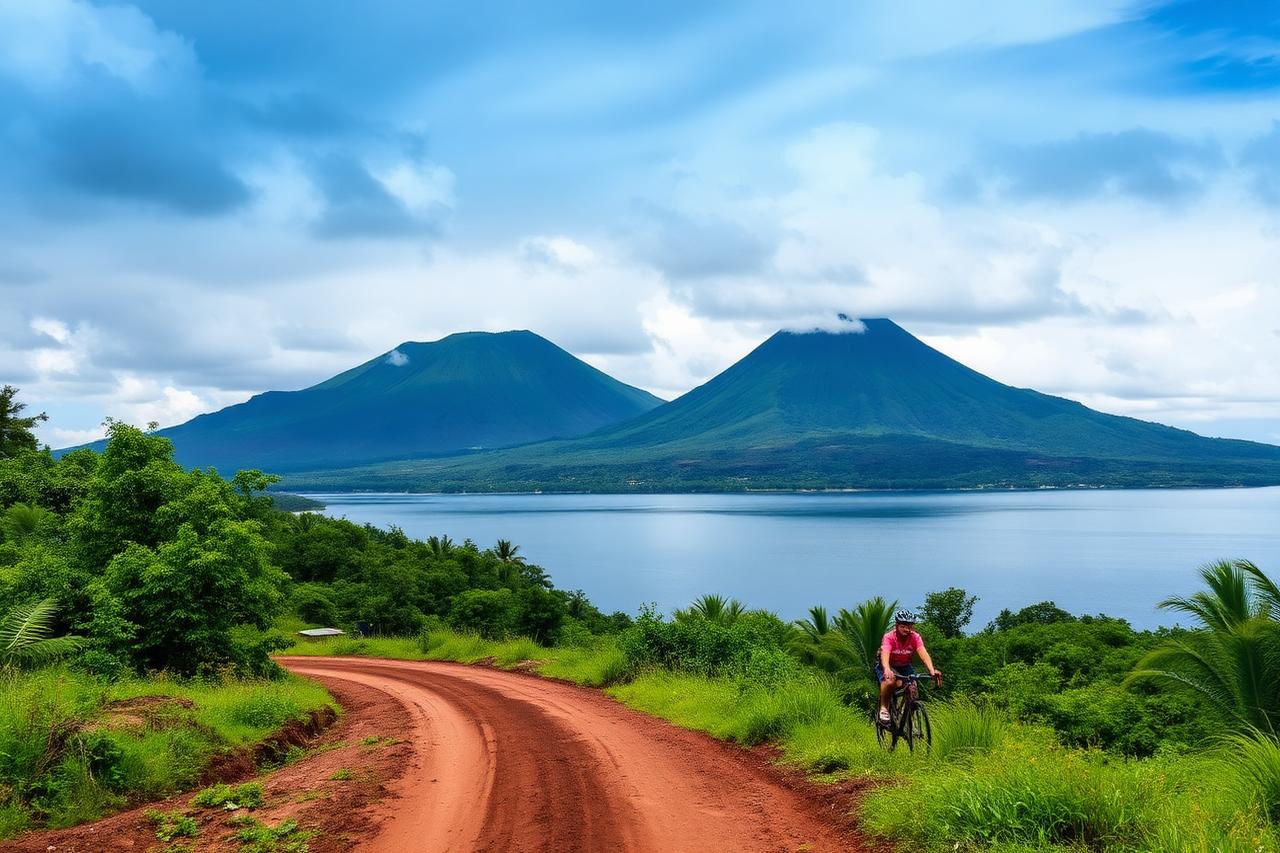
Twin volcanoes rising from a freshwater sea: rural Nicaragua at its most beautiful and untouched.
- Best time to visit: November to April
- Daily budget (budget traveller): $30 to $55 USD
- Ideal trip length: 3 to 4 days
Ometepe Island is one of the most dramatic landscapes in Central America, two towering volcanoes, Concepción and Maderas, rising from the calm waters of Lake Nicaragua to form a figure-eight island of dirt roads, organic farms, petroglyphs and howler monkeys. Life here is slow, powered by solar panels, farm produce and the rhythm of the lake ferry. As Nicaragua's tourism recovers, Ometepe is drawing travellers who want to hike active cones, swim in volcanic springs and experience a rural island where cars are few and bicycles are king. Joy Plus pairs volcano treks with lake kayaking, petroglyph hikes and the best farm-to-table meals on the island.
Ometepe looks fake from the ferry deck. Two volcanoes, Concepcion at 1,610 metres and Maderas at 1,394, stand in the middle of Lake Nicaragua, joined by a low sandy isthmus. The island is about 276 square kilometres of plantain groves, mango trees, cattle on the road and rusted pickups. The lake is big enough that you will swear you are at sea, and fresh enough that you can swim in it. The one-hour crossing from San Jorge is the best introduction, so sit outside and watch Concepcion's cone grow.
The island is really two places. The Concepcion side (Moyogalpa, Altagracia) has the ferry dock, the ATMs, the bike rentals and the fuel. The Maderas side (Balgue, Merida, the beaches around Santo Domingo and Santa Cruz) has the hostels, the eco-lodges, the cloud forest and the better swimming. The ring road is roughly 70 km. The paved stretch runs between Moyogalpa and Altagracia and the isthmus. Past Balgue towards Merida it turns to rock and dust, and in the green season to mud. Distances look small on the map and take hours on a scooter, so plan slow days.
Ometepe rewards a plan and punishes improvising. Power cuts are routine, cards often will not work, the last ferry is mid-afternoon, and the lake wind between January and March can cancel boats. Joy Plus sequences it for you: Moyogalpa for arrival, a base on the Maderas side for three or four nights, the Maderas climb on a clear morning, Ojo de Agua and the Istian river on the easy days, and a ferry out before the afternoon chop. Bring cash, a headlamp and low expectations for wifi. You will not miss it.
How many days in Ometepe Island?
For Ometepe Island, we recommend 3 to 4 days. With more time, add a day trip to San Juan del Sur or Granada.
| Trip length | What you'll see | Itinerary |
|---|---|---|
| 2 days | Cross the lake, settle in Moyogalpa; Across the isthmus to Santo Domingo | Ometepe Island in 2 days |
| 3 days · Recommended | Adds: Volcan Maderas summit | Ometepe Island in 3 days |
| 4 days · Recommended | Adds: Ojo de Agua and the Istian river | Ometepe Island in 4 days |
| 5 days | Adds: Altagracia, the museum and the north | Ometepe Island in 5 days |
| 7 days | Adds: San Ramon waterfall and Merida; Last swim | Ometepe Island in 7 days |
Ometepe Island itinerary
Cross the lake, settle in Moyogalpa
Morning: Take an early shuttle or bus from Granada or Managua to San Jorge, then the ferry to Moyogalpa (about 1 hour, from 6:30am). Drop bags and rent a bicycle for the day.
Afternoon: Cycle the paved road south to Reserva Charco Verde, a short forest trail with a calm lagoon and howler monkeys. Swim at the beach and lunch at a comedor on the water.
Evening: Sunset on the Moyogalpa waterfront, with the cone of Concepcion in the light. Dinner at Pizzeria Il Pomodorino, early bed.
Across the isthmus to Santo Domingo
Morning: Take the bus or a scooter along the paved road to Playa Santo Domingo. Swim in the lake with both volcanoes in view.
Afternoon: Walk the sand to Punta Jesus Maria, the long spit with water on both sides. Go late, when the heat drops and the wind eases.
Evening: Stay in Santa Cruz. Dinner at Finca Mystica, a vegetarian-friendly farm kitchen. Stargaze with a headlamp, there is almost no light pollution.
Ojo de Agua and the Istian river
Morning: Be at Ojo de Agua by 8am, before the day-trippers. Swim the spring pool and use the rope swing.
Afternoon: Kayak the Istian river, about 2 hours of reeds, herons and volcano views. Bring a hat and sunscreen.
Evening: Early dinner at Balgue, then bed. Maderas starts tomorrow.
Volcan Maderas summit
Morning: Start at 6am with a guide from the Finca Magdalena trailhead near Balgue. Climb through coffee farms, cloud forest and mud to the crater lake. Plan 3 hours up.
Afternoon: Rest at the summit, then descend (about 3 to 4 hours). Poles and gaiters help. Back in Balgue by 3pm.
Evening: Zopilote or Totoco for dinner and a hot shower. Sleep for 10 hours.
San Ramon waterfall and Merida
Morning: Ride or take the bus to Merida (road gets rough past Balgue). Walk the trail to Cascada San Ramon, about 90 minutes each way through forest.
Afternoon: Cool off under the 50 metre fall in the dry season. Lunch back in Merida at a lakeside comedor.
Evening: Sunset swim at Hacienda Merida's lakeshore. Local dinner and an early night.
Altagracia, the museum and the north
Morning: Take the bus or a scooter to Altagracia, the island's second town. Museo de Ometepe holds pottery and petroglyph fragments, and it is cool inside.
Afternoon: Visit a petroglyph site on a farm track near Concepcion with a local guide. Eat at a market comedor in Altagracia. If Concepcion is open and you are fit, this is the day for the volcano instead.
Evening: Return to Moyogalpa, final dinner, pack for the early boat.
Last swim and depart
Morning: Coffee at your guesthouse, then take the first or second ferry to San Jorge (arrive 30 minutes early, the line can be long).
Afternoon: Colectivo or taxi to Rivas, then bus to Granada or on to San Juan del Sur.
Evening: Land in Granada or Managua for your next flight, or stay and catch the Pacific sunset at San Juan del Sur.
Best neighbourhoods
- Moyogalpa: The main port town on the Concepción side, with the ferry dock, guesthouses, restaurants and bike rentals.
- Balgüe: A quieter village on the northern slopes of Maderas with farm stays, petroglyphs and views across to Concepción.
- Santa Cruz: The hub of the Maderas side, with the island's best beaches, hostels and access to the Maderas crater hike.
- Mérida: The remote southern tip with waterfalls, a natural spring and a handful of eco-lodges.
Must-do experiences
- Hike Volcán Maderas: A steep, muddy climb through cloud forest to a crater lake at the summit, with howler monkeys and orchids along the way.
- Kayak the Río Istián: Paddle the narrow river between the two volcanoes, surrounded by reeds, water birds and volcanic scenery.
- Swim at Ojo de Agua: A natural volcanic spring pool with crystal-clear water, rope swings and a jungle canopy overhead.
- Visit the petroglyphs at El Porvenir: Ancient stone carvings scattered through a field, one of the most accessible pre-Columbian sites on the island.
- Hike a volcano: Ometepe is an island formed by two volcanoes in Lake Nicaragua. Hike the challenging Concepción or the cloud-forested Maderas for jungle, waterfalls and crater views.
Hidden gems
- The San Ramón waterfall, a 50-metre cascade on the Maderas slopes reached by a tough but rewarding trail.
- Punta Jesús María, a narrow sand spit where you can stand with lake on both sides at sunset.
- The small organic farms and fincas where you can volunteer, learn permaculture or just eat incredibly fresh food.
- Sunset kayaking on the Río Istián, when caimans, herons and kingfishers are most active.
Daily budget
- Accommodation: budget C$ 250 to 450 / night (dorm or camping, about US$ 7 to 12), mid-range C$ 1,800 to 3,200 (private cabana or hacienda room), splurge C$ 5,500+ (lakefront bungalow at Villa Paraiso or Totoco). Balgue and Santa Cruz are the best value. Many farm stays include breakfast. Prices jump 20 to 30 percent at Christmas and Semana Santa.
- Food: budget C$ 350 to 550 / day (comedor almuerzo C$ 150 to 220, gallo pinto breakfast C$ 100 to 150), mid-range C$ 900 to 1,500 (farm-to-table dinner at Finca Mystica or Totoco), splurge C$ 2,200+ (lakefront fish dinner with wine). Eat the almuerzo corriente at any comedor: fried fish or chicken, rice, beans, salad and a fresco for about C$ 180. Island menus are small. Order early, kitchens run out.
- Transport: budget C$ 150 to 400 / day (bicycle C$ 250 to 350 or the local bus, C$ 30 to 100 per ride), mid-range C$ 900 to 1,300 (scooter C$ 900 to 1,200 plus fuel), splurge C$ 2,500+ (private 4x4 and driver). The San Jorge to Moyogalpa ferry is about C$ 80 to 120 each way (lancha costs more). Fill the scooter in Moyogalpa or Altagracia, pumps are rare. Hills and dirt kill bicycles, so rent a scooter for the Maderas side.
- Activities: budget C$ 200 to 500 / day (Ojo de Agua entry about C$ 200, free beaches and walks), mid-range C$ 1,000 to 1,600 (Maderas with guide C$ 900 to 1,300 pp, Istian kayak C$ 700 to 1,000), splurge C$ 2,000+ (private Concepcion guide, sunrise kayak, horse ride). Guides are compulsory on both volcanoes. Join a group through your hostel in Balgue and split the cost. Concepcion access can close without notice if activity rises, so check before you pay.
- Drinks & nightlife: budget C$ 100 to 250 (Toña or Victoria at C$ 50 to 70, fresco or smoothie C$ 40 to 80), mid-range C$ 400 to 700 (Flor de Cana rum at a lakeside bar), splurge C$ 1,000+ (cocktails at Villa Paraiso). There is no club scene. Nights are hostel bonfires, quiet bars in Santa Cruz and early beds. Most places stop serving by 10pm.
Where to stay
- Social hostel in Balgue (C$ 250 to 450 / night): Finca Zopilote is a bioconstruction farm hostel with dorms, camping and communal meals. Easy group hikes and a strong volunteer crowd. Bring a headlamp, the paths are dark.
- Boutique hotel in Merida (C$ 2,200 to 3,600 / night): Hacienda Merida is an old estate on the lakeshore at the quiet south end of the island. Garden rooms, a restaurant and kayaks. Bring your own supplies, the nearest shop is small.
- Apartment in Santa Cruz or Santo Domingo (C$ 1,500 to 2,800 / night): Private cabanas with a kitchenette and hammock porch, often through Airbnb. Best for four nights or more, and you can cook with farm produce from the local stall.
- Splurge in Playa Santo Domingo (C$ 4,000 to 7,500 / night): Villa Paraiso has lakefront bungalows with sand at the door and both volcanoes in view. Totoco Eco-Lodge, high on the Maderas slope, is the quiet alternative with forest and cooler nights.
What to eat
- Plantains in every form: tostones, maduros and patacones
- Fresh lake fish, guapote and mojarra, grilled with garlic and lime
- Gallo pinto with farm eggs and homemade tortillas for breakfast
- Tropical fruit smoothies, papaya, pineapple and banana, from island fruit stands
Day trips
- Cascada San Ramon (90 minute walk from Merida): A 50 metre waterfall on the Maderas slope, best from December to May when the flow is strong and the trail is firm. Bring water, the forest is humid. Scooter or bus to Merida, then walk the marked trail. A local guide costs about C$ 300 to 500 and is worth it.
- San Juan del Sur (About 1 hour by road from San Jorge, plus ferry): A Pacific surf town with beaches, sunset bars and the Cristo de la Misericordia. A long day from Ometepe and better as onward travel. Ferry to San Jorge, colectivo to Rivas (C$ 20 to 30), then a shared minivan to San Juan del Sur (about C$ 50 to 80).
- Granada (About 3 hours via San Jorge and Rivas): Colonial streets, the cathedral, and Lake Nicaragua's islets. Treat it as the other end of your trip, not a day trip. Ferry to San Jorge, microbus from Rivas to Granada (about C$ 80 to 100). Or the slow ferry from Altagracia, a few times a week.
When to visit
- Early dry season (November to January): 28 to 32°C days, 22°C nights, green hills, clear skies, breezy by January. Crowds: Moderate, Christmas week is busy with Nicaraguan families. The sweet spot. Trails are drying, views from the crater are clear, and the lake is still calm in November.
- Late dry season (February to April): 32 to 36°C, dusty, strong lake wind in February and March. Crowds: Heavy around Semana Santa (March or April), booked solid. Best volcano visibility, worst heat. Ferries and lanchas sometimes stop for a day when the wind picks up. Book Easter beds weeks ahead.
- Early green season (May to July): 27 to 31°C, short afternoon downpours, very green. Crowds: Low. Underrated. Mornings are usually clear, rooms are cheap, and the Maderas crater lake is brimming. Start hikes at dawn and be down by noon.
- Peak green season (August to October): 26 to 30°C, heavy rain, September and October are the wettest. Crowds: Very low, many lodges slow down. Skip it for volcanoes. Trails turn to soup, the Merida road washes out and clouds often hide the summits.
Entry rules for your passport
Visa rules for Nicaragua depend on the passport you travel on. Check the official source before you book: Nicaragua Ministry of the Interior
Getting there
Fly into Managua (MGA), about 2 hours from Rivas. A private transfer to San Jorge costs roughly US$ 80 to 120, or take a taxi to the Mayoreo terminal and an express bus to Rivas for about C$ 90 to 110 (2 to 2.5 hours). From Granada, a microbus to Rivas takes about 1 hour 15 minutes and costs C$ 80 to 100. From Costa Rica, cross at Peñas Blancas (about 35 km from Rivas) and take a bus or taxi to Rivas. From Rivas, a colectivo to San Jorge costs C$ 20 to 30 and a taxi about C$ 150 to 200. At San Jorge, ferries leave roughly hourly from 6:30am to mid-afternoon, taking about an hour to Moyogalpa and costing C$ 80 to 120. Faster lanchas cost a bit more. There is also a ferry from Granada to Altagracia, slow and infrequent, so check the days. Always confirm the last departure at the dock the morning of travel, wind can change the schedule. Buy your ticket at the window, not from touts.
Getting around
Ometepe's public buses are slow and infrequent, so the best way to get around is to rent a bicycle, scooter or 4x4 on arrival in Moyogalpa. Taxis exist but are limited and expensive for long distances. The ferry from San Jorge connects to Moyogalpa several times daily, and a smaller boat runs to San José del Sur, nearer the middle of the island. Roads are mostly unpaved and can be rough in the wet season.
Safety
Ometepe is very safe and rural, with a strong community feel. The main risks are the volcano hikes: Concepción is an active, technical climb requiring a guide, while Maderas is strenuous and can be slippery. Carry plenty of water, use a guide and check weather conditions. The lake has some sharks (bull sharks) but they rarely come near inhabited areas. Tap water is best avoided; drink bottled or filtered.
Solo travel tips
- Base in Balgue, not Moyogalpa: Moyogalpa is a dock town with little to do. Balgue and Santa Cruz have the hostels, the communal dinners and the trailheads. Solos meet people in the first hour, and hostels pair you into hiking groups.
- Split guides to cut the cost: Maderas and Concepcion need a guide, and a solo hiker pays the full day rate. Ask at your hostel the night before. Someone is almost always going and you can share for about C$ 900 to 1,300.
- Withdraw cash in Moyogalpa: ATMs (BAC, Banpro) sit in Moyogalpa and Altagracia, and they run empty or offline. Fill your wallet before heading to the Maderas side, where cards are rare and change is scarce. Carry small notes, nobody can break C$ 1,000.
- Pickups are the taxi: Local buses are infrequent and finish by mid-afternoon. A pickup (aventon) will take you for C$ 50 to 150 depending on distance. Ask the price before you climb in and never travel after dark.
- Solo female travellers: Ometepe is calm and community-oriented, and women alone are common. Hike only with a guide, avoid unlit dirt roads after dark, and carry a headlamp. Stay in places with a staffed front desk if you are arriving late.
- Pad your ferry day: Wind from January to March cancels boats, and the last ferry leaves mid-afternoon. Never book a flight the same day you leave the island. Aim to cross by 11am and keep a slack day.
Cultural etiquette
- Greet everyone. A "buenas" to people you pass on the road is expected, and silence reads as cold.
- Politics are sensitive in Nicaragua. Do not bring up the government, and do not photograph police or military.
- Ask before photographing people, especially children and farmers at work. A smile and "puedo" usually works.
- Dress modestly off the beach. Shirts in towns, swimwear stays at the water.
- Do not climb on, touch or chalk the petroglyphs. They are fragile and sacred to local communities.
- Carry out your rubbish on every hike, the island has no real waste collection. Use a refillable bottle and refill at your lodge.
- Bargain gently. Prices for pickups and tours are mostly fair, and aggressive haggling is out of place in a poor rural area.
Frequently asked questions
How many days do you need on Ometepe Island?
Three to four days is ideal: one day for a volcano hike, another for kayaking and swimming at Ojo de Agua, a third for petroglyphs and the San Ramón waterfall, plus time to enjoy the slow rural pace.
Is Ometepe Island safe for tourists?
Yes, it is very safe and welcoming, with a strong rural community. The main concerns are the volcano hikes, which require guides, proper gear and fitness. Use standard precautions with valuables and drink bottled water.
When is the best time to visit Ometepe Island?
The dry season from November to April offers the best hiking conditions, clearest lake views and easiest road travel. The green season (May to October) is lush and beautiful but trails are muddy and some roads become impassable.
Do I need a visa to visit Nicaragua?
Citizens of the EU, UK, US, Canada and Australia can usually enter Nicaragua visa-free for up to 90 days, paying a small tourist card fee on arrival. Confirm the latest entry rules before travelling.
How do I get to Ometepe Island?
Ferries run regularly from San Jorge, near Rivas, to Moyogalpa on Ometepe. The crossing takes about an hour. There is also a smaller ferry to San José del Sur, nearer the middle of the island. Buses and taxis run from Granada and Managua to San Jorge.
Which volcano should I hike on Ometepe?
Volcán Maderas is the more accessible hike, leading through forest to a crater lake, but it is still strenuous and muddy. Volcán Concepción is taller, active and technical, requiring a guide, good fitness and an early start. Most travellers choose Maderas.
Is Ometepe Island expensive to visit?
No, it is excellent value at around $30 to $55 a day. Farm stays, local comedores and bike rentals are very cheap, and the main expenses are the ferry, guided hikes and scooter hire.
Is Ometepe worth visiting?
Yes, the twin-volcano island is a magical, laid-back spot for hiking, swimming, wildlife and switching off. One of Nicaragua's most special and peaceful destinations.
How do I get to Ometepe?
Take the ferry from San Jorge (near Rivas) across Lake Nicaragua to the island, about an hour. The crossing can be choppy, so the larger ferries are more comfortable.
How do I get around Ometepe?
Renting a scooter or bicycle is the most popular way; the roads vary from paved to rough. Public buses and taxis exist but are infrequent, so wheels give you freedom.
Tours and activities in Ometepe Island | Ometepe Island in 2 days | Ometepe Island in 3 days | Ometepe Island in 4 days | Ometepe Island in 5 days | Ometepe Island in 7 days
Joy Plus home | Destinations | Itineraries | Activities | Flights | Budget planner | Calendar | Map | Blog | Lifetime access