Destinations / Europe
Orvieto, Italy travel guide
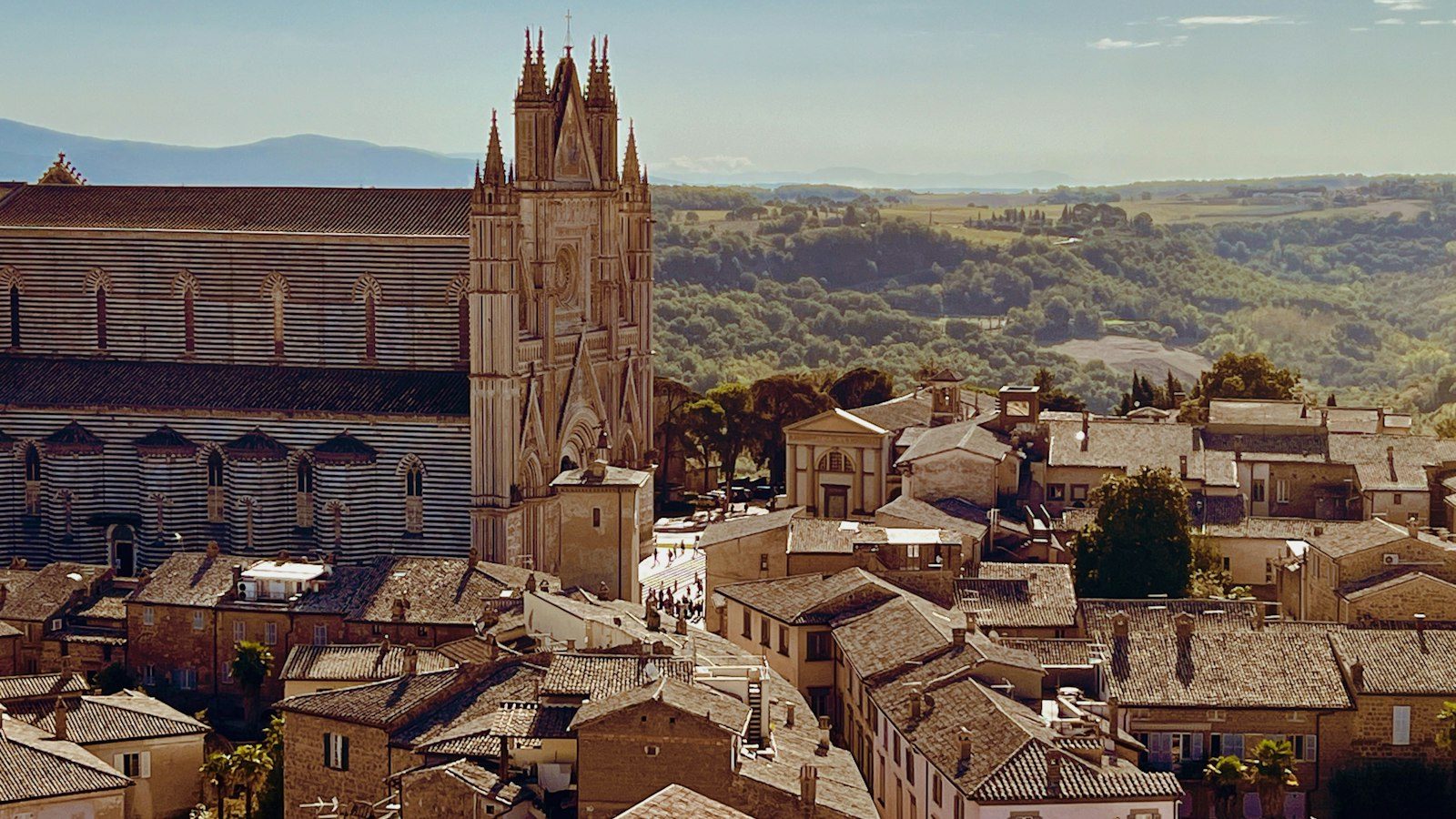
A hill town in Umbria built on a block of volcanic rock, with one of Italy's most striking cathedrals at the top. You ride the funicular up from the station, explore Etruscan caves under the streets and drink cold Orvieto Classico while the valley goes gold below you.
- Best time to visit: April to June and September to October
- Daily budget (budget traveller): $85 to $240 USD
- Ideal trip length: 3 to 5 days
Orvieto sits on a flat-topped cliff of volcanic tufa in southwest Umbria, about 75 minutes by train from Rome and two hours from Florence. The rock rises sharply out of the valley, so the town looks like a fortress from below, and the walk or ride up is part of the fun. At the top you find a compact medieval centre of honey-coloured stone, narrow lanes and small squares. The cathedral facade covers almost the whole front of the church in gold mosaic and carved marble. Underneath the town are hundreds of caves, wells and tunnels dug by the Etruscans and the people who came after them, and you can visit several of them. Most visitors come on a day trip from Rome and leave by late afternoon. Stay a few nights and you get the quiet evenings, the cathedral facade lit by the setting sun and a cheap glass of local white wine in a cellar bar. There are no big hostels here, so beds cost more than in Rome's dorms. Even so, a B&B single, simple trattorias, a combined museum pass and cheap regional trains and buses keep a solo trip affordable.
Orvieto stands on a plateau of volcanic tufa about 300 metres above the Paglia valley, roughly halfway between Rome and Florence. People have lived on the rock since Etruscan times, and it later became a refuge for popes, who left behind palaces, a cathedral and a famous well. The town is small, with around 20,000 people across the whole municipality and far fewer living on the rock itself. Most visitors come up on the funicular from Rome, see the Duomo and leave by five. Stay a few nights and you get the better version: the cathedral facade glowing at sunset, quiet lanes in the medieval quarter, a cellar bar with Orvieto Classico by the glass and a morning walk round the foot of the cliff before anyone else is up. It is not the cheapest place in Italy, as there are hardly any hostels, but B&B singles, trattoria lunches and the Carta Unica pass keep costs reasonable.
Getting here is easy. Trains on the Rome to Florence line stop at Orvieto station, about 1 hour 10 minutes to 1 hour 25 minutes from Rome on faster services. Regional trains are slower but cost only around €8-10. The funicular runs from opposite the station up to Piazza Cahen for €1.30, and the same ticket covers the minibus to the Duomo for 90 minutes. Once you are at the top, walk. Base yourself near the Duomo or Corso Cavour for convenience, in the medieval quarter for quiet and character, or down in Orvieto Scalo for cheaper rooms and early trains. Cotral buses go to Civita di Bagnoregio and Lake Bolsena on weekdays and Saturdays.
Timing shapes the trip. Spring and autumn bring mild days, green or golden hills and the grape harvest in September and October. Summer is hot and the Duomo square fills with tour groups at midday, but the evenings on the rock are lovely. Winter is quiet, cheap and often foggy in the valley, and Umbria Jazz Winter fills the town around New Year. Remember that the Duomo opens to tourists only in the afternoon on Sundays and that there are no Sunday buses to Civita. Orvieto is very safe, and English is spoken in most hotels and many restaurants. Evenings are calm rather than lively. If you want nightlife, Rome is an hour away. If you want frescoes, caves, good pasta and a quiet glass of wine on a cliff, stay here.
Orvieto itinerary
Arrive and ride up the rock
Morning: Take a morning train from Rome or Florence. Ride the funicular up to Piazza Cahen and drop your bag at your B&B.
Afternoon: Walk down the Pozzo di San Patrizio (€6), then stroll along Corso Cavour to Piazza del Duomo for your first look at the facade.
Evening: Watch the sun light up the cathedral front, then have dinner at a trattoria and a glass of Orvieto Classico.
Duomo, museums and the underground
Morning: Be at the Duomo for opening at 9.30am (€8) and spend time in the San Brizio Chapel before the groups arrive. Visit the Emilio Greco museum on the same ticket.
Afternoon: Look round the Faina Etruscan museum, then join an Orvieto Underground tour from Piazza del Duomo 23 (about €10).
Evening: Climb the Torre del Moro (about €4) for the late light, then eat umbrichelli in a back-lane trattoria.
Around the rock and into the medieval quarter
Morning: Walk the Anello della Rupe while it is cool, dropping down to the Etruscan necropolis at Crocifisso del Tufo on the north side.
Afternoon: Climb back up to the medieval quarter. Visit San Giovenale, the Pozzo della Cava and Porta Maggiore.
Evening: Sunset from the gardens of the Albornoz fortress, then a wine tasting in a cellar bar near the Duomo.
Civita di Bagnoregio
Morning: Catch an early Cotral bus from Piazza Cahen or the station to Bagnoregio (not on Sundays). Walk through town to the footbridge and pay €5 to enter Civita.
Afternoon: Explore the tiny village on its crumbling rock and have lunch with a view of the badlands. Head back to the bus with time to spare.
Evening: Back in Orvieto for a simple dinner and a gelato on Corso Cavour.
Lake Bolsena
Morning: Take a Cotral bus to Bolsena (check times the day before). Walk up to the castle for the view over the lake.
Afternoon: Have lake fish for lunch, swim from the shore in summer or walk the lakefront. Visit the Basilica of Santa Cristina.
Evening: Return to Orvieto and have a slow dinner with a bottle of local wine.
Todi or the wine country
Morning: Hire a car for the day, or check the limited buses, and drive about 45 minutes to Todi along the SS448 past Lake Corbara.
Afternoon: Wander Todi's Piazza del Popolo and the church of San Fortunato. Alternatively, book a tour and tasting at a wine estate near Orvieto.
Evening: Back on the rock for a farewell dinner near the Duomo.
Market morning and depart
Morning: On a Thursday or Saturday, browse the market in Piazza del Popolo and buy cheese, cured meats or a bottle to take home.
Afternoon: Take the funicular down and catch a train to Rome or Florence. Check times the day before.
Evening: Arrive at your next stop, or connect to a flight from Rome.
Best neighbourhoods
- Piazza del Duomo: The square in front of the cathedral, with the Faina Etruscan museum, the ticket office for the underground tours and a ring of cafés and wine shops. Rooms here have the best location for an early or late look at the facade. It is busy with day trippers from late morning to late afternoon, then goes very quiet.
- Corso Cavour and Piazza della Repubblica: The main street runs right across town, past the Torre del Moro to the town hall square. It has most of the shops, bakeries and bars, and the minibus from the funicular stops along it. It is central and lively, so ask for a room on a side lane if you sleep lightly.
- Medieval quarter: The western end of the rock around Via della Cava, Via Malabranca and the church of San Giovenale. It is the oldest and most residential part of Orvieto, with washing lines, flowerpots and views over the cliff edge. Small B&Bs here are often cheaper, but the Duomo is a 10 to 15-minute walk away.
- Piazza Cahen and Porta Rocca: The eastern edge of town, where the funicular arrives next to the Albornoz fortress and the Pozzo di San Patrizio. There are a few hotels and B&Bs and it is the easiest base if you are arriving by train with luggage. The Duomo is about 15 minutes' walk along Corso Cavour, or a short minibus ride.
- Orvieto Scalo: The modern lower town around the railway station, at the foot of the cliff. Hotels are cheaper, there are supermarkets and it is handy for early trains and the Cotral buses. The funicular takes you up in a few minutes, but it stops in the evening, so check the last run if you dine up top.
Must-do experiences
- See the Duomo and the San Brizio Chapel: Start with the facade, then go in for Luca Signorelli's Last Judgement frescoes in the Chapel of San Brizio. The €8 ticket also covers the Emilio Greco museum and the spaces under the cathedral. On Sundays and holidays, tourist visits run only in the afternoon.
- Take the Orvieto Underground tour: Guided tours lead you through caves cut into the tufa, with an old olive mill, medieval quarries and Etruscan-era dovecotes. You can only visit with a guide. Tickets cost about €10 at the office at Piazza del Duomo 23, and departures run at set times through the day.
- Walk down the Pozzo di San Patrizio: This deep well was built in the 1530s for a pope who had fled to Orvieto, with two spiral staircases that never meet. Entry is €6, and it is 248 steps down and the same back up. Allow 30 to 40 minutes and take a layer, as it is cool at the bottom.
- Climb the Torre del Moro: The clock tower on Corso Cavour is the tallest point in town and gives the best all-round view of the rock, the Duomo and the countryside. Entry is about €4. A lift covers the first part and steep steps take you to the top, so go late in the day for softer light.
- Walk the Anello della Rupe: A path of roughly 5km loops around the foot of the cliff, below the walls and through olive groves and woods. It is free, quiet and shows you how the town sits on the rock. You can join it near Porta Maggiore or the Albornoz fortress, and you will need good shoes.
- Visit the Etruscan necropolis: The Necropoli del Crocifisso del Tufo lies just below the north side of the cliff. It is a grid of stone chamber tombs from the 6th century BC, some with names still carved over the doors. Entry is a few euros or included in the Carta Unica, and it pairs well with the Rupe walk.
- See the Etruscan finds at the Faina museum: The Museo Claudio Faina faces the Duomo and holds painted vases, bronzes and coins from Orvieto's Etruscan past. It is a good hour out of the midday heat. Go up to the top floor for views of the cathedral facade from the windows.
Hidden gems
- The church of San Giovenale at the far western tip of the town, plain and very old inside, with faded frescoes and a view straight down over the valley
- The Pozzo della Cava, a private well and cave complex in the medieval quarter, run by a family, with Etruscan cisterns and a medieval kiln
- The gardens of the Albornoz fortress by the funicular, where locals walk dogs and watch the sunset over the plain
- The twelve-sided tower of Sant'Andrea on Piazza della Repubblica, easy to pass on your way to coffee
- Porta Maggiore, the oldest gate in Orvieto, cut into the rock on the western side, where a steep path leads down to the Rupe ring walk
Daily budget
- Accommodation: budget €55-80 / night (single room in a B&B or guesthouse), mid-range €100-160 (3-star hotel or old town apartment), splurge €200+ (palazzo hotel or countryside estate). There are almost no dorm beds, so a B&B single is the budget option. Rooms in Orvieto Scalo cost less. A small per-night tourist tax is added on top.
- Food: budget €25-35 / day (bakery breakfast, porchetta roll, supermarket picnic), mid-range €45-70 (trattoria lunch and dinner with wine), splurge €90+ (tasting menu with wine pairing). Pasta dishes cost about €10-15 and mains €14-22. Most restaurants add a cover charge (coperto) of €2-3. Prices are rough guides.
- Transport: budget €0-5 / day (walking, funicular and minibus), mid-range €8-20 (Cotral bus day trips, regional trains), splurge €60+ (hire car or private transfer). The funicular is €1.30 for 90 minutes and includes the minibus. Regional trains from Rome are around €8-10, and fast trains cost more.
- Activities: budget €0-15 / day (Rupe walk, churches, Duomo at €8), mid-range €15-35 (underground tour, St Patrick's Well, Carta Unica at €35), splurge €50+ (wine estate tours, cooking classes, private guides). The Duomo is €8, the underground tour about €10, St Patrick's Well €6 and the Torre del Moro about €4. The €35 Carta Unica covers nine sites for a year.
- Drinks & nightlife: budget €4-8 (a glass of Orvieto Classico or a spritz), mid-range €15-30 (a wine tasting in a cellar bar), splurge €40+ (bottles of local wine with dinner). An espresso at the bar costs about €1.20-1.50, more at a table on Piazza del Duomo. Nightlife means wine bars and terraces, which close fairly early.
Where to stay
- Budget guesthouse in Medieval quarter or Orvieto Scalo (€55-80 / night (single room)): There are almost no hostels in Orvieto, so small B&Bs and rooms to rent (affittacamere) are the budget choice. They are cheapest in the medieval quarter or down by the station, and many offer single rooms.
- Boutique hotel in Piazza del Duomo (€110-190 / night): Hotel Duomo sits in a lane just off the cathedral square, with bright rooms and a garden. You can see the facade at sunrise and sunset without walking far.
- Apartment in Corso Cavour and the old town lanes (€80-140 / night): Apartments in old stone houses give you a kitchen and a local feel close to the shops and market. Expect steep stairs and no lift, and check access if you have heavy luggage.
- Splurge in Piazza Ranieri, near Corso Cavour (€180-320+ / night): Palazzo Piccolomini is a converted 16th-century palace with vaulted rooms and views over the countryside. It is a short walk from the Duomo and the funicular minibus stop.
What to eat
- Umbrichelli: thick, hand-rolled Umbrian pasta, often served with black truffle or a simple tomato sauce. Trattoria La Palomba is a classic place to try it
- Wild boar: pappardelle with a slow-cooked cinghiale ragù, or a stew in winter, on most trattoria menus
- Orvieto Classico: the local dry white wine. Try it by the glass in a cellar bar near the Duomo for a few euros, and ask to see the caves underneath
- Porchetta: slow-roasted pork with herbs, sliced into a bread roll from a bakery or a market van, for a cheap lunch
- Lumachelle: small spiral-shaped savoury buns with pecorino and cured pork, sold in local bakeries
- Gelato and a coffee on Corso Cavour in the evening, after the day trippers have taken the funicular down
Day trips
- Civita di Bagnoregio (About 20km south of Orvieto, 35 to 50 minutes by bus): A tiny village on a crumbling clay and tufa rock, reached only by a long footbridge over the badlands. It is very photogenic and busy at midday, so go on an early bus. Take a Cotral bus from Orvieto station or Piazza Cahen to Bagnoregio, Monday to Saturday only. Walk through Bagnoregio to the bridge and pay €5 to enter Civita. Check the return bus times before you set off.
- Lake Bolsena (About 20km southwest of Orvieto, around 45 minutes to 1 hour by bus): Europe's largest volcanic lake, with a castle above the lakeside town, the Basilica of Santa Cristina and clean water for swimming in summer. It is a calm contrast to the cliff-top town. Take a Cotral bus from Orvieto to Bolsena on weekdays or Saturdays. Services are limited, so check times the day before, or hire a car for more freedom.
- Todi (About 40km east of Orvieto, around 45 minutes by car): Another Umbrian hill town with a grand medieval square, the church of San Fortunato and wide views over the Tiber valley. The road from Orvieto passes Lake Corbara. The easiest way is to hire a car and take the SS448. Public buses are few and slow, so check the Busitalia timetable carefully before you rely on them.
When to visit
- Spring (March - May): 12-24°C, mild with some rain, warming steadily through May. Crowds: Moderate, busy at Easter and on spring weekends. Great for walking the Rupe, green countryside and comfortable sightseeing. Pentecost brings the Palombella festival to Piazza del Duomo.
- Early summer (June): 24-29°C, sunny and dry. Crowds: Moderate to busy, especially at weekends. Long evenings and warm nights on the rock. The Corpus Domini celebrations bring a historic costume procession, so book early that weekend.
- High summer (July - August): 30-34°C, hot and dry, with the odd thunderstorm. Crowds: Busy by day, calm after the last trains. Fine if you sightsee early and late and rest in the cool underground sites at midday. Day trippers crowd the Duomo from late morning.
- Autumn and winter (September - February): September 22-27°C, then cooling to 3-11°C in winter, often with valley fog. Crowds: Moderate in autumn, quiet from November apart from New Year. September and October are the locals' pick, with harvest, truffles and soft light. Winter is cheap and peaceful, and Umbria Jazz Winter livens up late December.
Entry rules for your passport
Visa rules for Italy depend on the passport you travel on. Check the official source before you book: European Commission: Schengen visa policy
Getting there
There is no airport in Orvieto. The nearest major airports are Rome Fiumicino and Florence, and Perugia has a small regional airport. From Fiumicino, take the train into Rome and change for Orvieto, which takes about 2 to 2.5 hours in total. Orvieto station is on the main line between Rome and Florence. Fast trains from Roma Termini take about 1 hour 10 minutes to 1 hour 25 minutes, and regional trains take a little longer and cost around €8-10. Trains from Florence take roughly 2 hours. Book faster trains ahead for the best fares, and remember to validate paper regional tickets before boarding. From the station, the funicular climbs to Piazza Cahen in a few minutes for €1.30, and the ticket also covers the minibus into the centre for 90 minutes. By car, Orvieto is just off the A1 motorway. Park by the station or at Campo della Fiera, as the historic centre is a restricted traffic zone watched by cameras.
Border checks: non-EU visitors (other than Swiss, Norwegian, Icelandic, Liechtenstein, Andorran, Monegasque, San Marinese and Vatican citizens, and holders of an EU residence permit or long-stay visa) are registered in the EU's Entry/Exit System (EES) instead of getting a passport stamp. On your first crossing, officers take your photo and/or fingerprints, so allow extra time at passport control. ETIAS, the planned travel authorisation, is not in operation yet, so don't pay any website for one.
Getting around
Orvieto's centre is small and you will walk almost everywhere. It takes about 20 minutes to cross from the funicular at Piazza Cahen to San Giovenale at the western end. Expect cobbles, slopes and steps, especially in the medieval quarter. The funicular climbs from the railway station to Piazza Cahen in a few minutes and costs €1.30. The ticket is valid for 90 minutes and also covers the town minibuses, which run from Piazza Cahen to the Duomo and Piazza della Repubblica. The funicular runs every 10 minutes on weekdays from early morning to about 8.30pm, and less often on Sundays and holidays, so check the last run. The historic centre is a restricted traffic zone (ZTL) with cameras. If you drive, park at the station or at Campo della Fiera, where escalators and a lift take you up into town. Cotral buses for Civita di Bagnoregio and Lake Bolsena leave from the station and Piazza Cahen, but there are only a few a day and none on Sundays. Taxis wait at the station and are best booked by phone.
Safety
Orvieto is very safe, and violent crime against visitors is rare. Watch your bag at the station, on a crowded funicular and in Piazza del Duomo when tour groups arrive. The real risks are physical. The cobbles and basalt paving get slippery in rain, the wells and the Torre del Moro have long flights of steps and the Rupe path is uneven and quiet in places. Walk it in daylight and tell your host where you are going. Summer afternoons can reach the mid-30s°C, so carry water. In winter, fog can sit in the valley and make roads slow. If you drive, stay out of the ZTL unless your hotel has registered your plate, as camera fines arrive months later. Tap water is safe to drink. The EU emergency number is 112. EU travellers should carry an EHIC and UK travellers a GHIC, and everyone else needs travel insurance with medical cover.
Solo travel tips
- Stay at least one night: Day trippers leave by late afternoon. Sleeping on the rock gives you the Duomo at sunset and an almost empty town in the evening and early morning.
- Get to the Duomo early: Go in at 9.30am on a weekday and you will often have the San Brizio Chapel to yourself. Remember that tourist visits on Sundays start only in the afternoon.
- Plan around the Cotral buses: Buses to Civita and Bolsena are few and do not run on Sundays. Fix those days first and fit the rest of Orvieto around them.
- Work out the Carta Unica: At €35 it pays off only if you see most of the nine sites. For a short visit, buy separate tickets for the Duomo, the underground and the well.
- Safety for solo travellers: The main risks are slippery cobbles, long staircases in the wells and quiet stretches of the Rupe path. Walk the cliff path in daylight, carry water and check the last funicular if you stay down in the Scalo.
- Meet people over wine or a tour: Join the underground tour, a wine tasting or a cooking class. Cellar bars near the Duomo are relaxed places to sit at the counter and chat to the owner.
Cultural etiquette
- Greet people with 'buongiorno' during the day and 'buonasera' from late afternoon, and say 'grazie' (thank you). A little Italian goes a long way in small shops.
- Cover your shoulders and knees in the Duomo and other churches, and do not wander round during Mass.
- Do not sit or eat on the cathedral steps. Find a bench or a café table instead.
- Expect a cover charge (coperto) of a few euros on restaurant bills. It is normal and not a scam.
- Coffee is cheapest standing at the bar. Sitting at a table, especially on Piazza del Duomo, costs more.
- Many small shops close for a long lunch, roughly 1pm to 4pm, and some close on Sunday or Monday.
- Keep noise down in the lanes at night. Sound carries between the stone houses, and people live above the shops and restaurants.
Frequently asked questions
How do I get to Orvieto and up into the old town?
Take the train. Orvieto is on the main line between Rome and Florence. Fast trains from Rome take about 1 hour 10 minutes to 1 hour 25 minutes, and slower regional trains cost less, at around €8-10. From the station, cross the road to the funicular, which climbs to Piazza Cahen in a few minutes for €1.30. The ticket is valid for 90 minutes and also covers the minibus to the Duomo. If you have heavy luggage, ask your host which stop is closest.
How many days do I need in Orvieto?
One full day covers the Duomo, the underground tour and St Patrick's Well. Two or three nights let you add the Torre del Moro, the Faina museum, the Rupe walk and the necropolis, and enjoy the town after the day trippers leave. Four or five nights work well if you want to add Civita di Bagnoregio, Lake Bolsena or Todi.
When is the best time to visit Orvieto?
April to June and September to October are the best months, with mild weather for walking and harvest season in autumn. July and August are hot and busy with day trippers, though evenings on the rock are pleasant. Winter is quiet, cheaper and sometimes foggy. Umbria Jazz Winter brings concerts to town around New Year.
Is the Carta Unica worth it?
It depends on your time. The full card costs €35, lasts a year and covers nine sites, including the Duomo, the underground tour, both wells, the Torre del Moro and the Etruscan museums. If you only see the Duomo, the underground and St Patrick's Well in one day, separate tickets cost less. If you stay two or three days and visit most sites, the card saves money. There are also cheaper themed cards covering four sites.
Can I drive into Orvieto?
Only if your accommodation registers your car. The historic centre is a restricted traffic zone with cameras, and fines arrive by post. Most visitors park by the station and take the funicular, or use the Campo della Fiera car park, where escalators and a lift lead up into town. Orvieto is just off the A1 motorway, so it is an easy stop if you are touring by car.
How do I get to Civita di Bagnoregio from Orvieto?
Cotral buses run from Orvieto station and Piazza Cahen to Bagnoregio and take about 35 to 50 minutes. There are only a few a day and none on Sundays, so check the return times before you leave. From the bus stop it is a walk through Bagnoregio to the footbridge, where you pay €5 to enter Civita. Buy bus tickets at a tobacconist, a newsstand or on the Cotral app.
Is Orvieto safe for solo female travellers?
Yes. It is a small, calm town where locals are used to visitors, and the centre is lit and safe to walk at night. Take normal care with drinks in bars, watch your bag on busy trains and in crowds and walk the quieter parts of the Rupe path in daylight. If you stay in Orvieto Scalo, check the time of the last funicular before you go up for dinner.
What entry rules apply to Italy in 2026?
Italy is in the EU and the Schengen area. Many non-EU visitors, including those from the UK, US, Canada and Australia, can stay visa-free for up to 90 days in any 180-day period across Schengen. The EU's Entry/Exit System has been fully running since April 2026 and records non-EU travellers' fingerprints and photos at the external border. The ETIAS travel authorisation has not started yet and has no confirmed start date. Check official EU and Italian government websites and your own government's travel advice before you go.
More about Orvieto
Tours and activities in Orvieto | Orvieto in 2 days | Orvieto in 3 days | Orvieto in 4 days | Orvieto in 5 days | Orvieto in 7 days
Joy Plus home | Destinations | Itineraries | Activities | Flights | Budget planner | Calendar | Map | Blog | Lifetime access