Destinations / Europe
Oviedo, Spain travel guide
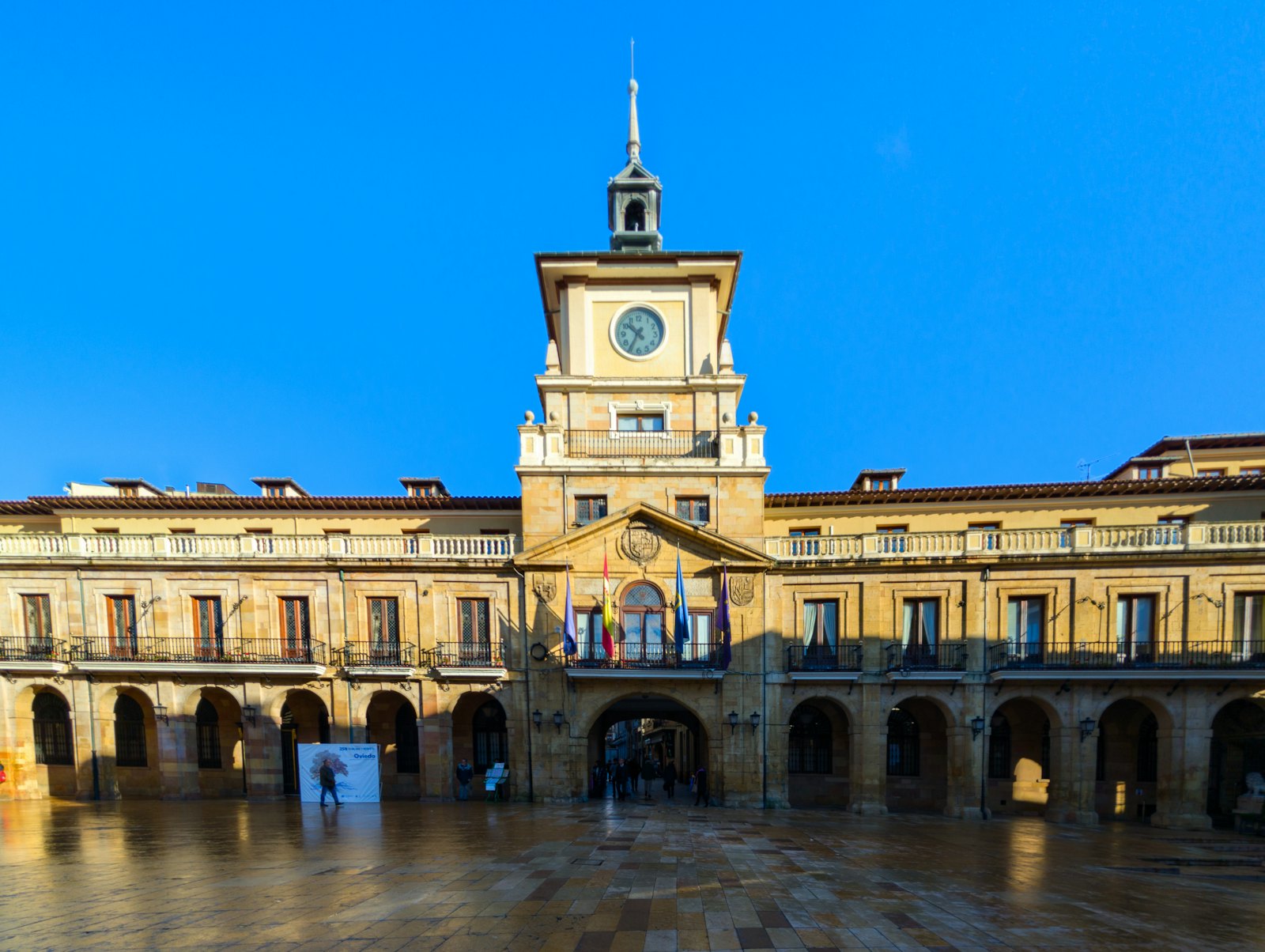
A compact, rain-washed university city with a Gothic cathedral, 9th-century palaces on the hill above town, cider poured from shoulder height and the Asturian coast and Picos de Europa within an hour or so by bus.
- Best time to visit: May to June and September
- Daily budget (budget traveller): $65 to $270 USD
- Ideal trip length: 3 to 7 days
Oviedo is the capital of Asturias, a green, rainy region on Spain's north coast. It is a small city of around 220,000 people, and the centre is easy to walk across in 20 minutes. The old town is clean, pedestrianised and full of honey-coloured stone, with bronze statues on street corners and the tall Gothic tower of the cathedral above everything. Inside the cathedral is the Cámara Santa, a 9th-century chapel holding the region's most important relics. On the slopes of Monte Naranco, just above town, sit a royal hall and a small church from the 840s that are among the oldest standing buildings in Spain. Oviedo is also where the Camino Primitivo starts, so you will see pilgrims with shells on their packs. Evenings are about cider. On Calle Gascona, waiters pour it from above their heads into a thin glass, and you drink each splash in one go. The city is safe, friendly and fairly cheap for Western Europe. It also makes a good base. Gijón and the sea are half an hour away, and buses run to Cudillero, Cangas de Onís and the lakes of Covadonga. Bring a rain jacket at any time of year.
Oviedo was the seat of the Kingdom of Asturias in the 9th century, and that history is still standing. Alfonso II built a church to house the relics that are now in the cathedral's Cámara Santa. His successor Ramiro I built a royal hall on Monte Naranco that still has its roof, its arches and its views. These buildings, along with Santullano and the Foncalada fountain, are UNESCO-listed. The rest of the city is mostly 19th and 20th century: a tidy shopping district around Calle Uría, a central park with peacocks, and a university that keeps the bars busy. The film Vicky Cristina Barcelona made it briefly famous, and there is a Woody Allen statue to prove it. It is not a big-ticket city. It is somewhere to eat well, walk a lot and drink cider with locals.
Getting here is now easier than it used to be. Since the high-speed line through the Pajares tunnels opened, the fastest trains from Madrid take about 3 hours 10 minutes to 3 hours 30 minutes. Avlo, Alvia and AVE services run through the day, and early fares start from around €15-40. Asturias Airport is 45 minutes away by ALSA coach. Once you are here, you do not need a car. Base yourself in the old town or around Calle Uría, walk everywhere and use the bus station for day trips to Gijón, Avilés, Cudillero and Cangas de Onís. A hire car only becomes useful for remote mountain villages.
Weather shapes the trip more than anything. Asturias is green because it rains, and it can rain any day of the year. Summers are mild, rarely above the mid-20s°C, which draws Spanish visitors escaping the heat in July and August. Late spring and September are often the best months, with long days and fewer crowds. San Mateo, in the second half of September, brings concerts, stalls and full hotels. In October the Princess of Asturias Awards ceremony brings big names to the Teatro Campoamor. Winter is cool and quiet, with short opening hours at the monuments but cheap rooms and steaming bowls of fabada. Pack layers, a jacket and shoes with grip.
Oviedo itinerary
Arrive and find your feet in the old town
Morning: This plan assumes you arrive on a Friday. Take the ALSA coach from the airport or the train from Madrid to Oviedo station, then walk 15 to 20 minutes down Calle Uría to your room.
Afternoon: Walk through Campo de San Francisco to Plaza de la Constitución and the town hall, then on to Plaza de Alfonso II for your first look at the cathedral tower. Look out for the bronze statues on the way.
Evening: Your first cider on Calle Gascona. Order a bottle at Tierra Astur or La Pumarada, watch how the locals drink it and share a plate of chorizo a la sidra.
Cathedral, market and museums
Morning: Mercado El Fontán early for coffee, cheese and fruit, then the cathedral when it opens (about €8). Give the Cámara Santa time, and add the guided tower climb (€10) if the sky is clear.
Afternoon: Menú del día around Trascorrales, then the free Museo de Bellas Artes de Asturias and the Museo Arqueológico in its old monastery cloister.
Evening: A carbayón from Camilo de Blas, an evening stroll through the old town squares and tapas around El Fontán.
Gijón and the sea
Morning: Oviedo is quiet on Sundays and the cathedral is not open for tourist visits, so head to the coast. Take the Cercanías train or an ALSA bus to Gijón (about 30 minutes) and walk out to the Cimadevilla headland.
Afternoon: Seafood lunch near the harbour, then the long San Lorenzo beach promenade. Swim in summer if the flags allow it.
Evening: Sunset from Cimadevilla, then the train back to Oviedo for a light dinner.
Monte Naranco
Morning: Take the city bus from Calle Uría to the Monumentos stop, or walk uphill for about 45 minutes. On a Monday morning, entry to Santa María del Naranco and San Miguel de Lillo is free and unguided. On other days, join the guided tour (about €5).
Afternoon: Picnic on the slopes, then walk up to the Sagrado Corazón statue for the view, and come back down through the woods to town.
Evening: Rest your legs with a sidrería dinner. Try fabada or share a cachopo, and finish with frixuelos.
Covadonga and the lakes
Morning: Take an early ALSA bus to Cangas de Onís (about 1 hour 15 minutes to 1 hour 30 minutes) and look at the Roman-style bridge. Catch the lakes shuttle (about €9 day ticket on regulated dates, bought online in advance).
Afternoon: Walk the easy circuit around Lago Enol and Lago Ercina. On the way down, stop at the Covadonga sanctuary and the Santa Cueva chapel in the cliff.
Evening: Back to Cangas for a cider, then the bus to Oviedo. Check the last departure before you go up.
Cudillero
Morning: ALSA bus to Cudillero (about 1 hour 15 minutes). The village of painted houses tumbles down to a tiny harbour.
Afternoon: Climb the lanes to the viewpoints above the village, then fish for lunch by the port. In summer, you can add a short trip to a nearby beach.
Evening: Return to Oviedo for a last round on Gascona. Say yes if someone asks to share a bottle.
Santullano and departure
Morning: Walk to San Julián de los Prados (Santullano) to see its painted 9th-century walls. Check opening hours in advance, because it opens on limited days and has a small fee. Stop at the Foncalada fountain on the way back.
Afternoon: Buy cheese at El Fontán and moscovitas from Rialto to take home, then the train or the airport coach.
Evening: Head home, or take an onward train to León or Madrid.
Best neighbourhoods
- Casco Antiguo (Old Town): The pedestrian heart of the city around the cathedral, Plaza de Alfonso II and Plaza de la Constitución, where the town hall stands. It has narrow lanes, small squares, museums and cafés. It is the most atmospheric base and everything is a short walk away, though some streets get noisy on weekend nights.
- El Fontán and Trascorrales: The old market quarter just south of the town hall. The covered Mercado El Fontán sells cheese, sausage and fruit, and the arcaded square behind it is lined with cheap bars and cider houses. It is a good spot for breakfast, picnic shopping and a lively but not wild evening.
- Calle Gascona and El Antiguo: Gascona, known as the Bulevar de la Sidra, is one long street of sidrerías north of the cathedral. Tierra Astur and La Pumarada are both here. Stay nearby if cider and late dinners are the point of your trip, and ask for a room facing away from the street.
- Centro and Calle Uría: The 19th-century shopping district between the old town and the train and bus stations, with Campo de San Francisco park along one side. Apartments and mid-range hotels here are slightly cheaper, the area feels practical and calm, and you can walk to arrivals with a suitcase.
- Naranco slopes: The leafy hillside north of the railway, home to Santa María del Naranco and San Miguel de Lillo, with walking tracks up to the big Sagrado Corazón statue. There is little to eat or drink up here, so it works for a visit rather than a base.
Must-do experiences
- See the cathedral and the Cámara Santa: The Gothic Cathedral of San Salvador holds the 9th-century Cámara Santa, home to the Cross of the Angels, the Victory Cross and the Sudarium. General entry is about €8 and includes the Cámara Santa. A guided climb up the tower costs extra.
- Visit Santa María del Naranco and San Miguel de Lillo: A royal hall built for King Ramiro I in the 840s, and its chapel a few minutes up the road. Both are UNESCO-listed. Visits are guided and cost about €5 for the pair, and Monday mornings are free and unguided.
- Drink cider on Calle Gascona: Order a bottle, about €4-6, and the waiter pours a small splash from high above into a wide, thin glass. Drink it straight away, leave a drop to rinse the rim, and share plates of chorizo a la sidra or cheese.
- Walk up Monte Naranco: Carry on past the pre-Romanesque churches to the Sagrado Corazón statue at the top for views over the city and, on clear days, the mountains. Allow a few hours return from the centre, or take a bus or taxi part of the way.
- Spend a morning at Mercado El Fontán: Wander the covered market for Cabrales and Afuega'l pitu cheeses, then have a coffee in the arcades of Plaza Daoíz y Velarde and Trascorrales. Come early, when the stalls are busiest.
- Go to the free city museums: The Museo de Bellas Artes de Asturias has a strong Spanish collection including El Greco and Goya, and the Museo Arqueológico occupies an old monastery cloister. Both are usually free. Check opening days, because most museums close on Mondays.
- Take the train to Gijón for the sea: Gijón is about half an hour away by train or ALSA bus. Walk the old fishing quarter of Cimadevilla, sit on the San Lorenzo promenade and eat seafood before heading back for the evening.
Hidden gems
- San Julián de los Prados (Santullano), a 9th-century church near the motorway on the east side of town with rare painted walls inside. It gets far fewer visitors than the Naranco. Check opening hours, as it opens limited days
- The Foncalada fountain, a small pre-Romanesque water fountain that is easy to walk past and is also part of the UNESCO listing
- The bronze statues dotted around the centre, including Woody Allen on Calle Milicias Nacionales and La Regenta in front of the cathedral. Spotting them is a free way to explore
- Campo de San Francisco, the city's central park, with peacocks, old trees and shaded benches. It is a good place to rest between sights or eat a takeaway from the market
- Confitería Camilo de Blas, a historic pastry shop selling carbayones, Oviedo's own almond and egg-yolk pastry. Buy one to eat in the park
Daily budget
- Accommodation: budget €20-35 / night (dorm bed in a central hostel), mid-range €70-120 (central 3-star hotel or studio apartment), splurge €180+ (Hotel de la Reconquista). Private hostel rooms run about €45-70. Prices jump in August and during San Mateo, so book early for those dates.
- Food: budget €20-30 / day (market picnic, menú del día lunch, tapas), mid-range €40-60 (sit-down lunch and a sidrería dinner), splurge €90+ (tasting menu at a top restaurant such as Casa Fermín). The weekday menú del día is the best deal, often €13-18. Sidrería portions are large, so order to share or ask for medias raciones (half portions).
- Transport: budget €0-5 / day (walking, city buses), mid-range €10-20 (ALSA day trips to Gijón or Cudillero), splurge €60+ (hire car or private transfers). The airport coach is about €9-10. Gijón by bus or train is a few euros each way. The Covadonga lakes bus is about €9 return on top of the ALSA fare to Cangas de Onís.
- Activities: budget €0-10 / day (free museums, Naranco on a Monday, walks), mid-range €15-25 (cathedral, guided Naranco visit, Santullano), splurge €60+ (guided Picos de Europa or Senda del Oso tour). Cathedral entry is about €8 and the tower visit €10. The Naranco ticket is about €5. The Bellas Artes and Archaeological museums are usually free.
- Drinks & nightlife: budget €5-10 (a bottle of cider shared at the bar), mid-range €15-30 (a cider crawl on Gascona with plates), splurge €50+ (wine bars and cocktails late into the night). A bottle of cider costs roughly €4-6, and a caña of beer or a glass of wine €2-3.50. Nights start late. Dinner is around 9 to 10pm, and bars stay busy until late at weekends.
Where to stay
- Social hostel in Casco Antiguo (€20-40 / night): Green Hostel on Calle Magdalena is in the historic centre, steps from the town hall square and Mercado El Fontán. It has a shared lounge and a terrace. It suits solo travellers who want to walk home from the cider bars.
- Boutique hotel in Centro (€80-140 / night): Hotel Fruela is a small, smart hotel on Calle Fruela between Calle Uría and the old town, close to Campo de San Francisco and an easy walk from the station.
- Apartment in Calle Uría and Centro (€60-110 / night): Studios and flats around Uría are a little cheaper than the old town and quieter at night, with a supermarket nearby and the stations close by for day trips.
- Splurge in Centro, near Campo de San Francisco (€180-350+ / night): Hotel de la Reconquista occupies an 18th-century hospice building with grand courtyards. It is the city's classic five-star and has hosted guests of the Princess of Asturias Awards.
What to eat
- Fabada asturiana: a heavy stew of large white beans with chorizo, morcilla and pork. It is a lunchtime dish, often on the menú del día
- Cachopo: two veal fillets breaded and fried around ham and cheese. It is huge, so share one or have it as your only meal
- Sidra natural: still, sharp local cider poured from a height. You will find it at every sidrería, with Calle Gascona the main strip
- Asturian cheeses: Cabrales, a strong blue, and Afuega'l pitu, a small cone-shaped cow's milk cheese. Try them at Mercado El Fontán or on a cheese board
- Carbayones and moscovitas: Oviedo's pastries. Carbayones are puff pastry filled with almond, and moscovitas are thin almond and chocolate biscuits sold at Rialto
- Frixuelos and arroz con leche: thin Asturian crepes and slow-cooked rice pudding with a burnt-sugar top, the usual end to a sidrería meal
Day trips
- Gijón (About 30 km, 30 minutes by train or bus): The largest city in Asturias sits right on the sea. It has the Cimadevilla fishing quarter on its headland, the long San Lorenzo beach and good seafood. It is an easy half day or a relaxed full day. Renfe Cercanías trains and frequent ALSA buses leave from the stations at the top of Calle Uría. Each way costs a few euros.
- Cangas de Onís, Covadonga and the lakes (About 75 km, 1 hour 15 minutes to 1 hour 30 minutes to Cangas, then 40 minutes up to the lakes): The arched bridge at Cangas, the Covadonga sanctuary and its cliffside cave chapel, then Lago Enol and Lago Ercina high in the Picos de Europa. It is the best day out in the region when the weather is clear. Take an ALSA bus from Oviedo to Cangas de Onís. In 2026, the lakes access plan runs on set dates from late March to 8 December. The shuttle costs about €9 for an adult day ticket, and you should buy it online in advance in busy periods.
- Cudillero (About 50 km, roughly 1 hour 15 minutes by bus): A tiny fishing village of painted houses stacked up a steep valley around the harbour. You get viewpoints, seafood and beaches nearby in summer. It is small, so a morning plus lunch is plenty. ALSA runs buses from Oviedo bus station. Check return times before you set off, because services thin out in the evening and at weekends.
When to visit
- Spring (March - May): 12-20°C, showery, longer days by May. Crowds: Low, with a bump at Easter. A good-value window with green hills and quiet monuments. The Naranco switches to longer summer hours from 1 April. Expect some wet days.
- Summer (June - August): 18-25°C, mild, still some rain and sea fog. Crowds: Busy in July and August with Spanish holidaymakers. The best beach and mountain weather. Book rooms and the Covadonga lakes bus early, especially in August, and expect higher prices.
- Early autumn (September - October): 14-22°C, often settled in September, wetter in October. Crowds: Very busy during San Mateo, then quieter. The locals' pick. Warm days, cider season and the San Mateo fiestas. Book well ahead for the second half of September.
- Winter (November - February): 7-13°C, grey, frequent rain, snow on the peaks. Crowds: Quiet, apart from the Christmas holidays. Cheap and cosy, ideal for food and museums. The Naranco has shorter hours, mountain trips depend on the weather and some days are dark early.
Entry rules for your passport
Visa rules for Spain depend on the passport you travel on. Check the official source before you book: European Commission: Schengen visa policy
Getting there
Asturias Airport (OVD) is on the coast near Avilés, about 45 minutes from Oviedo. It has flights from Madrid and Barcelona, other Spanish cities and a handful of European routes. KLM added Amsterdam for summer 2026, but schedules change, so check what is running. ALSA coaches link the airport with Oviedo bus station for about €9-10. By train, the high-speed line through the Pajares tunnels has cut the Madrid Chamartín to Oviedo journey to roughly 3 hours 10 minutes to 3 hours 30 minutes. Renfe runs Avlo, Alvia and AVE services, and fares start at around €15-40 if you book early, rising to €90 or more at busy times. There are also direct trains from León and Valladolid. ALSA coaches run from Madrid in about 5 to 6 hours, and from Santander, Bilbao and Santiago de Compostela. Oviedo's train and bus stations sit next to each other at the top of Calle Uría, about 15 to 20 minutes' walk from the cathedral. If you are coming from the UK, you can also take the Brittany Ferries crossing to Santander or Bilbao and continue by bus.
Border checks: non-EU visitors (other than Swiss, Norwegian, Icelandic, Liechtenstein, Andorran, Monegasque, San Marinese and Vatican citizens, and holders of an EU residence permit or long-stay visa) are registered in the EU's Entry/Exit System (EES) instead of getting a passport stamp. On your first crossing, officers take your photo and/or fingerprints, so allow extra time at passport control. ETIAS, the planned travel authorisation, is not in operation yet, so don't pay any website for one.
Getting around
Central Oviedo is compact and mostly pedestrianised. You can walk from the train and bus stations to the cathedral in 15 to 20 minutes, and most of what you will want to see is closer than that. The city buses (TUA) cost roughly €1-1.50 a ride and are useful for the Naranco monuments. Buses leave from Calle Uría towards the Monumentos stop, so check the current line number before you go. Taxis are reasonably priced and easy to find at ranks near Calle Uría and the station. For day trips, ALSA coaches leave from the bus station next to the train station for Gijón, Avilés, Cudillero, Cangas de Onís and the airport. Renfe Cercanías trains run to Gijón and Avilés. The Asturias transport consortium's Conecta card can lower fares if you are making several trips. You only need a hire car for remote mountain villages. Covadonga is reachable by bus, and at peak times private cars are not allowed on the lakes road anyway.
Safety
Oviedo is one of the safest cities in Spain and feels relaxed at night, including for women walking alone in the centre. Pickpocketing is rare but can happen in crowds during the San Mateo fiestas in September and on busy cider nights, so keep your phone off the bar. Cider is light but easy to drink a lot of, and it adds up over an evening. The polished stone streets get very slippery in the rain, so wear shoes with grip. If you hike on Monte Naranco or in the Picos de Europa, mountain weather changes fast. Fog and rain can roll in within an hour, so carry layers and water, stay on marked paths and tell someone where you are going. Asturian beaches can have strong currents, so swim where there are lifeguards and flags. The emergency number is 112.
Solo travel tips
- Stay in the old town: Most of the sights, the market and the cider streets are within ten minutes' walk, so you never need a taxi home. Ask for a room facing a courtyard if you are near Gascona.
- Share a bottle of cider: Cider comes by the bottle and is meant to be shared. Sit at the bar, and the waiter will often pour for everyone nearby. It is the easiest way to start talking to locals, and half bottles are rare, so expect company.
- Eat the menú del día at lunch: Lunch, from about 2pm, is the main meal and the best value. For €13-18 you get three courses, bread and a drink. Have a lighter evening of tapas or cider plates.
- Check Monday and Sunday closures: Most museums close on Mondays, and the cathedral is not open for tourist visits on Sundays. Plan the Naranco for Monday, when it is free, and do a coast trip on Sunday.
- Safety for solo travellers: Oviedo is very safe. The main risks are slippery stone after rain, too much cider and mountain weather on hikes. Wear shoes with grip, eat with your drinks and tell someone your route in the Picos.
- Book the lakes bus early: Covadonga is the most popular day out in Asturias. In summer and on holiday weekends, buy the lakes bus ticket online ahead of time, and keep a backup day in case of fog.
Cultural etiquette
- Greet people with 'buenos días' or 'buenas tardes' when you go into a shop or bar. You will also see Asturian on signs, such as 'Uviéu' for Oviedo.
- Cider has rules. Let the waiter pour, drink the small splash quickly, leave a drop to rinse the rim and hand the glass back. Do not try to pour it yourself unless you are invited.
- Meals run late. Lunch is around 2 to 4pm and dinner from about 9pm. Many kitchens close between services.
- Dress modestly in the cathedral and churches, and keep quiet during services. Tourist visits pause on Sundays and during worship.
- Tipping is not expected. Rounding up or leaving a coin or two for good service is enough.
- Asturians are proud of their region, its language and its food. Asking about local cheese or cider goes down well, and calling Asturias 'just like Galicia' does not.
- Do not touch the walls or paintings in the pre-Romanesque churches, and follow the guide's rules on photography.
Frequently asked questions
How do I get from Asturias Airport to Oviedo?
Asturias Airport (OVD) is on the coast about 45 minutes from Oviedo. ALSA runs a direct coach to Oviedo bus station, and the full fare is about €9-10, with roughly hourly departures through much of the day. Check the evening times if you land late. A taxi costs much more, often €55 or above. The bus station is next to the train station, about 15 to 20 minutes' walk from the old town.
How many days do I need in Oviedo?
Two full days cover the cathedral, the old town, the Naranco monuments and a cider night or two. Three to four days give you time for a trip to Gijón and the coast. With a week you can add the Covadonga lakes, Cudillero and a slower pace, using Oviedo as your base the whole time.
When is the best time to visit Oviedo?
May, June and September usually bring the best mix of longer days, mild temperatures and fewer crowds. July and August are warm rather than hot, around the low to mid 20s°C, but busier and pricier. The San Mateo fiestas take over the city in the second half of September. Winter is cool, grey and wet but quiet and cheap. It rains in every season, so pack a jacket whenever you go.
How much does it cost to visit the cathedral and the Naranco churches?
Cathedral entry is about €8 for adults and includes the Cámara Santa, with discounts for seniors, students and pilgrims. A guided tower visit costs around €10. Santa María del Naranco and San Miguel de Lillo share a ticket of about €5 with a guided tour, bought at Santa María, and on Monday mornings they are free and unguided. Prices and hours change, so check the official websites before you go.
Can I visit the Covadonga lakes without a car?
Yes. Take an ALSA bus from Oviedo to Cangas de Onís, about 1 hour 15 minutes to 1 hour 30 minutes. On regulated days, a shuttle bus runs from there up to Covadonga and the lakes. In 2026 the access plan runs on set dates between late March and 8 December, and the adult day ticket costs about €9. Buy online in advance in summer, and check the dates, because private cars are restricted on the lakes road during these periods.
Is Oviedo good for solo travellers on a budget?
Yes. Dorm beds start at roughly €20-35, the weekday menú del día is often €13-18 for three courses with bread and a drink, many museums are free and a bottle of cider costs only a few euros. Buses to the coast and mountains are cheap. Costs go up in August and during San Mateo, so book early for those dates.
Is Oviedo safe for solo female travellers?
Very much so. The centre is well lit, busy until late at weekends and has a strong local, family feel. Normal city sense applies: watch your drink on busy nights, use registered taxis late at night and take care on slippery streets. Hikers should tell someone their route before heading into the mountains.
What entry rules apply to Spain in 2026?
Spain is in the Schengen Area. Many non-EU visitors, including UK, US, Canadian and Australian citizens, can stay up to 90 days in any 180 without a visa. The EU's Entry/Exit System now records non-EU travellers' fingerprints and photos at the external border, and the ETIAS travel authorisation is due to follow. Your passport should be valid for at least three months after your planned departure. Check the official EU and Spanish government websites, and your own government's travel advice, before you book.
More about Oviedo
Tours and activities in Oviedo | Oviedo in 2 days | Oviedo in 3 days | Oviedo in 4 days | Oviedo in 5 days | Oviedo in 7 days
Joy Plus home | Destinations | Itineraries | Activities | Flights | Budget planner | Calendar | Map | Blog | Lifetime access