Destinations / Europe
Pamukkale, Turkey travel guide
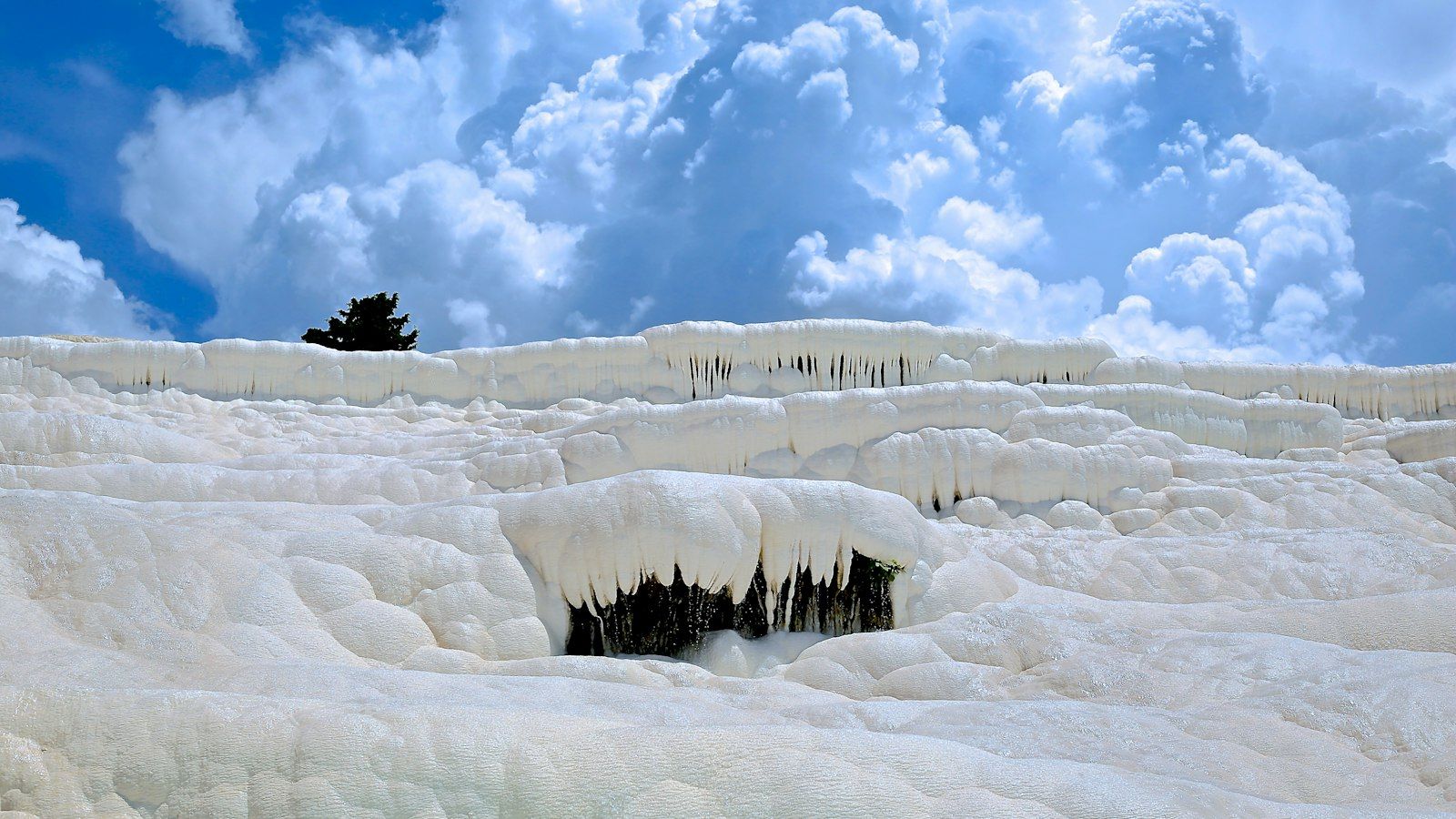
A hillside of white travertine pools topped by a Roman spa city. You walk barefoot through warm water, swim among fallen columns and eat gözleme for pocket change.
- Best time to visit: April to May and September to October
- Daily budget (budget traveller): $80 to $260 USD
- Ideal trip length: 3 to 7 days
Pamukkale means 'cotton castle', and from the road below it looks like a snowfield has slid down the hill. Up close, it is a staircase of white calcium terraces, filled in places with shallow turquoise water that comes from the same hot springs that drew the Romans here 2,000 years ago. On top of the terraces sits Hierapolis, a spa city with a huge theatre, a necropolis of hundreds of tombs and a pool where you can swim over sunken marble columns. Together they form a UNESCO World Heritage site, and one ticket covers both. Pamukkale village is small and easy to manage alone. Family pansiyons sit a few minutes' walk from the travertine gate, shared minibuses run to Denizli for less than the price of a tea and a pide, and the day-trippers leave by late afternoon. Stay a few nights and you can add the quiet Roman city of Laodicea, the marble workshops of Aphrodisias and the underground travertines of Kaklık Cave. You get the terraces at their emptiest too, early in the morning and at sunset.
Pamukkale is two sights sharing one hillside. The travertines are a 2.7 kilometre white cliff of calcium terraces built up by hot springs, and Hierapolis is the Roman spa city that grew up on the plateau above to profit from them. One €30 ticket covers both, plus the archaeology museum in the old Roman baths. Most visitors arrive on a coach from Antalya or Istanbul, rush up the terraces, take photos and leave by mid-afternoon. That is your advantage. Stay in the village and you can walk up at opening time, spend the whole day on the plateau and come back down in the sunset light when the pools turn pink and the day-trippers have gone.
The village is built for short stays, and it works well alone. Family pansiyons line the streets a few minutes from the town gate, most with breakfast included and many with small pools. Restaurants serve gözleme, pide and clay-pot casseroles on terraces facing the cliff. Shared dolmuş minibuses run to Denizli, the region's transport hub, for small change, and on to Karahayıt's red springs. Plan on one ticket for one long day, as the pass is valid for a single entry only. Then use the following days for the quieter ruins around the Lycus valley: Laodicea, about 15 minutes away, and Aphrodisias, a longer drive west, which has some of the finest Roman marble carving anywhere.
Timing decides the experience. In July and August the white surface reflects the heat back at you, Hierapolis has almost no shade, and the terraces fill with tour groups by 10am. Spring and autumn are warm enough to paddle comfortably, with clearer light and lower prices. Winter is cold, sometimes frosty, and quieter, but daylight is short and the water can feel chilly underfoot. Whatever the season, bring sunglasses, cash in lira and a bag for your shoes. Turkey prices many heritage sites in euros and changes fees often, so treat every figure here as a guide and check before you go.
Pamukkale itinerary
Arrive in Pamukkale village
Morning: Fly into Denizli Çardak (DNZ) or arrive by bus at Denizli bus station. Take a flight-timed shuttle or a 'Pamukkale' dolmuş from the lower level of the bus station (about 35-50 TRY, 30-40 minutes).
Afternoon: Check into your pansiyon and have a gözleme lunch on Atatürk Caddesi. Walk to the pond at the foot of the cliff to see the terraces from below, and save your ticket for tomorrow.
Evening: Watch sunset from a rooftop facing the travertines, then have dinner on the terrace at Mehmet's Heaven. Check the gate opening time for the morning.
Barefoot travertines and Hierapolis
Morning: Be at the town gate at opening (around 6:30am in summer, 8am in winter, so check locally). Pay the €30 ticket in lira (about 1,600 TRY), take your shoes off and climb the terraces before the coaches arrive.
Afternoon: Swim in the Antique Pool (extra fee, roughly €10-20), then cool off in the Hierapolis Archaeology Museum. Walk up to the theatre, past the Plutonium, and on to the Martyrium of St Philip.
Evening: The ticket allows one entry, so stay up top. Walk the North Necropolis in golden hour, then come down the terraces at sunset. Dinner at Hiera Restaurant Coffee & Tea House.
Laodicea and Denizli
Morning: Take a Denizli-bound dolmuş and ask to get off at the Laodikeia turn-off, or take a short taxi ride. Entry is about €12. There is little shade, so go early with water.
Afternoon: Continue to Denizli for a Denizli kebabı lunch, browse the textile shops for local towels, and ride the cable car up to the Bağbaşı plateau if it is running.
Evening: Take a dolmuş back to Pamukkale before the evening services thin out. Have a relaxed dinner at Bella Bar & Restaurant on Atatürk Caddesi.
Fly over, then soak in Karahayıt
Morning: Tandem paragliding over the terraces (from about €50) or, as a splurge, a sunrise balloon flight (about €70-120+). Book through a licensed operator and confirm hotel pickup.
Afternoon: Take the 10-minute dolmuş to Karahayıt to see the red iron springs in the village square. Ask at a thermal hotel about a day pass for the hot pools.
Evening: Back in Pamukkale, have pide and a cold ayran at Onur Restaurant, then pack a day bag for Aphrodisias.
Aphrodisias day trip
Morning: Drive (about 100 kilometres, roughly 1.5 to 2 hours) or join a small-group tour to Aphrodisias. Entry is about €12, including the museum.
Afternoon: See the Tetrapylon gate, the Sebasteion reliefs, the marble theatre and one of the best-preserved Roman stadiums in the Mediterranean world. Allow 2 to 3 hours.
Evening: Return to Pamukkale. Have a home-cooked dinner at Melrose Viewpoint Restaurant and an early night.
Salda Lake
Morning: Hire a car or join a tour for the roughly two-hour drive south-east to Salda Lake, known for its white shoreline and turquoise water. Bring lunch and water.
Afternoon: Walk the shore and the boardwalks. The lake is a protected area, so swim only in designated zones and follow the signs. Check current access rules locally.
Evening: Drive back to Pamukkale for a final sunset from the village side of the terraces. Have a clay-pot casserole for dinner.
Kaklık Cave and departure
Morning: Check out and drive or take a taxi about 40 kilometres east to Kaklık Cave, the 'underground Pamukkale'. The entry fee is small, so check it at the gate.
Afternoon: Kaklık lies east of Denizli, roughly on the way to Çardak airport, so continue to your flight. Alternatively, head to Denizli bus station for an onward coach.
Evening: Fly to Istanbul, or take an overnight bus to the coast or Istanbul. Book seats a day ahead.
Best neighbourhoods
- Pamukkale village (Atatürk Caddesi): The small village at the foot of the terraces and the obvious solo base. You get family pansiyons, terrace restaurants, tour desks, the dolmuş stop for Denizli and Karahayıt, and the town entrance to the travertines within a few minutes' walk.
- Travertine-facing strip (Mehmet Akif Ersoy Bulvarı): The road along the eastern edge of the village, looking straight at the white cliff. Small hotels and pansiyons here have rooftops and restaurant terraces with views of the terraces glowing at sunset.
- Karahayıt: A thermal spa village about 10 minutes north by dolmuş, known for its iron-rich red springs. This is where the big thermal hotels with hot pools are, so it suits a soak-and-rest night more than a social one.
- Denizli centre: The provincial city about 20 kilometres south, with the main bus station, the railway station and cheaper everyday eating. It is famous across Turkey for its towels and textiles. Good for a half day, or for a night before an early bus or flight.
Must-do experiences
- Walk barefoot up the travertines: Enter at the town gate, take your shoes off as the rules require, and climb the white terraces through ankle-deep warm water to the plateau. Go at opening time, before the coaches arrive.
- Explore the ruins of Hierapolis: Wander the colonnaded street, the Frontinus Gate and the Plutonium, the 'gate to the underworld' where toxic gas once killed sacrificial animals. The site is huge, so allow most of a day.
- Climb into the Hierapolis Theatre: Sit high in the restored Roman theatre above the plateau. The carved stage reliefs are some of the best in Turkey, and the views across the Lycus valley are worth the uphill walk.
- Swim in the Antique Pool: Pay the extra fee and float in warm spring water over fallen Roman columns that tumbled in during an ancient earthquake. Go early, as it gets packed by late morning.
- Hike up to the Martyrium of St Philip: Follow the path uphill behind the theatre to the octagonal shrine dedicated to the apostle Philip. Few tour groups make the climb, so it is often quiet.
- Wander the North Necropolis at golden hour: Walk among sarcophagi, house-shaped tombs and round tumuli in one of the largest ancient cemeteries in Anatolia, best in the low evening light.
- Paraglide over the terraces: Tandem flights launch from the hill above Hierapolis and glide down over the white cliff. Flights start from about €50, paid in lira or euros, and are the cheapest way to see the whole site from above.
- Take a day trip to Laodicea: Visit one of the Seven Churches of Revelation, with mosaic-floored churches, a marble colonnaded street and two theatres. It sees far fewer visitors than Hierapolis.
Hidden gems
- The red springs of Karahayıt, where iron-rich hot water has stained the travertine rust-orange right in the village square, free to see and 10 minutes by dolmuş from Pamukkale
- Kaklık Cave, about 40 kilometres east, where a collapsed cave roof revealed underground white travertines and warm pools, nicknamed 'underground Pamukkale' and costing a fraction of the main site
- Laodicea's churches and marble streets in the early morning, when you may share the whole site with a handful of archaeologists and a guard
- The Denizli cable car up to the Bağbaşı plateau, a local weekend escape with pine forest and cooler air above the city (check operating days before you go)
- The upper paths of Hierapolis beyond the theatre, where the Martyrium of St Philip and the ancient city walls stay empty while crowds gather around the pool
Daily budget
- Accommodation: budget 1,000-2,000 TRY / night (pansiyon single, dorm beds cheaper where available), mid-range 2,500-5,000 TRY (boutique hotel facing the travertines), splurge 6,000-14,000+ TRY (Karahayıt thermal resort). Many places quote prices in euros, and breakfast is usually included. Some pansiyons have pools and offer good-value home-cooked dinners. Prices rise in spring and at Turkish holiday weekends, so book early for those.
- Food: budget 600-1,000 TRY / day (pansiyon breakfast, gözleme, pide), mid-range 1,500-2,500 TRY (terrace lunch and a sit-down dinner), splurge 3,500+ TRY (thermal hotel dining, wine with dinner). Roughly 150-250 TRY for gözleme, 250-400 TRY for pide and 350-600 TRY for a main course in the village. Denizli is noticeably cheaper. Lira prices move quickly, so check menus.
- Transport: budget 100-300 TRY / day (dolmuş at about 35-50 TRY a ride), mid-range 1,800-3,500 TRY (hire car for day trips, plus fuel), splurge 4,500+ TRY (private driver or private tour). Airport shuttles timed with flights run to Denizli bus station or Pamukkale, with fares from a few hundred lira to about €20. One or two days with a hire car makes Aphrodisias, Kaklık Cave and Salda Lake far easier.
- Activities: budget About 1,600 TRY once for the €30 Pamukkale-Hierapolis ticket, plus Laodicea at €12, mid-range Add the Antique Pool (roughly €10-20) and tandem paragliding (from about €50), splurge Sunrise balloon flight (about €70-120+) and private guided day trips. Heritage tickets are priced in euros but paid in lira. Aphrodisias is €12. The Museum Pass Türkiye covers many sites, but the Antique Pool swim is always extra. Confirm prices at the gate.
- Drinks & nightlife: budget 100-250 TRY (tea, ayran, one supermarket beer), mid-range 500-900 TRY (a couple of Efes or a glass of local wine), splurge 1,500+ TRY (a bottle of Turkish wine at a hotel). Alcohol is heavily taxed in Turkey, so restaurant beer can cost 150-250 TRY. Nightlife means a rooftop drink at sunset and an early night. Tea is cheap and offered everywhere.
Where to stay
- Social hostel in Pamukkale village (600-1,800 TRY / night): Pamukkale has few true hostels. The closest equivalents are family-run places with a few dorm beds and cheap singles, like Ozbay Hotel near the travertines or Ozenturku Pansiyon in the village, where a shared terrace and home cooking make it easy to meet people.
- Boutique hotel in Travertine-facing strip, Pamukkale village (2,500-5,000 TRY / night): Hotel Hal-Tur faces the white cliff, with a view restaurant and an easy walk to the town gate. Venus Suite Hotel is a well-reviewed, quieter alternative with a garden pool.
- Apartment in Karahayıt (1,800-3,500 TRY / night): Karahayıt's apart-hotels, such as Güneş Termal Apart Hotel, give you more space and often thermal water for a modest price. Confirm kitchen facilities when you book, as they vary.
- Splurge in Karahayıt (6,000-14,000+ TRY / night): Big thermal resorts like Richmond Pamukkale Thermal or Pam Thermal Hotel Clinic & Spa have indoor and outdoor hot pools, spas and buffet dinners, a soft landing after a long day on the plateau.
What to eat
- Denizli kebabı: the city's own dish of lamb slow-cooked in a wood-fired oven, served in slices on pide bread with raw onion. Look for it in Denizli's kebab houses rather than in the tourist village
- Gözleme: thin hand-rolled flatbread filled with cheese, spinach or potato and cooked on a griddle, the cheapest decent lunch in Pamukkale village
- Pide: boat-shaped Turkish flatbread baked with minced meat, cheese or egg, a filling budget dinner at most village restaurants
- Clay-pot casseroles (güveç and testi kebab): meat or vegetables slow-cooked in a sealed earthenware pot, often cracked open at your table
- Turkish breakfast (kahvaltı): olives, white cheese, tomatoes, cucumber, honey, eggs or menemen, and endless tea, usually included at pansiyons
- Keşkek: a slow-cooked Aegean dish of pounded wheat and meat, served at village celebrations and some home-style restaurants
Day trips
- Laodicea (About 15 minutes by road south of Pamukkale): One of the Seven Churches of Revelation, with a marble colonnaded street, two theatres, mosaic-floored churches under protective roofs and very few visitors. Pair it with lunch in Denizli. Take a Denizli-bound dolmuş and ask for the Laodikeia turn-off, then walk. A taxi is simpler. Entry is about €12, paid in lira, and there is little shade, so go early.
- Aphrodisias (About 100 kilometres west, roughly 1.5 to 2 hours by car): The city of Aphrodite, famous for its sculptors. See the Tetrapylon gate, the Sebasteion reliefs, a huge stadium and a museum full of marble portraits. It is quieter than Ephesus and just as impressive. Hire a car or join a tour from a Pamukkale tour desk, as public transport involves several changes. Entry is about €12, including the museum. Allow 2 to 3 hours on site.
- Kaklık Cave (About 40 kilometres east of Pamukkale): A cave whose roof collapsed to reveal white travertine formations, stalactites and warm mineral pools inside, nicknamed 'underground Pamukkale'. A short visit, but unlike anything else nearby. Go by hire car, taxi or as part of a local tour. It is roughly on the road east towards Çardak airport, so it fits well on your departure day. The entry fee is small, so check it at the gate.
When to visit
- Spring (April - May): 18-28°C, sunny with occasional showers, green hills behind the white cliff. Crowds: Moderate, busier at weekends and Turkish holidays. The sweet spot. Pleasant paddling, comfortable walking in Hierapolis and Laodicea, and good paragliding conditions. Book pansiyons ahead for holiday weekends.
- Summer (June - August): 32-40°C, dry, intense glare off the travertines. Crowds: Heavy, coach groups from the coast every day. Doable if you enter at opening time, rest in the afternoon and go back out late. Laodicea and Aphrodisias are punishing at midday. Peak prices in Karahayıt.
- Autumn (September - October): 20-30°C, settled and dry, cooler nights by October. Crowds: Moderate, easing through October. The locals' pick. Warm water, long golden evenings on the terraces and the best weather for day trips by car.
- Winter (November - March): 5-15°C by day, frosty nights, occasional snow on the hills. Crowds: Low, apart from Asian tour groups and holiday weekends. Quiet and cheap, with dramatic steam rising off the springs on cold mornings. Bring layers, as walking barefoot on the terraces can be cold. Daylight is short, so start early.
Entry rules for your passport
Visa rules for Turkey depend on the passport you travel on. Check the official source before you book: Türkiye Ministry of Foreign Affairs
Getting there
Denizli Çardak Airport (DNZ) is about 65 kilometres from Pamukkale, roughly an hour by road, with domestic flights from Istanbul on Turkish Airlines and Pegasus taking about 1 hour 10 minutes. Shuttles timed with flight arrivals run to Denizli bus station, and some pre-booked shared shuttles go directly to Pamukkale and Karahayıt hotels. Quoted fares range from a few hundred lira to about €20 per person, so check when you book. By road, Denizli bus station has frequent coaches from İzmir (about 3 to 4 hours), Antalya (about 3.5 to 4 hours) and Istanbul (overnight, about 9 to 10 hours), with operators including Pamukkale Turizm, Kamil Koç and Metro Turizm. Trains run on the İzmir to Denizli line in about 3.5 to 4 hours. From Denizli bus station, 'Pamukkale' dolmuş minibuses leave from the lower level every 15 to 20 minutes, taking around 30 minutes and costing about 35 to 50 TRY. Taxis from Denizli cost roughly 250 to 650 TRY. Most Western visitors enter Turkey visa-free, but check the official e-Visa site, evisa.gov.tr, for your nationality before booking.
Getting around
Pamukkale village is small enough to walk end to end in 15 minutes. White dolmuş minibuses marked 'Pamukkale' run from Denizli bus station to the village roughly every 15 to 20 minutes, taking around 30 to 40 minutes, and the fare is about 35 to 50 TRY. Services thin out in the evening, so check the last departure. Dolmuşes also link the village with Karahayıt, about 10 minutes north. Taxis are metered, and a Denizli to Pamukkale ride costs roughly 250 to 650 TRY depending on the start point, so confirm the meter is running. For Aphrodisias, Kaklık Cave and Salda Lake, public transport is slow or awkward. Hire a car for a day or two, or join a small-group tour from a village tour desk. Traffic drives on the right, and rural roads are good but busy with lorries.
Safety
Pamukkale is a safe, low-crime place for solo travellers, and the village is friendly and easy to get around after dark. The real hazards are physical. The travertines are wet and can be slippery in places and painfully rough in others, so walk slowly, stay on the marked path and watch your footing on the way down. The white surface reflects intense sun: wear sunglasses, a hat and high-factor sunscreen, and carry plenty of water, as summer temperatures can pass 35°C and Hierapolis has little shade. Laodicea is even more exposed, so go early. Tour touts and commission-hungry restaurants work the main street, so compare prices before booking flights or day trips. Solo women generally report few problems, but dress modestly away from the pools and use a licensed taxi late at night. Keep valuables locked up while you swim in the Antique Pool.
Solo travel tips
- Sleep in the village, not on a coach: Day tours from Antalya and Istanbul arrive at the busiest, hottest time. Staying two or three nights gets you the terraces at opening and at sunset, and pansiyon breakfast tables are the easiest place to meet other solo travellers.
- Treat the ticket as a one-shot day pass: The Pamukkale-Hierapolis ticket is valid for one entry only. Bring lunch, water, a swimsuit and sun cream, and plan to stay from morning until sunset rather than popping back to your room.
- Pick the right gate: There are three entrances: the town gate at the foot of the terraces, and the South and North gates on the plateau where the coaches arrive. Independent travellers should walk up from the village gate, as you get the terraces at their emptiest and finish at the top.
- Compare before you book flights and tours: Paragliding, balloons and day trips are sold on every corner. Prices vary, so check two or three desks, ask what is included (pickup, photos, entrance fees) and pay the operator rather than a middleman where you can.
- Safety for solo travellers: Pamukkale is very safe. The real risks are heat, glare and slippery patches on the travertines. Walk slowly downhill, drink water constantly in summer, lock valuables while you swim, and use metered taxis after dark.
- Share a hire car: Aphrodisias, Kaklık Cave and Salda Lake are slow on public transport. Ask at your pansiyon or on the breakfast terrace if anyone wants to split a car for a day. It often costs less than a tour and gives you more time at each site.
Cultural etiquette
- Take your shoes off on the travertines. It is a rule, not a suggestion, and guards will whistle if you step off the path or onto fragile edges.
- Greet people with 'Merhaba' (hello) and thank them with 'Teşekkürler'. A little Turkish gets you a warmer welcome, and often a free tea.
- Swimwear is fine on the terraces and at the Antique Pool, but cover up when you walk through the village and Denizli.
- Dress modestly for mosques: shoulders and knees covered, and women should bring a scarf for their hair. Avoid visiting during Friday midday prayers.
- Accept tea when it is offered in shops and pansiyons. It is hospitality, not a sales trap, and you can decline politely with a hand on your heart.
- Ask before photographing people, especially women and older villagers. A smile and a gesture at the camera is usually enough.
- During Ramadan, eat and drink discreetly in public in daylight hours in Denizli, though tourist restaurants in Pamukkale stay open as normal.
Frequently asked questions
How do I get from Denizli airport or bus station to Pamukkale?
Denizli Çardak Airport (DNZ) is about 65 kilometres from Pamukkale, roughly an hour by road. Shuttles timed with arriving flights run to Denizli bus station, and some go directly to Pamukkale hotels. Quoted fares range from a few hundred lira to around €20, so check when you book. A taxi costs more. From Denizli bus station, white dolmuş minibuses marked 'Pamukkale' leave from the lower level every 15 to 20 minutes for about 35 to 50 TRY.
How many days do I need in Pamukkale?
One full day covers the travertines and Hierapolis, but two nights let you see the terraces at their quietest, early in the morning and at sunset. Three to four days adds Laodicea, Karahayıt and Aphrodisias. A week lets you add Kaklık Cave and Salda Lake at an unhurried pace.
When is the best time to visit Pamukkale?
April to May and September to October are best, with warm days, comfortable walking temperatures and softer light on the terraces. July and August are very hot and crowded. Winter is cold and sometimes frosty, with fewer visitors, but the pools can feel chilly and daylight is short.
How much is the Pamukkale ticket and what does it cover?
In 2026 the combined Pamukkale and Hierapolis ticket is €30, paid in lira at the current rate. It covers the travertines, the ruins and the Hierapolis Archaeology Museum. Swimming in the Antique Pool is an extra charge, quoted at roughly €10 to €20, so check the board at the pool. The ticket is valid for one entry only, so plan to stay inside for the whole day.
Can I wear shoes on the travertines?
No. To protect the calcium surface, you must take your shoes off on the travertine path. Carry a light bag for your shoes and some sandals for the rest of the site. The surface is warm and wet in places and rough in others, so walk slowly.
Is the Antique Pool (Cleopatra's Pool) worth the extra fee?
For most people, yes, if you go early. Swimming in warm spring water over real Roman columns is unusual, but by late morning the pool is crowded and the facilities are basic. Bring a swimsuit and towel. The pool reopened in 2026 after renovation work, so confirm it is open when you visit.
Is Pamukkale safe for solo female travellers?
Yes. Pamukkale is a small, tourist-friendly village where solo women travel without much trouble. Standard precautions apply: dress modestly in town and in Denizli, ignore pushy touts, use licensed taxis at night, and keep an eye on belongings while you swim.
What entry rules apply to travellers visiting Turkey in 2026?
Citizens of the UK, most EU countries and many others can visit Turkey visa-free for up to 90 days in any 180-day period. Recent changes also made US citizens visa-exempt, though some older guides still list an e-Visa. Some nationalities need an e-Visa from the official portal, evisa.gov.tr, and others need a consular visa. Your passport should be valid for at least 150 days, ideally six months, beyond your entry date. Rules change, so confirm your requirements on the official Turkish e-Visa site and the Turkish Ministry of Foreign Affairs before booking.
Tours and activities in Pamukkale | Pamukkale in 2 days | Pamukkale in 3 days | Pamukkale in 4 days | Pamukkale in 5 days | Pamukkale in 7 days
Can't decide? Compare Pamukkale with...
Joy Plus home | Destinations | Itineraries | Activities | Flights | Budget planner | Calendar | Map | Blog | Lifetime access