Destinations / Europe
Parga, Greece travel guide
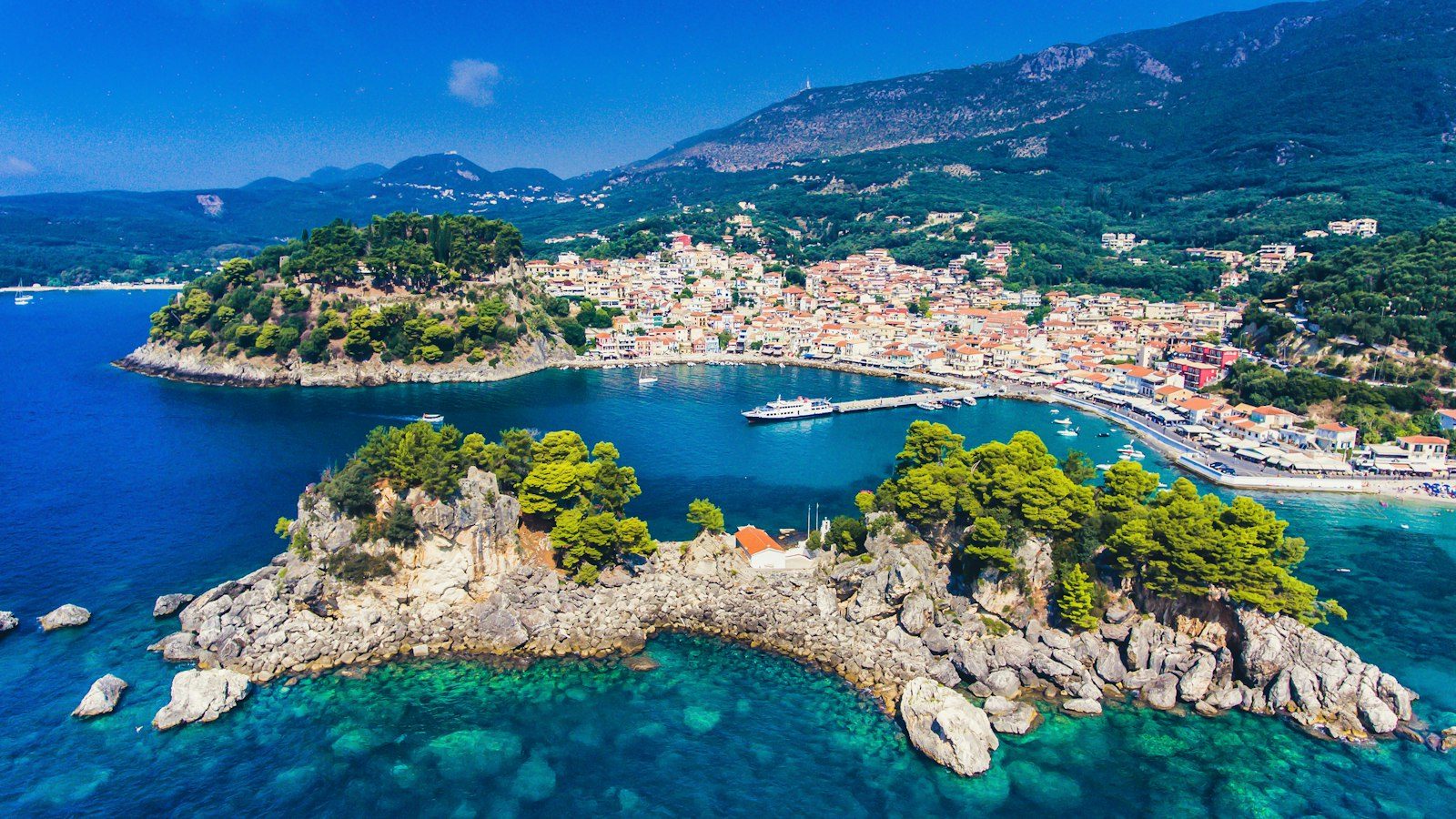
A small harbour town on the Epirus mainland, built up a green hillside opposite a tiny island with a white chapel. You swim out to the islet, walk up to a Venetian castle and take day boats across to Paxos and Antipaxos.
- Best time to visit: June and September
- Daily budget (budget traveller): $70 to $215 USD
- Ideal trip length: 4 to 7 days
Parga is on the Ionian coast of mainland Greece, in the region of Epirus, about halfway between Preveza and Igoumenitsa. It looks more like an island town than most mainland places. Pastel houses with tiled roofs climb a hill above a small harbour, olive and orange groves fill the slopes behind, and the island of Panagia with its little white chapel sits just offshore. Venice held Parga for centuries, and a ruined castle still stands on the headland between the town and Valtos, the long beach to the west. Entry to the castle is free. The water here is clear and blue-green. You can swim to the islet from Krioneri beach in the middle of town, take a water taxi to quieter coves, or join a day boat to Paxos and Antipaxos. Inland, the cold springs of the Acheron river at Glyki and the ancient Oracle of the Dead make a good half-day away from the sea. Parga is busy and pricier from July to August, and very quiet from November to March, when many businesses close. A room to let, cheap gyros, free beaches and shared boat trips make it easy for a solo traveller to spend a slow week here.
Parga is one of the prettiest small towns on the Greek mainland. It is a tight cluster of colourful houses on a hillside above a horseshoe bay in Epirus, with only a few thousand people living there all year. Venice held it for about four centuries, which is unusual for mainland Greece, and it was later fought over by the French, the British and Ali Pasha of Ioannina. You can still see that history in the castle on the headland and in Ali Pasha's ruined fort above Anthousa. Most visitors come for a package week on the beach. Stay as a solo traveller and you get more: the harbour quiet at 8am, a swim out to Panagia islet before the boats start, the castle at sunset and a gyros on the waterfront. It is not as cheap as inland Greece, but rooms to let, free beaches and shared boat trips keep costs down.
Getting here takes some planning. Preveza (Aktion) is the closest airport, about 1 to 1.5 hours away, and most flights are summer charters. Direct KTEL buses come from Athens in about 6.5 to 7 hours, and from Igoumenitsa, the ferry port for Corfu and Italy, in about 1 hour 15 minutes. Once you are here, walk and use water taxis. Base yourself in the old town for tavernas and boats, on Castle hill for views and quieter nights, or at Valtos if beach time comes first. For the Acheron springs and the Oracle of the Dead, book a tour or hire a car for a day.
Timing matters more here than in a city. June and September bring warm sea, running boats and space on the beaches. July and August are hot, crowded and the most expensive, and mid-August is the peak of the Greek holiday season. The boats to Paxos and the water taxis slow down in October, and from November to March Parga is close to shut, with most hotels and tavernas closed. Parga is very safe and English is widely spoken in the tourist trade. Evenings mean long dinners and a drink on the harbour rather than clubs. If you want a swim, a castle walk and grilled fish with a carafe of local wine, this is a good place to slow down.
Parga itinerary
Arrive and find your feet
Morning: Arrive by bus or airport transfer. Drop your bag and walk down the stepped lanes to the harbour for a coffee.
Afternoon: Swim at Krioneri beach and, if the sea is calm, swim or paddle out to Panagia islet and climb to the chapel.
Evening: Wander the waterfront at dusk, then grab a gyros or a simple taverna dinner by the water.
Castle and Valtos
Morning: Walk up to the Venetian castle before the heat. Entry is free. Explore the walls and have a drink at the café inside.
Afternoon: Take the stepped lane down the far side to Valtos beach. Walk to the quieter ends of the beach and swim.
Evening: Walk back over the hill or take a water taxi, then eat in the old town lanes.
Paxos and Antipaxos
Morning: Board a day boat from the harbour (from about €35). Swim in the clear water off Antipaxos.
Afternoon: Cruise past the sea caves on Paxos, then spend a couple of hours in Gaios for lunch and a wander.
Evening: Back in Parga by late afternoon. An easy dinner and an early night.
The Acheron and the Oracle of the Dead
Morning: Join an Acheron tour (around €35) or drive inland. See the Oracle of the Dead at Mesopotamos (€10) while it is cool.
Afternoon: Wade up the icy Acheron springs at Glyki in water shoes, then have lunch at a riverside taverna.
Evening: Back in town for a sunset drink at the castle and grilled fish by the harbour.
Lichnos and the coves
Morning: Take a water taxi to Lichnos and swim in the calm bay before the crowds arrive.
Afternoon: Try a kayak along the coast to the small caves and coves, or simply stay put on the beach. Check the last boat back.
Evening: Dinner in the old town, then a drink at a harbour bar.
Anthousa and Ali Pasha's castle
Morning: Take a taxi or walk up to Anthousa and explore Ali Pasha's castle while it is still cool.
Afternoon: Walk down towards Valtos for a long lunch and a final swim on the beach.
Evening: Watch the sunset from the Venetian castle, then a farewell dinner with a carafe of Zitsa wine.
Slow morning and depart
Morning: Have a last early swim at Krioneri and a pie from the bakery on the harbour.
Afternoon: Buy olive oil for home, then take the bus to Preveza or Igoumenitsa, or a transfer to the airport. Check times the day before.
Evening: Arrive at your next stop, or catch the ferry onwards to Corfu or Italy.
Best neighbourhoods
- Old town and harbour: The lanes stacked above the harbour and Krioneri beach, with most of the tavernas, cafés, shops and the water taxi jetty. The islet of Panagia is right in front of you. It is lively and noisy until late in summer, so pick a room up the hill or on a side lane if you sleep lightly.
- Castle hill: The steep upper part of town below the Venetian castle, reached by stepped lanes. It has guesthouses, a few bars and the best views over the bay. Expect a climb every time you come home, but it is quieter than the waterfront and close to both the harbour and Valtos.
- Valtos: The long beach on the far side of the castle headland, lined with hotels, apartments, beach bars and watersports. It is a 15 to 20 minute walk over the hill or a short water taxi ride from the harbour. It suits you if beach time comes first, but evenings in the old town mean a walk back over the hill.
- Lichnos: A sheltered bay about 3km east of town, with a sandy beach, a few resort hotels and clear, calm water. It is peaceful and good for swimming, but you need a water taxi, a taxi or a long walk on a road with little shade to reach Parga.
- Anthousa: A small hill village about 3km north-west of Parga, below Ali Pasha's castle. Rooms are cheaper and nights are cooler and quiet, with views down to Valtos. It works best if you have a car or scooter, as the walk back uphill is long.
Must-do experiences
- Walk up to the Venetian castle: Climb the stepped lanes from the harbour to the ruined castle on the headland. Entry is free. Wander the old walls and the cannons, look down over both Parga bay and Valtos, then have a drink at the café inside the walls. Go early or near sunset to avoid the heat.
- Swim out to Panagia islet: The little island with the white chapel sits just off Krioneri beach. Strong swimmers can swim out in calm weather, and others hire a kayak or paddleboard. Take water shoes for the rocks and keep clear of the boat lane.
- Spend a day on Valtos beach: Valtos is Parga's longest beach, a broad sweep of fine pebbles and sand below the castle. Sunbeds cost extra, but the far ends are quieter and free. Walk over the castle hill, or take a water taxi from the harbour if it is too hot.
- Take a water taxi to the coves: Small boats run from the harbour in summer to Valtos, Lichnos and smaller bays along the coast, for a few euros each way. It is the easiest way to reach the quieter beaches without a car. Check the last return time before you settle in.
- Go to Paxos and Antipaxos by boat: Day boats leave the harbour most mornings in season, from about €35 for a full day. Most stop to swim off Antipaxos, cruise past the sea caves on the west coast of Paxos and give you a couple of hours in Gaios. Book the day before and bring snacks and water.
- Wade up the Acheron at Glyki: The springs of the Acheron river are about 40 minutes inland. Walk upstream in the icy, clear water through a narrow gorge, the river the ancient Greeks linked with the underworld. Wear water shoes or old trainers, and go by tour, taxi or hire car, as buses barely run here.
- Visit the Oracle of the Dead: The Necromanteion at Mesopotamos was one of the best-known oracles of ancient Greece, where pilgrims came to speak to the dead. Full tickets cost €10 and reduced €5. The site is small, so allow under an hour and combine it with the Acheron springs.
Hidden gems
- Ali Pasha's castle above Anthousa, a quieter and free ruin built for the Ottoman ruler of Epirus, with wide views down to Valtos and the sea
- The steep stepped lane from the castle down to Valtos, shaded in places and much nicer than the road
- Piso Krioneri, the small beach just east of the main town beach, which is usually calmer than Krioneri itself
- The village of Agia in the hills above Lichnos, with simple tavernas and views over the bay
- The tiny chapel of the Virgin Mary on Panagia islet, which most swimmers pass without going up to see
Daily budget
- Accommodation: budget €35-60 / night (room to let or simple studio), mid-range €80-140 (3-star hotel or apartment), splurge €220+ (sea-view boutique hotel or resort suite). Prices peak in July and August. The Climate Resilience Fee is added per room per night, from €2 for rooms to let to €5 for 3-star hotels and €8 for short-term rentals from April to October, and less in winter.
- Food: budget €18-28 / day (bakery pies, gyros, supermarket picnic), mid-range €35-60 (café lunch and a taverna dinner), splurge €80+ (whole fish by the kilo, wine, dessert). A gyros pita costs a few euros and taverna mains roughly €10-20. Whole fish is priced per kilo, so ask before ordering. Prices are rough guides.
- Transport: budget €0-10 / day (walking, water taxis), mid-range €15-40 (taxis or a day's scooter hire), splurge €50-80+ (hire car for a day plus fuel). The Athens bus is roughly €40-55 each way and the Preveza bus about €12. Agree taxi fares before you set off.
- Activities: budget €0-10 / day (beaches, castle walk, swimming to the islet), mid-range €35-45 (Paxos boat trip or Acheron bus tour), splurge €60+ (kayak tours, private boat hire). The Venetian castle is free. The Oracle of the Dead costs €10 (€5 reduced). Paxos boat trips start at about €35, and Acheron tours are around €35 plus entry.
- Drinks & nightlife: budget €5-10 (a beer or carafe of house wine), mid-range €15-30 (a few cocktails on the harbour), splurge €50+ (a late night at a beach or castle bar). A coffee costs about €2.50-4 and a beer €4-6. Nightlife means harbour bars and beach bars rather than clubs.
Where to stay
- Rooms to let in Upper old town and Castle hill (€35-60 / night): Parga has no real hostels, but family-run rooms to let (domatia) are simple, clean and the cheapest beds in town. Many have a small fridge and a balcony, and the owners are a good source of local tips.
- Boutique hotel in Old town lanes (€90-170 / night): Small hotels in restored stone houses put you a few steps from the harbour, the water taxis and the tavernas. Ask for a room away from the busiest lanes if you want to sleep early.
- Apartment in Valtos (€70-130 / night): Studios and apartments behind Valtos beach give you a kitchen and the sea on your doorstep. Expect a walk over the hill to the old town in the evenings.
- Splurge in Lichnos (€220-400+ / night): The resort hotels on Lichnos bay have pools, quiet beaches and calm water. Water taxis and taxis link them to Parga, so you get rest and the town in one trip.
What to eat
- Gyros or souvlaki in pita: the cheapest hot meal in town, at a few euros from the grill counters just back from the harbour
- Grilled fish and fried calamari: harbour tavernas sell whole fish by the kilo, so ask the price before it reaches the grill
- Epirus pies (pites): cheese, spinach or leek pies from a bakery, a good cheap breakfast or beach lunch
- Parga olive oil and local oranges: the groves around town produce both, and the oil is easy to take home
- Zitsa wine: the light, sometimes sparkling white wine from the hills of Epirus, sold by the glass or the carafe
- Frappé or freddo espresso in the morning, then a scoop of ice cream on the waterfront in the evening
Day trips
- Acheron springs at Glyki (About 35km east of Parga, around 40 minutes by road): A cold, clear river running through a narrow gorge, linked in myth with the underworld. You wade or walk upstream in the water, then eat at riverside tavernas. It is a good escape from the beach on a hot day. Join an organised Acheron tour from Parga (around €35), take a taxi or hire a car. Public buses barely run here. Wear water shoes and bring a dry bag.
- Paxos and Antipaxos (About 1 to 1.5 hours by boat each way): Two small islands with sea caves, white cliffs and very clear water. Antipaxos is the swim stop, and Gaios on Paxos is a pretty harbour town for lunch. Day boats leave Parga harbour most mornings in season, from about €35 for a full day of roughly 8 hours. Book the day before and check the weather, as rough seas can cancel trips.
- Necromanteion and Ammoudia (About 20 to 25km south-east of Parga, 30 minutes by road): The Oracle of the Dead at Mesopotamos is a small but atmospheric ancient site with an underground chamber. Nearby Ammoudia has a long sandy beach where the Acheron meets the sea. Most Acheron tours include the Necromanteion. Otherwise take a taxi or hire a car. Full entry is €10 and reduced €5, with shorter hours in winter.
When to visit
- Spring (April - May): 17-25°C, green and fresh, sea still cool until late May. Crowds: Low, busier around Greek Easter and late May. Good for walking, wildflowers and cheap rooms. Some tavernas and boats only open fully in May, and swimming is chilly until the end of the month.
- Early summer (June): 25-30°C, sunny, sea around 22-24°C. Crowds: Moderate, building towards July. Arguably the best month. Long days, warm water, full boat timetables and prices still below the August peak.
- High summer (July - August): 30-35°C, hot and dry, sea up to about 26°C. Crowds: Very busy, especially around mid-August. Great for swimming and boat trips, but rooms cost the most and the beaches and harbour lanes are packed. Book early and go out early or late in the day.
- Autumn and winter (September - March): September 24-29°C, then cooling to 8-15°C in winter, with rain. Crowds: Moderate in September, very quiet from late October. September is the locals' pick, with warm sea and calm beaches. From November most hotels, tavernas and boats close, so winter only suits a very quiet stay.
Entry rules for your passport
Visa rules for Greece depend on the passport you travel on. Check the official source before you book: European Commission: Schengen visa policy
Getting there
There is no airport or train in Parga. The nearest airport is Preveza (Aktion), about 1 to 1.5 hours by road, with mostly summer flights. A taxi or pre-booked transfer is the simplest option. The KTEL bus from Preveza town takes about 1 hour 40 minutes for around €12, but you need a short taxi from the airport to the town. Ioannina airport is about 2 hours away and Corfu is another option. From Corfu, take the ferry to Igoumenitsa, then a KTEL bus to Parga, which takes about 1 hour 15 minutes for under €10, with only a few buses a day. KTEL Preveza also runs direct buses from Athens, taking about 6.5 to 7 hours for roughly €40-55. In summer, book a day or two ahead. Buses stop at the top of town, a steep walk above the harbour. If you drive, use the paid car parks on the edge of town, as the old town lanes are narrow and parking is scarce.
Border checks: non-EU visitors (other than Swiss, Norwegian, Icelandic, Liechtenstein, Andorran, Monegasque, San Marinese and Vatican citizens, and holders of an EU residence permit or long-stay visa) are registered in the EU's Entry/Exit System (EES) instead of getting a passport stamp. On your first crossing, officers take your photo and/or fingerprints, so allow extra time at passport control. ETIAS, the planned travel authorisation, is not in operation yet, so don't pay any website for one.
Getting around
Parga is small but very steep. You will walk almost everywhere in town, and the stepped lanes between the harbour, the castle and the upper streets can be tiring in the heat. From the harbour to Valtos takes about 15 to 20 minutes on foot over the castle hill. In summer, water taxis leave the harbour for Valtos, Lichnos and other coves, costing a few euros each way. This is the easiest way to reach the beaches. KTEL Preveza runs a few buses a day to Preveza, Igoumenitsa and Athens, but there is little useful local bus service to the Acheron or the inland villages. Taxis wait near the bus stop and the harbour. Agree the fare first or ask your host to book. For the Acheron springs, the Oracle of the Dead and Ammoudia, most solo travellers join an organised tour or hire a car or scooter for a day. Parking in town is scarce in summer, so leave cars in the paid car parks on the edge of town and walk down.
Safety
Parga is very safe, and violent crime against visitors is rare. Watch your bag in the crowded harbour lanes and on busy beaches in August. The real risks are the heat, steep stone steps and the sea. Polished steps get slippery, so wear shoes with grip, especially on the way to the castle. Swim near other people, keep clear of the water taxi and boat lanes around Panagia islet and look out for sea urchins on rocky entries. In the Acheron, the water is very cold and the stones are slippery, so take it slowly. Scooters and quad bikes on the narrow hill roads cause many tourist accidents, so only ride if you are experienced and always wear a helmet. Summer brings a high wildfire risk in Greece, so never light fires and follow any local warnings. Most visitors drink bottled water, so ask your host about the tap water. The emergency number is 112. EU travellers should carry an EHIC and UK travellers a GHIC, and everyone else needs travel insurance with medical cover.
Solo travel tips
- Stay up the hill: Rooms on Castle hill or in the upper lanes are quieter and often cheaper than the waterfront, with better views. The harbour is still only a few minutes away on foot.
- Get out early: Day boats and beach crowds build from mid-morning. Do the castle, the swim to the islet and the Acheron before 10am or after 5pm and you will have more space.
- Book boat days first: Paxos trips and Acheron tours depend on the season and the weather. Fix those days first and fit the beaches and lazy days around them.
- Eat cheaply between treats: Bakery pies, gyros and supermarket picnics on the beach keep food costs low. Save the per-kilo fish for one good harbour dinner.
- Safety for solo travellers: The main risks are steep wet steps, scooters on the hill roads and swimming alone near boat lanes. Swim near other people, skip the quad bikes and take a taxi on dark roads at night.
- Meet people on a boat or tour: Shared boat trips to Paxos and Acheron tours are easy places to start a conversation. Harbour bars at sunset and kayak tours work well too.
Cultural etiquette
- Greet people with 'kaliméra' (good morning) or 'kalispéra' (good evening) and say 'efcharistó' (thank you). A few words go a long way.
- Cover up when you leave the beach. Walking through town or into shops in swimwear is frowned upon.
- Dress modestly in churches, including the chapel on Panagia islet, with shoulders and knees covered.
- Greeks eat late, often from 9pm, so tavernas are quiet early and full later on.
- Ask the price of whole fish per kilo before you order, so you are not surprised by the bill.
- Rounding up or leaving 5-10% for good table service is appreciated but not compulsory.
- Put toilet paper in the bin rather than the toilet, as old pipes block easily.
Frequently asked questions
How do I get to Parga and from the bus stop to my room?
The nearest airport is Preveza (Aktion), about 1 to 1.5 hours away by road. A taxi or transfer is quickest. The KTEL bus takes about 1 hour 40 minutes from Preveza town and costs around €12, though you need a taxi between the airport and the town. Direct KTEL buses also run from Athens, taking about 6.5 to 7 hours. From Corfu, take the ferry to Igoumenitsa and then a bus of about 1 hour 15 minutes. Buses stop at the top of town, and the harbour is a steep 5 to 10 minute walk downhill. If you have heavy luggage, ask your host about a taxi.
How many days do I need in Parga?
Three nights covers the castle, Valtos, a swim to Panagia islet and one boat trip. Five to seven nights lets you add Paxos and Antipaxos, the Acheron springs and the Oracle of the Dead, Lichnos and Anthousa. Stay longer if you want slow beach days.
When is the best time to visit Parga?
June and September are the sweet spot. The sea is warm, the boats are running and the crowds are lighter than in high summer. July and August are hot and busy, and rooms cost the most, especially around mid-August. May and early October are quieter and cheaper. From November to March most hotels, tavernas and boat trips close.
Do I need a car in Parga?
Not for the town or the main beaches. You can walk and use water taxis. A car or scooter helps for the Acheron springs, the Oracle of the Dead, Ammoudia and the hill villages, as buses barely cover them. If you do not drive, an organised Acheron tour or a shared taxi does the job.
Which beaches can I reach without a car?
Krioneri and Piso Krioneri are in the town itself. Valtos is a 15 to 20 minute walk over the castle hill. Lichnos and smaller coves further east are easiest by water taxi from the harbour in summer, costing a few euros each way. Check the last boat back before you settle in for the day.
Can I visit Paxos from Parga?
Yes. In season, day boats leave the harbour most mornings and return in the late afternoon, from about €35 for a full day. Most stop to swim at Antipaxos, pass the sea caves on Paxos and give you free time in Gaios. Rough seas can cancel trips, so do not leave it until your last day.
Is Parga safe for solo female travellers?
Yes. It is a relaxed, family-friendly resort, and the harbour and lanes stay busy and well lit on summer evenings. Take normal care with drinks in bars, watch your bag in crowds and get a taxi rather than walking dark roads to Lichnos or Anthousa late at night.
What entry rules apply to Greece in 2026?
Greece is in the EU and the Schengen area. Many non-EU visitors, including those from the UK, US, Canada and Australia, can stay visa-free for up to 90 days in any 180-day period across Schengen. The EU's Entry/Exit System now records non-EU travellers' fingerprints and photos at the border. The ETIAS travel authorisation is due to start in late 2026 for a €20 fee, but no exact date had been announced by late October. Check official EU and Greek government websites and your own government's travel advice before you go.
Tours and activities in Parga | Parga in 2 days | Parga in 3 days | Parga in 4 days | Parga in 5 days | Parga in 7 days
Joy Plus home | Destinations | Itineraries | Activities | Flights | Budget planner | Calendar | Map | Blog | Lifetime access