Destinations / Asia
Perhentian Islands, Malaysia travel guide
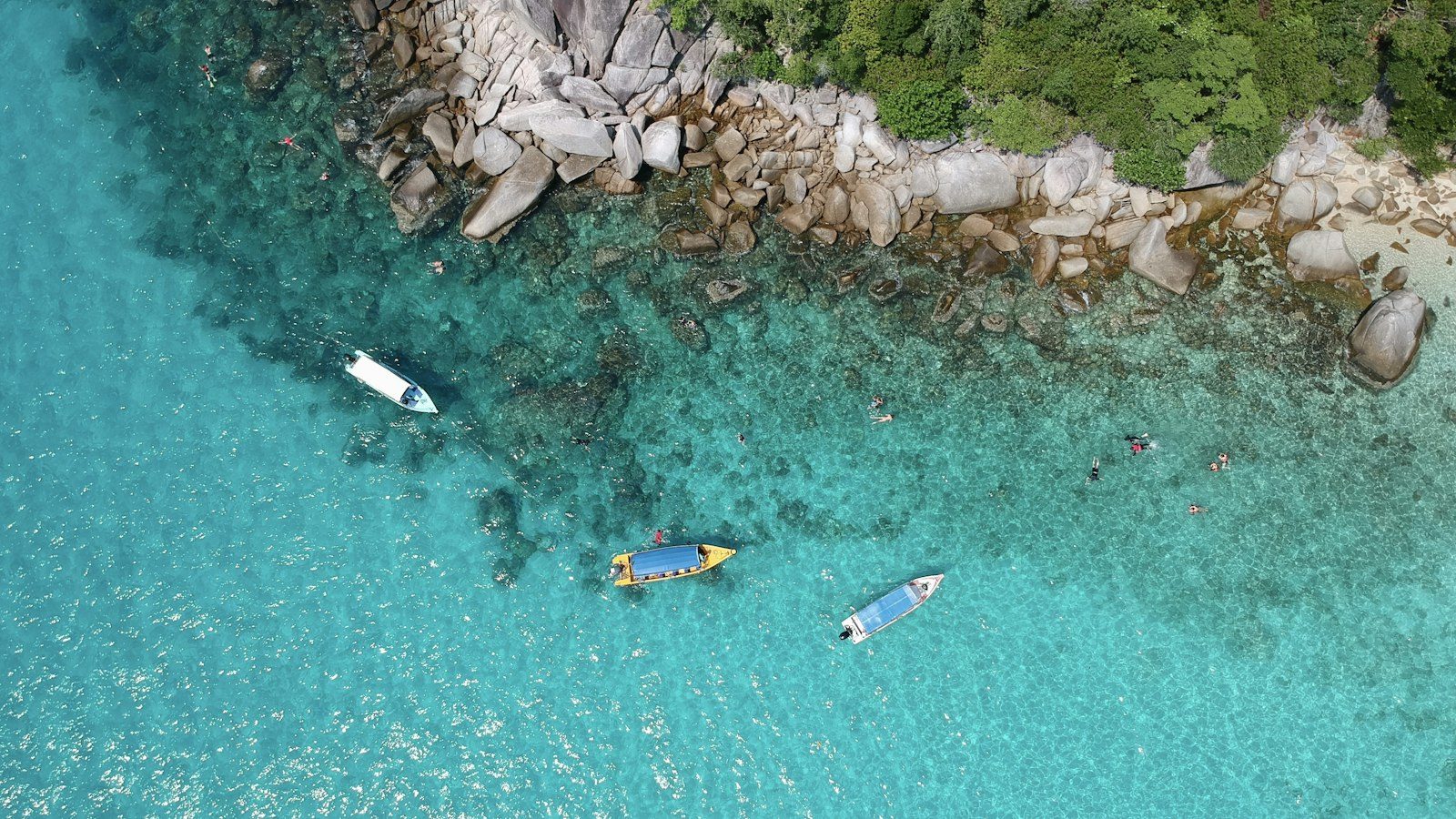
Two jungle-covered islands off Malaysia's north-east coast, with no roads, clear water and green turtles in the shallows. You snorkel over coral straight off the beach, walk forest paths between bays and eat grilled fish on the sand after dark.
- Best time to visit: March to May and September to early October
- Daily budget (budget traveller): $35 to $180 USD
- Ideal trip length: 4 to 7 days
The Perhentian Islands lie about 20km off the coast of Terengganu, in the South China Sea, inside a protected marine park. There are two main islands. Perhentian Kecil, the small one, is cheaper and more social, with the backpacker chalets and beach bars of Long Beach and the sunset bay at Coral Bay. Perhentian Besar, the big one, is quieter, with resorts along its west coast, turtle beaches and calm water for families and couples. Neither island has roads. You get around on forest paths and in small water taxis, and the only village is a fishing settlement on Kecil. You come here to get in the water. Green and hawksbill turtles feed in the bays, blacktip reef sharks patrol the shallows and the dive courses are some of the cheapest in South East Asia. The islands are seasonal. Boats and almost every resort shut for the north-east monsoon from about November to February, and the season runs from roughly March to October. There are no ATMs, power and wifi can be patchy and prices are higher than on the mainland. Still, a dorm bed on Long Beach, cheap snorkel trips and the easy social scene make it one of the best beach stops in Malaysia for a solo traveller.
The Perhentians are a small group of islands off the north-east coast of Peninsular Malaysia, part of a marine park in Terengganu. Only two are lived on. Perhentian Besar is larger and quieter. Perhentian Kecil is smaller and busier, with the fishing village of Kampung Pasir Hantu and the backpacker strip of Long Beach. There are no roads, no cars and no airport, just forest, sandy bays and some of the clearest water on the peninsula. Fishing is restricted inside the park, so the reefs are in better shape than at many spots in the region, and turtles and small reef sharks are a normal sight. Day trippers are rare because the islands are a long way from anywhere. Most visitors stay several nights, and many stay much longer than they planned, often to finish a dive course.
Getting here takes some planning. Fly from Kuala Lumpur to Kota Bharu, or take an overnight bus, then go by road to the jetty at Kuala Besut. Pay the RM30 marine park fee and the jetty fee in cash, and take a speedboat across in about 30 to 45 minutes for around RM35 one way. Boats run from roughly 8am into the late afternoon, and the last boats back leave the islands at around 4pm, so plan your connections. Once you are on the islands, you walk on forest paths or hop between beaches by water taxi. Stay on Long Beach for cheap beds and company, Coral Bay for sunsets and calmer water, or Besar for peace and comfort.
Timing matters more here than almost anywhere else in Malaysia. The islands open from about March to October and close for the north-east monsoon, when rough seas stop the boats and nearly every resort shuts. Visibility is best from March to May. June to August brings the crowds, full chalets and Malaysian holidaymakers, while September offers quieter beaches and deals before the weather turns in October. Bring all the cash you need, as there are no ATMs. Expect fan rooms, cold showers and wifi that comes and goes. This is a conservative part of Malaysia, so cover up away from the beaches. In return you get warm water, turtles at arm's length and evenings with grilled fish on the sand.
Perhentian Islands itinerary
Arrive and find your beach
Morning: Take an early flight from Kuala Lumpur to Kota Bharu, then a taxi or shared transfer to Kuala Besut. Pay the marine park and jetty fees in cash and take the speedboat to Long Beach.
Afternoon: Check in, rent a mask for the day and snorkel off the rocks at either end of the beach. Book a snorkel trip for the next morning.
Evening: Walk the forest path to Coral Bay for sunset, then eat grilled fish on the sand.
Turtles and reef sharks
Morning: Join a half-day snorkel trip (about RM40-50) to Turtle Point, Shark Point and the coral gardens. Wear a rash vest, as the sun is strong.
Afternoon: Lazy hours on Long Beach. Visit the dive shops and compare courses and fun-dive prices if you want to dive.
Evening: Dinner at a Long Beach restaurant and a drink at a beach bar if a fire show is on.
Trails and quiet coves
Morning: Walk from Coral Bay along the trails to Adam and Eve Beach and the coves in the north-west while it is cool. Take water and snacks.
Afternoon: Snorkel off the rocks, then return over the ridge past the wind turbines. Or take a water taxi back if you are tired.
Evening: Sunset at Coral Bay again, or an early night before diving.
Under the water
Morning: Start an Open Water course, try a Discover Scuba dive or, if you are certified, do two fun dives at sites such as the Temple or the Sugar Wreck.
Afternoon: Rest, rehydrate and log your dives. Get a fruit shake and find some shade on the beach.
Evening: Book a night dive or night snorkel with your dive shop, or have a quiet dinner.
A day on Besar
Morning: Take a water taxi across the channel to the west coast of Besar. Snorkel off the beach near Shark Point and look for turtles in the bay.
Afternoon: Walk the path over to Teluk Dalam for a swim in the sheltered bay, then lunch at a resort restaurant.
Evening: Water taxi back to Kecil before dark, or move to Besar for a quieter final few nights.
Rawa and Susu Dara
Morning: Join a boat trip to the small islands of Susu Dara and Pulau Rawa for some of the clearest water in the park. Trips need a minimum number of people, so book a day ahead.
Afternoon: Snorkel and lie on Rawa's white sand before the boat brings you back.
Evening: Walk to Kampung Pasir Hantu at sunset to see the mosque lit up, then eat a cheap rice dinner in the village.
Last swim and depart
Morning: Have an early swim and breakfast on the beach. Settle your bill in cash and confirm your boat time.
Afternoon: Take the boat back to Kuala Besut, ideally around midday, as the last boats leave in the late afternoon. Then go by road to Kota Bharu.
Evening: Fly back to Kuala Lumpur, or spend a night in Kota Bharu to eat at the night market.
Best neighbourhoods
- Long Beach (Pasir Panjang), Kecil: The long white beach on the east side of Kecil and the social heart of the islands. You will find dorms, fan chalets, dive shops, beach bars and restaurants in a row along the sand. It is the cheapest place to stay and the easiest place to meet people, but music from the bars can carry late, so ask for a chalet set back from the beach.
- Coral Bay (Teluk Aur), Kecil: The smaller bay on the west side of Kecil, a 10 to 15-minute walk through the forest from Long Beach. It is calmer and a little more upmarket, with a few dive resorts, seafood restaurants and the best sunsets on the islands. The water stays calm here when the east side gets choppy.
- West coast of Besar: The string of beaches from Teluk Pauh down to Tuna Bay, facing Kecil across the channel. Most of the mid-range resorts are here, and you can snorkel off the beach with turtles nearby. Evenings are quiet and there is little nightlife, so it suits you if you want sleep and sea more than bars.
- Teluk Dalam, Besar: A wide, sheltered bay on the south side of Besar with shallow water and a handful of resorts. It is the most peaceful corner of the islands. Getting anywhere else means a forest path or a water taxi, so plan to stay put and enjoy the quiet.
- D'Lagoon and Teluk Kerma, Kecil: A remote bay at the north-east tip of Kecil with one simple resort, a reef right off the beach and forest trails to nearby coves. It is about as far from the crowds as you can get on Kecil. Food is limited to the resort, and leaving means a boat or a long, sweaty walk.
Must-do experiences
- Snorkel with turtles on a boat trip: Every chalet and beach hut sells half-day snorkel trips for about RM40-50 ($10 to $12 USD), with mask and fins included. Boats usually stop at Turtle Point, Shark Point and a coral garden or two. Go in the morning, when the water is calmest and the boats are fewer.
- Learn to dive or do a fun dive: The Perhentians are one of the cheapest places in the region to learn. A PADI Open Water course takes three to four days and costs roughly RM750-1,100 ($175 to $260 USD). Certified divers pay around RM100-150 a dive for sites like the Temple and the Sugar Wreck.
- Walk to Coral Bay for sunset: A forest path links Long Beach with Coral Bay in about 10 to 15 minutes. It is free, shaded and easy, though muddy after rain. Get there an hour before sunset, find a beanbag at a beach restaurant and stay for grilled fish.
- Hike to Adam and Eve Beach: Follow the trails north from Coral Bay to the quiet coves on Kecil's north-west side, including Adam and Eve Beach. The water is clear and the snorkelling is good off the rocks. Bring water, wear proper shoes and leave well before dark.
- Spend a day on Besar: Take a water taxi across the channel (about RM10-20) and walk the beaches of the west coast, from Teluk Pauh to Tuna Bay. Snorkel off the shore near Shark Point and look for turtles feeding in the seagrass. In nesting season, local conservation groups sometimes run talks or night watches.
- Paddle along the coast by kayak: Kayaks and paddleboards are rented by the hour from huts on Long Beach and Coral Bay. Agree the price before you set off. Paddle early, stay close to shore and keep clear of the boat lanes in front of the busy beaches.
- Visit the fishing village: Kampung Pasir Hantu, on the south side of Kecil, is the only real village on the islands. Walk past the fishing boats, see the white A R Rahman mosque built over the water and eat a cheap rice lunch at a village kedai. Dress modestly, with shoulders and knees covered.
Hidden gems
- Romantic Beach, a tiny cove at the southern end of Long Beach that is often empty in the early morning
- The ridge trail between Long Beach and Coral Bay, where the old wind turbines stand above the forest and monitor lizards cross the path
- Snorkelling straight off the beach at D'Lagoon, where the reef starts just a few metres from the sand
- Night snorkelling or a night dive with a dive shop, to see the plankton glow and the reef creatures that only come out after dark
- The jetty at Kampung Pasir Hantu at dawn, when the fishing boats come in and the village is just waking up
Daily budget
- Accommodation: budget $8-15 / night (dorm bed on Long Beach), mid-range $35-120 (air-con chalet or dive resort), splurge $300+ (beachfront villa at a top resort). Fan chalets with shared bathrooms start at roughly RM40-70. Prices rise in June to August and on Malaysian holidays. Many budget places take cash only.
- Food: budget $10-15 / day (roti, village rice dishes, fruit shakes), mid-range $20-30 (beach restaurants and a seafood dinner), splurge $50+ (resort dining and grilled seafood by weight). Restaurant meals cost about RM15-35. Food is pricier than on the mainland because everything comes by boat. Ask the price of fish and prawns before they hit the grill.
- Transport: budget $2-7 / day (walking and the odd water taxi), mid-range $10-20 (several water taxis a day), splurge $40+ (private boat charters). The speedboat from Kuala Besut is about RM35 one way. A taxi from Kota Bharu airport to the jetty is around RM80-110, and shared transfers about RM30.
- Activities: budget $10-12 / day (half-day snorkel trip), mid-range $25-35 (a fun dive with gear), splurge $175-260 (PADI Open Water course). The marine park fee is RM30 for foreign adults, paid at the jetty before you board. Keep the receipt. Snorkel gear rental is about RM20-30 a day.
- Drinks & nightlife: budget $2-4 (fruit shake or iced tea), mid-range $10-20 (a few beers on Long Beach), splurge $30+ (cocktails at a resort bar). Alcohol is only sold at some bars and resorts, and it is expensive. Nightlife means beach bars and fire shows on Long Beach in season.
Where to stay
- Social hostel in Long Beach, Kecil ($8-15 / night (dorm)): Long Beach has the cheapest beds on the islands, from simple dorms at long-running places such as Mohsin Chalet to dive-shop bunks for students. Bars, dive centres and other travellers are on the doorstep.
- Beach chalet in Long Beach or Coral Bay, Kecil ($20-60 / night): A fan or air-con chalet gives you privacy for a modest price. Choose one set back from the sand on Long Beach for quieter nights, or Coral Bay for sunsets.
- Dive resort in Coral Bay, Kecil ($110-180 / night): Ombak Dive Resort combines rooms with an on-site dive centre, so courses and fun dives start a few steps from your door. Coral Bay is calm and close to Long Beach.
- Splurge in Long Beach, Kecil ($350-500+ / night): Bubu Villa offers sea-view rooms, good service and beachfront dining in a quieter corner of Long Beach. You still have the restaurants and dive shops within walking distance.
What to eat
- Beach barbecue: pick a whole fish, squid or prawns from the ice on Long Beach or Coral Bay in the evening and have it grilled with rice and sambal. Ask the price first
- Roti canai with dhal or curry for breakfast, the cheapest and most filling start to the day at village and beach cafés
- Nasi lemak: coconut rice with sambal, peanuts, anchovies and egg, often sold wrapped in banana leaf in the morning
- Keropok lekor: chewy Terengganu fish sausage, fried and served with chilli sauce, a typical snack from the village
- Mee goreng or nasi goreng at a village kedai in Kampung Pasir Hantu, much cheaper than the resort restaurants
- Fresh fruit shakes and coconuts on the beach, and banana pancakes at the backpacker cafés on Long Beach
Day trips
- Pulau Rawa and Susu Dara (About 15 to 30 minutes by boat north-west of Kecil): Small uninhabited islands with white sand, clear water and some of the healthiest reefs in the park. Rawa's beach is one of the prettiest in the area. Book a group boat trip through your chalet or a beach hut a day ahead. Expect to pay around RM65-70 a person, and trips usually need a minimum number of people.
- Redang and Lang Tengah (About 1 hour by boat south-east): Two more marine park islands with long white beaches and busy reefs. Redang is larger and more developed, while Lang Tengah is small and quiet. Join a full-day group snorkel trip, which costs around RM150-180 a person and needs a minimum group size. Trips only run in calm weather.
- Kota Bharu (About 1 hour by road from the Kuala Besut jetty): The capital of Kelantan, with a big central market, a lively night market and some of the best Malay food in the country. It is a good overnight stop on the way in or out. Take a taxi, a Grab car or a shared transfer from the jetty. Stay a night before flying out of Kota Bharu airport, and try the nasi kerabu.
When to visit
- Early season (March - May): 29-32°C, mostly dry and sunny, calm seas, water around 28-29°C. Crowds: Low to moderate, busier on Malaysian public holidays. The best time for divers and snorkellers, with the clearest water of the year. Some places only open in March, so check that your chalet is running before you book.
- Peak season (June - August): 30-33°C, hot and humid, short showers possible, seas mostly calm. Crowds: Busy, with budget chalets on Long Beach selling out. Lively and social, with turtle nesting under way. Prices are at their highest, so book ahead and expect busier snorkel spots.
- Late season (September - October): 28-31°C, more rain from October, seas getting rougher. Crowds: Moderate in September, thin by October. September is a good choice, with quieter beaches and better deals. From mid-October some resorts close early and boats can be cancelled, so keep your plans flexible.
- Monsoon (November - February): 26-29°C, heavy rain, strong winds and high waves. Crowds: Almost no visitors. Closed season. Most boats stop and nearly all resorts shut. Go to the west coast, such as Langkawi or Penang, instead.
Entry rules for your passport
Visa rules for Malaysia depend on the passport you travel on. Check the official source before you book: Immigration Department of Malaysia
Getting there
There is no airport on the islands, and every visitor arrives by boat from the jetty at Kuala Besut in Terengganu. The nearest airport is Kota Bharu (KBR), about an hour by road from the jetty, with frequent flights from Kuala Lumpur taking about an hour. From the airport, a taxi or private car costs roughly RM80-110 ($19 to $26 USD), and shared transfers run at set times through the day for about RM30. Kuala Terengganu airport is another option, but the drive is about 45 minutes longer. Overnight buses also run from Kuala Lumpur and other cities to Kuala Besut. At the jetty, foreigners pay a marine park fee of RM30 and a jetty fee in cash before boarding. Speedboats take about 30 to 45 minutes and cost around RM35 one way, or about RM70 return. Boats run from about 8am into the late afternoon, and return boats from the islands stop at around 4pm. Tell the boatman your beach, as boats drop at Long Beach, Coral Bay and the resorts on Besar. Most foreign visitors must submit the free Malaysia Digital Arrival Card online within three days before arrival.
Getting around
There are no roads or cars on the islands, so you walk or take a boat. Forest paths link Long Beach with Coral Bay (10 to 15 minutes), and longer trails reach the fishing village, the wind turbines and the bays in the north of Kecil. On Besar, a path crosses from the west coast to Teluk Dalam in about 30 minutes. The paths are rough, steep in places and slippery after rain, so wear proper shoes and carry a torch after dark. For most trips, take a water taxi. Boats wait on every main beach, and prices are usually posted on a board. Short hops cost around RM10-30 ($2 to $7 USD) a trip, and crossing between Kecil and Besar is about RM10-20. Fares are per person with a minimum, so solo travellers sometimes pay more unless they share. Boats get harder to find after dark, so arrange your ride back before dinner. There are no jetties on many beaches, so expect to wade ashore with your bag held high.
Safety
The Perhentians are generally safe and relaxed, and serious crime against visitors is rare. Most problems come from the sea and the boats. Water taxis and snorkel boats run close to the beaches, so swim inside the marked areas and stay visible. Never touch coral, turtles or sea urchins, and watch for jellyfish, especially later in the season. Currents can be strong around the points, so do not snorkel alone far from shore. Forest trails are dark, steep and slippery, so avoid them at night. Lock your chalet, use a safe if there is one and do not leave valuables on the beach. Take normal care with drinks at the Long Beach parties. There are only basic clinics on the islands, and serious cases go to the mainland by boat, so you need travel insurance that covers diving and medical evacuation. Do not drink the tap water. Malaysia's emergency number is 999.
Solo travel tips
- Bring all your cash: There are no ATMs on the islands. Work out your rooms, food, boats and diving, add a buffer and withdraw it in Kota Bharu before you reach the jetty.
- Check the season first: The islands effectively close from about November to February. Even in March and October, some places are shut, so confirm your chalet and the boats before you book flights.
- Share water taxis: Fares often have a minimum, so a solo passenger can pay as much as two. Wait for others on the beach or ask at your chalet who is heading the same way.
- Pick your beach for the night you want: Long Beach for company and bars, Coral Bay for sunsets and calm, Besar for early nights. You can always cross for the day, so sleep where you will be happiest.
- Safety for solo travellers: Do not snorkel alone far from shore, swim inside the marked areas away from boats and skip the forest trails after dark. Make sure your insurance covers diving and medical evacuation.
- Meet people underwater: Dive courses and snorkel trips are the easiest way to make friends here. Dive groups often eat together in the evening, and some dive shops have cheap dorms for students.
Cultural etiquette
- Greet people with 'selamat pagi' (good morning) and say 'terima kasih' (thank you). A smile and a nod go a long way.
- Terengganu is a conservative Muslim state. Swimwear is fine on the tourist beaches, but cover your shoulders and knees in the fishing village.
- Take off your shoes before entering a mosque or someone's home, and wear long clothes if you visit the mosque. Women should cover their hair.
- Use your right hand to give, receive and eat. Pointing with your thumb is more polite than pointing with a finger.
- Drink alcohol only at the bars and resorts that serve it, and never in the village. During Ramadan, avoid eating or drinking in public in the village.
- Do not touch, stand on or feed coral, turtles or fish. Keep a respectful distance from turtles and never chase them.
- Take your rubbish back with you, as everything has to be shipped off the islands. Avoid plastic bottles where you can refill.
Frequently asked questions
How do I get to the Perhentian Islands?
All public boats leave from the jetty at Kuala Besut on the mainland. Most people fly from Kuala Lumpur to Kota Bharu (about an hour), then take a taxi or shared transfer about an hour to the jetty. A private car costs roughly RM80-110, and shared transfers run at set times for about RM30. Overnight buses also run from Kuala Lumpur to Kuala Besut. Before boarding, foreigners pay a RM30 marine park fee and a separate jetty fee in cash. The speedboat takes about 30 to 45 minutes and costs around RM35 one way. Tell the boatman which beach you want.
How many days do I need on the Perhentians?
Three nights covers a snorkel trip, the walk to Coral Bay and a day on Besar. Four to seven nights lets you slow down, learn to dive or do several fun dives, explore the northern bays and add a boat trip to Rawa. If you are doing an Open Water course, allow at least four nights for the course alone, plus a spare day in case the weather turns.
When is the best time to visit, and are the islands open now?
The season runs from about March to October. March to May has calm seas and the best visibility, June to August is busiest and most expensive, and September is quieter with good deals. From about November to February, the north-east monsoon brings rough seas, most boats stop and nearly all resorts close. In November 2026 the islands are in their closed season, so plan for spring 2027 and check with your accommodation which date it reopens.
Should I stay on Perhentian Kecil or Perhentian Besar?
Kecil, for most solo travellers. Long Beach has the cheapest beds, dive shops and an easy social scene, and Coral Bay is close by for sunsets. Besar is quieter, with more comfortable resorts, calm beaches and very little nightlife. Many people stay on Kecil and cross to Besar for a day, or split their stay between the two.
Are there ATMs on the islands?
No. There are no ATMs or banks on either island, and card machines are unreliable even at mid-range resorts. Some places that take cards add a surcharge. Withdraw enough ringgit in Kota Bharu or before you reach the jetty to cover rooms, food, boats, snorkel trips and diving. Bring more than you think you need, since being stuck without cash means a trip back to the mainland.
Can I drink alcohol on the Perhentians?
Yes, but quietly. Terengganu is a conservative Muslim state, and alcohol is not sold in the village. A few bars and restaurants on Long Beach and at some resorts sell beer, and Long Beach has a small party scene with fire shows in season. Prices are high. Drink on the tourist beaches rather than in the village, and do not walk around drunk in public.
Are the Perhentians safe for solo female travellers?
Generally yes, and many women travel here alone. Long Beach is busy and friendly, and the islands are small enough that people get to know each other. Take normal care with drinks at the beach parties, avoid walking the forest trails alone after dark and arrange a water taxi back if you are out late. Cover up in the village. Some solo women prefer the quieter resorts on Coral Bay or Besar.
What entry rules apply to Malaysia in 2026?
Many nationalities, including those from the UK, EU, US, Canada and Australia, can visit Malaysia visa-free for short tourist stays, often up to 90 days, but check the rule for your passport. Your passport should be valid for at least six months. Most foreign visitors must complete the free Malaysia Digital Arrival Card (MDAC) online within three days before arrival. Use only the official Immigration Department site, imigresen-online.imi.gov.my. Check your own government's travel advice before you go.
Tours and activities in Perhentian Islands | Perhentian Islands in 2 days | Perhentian Islands in 3 days | Perhentian Islands in 4 days | Perhentian Islands in 5 days | Perhentian Islands in 7 days
Joy Plus home | Destinations | Itineraries | Activities | Flights | Budget planner | Calendar | Map | Blog | Lifetime access