Destinations / Asia
Pokhara, Nepal travel guide
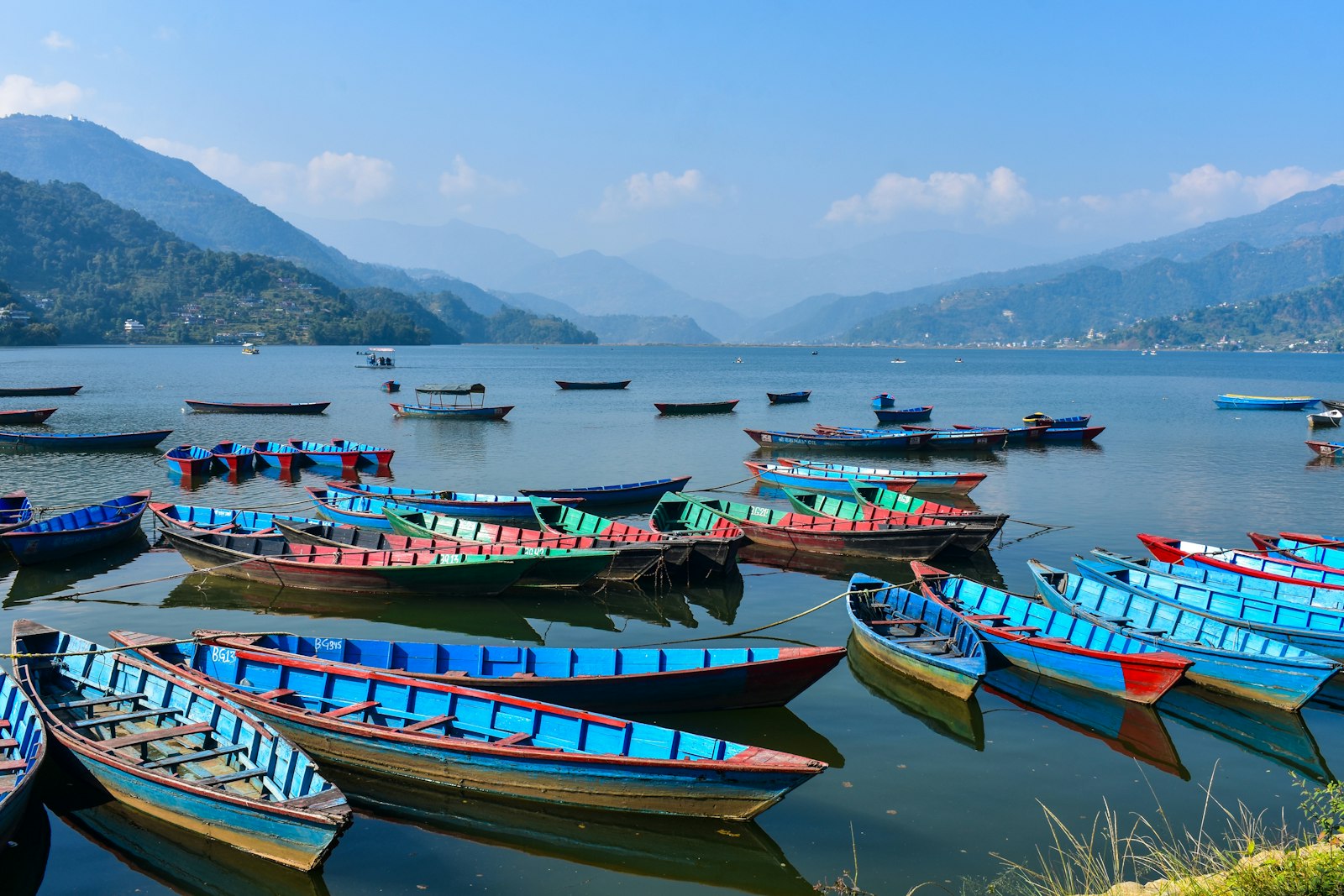
A laid-back lakeside town under the Annapurnas, Nepal's gateway to the Himalayas.
- Best time to visit: October-November and March-April
- Daily budget (budget traveller): $25 to $55 USD
- Ideal trip length: 3 to 4 days
Pokhara is where Nepal exhales. After the intensity of Kathmandu or a Himalayan trek, this lakeside town offers calm: a mirror-still lake reflecting the snow peaks, paragliders drifting overhead, and a string of easy cafés along the water. It's the staging post for the Annapurna treks, but it's also a destination in its own right. With Nepal's tourism rebounding fast and a new international airport, Joy Plus balances the lake, the sunrise viewpoints and gentle hikes with the trek logistics if you're heading higher.
Pokhara sits at just 820 metres, yet within about 40km the land climbs to Annapurna I at 8,091m. Machapuchare, the Fishtail peak at 6,993m, looks close enough to hit with a thrown stone, and it is held sacred and closed to climbers. The town has Phewa Lake at its centre and the Himalaya as a backdrop. The result is the easiest big mountain view in Asia: no altitude, no permits, no suffering. You can have it over a cheap milk tea. Most people arrive from Kathmandu on a 25 minute flight (Pokhara International Airport, PHH, opened in 2023, but international services are still thin) or a long, bumpy 7 to 8 hour bus.
The town runs on a simple rhythm. Mountains show at dawn and clouds roll in by 9 or 10am, so everything that matters happens early: Sarangkot sunrise, a boat on still water, the Peace Pagoda climb. Afternoons are for cafés, paragliders spiralling down to the Lakeside landing field, and a beer. Lakeside (Baidam) is the 3km strip of gear shops, bakeries and bars where you will base yourself. Damside is quieter and cheaper, and Old Bazaar is where Pokhara actually lives. Prices are friendly: dal bhat is NPR 350 to 650, a dorm bed NPR 700 to 1,300, and a Gorkha beer about NPR 450 to 600 on the strip.
Three days covers the lake, the dawn viewpoint, the caves and falls, and a paraglide. Five to seven days lets you add Begnas Lake and an overnight at Australian Camp, a teahouse taste of trekking. If you are heading into the Annapurnas (Poon Hill is 4 to 5 days, Annapurna Base Camp 7 to 10), Pokhara is where you sort permits, guides and gear, and where you recover afterwards with a pizza. Timing is everything: October and November are glorious, but the monsoon (June to September) hides the peaks behind cloud for days. Dashain (September or October) and Tihar (October or November) fill buses and flights, so book early.
How many days in Pokhara?
For Pokhara, we recommend 3 to 4 days. With more time, add a day trip to Bandipur.
| Trip length | What you'll see | Itinerary |
|---|---|---|
| 2 days | Lake at sunset; Sarangkot sunrise, museum, falls | Pokhara in 2 days |
| 3 days · Recommended | Adds: World Peace Pagoda | Pokhara in 3 days |
| 4 days · Recommended | Adds: Paraglide and Old Bazaar | Pokhara in 4 days |
| 5 days | Adds: Begnas Lake | Pokhara in 5 days |
| 7 days | Adds: Phedi to Dhampus to Australian Camp; Sunrise, descent | Pokhara in 7 days |
Pokhara itinerary
Arrive, settle, lake at sunset
Morning: Land at PHH or step off the tourist bus. Taxi to Lakeside, about NPR 700 to 1,000 from the airport. Drop bags, breakfast at Mike's Breakfast.
Afternoon: Walk Lakeside Road to Damside. Hire a doonga boat (NPR 800 to 1,000 per hour) to Tal Barahi temple on the island.
Evening: Sunset on the lakefront, dinner at Moondance, then a quiet beer at Busy Bee. Bed early, tomorrow starts at 5am.
Sarangkot sunrise, museum, falls
Morning: Taxi to Sarangkot at 5am, about NPR 3,000 return with a wait. Sunrise on Annapurna and Machapuchare, chai and breakfast at the tower.
Afternoon: Visit the International Mountain Museum (NPR 600), then Devi's Falls and Gupteshwor Mahadev Cave across the road (about NPR 100 each).
Evening: Dinner at OR2K, floor cushions and Middle Eastern mezze. Early night.
World Peace Pagoda
Morning: Boat across to the Anadu landing and climb the forest trail, 45 to 60 minutes, to the white Peace Pagoda. Arrive before 10am for the clearest views.
Afternoon: Walk down toward Damside, lunch at a lakeside café, wander the quieter shoreline.
Evening: Drop-in yoga class on Lakeside (about NPR 800 to 1,200), dinner at Fresh Elements.
Paraglide and Old Bazaar
Morning: Tandem paraglide with Sunrise Paragliding or Blue Sky Paragliding. Pick-up from Lakeside, 25 to 30 minutes in the air, landing back at the lake.
Afternoon: Taxi or microbus to Old Bazaar. Walk through Bindhyabasini Temple, the Newari lanes, then peer into the Seti River gorge at Mahendra Pul.
Evening: Newari or Thakali set meal in the Old Bazaar, then live music at Paradiso Sports Bar & Grill on Lakeside.
Begnas Lake
Morning: Local bus or taxi from Prithvi Chowk to Begnas Lake, about 45 to 60 minutes.
Afternoon: Row on the calm lake, walk to the Rupa Lake viewpoint, grilled fish lunch at a lakeside shack.
Evening: Back to Lakeside, hot shower, dal bhat and a long sleep before trekking.
Phedi to Dhampus to Australian Camp
Morning: Taxi to Phedi (NPR 1,200 to 1,800, 25 minutes). Climb the stone steps to Dhampus in 1.5 to 2 hours.
Afternoon: Lunch at a Dhampus teahouse, then hike through forest to Australian Camp, 2 to 3 hours.
Evening: Teahouse room at about NPR 1,500 to 3,000, dal bhat by the stove, stars on a clear night.
Sunrise, descent, depart
Morning: Early sunrise at Australian Camp, then walk down to Kande, about 1.5 hours.
Afternoon: Local bus or taxi back to Lakeside (NPR 100 bus, NPR 2,000 to 2,500 taxi). Last dal bhat and a bakery coffee.
Evening: Taxi to the airport (PHH) or the tourist bus park for your onward journey.
Best neighbourhoods
- Lakeside (Baidam): The traveller hub along Phewa Lake: cafés, gear shops, boat hire and sunset views of the peaks.
- Sarangkot: The ridge above town, famous for Himalayan sunrises and as the main paragliding launch.
- Old Bazaar: The historic, more local quarter with temples, markets and traditional Newari architecture.
- World Peace Pagoda hill: The forested ridge across the lake, crowned by a white stupa with sweeping views.
Must-do experiences
- Sunrise at Sarangkot: Watch dawn light the Annapurna and Machapuchare (Fishtail) peaks turn gold above the valley.
- Row on Phewa Lake: Hire a colourful doonga boat to the island Tal Barahi temple, with the peaks mirrored on the water.
- Paraglide over the valley: Tandem flights from Sarangkot are among the world's best, drifting over the lake and hills.
- Hike to the World Peace Pagoda: A short, scenic climb through forest to a white stupa with the finest panorama of the lake and mountains.
Hidden gems
- Begnas Lake, a quieter, greener alternative to Phewa on the edge of town.
- The Gupteshwor cave and Davis Falls, a dramatic underground waterfall.
- A short Australian Camp or Dhampus overnight, a teahouse taste of trekking without the long haul.
- Early-morning yoga and dawn coffee on a Lakeside rooftop before the clouds roll in.
Daily budget
- Accommodation: budget NPR 700 to 1,300 / night (hostel dorm), mid-range NPR 5,000 to 10,000 (lake view double), splurge NPR 18,000+ (Fishtail Lodge, Raniban Retreat). Damside is cheaper than Lakeside. Off-season rooms can drop 30 to 40%, so always ask for the lake view rate.
- Food: budget NPR 1,200 to 1,800 / day (dal bhat, momos, bakery), mid-range NPR 2,500 to 4,000 (café meals, one nice dinner), splurge NPR 7,000+ (lakeside dinners, wine). Dal bhat comes with free refills. Restaurants add 10% service and 13% VAT, so check the menu small print.
- Transport: budget NPR 200 to 500 / day (walk, microbus NPR 20 to 40, bicycle NPR 500), mid-range NPR 1,500 to 3,000 (scooter NPR 1,200 + petrol, one taxi), splurge NPR 6,000+ (private jeep for the day). Taxis have no meters. Agree the fare first or use Pathao or inDrive where they work.
- Activities: budget NPR 800 to 1,500 / day (boat, museum, falls), mid-range NPR 6,000 to 14,000 (paragliding, zipline), splurge NPR 20,000+ (mountain flight, helicopter tour). Paragliding runs NPR 11,000 to 14,000 for about 30 min. The Peace Pagoda and Sarangkot sunrise views are nearly free.
- Drinks & nightlife: budget NPR 500 to 900 (Gorkha beer, rooftop chai), mid-range NPR 1,500 to 3,000 (Busy Bee and Paradiso Sports Bar & Grill), splurge NPR 5,000+ (cocktails, lakeside lounges). Lakeside bars wind down by 11pm to midnight. Some dry days apply around elections and holidays.
Where to stay
- Social hostel in Lakeside (Baidam) (NPR 700 to 1,300 / night): Zostel Pokhara or Pokhara Backpackers Hostel. Rooftops, common rooms and instant trek partners, all steps from boats and bars.
- Boutique hotel in Lakeside (Gaurighat) (NPR 8,000 to 16,000 / night): Temple Tree Resort & Spa or Hotel Barahi. Gardens, a pool, comfortable beds and lake views, and a short walk to the strip.
- Apartment in Damside (NPR 3,500 to 7,000 / night): Quiet residential streets south of the dam, a private studio or homestay with a balcony, and good value for 5+ nights.
- Splurge in Lake edge and Anadu Hill (NPR 18,000 to 40,000 / night): Fishtail Lodge (reached by a hand-pulled raft) or Raniban Retreat above the Peace Pagoda. Peaks from the pillow, no road noise.
What to eat
- Dal bhat, the unlimited rice-and-lentil thali that powers every trek
- Momos, steamed or fried Himalayan dumplings
- Thakali sets (dal bhat the Thakali way) in the Old Bazaar
- Fresh lake fish grilled at a Lakeside restaurant
Day trips
- Begnas Lake (15km, 45 to 60 min): Greener, quieter sister to Phewa. Rent a boat, walk to the Rupa Lake viewpoint, and eat grilled fish at the lakeside shacks. Far fewer tourists than Lakeside. Local bus from Prithvi Chowk, about NPR 60 to 80, or taxi NPR 1,800 to 2,500 one way.
- Dhampus and Australian Camp (25km to Kande, then 4 to 6 hrs walking): A teahouse overnight with Annapurna and Machapuchare views at dawn. A good test of how you feel at altitude without committing to a week. Taxi to Phedi, NPR 1,200 to 1,800. Walk up via Dhampus, return from Kande by local bus (about NPR 100) or taxi.
- Bandipur (80km, about 2.5 hours): A preserved Newari hilltop bazaar with car-free streets and valley views. Doable in a day but better with an overnight. Tourist bus toward Kathmandu to Dumre (NPR 400 to 600), then a shared jeep up the hill, about NPR 100.
When to visit
- Autumn (October to November): 15 to 28°C, dry, crisp and clear, cold nights from late November. Crowds: Heavy, peak trekking season. The best window for mountain views. Book Kathmandu flights early around Dashain (mid to late October) and Tihar (early November).
- Winter (December to February): 8 to 20°C, sunny days, cold nights, occasional valley fog. Crowds: Low. The locals' pick and the best value. Sharp mountain views, cheap rooms, but guesthouses have little heating so bring layers.
- Spring (March to May): 15 to 32°C, warming up, haze builds from late April. Crowds: Moderate, busy in March and April. Great for Poon Hill rhododendrons in March and April. Views get hazy by May and the afternoons get hot and sticky.
- Monsoon (June to September): 22 to 32°C, heavy daily rain, some of Nepal's wettest weather. Crowds: Very low. Lush and empty but the peaks hide for days. Expect leeches on trails and landslide delays on the Kathmandu highway. Only for bargain hunters.
Entry rules for your passport
Visa rules for Nepal depend on the passport you travel on. Check the official source before you book: Nepal Department of Immigration
Getting there
Pokhara International Airport (PHH) opened in 2023 and sits about 5km southeast of Lakeside. International services are thin, so most people connect via Kathmandu (KTM) with Buddha Air, Yeti Airlines or Shree Airlines. The flight takes 25 minutes and foreigner fares run roughly NPR 9,000 to 14,000 one way. Morning flights have the best views and the fewest weather delays. From the airport, a prepaid taxi to Lakeside costs NPR 700 to 1,000. By road, tourist buses from Kathmandu (Kantipath and Thamel area) take 7 to 8 hours. A basic tourist bus is NPR 1,200 to 2,000, and Greenline is about NPR 4,000 with lunch. Buses arrive at the tourist bus park, a short taxi to Lakeside for NPR 300 to 500. Monsoon landslides can add hours. Book transport well ahead for Dashain and Tihar.
Getting around
Lakeside is small and walkable, with cheap bicycle and scooter rentals for exploring further. Taxis are plentiful but agree the fare first. Tourist buses link Pokhara to Kathmandu (6 to 7 hours) and the new Pokhara International Airport adds regional flights. For Sarangkot and trailheads, a taxi or arranged jeep is easiest.
Safety
Pokhara is very safe and relaxed, with the friendliest of locals. The main risks are road conditions on mountain routes and the usual altitude considerations if you trek higher. Drink bottled or filtered water, and check trekking permits (TIMS/ACAP) before heading into the Annapurnas. After deadly anti-government protests in September 2025 the situation has been stable, and the US rates Nepal 'Exercise increased caution'; protests can flare up at short notice.
Solo travel tips
- Find trek partners at cafés and hostels: Agency windows and hostel noticeboards along Lakeside Road are covered in 'looking for trek partner' notes. Himalayan Java and the bakeries are where people swap news on trail conditions and splitting guide costs.
- Hire a guide through a licensed agency: Pick a TAAN registered agency. A guide costs NPR 3,000 to 4,500 per day and a porter NPR 2,000 to 3,000. Rules around solo trekking and permits shift, so confirm ACAP (about NPR 3,000) and TIMS requirements before you set off.
- Hostel pick: Zostel Pokhara or Pokhara Backpackers Hostel: Both sit on Lakeside with common rooms, rooftop hangouts and travellers heading to the same trailheads. Expect NPR 700 to 1,300 for a dorm bed.
- Split the Sarangkot taxi: A sunrise taxi costs about NPR 3,000 round trip. Post on the hostel board the evening before and share with 3 or 4 people for under NPR 800 each.
- Solo female travellers: Pokhara is one of South Asia's easiest places for women alone. Standard rules apply: licensed taxis after dark, no solo hikes at dusk, stay on busy forest trails, and cover shoulders and knees at temples. Use a guide for remote routes.
- Book paragliding direct: Skip street touts. Book directly with a registered operator such as Sunrise Paragliding or Blue Sky Paragliding, confirm insurance and pilot certification, and fly mid-morning when the thermals are best.
Cultural etiquette
- Say namaste with palms together. It is polite and always returned warmly.
- Take your shoes off before entering temples and homes. Leather items are not allowed inside some Hindu shrines.
- Walk clockwise around stupas and mani walls, keeping them on your right.
- Eat and pass things with your right hand only. The left is considered unclean.
- Dress modestly. Cover shoulders and knees at temples and in villages, even in warm weather.
- Do not touch heads or point your feet at people or shrines. Public displays of affection raise eyebrows.
- Haggle gently with a smile in shops and for taxis, but never for dal bhat or guesthouse breakfasts.
Frequently asked questions
How many days do you need in Pokhara?
Three to four days covers the lake, a Sarangkot sunrise, paragliding and the Peace Pagoda, and works as a relaxing base before or after an Annapurna trek.
Is Pokhara good for solo travellers?
Yes, ideal. It's safe, cheap, laid-back and full of fellow travellers, making it easy to find trekking partners and meet people.
When is the best time to visit Pokhara?
October-November and March-April bring clear mountain views and stable weather. The monsoon (June-September) often hides the peaks behind cloud.
How do I get from Kathmandu to Pokhara?
You can fly in about 25 minutes, take a tourist bus over 6-7 scenic but bumpy hours, or hire a private car. The new Pokhara International Airport is also adding regional flights, making access easier than ever.
Do I need permits to trek the Annapurnas from Pokhara?
Yes. Trekkers need an ACAP (Annapurna Conservation Area) permit and, for most routes, a TIMS card. Both are easy to arrange in Pokhara before you set off, and many guesthouses and agencies will sort them for you. Nepal's rules also require foreign trekkers to hire a licensed guide on most routes; enforcement varies, so check before you set off.
Is Pokhara expensive to visit?
No, it's very budget-friendly. Expect $25 to $55 a day, with cheap lakeside guesthouses, unlimited dal bhat for a few dollars, and inexpensive activities. Paragliding and longer treks are the main extra costs.
Is Pokhara worth visiting without trekking?
Absolutely. Even without a multi-day trek, the lake, Sarangkot sunrise, paragliding, Peace Pagoda hike and relaxed café scene make Pokhara a worthwhile, scenic destination in its own right.
Do I need a visa for Nepal?
Most nationalities get a tourist visa on arrival at Kathmandu airport and the main land borders: about US$30 for 15 days or US$50 for 30 days. Filling in the online form before you travel saves time in the queue.
Tours and activities in Pokhara | Pokhara in 2 days | Pokhara in 3 days | Pokhara in 4 days | Pokhara in 5 days | Pokhara in 7 days
Can't decide? Compare Pokhara with...
Joy Plus home | Destinations | Itineraries | Activities | Flights | Budget planner | Calendar | Map | Blog | Lifetime access