Destinations / Europe
Polignano a Mare, Italy travel guide
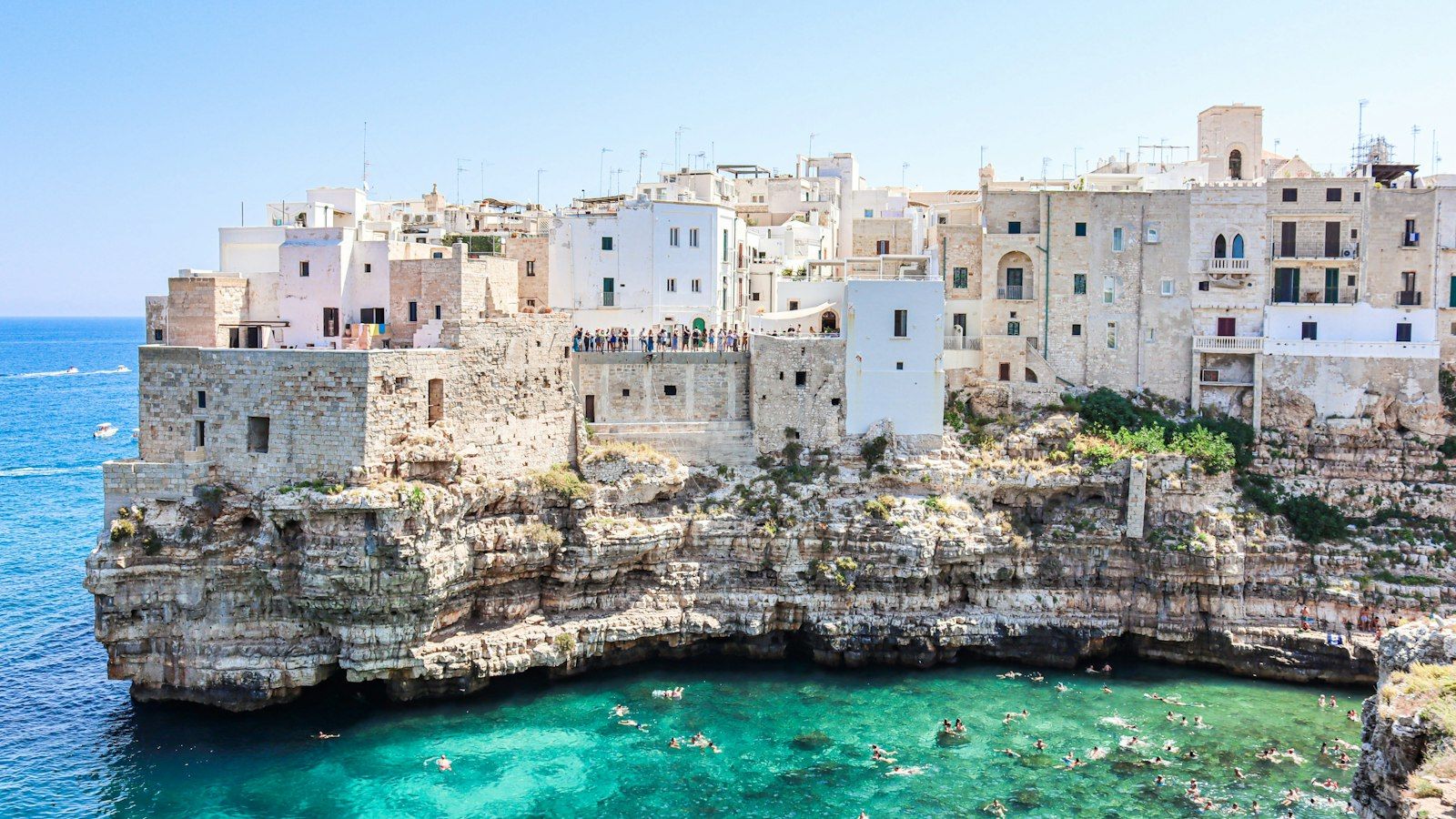
A whitewashed Puglian town on top of limestone cliffs full of sea caves. You can swim in a pebble cove under a Bourbon bridge, and a fast regional train gets you to Bari and Monopoli.
- Best time to visit: May to June and September to early October
- Daily budget (budget traveller): $90 to $280 USD
- Ideal trip length: 4 to 7 days
Polignano a Mare is a town of about 18,000 people on the Adriatic, roughly 33km south-east of Bari. Its old town sits right on the edge of the cliffs. The sea has cut caves into the rock below, and houses and terraces hang over the water. In the middle is Lama Monachile, a small pebble cove at the end of a narrow ravine, crossed by a 19th-century bridge. It is the photo everyone takes, and on a July afternoon it can feel like everyone is in the water too. The town has two famous names: Domenico Modugno, who sang 'Volare' and has a bronze statue on the seafront, and the arte povera artist Pino Pascali, who has a museum in a former slaughterhouse above the sea. The Grotta Palazzese restaurant sits inside one of the caves. Polignano works well for solo travellers. It is small and safe, and you can do it all on foot. It has a station on the main Adriatic line, so Bari, Monopoli and Ostuni are easy day trips without a car. Come in late spring or September for warm water and fewer people. In winter the town is quiet, the wind picks up and many places close.
Polignano a Mare is built on limestone cliffs that the Adriatic has hollowed into caves, and the old town stops right at the edge. Some houses have terraces over a 20-metre drop. The town has about 18,000 residents, one famous cove and a summer crowd much bigger than the town itself. Most visitors come on a day trip from Bari, take the Lama Monachile photo, queue for a fish sandwich and leave. Stay the night and things change. The day trippers leave by evening, the lanes empty out, and early the next morning you can have the cove almost to yourself. Polignano isn't cheap in August, but it isn't a resort either. Bakeries sell focaccia by the slice, panzerotti cost a few euros, and the best things in town, the views and the sea, are free.
Polignano works best as a base. It sits on the main Adriatic railway, so Trenitalia regionals reach Bari in 15 to 45 minutes and Monopoli in about 10, and Ostuni is under an hour south. That covers most of a week without a car. The exception is trulli country. Alberobello and Locorotondo are about half an hour inland by road, but slow by public transport, so that is the one day worth hiring a car or joining a tour. Stay in the Centro Storico for atmosphere, or near Piazza Aldo Moro and the station for lower prices and easy early trains. Polignano is too small to need any transport inside town.
Timing decides the trip. From June to September the sea is warm enough to swim, cave boats run every day, and every terrace is open. August brings crowds and peak prices. September often has the warmest water and hosts the Red Bull Cliff Diving stop in some years (25 to 27 September in 2026). Check the date for your year, as it moves around. Spring is mild and green, but the water is still cool. Winter is quiet and windy, and many seasonal businesses close, including Grotta Palazzese, which only opens from roughly spring to October. Polignano is very safe, English is spoken in most places that deal with visitors, and the pace is easy. Come for the sea, the food and the trains up and down the coast, not for nightlife.
Polignano a Mare itinerary
Arrive, old town and the Modugno sunset
Morning: Fly into Bari (BRI). Take the Ferrotramviaria train to Bari Centrale, then a Trenitalia regional to Polignano a Mare. Drop your bags.
Afternoon: Walk in through the Arco Marchesale to Piazza Vittorio Emanuele II and the Chiesa Matrice. Follow the lanes out to the sea terraces and look for Guido il Flâneur's poems on the steps.
Evening: Walk along Lungomare Domenico Modugno to the statue for sunset over Lama Monachile. Finish with a caffè speciale or gelato at Il Super Mago del Gelo.
Lama Monachile, sea caves and Pino Pascali
Morning: Swim at Lama Monachile before 9am while it is quiet (in season, calm seas only). Breakfast on focaccia from a bakery.
Afternoon: Join a shared cave boat tour (1.5-2 hours, from about €35-45, roughly April to October) under the cliffs and past Grotta Palazzese. Then visit the Fondazione Pino Pascali (Wednesday to Sunday, morning and late afternoon, about €5-10).
Evening: Fish sandwich at Pescaria in Piazza Aldo Moro, then join the passeggiata through the old town.
Coast walk to San Vito, swim at Cala Paura
Morning: Walk or cycle about 3km north along the coast to the Abbazia di San Vito and its fishing harbour. The interior only opens occasionally, so enjoy it from the water's edge.
Afternoon: Back in town, swim off the rocks at Cala Paura, then follow the seafront south towards Port'Alga for a quieter stretch of coast.
Evening: Aperitivo with a sea view, then orecchiette con cime di rapa at a trattoria.
Monopoli by train
Morning: Take the regional train to Monopoli (about 10 minutes). Walk the old port with its blue fishing boats, then the walls and the Castello di Carlo V.
Afternoon: Visit the cathedral, then swim at Cala Porta Vecchia, the small beach under the walls. Panzerotti for lunch.
Evening: Stay for dinner by the port, then catch an evening train back. Check the last departure before you sit down.
Alberobello and Locorotondo
Morning: Pick up a hire car (about 30 minutes' drive) or join a tour. Get to Alberobello's Rione Monti before the tour coaches to see the trulli at their quietest. Without a car, go via Bari on the Ferrovie del Sud Est (about 1.5 hours each way) and check for replacement buses.
Afternoon: Visit the Trullo Sovrano (small fee), then drive to Locorotondo for its white, round old town and views over the Valle d'Itria.
Evening: Stay in Locorotondo for sunset, then drive back to Polignano for a late dinner.
Bari Vecchia and the orecchiette lane
Morning: Train to Bari Centrale. Walk to the Basilica di San Nicola (free) and through Bari Vecchia to the Castello Normanno-Svevo.
Afternoon: Watch the women making orecchiette by hand on Strada Arco Basso and buy a bag to take home. Grab a slice of focaccia at Panificio Fiore, then walk the seafront promenade.
Evening: Stay for an aperitivo in Piazza Mercantile, then take a train back (they run until late evening, but check).
Grotte di Castellana and a last swim
Morning: Drive or take a taxi (about 20 minutes) to the Grotte di Castellana. Choose the short or the full cave route (roughly €18-25, so check times and book ahead in summer).
Afternoon: Back to Polignano for a final swim at Cala Paura or Lama Monachile, and one more caffè speciale.
Evening: Farewell sunset from the Lungomare. Splurge on Grotta Palazzese (in season only, book well ahead) or keep it simple with crudo di mare.
Best neighbourhoods
- Centro Storico: The old town on the cliffs, entered through the Arco Marchesale. It is a tight grid of white lanes with Piazza Vittorio Emanuele II, the Chiesa Matrice, sea-view terraces and B&Bs in old houses. It is the most atmospheric place to stay, but also the busiest and the priciest.
- Lungomare Domenico Modugno: The seafront promenade on the far side of Lama Monachile. The Modugno statue stands here, and it has the classic view back over the cove and the old town, which is best at sunset or first thing in the morning.
- Piazza Aldo Moro and the new town: The everyday side of Polignano, between the old town and the station. Cafés, bakeries, Pescaria and cheaper rooms are all within a 5 to 10 minute walk of the trains, which makes it a practical base for day trips.
- Cala Paura and the southern seafront: A small harbour cove just south-east of the old town, with fishing boats and rocks for swimming. From here a seafront walk heads south towards Port'Alga. It feels quieter and more local than the centre.
- San Vito: A fishing hamlet about 3km up the coast, built around a Benedictine abbey on the water. It is a sleepy spot for a sunset walk or a slower stay if you have a car or a bike.
Must-do experiences
- Swim at Lama Monachile early: Go down to the pebble cove under the Ponte Borbonico before 9am in summer, when it is quiet and the light hits the cliffs. By late morning there is barely space for a towel. Bring water shoes.
- See the sea caves by boat: Take a shared boat tour of 1.5 to 2 hours along the cliffs, passing under the old town, past Grotta Palazzese and into caves you can't reach on foot. Shared tours usually start from about €35 to €45, and most run roughly April to October, depending on the weather.
- Get lost in the Centro Storico: Walk in through the Arco Marchesale and wind through the lanes to the sea-view terraces. Look for the short poems painted on doors and steps by the local street poet Guido il Flâneur.
- Sunset at the Modugno statue: Walk out along Lungomare Domenico Modugno to the bronze statue of the 'Volare' singer, arms wide open to the sea. From here you get the best view back over Lama Monachile and the old town.
- Order a caffè speciale: Il Super Mago del Gelo in Piazza Garibaldi is famous for its caffè speciale, a coffee with lemon zest, sugar, cream and amaretto. Drink it standing at the counter like the regulars.
- Visit the Fondazione Pino Pascali: This contemporary art museum sits in a former slaughterhouse right on the sea. It opens Wednesday to Sunday, morning and late afternoon. Tickets have been listed at €5 to €10, so check the price before you go.
- Walk to the Abbazia di San Vito: Follow the coast about 3km north to the Benedictine abbey above the little fishing harbour of San Vito. In mid-June the patron saint's feast includes a procession by sea.
- Day trip to Monopoli: Take the 10-minute train to Monopoli for its old port full of blue fishing boats, a seafront castle, the cathedral and a town beach right under the walls.
Hidden gems
- The poems by Guido il Flâneur, painted on doorsteps, walls and stairways around the old town, a few lines at a time
- Cala Paura, a small harbour cove south-east of the old town where locals swim off the rocks among the fishing boats
- The Abbazia di San Vito at dusk, when the day trippers have gone and the boats come back into the tiny harbour
- The terrace view from the Fondazione Pino Pascali, where the art shares the space with open sea in every window
- Conversano, a short drive inland, with a Norman castle, a cathedral and almost no foreign tourists
Daily budget
- Accommodation: budget €60-100 / night (B&B single or small room), mid-range €130-220 (boutique hotel or sea-view B&B), splurge €400+ (Grotta Palazzese hotel, masseria stays). Real dorm hostels are rare here, so budget travellers use small B&Bs or stay in Bari. August prices can double. A municipal tourist tax of roughly €1-3+ per person per night applies, capped at 7 nights, and depends on the type of stay, so check what your booking includes.
- Food: budget €25-40 / day (focaccia, panzerotti, Pescaria sandwich, supermarket), mid-range €50-80 (trattoria lunch, seafood dinner), splurge €200-350+ (Grotta Palazzese dinner before wine). Many restaurants add a coperto (cover charge) of about €2-4. A coffee at the bar is cheapest standing up. A Pescaria sandwich costs roughly €10-16. Fixed menus at Grotta Palazzese have been reported from about €200 to over €300 per person, so check before booking.
- Transport: budget €0-10 / day (walking, Trenitalia regionals), mid-range €40-80 (one-day car hire, fuel, parking), splurge €100+ (private transfers or a driver). Bari to Polignano by regional train costs a few euros, and the airport to Polignano by train comes to under about €10. Hire a car only for the trulli or caves day. Avoid ZTL zones in Polignano and other old towns.
- Activities: budget €0-15 / day (beaches, old town, Pascali museum), mid-range €35-60 (shared cave boat tour, Grotte di Castellana), splurge €300+ (private boat for a few hours). Lama Monachile and the viewpoints are free. Shared boat tours start from roughly €35-45, and private boats from about €350 per group. Pascali museum tickets have been listed at €5-10. Grotte di Castellana tickets are roughly €18-25 depending on the route, so check.
- Drinks & nightlife: budget €5-12 (one beer or spritz at a bar), mid-range €20-40 (aperitivo with snacks plus a glass of Primitivo), splurge €60+ (cocktails on a cliff terrace). Nightlife means aperitivo, a passeggiata and late gelato. In summer the old town stays busy until after midnight. Off-season it is very quiet, and Bari has the bars.
Where to stay
- Social hostel in Near Piazza Aldo Moro, Polignano (or central Bari) (€60-100 / night): Polignano has almost no true dorm hostels. The nearest equivalent is a small B&B with a shared breakfast table near the station, or a hostel in Bari, 15 to 45 minutes away by train, if you want dorm prices and company.
- Boutique hotel in Centro Storico and the cliff edge (€130-250 / night): Old-town B&Bs and small hotels such as Covo dei Saraceni put you right above the water, a short walk from Lama Monachile and the evening passeggiata.
- Apartment in New town between Via Roma and the station (€80-160 / night): Self-catering flats give you a kitchen for market produce and burrata, quieter nights and a short walk to the train. They are the best value for stays of four nights or more.
- Splurge in Via Narciso, Centro Storico (€400-1,500+ / night): Hotel Grotta Palazzese sits above the famous cave restaurant, with sea-cliff rooms and dinner in the cave in season. Masseria stays in the countryside near Polignano and Monopoli are the alternative.
What to eat
- Fish sandwiches at Pescaria: a Polignano original, with soft rolls filled with raw or cooked seafood like tuna, octopus or salmon tartare, eaten standing in Piazza Aldo Moro
- Caffè speciale: Il Super Mago del Gelo's coffee with lemon zest, cream and amaretto, a local ritual at any hour
- Orecchiette con cime di rapa: ear-shaped pasta with bitter turnip greens, garlic, chilli and anchovy, the classic dish of the Bari area
- Crudo di mare: raw seafood platters with mussels, prawns, octopus and, in season, sea urchins, served along the coast
- Panzerotti: fried half-moons of dough filled with tomato and mozzarella, the cheapest filling lunch in town
- Focaccia barese: a thick, oily focaccia topped with cherry tomatoes and olives, sold by the slice at bakeries every morning
- Burrata: creamy fresh cheese from the Murgia inland, best with bread, oil and a glass of local Primitivo
Day trips
- Monopoli (About 8km south, around 10 minutes by train): A harbour town with a walled old town, a seafront castle, a baroque cathedral and a small beach under the walls. It is larger and slightly less crowded than Polignano, and good for an evening by the old port. Trenitalia regional train from Polignano a Mare to Monopoli. Trains run often, and a single costs a few euros. Check the last return train in the evening.
- Alberobello and Locorotondo (About 30km inland, roughly 30 to 40 minutes by car): Alberobello's UNESCO-listed trulli, the cone-roofed stone houses of the Itria Valley, plus Locorotondo's round white old town with views over the vineyards. Arrive early to beat the tour coaches. Easiest by hire car or on a tour. By public transport, go via Bari Centrale on the Ferrovie del Sud Est (around 1.5 hours each way), and check for replacement buses, especially on Sundays.
- Ostuni (About 45km south-east, roughly 40 to 55 minutes by train): The 'white city', a hilltop old town of whitewashed lanes, a Gothic cathedral and views across olive groves to the sea. Trenitalia regional train from Polignano to Ostuni. The station is about 2 to 3km below the town, so take the local bus or a taxi up, and check bus times for the return.
When to visit
- Spring (April - May): 15-24°C, mostly sunny, sea still cool at about 16-20°C. Crowds: Moderate, busy over Easter and long weekends. Great for walking, day trips and photos, with long days and fair prices. Boat tours start up again, but swimming is only for the brave until late May.
- Summer (June - August): 26-33°C, dry and sunny, sea about 23-26°C. Crowds: Very heavy in July and August, peak around Ferragosto (15 August). Best for swimming and boat trips, and the town is lively. June is the sweet spot, with the San Vito feast in mid-June. In August, book months ahead, swim at dawn and expect peak prices.
- Early autumn (September - October): 20-28°C, warm sea in September, more wind and rain in late October. Crowds: Moderate, dropping fast after September. Our pick. The sea is still warm, crowds are smaller and prices fall. Check the Red Bull Cliff Diving date for your year, as the town fills up that weekend.
- Winter (November - March): 7-16°C, windy, regular rain, rough seas. Crowds: Very quiet. Cheap, atmospheric and calm, but many restaurants, lidos and boat tours close, and Grotta Palazzese shuts for the season. Spend your time on walks and storm watching, and go to Bari for city life.
Entry rules for your passport
Visa rules for Italy depend on the passport you travel on. Check the official source before you book: European Commission: Schengen visa policy
Getting there
The nearest airport is Bari Karol Wojtyła (BRI), about 40km north-west, with direct flights from much of Europe. Brindisi (BDS) is about 80km south and also connected by train. From Bari airport, Ferrotramviaria trains reach Bari Centrale in about 20 minutes. From there, Trenitalia regionals run to Polignano a Mare often, taking roughly 15 to 45 minutes and costing a few euros. Some Intercity trains also stop at Polignano. Long-distance Frecciarossa and Italo trains connect Bari with Rome, Naples and Milan, and FlixBus stops in Polignano too. A taxi or private transfer from Bari airport takes about 40 minutes, but it is far pricier than the train, so get a quote first. Non-EU visitors should expect biometric registration under the EU Entry/Exit System at their first Schengen entry. ETIAS was not yet in operation in early November 2026, so check the official EU site before you fly.
Border checks: non-EU visitors (other than Swiss, Norwegian, Icelandic, Liechtenstein, Andorran, Monegasque, San Marinese and Vatican citizens, and holders of an EU residence permit or long-stay visa) are registered in the EU's Entry/Exit System (EES) instead of getting a passport stamp. On your first crossing, officers take your photo and/or fingerprints, so allow extra time at passport control. ETIAS, the planned travel authorisation, is not in operation yet, so don't pay any website for one.
Getting around
Polignano is small enough to walk everywhere. The station is about a 10-minute walk from the old town. Trenitalia regional trains on the Adriatic line run often to Bari Centrale (roughly 15 to 45 minutes depending on the train) and south to Monopoli, Ostuni and Brindisi, and single fares within the Bari area cost a few euros. Buy tickets in the Trenitalia app or at the station machines, and validate paper tickets before boarding. Trulli country (Alberobello, Locorotondo) and the Grotte di Castellana are much easier by car or on a tour. Public transport means going through Bari on the Ferrovie del Sud Est, which sometimes runs replacement buses, especially on Sundays. If you hire a car, keep out of the ZTL limited traffic zone around the old town, because cameras issue fines automatically, and expect paid parking. Taxis are limited and are best booked through your accommodation. Train strikes happen now and then, so check the news the day before you travel.
Safety
Polignano is very safe for solo travellers, and violent crime against visitors is rare. In summer the main risks are crowds and the sea. Watch for pickpockets on packed evenings in the old town and at Bari Centrale, and don't leave phones or bags alone on the pebbles at Lama Monachile while you swim. Most swimming is off rocks, so wear water shoes for sea urchins and slippery ledges. When the north wind or a swell picks up, waves break hard against the cliffs, so stay out of the water if locals do. You will see people jumping off the cliffs, but the depths and rocks underneath are not marked, so don't copy them. July and August heat can reach the mid-30s°C. Carry water and plan shade at midday. Off-season the old town gets very quiet at night, but it stays safe. Drivers should watch for the ZTL cameras and for narrow, busy coastal roads.
Solo travel tips
- Stay over, don't day-trip: Polignano changes completely once the day trippers leave. If you sleep here, you get Lama Monachile at dawn and the old town to yourself after 10pm, which is when it is at its best.
- Pick your base by budget: The Centro Storico has the views and the romance. The streets around Piazza Aldo Moro and the station are cheaper and only a 5 to 10 minute walk away, with easy early trains. Solo rooms are scarce in August, so book early.
- Hire a car for one day only: Trains cover Bari, Monopoli and Ostuni. Use a single car day for Alberobello, Locorotondo and the Castellana caves, and park outside the ZTL zones in every old town.
- Eat like a local at lunchtime: Focaccia, panzerotti and a sandwich from Pescaria will feed you for under €20 a day. Then put the savings into one proper seafood dinner. Many kitchens close mid-afternoon and reopen around 7:30pm.
- Respect the sea: Swim only when the water is calm and locals are in it. Wear water shoes, and leave the cliff jumping to the professionals at the Red Bull event. Keep your phone in a dry bag on boat tours.
- Meet people on the water: Shared cave boat tours, kayak trips and food walks in Bari are the easiest ways to meet other travellers here. B&B hosts are a great source of tips, and a few words of Italian go a long way.
Cultural etiquette
- Say 'buongiorno' when you walk into a shop or café and 'buonasera' from late afternoon. A 'grazie' and 'per favore' go a long way.
- Cover up off the beach. Walking through the old town or into churches in swimwear or shirtless is frowned upon. Cover your shoulders and knees in the Chiesa Matrice and Bari's Basilica di San Nicola.
- Respect riposo. Many shops close from about 1pm to 4:30 or 5pm, and dinner rarely starts before 8pm.
- Coffee is drunk standing at the bar, and it costs less that way. Locals rarely order cappuccino after the morning.
- The old town is home to real people. Keep your voice down in the lanes late at night and don't sit on private doorsteps for photos.
- Ask before photographing the orecchiette makers in Bari, and buying a bag of pasta is the polite thing to do.
- The coperto (cover charge) on a restaurant bill is normal, not a scam. Tipping is optional, so round up for good service.
Frequently asked questions
How do I get from Bari airport to Polignano a Mare?
Take the Ferrotramviaria train from Bari Karol Wojtyła airport to Bari Centrale (about 20 minutes), then a Trenitalia regional train to Polignano a Mare (about 15 to 45 minutes). The whole trip is usually around 1 to 1.5 hours with the connection and costs roughly €8 to €10 in total, so check current fares. A taxi or pre-booked transfer takes about 40 minutes and costs much more. Ask your accommodation for a quote.
How many days do I need in Polignano a Mare?
Two days covers the town itself: Lama Monachile, the old town, a cave boat tour and the Pascali museum. Four to seven days lets you use Polignano as a base for Monopoli, Bari, Alberobello and Ostuni, which are all an easy day trip away.
When is the best time to visit Polignano a Mare?
Late May to June and September to early October are best, with warm sea, long days and fewer people than in high summer. July and August are hot and very crowded, especially around Ferragosto on 15 August. From November to March the town is quiet and windy, and many restaurants, lidos and boat tours close.
Can I swim at Lama Monachile?
Yes. It is a free public pebble cove with no facilities. It is tiny and gets packed from late morning in summer, so go early and bring water shoes. On rough days, waves come straight into the cove, so only swim when the sea is calm and locals are in the water.
Do I need a car in Polignano a Mare?
Not for the town, Bari, Monopoli or Ostuni, which are all on the train line. A car makes Alberobello, Locorotondo and the Grotte di Castellana much easier. Hiring one for a single day is the best value for a solo traveller. Avoid driving into the old town's ZTL limited traffic zone.
Is Polignano a Mare worth visiting in winter?
It can be, if you want quiet lanes, cheap rooms and big seas crashing against the cliffs. Swimming, boat tours and the Grotta Palazzese restaurant are off the table, and some cafés and B&Bs close. Bari stays lively all year and is a short train ride away.
Is Polignano a Mare safe for solo female travellers?
Yes. It is small, friendly and busy with families and couples in season. Normal precautions apply: watch your drink at bars, take care on dark cliff paths at night, and keep valuables close in summer crowds and at Bari Centrale.
What entry rules apply to travellers visiting Italy in 2026?
Italy is in the Schengen Area. Many non-EU nationalities can visit without a visa for up to 90 days in any 180-day period. The EU Entry/Exit System is now in use, so expect your fingerprints and face to be recorded at your first entry. ETIAS, the new pre-travel authorisation for visa-exempt travellers, was not yet live in early November 2026, and no launch date had been announced. Rules change, so always confirm on official government sites, such as the Italian Ministry of Foreign Affairs visa portal and the EU's official travel-europe website, plus your own government's travel advice, before you book.
More about Polignano a Mare
Tours and activities in Polignano a Mare | Polignano a Mare in 2 days | Polignano a Mare in 3 days | Polignano a Mare in 4 days | Polignano a Mare in 5 days | Polignano a Mare in 7 days
Joy Plus home | Destinations | Itineraries | Activities | Flights | Budget planner | Calendar | Map | Blog | Lifetime access