Destinations / Europe
Ponta Delgada (Azores), Portugal travel guide
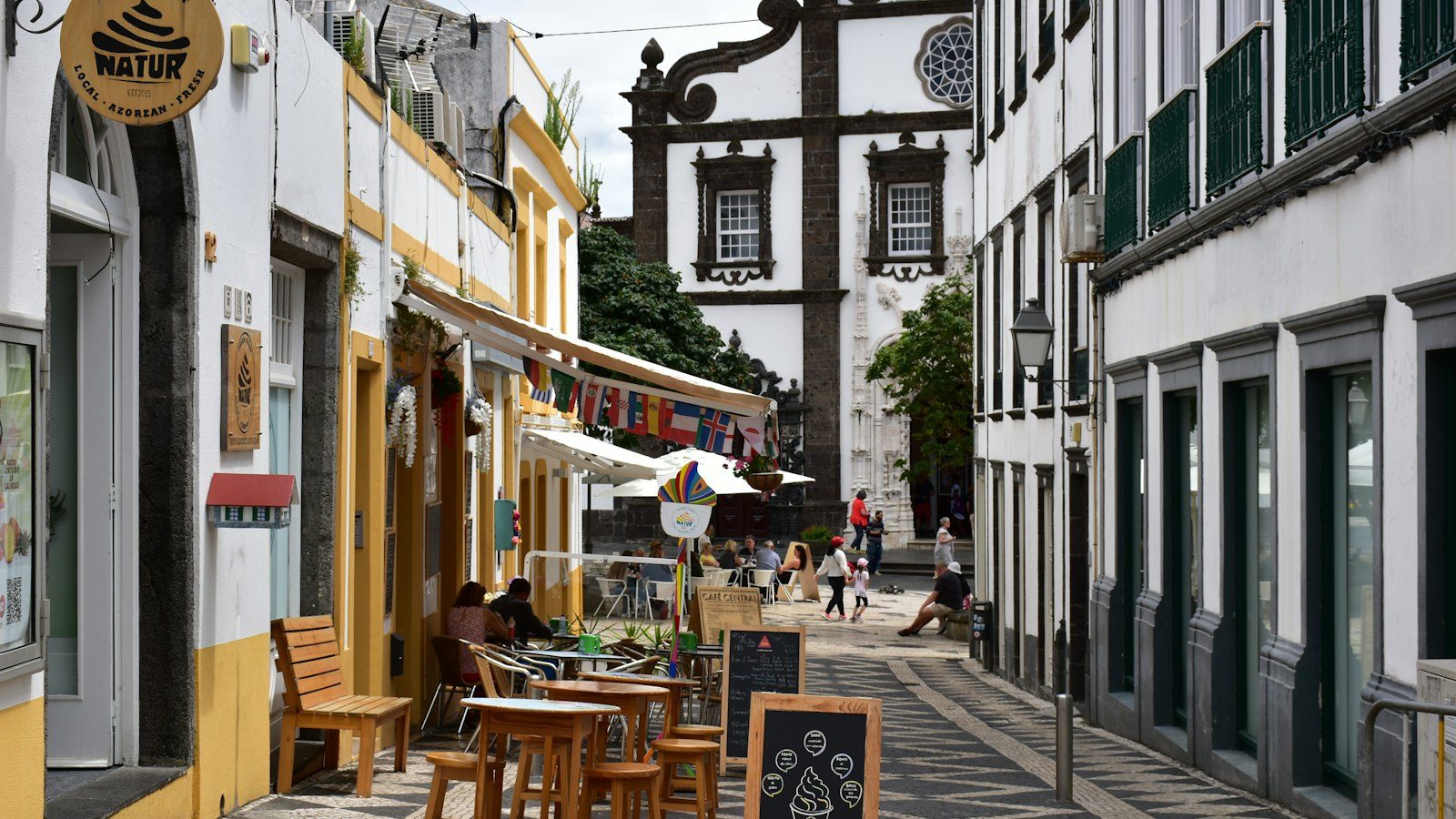
The capital of São Miguel, the largest island in the Azores, sits on a basalt and whitewashed harbour in the middle of the Atlantic. You walk black-and-white cobbled streets in the morning, look down into crater lakes in the afternoon and soak in iron-rich hot springs after dark.
- Best time to visit: June to September
- Daily budget (budget traveller): $70 to $215 USD
- Ideal trip length: 4 to 7 days
Ponta Delgada is the main town of São Miguel, the biggest island in the Azores, about two and a half hours by plane from Lisbon. It is a working port town of around 68,000 people, built in dark volcanic stone and white plaster. The streets are paved in black-and-white Portuguese mosaic and lead down to a long seafront avenue. The old centre is compact and flat enough to cross on foot in 20 minutes. The town itself is pleasant rather than spectacular. Most people come for what surrounds it: the twin crater lakes at Sete Cidades, the steaming valley and hot springs of Furnas, the wild lake at Lagoa do Fogo and the whales and dolphins offshore. Ponta Delgada is the best base for all of it. It has the airport, the bus hub, the whale-watching boats and the widest choice of cheap beds and cafés. The weather changes fast, the hills are often in cloud and buses to the best sights run only a few times a day, so a solo trip here works best with some planning or a few days of car hire. Hostel beds, cheap fresh fish and free viewpoints keep costs down, and the island is calm, friendly and easy to explore alone.
Ponta Delgada has been the main town of the Azores since the 16th century, when it replaced the earthquake-damaged Vila Franca do Campo as the island capital. Its wealth came from oranges, then tea and pineapples, and you can still see it in the churches, convents and grand townhouses of dark basalt and white plaster. The town is not trying hard to impress. Fishermen and office workers share the cafés, and the seafront feels more like a working port than a resort. Most visitors treat it as a base, which is what it does best. Within an hour's drive are crater lakes, tea plantations, geothermal valleys and Atlantic cliffs. Stay a few nights and you can fit your trips around the weather, eat cheaply at the market and walk the mosaic streets in the evening when the cruise passengers have gone.
Getting here means flying. TAP and Azores Airlines connect Lisbon with Ponta Delgada several times a day, and there are flights from Porto, seasonal routes from other European cities and direct flights from North America. Ryanair ended its Azores routes in March 2026, so budget for higher fares and book well ahead for summer. Once you are here, the town is walkable, and AzoresBus lines run around the island from stops on the seafront. Buses are cheap but infrequent, so the usual solo approach is a few days on foot and by bus, then two or three days of car hire for Sete Cidades, Lagoa do Fogo and the east. Base yourself in the historic centre for buses and restaurants, or near the marina for whale-watching mornings.
The weather shapes everything here. The Azores have a mild, wet, changeable climate. It rarely gets really hot or cold, but cloud sits on the mountains for days, and you can get four seasons in an afternoon. June to September is the most reliable, with sea temperatures warm enough to swim, the Lagoa do Fogo shuttle running and summer boats to the Vila Franca islet. Winter is cheap and green but wet, and some trails get muddy. Whatever the month, keep your plans flexible: if the morning is clear, head for the crater lakes, and save Furnas, the museums and the hot springs for grey days. The island is safe, friendly and easy to explore on your own, and the evening soak in a hot spring is hard to beat.
Ponta Delgada (Azores) itinerary
Arrive and walk the old town
Morning: Fly in and take a taxi into the centre (about €10-15). Drop your bag and get a coffee and a pastry near the Portas da Cidade.
Afternoon: Walk the mosaic streets to the Igreja Matriz, the Mercado da Graça and the Jardim António Borges. Book your whale-watching trip and a Poça da Dona Beija slot.
Evening: Watch the boats at Portas do Mar at sunset, then have grilled limpets and fish at a tasca in the centre.
Sete Cidades crater lakes
Morning: Check the webcam. If it is clear, drive or take a tour up to Vista do Rei and Boca do Inferno early, before the cloud arrives.
Afternoon: Walk the forest path to Lagoa do Canário and down to Sete Cidades village. Have a picnic by the lake, or walk around part of it.
Evening: Back in town for a simple dinner. On a bus day, check the return time carefully, as there are few services.
Furnas valley and hot springs
Morning: Take an early bus or drive to Furnas (about 1 hour 30 minutes by bus, 45 minutes by car). See the steaming caldeiras by the village and the lake.
Afternoon: Lunch on cozido das Furnas, then walk the Terra Nostra gardens and swim in the thermal pool (€17). Wear an old dark swimsuit.
Evening: If you have a car or are staying over, soak at Poça da Dona Beija after dark (€16 from 18:00). Otherwise, go in the afternoon and catch the bus back.
Whales and pineapples
Morning: Join a half-day whale and dolphin trip from Portas do Mar (about €65-70). Bring a windproof jacket and seasickness tablets.
Afternoon: Walk or take a short taxi to the Arruda pineapple plantation to see the old glasshouses. Then visit the Carlos Machado Museum if it is open.
Evening: Have a drink on the marina and a relaxed dinner in São Pedro.
Lagoa do Fogo and the north coast
Morning: Drive up to Lagoa do Fogo before 9:00, or take the summer shuttle from the parking hubs. Walk down to the lake shore if the path is open.
Afternoon: Bathe in the warm waterfall pools at Caldeira Velha, then walk around Ribeira Grande, the north coast's main town.
Evening: Return to Ponta Delgada over the mountain road and have dinner in the old centre.
Tea plantations and the wild east
Morning: Drive along the north coast to Gorreana. Visit the tea factory, taste the tea and walk between the tea bushes for free.
Afternoon: Continue east to Nordeste and the Ponta do Sossego and Ponta da Madrugada viewpoints, with gardens above the sea.
Evening: Return along the south coast via Povoação and Vila Franca do Campo. Buy queijadas for the road.
Vila Franca and depart
Morning: Take the bus to Vila Franca do Campo. In summer, catch a boat out to the islet's round crater lagoon for a swim. Check numbers and times in advance.
Afternoon: Have lunch in Vila Franca and head back to Ponta Delgada. Pick up tea, cheese or pineapple jam for home.
Evening: Head to the airport, which is only 10 to 15 minutes from the centre, or stay for one last sunset at Portas do Mar.
Best neighbourhoods
- Historic centre and São Sebastião: The streets around the Portas da Cidade, the three-arched city gate, and the Igreja Matriz. Here you have most of the cafés, small restaurants, shops and the main bus stops on the seafront. It is the most convenient base for a first visit, and almost everything is within a 10-minute walk.
- Avenida and Portas do Mar: The long seafront avenue, Avenida Infante Dom Henrique, and the modern marina complex at Portas do Mar. This is where the whale-watching companies, the sea pool and many bars are. Rooms facing the water cost more, and cruise ship days bring crowds.
- São Pedro and the east end: A quieter residential area east of the centre, around the São Pedro church and the slope above the marina. It has guesthouses, apartments and a few good local restaurants. It is a 10 to 15-minute walk to the old centre and handy for the road east to Lagoa and Furnas.
- São José and the west end: The area around the Forte de São Brás and the Jardim António Borges, west of the centre. It is mostly residential, with mid-range hotels and apartments, and is slightly closer to the airport. Evenings are quiet, and the seafront walk into town takes about 15 minutes.
- Furnas: A volcanic spa village about 45 minutes' drive east, with the Terra Nostra gardens, Poça da Dona Beija and the steaming caldeiras. Staying a night here lets you soak after the day trippers leave. It is very quiet in the evening, and buses back to town are infrequent.
Must-do experiences
- Look down on Sete Cidades: Go up to the Vista do Rei and Boca do Inferno viewpoints over the blue and green crater lakes on the west of the island. The views are free but depend on the weather. Check a webcam before you set off and go early, before the cloud builds.
- Soak at Poça da Dona Beija: These stone-edged thermal pools in Furnas stay open late, with the last entry at 21:30. Tickets are €12 until 17:30 and €16 in the evening, for a 90-minute session. Book online, as evening slots sell out in summer.
- Swim in the Terra Nostra pool: The big orange-brown thermal pool sits inside a 12-hectare garden in Furnas. Adult entry is €17 and includes the gardens, the pool and the smaller jacuzzis. Wear an old dark swimsuit, because the iron in the water stains.
- Go whale and dolphin watching: Boats leave from the Portas do Mar marina all year round, weather permitting. A half-day trip with a marine biologist costs around €65-70 with operators such as Futurismo and Picos de Aventura. Book for your first few days so that you can rebook if the sea is too rough.
- See Lagoa do Fogo: A wild lake in an old crater in the middle of the island, with no buildings around it. From mid-June to the end of September, the road is shuttle-only between 9:00 and 19:00, with all-day tickets from about €5. Arrive before 9:00 by car or walk up the trail.
- Walk the old town: Start at the Portas da Cidade, look into the Igreja Matriz with its carved stone doorway and wander the mosaic lanes to the Mercado da Graça. Finish at the Forte de São Brás on the seafront. It is free, flat and best on a rainy day between island trips.
- Drink tea at Gorreana: Gorreana, on the north coast, is one of the oldest tea plantations in Europe, still growing tea since the 19th century. Visiting the factory and tasting the tea are free. Walk the short trail through the rows of tea bushes for views of the sea.
Hidden gems
- The Arruda pineapple plantation on the edge of town, where pineapples are still grown in whitewashed glasshouses and you can visit for free
- Jardim António Borges, a 19th-century garden with huge trees, grottoes and tunnels a few minutes from the centre, usually almost empty
- The Mercado da Graça in the morning, when locals buy fish, cheese, passion fruit and bolo lêvedo, and you can eat cheaply at the stalls
- Lagoa do Canário and the Grota do Inferno viewpoint above Sete Cidades, a short forest walk away from the main viewpoint crowds
- The seafront sea pool at Pópulo beach east of town, a quiet local swim on a sunny afternoon
Daily budget
- Accommodation: budget €25-45 / night (hostel dorm), mid-range €90-150 (guesthouse or 3-star hotel), splurge €220+ (design hotel with sea views). Prices peak from July to September. A municipal tourist tax of €2 per night is added, for up to seven nights. Single rooms are scarce in summer, so book early.
- Food: budget €20-30 / day (bakery breakfast, market lunch, supermarket picnic), mid-range €40-60 (café lunch and a fish dinner), splurge €80+ (seafood dinner with wine). A prato do dia (dish of the day) at a local tasca costs about €9-13. Cozido das Furnas runs €15-25. Bread and starters put on the table are charged if you eat them.
- Transport: budget €0-10 / day (walking and AzoresBus), mid-range €35-60 (small hire car plus fuel), splurge €90-100+ (full-day shared jeep or van tour). An airport taxi is roughly €10-15. Hire cars cost much more in summer, so book ahead. The Lagoa do Fogo shuttle is from about €5.
- Activities: budget €0-15 / day (viewpoints, walks, Gorreana, Poça da Dona Beija at €12), mid-range €17-30 (Terra Nostra at €17, museums), splurge €65-120 (whale watching, canyoning, guided tours). Most viewpoints, trails and the tea factory are free. Book Poça da Dona Beija online, where it costs €16 after 18:00. Whale-watching trips are about €65-70.
- Drinks & nightlife: budget €5-10 (a beer or glass of wine at a café), mid-range €15-30 (a few drinks at a marina bar), splurge €45+ (cocktails at a rooftop bar). A coffee costs about €1-1.50 and a local beer €2-3. Nightlife is low-key, with bars along the seafront and in the old centre, especially at weekends.
Where to stay
- Social hostel in Historic centre (€25-45 / night (dorm)): There are several small hostels in the old town, including the Pousada de Juventude youth hostel. Their common rooms make it easy to find people to share a hire car or a tour. They are close to the bus stops and the seafront.
- Boutique hotel in Historic centre (€100-180 / night): Small hotels such as the Talisman occupy old townhouses in the centre, a few minutes from the Portas da Cidade. They put you within walking distance of restaurants, the market and the whale-watching boats.
- Apartment in São Pedro and the east end (€70-130 / night): Apartments in quieter residential streets come with a kitchen, which saves money if you shop at the market. Many have parking, which is useful on car-hire days.
- Splurge in Seafront west of the centre (€200-400+ / night): Octant Ponta Delgada is a modern hotel on the seafront with pools and Atlantic views. It is near the airport and easy to reach by car or taxi, and it makes a comfortable base for exploring the island.
What to eat
- Cozido das Furnas: a meat and vegetable stew slow-cooked for hours in the volcanic ground at Furnas, usually €15-25 at village restaurants
- Lapas: grilled limpets with garlic butter and lemon, served in a hot pan in most seafood places, including A Tasca in the centre
- Fresh fish and octopus: grilled boca negra, chicharro or octopus, priced simply at local tascas. Ask whether whole fish is priced by the kilo
- Bolo lêvedo: a sweet, flat muffin from Furnas, eaten for breakfast with butter or used as a burger bun
- Queijadas de Vila Franca: small, rich cheesecakes from Vila Franca do Campo, and Azorean pineapple, which is sweeter than imported fruit
- Gorreana tea, São Jorge cheese, local Especial beer and Kima passion fruit soda, all cheap in supermarkets and cafés
Day trips
- Sete Cidades (About 25km west of Ponta Delgada, 30 to 40 minutes by car or about 1.5 hours by bus): Twin blue and green lakes in a huge crater, with the Vista do Rei and Boca do Inferno viewpoints, forest walks and a small village on the shore. It is the classic São Miguel view. Drive or join a shared tour. AzoresBus lines 205, 206 and 208 reach the village, but services are few, so check return times before you set off. Go on a clear morning.
- Furnas (About 30km east, 45 minutes by car or about 1.5 hours by bus): A volcanic valley with steaming fumaroles, cozido cooked in the ground, the Terra Nostra garden and pool (€17) and Poça da Dona Beija (€12, or €16 after 18:00). AzoresBus lines 110 and 318 run from Ponta Delgada a few times a day, so take an early bus. Drive if you want an evening soak, or stay the night in Furnas.
- Vila Franca do Campo and the islet (About 25km east along the south coast, 30 minutes by car): The island's first capital, known for its queijadas. Offshore lies a small volcanic islet with an almost round, swimmable lagoon inside. The islet is a protected area. Take the AzoresBus line 315 or drive. Boats to the islet run in summer only, and visitor numbers are limited, so check times and book ahead.
When to visit
- Spring (March - May): 15-20°C, mild with frequent showers, sea around 16-17°C. Crowds: Low to moderate, busier at Easter. Green and cheap, with good whale watching as blue and fin whales pass through. Pack for rain and expect some cloudy viewpoints.
- Early summer (June): 19-23°C, more settled, sea around 19-20°C. Crowds: Moderate. A good month. Hydrangeas start to flower along the roads, days are long, and the Lagoa do Fogo shuttle begins in mid-June. Rooms are cheaper than in August.
- High summer (July - September): 22-27°C, warm and humid, sea up to about 23-24°C. Crowds: Busy, especially in August. The most reliable weather and the best swimming, plus Vila Franca islet boats. Rooms and rental cars cost the most, so book early. September is calmer and still warm.
- Autumn and winter (October - February): 14-20°C, wet and windy, with Atlantic storms. Crowds: Quiet. Cheap and peaceful, and hot springs feel even better in the rain. Views often disappear into cloud and some boat trips are cancelled, so allow spare days.
Entry rules for your passport
Visa rules for Portugal depend on the passport you travel on. Check the official source before you book: European Commission: Schengen visa policy
Getting there
Ponta Delgada's João Paulo II airport (PDL) handles almost all flights to the Azores. TAP Air Portugal and Azores Airlines fly from Lisbon several times a day in about two and a half hours, and Azores Airlines also flies from Porto. There are seasonal direct flights from other European cities, plus routes from Boston, Toronto and other North American cities. Ryanair ended all its Azores flights on 29 March 2026, so cheap fares are rarer than before. Book early and compare TAP and Azores Airlines. The airport is about 2km west of the centre. A taxi takes around 10 minutes and costs about €10-15, and a bus runs into town for a few euros, with limited services. Inter-island flights with SATA Air Açores connect Ponta Delgada with the other eight islands. Seasonal Atlânticoline ferries run in summer, but timetables are limited. If you hire a car, collect it at the airport and book well ahead for July and August.
Border checks: non-EU visitors (other than Swiss, Norwegian, Icelandic, Liechtenstein, Andorran, Monegasque, San Marinese and Vatican citizens, and holders of an EU residence permit or long-stay visa) are registered in the EU's Entry/Exit System (EES) instead of getting a passport stamp. On your first crossing, officers take your photo and/or fingerprints, so allow extra time at passport control. ETIAS, the planned travel authorisation, is not in operation yet, so don't pay any website for one.
Getting around
The centre of Ponta Delgada is easy to walk, and the old town, the seafront and the marina are all within 15 minutes of each other. The airport is about 2km west of the centre. A taxi costs roughly €10-15, and a bus runs into town for a few euros, though not late at night. Small city minibuses cover the main town routes cheaply. Around the island, the AzoresBus network links Ponta Delgada with Furnas, Sete Cidades, Ribeira Grande, Vila Franca do Campo and Nordeste. Lines 110 and 318 run to Furnas and lines 205, 206 and 208 to Sete Cidades. Some routes have only one or two useful buses a day, so check times on azoresbus.pt or the app the night before, and look at the 3 or 5-day tourist passes. Renting a car for two or three days is the easiest way to reach viewpoints, lakes and trailheads. Book early for summer and expect narrow, winding roads. From mid-June to September, Lagoa do Fogo is shuttle-only during the day. Taxis are useful for one-way hike pick-ups, and shared tours fill the gaps if you do not drive.
Safety
Ponta Delgada is very safe, and crime against visitors is rare. Watch your bag on cruise ship days and lock valuables out of sight in hire cars at viewpoints. The real risks are the weather and the sea. Fog can roll in quickly in the mountains, so stay on marked trails, carry a rain layer and tell someone where you are walking. Do not swim in rough Atlantic surf, and use guarded beaches or sea pools in summer. Volcanic rock is sharp and slippery. Thermal pools are hot, so limit long soaks, drink water and remove silver jewellery, which can discolour. Tap water is safe to drink. The emergency number is 112. EU travellers should carry an EHIC and UK travellers a GHIC, and everyone else needs travel insurance with medical cover. Make sure it includes hiking.
Solo travel tips
- Stay central, rent a car later: Stay in the old centre, near the bus stops and restaurants. Spend a few days on foot and by bus, then hire a car for two or three days for Sete Cidades, Lagoa do Fogo and the east.
- Chase the clear mornings: Cloud often covers the crater lakes. Check a webcam at breakfast. If the lakes are clear, go there first, and keep Furnas, hot springs and museums for grey days.
- Book the timed things early: Poça da Dona Beija sells timed tickets online and the evening slots sell out. Book whale watching for early in your stay, so a rough-sea cancellation can be moved.
- Eat the dish of the day: Local tascas serve a prato do dia at lunch for around €9-13. Have that as your main meal, and keep dinner simple with market cheese, bread and fruit.
- Safety for solo travellers: The town is very safe. The main risks are fog on trails, slippery rocks and strong surf. Tell someone your hiking route, carry a rain layer and only swim at guarded beaches or sea pools.
- Meet people on tours and in hostels: Whale-watching boats, shared jeep tours and canyoning trips put you with other travellers for a few hours. Hostel common rooms and the marina bars at sunset are easy places to find a hiking or car-sharing partner.
Cultural etiquette
- Greet people with 'bom dia' (good morning) or 'boa tarde' (good afternoon), and say 'obrigado' if you are a man or 'obrigada' if you are a woman.
- Azoreans are polite and fairly reserved. Speak quietly in churches and small cafés, and do not try Spanish first. A few words of Portuguese go a long way.
- Cover your shoulders in churches, and do not walk around town in swimwear.
- Bread, butter, cheese or olives put on the table before your meal are charged if you eat them. Send them back if you do not want them.
- Stay on marked trails and leave gates as you find them. Much of the land is farmland, and cows have right of way on rural roads.
- Do not stop on narrow roads for photos. Use the viewpoint car parks, and never drive off-road near crater rims.
- Tipping is not expected. Rounding up or leaving 5 to 10% for good table service is appreciated.
Frequently asked questions
How do I get to Ponta Delgada and from the airport into town?
Fly to Ponta Delgada airport (PDL), the main airport in the Azores. TAP and Azores Airlines fly from Lisbon several times a day in about two and a half hours, and Azores Airlines also flies from Porto. There are seasonal flights from other European cities and direct routes from North America. Ryanair stopped flying to the Azores in March 2026, so fares are higher than they used to be and booking early helps. The airport is about 2km from the centre. A taxi costs roughly €10-15, and there is a bus for a few euros, though it is not much use for late arrivals.
How many days do I need in Ponta Delgada?
Three days covers the town, Sete Cidades and Furnas. Five days adds whale watching, Lagoa do Fogo and the tea plantations, and gives you spare days for bad weather. A week lets you slow down, add Vila Franca do Campo and the far east of the island and wait for clear skies over the crater lakes.
When is the best time to visit Ponta Delgada?
June to September brings the warmest sea, the most reliable weather and the full range of boat trips and shuttles. July and August are the busiest and most expensive. April, May and October are cheaper and quieter, with more rain. Winter is mild, rarely below 12°C, but wet and windy, and views in the mountains are often hidden by cloud. The weather changes quickly in any season.
Do I need a car on São Miguel?
Not for Ponta Delgada itself, but a car makes the rest of the island much easier. Buses reach Furnas, Sete Cidades and Ribeira Grande, but some routes have only one or two useful services a day. A good plan for solo travellers is to spend a few days on foot and by bus, then rent a car for two or three days. If you do not drive, shared day tours to Sete Cidades and Furnas are a reasonable alternative.
How do I visit Lagoa do Fogo in summer?
From mid-June to the end of September, private cars cannot use the road to the viewpoints between 9:00 and 19:00. You park at the edge and take a hop-on, hop-off shuttle. Tickets cost from about €5 and can be bought online or on board. Check the current price. You can also drive up before 9:00 when it is quieter or walk up from the south coast. Check a webcam first, because the lake is often in cloud.
Can I see whales all year round?
Yes. Boats leave Ponta Delgada all year round, weather permitting. Sperm whales and common dolphins are seen in most months, and spring is best for migrating blue and fin whales. Half-day trips cost about €65-70. Trips are cancelled in rough seas, so book early in your stay to leave time to rebook.
Is Ponta Delgada safe for solo female travellers?
Yes. It is a calm, friendly town with little crime, and the centre is busy and well lit in the evening. The bigger risks are outdoors: hiking alone in fog, slippery trails and strong sea currents. Share your hiking plans, stick to marked routes, take normal care with drinks in bars and use taxis for late returns from Furnas.
What entry rules apply to Portugal in 2026?
The Azores are part of Portugal, so EU and Schengen rules apply. Many non-EU visitors, including those from the UK, US, Canada and Australia, can stay visa-free for up to 90 days in any 180-day period across Schengen. The EU's Entry/Exit System now records non-EU travellers' fingerprints and photos at the external border, and the ETIAS travel authorisation is due to follow, so check whether it has started. Flights from Lisbon are domestic, but keep your passport with you. Confirm the rules on official EU and Portuguese government websites.
More about Ponta Delgada (Azores)
- What To Do in Lisbon for 7 Days: Itinerary with Sintra, Cascais and Évora
- Hidden Gems in Lisbon: Quiet Viewpoints, Museums, Gardens and Markets
Tours and activities in Ponta Delgada (Azores) | Ponta Delgada (Azores) in 2 days | Ponta Delgada (Azores) in 3 days | Ponta Delgada (Azores) in 4 days | Ponta Delgada (Azores) in 5 days | Ponta Delgada (Azores) in 7 days
Can't decide? Compare Ponta Delgada (Azores) with...
Joy Plus home | Destinations | Itineraries | Activities | Flights | Budget planner | Calendar | Map | Blog | Lifetime access