Destinations / Europe
Porto, Portugal travel guide
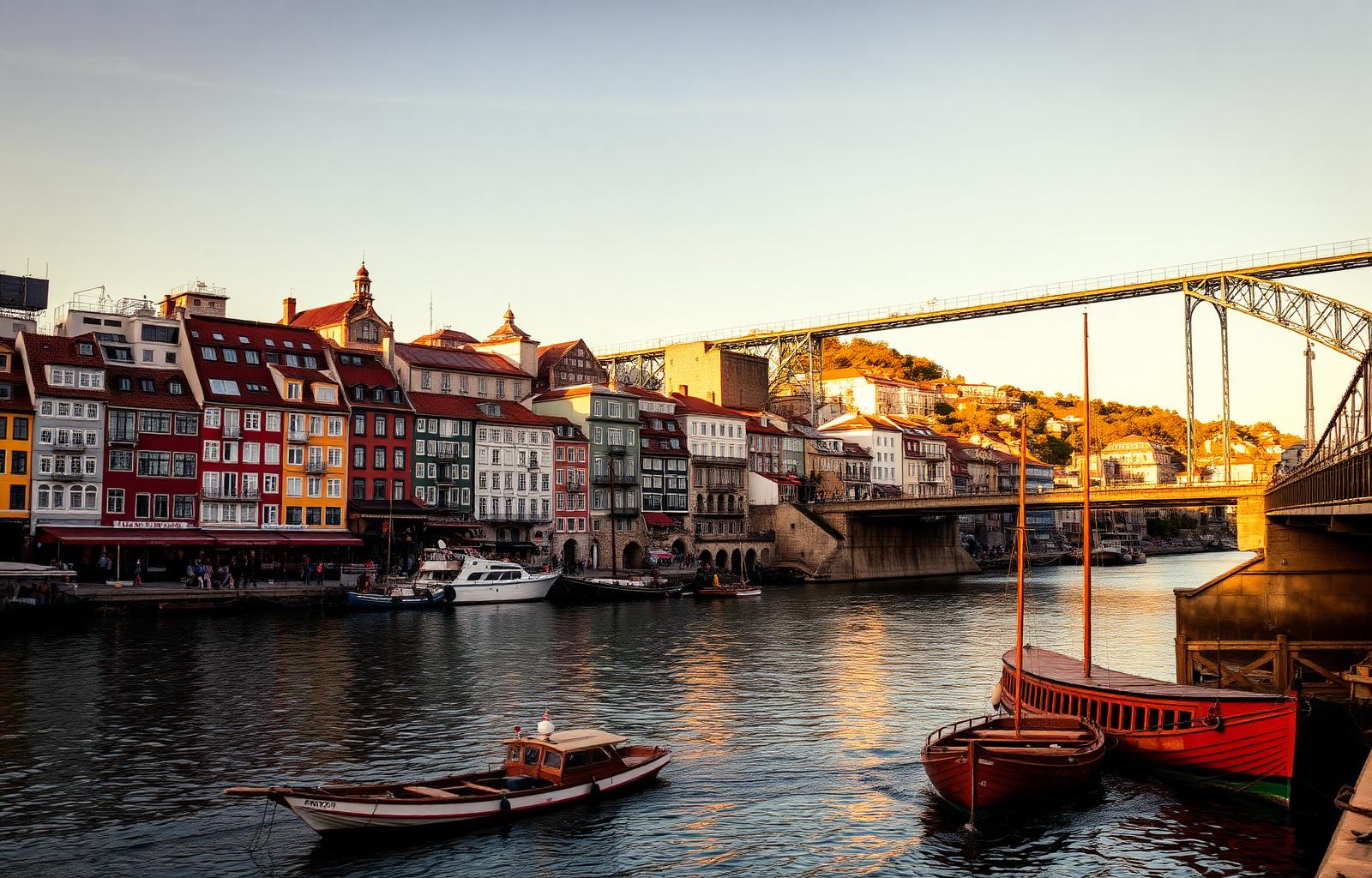
Lisbon's moodier, riverside little brother. Smaller, cheaper, arguably tastier.
- Best time to visit: May-June and September-October
- Daily budget (budget traveller): $60 to $100 USD
- Ideal trip length: 3 to 4 days
Porto is the kind of city you plan to visit for two days and end up extending. The Douro river splits it in half, the port wine cellars line one bank, and the steep granite streets do all the work your gym usually does. Joy Plus stitches the riverside walks, port-tasting slots and Foz beach trams into a clean 3-day plan.
Porto is the city you book for two nights and then quietly extend. The Douro cuts it in half, the granite houses stack up the hillsides in tile and laundry, and every street seems to slope toward a river view you didn't plan on. It is smaller and cheaper than Lisbon and moodier too. The Atlantic fog rolls in, the cafés steam up, and a francesinha arrives swimming in beer sauce at 1pm. It rewards walking and long lunches, and it punishes smooth-soled shoes.
The geography is simple once you see it. Ribeira and Baixa sit on the north bank, with São Bento station, Livraria Lello and the Clérigos Tower all within ten minutes of each other. Across the Dom Luís I bridge is Vila Nova de Gaia, where the port lodges (Graham's, Taylor's, Sandeman, Cálem) age wine in the cellars they have used for centuries. Cedofeita and Bonfim cover the creative and local sides of the city. Foz do Douro is a vintage tram ride west, where the river finally gives up and becomes the Atlantic.
Eating here is half the reason to come. Expect €9 to €12 lunch menus with wine, bifanas at a marble counter, grilled fish in Matosinhos and a glass of white port with tonic at sunset on Jardim do Morro. Three days covers the city properly. Add a fourth for the Douro Valley, a train or driver ride to terraced vineyards that is the best day trip in northern Portugal. Bring grippy shoes and a rain shell, because Porto gets more rain than Lisbon and the calçada does not forgive.
How many days in Porto?
For Porto, we recommend 3 to 4 days. With more time, add a day trip to Guimarães or Aveiro.
| Trip length | What you'll see | Itinerary |
|---|---|---|
| 2 days | São Bento and the Ribeira; Baixa classics and Jardim do Morro | Porto in 2 days |
| 3 days · Recommended | Adds: Gaia port lodges and the river | Porto in 3 days |
| 4 days · Recommended | Adds: Douro Valley day trip | Porto in 4 days |
| 5 days | Adds: Foz do Douro and Matosinhos | Porto in 5 days |
| 7 days | Adds: Cedofeita, galleries and Serralves; Bolhão, Bonfim | Porto in 7 days |
Porto itinerary
Arrive, São Bento and the Ribeira
Morning: Land at OPO, metro Line E (violet) to Trindade, then Line D two stops to São Bento. Drop bags, coffee (a cimbalino, as Porto calls an espresso) at Café Majestic or a local pastelaria.
Afternoon: Walk through São Bento station to see the azulejo panels. Wander down Rua das Flores to the Igreja de São Francisco and the Ribeira waterfront.
Evening: Dinner at Cantina 32 on Rua das Flores. Cross the lower deck of Dom Luís I for a night view of the Ribeira. Early night, tomorrow is hills.
Baixa classics and Jardim do Morro
Morning: Livraria Lello at 9am opening (around €10, redeemable on a book), then climb the Torre dos Clérigos for the 360° view before the groups arrive.
Afternoon: Lunch at Conga for a bifana or Casa Guedes for the pork sandwich on Praça dos Poveiros. Then the Palácio da Bolsa guided tour (about €12-14).
Evening: Walk to Jardim do Morro in Gaia for sunset, with a glass of white port and tonic. Dinner at Taberna dos Mercadores in Ribeira.
Gaia port lodges and the river
Morning: Cross the top deck of Dom Luís I (or take the metro D line over it). Graham's or Taylor's lodge tour and tasting, book ahead for the 11am slot (about €20-35).
Afternoon: Lunch at Mercado Beira-Rio food hall in Gaia. Smaller house Ramos Pinto or Cálem for a second flight. Ride the Teleférico de Gaia back up for the views.
Evening: Six Bridges river cruise (around €18-20) at golden hour, then dinner in Bonfim. Try a tasca on Rua do Heroísmo.
Douro Valley day trip
Morning: 8:20am train from São Bento to Pinhão (about 2h30, the line hugs the river). From 3 Nov 2026 to 24 Mar 2027 buses replace trains between Marco de Canaveses and Régua. Walk to Quinta do Bomfim or a nearby quinta tasting room.
Afternoon: Quinta lunch with terraced vineyard views, then a short rabelo boat ride (about €15-20) from Pinhão.
Evening: Afternoon train back to Porto, easy dinner of a francesinha at Café Santiago, early night.
Foz do Douro and Matosinhos
Morning: Tram 1 from Infante to Passeio Alegre in Foz (about €6). Walk the Pérgola da Foz and Farol de São Miguel o Anjo along the sea.
Afternoon: Swim or paddle at Praia dos Ingleses, then continue by bus 500 to Matosinhos for grilled fish on Rua Heróis de França (around €15-25 a head).
Evening: Back to Baixa for a drink on Rua Galeria de Paris. Treat yourself to a tasting menu at Pedro Lemos (Rua do Ouro 258) if you've booked ahead.
Cedofeita, galleries and Serralves
Morning: Brunch at Early Bird, then wander Rua Miguel Bombarda's galleries and concept stores.
Afternoon: Metro or Bolt to the Serralves Foundation for the contemporary art museum and gardens (around €15-24).
Evening: Dinner and a gig or exhibition at Maus Hábitos, the arts space on Rua Passos Manuel. Cocktails on Rua Cândido dos Reis after.
Bolhão, Bonfim, depart
Morning: Pastel de nata at Manteigaria on Rua de Alexandre Braga, then Mercado do Bolhão before 11am for fruit, cheese and fish stalls.
Afternoon: Late lunch at a Bonfim tasca, then walk to Praça da Batalha and the Capela das Almas tile façade on Rua de Santa Catarina.
Evening: Metro Line E to OPO, about 30 min from Trindade.
Best neighbourhoods
- Ribeira: UNESCO riverside, colourful houses, the postcard view.
- Vila Nova de Gaia: Across the bridge, where every port wine cellar lives.
- Cedofeita: Indie shops, galleries, the city's creative quarter.
- Foz do Douro: Where the river meets the Atlantic. Tram 1 takes you there.
- Bonfim: Locals' Porto, no tourists, best tascas.
Must-do experiences
- Sunset at Jardim do Morro: The Dom Luís bridge from above, with port in hand.
- Livraria Lello early entry: Go at the 9am opening or skip it. Worth it once.
- Douro Valley day trip: Hire a driver, not the bus tour. Lunch at a quinta.
- Port tasting in Vila Nova de Gaia: Cross the Dom Luís I bridge to the cellars on the south bank, Graham's or Taylor's for the view, smaller houses for the chat. Book a tasting flight and watch the sun hit the riverfront.
- Walk the Douro riverfront at golden hour: From the Ribeira's tiled houses up onto the bridge's top deck, the whole city glows. Time it for late afternoon, then drop down for dinner by the water.
Hidden gems
- Capela das Almas tile facade, Rua de Santa Catarina.
- Mercado do Bolhão, recently renovated, locals only by 11am.
- Praia dos Ingleses for an Atlantic dip after lunch.
- Café Santiago for a proper francesinha (Porto's only sin).
Daily budget
- Accommodation: budget €25-40 / night (hostel dorm), mid-range €100-170 (boutique double), splurge €400+ (The Yeatman, Torel Palace). Baixa and Cedofeita give the best value. Summer and São João week push prices up 30-50%.
- Food: budget €20-30 / day (bifana, prato do dia, pastelaria), mid-range €45-65 (one proper dinner with wine), splurge €130+ (tasting menu at The Yeatman or Pedro Lemos). A prato do dia lunch is €8-11 with a drink and coffee at neighbourhood tascas. Francesinha is €12-15 and lasts you until dinner.
- Transport: budget €5.35 / day (Andante 24 pass), mid-range €10-18 (metro, Tram 1, Bolt), splurge €250+ (private driver to the Douro, split it if you can). The centre is walkable. Tram 1 to Foz is a €6 tourist ride, so use bus 500 for the cheap version.
- Activities: budget €10-20 / day (free viewpoints + one paid sight), mid-range €35-60 (port lodge tasting, Lello, Clérigos Tower), splurge €120-180 (small-group Douro tour with boat and quinta lunch). Livraria Lello costs about €10, redeemable on a book. Walking the top deck of the Dom Luís I bridge is free.
- Drinks & nightlife: budget €8-12 (Super Bock at a tasca + a glass of port), mid-range €25-40 (Galeria de Paris bar crawl), splurge €70+ (rooftop cocktails + club in Ribeira). Beers are €1.50-2.50 in local places and €4-6 in Ribeira. A porto tónico runs €5-8. Rua Galeria de Paris is the main bar strip.
Where to stay
- Social hostel in Baixa / Cedofeita (€25-45 / night): Gallery Hostel or Rivoli Cinema Hostel, central, communal dinners, and a short walk to São Bento and Lello.
- Boutique hotel in Baixa / Santa Catarina (€120-200 / night): Hotel Teatro is design-led in a former theatre. Quiet rooms, central, and walkable to every main sight.
- Apartment in Bonfim or Cedofeita (€70-120 / night): Residential streets, local bakeries and tascas on your corner. Best value for a 5+ night stay.
- Splurge in Vila Nova de Gaia riverfront (€350-700 / night): The Yeatman is a wine hotel with a Michelin-starred restaurant, a wine-themed spa and terraces facing Ribeira. Torel Palace Porto is the in-city alternative.
What to eat
- Francesinha at Café Santiago
- Bacalhau à Brás at a neighbourhood tasca
- Pastel de nata at Manteigaria (yes, also in Porto)
- Tripas à moda do Porto if you're brave
Day trips
- Douro Valley (Pinhão) (2h30 by train): Terraced vineyards, quintas with port tastings, and rabelo boats on the river. UNESCO-listed wine country at its most dramatic. Regional train from São Bento to Pinhão, about €12-15 each way (from 3 Nov 2026 to 24 Mar 2027 buses replace trains between Marco de Canaveses and Régua). Or book a small-group tour (€110-180) with a boat and quinta lunch.
- Guimarães (1h15 by train): The birthplace of Portugal. A compact medieval centre, the Paço dos Duques palace, and a cable car up to Penha. Train from São Bento via Lousado, around €3.65 each way. The old town is entirely walkable.
- Aveiro (1h10 by train): Canal-side 'Venice of Portugal' with moliceiro boats, ovos moles pastries and the striped houses of Costa Nova nearby. Train from São Bento or Campanhã, from about €4 on regional services. Buses to Costa Nova take about 20 min.
When to visit
- Spring (April - June): 15-23°C, bright spells, some showers, cool evenings. Crowds: Building, comfortable until June. Best all-rounder. Long days, terraces open, and the Douro hills turn green. São João on the night of 23 June is a street party of plastic hammers and grilled sardines, so book months ahead.
- Summer (July - August): 24-30°C, dry, sea fog on the coast in the mornings. Crowds: Heavy in Ribeira, Gaia and on the Douro boats. Cooler than Lisbon but busy and pricey. Do the Douro by train at 8:20am and spend afternoons on Foz beaches.
- Autumn (September - October): 17-25°C, warm early, wetter by late October. Crowds: Moderate, easing after mid-October. The locals' pick. Harvest (vindima) runs in the Douro and quintas are buzzing, with golden light over the bridge at 7pm.
- Winter (November - March): 7-14°C, frequent rain, damp wind. Crowds: Low. Cheapest beds and no queues at Lello. Soup, francesinhas and port cellars are made for this weather, but pack proper waterproofs.
Entry rules for your passport
Visa rules for Portugal depend on the passport you travel on. Check the official source before you book: European Commission: Schengen visa policy
Getting there
Porto airport (OPO) is about 11km from the centre. Metro Line E (violet) runs direct to Trindade in around 30 min, €2.30 plus a €0.60 Andante card, then change for São Bento on Line D. Bolt or Uber to Baixa is €12-18, a taxi from the rank is metered, usually €20-30. Arriving by train from Lisbon, Alfa Pendular or Intercidades takes about 3 hours to Campanhã (€25-45, book on cp.pt), then a 5 minute urban train ride to São Bento. Buses from Lisbon with Flixbus or Rede Expressos are €12-20 and take around 3h30.
Border checks: non-EU visitors (other than Swiss, Norwegian, Icelandic, Liechtenstein, Andorran, Monegasque, San Marinese and Vatican citizens, and holders of an EU residence permit or long-stay visa) are registered in the EU's Entry/Exit System (EES) instead of getting a passport stamp. On your first crossing, officers take your photo and/or fingerprints, so allow extra time at passport control. ETIAS, the planned travel authorisation, is not in operation yet, so don't pay any website for one.
Getting around
Mostly walkable, but the hills are real. Get the Andante card for the metro and buses. The historic tram 1 to Foz needs its own ticket, about €6, bought on board. Bolt is cheap for late-night hops back to your hotel.
Safety
Very safe. Petty theft is rare even by European standards. The main hazard is a wet calçada in winter rain, those stone pavements get slippery.
Solo travel tips
- Eat at the counter: Conga, Casa Guedes and most tascas have a bar. Order a bifana and a Super Bock standing up, and you will be talking to a regular within minutes.
- Hostel pick: Gallery Hostel or Rivoli Cinema Hostel: Both sit in the Baixa and Cedofeita area and run family dinners and walking tours without forcing a pub crawl. Great for meeting people on day one.
- Book port lodge slots for 11am: Group tours at Graham's, Taylor's and Cálem fill up with solos and couples sharing tables. It is the easiest way to meet other travellers over a tasting flight.
- Skip the Ribeira waiters with menus: Touts push mediocre set menus along the river. Walk two streets back to Rua das Flores or Rua dos Mercadores for better food at 30% less.
- Solo female travellers: Porto is one of Western Europe's safest cities at night. Standard rules apply, watch drinks, use Bolt after midnight, and avoid slick calçada in heels.
- Find your people at Maus Hábitos or a Douro tour: Maus Hábitos hosts gigs, exhibitions and a cheap bar. Small-group Douro tours cap at 8-12 people and are full of solos.
Cultural etiquette
- Don't call Porto 'Lisbon but smaller' to a local. Tripeiros are proud, and the rivalry is real.
- Tipping is 5-10%, not 20%. Round up at cafés and leave a few euros at a sit-down dinner.
- Couvert (bread, olives, cheese) on the table is not free. Wave it away if you don't want it.
- Order a coffee as 'um cimbalino' (Porto's word for espresso), not 'uma bica' (Lisbon's).
- Lunch is 12:30-3pm, dinner is 8-10:30pm. Arrive at 6pm and you get tourist-menu service.
- Don't wear a Benfica or Sporting shirt near the Estádio do Dragão. Football loyalty to FC Porto is serious.
- Dress modestly in churches. Cover shoulders at Igreja de São Francisco and the Sé.
Frequently asked questions
How many days do you need in Porto?
Three full days covers the Ribeira riverfront, the port lodges of Vila Nova de Gaia, Livraria Lello and a Foz sunset. Add a fourth day for a Douro Valley wine trip, which is the single best excursion from the city.
Is Porto good for solo travellers?
Yes, it is one of Europe's easiest solo cities. It is compact, walkable and very safe at night, locals switch to English readily, and group port tastings, food tours and Douro day trips make meeting other travellers effortless.
Is Porto worth visiting over Lisbon?
It's not either/or, they're different moods. Porto is smaller, moodier, cheaper and built around port wine and the river; many travellers prefer it. Do both if you can, they're three hours apart by train.
Is the Douro Valley a good day trip from Porto?
Yes, and one of Europe's prettiest. Take a small-group tour or the scenic train to Pinhão, terraced vineyards, a river cruise and lunch at a quinta. Book ahead in harvest season.
When is the best time to visit Porto?
May-June and September-October is the sweet spot for weather and crowds. Shoulder season brings lower prices and easier bookings, while peak months mean higher accommodation costs and longer queues at the best known sights, so book early if you travel then.
How much does a solo trip to Porto cost?
Budget on roughly $60-$100 USD per day in Porto as a solo traveller. That covers a hostel bed or simple room, local food, getting around and a couple of paid sights. Mid-range comfort with private rooms, sit-down dinners and the odd tour runs closer to double, while shoestring travellers who cook and stick to street food can come in under it.
Is Porto safe for solo female travellers?
Porto is generally a comfortable place to travel solo, including for women, as long as you use normal city sense. Very safe. Petty theft is rare even by European standards. The main hazard is a wet calçada in winter rain, those stone pavements get slippery.
How do you get around Porto?
Mostly walkable, but the hills are real. Get the Andante card for the metro and buses. The historic tram 1 to Foz needs its own ticket, about €6, bought on board. Bolt is cheap for late-night hops back to your hotel.
More about Porto
- What To Do in Lisbon for 7 Days: Itinerary with Sintra, Cascais and Évora
- Hidden Gems in Lisbon: Quiet Viewpoints, Museums, Gardens and Markets
Tours and activities in Porto | Porto in 2 days | Porto in 3 days | Porto in 4 days | Porto in 5 days | Porto in 7 days
Can't decide? Compare Porto with...
- Lisbon vs Porto
- Porto vs Faro
- Porto vs Madrid
- Porto vs Coimbra
- Santiago de Compostela vs Porto
- Porto vs Barcelona
- Sintra vs Porto
- Porto vs Seville
Joy Plus home | Destinations | Itineraries | Activities | Flights | Budget planner | Calendar | Map | Blog | Lifetime access