Destinations / Europe
Portofino, Italy travel guide
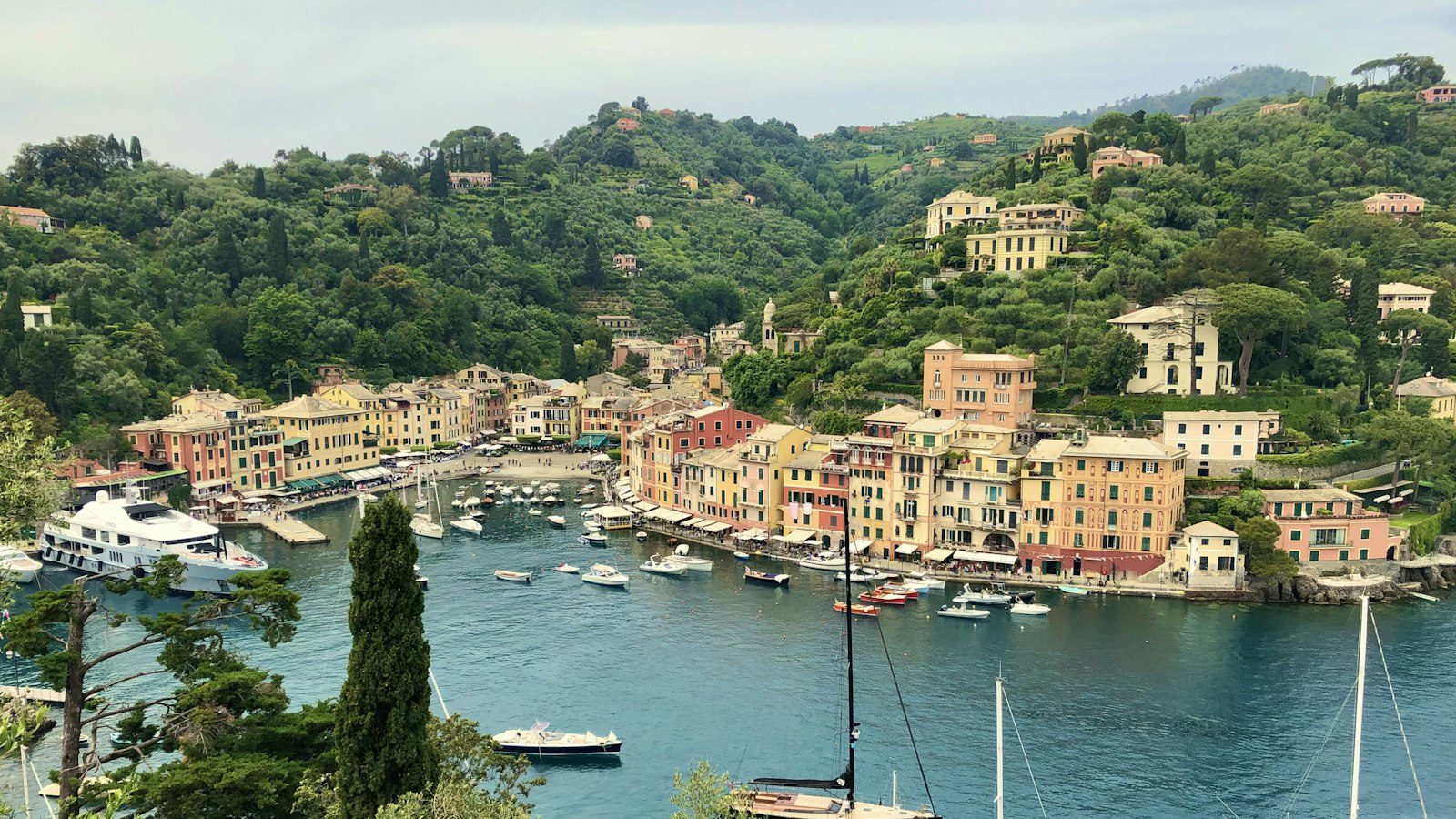
A tiny fishing harbour on a wooded headland east of Genoa, ringed by painted houses and very expensive yachts. Climb to the castle for the classic view, then walk forest trails to a hidden abbey and catch a boat back across the bay.
- Best time to visit: May to June and September
- Daily budget (budget traveller): $110 to $380 USD
- Ideal trip length: 3 to 5 days
Portofino sits at the tip of a steep, green promontory on the Italian Riviera, about 35km east of Genoa. Only a few hundred people live in it, and the whole village wraps around one small harbour. The Piazzetta, the cobbled square on the waterfront, is lined with tall houses painted ochre, pink and red, with designer shops and cafés where a coffee can cost three times what it does down the coast. That is the trade-off. Portofino is beautiful and famously pricey, and in summer it fills with day trippers and cruise passengers between late morning and late afternoon. The good news for a solo traveller is that the best parts are cheap or free. You can walk up to the Church of San Giorgio and Castello Brown for the view, follow the path out to the lighthouse and hike through the Portofino Regional Park to the abbey at San Fruttuoso. You can also swim at Paraggi or snorkel in the marine reserve. Most visitors sleep in Santa Margherita Ligure or Rapallo, which are a short bus or boat ride away, cost far less and have trains to Genoa and beyond. Come early or late in the day and Portofino feels like a fishing village again.
Portofino is the most famous village on the Italian Riviera, and also one of the smallest. A few hundred people live around a harbour barely 200 metres across, at the tip of a forested headland that has been a regional park and marine reserve for decades. Fishermen and sailors built the tall, narrow, brightly painted houses. Since the 1950s the village has drawn film stars, fashion houses and superyachts, and prices on the Piazzetta reflect that. Most visitors come for a few hours by boat or coach and leave again. Sleep nearby and come at the edges of the day instead. You get the harbour at breakfast with only the fishermen around, the castle terraces before the crowds and the trail to San Fruttuoso through the pine and holm oak woods. For a solo traveller, staying in Santa Margherita or Rapallo keeps costs reasonable, while bakeries, free trails and cheap trains make the rest easy.
Getting here is straightforward. Regional and Intercity trains run along the coast from Genoa, about 40 to 50 minutes away, and from Milan, La Spezia and the Cinque Terre. Get off at Santa Margherita Ligure, then take the bus via Paraggi or the 15-minute boat. Genoa airport is about 45 minutes away by road. Rapallo is one stop further and has more cheap rooms, while Camogli, on the other side of the promontory, is the base for hikers. Boats tie the whole coast together, linking Portofino, San Fruttuoso, Camogli, Santa Margherita and Rapallo. Trails cross the park between them, so you can walk one way and sail back.
Timing matters here more than in most places. May, June and September bring warm sea, regular boats and pleasant hiking. July and August are hot and crowded, and the red zones, where you cannot stop in the Piazzetta or on the harbour from mid-morning to early evening, are strictly enforced from April to October. From November to March the village is quiet and many places close, but the light is lovely and the trails are at their best on clear winter days. Portofino is very safe. English is spoken in hotels and most restaurants, but a little Italian goes a long way in bakeries and on the buses. Nightlife means a drink on the harbour, not clubbing. If you want livelier evenings, Rapallo and Santa Margherita have more going on.
Portofino itinerary
Arrive and find your feet
Morning: Take a train to Santa Margherita Ligure (about 40 to 50 minutes from Genoa). Drop your bag at your hotel and have a coffee and focaccia near the seafront.
Afternoon: Walk the seafront and the old centre, then head up to the gardens of Villa Durazzo for the view over the bay.
Evening: Take a late-afternoon boat or bus to Portofino after the day crowds have thinned. Have a drink by the harbour, then take the bus back for a cheaper dinner in Santa Margherita.
Portofino village, castle and lighthouse
Morning: Catch an early boat to Portofino. Walk the Piazzetta while it is quiet, then climb to the Church of San Giorgio and Castello Brown (€10).
Afternoon: Follow the path to the Punta Portofino lighthouse, then come back for a picnic in the shade. Avoid hanging around in the red zones at peak hours.
Evening: Walk back along the coast to Paraggi for a late swim, then take the bus to Santa Margherita.
Hike to San Fruttuoso
Morning: Start early from Portofino on the marked trail through the park to San Fruttuoso (about 2 to 2.5 hours). Bring plenty of water and proper shoes.
Afternoon: Visit the abbey (€10), swim from the pebble beach and have lunch at one of the seasonal places by the cove.
Evening: Take the boat to Camogli and then the train back, or sail straight to Portofino or Santa Margherita. Check the last departure before you leave.
Paraggi and the Cervara
Morning: Walk the coast path from Santa Margherita towards Paraggi and look into the Abbazia della Cervara if a guided visit is running.
Afternoon: Swim and laze at Paraggi. Use the free stretch or treat yourself to a sunbed if you want shade.
Evening: Aperitivo on the Santa Margherita seafront, then farinata and a glass of Vermentino.
Camogli and Punta Chiappa
Morning: Take the train to Camogli. Walk its harbour and seafront, and try focaccia di Recco at a local bakery.
Afternoon: Hike out via San Rocco to Punta Chiappa for a swim from the rocks, or take the boat there if the trail feels like too much.
Evening: Dinner in Camogli as the fishing boats come in, then the short train ride back.
A day in Genoa
Morning: Take the train to Genoa (about 40 to 50 minutes). Walk the narrow lanes of the old town and Via Garibaldi with its palaces.
Afternoon: Visit the old port, then eat pesto, focaccia or fried fish from a friggitoria in the centre.
Evening: Train back to the coast and a farewell dinner in Rapallo or Santa Margherita.
Slow morning and depart
Morning: Have a last early swim or walk along the seafront, and breakfast before the crowds.
Afternoon: Buy pesto, olive oil or a bottle of Ligurian wine to take home, then catch your train. Check times and strike notices the day before.
Evening: Arrive in Genoa, Milan or your next stop.
Best neighbourhoods
- The Piazzetta and harbour: The heart of Portofino, where the boats come in, the cafés spread across the cobbles and the coloured houses rise behind. A handful of hotels and rooms sit here and up the lanes, but prices are among the highest in Italy. It is magical at night once the day trippers have left, and very busy from about 10:30am to 6pm in summer.
- Paraggi: A small green bay about 2km before Portofino on the road from Santa Margherita, with clear water, beach clubs and a few smart hotels and villas. It is the main swimming spot near the village. Staying here is quiet and pricey, and buses stop right above the beach.
- Santa Margherita Ligure: The practical base for most visitors. It is a proper Riviera town with a palm-lined seafront, a train station, plenty of mid-range hotels, bakeries and fish restaurants. Buses and boats run to Portofino in 15 to 30 minutes, and rooms cost a fraction of Portofino's.
- Rapallo: A bigger, livelier town one stop further along the railway, with a seafront promenade, a small castle in the sea and the widest choice of cheaper rooms. Trains to Genoa and the Cinque Terre stop here, and summer boats run to Portofino and San Fruttuoso. It suits you if you want shops, bars and value.
- Camogli: A fishing town on the western side of the promontory, known for its tall painted houses and pebble beach. It has a train station and boats to San Fruttuoso, and trails start just behind the town. It is a good base for hikers and is calmer and more local in feel than Santa Margherita.
Must-do experiences
- Arrive by boat from Santa Margherita: The ferry from Santa Margherita takes about 15 minutes and follows the coast past Paraggi and the villas. Single tickets cost around €7-11, so check current fares. Sit on the right-hand side going out for the best view of the harbour as you come round the point.
- Climb to San Giorgio and Castello Brown: Steps lead up from the harbour to the Church of San Giorgio, which is free, and on to Castello Brown, an old fortress turned villa with gardens and terraces. Entry is €10 from 1 April to 3 November and €5 in winter. You can only buy tickets at the door. The view straight down over the harbour is the one on the postcards.
- Walk to the Punta Portofino lighthouse: Carry on past the castle along the shaded path to the lighthouse at the tip of the headland. It takes about 15 to 20 minutes from the Piazzetta and is free. On a clear day you can see along the Gulf of Tigullio, and there is a seasonal bar at the end.
- Hike to San Fruttuoso: A marked trail runs through Portofino Regional Park to San Fruttuoso, a medieval abbey in a cove with no road access. Allow about 2 to 2.5 hours, with steep ups and downs. The FAI-run abbey costs €10 for adults. Take a boat back to Portofino or Camogli, but check first that they are running.
- Swim at Paraggi: This small bay has the clearest water close to Portofino. Most of the beach belongs to clubs where a sunbed can cost a lot, but there is a small free stretch. Go early on summer weekends, as it fills quickly, and remember there is no shade on the free part.
- Snorkel in the marine reserve: The waters around the headland are a protected marine area, with rocky reefs, fish and seagrass meadows. Book a guided snorkel or a dive with a licensed centre, which knows where you are allowed to swim. Divers can visit the bronze Christ of the Abyss statue on the seabed off San Fruttuoso.
- Walk the coast from Santa Margherita: A walkway follows the coast road from Santa Margherita to Portofino via Paraggi, part path and part pavement, in about an hour to an hour and a quarter. It is free and has sea views most of the way. Start early in summer and take the boat or bus back.
Hidden gems
- The Abbazia della Cervara, a former monastery with terraced Italian gardens between Santa Margherita and Paraggi, open for guided visits on set days
- The Valle dei Mulini path, which climbs from the back of Portofino through woods and past old mill ruins, almost empty while the harbour is packed
- Punta Chiappa, a flat slab of rock jutting into the sea below San Rocco di Camogli, reached by trail or boat and good for a quiet swim
- The Doria Tower above San Fruttuoso, which looks best from the trail late in the afternoon after the last tour boats have gone
- The Piazzetta at 8am, when the fishermen and delivery boats have the harbour to themselves and the café tables are still being set out
Daily budget
- Accommodation: budget €70-110 / night (simple guesthouse or B&B in Rapallo or Santa Margherita), mid-range €150-280 (3 or 4-star hotel in Santa Margherita), splurge €1,500+ (Belmond Splendido in Portofino). There are no hostels in Portofino, and even basic rooms in the village cost a lot. Prices peak in July and August, and a nightly tourist tax is added. Single rooms go fast, so book early.
- Food: budget €25-40 / day (focaccia breakfast, farinata or a pasta lunch, supermarket picnic), mid-range €55-90 (trattoria lunch and a fish dinner in Santa Margherita), splurge €150+ (harbourside dinner in Portofino with wine). A coffee on the Piazzetta can cost several times the usual price, so drink it in a bar in Santa Margherita instead. Pasta mains in town run roughly €14-22, and fish is often priced per 100g.
- Transport: budget €6-12 / day (bus or boat to Portofino and back), mid-range €20-35 (boats to San Fruttuoso and Camogli, a train ride), splurge €100+ (private boat or taxi transfers). The Santa Margherita boat costs around €7-11 single, and the bus around €3-5. San Fruttuoso boats cost about €20 return from Portofino or €17 from Camogli. Parking in Portofino is very expensive.
- Activities: budget €0-10 / day (trails, the lighthouse, San Giorgio), mid-range €10-25 (Castello Brown at €10, San Fruttuoso abbey at €10), splurge €60+ (guided snorkel, dive or boat tour). Castello Brown is €10 from 1 April to 3 November and €5 in winter, sold only at the door. The San Fruttuoso abbey is €10 for adults and closes if boats cannot sail.
- Drinks & nightlife: budget €5-10 (a glass of Vermentino or a beer in Santa Margherita), mid-range €20-40 (aperitivo and a couple of drinks), splurge €60+ (cocktails on the Piazzetta). An aperitivo often comes with snacks, which can stand in for a light dinner. Drinks on Portofino's harbour cost much more than in Rapallo or Santa Margherita.
Where to stay
- Budget guesthouse in Rapallo or Santa Margherita, near the station (€70-110 / night): There are no hostels in Portofino, so simple B&Bs and family-run guesthouses near the stations are the cheapest option. You are close to trains, buses and boats, with bakeries and cheap food nearby.
- Boutique hotel in Portofino harbour (€400-900 / night): A small hotel right on the harbour, such as Eight Hotel Portofino, puts you in the village when the day trippers have gone. Evenings and early mornings on the Piazzetta are the reward.
- Apartment in Santa Margherita old centre or Camogli (€100-180 / night): Apartments in old houses give you a kitchen and a local feel, which helps a lot in a pricey area. Expect stairs and no lift, and check how far it is from the station.
- Splurge in Hillside above Portofino (€1,500+ / night): Belmond Hotel Splendido is a former monastery above the harbour, with terraces, a pool and famous views over the bay. It is one of the most celebrated hotels on the Riviera.
What to eat
- Focaccia: plain, oily Genoese focaccia from a bakery for breakfast, or the thin, cheesy focaccia di Recco, the cheapest good meal on this coast
- Trofie al pesto: short twisted pasta with Ligurian basil pesto, often with potato and green beans, on almost every menu
- Pansoti with walnut sauce: herb-filled pasta parcels with a creamy walnut sauce, a local dish that is worth trying at least once
- Red prawns from Santa Margherita: sweet local gamberi rossi, served raw or grilled. They are priced high, so check before you order
- Farinata: a thin, crispy chickpea pancake from a wood oven, sold by the slice in Santa Margherita and Rapallo
- Vermentino and Pigato: crisp Ligurian white wines, a few euros a glass in town bars and more on the Piazzetta
Day trips
- Camogli and San Fruttuoso (Camogli is about 15 minutes by train from Santa Margherita, and San Fruttuoso about 30 minutes by boat from Camogli): A fishing town with tall painted houses and a pebble beach, plus the medieval abbey in its hidden cove. Together they make one of the best days on this coast, especially if you walk one way. Take the train to Camogli, then the boat to San Fruttuoso (€11 one way, €17 return), which runs about hourly in summer. Or hike there through the park and sail back to Portofino. Boats and the abbey close in rough seas.
- Genoa (About 40 to 50 minutes by train from Santa Margherita): Liguria's capital has one of Europe's largest medieval old towns, palace-lined streets, a busy port and the best focaccia and pesto around. It is a gritty, lively contrast to the polished Riviera. Regional trains run frequently from Santa Margherita and Rapallo to Genova Brignole and Piazza Principe. Buy tickets from machines or the Trenitalia app, and check for strikes before you go.
- Cinque Terre (About 1 to 1.5 hours by train to Monterosso or Levanto): Five cliffside villages linked by trains, boats and famous coastal paths. It is busy in summer but spectacular, and easy to reach from this coast. Take a regional train from Santa Margherita or Rapallo towards La Spezia, changing if needed. Some trails need a paid park card, and in season boats also run from the Gulf of Tigullio. Go early to beat the crowds.
When to visit
- Spring (April - May): 16-23°C, mild and green, sea still cool until late May. Crowds: Moderate, busy at Easter and on sunny weekends. Great for hiking, with wildflowers in the park and longer boat timetables from spring. Swimming is chilly until the end of May. The red zone rules begin around Easter.
- Early summer (June): 22-27°C, sunny, sea around 21-24°C. Crowds: Moderate to busy, more cruise ships at weekends. Arguably the best month. Warm water, long evenings and full boat timetables, but book rooms early. Hike in the morning before the heat.
- High summer (July - August): 27-31°C, hot and humid, sea up to about 26°C. Crowds: Very busy, especially in August and on cruise days. Good for swimming and boat trips, but the harbour is packed from late morning and rooms cost the most. Visit Portofino early or late, and keep long hikes for dawn.
- Autumn and winter (September - March): September 21-26°C, then cooling to 8-14°C in winter. Crowds: Moderate in September, quiet from November. September is the local favourite, with warm sea and fewer crowds. Winter is cheap and peaceful with clear hiking days, but boats are fewer and rough seas can cancel them.
Entry rules for your passport
Visa rules for Italy depend on the passport you travel on. Check the official source before you book: European Commission: Schengen visa policy
Getting there
There is no airport or train station in Portofino. The nearest airport is Genoa, about 45 minutes away by road, and Milan's airports and Pisa are further away. From Genoa airport, take a bus or taxi to a Genoa station, then a train to Santa Margherita Ligure. Regional trains from Genoa Brignole and Piazza Principe take about 40 to 50 minutes and cost a few euros. There are also direct trains from Milan, which take about 2.5 to 3 hours, and from La Spezia and the Cinque Terre. From Santa Margherita station, take the bus along the coast road via Paraggi, which takes about 25 minutes and costs around €3-5 one way. Alternatively, walk 10 minutes to the harbour for the Servizio Marittimo del Tigullio boat, which takes about 15 minutes. Boats also run from Rapallo and, mostly in season, from Genoa and the Cinque Terre. Driving is not recommended in summer. The road in is narrow and slow, and the car park at the village entrance is costly and fills early. Italian motorways have tolls, which you pay at booths with cash or card.
Border checks: non-EU visitors (other than Swiss, Norwegian, Icelandic, Liechtenstein, Andorran, Monegasque, San Marinese and Vatican citizens, and holders of an EU residence permit or long-stay visa) are registered in the EU's Entry/Exit System (EES) instead of getting a passport stamp. On your first crossing, officers take your photo and/or fingerprints, so allow extra time at passport control. ETIAS, the planned travel authorisation, is not in operation yet, so don't pay any website for one.
Getting around
Portofino itself is tiny and you will walk everywhere. It takes about five minutes to cross the village, with steep steps up to San Giorgio, Castello Brown and the trails. Most people arrive by train in Santa Margherita Ligure, then take the bus or boat. The bus to Portofino runs from outside Santa Margherita station along the coast road via Paraggi, roughly every 15 to 30 minutes in season. It takes about 25 minutes and costs around €3-5 one way depending on how you pay. Buy tickets at a bar or tobacconist, or tap a contactless card on board, and check current fares. Servizio Marittimo del Tigullio boats link Portofino with Santa Margherita, Rapallo and San Fruttuoso, with the most sailings from spring to autumn. Separate boats run from Camogli to San Fruttuoso. All boats are cancelled in rough seas. Driving is a poor idea in summer. The road is narrow and winding, and the car park at the village entrance is expensive and often full by mid-morning. Taxis exist but are pricey. For hiking, the park trails are well marked and link Portofino, San Fruttuoso, Camogli and Santa Margherita.
Safety
Portofino and the nearby towns are very safe, and violent crime against visitors is rare. Watch your bag on crowded boats, buses and the harbour front on cruise-ship days. From April to October, red zones in the Piazzetta, on the harbour and on Molo Umberto I ban stopping or gathering between about 10:30am and 6pm. You can still take photos, but keep moving, as fines can reach €275. Walking around the centre barefoot, bare-chested or in swimwear can also earn you a fine. The bigger risks are outdoors. The park trails are steep and rocky, with drops in places, so wear proper shoes, carry water and do not start long hikes late in the day. Boats are cancelled when the sea is rough, so always have a walking or bus plan to get back. Watch for jellyfish and slippery rocks when swimming, and keep clear of boat lanes. Tap water is safe to drink. The EU emergency number is 112. EU travellers should carry an EHIC and UK travellers a GHIC, and everyone else needs travel insurance with medical cover.
Solo travel tips
- Sleep outside the village: Santa Margherita, Rapallo or Camogli cost far less than Portofino and have trains, bakeries and cheaper dinners. Portofino is only a short bus or boat ride away.
- Visit at the edges of the day: Cruise passengers and tour groups arrive from late morning and leave by early evening. Be in the Piazzetta before 10am or after 6pm and the red zone rules matter much less.
- Plan around the sea: Boats are cancelled when the sea is rough, and the San Fruttuoso abbey closes when they do. Check the forecast and always know your walking or bus route back.
- Eat like a local: Focaccia for breakfast, farinata or pasta for lunch and an aperitivo with snacks keep costs down. Save the harbour restaurant for one special evening.
- Safety for solo travellers: The main risks are steep trails, heat and swimming alone off rocks. Start hikes early, tell someone your route, carry water and swim where other people are around.
- Meet people on the water or the trail: Join a guided snorkel, a small-group boat trip or a park walk with a local guide. Shared boat rides and aperitivo bars are also easy places to start talking.
Cultural etiquette
- Greet people with 'buongiorno' in the morning and 'buonasera' from mid-afternoon, and say 'grazie' (thank you). It is polite to greet shop staff when you walk in.
- Cover up when you leave the beach. Walking through Portofino barefoot, bare-chested or in swimwear is banned and can bring a fine.
- Keep moving in the marked red zones on the harbour and in the Piazzetta between about 10:30am and 6pm from April to October. You can take photos, but do not block the way.
- Dress modestly in San Giorgio, San Fruttuoso abbey and other churches, with covered shoulders, and keep quiet if a service is on.
- Ask how fish is priced before you order. It is often sold per 100g, so the bill can climb quickly.
- A cover charge (coperto) is normal in restaurants. Tipping is not expected, but rounding up for good service is appreciated.
- Stay on marked trails in the park, take your rubbish with you and do not pick plants or disturb marine life in the protected area.
Frequently asked questions
How do I get to Portofino and from the stop to my room?
Take a train to Santa Margherita Ligure. It is about 40 to 50 minutes from Genoa and has direct trains from Milan and La Spezia. From there, the bus to Portofino leaves from outside the station and takes about 25 minutes, or you can walk 10 minutes down to the harbour for the 15-minute boat. Both arrive close to the Piazzetta, and everything in Portofino is within a few minutes on foot, though some hotels are up steep steps. If you stay in Santa Margherita, most hotels are a short walk from the station or seafront.
How many days do I need in Portofino?
A day trip covers the village, Castello Brown and the lighthouse. Three days lets you add the hike to San Fruttuoso and a swim at Paraggi. Four or five days, based in Santa Margherita, Rapallo or Camogli, gives time for Camogli, Punta Chiappa and a day in Genoa. A week works if you want to add the Cinque Terre.
When is the best time to visit Portofino?
May, June and September are best. The sea is warm enough to swim, boats run often and the trails are not too hot. July and August are hot and crowded, with cruise passengers and day trippers filling the harbour by late morning, and prices peak. From November to March it is quiet and mild, but boats run less often, some hotels and restaurants close and rough seas can cancel sailings.
Can I drive to Portofino?
You can, but it is rarely worth it in summer. The only road from Santa Margherita is narrow and winding, queues build on busy days, and the car park at the village entrance is expensive and often full by mid-morning. If you have a car, leave it at your hotel in Santa Margherita or Rapallo and take the bus or boat. Check for limited traffic zones (ZTL) in the towns too, as fines arrive by post months later.
Where can I swim near Portofino?
Paraggi bay, 2km before the village, has the clearest water and a small free stretch of beach, with paid beach clubs on the rest. You can also swim from the rocks along the coast, at San Fruttuoso's pebble beach, at Punta Chiappa and from Camogli's beach. There is no real beach in Portofino harbour itself, and swimming in boat areas is not allowed.
How do I get to San Fruttuoso?
Walk or take a boat. The trail from Portofino takes about 2 to 2.5 hours and is steep in places. Boats run from Portofino, Santa Margherita and Rapallo, and a 2026 return from Portofino costs around €20. Boats from Camogli cost €11 one way or €17 return, running roughly hourly in summer. If the sea is too rough, the boats do not sail and the abbey closes, so check the forecast that morning.
Is Portofino safe for solo female travellers?
Yes. Portofino and the Riviera towns around it are among the safest places in Italy to travel alone, and the waterfronts stay busy into the evening in season. Use normal care with drinks in bars and with your bag in crowds. Do not hike the park trails alone late in the day, and tell someone your route, as some paths are steep and quiet.
What entry rules apply to Italy in 2026?
Italy is in the EU and the Schengen area. Many non-EU visitors, including those from the UK, US, Canada and Australia, can stay visa-free for up to 90 days in any 180-day period across Schengen. The EU's Entry/Exit System has been fully running since 10 April 2026, recording non-EU travellers' fingerprints and photos at the external border. ETIAS, the online travel authorisation, has not started yet and has no confirmed date, so check before you travel and only use the official EU website. Confirm the rules with official EU and Italian sources and your own government's travel advice.
More about Portofino
Tours and activities in Portofino | Portofino in 2 days | Portofino in 3 days | Portofino in 4 days | Portofino in 5 days | Portofino in 7 days
Can't decide? Compare Portofino with...
Joy Plus home | Destinations | Itineraries | Activities | Flights | Budget planner | Calendar | Map | Blog | Lifetime access