Destinations / Europe
Positano, Italy travel guide
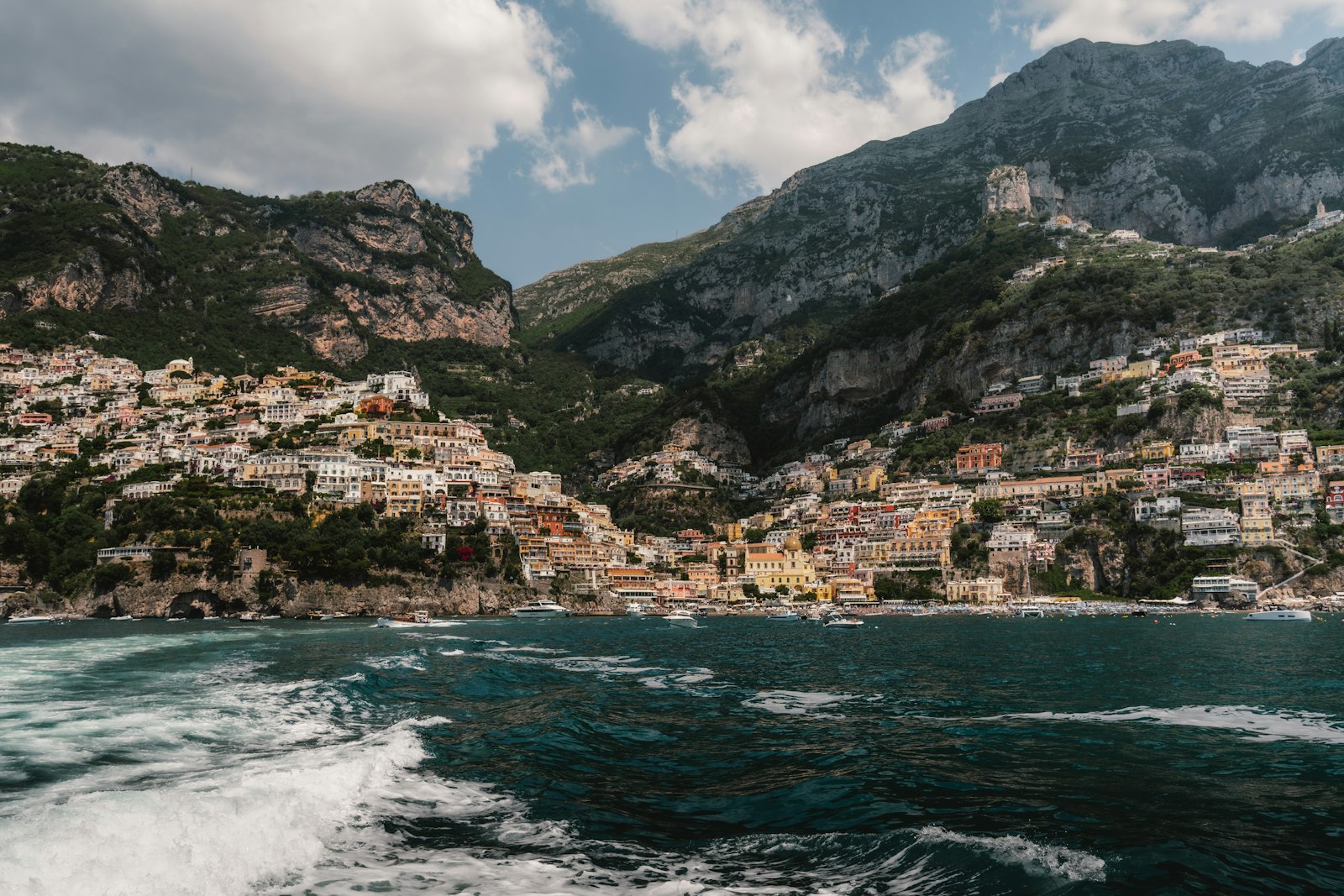
The Amalfi Coast's vertical dream. Pastel houses tumbling to the sea, lemon groves, and Mediterranean glamour.
- Best time to visit: May-June & September
- Daily budget (budget traveller): $150 to $400 USD
- Ideal trip length: 2 to 3 days
Positano is the postcard of the Amalfi Coast: pastel houses cascading down a cliff to a pebbled beach, bougainvillea draping over staircases, and the scent of lemons in the air. There are no real roads through the centre, just hundreds of steps connecting boutiques, trattorias and terraces with sweeping sea views. Joy Plus paces the climbs, boat trips and coastal hikes so you savour the drama without melting in the midday crowds.
Positano is a town built on a staircase. The Amalfi Coast road clings to the cliff at the top, the beach sits at the bottom, and roughly a thousand steps connect the two. Nobody here drives to dinner. You climb, you sweat, you earn the spritz. The pastel houses, the majolica dome of Santa Maria Assunta and the bougainvillea are all real, and so is the price tag: a pasta lunch near the beach runs €22 to €30 and a sunbed can cost more than your dinner. It is gorgeous and it knows it.
The trick is timing. The town belongs to you before 10am and after 5pm. Between those hours the ferries and coaches dump day-trippers onto Spiaggia Grande and the lanes fill up. Smart travellers hit the sea at 8am, hike the Path of the Gods while it is still cool, and take a long, slow lunch in the heat. They come back out for the golden hour from the terraces. Stay two or three nights, ideally in spring or September, and treat the ferry as your transport. The SS163 coast road in July is a parking lot with views.
This guide assumes you want the postcard and a few secrets as well. It covers the Nocelle end of the Path of the Gods, the quieter Fornillo cove and the ferry to Amalfi that beats the bus. Along the way it covers where to eat for less than a beach club charges, which hotels justify their rates, and how to get from Naples without losing half a day. Pack good shoes and a sense of humour about stairs.
How many days in Positano?
For Positano, we recommend 2 to 3 days. With more time, add a day trip to Pompeii.
| Trip length | What you'll see | Itinerary |
|---|---|---|
| 2 days · Recommended | Get your stair legs; Path of the Gods | Positano in 2 days |
| 3 days · Recommended | Adds: On the water, Li Galli | Positano in 3 days |
| 4 days | Adds: Amalfi and Ravello | Positano in 4 days |
| 5 days | Adds: Beaches, ceramics, lemons | Positano in 5 days |
| 7 days | Adds: Capri day trip | Positano in 7 days |
Positano itinerary
Arrive and get your stair legs
Morning: Land at Naples (NAP). Take the Curreri Viaggi shuttle to Sorrento (about €12-15, 75 min), then the SITA bus to Positano (about €3-4). Sit on the right side for the sea views. Drop bags and have an espresso at the bar.
Afternoon: Walk down Via dei Mulini to Spiaggia Grande, then step into Santa Maria Assunta for the Black Madonna. Have a light lunch of pizza at Chez Black.
Evening: Aperitivo as the sun hits the cliff. Dinner at Da Vincenzo on Viale Pasitea, then an early night.
Path of the Gods
Morning: Catch the first SITA bus to Amalfi, then the bus up to Bomerano (about €2-3). Start the Sentiero degli Dei by 8:30am, while it is still cool. Allow 3 to 4 hours of walking.
Afternoon: Finish in Nocelle with lunch at a trattoria on the terrace. Then take the 1,500 steps down to Positano, about 40 minutes of knees-versus-gravity.
Evening: Dinner at La Tagliata in Montepertuso, a farm-style fixed menu with a free shuttle (about €50 with wine). Book ahead.
On the water, Li Galli
Morning: Beach at Fornillo for a calm swim. Collect lunch from La Zagara.
Afternoon: Join a shared boat trip to Li Galli with Lucibello Positano (about €70-110 for a half day). Swim stops, sea caves and Laurito. Lunch at Da Adolfo on the pebble beach, famous for grilled mozzarella on lemon leaves.
Evening: Sunset drink at Franco's Bar at Le Sirenuse. Dinner at Next2 for modern Campanian.
Amalfi and Ravello
Morning: Ferry to Amalfi from the Marina Grande pier (about €10, 25 min). See the Duomo and its Cloister of Paradise, then wander the paper-mill lanes. Gelato at Gelateria Porto Salvo.
Afternoon: Bus to Ravello (about €2.50, 25 min). Villa Cimbrone's Terrace of Infinity is the view of the day. Then Villa Rufolo if you have energy.
Evening: Check the last ferry (about 6-7pm in season) or take the SITA bus back. Simple dinner in Positano.
Beaches, ceramics, lemons
Morning: Be on Spiaggia Grande by 8am, the town's only quiet hour. Coffee, a swim and then browse Ceramica Assunta.
Afternoon: Boat shuttle to Arienzo beach for lunch and a sunbed. Back via the steps if you feel brave. Delizia al limone at La Zagara.
Evening: Dress up for dinner at La Cambusa or Buca di Bacco on the sea. Gelato on the way home.
Capri day trip
Morning: Take the first seasonal ferry to Capri (about 45 min, €25-30 each way). Walk up to Anacapri or ride the Monte Solaro chairlift (about €15 return).
Afternoon: Lunch away from Piazzetta prices. Swim at Bagni di Tiberio or take a boat around the island.
Evening: Ferry back and a casual dinner in Positano. Early night.
Slow morning, depart
Morning: Breakfast on a terrace. Walk to Fornillo for a final swim, or browse the sandal makers on Via Pasitea.
Afternoon: Take the ferry to Naples (about 1h 45, €25-30, seasonal) or the SITA bus to Sorrento, then the Circumvesuviana to Naples.
Evening: Fly out of NAP, or stay a night in Naples for pizza at L'Antica Pizzeria da Michele.
Best neighbourhoods
- Spiaggia Grande: The main beach and harbour, lined with restaurants and the boat dock.
- Fornillo: A quieter beach a short cliff walk away, with relaxed beach clubs.
- Montepertuso & Nocelle: Hillside villages above town with cheaper stays and stunning views.
- Centro Storico: The maze of stepped lanes, boutiques and the iconic majolica-domed church.
- Arienzo: A sun-soaked beach reached by hundreds of steps or by boat.
Must-do experiences
- Walk the Path of the Gods: The legendary clifftop trail with jaw-dropping views over the coast.
- Boat trip to Capri or the grottoes: See Positano from the water and explore hidden sea caves and coves.
- Sunset aperitivo on a terrace: Spritz in hand as the pastel town glows over the bay.
- Visit Santa Maria Assunta: The majolica-domed church and its Byzantine Black Madonna.
- Day trip to Ravello & Amalfi: Hilltop gardens, the duomo and the coast's most romantic villages.
- Relax on Fornillo beach: A calmer alternative to the busy main beach, with great swimming.
Hidden gems
- The hillside village of Nocelle, the quiet end of the Path of the Gods.
- Arienzo beach club, reached by hundreds of steps or a quick boat shuttle.
- Early-morning Spiaggia Grande before the day-trippers arrive.
- Lemon-grove tours and limoncello tastings in the hills above town.
Daily budget
- Accommodation: budget €55-90 / night (dorm at Hostel Brikette, or a room in Praiano or Sorrento), mid-range €250-420 (three or four star boutique, high season), splurge €1,000+ (Le Sirenuse, Il San Pietro di Positano). Add the local tourist tax, about €3 to €5 per person per night. Montepertuso and Nocelle cut rates by 30 to 40%.
- Food: budget €35-45 / day (pizza, panini, bakery breakfast, one pasta), mid-range €90-130 (seafood lunch plus dinner with wine), splurge €300+ (tasting menu at La Sponda, Le Sirenuse). Coperto (cover charge) is €3-5 per person. Fish is priced by the etto (100g), so ask the price before you order.
- Transport: budget €8-12 / day (local bus about €2, SITA bus €3-4 per hop), mid-range €25-45 (ferry to Amalfi one way, buses back), splurge €150-250 (private driver or boat transfer). Ferries from April to October are more pleasant than the SS163 road. Ferry fares are roughly €10 to Amalfi, €25-30 to Capri or Naples.
- Activities: budget €0-15 (Path of the Gods is free, plus the church and beach walks), mid-range €60-120 (shared Li Galli boat trip, Villa Cimbrone, Capri ferry), splurge €350+ (private boat to Li Galli and Capri). Villa Cimbrone and Villa Rufolo are about €10 each in Ravello. Guided Path of the Gods hikes cost €60-100.
- Drinks & nightlife: budget €15 (aperitivo at a village bar, local wine by the glass), mid-range €40-70 (two cocktails on a terrace, a beach club spritz), splurge €150+ (Franco's Bar, then Music on the Rocks). Cocktails run €18-28 on the main drag. A beer at a village bar in Montepertuso is €4-5. Nightlife is low-key and ends by about 1am.
Where to stay
- Social hostel in Viale Pasitea, upper Positano (€55-90 / night): Hostel Brikette is the one real budget option. It has sea-view terraces, mixed dorms and privates, and a steady stream of hikers and young travellers. Expect a climb, not a beach hop.
- Boutique hotel in Centro Storico (€250-450 / night): Hotel Savoia or Hotel Villa Rosa, central, family-run, with terraces and stunning views. Walk to the beach in 5 minutes. Book 4 to 6 months ahead for summer.
- Apartment in Montepertuso or Nocelle (€120-220 / night): A hillside apartment with a terrace and sea view at 30 to 40% less than the centre. Cook with local produce. You will walk a lot, and the bus up costs about €2.
- Splurge in Cliffside above the beach (€1,000-2,500+ / night): Le Sirenuse or Il San Pietro di Positano, the two icons, with private lifts, terraces over the bay and Michelin dining. Villa Treville is the quieter alternative.
What to eat
- Spaghetti alle vongole and fresh seafood by the beach
- Delizia al limone, the local lemon cream dessert
- Handmade scialatielli pasta with seafood
- Limoncello made from Amalfi's giant sfusato lemons
Day trips
- Amalfi and Ravello (25 min by ferry to Amalfi, plus 25 min bus to Ravello): Amalfi has the striped Duomo, the Cloister of Paradise and the paper museum. Ravello sits 350m above it with Villa Cimbrone's Terrace of Infinity and Villa Rufolo's gardens. Do Amalfi in the morning and Ravello after lunch. Travelmar ferry from the Marina Grande pier, about €10 one way, April to October. Bus from Amalfi to Ravello about €2.50. Villa entries are about €10 each.
- Capri (45 min by ferry): Take the Monte Solaro chairlift and walk to the Faraglioni viewpoint. Skip the Blue Grotto queue unless you love waiting. Go on the first boat and avoid the Piazzetta restaurants. Seasonal ferry from Marina Grande, about €25-30 each way, April to October. Check the last return boat before you go.
- Pompeii (2 to 2.5 hours each way): A buried Roman city under Vesuvius. It is a long day from Positano but unmissable for history fans. Start early, wear a hat and bring water. SITA bus or ferry to Sorrento, then the Circumvesuviana to Pompei Scavi (about €3). Entry is about €22. A day tour with transfers is easier if you are short on time.
When to visit
- Spring (April - early June): 16-25°C, bougainvillea in bloom, sea still cool at 16-19°C. Crowds: Building, manageable until late May. The best window for walking. Ferries and most hotels reopen from mid April, and the Path of the Gods is at its greenest. Late May and early June are the sweet spot.
- Summer (July - August): 28-34°C, humid, sea 24-26°C. Crowds: Extreme, with coaches, cruise passengers and Italian holidays. Gorgeous for swimming, miserable on the road. Book everything months ahead, hike at dawn only, and expect the highest prices of the year.
- Autumn (September - October): 22-28°C in September, cooler and showery by late October. Crowds: Moderate, easing from mid September. The locals' favourite. The sea is at its warmest, the lemons are heavy and the light is softer. Ferries run until about the end of October.
- Winter (November - March): 8-15°C, wet and windy spells. Crowds: Almost none. Atmospheric but closed. Most hotels, beach clubs and many restaurants shut and ferries stop. Fine for hiking and cheap Sorrento bases, but not a beach trip.
Entry rules for your passport
Visa rules for Italy depend on the passport you travel on. Check the official source before you book: European Commission: Schengen visa policy
Getting there
There is no train station and no airport in Positano. The nearest airport is Naples (NAP), 60km away. From NAP take the Curreri Viaggi shuttle to Sorrento (about €12-15, 75 min), then the SITA bus to Positano (about €3-4, 50 min; sit on the right for the sea view). Alternatively take the Alibus (€5) to Napoli Centrale, the Circumvesuviana to Sorrento (about €5), then the same bus. In season (April to October) a fast ferry runs from Naples Beverello to Positano (about €25-30, 1h 45). From Salerno, a Travelmar ferry takes about an hour (around €13). A private transfer from NAP costs €150-220 and is worth splitting for a group. Do not drive in summer: the SS163 coast road is slow, parking is €20-40 a day and restricted by plate number on some peak days.
Border checks: non-EU visitors (other than Swiss, Norwegian, Icelandic, Liechtenstein, Andorran, Monegasque, San Marinese and Vatican citizens, and holders of an EU residence permit or long-stay visa) are registered in the EU's Entry/Exit System (EES) instead of getting a passport stamp. On your first crossing, officers take your photo and/or fingerprints, so allow extra time at passport control. ETIAS, the planned travel authorisation, is not in operation yet, so don't pay any website for one.
Getting around
Positano is best explored on foot, but be ready for steep staircases everywhere. A small internal bus loops between the top road and the beach to save your legs. The SITA coastal bus and ferries connect Positano with Amalfi, Sorrento and the rest of the coast, and ferries are far more pleasant than the winding, traffic-choked road in summer. Avoid driving and parking, which are stressful and expensive.
Safety
Positano is very safe, with the main hazards being the endless steep steps, slippery lanes and intense sun, so wear good shoes and stay hydrated. The coastal road is narrow and winding, so leave driving to the buses and ferries. The sea is generally calm but check conditions before boat trips. Prices are high, so confirm costs at beach clubs and restaurants. Solo travellers, including women, feel very comfortable here.
Solo travel tips
- Base smart on a budget: Positano has little solo-friendly accommodation. Hostel Brikette is the best social option (dorms €55-90 in season). If it is full, stay in Praiano or Sorrento and day-trip in by ferry or SITA bus.
- Eat at the bar or go early: A table for one on a terrace can get frosty. Order a spritz and food at the counter in a village bar, or book 7pm slots for the best sunset tables before the couples arrive.
- Take shared boats and group hikes: Shared Li Galli boat trips and guided Path of the Gods hikes (€60-100) are where solos meet each other. Both are easy to book through Lucibello Positano or your hotel the night before.
- Use a luggage porter: Dragging a wheeled suitcase down hundreds of steps is miserable. Porters meet you at the bus stop or ferry pier and charge about €15-25. Agree the fare first, and pack light.
- Solo female travellers: Positano is very safe. The main hazard is dark stairs, so use your phone torch after dinner and wear flat shoes. Use official taxis, agree the fare first, and keep your drink in sight at beach bars.
- Hike with company: The Path of the Gods is busy from 9am, so you will rarely be alone. Start at 8am for fewer people and cooler air. Carry 1.5 litres of water, as there are very few refill points.
Cultural etiquette
- Cover shoulders and knees in churches, including Santa Maria Assunta. Beachwear stays at the beach, and bare-chested walking in town can draw a fine.
- Say buongiorno or buonasera when you enter any shop or cafe. It is the polite baseline.
- Coffee standing at the bar is €1.50-2. Sitting at a table can double or triple that. Cappuccino after 11am marks you as a tourist.
- Coperto is a per-person cover charge of €3-5, not a tip. Service is often added on top, and a round-up for good service is enough.
- Fish and lobster are priced by weight. Ask the price per etto (100g) and the total before you order.
- Lunch runs 12:30 to 3pm and dinner 8 to 10:30pm. Turning up at 6pm gets you tourist menus and the same prices.
- Keep it down on residential stairs at night. Many of the village houses are the lanes you are walking through.
Frequently asked questions
How many days do you need in Positano?
Two to three days is ideal. One day covers the town itself, the beaches and a sunset aperitivo, while a second allows for the Path of the Gods hike or a boat trip to Capri and the grottoes. A third day is perfect for visiting Amalfi and Ravello along the coast. Positano is small, but its vertical layout and the slow coastal transport mean you'll want to take things at a relaxed pace.
Is Positano good for solo travellers?
Yes, Positano is very safe and welcoming, though it's a romantic, couples-heavy destination and quite expensive, which solo travellers should factor in. It's easy to get around on foot and by ferry, and joining a group boat trip or coastal hike is a good way to meet others. Solo women travellers report feeling completely comfortable. For budget and social variety, some solo visitors base themselves in nearby Sorrento or Amalfi instead.
When is the best time to visit Positano?
May to June and September offer warm weather, swimmable seas and slightly thinner crowds than the July-August peak, which is extremely busy and hot. Spring brings blooming bougainvillea and fewer day-trippers, while September still has warm water and harvest-season food. Winter is quiet and atmospheric but many hotels, restaurants and ferries shut down. For the best mix of weather, crowds and value, aim for late May, early June or September.
How do you get to Positano?
The main airport is Naples (closed from 1 to 30 November 2026 for runway works, with some flights moved to Salerno's smaller airport), from which you can take a train to Sorrento and then a bus or ferry to Positano, or arrange a private transfer along the coastal road. In summer, ferries from Naples, Sorrento, Amalfi and Capri are the most scenic and stress-free option, avoiding the notorious coastal-road traffic. There's no train directly to Positano, so plan the final leg by bus, ferry or car.
Is Positano expensive?
Yes, Positano is one of Italy's priciest destinations, with high-season hotel rates, beach-club fees and restaurant prices to match its glamour. You can reduce costs by staying in the hillside villages of Montepertuso or Nocelle, eating away from the main beach, using ferries and buses rather than private transfers, and visiting in the shoulder season. Many travellers base in cheaper Sorrento or Amalfi and visit Positano on day trips.
Is the Path of the Gods hike worth it?
Absolutely, it's one of the most spectacular coastal walks in Europe. The trail runs along the cliffs high above the Amalfi Coast, with sweeping views over the sea, terraced hillsides and villages. The classic route runs between Bomerano and Nocelle and takes around three hours. Wear proper shoes, carry water and a hat, and start early to avoid the heat. From Nocelle, hundreds of steps lead back down into Positano.
Are there beaches in Positano?
Yes, though they are pebbly rather than sandy. Spiaggia Grande is the main beach right in front of town, lively and lined with restaurants and sunbed clubs. Fornillo, a short cliff walk west, is quieter and more relaxed. Arienzo is reached by steps or boat and gets afternoon sun. Many visitors also take boats to swim in coves and grottoes along the coast for clearer, calmer water.
More about Positano
Tours and activities in Positano | Positano in 2 days | Positano in 3 days | Positano in 4 days | Positano in 5 days | Positano in 7 days
Can't decide? Compare Positano with...
- Positano vs Amalfi Coast
- Positano vs Sorrento
- Positano vs Ravello
- Cinque Terre vs Positano
- Positano vs Capri
Joy Plus home | Destinations | Itineraries | Activities | Flights | Budget planner | Calendar | Map | Blog | Lifetime access