Destinations / Europe
Procida, Italy travel guide
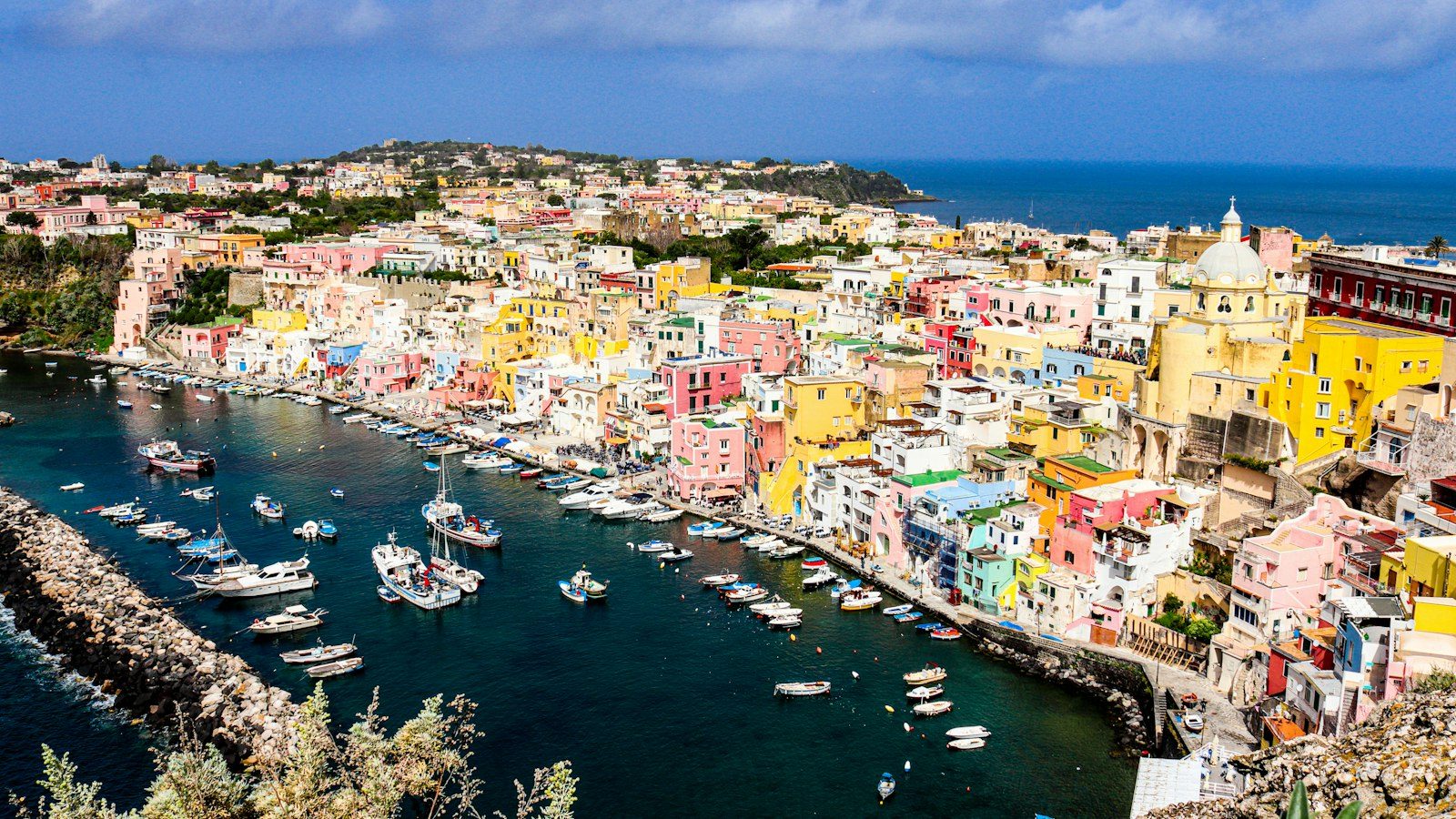
The smallest of the three main islands in the Bay of Naples, with pastel fishermen's houses stacked above the harbour at Corricella. You climb to the walled old village, swim off dark volcanic beaches and eat lemon salad while the ferries come and go from Naples.
- Best time to visit: May to June and September
- Daily budget (budget traveller): $85 to $270 USD
- Ideal trip length: 3 to 5 days
Procida is a small volcanic island in the Gulf of Naples, between the mainland at Capo Miseno and the much bigger island of Ischia. Hydrofoils from Naples get here in about 40 minutes. It is only about 4km square, and it still feels like a working island rather than a resort. Fishing boats tie up beneath pink, yellow and blue houses, and lemon gardens hide behind high walls. Most people know it from the film Il Postino or from photos of Marina Corricella. Day trippers come and go, but the island is quiet once the last boats leave. There are no big sights. You get Terra Murata, the old walled village on the highest point, with its abbey and a huge former prison. Below it are a handful of beaches of dark sand and pebbles, and Vivara, a crescent-shaped nature reserve joined to the island by a footbridge. Rooms cost more than in Naples and there are almost no hostels. Even so, cheap island buses, free beaches and simple seafood make Procida a calm, safe place for a solo traveller to slow down for a few days.
Procida is the smallest and least touristy of the three islands in the Bay of Naples, with around 10,000 people living on about 4 square kilometres. It is a seafaring island. For centuries its men worked as sailors and captains, and the brightly painted houses were said to help them spot home from the sea. It was Italy's Capital of Culture in 2022, and it is busier than it was. Even so, most visitors come for a few hours from Naples or Ischia. If you stay a few nights, you see Corricella empty at 7am, swim from a dark sand beach before lunch and watch the sun set behind Ischia from Chiaiolella. It is not cheap, and hostels barely exist, but free beaches, €1.20 bus tickets and bakery lunches keep costs down.
Getting here is easy. Hydrofoils from Molo Beverello in Naples take about 35 to 40 minutes for roughly €19-24. Slower Caremar ferries leave from Calata Porta di Massa and take about an hour for around €16. Boats from Pozzuoli are shorter and cheaper, and there are frequent hydrofoils to and from Ischia. A small landing fee is built into the ticket. Once you arrive, walk or take the bus. The C2 goes up to Terra Murata and Corricella, and the L1 and L2 go to Chiaiolella. Base yourself near the port for early boats and transport, near Corricella for atmosphere or in Chiaiolella for beaches and sunsets.
Timing shapes the trip. May, June and September bring warm water, late buses and room to breathe. July and August are hot, busy and the most expensive. Easter is when the island's Good Friday procession of the Misteri fills the streets. From November to March, Procida is quiet and mild, but many restaurants and hotels close, buses thin out and storms can stop the boats. The island is very safe, and English is spoken in hotels and some restaurants, though less widely than in Capri or Sorrento. A few words of Italian go a long way. Evenings mean an aperitivo on the harbour and a late dinner. If you want nightlife, go to Naples. If you want a swim, a lemon pastry and a slow walk home, stay here.
Procida itinerary
Arrive and find your feet
Morning: Take a hydrofoil from Molo Beverello (about 40 minutes). Drop your bag and have a coffee and a lingua di bue on the Marina Grande waterfront.
Afternoon: Walk up through the lanes to the viewpoint on Via San Rocco, then take the steps down into Marina Corricella. Have a lazy lunch or a granita on the quay.
Evening: Stay in Corricella as the lights come on, then have dinner on the harbour or catch the C2 bus back to the port.
Terra Murata, the abbey and the old prison
Morning: Climb to Terra Murata early and visit the Abbey of San Michele Arcangelo (by donation). Walk on to Punta dei Monaci for the view over Chiaia.
Afternoon: Tour Palazzo d'Avalos (from about €8, booked ahead), then walk down past Casale Vascello. Rest through the heat of the day.
Evening: Go down the steps to Chiaia beach for a late swim, then have pasta at a trattoria near Piazza Olmo.
West coast beaches
Morning: Take the C1 bus to Pozzo Vecchio and swim while the beach is quiet. Bring water and a hat, as shade is limited.
Afternoon: Catch a bus to Ciraccio and walk the long beach south towards Chiaiolella. Lunch at a beach bar or picnic from a bakery.
Evening: Watch the sunset over Ischia from the Chiaiolella seafront, then take the L1 back to the port.
Vivara and Chiaiolella
Morning: Take an early bus to Chiaiolella and join a booked guided walk on Vivara (€10, Tuesday to Sunday). Wear proper shoes and carry water.
Afternoon: Lunch at the marina, then swim off Chiaiolella beach or rent a lounger at one of the lidos.
Evening: Have an aperitivo on the waterfront and a seafood dinner. Check the time of the last bus before you sit down.
Round the island by boat
Morning: Join a small-group boat tour from Marina Grande or Corricella, which stops for swims in coves you cannot reach by land. Book the day before.
Afternoon: Rest, then wander the lanes of the centre along Via Vittorio Emanuele and try a lemon salad for a late lunch.
Evening: Go back up to Terra Murata for the view at dusk, then have a final drink in Corricella.
A day on Ischia
Morning: Take a hydrofoil to Ischia (about 20 minutes). Walk across to the Aragonese Castle on its rock at Ischia Ponte.
Afternoon: Try one of the island's thermal gardens or beaches, or browse the shops along Corso Vittoria Colonna. Lunch in Ischia Porto.
Evening: Take the last convenient boat back to Procida and have a quiet dinner near your room. Check return times in the morning.
Slow morning and depart
Morning: Have a last swim at Spiaggia della Lingua or a coffee on the quay at Corricella before the day trippers arrive.
Afternoon: Buy lemons, limoncello or pastries to take home, then catch a hydrofoil to Naples or a ferry to Pozzuoli. Allow a buffer if the sea is rough.
Evening: Arrive in Naples, or carry on to your next stop.
Best neighbourhoods
- Marina Grande: The port, where every ferry and hydrofoil arrives and all four bus lines start. Via Roma runs along the water with bars, pastry shops, the pink church of Santa Maria della Pietà and most of the island's ATMs. It is busy by day and practical for early boats, and the walk up to Terra Murata takes about 20 minutes.
- Corricella and Terra Murata: The postcard part of Procida. Corricella is the old fishing harbour of colourful houses with restaurants along the quay. Terra Murata sits on the cliff above with the abbey and Palazzo d'Avalos. There are steep steps everywhere and few rooms, but nowhere on the island is prettier in the evening.
- Chiaiolella: A small marina at the south-western end of the island, by the footbridge to Vivara. You have a sandy beach, bars facing the sunset and a few hotels and guesthouses. It is the best base for swimming and quiet nights, and the L1 and L2 buses link it with the port.
- The centre and Via Vittorio Emanuele: The island's main road runs inland past Piazza Olmo and Sant'Antonio, lined with shops, bakeries and ordinary houses. It is less pretty, but rooms are often cheaper, buses pass constantly and you can walk down a long flight of steps to Chiaia beach.
- Ciraccio and Solchiaro: The quieter west and south of the island, with the long Ciraccio beach, holiday apartments and lemon gardens. It suits a beach-focused stay. After dark you rely on the bus or a micro-taxi, and the roads have no pavements.
Must-do experiences
- Walk down into Marina Corricella: Take the steps down from the viewpoint on Via San Rocco into the old fishing harbour. It is free. Go early, when fishermen are mending nets, or at dusk when the houses turn gold. Coffee on the quay costs more than in the port, but you are paying for the setting.
- Climb to Terra Murata and the abbey: Walk up the ramp from Piazza dei Martiri or take the C2 bus to the walled village at the top of the island. The Abbey of San Michele Arcangelo has a carved ceiling, an old library and a shell-decorated nativity scene. Entry is by donation, and it is open mainly in the mornings.
- Visit Palazzo d'Avalos: This 16th-century palace became a prison in 1830 and stayed one until 1988. The cells, workshops and exercise yards are crumbling and atmospheric. Self-guided entry is from about €8, or €13 for a guided tour at weekends. It opens late morning, so book ahead.
- Take a guided walk on Vivara: Cross the footbridge from Chiaiolella to the crescent-shaped nature reserve, which you can only visit with a guide. Walks last around two and a half to three hours and cost €10. Book online in advance, as there are no tickets at the gate and it is closed on Mondays.
- Swim at Pozzo Vecchio: A small beach of dark sand below the cemetery on the north-west coast, made famous by Il Postino. It is free, and the C1 bus stops nearby. Go late in the afternoon, when it is quieter and the light is warm.
- Go down the steps to Chiaia beach: A long flight of steps leads down from near Piazza Olmo to a sheltered bay with a view of Corricella and Terra Murata. The beach itself is free, though there are a couple of lidos and a restaurant at the bottom. Save some energy for the climb back.
- Watch the sunset from Chiaiolella: Walk along the marina at the western end of the island as the sun drops behind Ischia. Get an aperitivo at one of the seafront bars, or sit on the sea wall with a drink from a shop. The buses back to the port run late in summer.
Hidden gems
- Casale Vascello, a courtyard of old pastel houses built around a ring of stairways, a few minutes' walk from Terra Murata
- The ruined church of Santa Margherita Nuova on Punta dei Monaci, at the edge of Terra Murata, with views straight down to Chiaia
- Spiaggia della Lingua, a small pebbly beach just east of the port, handy for a swim before an evening ferry
- The church of Santa Maria della Pietà on the Marina Grande waterfront, plain inside and easy to walk past on the way to the bus
- The lanes between Corricella and the centre early in the morning, when lemon trees hang over the walls and there is barely anyone around
Daily budget
- Accommodation: budget €70-100 / night (single room in a B&B or guesthouse), mid-range €120-200 (boutique B&B or 3-star hotel), splurge €250+ (4-star hotel with a pool or spa). There are almost no hostels, so a simple room is the budget option. Prices peak in July and August, and many places close from November to March. Procida has no hotel tax, as the landing fee covers it.
- Food: budget €25-35 / day (bar breakfast, bakery lunch, pizza or takeaway seafood), mid-range €45-70 (a trattoria lunch and a sit-down seafood dinner), splurge €100+ (harbour-front seafood with wine). Espresso at the bar is about €1.20-1.50. Pasta dishes run about €14-22 and fish is often priced by weight, so ask first. Prices are rough guides.
- Transport: budget €4-8 / day (walking plus a €3.60 day bus ticket), mid-range €10-25 (buses plus a micro-taxi), splurge €40+ (private boat or taxi transfers). Hydrofoils from Naples cost about €19-24 each way and ferries around €16, including the landing fee. Single bus tickets are €1.20 ashore and €1.70 on board.
- Activities: budget €0-10 / day (beaches, abbey by donation, viewpoints), mid-range €10-25 (Palazzo d'Avalos from €8, Vivara walk €10), splurge €40+ (boat tour round the island, private guide). Vivara walks must be booked online and run Tuesday to Sunday. Palazzo d'Avalos guided tours are €13 at weekends. Lido loungers cost extra in summer.
- Drinks & nightlife: budget €5-10 (a spritz or beer on the harbour), mid-range €15-30 (aperitivo and a few drinks), splurge €50+ (sunset boat aperitivo). An aperitivo often comes with snacks. Nightlife is low-key, with harbour bars in Marina Grande, Corricella and Chiaiolella rather than clubs.
Where to stay
- Budget guesthouse in Marina Grande and the centre (€70-100 / night): There are almost no hostels on Procida, so a single room in a small B&B or guesthouse is the cheapest option. Near the port you are close to the boats, the bus terminus and the cheaper bars.
- Boutique hotel in Between Terra Murata and Corricella (€150-250 / night): La Casa sul Mare is a small hotel on the steps between the old village and the harbour, with views over Corricella. Expect plenty of stairs, and enjoy the island's best views from your room.
- Apartment in Corricella or Chiaiolella (€90-160 / night): A studio in an old island house gives you a kitchen and a local feel, which helps on longer stays. Check for steps and the distance to the nearest bus stop if you have heavy luggage.
- Splurge in Near Terra Murata (€220-400+ / night): Hotel La Vigna is a restored 18th-century house set in its own vineyard near the old village, with a spa and sea views. It is quiet, a short walk from the abbey and a downhill stroll to Corricella.
What to eat
- Lingua di bue: a long puff pastry filled with lemon custard, the island's signature pastry. Bar dal Cavaliere on the Marina Grande waterfront is the classic place to try it
- Insalata di limoni: a salad of Procida's big, sweet-skinned lemons with garlic, chilli, mint and olive oil, served as a starter in most local restaurants
- Spaghetti with sea urchins, clams or local squid, eaten on the quay at Corricella or Chiaiolella. Prices on the harbour are higher, so check the menu first
- Coniglio alla procidana: rabbit cooked the island way with tomatoes and herbs, a reminder that Procida has farms as well as boats
- Fried seafood in a paper cone, pizza a portafoglio and arancini from bakeries and takeaways along Via Roma and Via Vittorio Emanuele
- Local white wine from the Campi Flegrei, such as Falanghina, and a cold limoncello made with island lemons to finish
Day trips
- Ischia (About 20 minutes by hydrofoil from Marina Grande): Procida's much bigger neighbour, with the Aragonese Castle on its rock, thermal gardens, beaches and green volcanic hills. It is busier and more developed, which makes a good contrast. Frequent hydrofoils and ferries run from Marina Grande to Ischia Porto and Casamicciola. Use Ischia's local buses once you arrive, and check the last boat back before you set off.
- Pozzuoli and the Campi Flegrei (About 25 to 40 minutes by boat): A busy port town on the mainland with a Roman amphitheatre, the old Rione Terra quarter and the volcanic landscape of the Campi Flegrei around it. The area is seismically active, so some sites may close at short notice. Take a Caremar ferry or hydrofoil from Marina Grande to Pozzuoli. The amphitheatre is a walk uphill from the port. Check opening times and any local advice before you go.
- Naples (About 35 to 40 minutes by hydrofoil, or an hour by ferry): The chaotic, brilliant city across the bay, with the historic centre, the archaeological museum and the best pizza in Italy. One full day gives you a taste. Hydrofoils run to Molo Beverello, a short walk from Piazza del Plebiscito and the historic centre. Keep a close eye on your bag in crowded places and allow time for the last boat back.
When to visit
- Spring (April - May): 16-23°C, mild and bright, sea still cool until late May. Crowds: Low to moderate, busy at Easter and on sunny weekends. Good for walking, the Good Friday procession and lower prices. Swimming is for the brave until the end of May, and some beach bars are still shut.
- Early summer (June): 24-28°C, sunny, sea around 22-24°C. Crowds: Moderate, rising towards the end of the month. Possibly the best month. Long evenings, warm water and buses running late, before the August crowds arrive.
- High summer (July - August): 29-33°C, hot and humid, sea up to about 26-27°C. Crowds: Busy, very busy at weekends and in August. Great for swimming and the summer festival in Corricella, but rooms cost the most and the beaches fill up. Book well ahead and do the climbs early.
- Autumn and winter (September - March): September 23-28°C, then cooling to 9-15°C in winter, with rain and storms. Crowds: Moderate in September, very quiet from November. September is the locals' pick, with warm water and calmer lanes. Winter is peaceful and cheap, but many places close and rough seas can cancel boats.
Entry rules for your passport
Visa rules for Italy depend on the passport you travel on. Check the official source before you book: European Commission: Schengen visa policy
Getting there
There is no airport on Procida. The nearest is Naples International (Capodichino), around 30 to 40 minutes by road from the port. The Alibus shuttle and fixed-fare taxis run from the airport to Molo Beverello. From Beverello, Caremar and SNAV hydrofoils reach Procida in about 35 to 40 minutes for roughly €19-24 one way. Slower Caremar ferries from nearby Calata Porta di Massa take about an hour and cost around €16. Pozzuoli, west of Naples and reached by metro or the Cumana train, has shorter, cheaper crossings that cost around €11-14. There are also frequent 20-minute hydrofoils from Ischia, and summer links from Sorrento, Capri and Amalfi. A landing fee of about €3.50 in the main season is added to every ticket, so buy a ticket that names Procida as your destination. In summer, book a day ahead for weekend boats, and in winter check the forecast, as storms can cancel sailings. Non-residents cannot bring vehicles onto the island from 30 March to 15 October 2026.
Border checks: non-EU visitors (other than Swiss, Norwegian, Icelandic, Liechtenstein, Andorran, Monegasque, San Marinese and Vatican citizens, and holders of an EU residence permit or long-stay visa) are registered in the EU's Entry/Exit System (EES) instead of getting a passport stamp. On your first crossing, officers take your photo and/or fingerprints, so allow extra time at passport control. ETIAS, the planned travel authorisation, is not in operation yet, so don't pay any website for one.
Getting around
Procida is small but hilly, and the roads are narrow, winding and usually without pavements, so walk carefully. It takes about 20 minutes on foot from the port to Terra Murata and around an hour to reach Chiaiolella. EAV runs four bus lines from the Marina Grande terminus. The L1 and L2 go to Chiaiolella, the C1 goes to Pozzo Vecchio and the C2 goes up to Terra Murata and Corricella. A single ticket is €1.20 from bars and tobacconists or €1.70 on board. A 100-minute ticket costs €1.50, a day ticket €3.60 and a weekly ticket €12.60. In summer, buses run until late at night, but services are much thinner from autumn to spring. Micro-taxis, small three-wheeled vehicles, and ordinary taxis wait at the port and suit luggage or late returns. Agree the fare first. You can hire bikes and e-bikes, but the hills and traffic make them hard work. From 30 March to 15 October 2026 non-residents cannot bring cars or scooters onto the island, and fines start at €430.
Safety
Procida is very safe, and crime against visitors is rare. Keep an eye on your bag on crowded summer buses and at the port, and take more care in Naples, especially around Molo Beverello and the station. The real risks are the narrow roads with no pavements, where cars, scooters and buses squeeze past, and the steep, polished steps down to Chiaia and Corricella. Sun and heat are strong from June to September, and some beaches have little shade. Watch for jellyfish and sea urchins, and swim near other people. The Campi Flegrei volcanic area just across the water has frequent small earthquakes, which can occasionally be felt on Procida, so follow any advice from local authorities. Winter storms cancel boats, so leave a buffer before flights. Tap water is treated and safe to drink, though many locals buy bottled. The EU emergency number is 112. EU travellers should carry an EHIC and UK travellers a GHIC, and everyone else needs travel insurance with medical cover.
Solo travel tips
- Stay where you want your evenings: Marina Grande is easiest for boats and buses, Corricella is the most atmospheric and Chiaiolella is best for beaches and sunsets. Choosing the right base saves late taxi rides.
- Get out early: Day trippers arrive mid-morning and leave on the afternoon boats. See Corricella and Terra Murata before 10am or after 5pm and you will have them nearly to yourself.
- Book the timed things first: Vivara walks and Palazzo d'Avalos tours have limited slots, and the abbey keeps short hours. Fix those days, then fit beaches and day trips around them.
- Eat cheaply away from the quay: Bakeries, takeaway seafood and pizza in the centre cost far less than harbour restaurants. Save Corricella for one long dinner and buy a bus day pass on busy days.
- Safety for solo travellers: The main risks are traffic on narrow roads without pavements, steep steps and swimming alone. Walk facing oncoming traffic, use buses or micro-taxis at night and swim near other people.
- Meet people on a tour or a boat: Small-group boat trips, walking tours of the old town and the Vivara walks are easy ways to meet other travellers. The harbour bars at aperitivo time are friendly too.
Cultural etiquette
- Greet people with 'buongiorno' before lunch and 'buonasera' from mid-afternoon, and say 'grazie'. A little Italian goes a long way on Procida.
- Cover up when you leave the beach. Walking through town, onto buses or into shops in swimwear is frowned upon.
- Dress modestly in the abbey and other churches, with covered shoulders and knees, and keep quiet if a service is on.
- Corricella and Terra Murata are lived-in villages. Do not step onto private stairs or terraces for photos, and keep your voice down at night.
- Ask whether fish is priced per kilo before you order, so the bill is not a surprise.
- Tipping is not expected, and a coperto (cover charge) is often added. Rounding up or leaving a few euros for good service is appreciated.
- Take your rubbish home from the beaches, and stay on the marked paths on Vivara, a protected reserve.
Frequently asked questions
How do I get to Procida and from the port to my room?
Take a hydrofoil from Molo Beverello in Naples, which takes about 35 to 40 minutes and costs roughly €19-24, or the slower Caremar ferry from Calata Porta di Massa, which takes about an hour for around €16. Ferries from Pozzuoli are shorter and cheaper. A landing fee of about €3.50 is added to the ticket. Everything arrives at Marina Grande, where all four buses start and taxis and micro-taxis wait. If you are staying in Corricella or Terra Murata, ask your host about steps, as some rooms are only reachable on foot.
How many days do I need on Procida?
A day trip covers Corricella and Terra Murata in a rush. Three nights lets you add the old prison, a couple of beaches and a sunset at Chiaiolella. With four or five nights you can book a Vivara walk and take a boat trip round the island. A week works if you also want day trips to Ischia, Pozzuoli or Naples.
When is the best time to visit Procida?
May, June and September are best. The sea is warm enough to swim, the buses run late and the island is not yet packed. July and August are hot and busy with Italian holidaymakers, especially at weekends, and rooms cost the most. Easter is special for the Good Friday procession of the Misteri. From November to March the island is quiet, many restaurants close and rough seas can cancel boats.
Can I bring a car to Procida?
Not in the main season. From 30 March to 15 October 2026 vehicles belonging to non-residents are banned from the island, with fines from €430. Outside that period you can, but the roads are narrow and parking is scarce, so it is not worth it. Leave the car in Naples or Pozzuoli and use the buses.
Where can I swim on Procida?
The main beaches are Chiaiolella in the south-west, the long Ciraccio beach on the west coast, Pozzo Vecchio on the north-west coast and Chiaia below the centre. All are free, and some have lidos that rent loungers and umbrellas in summer. The sand is dark and volcanic and gets very hot. For a quick dip near the port, try Spiaggia della Lingua.
What is the landing fee and do I pay a tourist tax?
Procida charges a landing fee instead of a hotel tourist tax. It is added to your ferry or hydrofoil ticket automatically, at about €3.50 in the main season and less in winter. Buy a ticket for Procida itself, as the town has been checking tickets bought to Ischia by passengers who get off here. You do not pay a separate nightly tax at your accommodation.
Is Procida safe for solo female travellers?
Yes. It is a small, close-knit island where people know each other, and it feels calm at all hours. Take normal care with drinks, keep to lit roads at night and use a taxi or micro-taxi rather than walking long, dark stretches without pavements. Naples needs more care than the island, especially around the port and the station.
What entry rules apply to Italy in 2026?
Italy is in the EU and the Schengen area. Many non-EU visitors, including those from the UK, US, Canada and Australia, can stay visa-free for up to 90 days in any 180-day period across Schengen. The EU's Entry/Exit System now records non-EU travellers' fingerprints and photos at the external border, and the ETIAS travel authorisation is due to follow, so check whether it has started before you travel. Confirm the rules on official EU and Italian government websites and check your own government's travel advice.
More about Procida
Tours and activities in Procida | Procida in 2 days | Procida in 3 days | Procida in 4 days | Procida in 5 days | Procida in 7 days
Joy Plus home | Destinations | Itineraries | Activities | Flights | Budget planner | Calendar | Map | Blog | Lifetime access