Destinations / South America
Pucón, Chile travel guide
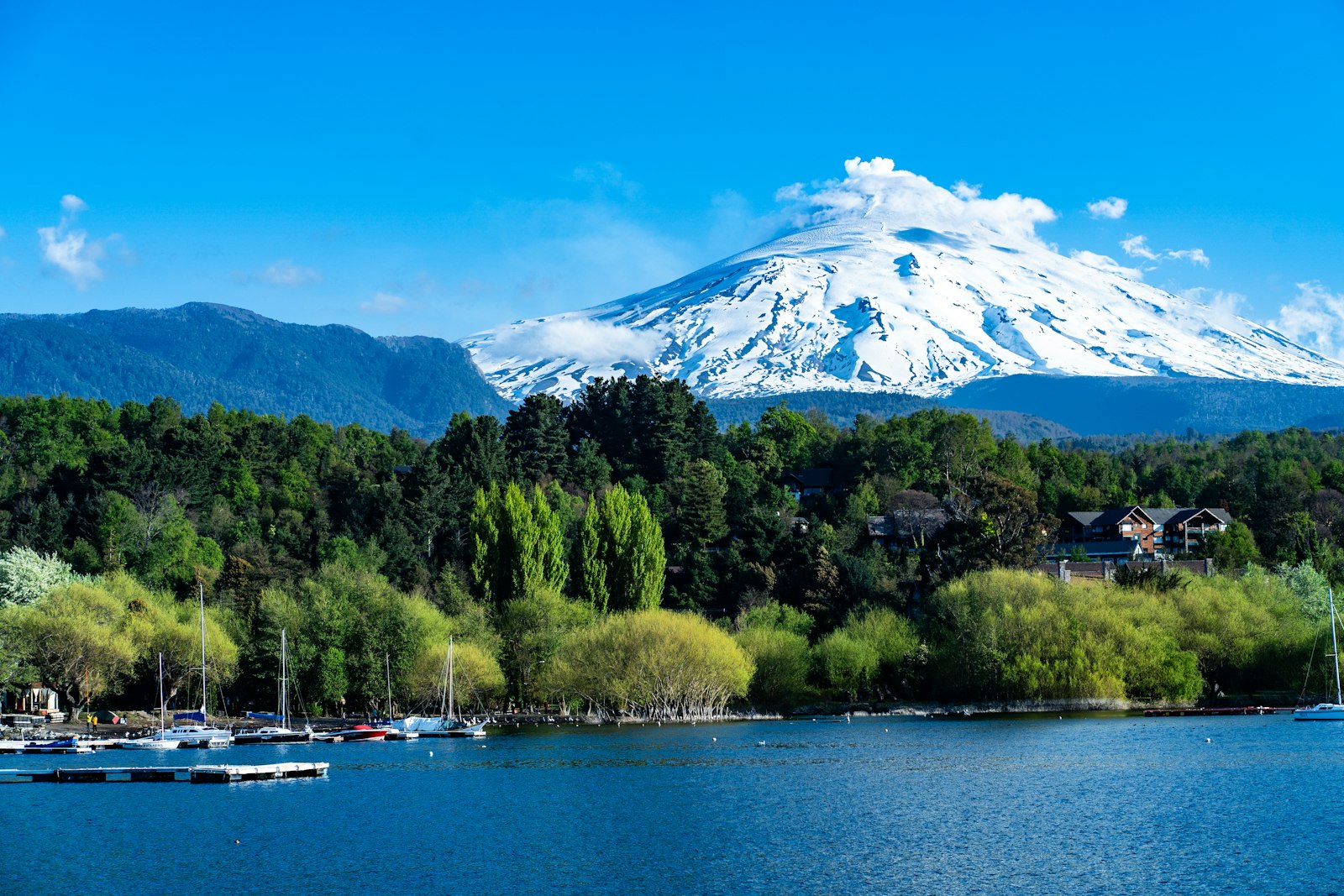
Chile's adventure capital of the Lake District, under the smoking Villarrica volcano, ringed by lakes, hot springs and forests.
- Best time to visit: December-March (summer) & winter for skiing
- Daily budget (budget traveller): $50 to $130 USD
- Ideal trip length: 3 to 4 days
Pucón sits on the shore of Lake Villarrica in Chile's stunning Lake District, in the shadow of the near-perfect cone of the Villarrica volcano, one of the most active in South America and often glowing at night. It's the country's adventure playground: climb the smoking volcano to peer into its crater, raft foaming rivers, soak in natural hot springs, hike araucaria-forested national parks, and kayak or swim in glacial lakes. The town itself is a compact resort of wooden lodges, gear shops and cafés, buzzing with an outdoors crowd. Whether you crave adrenaline or just want lakes, forests and thermal baths, Pucón delivers. Joy Plus balances your volcano, rivers, parks and hot springs around the mountain weather.
Pucón is a one-grid lake town with a volcano parked at the end of the main street. Avenida O'Higgins runs from the plaza straight down to the black sand of Playa Grande, and above it Villarrica (2,847 m) puffs a thin plume most mornings. Chileans have been coming here since the 1930s, and the town now runs on a simple loop. You book something at an agency, check the wind, soak in a hot spring, and eat trout with a pisco sour. Everything of note is under 40 km away, so you can base yourself in one bed for a week.
The first thing to understand is that the weather runs the trip. The Villarrica climb only goes when the summit is clear, the wind is low and the alert level allows it. Operators decide in the early morning, and cancellations are common. Rafting on the Trancura depends on water levels, and Huerquehue is best on a dry day. So you plan like a local: book the volcano for day 1 or 2 to leave buffer days, keep hot springs and the lake for the grey days, and never prepay a non-refundable volcano slot. The upside is that nearly everything here, from rafting to the ancient araucaria forests, is a half-day or full-day outing priced between CLP 3,000 and CLP 150,000.
Timing matters more than anywhere else in Chile. January and February are Chilean school holidays, when the beach is wall to wall, the tábanos (biting horse flies) are out and prices jump 30 to 50 percent. Late November, December and March are the sweet spot, with long light and room to breathe. Winter turns the volcano into a ski hill (Ski Pucón, July to September), and Los Pozones in the rain is its own kind of perfect. Pucón has no airport of its own, so you arrive via Temuco, 1h45 away by bus, and that distance keeps it feeling like a place people choose rather than stumble into.
How many days in Pucón?
For Pucón, we recommend 3 to 4 days.
| Trip length | What you'll see | Itinerary |
|---|---|---|
| 2 days | Lake and volcano forecast; Villarrica volcano summit | Pucón in 2 days |
| 3 days · Recommended | Adds: Huerquehue National Park | Pucón in 3 days |
| 4 days · Recommended | Adds: Rafting and the lake | Pucón in 4 days |
| 5 days | Adds: Caburgua, waterfalls and thermal valleys | Pucón in 5 days |
| 7 days | Adds: Termas Geométricas day; Lava caves, buffer day | Pucón in 7 days |
Pucón itinerary
Arrive, lake and volcano forecast
Morning: Land at Temuco (ZCO), then a pre-booked transfer (about CLP 70,000 a car) or taxi to Temuco's bus terminal and JAC bus to Pucón (1h45, around CLP 5,000-6,000). Drop bags, coffee on Avenida O'Higgins.
Afternoon: Walk O'Higgins down to Playa Grande. Pop into Aguaventura or Summit Pucón and ask about the volcano window. Do not pay until the forecast is confirmed.
Evening: Climb Cerro La Cruz (about 20 min) for sunset. Trout dinner at Trawen, early bed in case the call comes at 6am.
Villarrica volcano summit
Morning: Pickup around 7:00, 15 km to Ski Pucón, chairlift up, then a roughly 4 to 5 hour crampon climb with a guide to the crater rim. Sulphur fumes, wind and a view of three lakes if you are lucky.
Afternoon: Slide down the snow on the plastic sled-mat (the fun part), back in town by 15:30. Late lunch of empanadas and a cold Kunstmann.
Evening: Taxi to Termas Los Pozones (about CLP 15,000-20,000 entry, open late). Soak your legs under the stars and arrange a return taxi before you go.
Huerquehue National Park
Morning: Early minibus or taxi to the Paillaco entrance (35 km, about 1h). Pay the CONAF fee (about CLP 10,000) and walk the Los Lagos trail past Lago Chico and Lago Toro through araucarias.
Afternoon: Picnic at Lago Verde, then loop back to Lago Tinquilco. Allow 6 to 7 hours total, 12 km.
Evening: Easy dinner and a pisco sour at Mamas & Tapas. Sore legs get hot-spring-level sleep.
Rafting and the lake
Morning: Upper Trancura rafting with Aguaventura or similar (class III-IV, about 3 hours, CLP 35,000-40,000). Wetsuit, helmet and a post-run snack are included.
Afternoon: Rent a SUP or kayak on Playa Grande (CLP 10,000-15,000 an hour) and paddle out for the volcano reflection.
Evening: Parrilla dinner at La Maga, then a quiet drink on Fresia.
Caburgua, waterfalls and thermal valleys
Morning: Ojos del Caburgua at opening (about 17 km north, CLP 3,000-5,000 entry). Turquoise pools fed by underground rivers, best before the crowds.
Afternoon: Swim at Playa Negra on Lago Caburgua, then take the Huife road to Termas Huife or the Cañi sanctuary for araucaria forest.
Evening: Back in town for a trout ceviche or a plate of curanto, then bed.
Termas Geométricas day
Morning: Leave by 8:30 for Coñaripe and Termas Geométricas (about 2 hours from Pucón). Book online, entry around CLP 45,000-55,000.
Afternoon: Soak between 17 red-wood walkways and a waterfall gorge, eat in the on-site cafe.
Evening: Return via Lican Ray for kuchen and dinner, then an early night.
Lava caves, buffer day, depart
Morning: Cuevas Volcánicas at 9:30 (about CLP 15,000-20,000, helmet and torch included, 45 min). If weather stopped your volcano climb earlier, this is the buffer slot to try again.
Afternoon: Last lunch of empanadas and a farewell pint, then JAC bus to Temuco (1h45) for your flight.
Evening: Fly from Temuco to Santiago, or take a night bus south to Puerto Varas.
Best neighbourhoods
- Pucón town centre: The compact grid of lodges, gear shops, cafés and tour agencies near the lake.
- Playa Grande: The black-sand lake beach for swimming, kayaking and volcano views.
- Villarrica National Park: The volcano and its trails, ski area and lava caves just outside town.
- Huerquehue National Park: A forested park of lakes and araucaria trees for day hikes.
- Caburgua & hot springs: The lake and thermal-spring valleys northeast of town.
Must-do experiences
- Climb the Villarrica volcano: Summit the smoking cone with crampons and ice-axe for crater views (guided).
- Soak in natural hot springs: Relax in forest thermal pools like Termas Los Pozones, or Geométricas nearly two hours' drive away.
- Raft the Trancura River: Tackle whitewater rapids through scenic mountain gorges.
- Hike Huerquehue National Park: Trek to alpine lakes among ancient araucaria trees.
- Relax at Playa Grande: Swim, kayak or sunbathe on the black-sand lake beach.
- Visit Ojos del Caburgua: See the turquoise waterfalls and pools near Lake Caburgua.
Hidden gems
- The volcano glowing red at night from town on clear evenings.
- Quiet forest hot springs like Los Pozones after dark.
- The lava caves (Cuevas Volcánicas) on the volcano's flank.
- Sunset kayaking on Lake Villarrica with the volcano behind you.
Daily budget
- Accommodation: budget CLP 14,000-25,000 / night (hostel dorm), mid-range CLP 90,000-160,000 (boutique double or lake cabaña), splurge CLP 350,000+ (Hotel Antumalal). Jan-Feb rates run 30 to 50 percent higher. Foreign visitors paying with a foreign card or in dollars can have the 19% IVA removed, so ask at check-in.
- Food: budget CLP 15,000-22,000 / day (empanadas, menú del día, Eltit supermarket picnics), mid-range CLP 35,000-55,000 (trout dinner at Trawen or La Maga), splurge CLP 80,000+ (dinner at Antumalal). Menú del día at small comedores a few blocks off O'Higgins is CLP 8,000-12,000 with a drink. A cheese and ham sandwich or empanada de pino is CLP 2,500-4,000.
- Transport: budget CLP 3,000-8,000 / day (colectivos and minibuses), mid-range CLP 15,000-25,000 (shared taxis plus a few transfers), splurge CLP 100,000+ (private driver or 4x4 rental with fuel). Town is walkable. Rental cars run CLP 45,000-70,000 a day and fuel is roughly CLP 1,300 a litre. Villarrica buses cost CLP 1,500-2,000.
- Activities: budget CLP 10,000-20,000 / day (Playa Grande, Cerro La Cruz, one park fee), mid-range CLP 40,000-80,000 (rafting plus a hot spring), splurge CLP 150,000+ (volcano climb or heli-ski day). Volcano with guide and gear is about CLP 130,000-150,000, chairlift often extra. Lower Trancura rafting is CLP 25,000-30,000, Upper CLP 35,000-40,000. Huerquehue entry is about CLP 10,000.
- Drinks & nightlife: budget CLP 6,000-10,000 (a pint or happy-hour pisco sour), mid-range CLP 18,000-30,000 (bar crawl on O'Higgins and Fresia), splurge CLP 50,000+ (cocktails at Antumalal, casino night at Enjoy Pucón). Craft pints are CLP 4,500-6,500 and a pisco sour CLP 5,000-8,000. Most bars run 2x1 happy hours from around 6pm to 9pm.
Where to stay
- Social hostel in Pucón town centre (CLP 14,000-25,000 / night dorm, CLP 45,000-70,000 private): Chili Kiwi or Espacio Ecole, a short walk from the lake, tour desks, shared kitchens and a ride-share board for hot springs and parks.
- Boutique hotel in Near Playa Grande and the Península (CLP 110,000-180,000 / night): Small lakeside hotels with lake and volcano views, wood-and-stone lodge feel, ten minutes on foot to O'Higgins.
- Apartment in Camino a Playa Grande or Camino a Caburgua (CLP 60,000-110,000 / night for 2-4 people): A cabaña with kitchen, wood stove and a terrace. Best value for 4+ nights or small groups, with a supermarket run to Eltit.
- Splurge in Lake bluff, 2 km out of town (CLP 350,000-550,000 / night): Hotel Antumalal, a 1950s design lodge perched over Lake Villarrica with terraced gardens, a heated pool and a legendary dining room.
What to eat
- Fresh lake and river trout and salmon
- Curanto and hearty southern Chilean stews
- Mapuche-inspired dishes and merkén-spiced fare
- Craft beer and pisco sours after a day outdoors
Day trips
- Huerquehue National Park (35 km, about 1 hour): Araucaria forest, three alpine lakes and a classic 12 km Los Lagos hike. Start by 9am and carry a picnic. Entry is about CLP 10,000. Morning minibus from the Pucón terminal (about CLP 3,000-4,000 each way, ask the day before), taxi CLP 25,000-30,000 each way, or a tour.
- Termas Geométricas (Coñaripe) (About 90 km, 2 hours): Seventeen thermal pools linked by red-wood walkways in a forest gorge. Book online, arrive by midday and plan a full afternoon. Rental car, or tour transfers (CLP 25,000-35,000 per person). Entry is about CLP 45,000-55,000.
- Villarrica and Lican Ray (25 km to Villarrica, 55 km to Lican Ray): Villarrica has a lake promenade and a Mapuche craft market. Lican Ray is a black-sand beach town known for kuchen and fried fish. Buses and colectivos from Pucón to Villarrica every 15 to 20 minutes (CLP 1,500-2,000), then a bus from Villarrica to Lican Ray (about 40 minutes, CLP 1,500-2,500).
When to visit
- Summer (December - February): 22-28°C days, 8-12°C nights, mostly dry, strong UV, tábanos in January. Crowds: Very heavy in January and February, Chilean school holidays. Best volcano and rafting odds, but expect 30 to 50 percent higher prices and a packed Playa Grande. Aim for early December or the last week of February.
- Autumn (March - May): 12-22°C, cooling fast, rain returns from late April. Crowds: Drops sharply after the first week of March. The locals' pick. Gold and red lenga and roble forests, empty trails in Huerquehue, hot springs at their best, and the volcano still climbable in March.
- Winter (June - August): 2-11°C, heavy rain in town, snow on the volcano. Crowds: Low, except the two-week mid-July winter holiday. Ski Pucón runs July to September and the hot springs shine in the rain. No summit climbs, cheapest beds, and many lake operators close.
- Spring (September - November): 8-18°C, changeable, windy, rivers high with snowmelt. Crowds: Low to moderate. Big rafting water on the Trancura and late-season skiing in September. Volcano climbs reopen in November when the snow is stable, but expect cancelled days.
Entry rules for your passport
Visa rules for Chile depend on the passport you travel on. Check the official source before you book: Chile Ministry of Foreign Affairs
Getting there
Pucón has no commercial airport. Fly to Temuco's La Araucanía airport (ZCO) from Santiago (SCL), about 1h20 with LATAM, Sky or JetSMART, fares typically CLP 30,000-90,000 one way. From ZCO, take a pre-booked shared or private transfer (CLP 20,000-30,000 per person shared, CLP 65,000-90,000 per car) or a taxi to Temuco's bus terminal, then a JAC bus to Pucón (about 1h45, every 30 minutes, CLP 5,000-6,000). Overnight buses from Santiago (Turbus, Pullman, JAC) take 10 to 11 hours, cama seats CLP 25,000-45,000. Pucón's bus terminal is at Palguín and Uruguay, a 5 to 10 minute walk to the lake. If you want to chase good weather, rent a car at ZCO for CLP 45,000-70,000 a day, but you do not need one for the town itself.
Getting around
Pucón's town centre is small and easily walkable, with tour agencies, restaurants and the lakefront all close together. To reach the volcano, national parks, hot springs, waterfalls and Lake Caburgua you'll need transport: most visitors go with organised tours that include transfers, or rent a car for flexibility to chase good weather and reach thermal springs at night. Local buses and minibuses (colectivos) serve nearby towns and some attractions, and taxis are available. Pucón is around 100 kilometres from Temuco, whose airport offers domestic flights from Santiago; long-distance buses also connect Pucón with Santiago and the wider Lake District. A hire car is the most convenient way to explore the surrounding region.
Safety
Pucón is a safe, well-organised adventure-tourism town where visitors and solo travellers generally feel very comfortable, with low crime and a friendly outdoor atmosphere; standard petty-theft precautions are enough in town. The real risks here are activity-related. The Villarrica volcano is active and climbs only run in safe conditions with certified guides and proper gear, so never attempt it alone and always follow guide instructions and eruption-alert status. Rafting, hiking and volcano climbs demand reasonable fitness and reputable operators, check credentials and equipment. Mountain weather changes fast, so carry layers and sun protection, respect lake and river currents, and enjoy hot springs sensibly. With good operators and common sense, Pucón's adventures are safe and hugely rewarding.
Solo travel tips
- Book the volcano on the day, not in advance: Agencies like Aguaventura, Summit Pucón and Politur confirm in the early morning. Book the night before, never weeks ahead, and ask about their weather-cancellation policy. Solo travellers get slotted into mixed groups easily.
- Hostel pick: Chili Kiwi or Espacio Ecole: Both are social without forcing pub crawls and run a message board for splitting taxis to Los Pozones and Huerquehue. Check the board before breakfast.
- Split taxis, don't hire alone: A private taxi to Termas Los Pozones or Huerquehue is CLP 25,000-35,000 each way, but three or four people share it for a fraction. Colectivos and minibuses to Caburgua are CLP 2,000-3,000.
- Solo female travellers: Pucón is one of the easiest places in Chile for women alone. Keep standard precautions: tell your hostel your hiking route, avoid empty trails after 3pm, use a booked taxi for night hot springs and keep your drink in sight at bars.
- Tábanos and sun, not crime, are the real nuisances: In January and February the horse flies bite hard at lake beaches. Pack a hat, long sleeves and repellent. Sunscreen SPF 50 at altitude is not optional.
- Find your tribe on a raft or SUP: Rafting groups and sunset SUP outings are full of solo travellers and finish with a beer. Mamas & Tapas and the Playa Grande bars are the easy places to keep a conversation going.
Cultural etiquette
- Greet with a single kiss on the right cheek, handshakes for first meetings with men. Chileans say 'buenos días' to everyone in shops and buses.
- Tip about 10 percent at restaurants. Many bills ask '¿propina incluida?', and it is voluntary but expected. Round up for taxis and small cafés.
- Meals run late: lunch 1 to 3pm, once (tea and sandwiches) around 6 to 8pm, dinner 8:30 to 10pm. Arriving at 6pm gets you an empty dining room.
- No fires, no exceptions. CONAF enforces a strict ban and wildfires in the south are a real issue. Smoke only in designated areas.
- You are in Mapuche territory (Wallmapu). The araucaria (pehuén) is sacred to the Pehuenche. Ask before photographing people or ceremonial sites.
- Shower before entering hot springs, wear swimwear, keep noise low in forest pools and carry out all trash.
- Follow guide instructions on the volcano without argument. They stop the climb for wind and fumes, and arguing helps nobody.
Frequently asked questions
How many days do you need in Pucón?
Three to four days is ideal for Pucón. That gives you time for one big adventure such as climbing the Villarrica volcano or rafting, a day hiking in Huerquehue or Villarrica national parks, and a more relaxed day mixing the lake beach with a soak in the natural hot springs. A fourth day allows flexibility for weather, important since the volcano climb depends on good conditions, or an extra excursion to Lake Caburgua and its waterfalls. Adventure lovers could easily stay a week, combining Pucón with the wider Chilean Lake District. For a first visit balancing adrenaline and relaxation, three or four days works well.
What is Pucón known for?
Pucón is known as the adventure capital of Chile's Lake District, set on the shore of Lake Villarrica beneath the near-perfect, often-smoking cone of the Villarrica volcano, one of South America's most active. It's famous for climbing that volcano to peer into its crater, along with whitewater rafting, hiking, kayaking, mountain biking and skiing in winter. Pucón is equally renowned for its many natural hot springs set in forests and valleys, its araucaria-forested national parks such as Huerquehue, and its black-sand lake beaches. The compact resort town of wooden lodges and gear shops makes it a base for outdoor adventure in every season.
Can you climb the Villarrica volcano from Pucón?
Yes, climbing the Villarrica volcano is Pucón's signature adventure. The guided ascent takes you up snow and ice to the crater rim of the roughly 2,847-metre active volcano, where you can peer down toward its lava lake and enjoy vast views over lakes and other peaks. It's a strenuous full-day climb requiring reasonable fitness, and it's done with certified guides who provide crampons, ice-axes and safety gear; independent climbing is not permitted. Crucially, climbs only run when weather and volcanic-activity conditions are safe, so trips are sometimes cancelled at short notice. Booking early in your stay gives flexibility to reschedule if the weather doesn't cooperate. Summit climbs were suspended for long stretches between 2022 and 2025 while the alert level was raised. They resumed under a protocol that allows them only at the lowest alert level and limits time at the crater to ten minutes, so check the current status before you plan around it.
When is the best time to visit Pucón?
The best time to visit Pucón for hiking, volcano climbing, rafting and lake activities is the southern summer, from December to March, when the weather is warmest and driest, days are long and all outdoor activities are running, though this is also the busiest and priciest period, especially in January and February. Spring and autumn (October-November and April) are quieter with pleasant conditions but more variable weather. Winter, from June to August, transforms Pucón into a ski destination on the volcano's slopes and a cosy time for hot springs, though many summer activities pause. For adventure and lake life choose summer; for skiing and thermal baths choose winter.
What are the hot springs near Pucón?
Pucón is surrounded by natural hot springs (termas) fed by geothermal activity from the volcanoes, making a soak an essential part of any visit. Popular options include Termas Los Pozones, a series of rustic stone pools by a river, especially atmospheric at night; Termas Geométricas, nearly two hours' drive away, a stylish complex of hot pools linked by red boardwalks through a forested gorge; and family-friendly resorts like Termas de Menetúe and Huife with landscaped pools. They range from simple rustic baths to polished spa complexes, and most lie a short drive from town in scenic valleys. Many visitors combine a day of adventure with an evening soak to relax tired muscles under the stars.
Is Pucón worth visiting?
Yes, Pucón is well worth visiting and is one of the highlights of southern Chile. Its dramatic setting beneath the smoking Villarrica volcano, on a lake ringed by forests, hot springs and national parks, makes it one of South America's premier outdoor destinations. Whether you want adrenaline, climbing the volcano, rafting rivers, hiking araucaria forests, or relaxation, soaking in thermal springs and lazing on lake beaches, Pucón delivers in every season, with skiing in winter too. The town is compact, welcoming and well set up for tourism. For anyone who loves nature and adventure, Pucón is a genuine bucket-list stop on any trip through Chile's Lake District.
Is Pucón safe for tourists?
Pucón is a safe, welcoming adventure town where tourists and solo travellers generally feel very comfortable, with low crime; standard precautions against petty theft in town are enough. The main risks are activity-related rather than criminal. The Villarrica volcano is active, so climbs run only in safe conditions with certified guides and proper equipment, follow their instructions and eruption alerts, and never climb alone. For rafting, hiking and other adventures, choose reputable operators and check gear and credentials. Mountain weather changes fast, so pack layers and sun protection, respect river and lake currents, and use hot springs sensibly. With good operators and common sense, Pucón is a safe and hugely rewarding destination.
Do I need a visa to visit Chile?
Citizens of the EU, UK, US, Canada and Australia can enter Chile visa-free for up to 90 days. Your passport must be valid for the duration of your stay.
Tours and activities in Pucón | Pucón in 2 days | Pucón in 3 days | Pucón in 4 days | Pucón in 5 days | Pucón in 7 days
Joy Plus home | Destinations | Itineraries | Activities | Flights | Budget planner | Calendar | Map | Blog | Lifetime access