Destinations / Asia
Puerto Princesa, Philippines travel guide
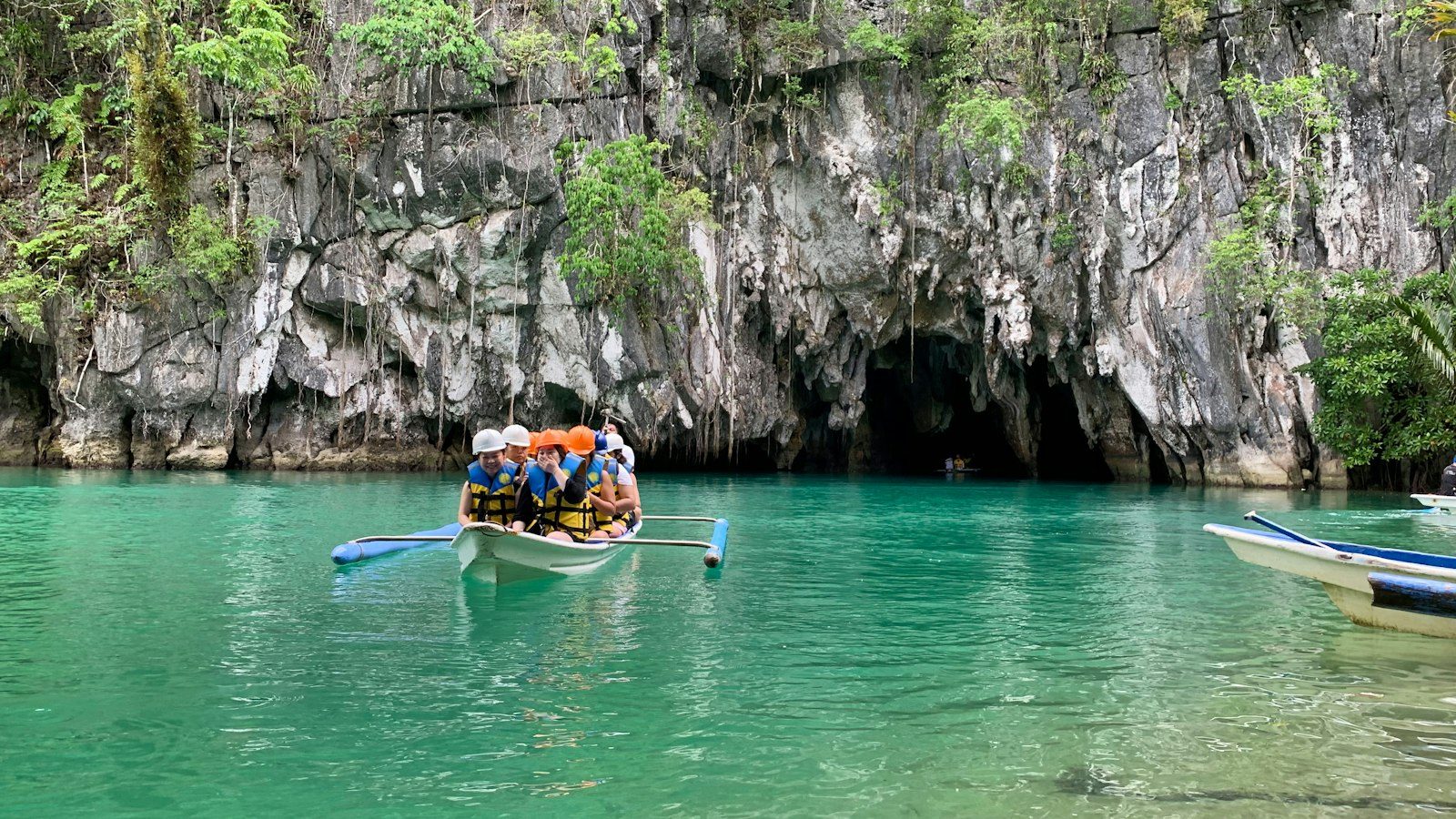
Palawan's capital and main airport, a low-rise city on a sheltered bay. You ride a paddle boat into a cave river under the limestone, snorkel off sandbars in Honda Bay and eat grilled fish on the Baywalk once the heat goes out of the day.
- Best time to visit: December to April
- Daily budget (budget traveller): $30 to $120 USD
- Ideal trip length: 3 to 5 days
Puerto Princesa is the capital of Palawan and the place most travellers fly into before heading north to Port Barton or El Nido. Manila is about an hour away by air, and the airport is only a short tricycle ride from the centre. On paper it is a huge city, one of the biggest in the country by land area, but the part you will use is small and easy: Rizal Avenue running from the airport to the bay, a few streets of hotels and restaurants, and the Baywalk along the water. The big draw is the Puerto Princesa Underground River, a UNESCO-listed cave river about two hours north at Sabang. You float into it by paddle boat, past bats and huge rock formations. Closer to town, Honda Bay has small islands and sandbars for a day of snorkelling, and the Iwahig River lights up with fireflies after dark. The city itself is clean and orderly, with strict rules on littering and smoking. Rooms and food are cheap by Western standards, and a dorm bed, shared tricycles and joiner tours keep a solo trip affordable. Many people rush through in a night. Stay three or four and you get the cave, the islands and a slower look at Palawan before the long van ride north.
Puerto Princesa sits on the east coast of Palawan, the long, thin island that stretches towards Borneo. For most visitors it is the way in, as the airport has far more flights than El Nido's small airstrip. The city itself is green, low-rise and orderly, known in the Philippines for clean streets and strict rules on rubbish and smoking. There are no big beaches in town, and that is why many people leave after a night. Stay a little longer and you get some of Palawan's best sights within reach: the Underground River at Sabang, the islands of Honda Bay, fireflies on the Iwahig River and a WWII story at Plaza Cuartel. It is cheap too. Dorm beds start at under $10 USD, a bowl of chao long costs a couple of dollars and shared tours take care of the logistics.
Getting here is easy. Flights from Manila take about an hour, and there are also flights from Cebu and a few other cities. Tricycles cover the 3km from the airport to the centre for around ₱50-150. Once you are here, tricycles do most of the work, with short shared hops along Rizal Avenue for small change. Base yourself in the centre for restaurants and nightlife, near the airport for quiet hostels and early flights, or in Sabang if the cave is your main reason for coming. When you move on, shared vans and buses run north to Port Barton in about 3.5 hours and to El Nido in 5 to 7.
Timing shapes the trip. The dry season from December to April brings calm seas and reliable boats, but April and May are the hottest and busiest months, with domestic holidaymakers filling the Underground River slots. From June to October the southwest monsoon brings heavy showers and some cancelled boat trips, though mornings are often fine and prices fall. Whatever the month, book the Underground River permit before anything else. English is widely spoken, people are friendly and nights are relaxed rather than wild. If you want beach bars, go north. If you want a cave river, a sandbar lunch and fireflies in the mangroves, stay here.
Puerto Princesa itinerary
Arrive and find your feet
Morning: Fly in from Manila (about an hour) and take a tricycle to your hostel. Ask your host or a tour desk to book your Underground River permit straight away.
Afternoon: Rest through the heat, then take a tricycle down Rizal Avenue to Plaza Cuartel and the Immaculate Conception Cathedral.
Evening: Walk the Baywalk at sunset and eat grilled fish from the stalls, or book a table at Ka Lui.
Honda Bay islands
Morning: Join a Honda Bay island-hopping tour with hotel pick-up around 7:30am. Pay the ₱150 environmental fee and keep the receipt.
Afternoon: Swim off Luli or Cowrie Island, snorkel at Pambato Reef and have lunch on the sand. Back in town by mid-afternoon.
Evening: Try tamilok and crocodile sisig at Kinabuch's Grill and Bar, then a drink on Rizal Avenue.
The Underground River
Morning: Early van to Sabang (about 2 hours). Stop at Ugong Rock if your tour includes it, then take the boat to the park entrance.
Afternoon: Paddle about 45 minutes into the cave river with the audio guide. Afterwards, add the mangrove paddle boat tour or swim at Sabang beach.
Evening: Return to the city by van, or stay the night in Sabang for a quiet evening on the beach.
Crocodiles, Iwahig and fireflies
Morning: Take a tricycle to the Palawan Wildlife Rescue and Conservation Center (about ₱40) and join a guided walk.
Afternoon: Carry on to the Iwahig Prison and Penal Farm. Entry is free, and you can buy crafts made by inmates at the shop.
Evening: Join a firefly-watching boat on the Iwahig River (from about $30 USD with transfers). Wear repellent.
Baker's Hill and a slow afternoon
Morning: Visit Baker's Hill for hopia and ube, then the free viewpoint at Mitra's Ranch over Honda Bay. Check opening days before you go.
Afternoon: Look in at Binuatan Creations or the Butterfly Eco-Garden, or simply rest by your hostel pool or in a café.
Evening: Chao long for dinner and an early night if you are heading to the beach.
Nagtabon Beach
Morning: Take a tricycle or scooter to Nagtabon Beach on the west coast (about an hour). Arrange a return ride before you set off.
Afternoon: Swim, read in the shade and eat lunch at one of the small beach resorts.
Evening: Watch the sunset over the sea, then head back to the city or stay overnight in a beach hut.
Slow morning and move on
Morning: Have a last breakfast and buy cashews or hopia to take with you.
Afternoon: Catch a shared van north to Port Barton (about 3.5 hours) or fly out. Check van times the day before.
Evening: Arrive in Port Barton, or carry on to your next stop.
Best neighbourhoods
- City centre and Rizal Avenue: The main road from the airport to the bay, lined with hotels, banks, malls, restaurants and bars. Ka Lui and Kinabuch's are here, and shared tricycles pass every minute. It is noisy in the daytime but the most practical base for a first stay, with everything a short ride away.
- Plaza Cuartel and the Baywalk: The old heart of the city on a low bluff above the bay, with the cathedral, the Plaza Cuartel memorial and the Baywalk promenade. It is quieter in the day and busy in the evenings, when families come out and the grill stalls light up. Pick it if you want sunsets on your doorstep.
- Airport side and Bancao-Bancao: The residential streets around the airport, where many of the best hostels and small guesthouses sit. It is calm, cheap and handy for early flights or late arrivals. You will need a tricycle for dinner and nights out, but rides into the centre take only a few minutes.
- Sabang: A small beach village about two hours north, at the doorstep of the Underground River. There are guesthouses, beach huts, a long sandy beach and a large resort. Stay a night here to visit the cave early before the tour vans arrive, or to break the trip. Evenings are very quiet.
- Nagtabon Beach: A wide, pale beach on the west coast, about an hour from the city on a partly rough road. There are a few simple resorts, a hostel and almost nothing else. It suits you if you want a night or two of sunset swims and hammocks without leaving the Puerto Princesa area.
Must-do experiences
- Float into the Underground River: Take a paddle boat about 45 minutes into the cave river at Sabang, past bats, swiftlets and huge rock formations. You need a permit booked in advance. Park fees are about ₱740, including the ₱500 entrance and the audio guide, plus your share of the boat from Sabang.
- Island hop in Honda Bay: Spend a day on the small islands and sandbars north of the city, usually Cowrie, Luli and Starfish Island, with snorkelling at Pambato Reef. Joiner tours cost roughly ₱1,500-2,200 with transfers, boat, lunch and fees. Luli disappears at high tide, so it is best seen in the morning.
- Stand quietly at Plaza Cuartel: This small garden by the cathedral was a Japanese garrison in the Second World War. In December 1944 around 150 American prisoners of war were killed here, and a memorial lists their names. Entry is free or a token fee. Walk on to the Immaculate Conception Cathedral next door.
- Watch fireflies on the Iwahig River: After dark, small boats glide down the mangrove-lined river near Iwahig while the trees blink with fireflies. Tours with transfers start at around $30 to $36 USD. Go on a moonless or cloudy night for the best show, and wear insect repellent.
- Eat by the Baywalk at sunset: The promenade along the bay is where the city comes to cool off. Walk it as the sun goes down, then pick fish, squid or skewers from the grill stalls. It is cheap, lively and safe, and a good way to see local life on your first evening.
- Visit the crocodile centre: The Palawan Wildlife Rescue and Conservation Center, still called the crocodile farm by everyone, is about 13km south of the centre. Adult entry is around ₱40. Short guided walks every 15 minutes or so cover the breeding pens and a small zoo of rescued Palawan animals.
- See the Iwahig Prison and Penal Farm: One of the world's largest open prisons, where inmates farm and live without walls. Parts of it are open to visitors and entry is free. Buy crafts made by inmates at the souvenir shop, and combine it with the fireflies in the evening.
Hidden gems
- Ugong Rock in Tagabinet, a limestone outcrop on the way to Sabang where you can scramble through a cave to the top and come back down by zipline
- The mangrove paddle boat tour in Sabang, about ₱200, where local guides row you through quiet channels and point out snakes sleeping in the branches
- Binuatan Creations, a small weaving workshop on the city tour loop where you can watch mats and bags being made on wooden looms
- The Palawan Butterfly Eco-Garden and Tribal Village, a small garden where Palaw'an people show traditional crafts, music and blowpipe skills
- Nagtabon Beach on a weekday afternoon, when the wide sand is nearly empty and the sun sets straight over the sea
Daily budget
- Accommodation: budget $8 to $15 USD / night (hostel dorm), mid-range $35 to $70 USD (city hotel or guesthouse room), splurge $150+ USD (beach resort in Sabang or Honda Bay). Prices rise in April, May and over Christmas. Many hostels are near the airport rather than the centre. Single private rooms in hostels start at around $20 USD.
- Food: budget $8 to $15 USD / day (carinderia meals, chao long, Baywalk grills), mid-range $20 to $35 USD (café lunch and a seafood dinner), splurge $50+ USD (seafood feasts, drinks, resort dining). A carinderia plate is about ₱80-150 and a bowl of chao long about ₱80-120. Restaurant mains run roughly ₱250-600. Prices are rough guides.
- Transport: budget $2 to $5 USD / day (shared tricycles and multicabs), mid-range $10 to $25 USD (chartered tricycles or scooter hire), splurge $100+ USD (private van to Sabang or El Nido). The airport tricycle is about ₱50-150. Scooters cost ₱500-600 a day. Shared vans to El Nido are about ₱500-850 and to Port Barton around ₱600.
- Activities: budget $0 to $10 USD / day (Plaza Cuartel, cathedral, Baywalk, crocodile centre), mid-range $25 to $50 USD (Underground River or Honda Bay joiner tour), splurge $70+ USD (private tours, firefly dinner cruise, diving). Underground River park fees are about ₱740 plus a shared boat. The ₱150 environmental fee is paid once and usually covers later tours. Keep the receipt.
- Drinks & nightlife: budget $2 to $5 USD (a San Miguel or two at a local bar), mid-range $10 to $20 USD (a few drinks at a Rizal Avenue bar), splurge $35+ USD (cocktails at a hotel or resort bar). A local beer costs about ₱60-120 and a fresh fruit shake ₱80-150. Nightlife means relaxed bars and live music rather than clubs.
Where to stay
- Social hostel in City centre and airport side ($8 to $15 USD / night (dorm)): Mojo Hostel and 100% Cafe Moto Hostel are popular with solo travellers, with dorms, common areas and staff who book tours and permits. Both are a short tricycle ride from the airport and Rizal Avenue.
- City hotel in Rizal Avenue ($35 to $70 USD / night): Mid-range hotels along Rizal Avenue put you near banks, restaurants and bars, with air conditioning, pools at some and easy tricycles to the airport. Good for a private room between tours.
- Beach base in Sabang ($25 to $60 USD / night): Simple guesthouses and beach huts in Sabang let you visit the Underground River early, before the tour vans arrive, and fall asleep to the sound of the sea.
- Splurge in Sabang ($150 to $300+ USD / night): Four Points by Sheraton Palawan sits on Sabang beach a few minutes from the Underground River wharf, with a big pool and sea views. It turns the cave trip into a short resort break.
What to eat
- Chao long: the local take on Vietnamese noodle soup, brought by refugees in the 1970s. A big bowl with bread costs around ₱80-120 at places such as Bona's Chao Long House
- Tamilok: the long woodworm found in mangrove wood, eaten raw with vinegar and calamansi at Kinabuch's Grill and Bar. Worth trying once, and it tastes like oysters
- Grilled seafood at Ka Lui: a set meal of fish, prawns and fruit in a wooden house where you leave your shoes at the door. Book ahead for dinner
- Crocodile sisig: chopped crocodile meat cooked sizzling with onion and chilli, served at Kinabuch's and a few other city restaurants
- Baker's Hill hopia and ube: small flaky pastries filled with purple yam or mung bean, sold at the bakery on the hill. Good for taking north
- Carinderia rice meals: point at trays of adobo, sinigang and grilled fish in local canteens, and pay ₱80-150 for a full plate
Day trips
- Underground River and Sabang (About 80km north, roughly 2 hours by van): A UNESCO-listed cave river that you enter by paddle boat, with bats, swiftlets and huge rock formations. Sabang also has a long beach and a mangrove paddle boat tour. Join a shared tour (about ₱1,850-3,000 with permit and transfers) or take a public van from the city for around ₱250-400 each way. You need a permit booked in advance either way.
- Honda Bay (About 12-15km north, 30 to 45 minutes to Sta. Lourdes wharf): Small islands and sandbars with shallow snorkelling, beach shelters and lunch on the sand. Most tours stop at three islands, such as Cowrie, Luli and Starfish. Join a shared tour with pick-up for roughly ₱1,500-2,200, or take a tricycle or jeepney to Sta. Lourdes wharf, pay the ₱150 environmental fee and island fees, and hire a boat.
- Nagtabon Beach (About 25km west, roughly an hour by road): A wide, quiet beach facing the West Philippine Sea, with a handful of simple resorts and sunsets over the water. It is the nearest proper beach to the city. Hire a tricycle or van for the day, or ride a scooter. The last stretch is steep and partly rough, so agree on a return time with your driver before you leave.
When to visit
- Cool dry season (December - February): 27-31°C, mostly dry and sunny, calm seas. Crowds: Moderate, busy over Christmas and New Year. The most comfortable time. Boats run reliably and the heat is manageable. Book rooms early around the holidays.
- Hot dry season (March - May): 30-34°C, hot and humid, very little rain. Crowds: Busy, peaking in April and May and around Holy Week. Perfect sea conditions, but hot and crowded. Underground River slots sell out, so book permits well ahead.
- Wet season (June - September): 26-31°C, heavy showers and storms, rougher seas. Crowds: Low. Cheap and green, with mornings often clear. Expect some cancelled boat trips and leave a spare day for the cave.
- Shoulder season (October - November): 27-31°C, rain easing, occasional storms. Crowds: Low to moderate. A good gamble. Prices are low and the seas start to settle by late November, but watch the forecast for tropical storms.
Entry rules for your passport
Visa rules for the Philippines depend on the passport you travel on. Check the official source before you book: Bureau of Immigration, Philippines
Getting there
Puerto Princesa International Airport is about 3km from the centre and is Palawan's main gateway. Cebu Pacific, Philippine Airlines and AirAsia fly from Manila in about an hour, and there are also flights from Cebu and other cities. Tricycles outside arrivals charge around ₱50-150 into town, and many hostels offer pick-up. Arriving from El Nido, shared vans take 5 to 6 hours and cost around ₱500-850, and Cherry Bus takes 6 to 7 hours for less. From Port Barton, vans take about 3 to 3.5 hours for around ₱600. Vans from the north usually drop at the San Jose terminal north of the city, and a tricycle from there costs roughly ₱100-150. Before flying in from abroad, register on the free eTravel website within 72 hours of arrival and have proof of onward travel ready.
Getting around
Tricycles are how everyone gets around Puerto Princesa. Short shared rides along Rizal Avenue cost around ₱15-25, and chartering one to yourself for a trip across town costs roughly ₱100-150. The airport is about 3km from the centre, so expect around ₱50-150 into town. Agree the fare before you get in if there is no posted price. Multicabs, small jeepney-style vans, run fixed routes for a few pesos and go out to the San Jose bus terminal north of the city. Grab is limited here, so tricycles are the main option. For day trips, most solo travellers join a shared tour with hotel pick-up, which is easier than piecing together public transport. Scooter hire costs about ₱500-600 a day from hostels and shops. Roads out of town are fine but busy with trucks, and you need a licence and a helmet. Shared vans to Sabang take about 2 hours and run only a few times a day, so check the times the day before. Vans north to Port Barton and El Nido leave from San Jose terminal or pick you up from your hotel if you book ahead.
Safety
Puerto Princesa has a reputation as one of the safer and cleaner cities in the Philippines, and violent crime against visitors is rare. Watch your phone and bag on the Baywalk and in markets, and use a lockable bag in dorms. The bigger risks are the sun, the sea and the wildlife. Wear a rash vest and reef-safe sunscreen on island tours, keep an eye on currents and jellyfish, and swim near other people. At the Underground River, long-tailed macaques snatch food and plastic bags, so keep snacks out of sight. Stray dogs and monkeys can carry rabies, so get any bite or scratch treated at once. Dengue is a risk all year, more so in the rainy season, so use repellent. Do not drink the tap water. Boat trips are cancelled when the sea is rough in the southwest monsoon, so build in a spare day. Public smoking and littering bring fines. The emergency number is 911. Bring travel insurance with medical cover, as private hospitals expect payment up front.
Solo travel tips
- Book the cave first: The Underground River has a daily cap and permits sell out in peak months. Lock in your date as soon as you arrive, then plan everything else around it.
- Use joiner tours: Shared tours with hotel pick-up are cheaper for one person than hiring boats and vans alone, and you split the Sabang boat fee with others automatically.
- Keep your eco-fee receipt: The ₱150 environmental fee is paid once. Show the receipt on later tours instead of paying again.
- Carry small notes: Tricycle drivers and stalls rarely have change for ₱1,000 notes. Break big notes at malls or supermarkets and keep ₱20 and ₱50 notes handy.
- Safety for solo travellers: The main risks are sun, sea and stray animals rather than crime. Swim near others, keep snacks hidden from monkeys and get any animal bite treated straight away.
- Meet people on the boats: Hostel common rooms, island-hopping boats and the firefly tours are easy places to meet other travellers, and many are heading north on the same vans.
Cultural etiquette
- Say 'salamat' (thank you) and 'magandang umaga' (good morning). Adding 'po' to sentences shows respect to older people.
- Dress modestly in the cathedral, with covered shoulders and knees, and keep swimwear for the beach and boats.
- Be quiet and respectful at Plaza Cuartel, which is a war memorial as well as a garden.
- Do not litter or smoke in public places. Puerto Princesa enforces fines, and locals take pride in a clean city.
- Do not touch or lift starfish, coral or other sea life on island tours, and never feed the monkeys.
- Ask before photographing Indigenous Palaw'an, Tagbanua or Batak people, and buy crafts directly where you can.
- Tipping guides and boat crews ₱50-100 after a good tour is appreciated, though not compulsory.
Frequently asked questions
How do I get to Puerto Princesa and from the airport to my room?
Most people fly from Manila, which takes about an hour, or from Cebu. Cebu Pacific, Philippine Airlines and AirAsia all fly here. The airport is about 3km from the centre, roughly 10 minutes by tricycle. Tricycles wait just outside arrivals and charge around ₱50-150 depending on where you are staying. Many hostels and hotels near the airport offer free or cheap pick-up, so ask when you book.
How many days do I need in Puerto Princesa?
Two nights is the minimum if you want the Underground River, as the permit and the long day trip take time. Three to four nights lets you add Honda Bay, the city sights and the Iwahig fireflies. Five days or more works if you want a night in Sabang or Nagtabon Beach before heading north to Port Barton or El Nido.
When is the best time to visit Puerto Princesa?
December to April is the dry season, with calm seas and the most reliable boat trips. January and February are slightly cooler. March to May is hot, and April and May are the local peak, especially around Holy Week, so book permits and rooms early. June to October brings the southwest monsoon, with heavy showers and occasional cancelled boat trips, but lower prices and fewer people.
How do I book the Underground River?
Every visitor needs a permit, and the city caps numbers at 900 a day. The easiest way is to book a tour through your hostel or an accredited agency, which handles the permit, transport and boat. Expect around ₱1,850-3,000 for a shared day tour. To go on your own, get the permit at the Underground River booking office at the City Coliseum a few days ahead, then take a van to Sabang. Park fees come to about ₱740, and the boat costs around ₱1,000-1,100 for up to six people, so solo travellers share with others at the wharf.
Should I do Honda Bay on my own or on a tour?
For a solo traveller, a joiner tour is usually cheaper and easier. It costs roughly ₱1,500-2,200 and includes hotel pick-up, the boat, lunch and island fees. Going on your own means a tricycle or jeepney to Sta. Lourdes wharf, the ₱150 environmental fee, island fees of about ₱100-200 each and a whole boat to yourself unless you find others to share. Keep your environmental fee receipt, as it usually covers your other tours in the city.
How do I get from Puerto Princesa to El Nido or Port Barton?
By road. Shared vans to El Nido take 5 to 6 hours and cost around ₱500-700 at the San Jose terminal, or about ₱850 if you book online with hotel or airport pick-up. Cherry Bus is cheaper but takes 6 to 7 hours. Vans to Port Barton take about 3 to 3.5 hours for around ₱600. Morning departures are best, as the road north is slow after dark.
Is Puerto Princesa safe for solo female travellers?
Yes, it is one of the easier places in the Philippines to travel alone. The centre is busy and well lit in the evenings, and joiner tours mean you are rarely on your own on day trips. Use registered tricycles, take normal care with drinks in bars and choose hostels with female dorms if you prefer. Avoid walking unlit roads outside the centre late at night.
What entry rules apply to the Philippines in 2026?
Many nationalities, including those from the UK, US, Canada, Australia and most EU countries, can enter visa-free for up to 30 days. Your passport should be valid for at least six months beyond your stay, and you need a return or onward ticket. Everyone must complete the free eTravel registration online within 72 hours before arrival. Avoid copycat sites that charge a fee. You can extend a visa-free stay through the Bureau of Immigration. Rules differ for some passports, so check the official Philippine government websites and your own government's travel advice before you go.
Tours and activities in Puerto Princesa | Puerto Princesa in 2 days | Puerto Princesa in 3 days | Puerto Princesa in 4 days | Puerto Princesa in 5 days | Puerto Princesa in 7 days
Can't decide? Compare Puerto Princesa with...
Joy Plus home | Destinations | Itineraries | Activities | Flights | Budget planner | Calendar | Map | Blog | Lifetime access