Destinations / Europe
Pula, Croatia travel guide
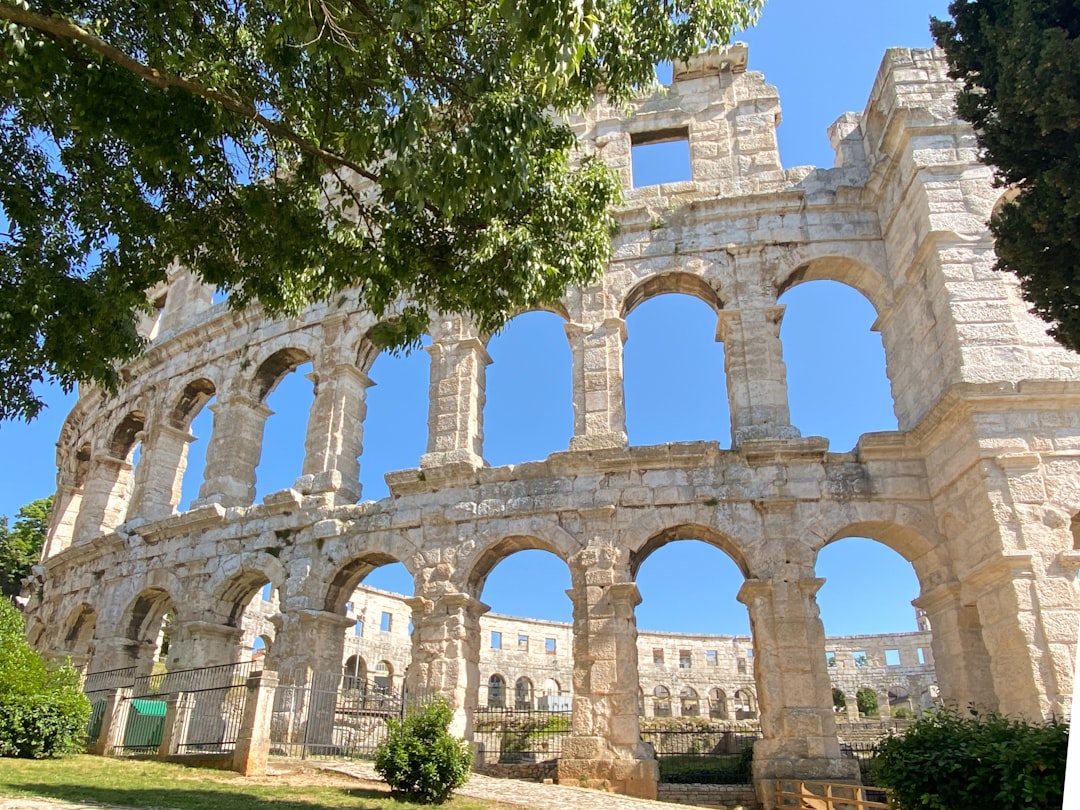
Istria's Roman port: an intact amphitheatre, pine-fringed coves and truffle country inland.
- Best time to visit: May-June and September
- Daily budget (budget traveller): $100 to $180 USD
- Ideal trip length: 3 to 4 days
Pula anchors the tip of Istria with a Roman amphitheatre that still hosts concerts, a working shipyard skyline and a coastline of pine-shaded pebble coves at Verudela and Kamenjak. Istrian food is the other draw: truffles, olive oil and Malvazija whites from hill towns like Motovun and Grožnjan, with Rovinj and Brijuni National Park within easy reach.
Pula is a working port that happens to have a Roman amphitheatre in the middle of it. The arena is the sixth-largest surviving in the world and still hosts concerts and the July film festival, while the Uljanik shipyard cranes light up the skyline at night like a fairground built by engineers. James Joyce taught English here in 1904 and his bronze statue sits outside Cafe Uliks by the Arch of the Sergii, drink in reach. Locals still live, shop and argue in the old town, which is why Pula feels less staged than Dubrovnik or Split.
The swimming is the other half of the deal, and it is not sandy. You get pine-shaded pebble coves at Verudela and Valkane, concrete and rock platforms where locals lay out towels, and the wild protected cape of Kamenjak 20 minutes south, with turquoise water and cliff-jump bars. Water shoes are the best 10 euros you will spend. Istrian food is the reason to stay hungry: fuži pasta with truffle, boškarin ox carpaccio, grilled Adriatic fish by the kilo, Malvazija whites and Teran reds poured in family-run konobas.
Pula is a brilliant base because the sights are Roman and central while everything else is scattered. The old town walks in two hours, buses reach the coves in 15 to 30 minutes, and boats leave for Brijuni from Fažana. For truffle towns like Motovun and Grožnjan you want a car or a small tour. Give it 3 to 4 days, come in May, June or September, and expect prices to roughly double in late July and August when the arena and the beaches fill up. It is cheaper than the Dalmatian headliners and quieter than almost all of them.
How many days in Pula?
For Pula, we recommend 3 to 4 days.
| Trip length | What you'll see | Itinerary |
|---|---|---|
| 2 days | Roman old town; The Arena, Zerostrasse and a sunset swim | Pula in 2 days |
| 3 days · Recommended | Adds: Cape Kamenjak by bike | Pula in 3 days |
| 4 days · Recommended | Adds: Brijuni National Park | Pula in 4 days |
| 5 days | Adds: Rovinj and its sunsets | Pula in 5 days |
| 7 days | Adds: Truffle country, Motovun and Grožnjan; Verudela swim, aquarium | Pula in 7 days |
Pula itinerary
Arrive, settle, Roman old town
Morning: Land at Pula airport (PUY), 10 minutes by taxi or Bolt, around €15-22. Drop bags, burek and coffee near the Forum.
Afternoon: Walk through the Arch of the Sergii, the Temple of Augustus and Porta Gemina. Climb to Kaštel fortress for the city view and a quick look at the Roman Theatre below.
Evening: Dinner at Gostionica Istranka (fuži, boškarin). Drink at Cafe Uliks beside Joyce's statue. Look for the lit shipyard cranes on the walk home.
The Arena, Zerostrasse and a sunset swim
Morning: Arena at 8am opening, before the heat and tour groups. Walk the underground galleries with the amphora exhibition.
Afternoon: Zerostrasse WWI tunnels, then market hall (Tržnica) picnic of cheese, ham and fruit. Swim at Valkane in the pine shade.
Evening: Dinner at Restaurant Milan in Stoja (book ahead). Walk back along the water at golden hour.
Cape Kamenjak by bike
Morning: Bus to Premantura, rent a bike for €10-15. Pay the park fee (about €3 on foot or bike) and ride the coastal trails.
Afternoon: Swim at the rocky coves, look for the dinosaur footprints on the rocks, cliff-side drink at Safari Bar.
Evening: Dinner in Banjole at Konoba Batelina (book days ahead), famous for plain, perfect fish.
Brijuni National Park
Morning: Local bus to Fažana (about 25 min), then the national park boat across. Book the first departure online.
Afternoon: Tour the Roman villa ruins, safari park and Tito's cars by little train. Swim off the rocks if you have time.
Evening: Grilled sardines on the Fažana waterfront, bus back to Pula.
Rovinj and its sunsets
Morning: Bus to Rovinj (about 1 hour, €5-9). Wander the old town up to St Euphemia's church and climb the bell tower for about €5.
Afternoon: Swim at the rocky coves around Punta Corrente forest park. Lunch at a harbour konoba.
Evening: Sunset drink at Valentino Cocktail Bar on the rocks. Check the last bus back, often 8pm to 10pm in season.
Truffle country, Motovun and Grožnjan
Morning: Drive or join a tour inland (about 1 hour 15 minutes). Walk the Motovun ramparts above the Mirna valley.
Afternoon: Truffle lunch at Zigante Tartufi in Livade, then the artist town of Grožnjan.
Evening: Return to Pula for a simple pizza at Pizzeria Jupiter and an early night.
Verudela swim, aquarium, depart
Morning: Bus to Verudela for a last swim at Hawaii or Ambrela cove.
Afternoon: Aquarium Pula in the old Austro-Hungarian fort if you have time, then a final Malvazija on the waterfront.
Evening: Taxi or Bolt to the airport, about 10 minutes.
Best neighbourhoods
- Old Town & Forum: Roman and Venetian core around the temple of Augustus, cafes and the market hall.
- Arena district: Streets ringing the amphitheatre, walkable to the waterfront and concerts.
- Verudela: The resort peninsula south of town with hotels, coves and the aquarium fort.
- Stoja & Valkane: Local swimming bays and campsites with pine shade and sunset views.
- Kamenjak (Premantura): Wild protected cape 20 minutes south, all clifftop coves and cycling trails.
Must-do experiences
- Pula Arena: Walk the 1st-century amphitheatre, one of the six largest surviving anywhere.
- Roman Forum & Temple of Augustus: See the intact temple facade on the old town's main square.
- Cape Kamenjak: Cycle or drive the protected cape and swim off its rocky coves.
- Brijuni National Park: Boat to the islands for Roman villas, safari park and Tito's retreat.
Hidden gems
- Zerostrasse, the WWI tunnel network running under the city centre.
- Fort Punta Christo, an Austro-Hungarian fortress used for summer festivals.
- Istrian dinosaur footprints on the rocks near Kamenjak's coves.
- Vodnjan's mummies and the kažuni stone huts on the drive inland.
Daily budget
- Accommodation: budget €25-40 / night (dorm or campsite pitch), mid-range €90-160 (boutique double or apartment), splurge €250+ (Grand Hotel Brioni Pula, Park Plaza Histria). Rates roughly double from late June. Verudela resort hotels sell out for August by spring.
- Food: budget €22-32 / day (burek, market hall, konoba lunch menu), mid-range €50-75 (one proper konoba dinner), splurge €130+ (Milan in Stoja or Monte in Rovinj tasting menu). Daily lunch menus run €10-15. Whole grilled fish is sold by weight, around €60-90 per kg, so ask the price first.
- Transport: budget €4-8 / day (city bus, walking), mid-range €20-35 (bus to Rovinj, bike hire, Bolt), splurge €70+ (hire car or scooter, parking). Old town is walkable. A car only pays off for Motovun, Grožnjan and remote coves.
- Activities: budget €5-15 / day (free swims, Zerostrasse, one sight), mid-range €40-60 (arena, Kaštel museum, Brijuni boat), splurge €120+ (guided truffle hunt with lunch, private boat). Arena entry is about €12 in high season and cheaper off-season. Kamenjak charges around €10 per car, less on foot or bike.
- Drinks & nightlife: budget €8-12 (coffee €2, beer €3.50-4.50), mid-range €20-35 (Uliks, wine in a konoba, cocktails), splurge €60+ (arena concert, beach club, late night). Malvazija by the glass is €3-5. Pula is a sit-and-talk town, the big nights are concerts and summer festivals.
Where to stay
- Social hostel in Old Town & Forum (€25-45 / night): Small hostels like Hostel Pula keep you within walking distance of the arena, market and buses. Mixed dorms, easy social vibe, no party reputation.
- Boutique hotel in Arena district (€110-200 / night): Hotel Scaletta, a family-run property with a restaurant, sits a few minutes from the amphitheatre. Quiet, design-conscious and walkable to the waterfront.
- Apartment in Stoja & Valkane (€70-130 / night): Local residential bays with pine shade and sunset swims, a short bus ride from the centre. Best value for 5+ nights and good for families.
- Splurge in Verudela (€250-450 / night): Grand Hotel Brioni Pula or Park Plaza Histria, with pools and private coves within a short walk. You will want a car or bus for inland days.
What to eat
- Fuži and pljukanci pasta with Istrian truffle
- Boškarin ox carpaccio and prosciutto
- Grilled Adriatic fish and buzara mussels
- Malvazija and Teran wines with Istrian olive oil
Day trips
- Brijuni National Park (10km north, 15 min boat from Fažana): Island park with Roman villa ruins, a safari park with zebras and elephants gifted to Tito, and quiet swims. Book the first boat to avoid the heat and crowds. Local bus Pula to Fažana (about 25 min, €2-3), then the national park boat. Tickets with tour run about €35-50, book ahead online.
- Rovinj (40km, about 1 hour by bus): Venetian-style harbour town on a peninsula, with steep cobbled lanes, St Euphemia's bell tower and the best sunset in Istria. Go early or stay for sunset. Bus from Pula station, about €5-9 each way, roughly hourly in season. Check the last return before you commit.
- Motovun & Grožnjan (65km inland, about 1h15 by car): Hilltop towns in truffle country. Walk Motovun's ramparts over the Mirna valley, lunch at Zigante Tartufi in Livade, then browse the artists' studios in Grožnjan. Hire a car (€50-80 a day) or join a small-group truffle tour from Pula, €70-120. Public transport is very limited.
When to visit
- Spring (April - June): 14-26°C, mostly sunny, sea 14-22°C. Crowds: Light in April, building through June. Best for sightseeing and hill towns. Late May and June add warm-enough swimming and empty coves.
- Summer (July - August): 28-34°C, dry, strong afternoon maestral wind. Crowds: Heavy, arena concerts and Italian holiday traffic. Peak water temperature (24-26°C) but peak prices too. Book Verudela early and swim at 8am.
- Autumn (September - October): 18-27°C, sea still 21-24°C in September. Crowds: Moderate, drops fast after mid-September. The locals' pick. Warm sea, cheaper rooms, and truffle season starts inland.
- Winter (November - March): 3-12°C, rain and occasional bora wind. Crowds: Very low. Quiet and cheap, with the arena all to yourself. Many coastal restaurants and Brijuni boats cut back.
Entry rules for your passport
Visa rules for Croatia depend on the passport you travel on. Check the official source before you book: European Commission: Schengen visa policy
Getting there
Pula airport (PUY) is about 6km from the centre, a 10 minute drive, with seasonal flights from across Europe on Ryanair, Eurowings, easyJet, Wizz and others. A taxi or Bolt to town is roughly €15-22, and seasonal shuttle buses run on some days. The bus station is a short walk from the old town, with services to Rijeka (about 2 hours), Zagreb (4 hours), Trieste (about 3 hours) and Venice (3 to 5 hours, seasonal). There is no useful train link. Drivers coming from Italy or Slovenia use the Istrian Y motorway, which has tolls. A car is worth hiring for truffle towns and remote coves, either at the airport or in town.
Border checks: non-EU visitors (other than Swiss, Norwegian, Icelandic, Liechtenstein, Andorran, Monegasque, San Marinese and Vatican citizens, and holders of an EU residence permit or long-stay visa) are registered in the EU's Entry/Exit System (EES) instead of getting a passport stamp. On your first crossing, officers take your photo and/or fingerprints, so allow extra time at passport control. ETIAS, the planned travel authorisation, is not in operation yet, so don't pay any website for one.
Getting around
Pula airport is 10 minutes from town with seasonal European flights, and buses connect to Rijeka, Zagreb, Trieste and Venice; there is no useful rail link. The old town is compact and walkable, city buses reach Verudela, Stoja and Premantura in 15 to 30 minutes, and boats leave for Brijuni from Fažana. A car or scooter makes Istria's hill towns and remote coves much easier.
Safety
Pula is safe with very little violent crime; watch for beach-bag theft and inflated taxi fares in summer. Coves are pebble and rock, so water shoes help, and sea urchins and slippery entries cause most injuries. The maestral wind picks up in the afternoon, jellyfish appear in late summer, and July and August bring intense heat and packed parking near the coves.
Solo travel tips
- Base in the old town, not Verudela: Verudela is a resort strip with early nights. The old town puts you near cafes, the market hall and buses, and you will actually meet people.
- Water shoes, and swim where others swim: Rock and sea urchins cause most injuries here. On windy afternoons stick to Verudela or Valkane where other swimmers are around, rather than a lonely Kamenjak ledge.
- Lunch menu beats dinner: Konobas post a dnevni menu at €10-15 with soup, main and sometimes wine. Solo diners get the same food for half the dinner price and no awkward table for four.
- Join small groups for the inland trips: Truffle hunts and Motovun tours run with 4 to 10 people and cost €70-120, which beats renting a car solo. It is also the easiest place in Istria to land a travel buddy.
- Solo female travellers: Pula is very safe, with little violent crime. Keep standard habits: watch drinks at concerts, use Bolt after arena nights, and keep valuables out of beach bags left unattended.
- Find your tribe at Uliks and Rojc: Cafe Uliks near the Sergii arch is the local meeting point. Rojc, the old military complex turned arts hub, hosts workshops and gigs that welcome strangers.
Cultural etiquette
- Learn dobar dan (hello) and hvala (thanks). Istria is bilingual with Italian, so you will see signs in both and meet people proud of the mix.
- Tipping is 10% at konobas or round up. Service is rarely included, so leave cash on the table at sit-down dinners.
- Don't climb or sit on the Roman stones. The Arena, Sergii arch and Temple of Augustus are monitored, and fines are real.
- Cafes are for lingering. Order a kava (coffee) and sit for an hour, nobody will hurry you.
- Some coves, especially at Kamenjak, are naturist. They are signposted, so don't photograph people and don't take drones in.
- Never light fires in the pine forests, and don't take stones or shells from protected Kamenjak. In summer the fire risk is serious.
- Many shops close on Sundays outside peak season, so buy groceries and swim gear on Saturday.
Frequently asked questions
How many days do you need in Pula?
Three days works: one for the arena, forum, Zerostrasse and old town, one for beaches at Verudela or Kamenjak, and one for Brijuni islands or the Istrian hill towns. Four or five days lets you add Rovinj, Motovun truffle hunting and a slower pace of swimming.
Is Pula worth visiting?
Yes. It combines an exceptionally well-preserved Roman amphitheatre and forum with genuinely good swimming coves, Istrian truffle and wine country inland, and lower prices than Dubrovnik or Split. It feels like a working city rather than a resort, which many travellers prefer.
What are the best beaches in Pula?
Verudela's Hawaii and Ambrela coves are closest with facilities, Valkane and Stoja are local favourites with pine shade, and Cape Kamenjak 20 minutes south has the clearest water and most dramatic rocky coves. Almost all are pebble or rock rather than sand, so bring water shoes.
When is the best time to visit Pula?
May, June and September give warm sea, hot but bearable days and space on the coves. July and August are peak with the highest prices, busiest beaches and the arena's festival season. April and October are pleasant for sightseeing and hill towns but too cool for much swimming.
How do you get to Pula?
Pula airport is 10 minutes from the centre with seasonal flights from across Europe. Buses run from Zagreb in about four hours, Rijeka in two and a half, and Trieste and Venice in around three to five. There is no practical train service, and many visitors drive in from Slovenia or Italy.
Is Pula good for a family holiday?
Yes. Verudela has family hotels with pools, calm shallow coves and the aquarium in a coastal fort, Brijuni has a safari park and Roman ruins, and the arena is an easy win with children. Distances are short, and pebble beaches mean water shoes are the main practical purchase.
Is Pula expensive?
It is mid-range for Croatia at roughly $100 to $180 a day, cheaper than Dubrovnik, Hvar or Split. Konoba meals with local wine are good value, arena entry is modest, and buses cost a couple of euros. Accommodation prices roughly double in late July and August.
Tours and activities in Pula | Pula in 2 days | Pula in 3 days | Pula in 4 days | Pula in 5 days | Pula in 7 days
Can't decide? Compare Pula with...
Joy Plus home | Destinations | Itineraries | Activities | Flights | Budget planner | Calendar | Map | Blog | Lifetime access