Destinations / South America
Purmamarca, Argentina travel guide
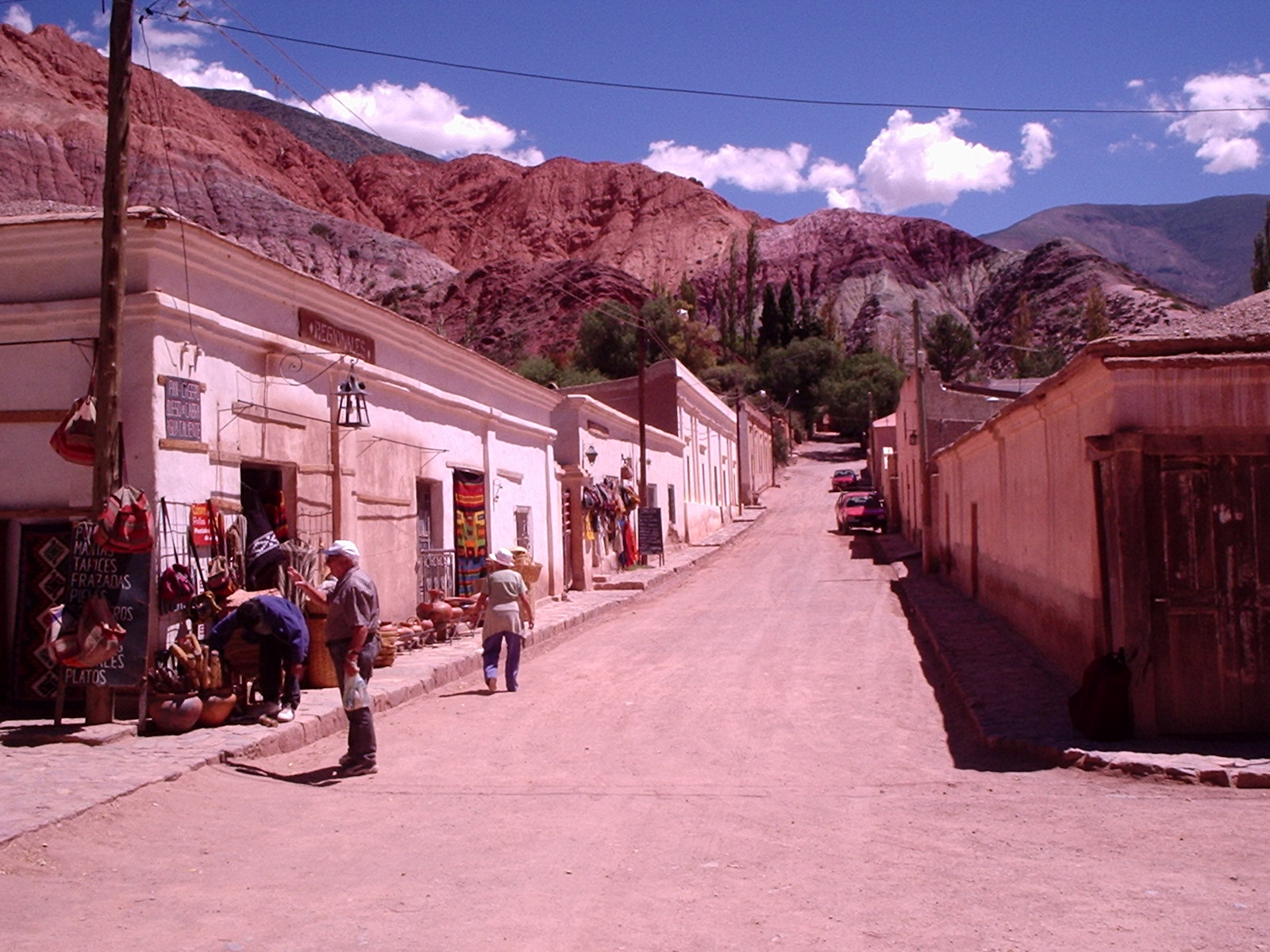
A small adobe village at the foot of the striped Cerro de los Siete Colores, with a red-rock loop walk behind the houses and the salt flats a mountain pass away.
- Best time to visit: April to November
- Daily budget (budget traveller): $60 to $425 USD
- Ideal trip length: 3 to 7 days
Purmamarca is a small village of adobe houses about 65km north of San Salvador de Jujuy, at roughly 2,200m. It sits at the entrance to the Quebrada de Humahuaca, the long valley that UNESCO listed as a World Heritage Site in 2003. The reason people come is right behind the houses. Cerro de los Siete Colores is a hill striped in reds, purples, greens and creams, and it looks best in the morning light. Most visitors arrive on a day tour from Salta or Jujuy, take a photo from the plaza and leave by lunchtime. Stay a few nights and you get the quiet version: the Paseo de los Colorados walk before the coaches arrive, cold clear nights, folk music in a peña and early starts up the Cuesta de Lipán to the Salinas Grandes salt flats. Purmamarca is also a good base for the rest of the valley, with buses to Maimará, Tilcara and Humahuaca. It is cheap by Western standards, though Argentine prices change month to month. Cash still matters, the altitude takes a day or two to get used to, and the village is small, calm and easy to walk around alone.
Purmamarca is a village of a few thousand people at the mouth of a side valley off the Quebrada de Humahuaca, at around 2,200m in Argentina's far northwest. The streets are packed earth and the houses are adobe. Above them stands Cerro de los Siete Colores, its layers of ancient sediment turned into bands of colour. Most visitors meet it on a day tour from Salta or Jujuy, with half an hour at the plaza and a photo from the road. That works if you are short of time, but you miss the best of it: the hill in early light from El Porito, the Paseo de los Colorados walk while it is still quiet, a cold starry night and a slow bowl of locro. Purmamarca is cheap for visitors with foreign money, though peso prices rise most months. A hostel bed, bus fares of a few thousand pesos and an ARS 12,000 entry to the Pucará de Tilcara keep a solo budget manageable.
Logistics are simple once you reach Jujuy. Evelia buses take about 70 minutes from the city terminal and run several times a day. From Purmamarca, regional buses run north to Maimará, Tilcara and Humahuaca, so you can see the whole valley without a car. The main exception is the Salinas Grandes, about 66km west over the Cuesta de Lipán. For that you need a tour, a shared remise or a hire car. Base yourself near the plaza if you do not have a car. Do the Hill of Seven Colours and the Colorados walk on your first full day, while you get used to the altitude, and save the 4,170m pass for later.
Timing shapes the trip. April to November is the dry season, with clear skies and sharp light. From June to August the days are mild, but nights drop below freezing. December to March brings the rains: greener hills, afternoon storms and sometimes landslides that close the roads for a few hours or longer. Carnival in February or March fills the Quebrada with music, flour fights and crowds. Pachamama offerings take place in August, and Purmamarca celebrates its patron saint, Santa Rosa de Lima, at the end of that month. People here are courteous and quiet, Spanish is the language you will need, and nights out mean a peña rather than a club. If you want a calm base with big landscapes on the doorstep, this works well.
How many days in Purmamarca?
For Purmamarca, we recommend 3 to 7 days.
| Trip length | What you'll see | Itinerary |
|---|---|---|
| 2 days | The village; Seven Colours and the Colorados | Purmamarca in 2 days |
| 3 days · Recommended | Adds: Cuesta de Lipán and the Salinas Grandes | Purmamarca in 3 days |
| 4 days · Recommended | Adds: Maimará and Tilcara | Purmamarca in 4 days |
| 5 days · Recommended | Adds: Humahuaca and Hornocal | Purmamarca in 5 days |
| 7 days · Recommended | Adds: Garganta del Diablo and a slow afternoon; Last market morning | Purmamarca in 7 days |
Purmamarca itinerary
Arrive and settle into the village
Morning: Take a morning Evelia bus from the Jujuy terminal (about 70 minutes). Sit on the left for the first views up the Quebrada. Check in near the plaza.
Afternoon: A slow first walk around the plaza, the craft market and the Iglesia Santa Rosa de Lima. Keep it gentle while your body adjusts to the altitude.
Evening: Watch the hill turn red at sunset from the edge of the village, then have empanadas and a bowl of locro. Early night, plenty of water and a mate de coca.
Seven Colours and the Colorados
Morning: Climb Cerro El Porito when it opens (around 9.30am) for front-on morning light on the hill. Pay the small fee in cash.
Afternoon: Walk the Paseo de los Colorados loop, about 3km and 40-60 minutes, starting near the cemetery. Lunch from a set-menu place near the plaza, then a siesta.
Evening: Wander the market as it winds down for better prices. Ask your host about live music and catch a peña if one is on.
Cuesta de Lipán and the Salinas Grandes
Morning: Leave early on a tour or shared remise up Ruta 52. Stop at the switchbacks of the Cuesta de Lipán and the 4,170m pass. Take water, sunglasses and warm layers.
Afternoon: Walk onto the salt with a community guide to see the salt pools and the 'ojos del salar'. The fee is per vehicle. Then drive back down to the village.
Evening: A quiet night after a big altitude day. A simple dinner and lots of water.
Maimará and Tilcara
Morning: Take a regional bus north. Stop at Maimará for the hillside cemetery below the Paleta del Pintor, then continue to Tilcara. The Pucará is closed on Mondays, so plan around that.
Afternoon: Visit the Pucará de Tilcara (ARS 12,000, open 9am-6.30pm, last entry 5.15pm) and its cactus garden, then wander Tilcara's plaza and market.
Evening: Stay for an early peña in Tilcara and take a late-afternoon bus back, or sleep over if you want the full night of music.
Humahuaca and Hornocal
Morning: Take an early bus to Humahuaca, about 2,940m. If you can, stop at Uquía to see the church's paintings of the angels armed with muskets.
Afternoon: Join a shared 4x4 at Humahuaca's terminal for the 25km gravel road to the Hornocal viewpoint at about 4,350m. Early afternoon light suits the 14 colours.
Evening: Bus back down the valley as the light fades. Have a hearty dinner and an early night.
Garganta del Diablo and a slow afternoon
Morning: Bus to Tilcara and hike to the Garganta del Diablo, a gorge and small waterfall above the town. Allow a few hours, and pay any small trail fee at the start.
Afternoon: Lunch in Tilcara, then head back to Purmamarca for a rest in the shade.
Evening: Walk the edge of the riverbed at dusk, or repeat the Colorados loop in evening light.
Last market morning and depart
Morning: Have breakfast, then pick up any woven goods you have been eyeing at the plaza market. Go back to El Porito if the sky is clear.
Afternoon: Take an Evelia bus to Jujuy for a flight or an onward bus to Salta. Leave plenty of time for the airport transfer.
Evening: Connect onwards from Jujuy or Salta, or stay the night in Salta before a morning flight.
Best neighbourhoods
- Around the plaza: The centre of the village, with the craft market, the 17th-century Iglesia Santa Rosa de Lima, small restaurants and most budget places to stay. Giramundo Hostel and La Casa del Abuelo are a short walk away. It is the obvious base for a solo traveller without a car.
- Ruta 52 approach: The road in from the RN9 junction, where several larger hotels and cabins sit among the cardón cacti, including El Manantial del Silencio and La Comarca. It is quieter and roomier, but you will be walking 10 to 30 minutes into the village, often along the road.
- Below Cerro El Porito: The east side of the village, close to the paid viewpoint that looks straight across to the Hill of Seven Colours. A good spot if you want the morning light without a long walk, and still only a few minutes from the plaza.
- Colorados side: The lanes running towards the cemetery and the start of the Paseo de los Colorados. It is quieter after dark, with simple hospedajes and guesthouses, and you can be on the trail before breakfast.
- Tilcara (alternative base): A bigger town about 25km north, with more hostels, peñas and places to eat, plus the Pucará and the Garganta del Diablo walk. Some solo travellers split their stay, with two or three nights in Purmamarca and the rest in Tilcara.
Must-do experiences
- See the Hill of Seven Colours from Cerro El Porito: A short climb from the village to a paid viewpoint facing the hill. In 2026 visitors reported paying roughly ARS 1,500-2,000. Go in the morning, when the sun hits the stripes head-on.
- Walk the Paseo de los Colorados: A roughly 3km loop behind the village through red rock towers and gullies, with only gentle climbs. It takes 40-60 minutes. Start by the cemetery or near El Porito, and pay the small municipal fee in cash at the booth.
- Cross the Cuesta de Lipán to the Salinas Grandes: Ruta 52 zigzags up to about 4,170m before dropping to a huge white salt flat around 66km from Purmamarca. The local community guides you onto the salt for a per-vehicle fee, with stops at the salt pools and the 'ojos del salar'.
- Browse the plaza craft market: Stalls around the plaza sell llama wool ponchos, woven blankets, ceramics and Andean hats every day. Prices are softer early and late in the day, and a polite haggle is fine.
- Visit the Pucará de Tilcara: A partly rebuilt pre-Inca hilltop settlement above Tilcara, with a cactus garden and big valley views. General entry is ARS 12,000 in 2026, and it is open Tuesday to Sunday, 9am to 6.30pm.
- Ride up to the Serranía de Hornocal: The 'mountain of 14 colours' is about 25km of gravel above Humahuaca, with a viewpoint at roughly 4,350m. Shared 4x4s leave from Humahuaca's bus terminal, and early afternoon light shows the colours best.
- Spend an evening at a peña: Peñas are folk music nights with carnavalitos, zambas, charango and bombo drums, usually over empanadas and local wine. Ask your host which places have live music that night, as Tilcara has the widest choice.
Hidden gems
- The old algarrobo tree beside the Iglesia Santa Rosa de Lima, a shady spot locals use as a meeting point, with the church's cactus-wood doors next to it
- The village cemetery on the edge of town, with colourful graves set against the red hills, best seen quietly on your way to the Colorados walk
- Maimará's hillside cemetery, a short bus ride north, framed by the striped ridge locals call the Paleta del Pintor (the painter's palette)
- The dry riverbed on the edge of Purmamarca at dusk, when the day-trippers have gone and the hill turns deep red
- The Tropic of Capricorn marker at Huacalera, an easy stop on the way to Humahuaca if your bus or driver will pull in
Daily budget
- Accommodation: budget ARS 25,000-60,000 / night (hostel bed or simple hospedaje), mid-range ARS 120,000-220,000 (boutique hotel or cabin), splurge ARS 300,000+ (top hotels on the Ruta 52 approach). Prices peak in July, at Easter and during Carnival, when it is worth booking weeks ahead. Check that heating is included from May to August. Some places give a better rate for cash.
- Food: budget ARS 25,000-40,000 / day (empanadas, set lunch, market snacks), mid-range ARS 50,000-80,000 (sit-down lunch and dinner), splurge ARS 100,000+ (hotel restaurants, wine with dinner). Set lunches (menú del día) are the best value. Empanadas are cheap and filling. Prices rise most months, so treat all figures as rough.
- Transport: budget ARS 0-20,000 / day (walking plus regional buses), mid-range ARS 45,000-110,000 (one shared tour to the salt flats), splurge ARS 150,000+ (hire car or private driver). Jujuy to Purmamarca was about ARS 8,000-10,100 in late 2026. Shared 4x4s to Hornocal are around ARS 20,000 per person from Humahuaca. Fuel stations are scarce beyond Purmamarca on Ruta 52.
- Activities: budget ARS 2,000-15,000 / day (El Porito, Colorados, Pucará), mid-range ARS 45,000-110,000 (Salinas Grandes tour), splurge ARS 150,000+ (private 4x4 day in the Puna). El Porito and the Colorados each cost roughly ARS 1,000-2,000 in 2026 reports. The Pucará de Tilcara is ARS 12,000 for general admission. The salt flats community guide fee is charged per vehicle, so on a tour it is shared.
- Drinks & nightlife: budget ARS 5,000-10,000 (a beer or wine from a shop), mid-range ARS 15,000-35,000 (peña with drinks), splurge ARS 50,000+ (good Salta or Cafayate wine with dinner). Nightlife means peñas, and Tilcara has more choice than Purmamarca. Go easy on alcohol for your first nights at altitude. A small tip for the musicians is appreciated.
Where to stay
- Social hostel in Around the plaza (ARS 25,000-60,000 / night): Giramundo Hostel Purmamarca on Avenida San Martín is a simple, cheap base right in the centre and well rated by travellers. It is easy to meet people heading for the salt flats or Tilcara.
- Boutique hotel in Around the plaza (ARS 150,000-220,000 / night): La Casa del Abuelo Hotel Boutique on Gorriti is a small, well-reviewed hotel a couple of minutes from the plaza, so you can walk to the market and the hill viewpoints.
- Apartment in Ruta 52 approach (ARS 110,000-190,000 / night): Tierra Quebrada Cabañas has self-contained cabins on the road into the village. They are useful for longer stays, self-catering and travellers with a hire car.
- Splurge in Ruta 52 approach or edge of the village (ARS 300,000-450,000+ / night): El Manantial del Silencio is a long-running estancia-style hotel set among cacti, and the Ecohotel Posta de Purmamarca has a higher position with views. Both are quiet, comfortable splurges after a high Puna day.
What to eat
- Empanadas jujeñas: baked or fried, filled with beef, cheese or llama meat, and sold everywhere around the plaza
- Locro: a thick stew of maize, beans, squash and meat, a winter staple and a classic on 25 May
- Humitas and tamales: fresh corn steamed in husks, either sweet and cheesy or with spiced meat, often sold at stalls
- Llama: grilled, in stews or in empanadas, leaner than beef and on most menus in the Quebrada
- Quinoa and Andean potatoes: in salads, stews and croquettes, with dozens of small coloured potato varieties
- Quesillo con cayote: fresh goat's cheese with a sweet squash preserve, a simple local dessert
Day trips
- Salinas Grandes via the Cuesta de Lipán (About 66km west on Ruta 52, around 1 hour 15 minutes each way): A switchback climb to about 4,170m, then a wide white salt flat where local communities still harvest salt. Guides take you to the rectangular salt pools and the 'ojos del salar', springs that well up through the crust. Book a tour from Purmamarca, Tilcara or Jujuy (very roughly ARS 45,000-110,000), or share a remise from the plaza. Pay the community guide fee on arrival. It is charged per vehicle, and reported figures range from about ARS 12,000 to 24,000.
- Maimará and Tilcara (About 15-25km north on Ruta 9, roughly 20-40 minutes by bus): Maimará's cemetery sits under the striped Paleta del Pintor. Tilcara has the Pucará, a partly rebuilt pre-Inca settlement, plus a lively plaza, peñas and the walk to the Garganta del Diablo. Regional buses run several times a day along Ruta 9 for a few thousand pesos. The Pucará is ARS 12,000 for general admission, open Tuesday to Sunday from 9am to 6.30pm.
- Humahuaca, Uquía and Hornocal (About 65km north to Humahuaca, then 25km of gravel to Hornocal): A colonial town at around 2,940m, the church at Uquía with its paintings of angels armed with muskets, and the 14-colour ridges of Hornocal from a viewpoint at about 4,350m. Take a bus to Humahuaca, then a shared 4x4 from the terminal to Hornocal, around ARS 20,000 per person in mid-2026, plus a small access fee. Tours from Tilcara run around ARS 75,000.
When to visit
- Autumn (April - May): Around 20-24°C by day, cold nights, dry and clear. Crowds: Low to moderate, with a bump at Easter. The locals' pick. The rains have finished, the light is clear, the roads are reliable and prices are softer. Bring a warm layer for the evenings.
- Winter (June - August): Around 17-20°C in the sun, often below freezing at night, very dry. Crowds: Busy in July with Argentine winter holidays. Blue skies almost every day and great photos, but book July early and pick a room with good heating. The salt flats and Hornocal are bitterly cold in the wind.
- Spring (September - November): Warming to 22-27°C, dry, windy afternoons. Crowds: Moderate, with quiet weekdays. A good all-round window. Long dry days, fewer tour groups and comfortable walking. Afternoon wind can kick up dust, so walk early.
- Rainy summer (December - March): Around 24-28°C, humid by local standards, afternoon storms. Crowds: Busy at New Year and Carnival, quiet otherwise. The hills turn green and Carnival is a huge party, but mudslides can close Ruta 9 and Ruta 52. Plan the high trips for the morning and leave spare days.
Entry rules for your passport
Visa rules for Argentina depend on the passport you travel on. Check the official source before you book: Argentina Ministry of Foreign Affairs
Getting there
Most travellers fly from Buenos Aires to San Salvador de Jujuy (JUJ) or Salta (SLA). Both have several daily flights in season, so compare fares, as Salta often has more choice. Jujuy's airport is about 30km southeast of the city. Airport buses and shared transfers run to the centre, at about ARS 5,000-5,500 in late 2026, and taxis cost more. From Salta, buses to Jujuy take about two hours. From the Jujuy bus terminal, Evelia runs several services a day to Purmamarca. The trip takes about 70 minutes, and fares were roughly ARS 8,000-10,100 in late 2026, rising most months. Some buses on Ruta 9 only stop at the junction, about 3km from the plaza, so ask for a service that enters the village. A tourist train, the Tren Solar de la Quebrada, has run between Volcán and Tilcara with a Purmamarca stop, but check current timetables and fares before you plan around it. International buses between San Pedro de Atacama in Chile and Jujuy or Salta cross the Paso de Jama and come down Ruta 52 past Purmamarca, so ask whether they will drop you in the village. Many nationalities can enter Argentina visa-free for up to 90 days, but check the current rules for your passport.
Getting around
Purmamarca is small enough to walk everywhere. The plaza, El Porito and the Paseo de los Colorados trailheads are all within about 10-15 minutes of each other on foot. For the rest of the Quebrada, regional buses run along Ruta 9 between San Salvador de Jujuy, Purmamarca, Maimará, Tilcara and Humahuaca. Evelia runs several services a day between Jujuy and Purmamarca. Fares from Jujuy were around ARS 8,000-10,100 in late 2026, with Tilcara about ARS 10,700 and Humahuaca about ARS 15,800, and they go up most months. Short hops between villages cost a few thousand pesos. Some through buses only stop at the junction on Ruta 9, about 3km from the plaza, so ask where yours stops. No public bus goes to the Salinas Grandes for day visits. Book a tour or a shared remise (private car) at the plaza or through your host. For Hornocal, take a shared 4x4 from Humahuaca's bus terminal, around ARS 20,000 per person in mid-2026. Hiring a car in Jujuy gives you the most freedom, but Ruta 52 is steep and winding and has trucks heading for Chile, and summer storms can bring mud and rockfalls onto the roads.
Safety
Purmamarca is very safe, and crime against visitors is rare. The real risks are altitude, sun and the roads. The village is at about 2,200m, but the Lipán pass reaches 4,170m and Hornocal about 4,350m, so take it easy on day one, drink plenty of water, go light on alcohol and save the high trips for day two or later. Coca tea and coca sweets are legal and widely used. Headaches, breathlessness and poor sleep are common. If symptoms get severe, go down. The sun is fierce at this altitude even in winter, so wear a hat, sunglasses and high-factor sunscreen, especially on the salt. Nights can drop below freezing from May to August. From December to March, afternoon storms can cause flash floods and mudslides that close Ruta 9 and Ruta 52, so check conditions before you travel. Carry water and a layer on the Colorados walk, and do not walk dry riverbeds when a storm is building. Medical care is basic locally, and the main hospitals are in San Salvador de Jujuy, so get travel insurance that covers evacuation.
Solo travel tips
- Stay near the plaza: Without a car, the plaza puts the market, buses, food and both trailheads within an easy walk. The Ruta 52 hotels are lovely, but they mean walking along the road after dark.
- Join shared tours to save money: The salt flats fee is charged per vehicle, and shared remises split fuel costs. Joining a small group at the plaza or through your hostel makes the Puna much cheaper for one person.
- Give the altitude a day: Do the village sights on day one and two, and the Lipán pass and Hornocal later. Drink lots of water, try coca tea and do not plan anything big after a night at the peña.
- Carry small notes: Viewpoints, trail booths, toilets and stalls want small cash, and change is often short. Get pesos in Jujuy or Salta, as village ATMs can empty at weekends.
- Safety for solo travellers: The risks are sun, cold, altitude and storms rather than crime. Tell your host your walking plans, carry water and a layer, and avoid dry riverbeds when summer storms are building.
- Learn a little Spanish: Little English is spoken outside hotels and tour desks. Simple greetings and numbers go a long way, and an offline translation app helps on the buses.
Cultural etiquette
- Greet people with 'buen día' or 'buenas tardes' when you walk into a shop or a stall. Skipping the greeting comes across as rude.
- Ask before photographing people, especially older women in traditional dress and stallholders. Some may ask for a small tip, and a no means no.
- Haggle gently and with a smile at the market. Many sellers are the weavers' families, and a big discount on handmade work is not fair.
- Dress modestly and keep quiet inside the Iglesia Santa Rosa de Lima. Do not use flash, and check before photographing the interior.
- Pachamama (Mother Earth) is honoured, especially in August. If you see offerings of coca, food or drink at a cairn or a hole in the ground, leave them alone.
- Stick to the marked paths on the Colorados and at the salt flats. The fees support local communities, so pay them and keep your ticket.
- Life runs at a slower pace. Lunch is long, many shops close for the siesta, and dinner rarely starts before 9pm.
Frequently asked questions
How do I get to Purmamarca?
Fly to San Salvador de Jujuy (JUJ) or Salta (SLA) from Buenos Aires, then get to Jujuy's bus terminal. Evelia runs several buses a day to Purmamarca, taking about 1 hour 10 minutes. Fares were roughly ARS 8,000-10,100 in late 2026. From Salta, take a bus to Jujuy first, which takes about two hours. Check whether your bus drops you in the village or at the junction on Ruta 9.
How many days do I need in Purmamarca?
Two nights covers the hill, the Colorados walk and the Salinas Grandes. Four to five nights lets you add Tilcara, Maimará, Humahuaca and Hornocal at a gentler pace, which also helps with the altitude. A week lets you see the whole Quebrada without rushing.
When is the best time to visit?
April to May and September to November bring dry, clear weather and fewer crowds. June to August is dry and sunny but freezing at night, and July's school holidays fill the village. December to March is the rainy season, with afternoon storms, occasional road closures and big Carnival crowds in February or March.
Will the altitude affect me?
Purmamarca is at about 2,200m, which most people handle fine. The trip to the salt flats climbs to 4,170m and Hornocal to about 4,350m, where headaches and breathlessness are common. Spend a day or two in the village first, drink plenty of water and avoid heavy drinking. Coca tea also helps. Speak to a doctor before you go if you have heart or lung conditions.
Do I need cash in Purmamarca?
Yes. Market stalls, small restaurants, viewpoint and trail fees, and the community fees at the salt flats are often cash only. Bank transfers through apps such as Mercado Pago are common among Argentines, but rarely practical for visitors. ATMs in the village are few and can run dry at weekends, so bring pesos from Jujuy or Salta.
Can I visit the Salinas Grandes without a tour?
There is no regular public transport for day visits. Most solo travellers join a tour from Jujuy, Tilcara or Purmamarca, or share a remise from the plaza. Tours cost very roughly ARS 45,000-110,000 depending on the operator and season. To walk out to the salt pools you must go with a local community guide, who charges a fee per vehicle at the entrance.
Is Purmamarca safe for solo female travellers?
Yes, it is one of the calmer places to travel alone in Argentina. The village is small, people are reserved but helpful, and serious crime is rare. Use normal sense after dark on unlit lanes and the road out to the RN52 hotels, tell your host where you are walking, and choose registered tour operators for trips into the Puna.
What entry rules apply to Argentina in 2026?
Visitors from the UK, EU, US, Canada, Australia and many other countries can usually enter visa-free for up to 90 days with a valid passport. Rules vary by nationality and can change, so confirm with Argentina's official migration authority and your own government's travel advice before booking. If you plan to cross to Chile via the Paso de Jama, check Chilean rules too.
Tours and activities in Purmamarca | Purmamarca in 2 days | Purmamarca in 3 days | Purmamarca in 4 days | Purmamarca in 5 days | Purmamarca in 7 days
Joy Plus home | Destinations | Itineraries | Activities | Flights | Budget planner | Calendar | Map | Blog | Lifetime access