Destinations / South America
Quilotoa, Ecuador travel guide
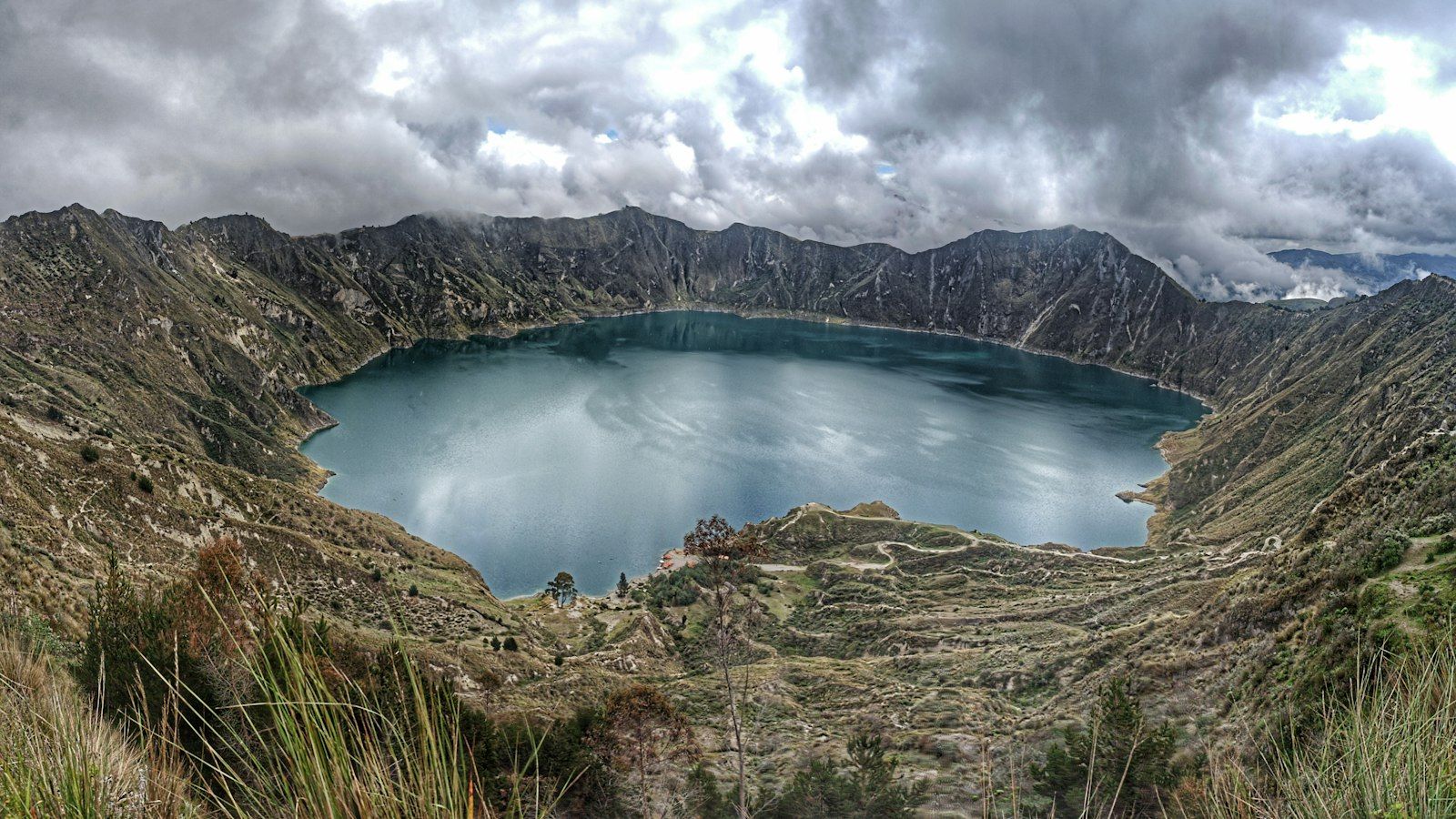
A turquoise crater lake at 3,500 metres in Ecuador's central Andes, linked to Kichwa villages by a hostel-to-hostel trek through canyons, páramo and patchwork fields.
- Best time to visit: June to September and December to January
- Daily budget (budget traveller): $35 to $120 USD
- Ideal trip length: 4 to 7 days
Quilotoa is a collapsed volcano in Cotopaxi province, about 3km across, with a green-blue lake sitting a few hundred metres below a rim that tops out near 3,900 metres. Most people see it on a day tour from Quito, but the real reason to come is the Quilotoa Loop. It is not really a loop. It is a three-day walk from Sigchos through Isinliví and Chugchilán, ending with a long climb out of the Toachi canyon to the crater rim. You sleep in village hostels that serve dinner and breakfast, so you only carry a daypack. The trail runs through Kichwa farming communities where people still harvest by hand, and the weekly markets at Saquisilí and Zumbahua have nothing to do with tourism. Latacunga, two hours south of Quito by bus, is the gateway town where you store your big bag. Buses cost a few dollars, a dorm bed with two meals is often $15 to $30, and the views come free. The trade-off is altitude, cold nights and fog that can roll in by early afternoon.
Quilotoa is the westernmost volcano in Ecuador's Avenue of the Volcanoes. An eruption about 800 years ago blew out its centre, and the crater has since filled with a lake whose colour shifts from jade to deep blue as the light changes. The rim stands at almost 3,900 metres. Day trippers from Quito spend an hour at the viewpoint, take a photo and leave. Solo travellers who give it a few days get something better. You can walk from village to village through a working Andean landscape, eat dinner at a long table with other hikers every night, and arrive at the crater on foot, which beats arriving by bus. It is also one of the cheapest multi-day treks in South America, because half-board hostel beds often cost $15 to $30 and buses cost a few dollars.
The standard route starts in Sigchos and finishes at Quilotoa, which gets the crater as the reward at the end. Day one runs gently downhill to Isinliví. Day two crosses the Toachi valley to Chugchilán. Day three is the hard one, through the Toachi canyon and up nearly 1,000 metres to the rim. You can reverse it, but you lose the payoff. Base yourself in Latacunga, where Hostal Café Tiana and other hostels store big bags for about $1 a day, and pack only a 25 to 35 litre daypack. Buses are the backbone of the trip, but they are infrequent in the afternoon, so ask your hostel for current times every evening.
The weather decides how your days go. Clear mornings tend to turn foggy by early afternoon, and nights at the rim drop to around freezing even in the dry season. June to September brings the most reliable views, along with wind and the biggest crowds. The wetter months make the canyon paths muddy and slippery. Altitude is the other thing to respect, so acclimatise in Quito or Latacunga, or with an easy day at Cotopaxi, before your first stage. Do that, carry cash in small notes and a warm layer, and the loop is easy to manage on your own.
How many days in Quilotoa?
For Quilotoa, we recommend 4 to 7 days. With more time, add a day trip to Saquisilí Thursday market.
| Trip length | What you'll see | Itinerary |
|---|---|---|
| 2 days | Quito to Latacunga, bags down; Cotopaxi acclimatisation day | Quilotoa in 2 days |
| 3 days | Adds: Sigchos to Isinliví | Quilotoa in 3 days |
| 4 days · Recommended | Adds: Isinliví to Chugchilán | Quilotoa in 4 days |
| 5 days · Recommended | Adds: Chugchilán to the Quilotoa rim | Quilotoa in 5 days |
| 7 days · Recommended | Adds: Down to the lake and over to Shalalá; Zumbahua, Tigua and back to Latacunga | Quilotoa in 7 days |
Quilotoa itinerary
Quito to Latacunga, bags down
Morning: Bus from Quitumbe terminal to Latacunga, about 1.5 to 2 hours. Check in at Hostal Café Tiana or another central hostel and arrange to store your big bag for the loop.
Afternoon: Walk the colonial centre around Parque Vicente León. Buy allullas and queso de hoja, pick up cash at a Latacunga ATM, and check bus times for Sigchos at the terminal.
Evening: Chugchucaras for dinner, then pack a daypack with layers, rain gear, snacks and a headtorch. Early night to help with acclimatisation.
Cotopaxi acclimatisation day
Morning: Take a Quito-bound bus north and get off at the Cotopaxi National Park turn-off. Hire a pickup at the entrance (roughly $20-50, agree first) and enter between 8am and 3pm with your passport.
Afternoon: Walk the flat loop around Limpiopungo lagoon at about 3,800 metres, around 1.5 hours. Fit hikers can drive higher and walk to the José Ribas refuge without a guide.
Evening: Back to Latacunga. If it is a Wednesday, plan for the Thursday market at Saquisilí before heading out, or keep to the plan and sleep early.
Sigchos to Isinliví
Morning: Early bus to Sigchos with Reina de Sigchos, about 2 hours and around $2. Start walking by 9am. The route drops to the river and climbs up to Isinliví in about 3 to 4 hours.
Afternoon: Check in at Llullu Llama or Hostal Taita Cristóbal. Rest, have a hot shower and book your packed lunch for tomorrow.
Evening: Shared dinner with other hikers. Ask who is walking to Chugchilán in the morning and team up.
Isinliví to Chugchilán
Morning: Leave by 8am. About 12km and 5 to 6 hours, through farms and hamlets and down into the Toachi valley.
Afternoon: Steep final climb to Chugchilán. Check in at Hostal Cloud Forest or Hostal el Vaquero, both popular with solo hikers.
Evening: Hostel dinner. Confirm the route for tomorrow and ask about a luggage transfer if your knees are complaining.
Chugchilán to the Quilotoa rim
Morning: Start at first light. Drop into the Toachi canyon, cross the river and climb past Guayama San Pedro. Expect 5 to 7 hours and nearly 1,000 metres of ascent.
Afternoon: The final pull brings you onto the rim with the lake opening below. Pay the $2 community fee and check in at a lodge such as Hostal Chukirawa or Runa Wasi.
Evening: Ask for the fire to be lit in your room, drink a canelazo and watch the light fade over the crater. It will be close to freezing outside.
Down to the lake and over to Shalalá
Morning: Walk down to the lake before the day tours arrive, about 30 to 40 minutes. Rent a kayak, then climb back up in 1 to 1.5 hours or hire a mule for about $10.
Afternoon: Walk along the rim to Mirador Shalalá, about an hour each way, for the view across the lake. Turn back if fog comes in.
Evening: Second night at the rim, or catch an afternoon bus to Latacunga if you are short on time. Buses run roughly hourly in daytime.
Zumbahua, Tigua and back to Latacunga
Morning: Take a bus towards Latacunga and hop off in Zumbahua. On a Saturday, the market is the main event. On other days, it is a quick look at the plaza and a coffee.
Afternoon: Continue along the road past Tigua and stop at a gallery for a sheepskin painting if one is open. Back in Latacunga, collect your bag.
Evening: Bus to Quito, or one last night in Latacunga with a celebratory hornado.
Best neighbourhoods
- Latacunga: The gateway town at about 2,750 metres, with a colonial centre around Parque Vicente León, cheap set lunches, chugchucaras stalls and hostels that store your big bag while you hike. Buses to Sigchos, Isinliví, Chugchilán and Quilotoa leave from the terminal.
- Quilotoa village: A small Kichwa community strung along the southwest rim of the crater, with basic lodges, wood-burning stoves in the rooms and the main viewpoints. Cold at night, but staying here lets you see the lake before the day tours arrive.
- Chugchilán: A farming village perched above the Toachi canyon and the most popular overnight stop on the loop, with several well-run half-board hostels, horse riding and a cloud forest on its doorstep.
- Isinliví: A tiny village at the end of a winding road, home to two of the loop's best-loved hostels. It is quiet, friendly and a good place to meet hiking partners over a shared dinner.
- Sigchos: The market town where most hikers start the loop. There is little to keep you, but it has regular buses to and from Latacunga and a gentle first stage down to Isinliví.
- Zumbahua: A highland market town on the road between Latacunga and Quilotoa. Its Saturday market draws families from the surrounding communities, and it is the fallback for buses back to Latacunga when the last Quilotoa service has gone.
Must-do experiences
- Hike down to the crater lake: Take the steep, sandy path from the village to the water. It takes about 30 to 40 minutes down and 1 to 1.5 hours back up at this altitude, or you can hire a mule for the climb.
- Paddle a kayak on the lake: Rent a kayak at the bottom of the crater for a slow lap under the cliffs. Expect a few dollars in cash. Swimming is discouraged because the water is mineral-heavy and very cold.
- Walk Isinliví to Chugchilán: The middle stage of the loop, around 12km and 5 to 6 hours, drops into the Toachi valley past farms and hamlets, then climbs steeply to Chugchilán. Carry a packed lunch from your hostel.
- Climb from Chugchilán to the crater rim: The final stage crosses the Toachi canyon, passes the village of Guayama San Pedro and gains nearly 1,000 metres to the rim. Start early, because the views of the lake appear right at the end.
- Walk the crater rim: Follow the sandy path around the rim for big views of the lake and, on clear mornings, the snow-capped Ilinizas and Cotopaxi. The full circuit is roughly 10 to 12km and 4 to 6 hours, so start by 8am.
- Shop the Saquisilí Thursday market: One of the largest indigenous markets in the Andes, 20 to 30 minutes from Latacunga, with livestock, produce, felt hats and cooked food spread across several plazas. Go early.
- Walk around Limpiopungo under Cotopaxi: Spend an acclimatisation day in Cotopaxi National Park. Entry is free with your passport, and the flat loop around Limpiopungo lagoon sits at about 3,800 metres below the volcano.
Hidden gems
- Mirador Shalalá, a community-run viewpoint on the northwest rim of the crater, about an hour's walk from the village, with a small entry fee and a very different angle on the lake
- Getting off the Isinliví bus at the Guingopana pass and walking the last 2 to 3 hours downhill into the village instead of riding
- The Tigua painting tradition, bright naïve scenes of Andean life painted on sheepskin, sold from small galleries along the Latacunga to Zumbahua road
- Pujilí, a market town just west of Latacunga whose Corpus Christi celebrations in June bring out the danzantes in towering plumed headdresses
- The Saturday market in Zumbahua, where families from the surrounding communities trade animals, wool and grain, and almost no tourists stay longer than an hour
Daily budget
- Accommodation: budget $15-30 / night (dorm with dinner and breakfast), mid-range $35-60 (private room, half-board), splurge $160-750+ (Hacienda La Ciénega, Hacienda San Agustín de Callo). Loop hostels almost always include dinner and breakfast, which makes them very good value. Quilotoa village lodges are more basic and often cost more. Book ahead at weekends and in July and August, and check current rates, as prices have crept up.
- Food: budget $5-12 / day on top of half-board (packed lunch, snacks), mid-range $15-25 (set lunches, café stops, a Latacunga dinner), splurge $35+ (hacienda dinners). Hostels sell packed lunches for a few dollars. In Latacunga, a set almuerzo is usually a few dollars and a plate of chugchucaras costs a little more. Restaurants in Quilotoa village are pricier, so eat at your lodge.
- Transport: budget $3-8 / day (local buses at about $2-4 a leg), mid-range $15-40 (shared camioneta between villages, luggage transfers), splurge $80-150+ (private driver from Quito or Latacunga). Quito to Latacunga is roughly $2.50-4, and Latacunga to Quilotoa, Chugchilán or Sigchos is about $2-3. Truck taxis between villages vary, so agree the fare before you get in and check current prices with your hostel.
- Activities: budget $2-5 / day (Quilotoa community fee $2, Toachi viewpoint fee about $1), mid-range $10-30 (kayak, mule ride about $10, horse riding), splurge $55-170 (guided Quilotoa or Cotopaxi tours from Quito). Cotopaxi National Park is free to enter with your passport, but buses cannot go inside, so budget for a pickup from the gate. Shalalá viewpoint charges a small fee. Mules and kayaks are cash only.
- Drinks & nightlife: budget $2-5 (canelazo or a beer at the hostel), mid-range $8-15 (a few drinks in Latacunga), splurge $25+ (hacienda bar). Nightlife on the loop means a fire, a hostel dinner and an early night before the next stage. Latacunga has a handful of bars around the centre, but this is not a party trip.
Where to stay
- Social hostel in Isinliví ($20-35 / person in a dorm with dinner and breakfast (check current rates)): Llullu Llama Mountain Lodge is the loop's best-known hostel, with dorms, a communal fire, a hot tub and sauna, and a shared dinner that turns strangers into hiking partners.
- Boutique hotel in Near Lasso, between Latacunga and Cotopaxi ($160-190 / night): Hacienda La Ciénega is one of Ecuador's oldest colonial haciendas, a historic place to sleep before or after the loop and well placed for Cotopaxi National Park.
- Apartment in Latacunga centro histórico ($20-45 / night): A self-catering flat or a hostel room with kitchen access near Parque Vicente León keeps costs low before and after the hike. Hostal Café Tiana has a fully equipped guest kitchen and bag storage.
- Splurge in Near Lasso, at the foot of Cotopaxi ($450-750+ / night): Hacienda San Agustín de Callo is built around original Inca stone walls, with fireplaces, horses and easy access to the national park. Recent reviews are mixed for the price, so read them before booking.
What to eat
- Chugchucaras: Latacunga's signature plate of fried pork, crackling, mote (hominy), fried plantain, toasted corn, popcorn and a small empanada
- Allullas with queso de hoja: crumbly Latacunga biscuits sold at bus stops and on the Panamericana, eaten with soft string cheese wrapped in leaves
- Locro de papa: a thick potato and cheese soup topped with avocado, served as the starter in many hostel dinners and set lunches
- Hornado: slow-roasted pork with llapingachos (potato cakes), mote and pickled onion, found at markets and Sunday stalls
- Cuy: whole roast guinea pig, a highland celebration dish you will see on spits in Zumbahua and at roadside grills
- Canelazo: hot cinnamon and naranjilla drink, usually spiked with aguardiente, which is exactly what you want on a freezing night at the rim
Day trips
- Cotopaxi National Park (Roughly 45 minutes to 1 hour north of Latacunga to the park turn-off): The near-perfect cone of Cotopaxi at 5,897 metres, wild horses on the páramo, and a flat loop around Limpiopungo lagoon at about 3,800 metres. It is a good acclimatisation day before the loop. Take a Quito-bound bus and get off at the park turn-off, then hire a pickup at the gate for roughly $20-50. Entry is free with your passport, gates open roughly 8am to 3pm, and no guide is needed below the glacier.
- Saquisilí Thursday market (About 20-30 minutes from Latacunga): A sprawling indigenous market across several plazas, with livestock early in the morning and then produce, hats, ponchos and cooked food. It is one of the most authentic market days in the Andes. Frequent local buses from Latacunga. Go on Thursday and arrive by 8am for the animal market. On Thursdays, some Isinliví buses leave from the market, so ask locally.
- Zumbahua and Tigua (About 1.5 hours from Latacunga on the Quilotoa road): Zumbahua's Saturday market brings in families from across the highlands, and the roadside galleries at Tigua sell the area's distinctive paintings on sheepskin. Any Latacunga to Quilotoa bus passes through. Hop off and catch the next one, and check the last service of the day before you linger.
When to visit
- Dry season (June - September): Rim days around 10-16°C in sun, nights near or below 0°C, clear mornings, strong winds. Crowds: Busiest in July and August with European and North American holidays. The most dependable views and driest trails. Book Llullu Llama and Chugchilán hostels ahead at weekends, and pack for real cold after dark.
- Autumn shoulder (October - November): Mixed sun and showers, afternoon fog becomes more common. Crowds: Quieter on the trail. A good compromise if you start early every day. Latacunga's Mama Negra festival falls around 11 November, so check dates and book rooms early if you want to see it.
- Short dry spell (December - January): Often clearer, cold nights, occasional rain. Crowds: Ecuadorian holiday visitors around Christmas and New Year, quieter in January. Worth considering for clear spells and smaller crowds outside the festive week. Buses can be fuller around the holidays.
- Wet season (February - May): Frequent afternoon rain and fog, muddy canyon sections, cold nights. Crowds: Low. Doable, but views are less reliable and the descent to the Toachi river can be slippery. Start at dawn, carry waterproofs and be ready to bus a stage if conditions are poor.
Entry rules for your passport
Visa rules for Ecuador depend on the passport you travel on. Check the official source before you book: Ecuador Ministry of Foreign Affairs
Getting there
Fly into Quito's Mariscal Sucre International Airport (UIO) at Tababela, northeast of the city. To start the loop, make your way to the Quitumbe bus terminal in south Quito, roughly an hour or more by taxi at about $30 to $40. Many travellers spend a night or two in Quito first, which also helps with acclimatisation at around 2,850 metres. From Quitumbe, buses run regularly down the Panamericana to Latacunga, taking about 1.5 to 2 hours and costing roughly $2.50 to $4. From Latacunga's terminal, take a direct bus to Quilotoa (about 2 hours), Chugchilán (2.5 to 3 hours), Sigchos (about 2 hours) or Isinliví. All cost a few dollars, so check the day's times at the terminal. Coming from the south, buses from Baños, Ambato and Riobamba also stop at Latacunga. Most Western visitors can enter Ecuador visa-free for up to 90 days, but confirm the rules for your passport before you fly.
Getting around
Everything starts in Latacunga. From Quito's Quitumbe terminal in the south of the city, buses run regularly to Latacunga in about 1.5 to 2 hours for roughly $2.50 to $4. From Latacunga's terminal, Trans Vivero and Iliniza run buses to Quilotoa (about 2 hours, around $2.50), Iliniza runs to Chugchilán (2.5 to 3 hours, about $2.50), Reina de Sigchos covers Sigchos (about 2 hours, around $2) and Vivero or 14 de Octubre serve Isinliví. Timetables change often and services between villages thin out in the afternoon, so confirm times at the terminal or with your hostel the day before. Return buses from Quilotoa to Latacunga run roughly hourly in daytime. If you miss the last one, take a taxi to Zumbahua, where buses keep going later. Camionetas (pickup truck taxis) link the villages and can be shared, so agree the price first. Hostels also arrange luggage transfers between stops if you would rather not carry anything. Driving yourself is possible, but the loop roads are steep, narrow and partly unpaved.
Safety
The loop villages are friendly and safe, and violent crime against hikers is rare. The main hazards are altitude, weather and navigation. Spend at least a night or two in Quito or Latacunga before you hike, drink plenty of water, go easy on alcohol, and turn back if a headache or nausea gets worse. Fog and rain often arrive by early afternoon, so start walking by 8am, carry a rain shell and warm layers, and keep well back from the crater edge and canyon drops, where the ground is loose and landslides happen. Trails cross farmland and are not always signed, so download an offline map and take the printed directions most hostels hand out. Farm dogs can be territorial. Slow down, keep walking and do not run. Pickpockets work the buses to and from Latacunga, so keep your bag on your lap rather than in the overhead rack. Ecuador has had serious security problems in recent years, mostly concentrated on the coast, so check your government's travel advice before you go, avoid night buses and use registered taxis in Quito.
Solo travel tips
- Store your big bag in Latacunga: Hostels such as Hostal Café Tiana keep luggage in a locked room with lockers for about $1 a day. Bring your own padlock, take a 25 to 35 litre daypack, and pick your bag up on the way back.
- Let the hostel dinner do the social work: Every hostel on the loop seats guests together for dinner. It is the easiest place in Ecuador to find walking partners, and solo hikers regularly set off as a group the next morning.
- Start early, every day: Clear mornings often turn to fog and rain after lunch, and finding the way gets much harder in poor visibility. Leave by 8am, and earlier on the Chugchilán to Quilotoa stage.
- Carry cash in small notes: There are no ATMs at Quilotoa and most of the loop is cash only, from the $2 fee to mules, kayaks and buses. Withdraw in Latacunga and break $20s at the supermarket before you go.
- Navigate with two sources: Download an offline map with the loop marked and keep the printed directions from your hostel. Farm tracks split constantly, and locals are happy to point the way if you ask for the next village by name.
- Safety for solo travellers: The villages are safe and welcoming. The risks are altitude, cold and getting lost. Tell your hostel when you leave and where you are heading, keep your bag on your lap on Latacunga buses, and do not walk after dark.
Cultural etiquette
- Greet people as you pass through villages. A 'buenos días' works everywhere, and the Kichwa 'alli puncha' (good morning) or 'yupaychani' (thank you) gets a smile.
- Ask before photographing people, especially at markets. Some will ask for a small tip, and some will say no, which you should respect.
- The trail crosses private farmland. Stay on the path, close any gates you open and do not walk through planted fields.
- Pay the community fees at Quilotoa and Shalalá without fuss. The money goes to the Kichwa communities that manage the area.
- Dress for the cold and cover up in villages. Locals wear layers, felt hats and ponchos, and shorts look out of place up here.
- Do not hand out sweets or money to children. If you want to help, buy crafts directly from makers or eat at family-run places.
- Hostel dinner times are fixed and portions are planned in advance, so tell your hosts when you arrive if you have dietary needs.
Frequently asked questions
How do I get from Quito to Quilotoa?
Take a bus from Quitumbe terminal in south Quito to Latacunga, about 1.5 to 2 hours for roughly $2.50 to $4. From Latacunga's terminal, direct buses run to Quilotoa in about 2 hours for around $2.50. From Quito's airport, a taxi to Quitumbe costs roughly $30 to $40 and takes over an hour, so many people sleep a night in Quito first. Day tours from Quito cost from about $55, but they leave little time at the crater.
How many days do I need for Quilotoa?
Three days of hiking covers the classic Sigchos to Isinliví to Chugchilán to Quilotoa route, plus a day either side for Latacunga and acclimatisation. Five to seven days lets you add Cotopaxi, a market day and a night at the rim. If you only have one day, a bus or tour from Latacunga or Quito gets you to the rim and down to the lake.
When is the best time to visit Quilotoa?
June to September is the driest and clearest period, though windy and cold at night, and July and August are the busiest months. December to January often brings another drier spell. February to May is wetter, with afternoon fog and muddy trails. Whatever the month, mornings are clearest, so plan to be on the trail or at the rim early.
Will the altitude affect me?
Probably a little. The rim is close to 3,900 metres and Latacunga sits at about 2,750 metres. Spend at least a night or two in Quito or Latacunga before hiking, walk slowly, drink water and avoid heavy drinking on the first nights. The climb back up from the lake and the final stage from Chugchilán are where most people feel it. If symptoms get worse, descend and get help.
Do I need a guide to hike the Quilotoa Loop?
No. Most people walk it independently using offline maps and the printed directions that hostels give out. Some sections cross farmland and are poorly signed, so a GPS app helps. Solo hikers often team up with people met at hostel dinners. If you would rather not navigate, hostels and agencies in Latacunga can arrange local guides.
Can I pay by card on the Quilotoa Loop?
Mostly not. Ecuador uses the US dollar, and the Quilotoa community fee of $2, mule rides, kayaks, buses and many hostel bills are cash only. There are no ATMs at Quilotoa, so withdraw enough in Latacunga before you set off and carry small notes, because $20 bills are hard to break in the villages.
Is Quilotoa safe for solo female travellers?
Generally yes. The loop villages are small and welcoming, and the hostels are well used by solo women. The usual precautions apply: walk in daylight, tell your hostel when you leave and which route you are taking, consider teaming up with other hikers on the remote canyon stages, and watch your bags on buses around Latacunga.
What entry rules apply to travellers visiting Ecuador in 2026?
Citizens of the UK, Ireland, the EU, the US, Canada, Australia and New Zealand can usually enter visa-free as tourists for up to 90 days in a 12-month period, with a passport valid for the length of the stay. Travel health insurance is compulsory for the Galápagos, and sources disagree about whether the old insurance rule still applies on the mainland, so carry a policy anyway. Other nationalities may need a visa or extra documents. Rules change, so always confirm on the official Ecuadorian foreign ministry website (cancilleria.gob.ec) and your own government's travel advice before you book.
Tours and activities in Quilotoa | Quilotoa in 2 days | Quilotoa in 3 days | Quilotoa in 4 days | Quilotoa in 5 days | Quilotoa in 7 days
Joy Plus home | Destinations | Itineraries | Activities | Flights | Budget planner | Calendar | Map | Blog | Lifetime access