Destinations / Europe
Rouen, France travel guide
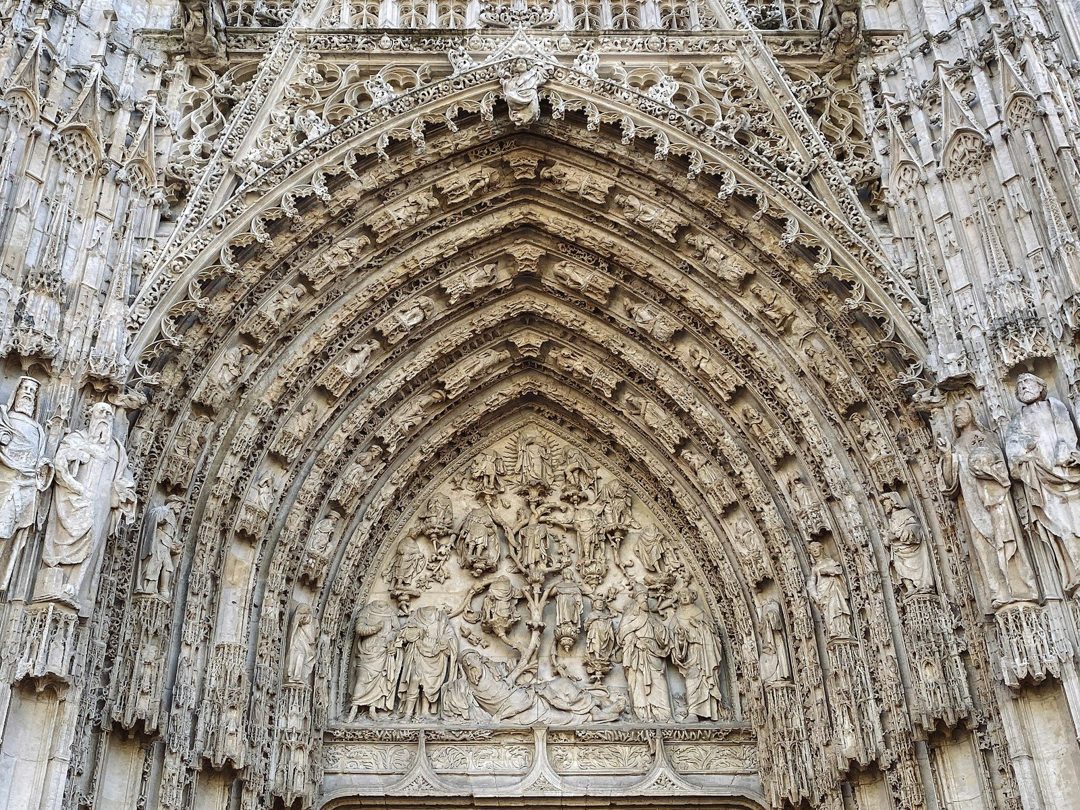
Normandy's gothic capital: soaring spires, timber-framed alleys and culinary soul.
- Best time to visit: May to October
- Daily budget (budget traveller): $80 to $195 USD
- Ideal trip length: 2 to 4 days
Perched on a looping bend of the Seine, Rouen is the historic heart of Normandy, where medieval timber-framed houses lean over narrow stone lanes beneath the shadow of France's tallest cathedral spire. Immortalised across dozens of Claude Monet canvases, the city combines tragic history, such as the marketplace where Joan of Arc met her fate, with vibrant contemporary university culture, world-class fine art, and rich Norman gastronomy. Just over an hour by train from Paris, it provides solo travellers with an intimate, pedestrian-friendly city break that feels deeply layered yet refreshingly unhurried.
Known to Victor Hugo as 'the city of a hundred spires', Rouen sits on a sweeping meander of the lower Seine where ocean-going vessels meet the river route to Paris. The city is a living museum of flamboyant gothic stonework and over two thousand preserved half-timbered houses, many tilting gracefully toward cobbled alleys that have kept their medieval layouts. Yet Rouen is far from stuck in amber. Home to tens of thousands of university students, its quays are lined with bustling food halls, indie breweries, and lively public spaces.
History feels palpable on every street corner. Outside the Cathédrale Notre-Dame, you stand where Claude Monet positioned his easel across different times of day to capture the changing light on pale limestone. A ten-minute stroll west brings you to the Place du Vieux-Marché, where Joan of Arc was executed at the stake in 1431, framed today by an avant-garde church whose sweeping roof echoes overturned Viking drakkars. Tucked between these landmarks are quieter medieval survival stories, including the Aître Saint-Maclou, an eerie yet striking 16th-century timber charnel house built during the Great Plague.
For the solo traveller, Rouen strikes an ideal balance. It offers the architectural and artistic richness of a grand capital, but on a manageable scale where everything lies within easy walking reach. You can spend an unhurried morning examining impressionist canvases in an uncrowded municipal museum, settle into a brass-trimmed bistro for duckling and local cider, and spend the evening watching the cathedral facade glow beneath summer light projections.
Rouen itinerary
Arrival, the Cathedral and Medieval Core
Morning: Arrive at Rouen-Rive-Droite station from Paris. Walk downhill through Rue Jeanne-d'Arc to check into your hotel. Grab a warm croissant from a local artisan bakery.
Afternoon: Head straight to Cathédrale Notre-Dame. Admire the facade from Place de la Cathédrale, then explore the interior tombs. Afterwards, walk west through Rue du Gros-Horloge.
Evening: Tour the Gros-Horloge belfry for late afternoon city views. Head to Place du Vieux-Marché for an outdoor dinner of moules frites or a savoury buckwheat galette.
Joan of Arc, Fine Art and Hidden Courtyards
Morning: Visit the Historial Jeanne d'Arc inside the Archbishop's Palace for an immersive account of her life and trial. Continue to Église Sainte-Jeanne-d'Arc on the market square.
Afternoon: Walk north to the Musée des Beaux-Arts. Spend two unhurried hours exploring Impressionist masterpieces by Monet and Pissarro, followed by the quirky Musée Le Secq des Tournelles nearby.
Evening: Stroll down the picturesque Rue Eau-de-Robec. Pick a quiet bistro alongside the canal stream for a hearty dinner of Norman veal escalope cooked with cream and cider.
Flamboyant Gothic and River Quays
Morning: Explore the Quartier des Antiquaires. Admire the exuberant stone lace of Église Saint-Maclou, then slip into the quiet timber courtyard of Aître Saint-Maclou.
Afternoon: Cross south toward the Seine quays. Walk along the riverfront to the Hangar 107 contemporary arts space or cross the Pont Boieldieu to explore the botanical Jardin des Plantes.
Evening: In summer, take a seat on the cathedral square after dark to watch the spectacular Cathédrale de Lumière projection mapping show illuminate the limestone facade.
Monet's Sanctuary at Giverny
Morning: Take an early regional train from Rouen-Rive-Droite to Vernon-Giverny (40 minutes). Board the shuttle bus or rent an electric bicycle directly to Monet's former estate.
Afternoon: Wander Claude Monet's restored home and the Japanese water garden, admiring the water lilies and weeping willows. Stop at the nearby Museum of Impressionisms.
Evening: Take the train back to Rouen. Celebrate with a relaxed dinner at an intimate wine bar near Saint-Maclou, pairing regional cheeses with crisp Loire or Norman wines.
Panoramic Heights and Antique Treasures
Morning: Start with fresh coffee and an apple tart. Hike or take bus 13 up to Colline Sainte-Catherine to admire the sweeping view of Rouen and the river Seine looping below.
Afternoon: Head back down to browse the eccentric antique shops along Rue Damiette. Pop into the Abbatiale Saint-Ouen to admire its towering Gothic nave and magnificent 14th-century stained glass.
Evening: Treat yourself to an authentic Norman culinary feast: sample traditional caneton à la rouennaise (pressed duck) at a historic dining institution.
Day Trip to the Cliffs of Étretat
Morning: Take an early morning train to Le Havre or Bréauté, connecting via regional bus to the Alabaster Coast at Étretat (roughly 1 hour 45 minutes total).
Afternoon: Hike the cliff paths over the dramatic chalk arches of Porte d'Aval and Aiguille. Eat fresh oysters and seafood at a beachside cafe looking out over the English Channel.
Evening: Return to Rouen by early evening. Unwind with a glass of artisanal Norman perry (pear cider) on the lively terraces of Place de la Pucelle.
Local Markets and Farewell
Morning: Browse the weekend food market at Place Saint-Marc. Sample creamy Neufchâtel cheese shapes, farm honey, salted butter caramels, and fresh orchard apples.
Afternoon: Pick up gourmet souvenirs: a tin of Rouen apple sugar sweets (sucre de pomme) or an artisanal bottle of Calvados from a local cave à vin.
Evening: Walk up to Rouen-Rive-Droite station to board your direct train back to Paris or forward toward Caen and the Normandy landing beaches.
Best neighbourhoods
- Centre Historique (Cathédrale & Gros-Horloge): The pedestrian core lined with half-timbered merchant facades, independent bookshops, lively bakeries, and the Renaissance astronomical clock.
- Quartier Saint-Maclou & Antiquaires: An atmospheric district of sloping cobbled lanes, antique dealers, artisan workshops, and flamboyant gothic churches.
- Place du Vieux-Marché & Saint-Éloi: A bustling public square ringed with historic timber buildings, vibrant restaurant terraces, indoor food halls, and the modern Joan of Arc memorial church.
Must-do experiences
- Gaze up at Cathédrale Notre-Dame de Rouen: Study the intricate stone lace facade that captivated Claude Monet, then step inside to view the tomb of Richard the Lionheart.
- Walk beneath Le Gros-Horloge: Admire the gilded 14th-century astronomical clock spanning Rue du Gros-Horloge, then climb the belfry for views across the medieval rooftops.
- Explore the peaceful courtyard of Aître Saint-Maclou: Discover this rare medieval plague charnel house, featuring eerie wooden skull carvings, now transformed into an artisan arts courtyard.
- Reflect at Place du Vieux-Marché and the Joan of Arc church: Stand at the memorial site where Joan of Arc was burned in 1431 and step inside the daring 1970s church illuminated by 16th-century stained glass.
- Inspect Impressionist masterpieces at Musée des Beaux-Arts: Wander free permanent galleries housing exceptional collections of Monet, Sisley, Caravaggio, and Géricault.
- Climb Colline Sainte-Catherine for sunset: Ascend the chalk hill east of town for panoramic views of the Seine curving around Rouen's spires, echoing Monet's panoramic sketches.
Hidden gems
- Musée Le Secq des Tournelles, a bizarre and beautiful museum of wrought-iron craftsmanship inside a deconsecrated gothic church
- Rue Eau-de-Robec, a tranquil lane along an exposed stream where cloth dyers worked, now lined with quiet cafes and bookshops
- Historial Jeanne d'Arc, an interactive multimedia walk-through inside the Archbishop's Palace where her rehabilitation trial took place
- Jardin des Plantes on the south bank, a 19th-century botanical garden with historic greenhouses, calm ponds, and zero tourist crowds
Daily budget
- Accommodation: budget €28-45 / night (hostel dorm or budget room south of the river), mid-range €75-130 / night (charming 3-star boutique hotel in the historic centre), splurge €180-320 / night (luxury historic hotel like Hôtel de Bourgtheroulde). Prices remain relatively stable year-round compared to Paris, though summer weekends book out quickly.
- Food: budget €15-25 / day (boulangerie sandwiches, market produce, galette lunch), mid-range €35-60 / day (classic bistro lunch menu, cider, casual evening dining), splurge €90-160 / day (gourmet multi-course menu featuring canard au sang and fine wines). Weekday lunch formulas (formule du midi) offer outstanding value at €16 to €22 for two courses.
- Transport: budget €0-3.60 / day (walking everywhere or two local bus/tram tickets), mid-range €5-10 / day (public transit day pass or regional return train ticket), splurge €30-50 / day (occasional taxi or private airport transfer connection). You rarely need transport within central Rouen as everything is within comfortable walking distance.
- Activities: budget €0-8 / day (free fine arts museum, cathedral, hiking viewpoints), mid-range €12-25 / day (Gros-Horloge tower entry, Historial Jeanne d'Arc, museum passes), splurge €45-90 / day (guided historic walking tour, private boat cruise on the Seine). The permanent collection of the Musée des Beaux-Arts is completely free to enter.
- Drinks & nightlife: budget €4-8 (supermarket cider, local beer at student bar during happy hour), mid-range €12-24 (two glasses of cider or craft beer at Place du Vieux-Marché), splurge €35-65 (cocktails at a luxury hotel bar or vintage Calvados tasting flight). Local Norman draught cider is often cheaper than beer, usually €3.50 to €5.50 a glass.
Where to stay
- Social hostel in Gare Rive-Droite / Vieux-Marché (€28-45 / night): Shared dorms and sociable private rooms within walking distance of both the station and town centre, providing communal kitchens and group walking tips.
- Boutique hotel in Historic Centre (Cathédrale / Gros-Horloge) (€75-130 / night): Charming hotels set inside renovated 17th-century townhouses, offering exposed timber beams, courtyard breakfast gardens, and instant access to pedestrian alleys.
- Apartment in Quartier Saint-Maclou / Antiquaires (€65-120 / night): Self-catering studio flats tucked inside historic timber-framed buildings, featuring kitchenettes, quiet courtyards, and neighbourhood bakeries downstairs.
- Splurge in Place de la Pucelle (€180-320 / night): Hôtel de Bourgtheroulde, Autograph Collection, a five-star Renaissance palace with a subterranean spa, indoor swimming pool, and five-star Norman luxury.
What to eat
- Caneton à la rouennaise: rich pressed duckling served in an unctuous red wine and shallot sauce
- Norman cheese platter: creamy Neufchâtel, pungent Pont-l'Évêque, and ripe Camembert de Normandie with crusty baguette
- Galette complète: savoury buckwheat crepe filled with cured ham, melted Emmental, and a runny farm egg, washed down with dry artisanal cider
- Tarte Tatin: caramelised apple tart served warm with a generous dollop of thick Isigny crème fraîche
Day trips
- Monet's House and Gardens at Giverny (40 min by train to Vernon, then 15 min shuttle): The world-famous sanctuary of Claude Monet, featuring vibrant flower beds, Japanese bridges, and tranquil water lily ponds that inspired his late masterworks. Direct SNCF train from Rouen-Rive-Droite to Vernon-Giverny (around 40 minutes, €9 to €15), followed by the dedicated connecting shuttle bus (€10 return) or bicycle rental.
- Étretat and the Alabaster Coast (1h 45m by train and connecting bus): Dramatic white chalk cliffs plunging into the sea, framed by natural arches, sea needles, and exhilarating coastal hiking trails along the English Channel. Take the regional train to Bréauté-Beuzeville (connecting to Nomad bus 504) or to Le Havre (connecting to Nomad bus 509) directly to Étretat town centre.
- Honfleur (1h 10m drive, or around 1h 40m by train and bus): A postcard-perfect maritime harbour with slate-fronted townhouses, historic wooden ships, salt storehouses, and the unique all-timber Saint-Catherine church. Take an SNCF Nomad train from Rouen to Le Havre (around 50 minutes) and connect to Nomad bus line 122 to Honfleur (around 30 minutes), or drive via the A13 and A29 in approximately 1 hour 10 minutes.
When to visit
- Spring (March to May): 8-17°C, mix of bright sun and passing Atlantic showers. Crowds: Moderate, with school groups around Easter but calm weekday streets. A lovely season to visit as sidewalk terraces reopen and gardens burst into bloom. Pack a light waterproof coat for unpredictable Norman showers.
- Summer (June to August): 14-25°C, generally pleasant with occasional warm spells above 28°C. Crowds: Peak international tourism, especially for the evening cathedral light shows. Lively outdoor atmosphere along the Seine quays and long daylight hours. Evening cathedral illumination shows are a major highlight.
- Autumn (September to November): 9-19°C in September, cooling to 5-11°C by November with crisp misty mornings. Crowds: Noticeably calmer after mid-September, very peaceful on weekdays. The premier time for food lovers. Autumn brings the apple harvest, fresh cider pressings, forest mushrooms, and fewer queues at key sights.
- Winter (December to February): 2-8°C, chilly, overcast and damp with rare light snowfall. Crowds: Quiet, except around the December Christmas market on the cathedral square. Atmospheric and low cost, perfect for museum hopping and warming stews in traditional taverns, though days are short.
Entry rules for your passport
Visa rules for France depend on the passport you travel on. Check the official source before you book: European Commission: Schengen visa policy
Getting there
Rouen is among the most accessible regional cities from Paris. Direct SNCF Nomad intercity trains depart Paris Saint-Lazare station roughly every hour, arriving at Rouen-Rive-Droite in just 1 hour 15 minutes to 1 hour 30 minutes (fares from €10 advance). Direct regional trains also connect Rouen to Le Havre (50 minutes), Dieppe (45 minutes), Caen (1 hour 45 minutes), and Lille (3 hours). If flying internationally, arrive at Paris Charles de Gaulle (CDG) or Paris Orly, take the RER or metro to Paris Saint-Lazare, and transfer directly to the Rouen train. Long-distance coaches (FlixBus, BlaBlaCar Bus) stop at the quayside terminal on the Seine.
Border checks: non-EU visitors (other than Swiss, Norwegian, Icelandic, Liechtenstein, Andorran, Monegasque, San Marinese and Vatican citizens, and holders of an EU residence permit or long-stay visa) are registered in the EU's Entry/Exit System (EES) instead of getting a passport stamp. On your first crossing, officers take your photo and/or fingerprints, so allow extra time at passport control. ETIAS, the planned travel authorisation, is not in operation yet, so don't pay any website for one.
Getting around
Rouen is compact and largely pedestrianised, meaning almost all major attractions are reachable within a 15-minute walk. The public transport network (Réseau Astuce) operates a two-line light rail tramway (often called the Métro) and four rapid TEOR bus lines (T1 to T4); a single ticket costs €1.80 and is valid for one hour. Lovelo libre-service public bicycles offer convenient short hops between the river quays and the station.
Safety
Rouen is generally very safe for solo travellers. Standard precautions apply around the Rouen-Rive-Droite railway station late at night and in dimly lit riverside areas after dark. Cobblestones can become remarkably slick when wet, so sturdy shoes with good grip are essential during damp Norman mornings. Emergency services can be reached on 112.
Solo travel tips
- Dine comfortably at bistro counters and wine bars: Eating alone in Rouen is completely stress-free. Many modern bistros, cider bars, and brasseries around Place du Vieux-Marché offer counter seating where you can chat with bartenders or watch the kitchen.
- Take advantage of free museum access: Rouen's municipal museums, including the flagship Musée des Beaux-Arts, Musée Flaubert et d'Histoire de la médecine, and Musée Le Secq des Tournelles, offer free admission to their permanent collections year-round.
- Pick central accommodation on the Right Bank (Rive Droite): Stay north of the Seine within the historic centre or near the Gare Rive-Droite. You will be able to walk to almost every attraction without needing buses late in the evening.
- Wear shoes with reliable grip on wet cobbles: The city's historic core is paved with ancient cobblestones that become remarkably slippery during typical Norman drizzle. Sturdy trainers or flat walking boots will save your ankles.
- Time your cathedral visits for varied lighting: Follow Monet's example by visiting the Cathédrale Notre-Dame twice: once in the early morning light when the stone turns pale rose, and again in the late afternoon as the facade warms to gold.
- Solo safety on night walks: Central streets like Rue du Gros-Horloge and Place du Vieux-Marché stay well lit and lively until late. Exercise normal city caution around the train station surrounds and quiet river docks after midnight.
Cultural etiquette
- Always greet shopkeepers and waitstaff with a polite 'Bonjour, Madame' or 'Bonjour, Monsieur' upon entering, and say 'Merci, au revoir' when leaving.
- Dress respectfully when entering active places of worship like the Cathédrale Notre-Dame and Église Saint-Maclou; remove hats and keep voices low.
- Do not ask for food substitutions at traditional French bistros unless you have a genuine allergy, as chefs take pride in balanced classic recipes.
- Tipping is not required as a 15 percent service charge is included by law in France; leaving €1 to €2 on casual meals or 5 percent for great service is customary.
- Keep your phone on silent and speak in hushed tones when travelling on public buses, regional trains, and within quiet museum galleries.
- Take your time at meals. Dining is considered an experience in Normandy, and waiters will never bring the bill until you explicitly ask for 'l'addition, s'il vous plaît'.
- Do not touch fruit or vegetables at farmers' markets without asking; the vendor will typically select and bag items for you.
Frequently asked questions
How do I get to Rouen from Paris?
Direct SNCF Nomad trains run frequently from Paris Saint-Lazare station to Rouen-Rive-Droite. The journey takes between 1 hour 15 minutes and 1 hour 30 minutes, with advance one-way tickets usually costing between €10 and €25.
How many days are ideal for Rouen?
Two full days allow you to see the main cathedral, clock tower, museums, and historical quarters at an easy pace. A third or fourth day provides time for day trips to Étretat, Honfleur, or Monet's house and gardens at Giverny.
Is Rouen friendly for solo travellers?
Rouen is very welcoming for solo visitors. Its compact historic centre is safe and completely walkable, and dining alone at bistro counters, cider bars, or outdoor terrace cafes on Place du Vieux-Marché is commonplace and comfortable.
What is the story of Joan of Arc in Rouen?
Joan of Arc was imprisoned, interrogated, and executed here in 1431 during the Hundred Years' War. Today, a modern church and memorial garden mark the spot of her pyre at Place du Vieux-Marché, while the Historial Jeanne d'Arc details her trial.
Can I visit Giverny or the Norman coast easily from Rouen?
Yes. Giverny is reached by taking a 40-minute train to Vernon-Giverny, followed by a dedicated shuttle bus or bike hire. The coastal ports of Dieppe and Le Havre are 45 to 55 minutes away by direct regional rail.
What are the best free things to do in Rouen?
Entering the Cathédrale Notre-Dame, walking the medieval streets around Saint-Maclou, visiting the permanent collections of the Musée des Beaux-Arts, and hiking up Colline Sainte-Catherine are completely free.
What local drinks should I try besides wine?
Normandy is France's premier apple country. Try refreshing dry cider (cidre brut), sparkling perry (poiré), sweet Pommeau de Normandie as an aperitif, and aged Calvados apple brandy as a digestif.
What entry rules apply when travelling to France in 2026?
Schengen 90 days in 180, EU Entry/Exit System (photo and fingerprints) since October 2025, ETIAS not yet required, check rules for your nationality.
Tours and activities in Rouen | Rouen in 2 days | Rouen in 3 days | Rouen in 4 days | Rouen in 5 days | Rouen in 7 days
Can't decide? Compare Rouen with...
Joy Plus home | Destinations | Itineraries | Activities | Flights | Budget planner | Calendar | Map | Blog | Lifetime access