Destinations / Europe
Salzburg, Austria travel guide
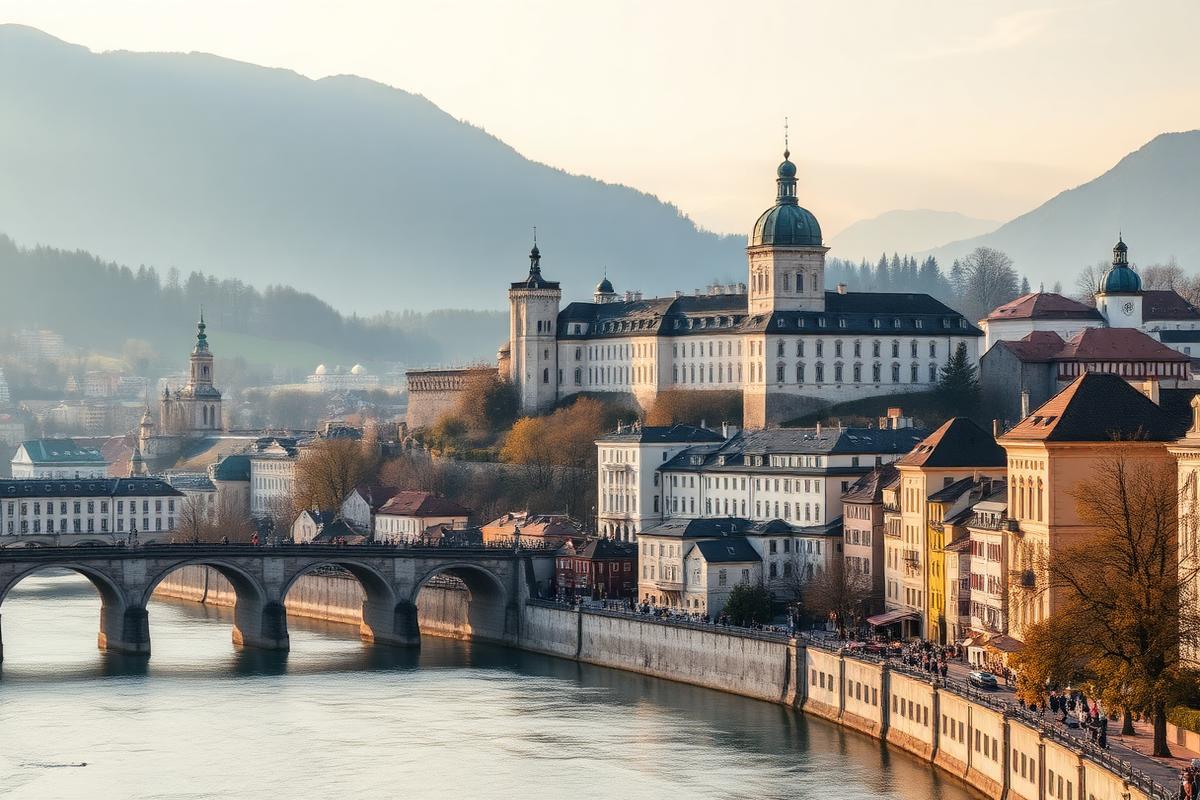
Mozart's baroque birthplace: a fortress-topped old town, Sound of Music scenery and Alpine lakes on the doorstep.
- Best time to visit: May-September; December for Christmas markets
- Daily budget (budget traveller): $75 to $120 USD
- Ideal trip length: 2 to 3 days
Salzburg packs an absurd amount of beauty into a small space: a UNESCO baroque old town beneath a hilltop fortress, Mozart everywhere, and the Alps and lakes of the Salzkammergut just outside town. It's compact, elegant and easy to love. Joy Plus clusters the old-town sights, times the fortress funicular for clear views, and slots a Hallstatt or lakes day trip without rushing.
Salzburg is the rare tourist town where the postcard is smaller than the reality. The Altstadt is roughly 1.5km of baroque squares, church domes and wrought-iron shop signs, squeezed between the Salzach river and a cliff called the Mönchsberg, with Hohensalzburg Fortress sitting on top like a punchline. You can cross the whole old town on foot in 15 minutes, which is why two days works and why people still underestimate it. The Glockenspiel on Residenzplatz plays at 7am, 11am and 6pm, and Getreidegasse is nearly empty at 8am. The postcard trick is to be in the right place at the wrong time for everyone else.
Plan around three things: rain, buses and the calendar. Salzburg is one of Austria's wettest cities, and locals have a word for the fine, endless drizzle, Schnürlregen (string rain), so pack for it and move your fortress day to whichever morning is clear. Day-trip coaches flood the centre from about 10am to 4pm, so do Getreidegasse and Mozart's birthplace early or after 6pm. The Salzburg Festival (mid-July to end of August) and the Advent markets (from mid-November, with the main Christkindlmarkt on Domplatz open until 1 January) push hotel prices up by 40 to 80 percent, and most shops are shut on Sundays all year, except some Altstadt souvenir and food shops and the supermarket inside the Hauptbahnhof.
Salzburg's second act is the landscape around it. Within two and a half hours by train or bus you can reach Hallstatt's lakeside salt-mining village, the ice caves at Werfen, the emerald Königssee in Bavaria and the Untersberg cable car, all without hiring a car. A three-day stay is the sweet spot: one day for the old town and fortress, one for Mirabell, Steingasse and a Mozart concert, one for the mountains. Stretch to a week and you can add Hellbrunn's trick fountains, Wolfgangsee and a slow Nonntal morning. Prices are Austrian, not cheap, but the Mittagsmenü (lunch special) and the beer-garden culture keep it reasonable.
How many days in Salzburg?
For Salzburg, we recommend 2 to 3 days.
| Trip length | What you'll see | Itinerary |
|---|---|---|
| 2 days · Recommended | Altstadt and Mozart; Fortress, Mönchsberg and Nockerl | Salzburg in 2 days |
| 3 days · Recommended | Adds: Mirabell, Steingasse and a concert | Salzburg in 3 days |
| 4 days | Adds: Hallstatt day trip | Salzburg in 4 days |
| 5 days | Adds: Hellbrunn and the Untersberg | Salzburg in 5 days |
| 7 days | Adds: Königssee or the Eisriesenwelt; Nonntal, a slow morning | Salzburg in 7 days |
Salzburg itinerary
Arrive, Altstadt and Mozart
Morning: Land at SZG or arrive at Salzburg Hbf, drop bags, then walk to the old town over the Staatsbrücke. Get to Mozart's Birthplace (Getreidegasse 9) at 9am opening, about €18.
Afternoon: Bosna at Balkan Grill Walter, then Mozartkugeln at Café Konditorei Fürst (Brodgasse 13). Walk Residenzplatz and the cathedral (free) before the 6pm Glockenspiel.
Evening: Dinner at Zum Fidelen Affen (Priesterhausgasse 8, cash, closed Sundays) for Schnitzel or Tafelspitz. Nightcap at Café Bazar riverside terrace.
Fortress, Mönchsberg and Nockerl
Morning: Hohensalzburg Fortress at opening (8:30am from May to September, 9:30am the rest of the year). Walk up the Festungsgasse path (free, 15 min) or take the funicular. Fortress ticket with funicular is around €18 to €20.
Afternoon: Follow the clifftop path along the Mönchsberg to the Museum der Moderne and M32 for views and coffee. Ride the lift (about €4) down to Gstättengasse.
Evening: Salzburger Nockerl at Stiftskeller St. Peter (it shares a sweet with two). Finish with beer in the Stiegl-Keller garden under the fortress.
Mirabell, Steingasse and a concert
Morning: Mirabell Gardens at 8am before the groups (free): Pegasus fountain, the Dwarf Garden, the Sound of Music steps. Coffee at Café Sacher Salzburg or the nearby Café Bazar.
Afternoon: Wander Steingasse and Linzer Gasse, then walk up Kapuzinerberg to the Franziskischlössl viewpoint. Visit the Mozart Residence (Makartplatz 8), or pick the combo ticket at about €25.
Evening: Mozart concert in Mirabell's Marble Hall (about €35 to €55) or the Salzburger Marionettentheater (Schwarzstraße 24). Late supper at Gasthaus Zum Wilden Mann.
Hallstatt day trip
Morning: Take the early train from Salzburg Hbf via Attnang-Puchheim to Hallstatt Bahnhof, about 2h30. The boat across the lake meets the train. Walk the Marktplatz and Evangelical church.
Afternoon: Salzbergbahn funicular up to the Skywalk and salt mine tour, or the Beinhaus (bone house) and a lakeside walk. Lunch on grilled Reinanke (whitefish) at Bräugasthof.
Evening: Return train after 4pm to dodge the day-tour crush, arriving back around 7pm. Käsekrainer from a stand and an early night.
Hellbrunn and the Untersberg
Morning: Bus 25 from Hbf to Hellbrunn Palace (25 min). First trick-fountain tour at 9:30, about €15, wear what dries. See the Sound of Music pavilion in the park.
Afternoon: Stay on bus 25 to the Untersbergbahn valley station and ride the cable car to 1,776m (about €35 return). Walk the plateau for views into Bavaria.
Evening: Back in town, dinner at Triangel near the Festspielhaus and a beer on Rudolfskai.
Königssee or the Eisriesenwelt
Morning: Bus 840 from Salzburg Hbf towards Berchtesgaden and Königssee, changing at Berchtesgaden if needed, 1h15 to 1h30. Carry ID. Take the electric boat across the lake to St. Bartholomä (about €22 return).
Afternoon: Lunch at St. Bartholomä's lakeside Wirtshaus (smoked fish) and a short walk. Alternatively, from May to October, take the train to Werfen for the ice caves and Hohenwerfen fortress.
Evening: Back in Salzburg for a hearty Gasthaus dinner. Order the Schnitzel with potato salad at Gasthof Goldene Ente (Goldgasse).
Nonntal, a slow morning and depart
Morning: Wander up to Nonnberg Abbey (free to enter the church; the film's abbey is just the inspiration). Coffee and Apfelstrudel at Café Tomaselli on Alter Markt.
Afternoon: Final shopping at Fürst or the Markt on Universitätsplatz (Mon to Sat mornings, best Saturday). Collect bags.
Evening: O-Bus 2 from the Hbf to the airport (about 20 min, €3 to €4) or onward train to Vienna (2h25) or Munich (1h30).
Best neighbourhoods
- Altstadt (Old Town): The UNESCO baroque core: Getreidegasse, Residenzplatz and the cathedral.
- Mönchsberg: The wooded clifftop next to the fortress hill, with the modern art museum, forest paths and views.
- Right bank (Neustadt): Mirabell Palace and gardens, plus quieter cafés and shops.
- Steingasse: A narrow medieval lane with atmospheric little bars.
- Salzkammergut (nearby): The lake district with Hallstatt, St. Wolfgang and mountain views.
Must-do experiences
- Hohensalzburg Fortress: Ride the funicular up to one of Europe's best-preserved castles.
- Mirabell Palace & Gardens: Manicured baroque gardens made famous by The Sound of Music.
- Mozart's birthplace & old town: Getreidegasse, the cathedral and the composer's yellow birth house.
- Day trip to Hallstatt or the lakes: Postcard-perfect lakeside villages in the Salzkammergut.
Hidden gems
- A beer in the garden of Augustiner Bräustübl, a centuries-old monastery brewery.
- The view from the Mönchsberg lift, skipping the fortress crowds.
- Hellbrunn Palace's trick fountains, especially fun in summer.
- An evening Mozart concert in a baroque hall or the fortress.
Daily budget
- Accommodation: budget €28-45 / night (hostel dorm), mid-range €150-240 (boutique double), splurge €380+ (Hotel Sacher, Schloss Mönchstein). Prices jump 40 to 80% during the Festival and Advent weekends. Staying in Maxglan or Lehen and taking the bus saves €30 to €60 a night.
- Food: budget €25-35 / day (Bosna, bakery, supermarket), mid-range €55-85 (Mittagsmenü + a proper Gasthaus dinner), splurge €150+ (tasting menu at Esszimmer or M32). Lunch specials at Gasthäuser run €12 to €17 for soup plus main. A Bosna at Balkan Grill Walter on Getreidegasse is about €4.50.
- Transport: budget €0-7 / day (walk the old town + one bus ticket), mid-range €10-20 (buses + one regional train); about €55 on a Hallstatt day, splurge €150+ (private driver to Hallstatt, taxis). The Salzburg Card (24h from about €35) includes city buses, Hellbrunn, the fortress and the Mönchsberg lift. It pays off at three paid sights a day.
- Activities: budget €10-25 / day (free gardens and viewpoints + one sight), mid-range €40-70 (fortress ticket, Mozart's birthplace, a concert), splurge €120+ (Mozart dinner concert, private Sound of Music tour). Mirabell Gardens, the cathedral, St. Peter's Cemetery and the Kapuzinerberg and Mönchsberg paths are free. Fortress with funicular is about €18 to €20.
- Drinks & nightlife: budget €8-15 (half litre at Augustiner Bräustübl), mid-range €25-40 (Stiegl-Keller, Steingasse and Rudolfskai bars), splurge €70+ (Stein rooftop cocktails, Hotel Sacher bar). Salzburg goes to bed early. Most bars wind down by midnight to 1am. The monastery beer at Augustiner (about €6 for 0.5L) is the best-value pour in town.
Where to stay
- Social hostel in Neustadt, near Hauptbahnhof and Mirabell (€28-45 / night): Yoho International Youth Hostel has a lively bar, nightly Sound of Music screenings and easy day-trip logistics. It is a 10 minute walk from the station.
- Boutique hotel in Altstadt riverfront (Giselakai) (€150-240 / night): Hotel Stein has a rooftop terrace overlooking the old town and the fortress, Arthotel Blaue Gans sits on Getreidegasse. Everything is a 5 minute walk.
- Apartment in Nonntal or Andräviertel (€95-150 / night): Quiet residential streets south of the fortress or across the river, with a kitchen, a bakery on the corner and the old town 10 minutes away. Best value for 4+ nights.
- Splurge in Salzach riverfront / Mönchsberg (€380-800 / night): Hotel Sacher Salzburg (Schwarzstraße 5-7) for river views and the Sachertorte; Schloss Mönchstein for a Relais & Châteaux castle on the cliff above town.
What to eat
- Salzburger Nockerl, the giant sweet soufflé
- Wiener schnitzel with potato salad
- Bosna, the local spicy sausage sandwich
- Monastery beer and pretzels in a beer garden
Day trips
- Hallstatt (About 2h30 by train and boat): A lakeside village below a salt mountain, with the Beinhaus bone chapel, Skywalk and the world's oldest salt mine tours. Tour coaches arrive 10:30am to 4pm, so go early or stay late. ÖBB train from Salzburg Hbf via Attnang-Puchheim to Hallstatt Bahnhof (about €25 to €35 each way, cheaper with Sparschiene). The boat across the lake meets the trains, so check whether your ticket includes it.
- Königssee and Berchtesgaden (1h15 to 1h30 by bus): Electric boats glide across a fjord-like Alpine lake to the pilgrim chapel of St. Bartholomä. Combine it with the Berchtesgaden salt mine, or the Eagle's Nest (May to October) for a heavier history day. RVO bus 840 from Salzburg Hbf towards Berchtesgaden and Königssee, changing there if needed. Around €10 each way. Boat to St. Bartholomä is about €22 return. Carry ID for Germany.
- Werfen and the Eisriesenwelt (45 min by train): The world's largest ice cave, open about May to late October, plus Hohenwerfen fortress with falconry shows. It is 0°C inside, so bring a jacket and decent shoes. REX train from Salzburg Hbf to Werfen (about €10 to €12 each way), then the shuttle bus, a 15 minute walk and the cable car. Cave, cable car and shuttle all in roughly €40 to €50.
When to visit
- Spring (April - June): 6-22°C, fresh mornings, regular showers, long light evenings by June. Crowds: Building, comfortable until Whitsun. The best window. Gardens in bloom, Hellbrunn and the ice caves open, and the Festival crowds have not arrived yet. Pack a rain jacket.
- Summer (July - August): 18-27°C, humid, frequent afternoon thunderstorms. Crowds: Heavy, with Festival and tour-bus season at full tilt. Spectacular for music and lake swims, brutal for prices. Book 3 to 4 months ahead and do Hallstatt before 10am.
- Autumn (September - October): 8-20°C, golden larches, misty mornings, some clear Föhn days. Crowds: Moderate, drops after the first week of October. The locals' pick. Lakes still pleasant in early September, hiking at its best, and rooms cost far less than in August.
- Winter (November - March): -5 to 4°C, grey in the valley, snow in the hills. Crowds: Low, except Advent weekends and Mozart Week in late January. The Christkindlmarkt on Domplatz and the fortress in snow are magic. January and February are cheap and quiet, but Hallstatt's sights are limited and the ice caves are closed until May.
Entry rules for your passport
Visa rules for Austria depend on the passport you travel on. Check the official source before you book: European Commission: Schengen visa policy
Getting there
Salzburg Airport (SZG) is only 4km west of the centre. O-Bus 2 reaches the Hauptbahnhof in about 20 minutes for roughly €3 to €4, and a taxi to the old town is €18 to €25. Many travellers fly into Munich (MUC) instead and take the S-Bahn to Munich Hbf, then a direct train to Salzburg Hbf in 1h30 to 1h45 (€20 to €40; the Bayern-Ticket at about €34 for one person also works on regional trains). Vienna is 2h25 by ÖBB Railjet or Westbahn, from about €15 to €25 if booked in advance. Innsbruck takes about 2h and Prague about 6h. Salzburg Hbf is a 10 minute walk from Mirabell and 20 minutes from Getreidegasse.
Border checks: non-EU visitors (other than Swiss, Norwegian, Icelandic, Liechtenstein, Andorran, Monegasque, San Marinese and Vatican citizens, and holders of an EU residence permit or long-stay visa) are registered in the EU's Entry/Exit System (EES) instead of getting a passport stamp. On your first crossing, officers take your photo and/or fingerprints, so allow extra time at passport control. ETIAS, the planned travel authorisation, is not in operation yet, so don't pay any website for one.
Getting around
The old town is entirely walkable and largely pedestrianised. Buses cover the outskirts and Hellbrunn cheaply. For day trips, trains and post buses reach Hallstatt and the lakes; renting a car gives more flexibility for the Salzkammergut if you're short on time.
Safety
Salzburg is extremely safe and clean. The main considerations are summer and Christmas-market crowds in the old town, slippery cobbles in wet or icy weather, and booking accommodation early during the July-August festival season when prices spike.
Solo travel tips
- Sit at the long tables: At Augustiner Bräustübl (daily from 3pm, Augustinergasse 4) you grab a stone mug, fill it from the barrel and sit wherever there is a free seat. Say 'Ist hier noch frei?' and you will be in a conversation within ten minutes.
- Hostel pick: Yoho: Yoho International Youth Hostel (Paracelsusstraße 9, near the Hbf) is known for its Sound of Music screenings and an easy social bar. It is a 10 minute walk to Mirabell.
- Get single seats for concerts: Solos get the best deals on concerts, since single seats are rarely sold out. Ask the Mozarteum and Festival box offices for same-day returns and standing places. The Marionettentheater is a charming solo date night.
- Eat at lunch, not dinner: Mittagsmenü deals (about €12 to €17) are served 11:30am to 2pm and are the cheapest way to sample Gasthaus cooking solo. Dinner kitchens often close by 9pm and portions are for two.
- Solo female travellers: Salzburg is very safe. The station area and Rudolfskai are rougher after midnight. Standard rules apply. Taxi 8111 (+43 662 8111) is the reliable local cab number, with no surge pricing.
- Find your tribe on the Gaisberg: Seasonal bus 151 from Mirabellplatz reaches the Gaisberg summit (1,287m), where solo hikers swap trail tips over Kaiserschmarrn. Check the timetable, it only runs on certain days outside peak season.
Cultural etiquette
- Say 'Grüß Gott' or 'Servus' when entering a shop, café or Gasthaus and 'Auf Wiedersehen' when leaving. Silent entrances read as rude.
- Tipping is 5 to 10%. Don't leave coins on the table. Tell the server the total you want to pay ('Zehn Euro, bitte') when settling the bill.
- Most shops close on Sundays, and on weekdays many close in the early evening, with supermarkets often open until about 7:30pm. On Sundays only some Altstadt souvenir and food shops, the Hauptbahnhof's Spar and petrol stations open, so buy supplies on Saturday.
- A table marked 'Stammtisch' in a Gasthaus belongs to regulars. Don't sit there, and ask 'Ist hier frei?' before joining shared tables in beer gardens.
- Many Austrians have never seen The Sound of Music. Don't expect locals to share your enthusiasm or sing along.
- Cyclists have the red lanes and do not slow down. Don't stand on them while photographing Mirabell or the Salzach embankment.
- Dirndl and Lederhosen are everyday clothing in Salzburg, especially at the Festival. Admire them quietly, don't treat them as fancy dress.
Frequently asked questions
How many days do you need in Salzburg?
Two days covers the old town and fortress comfortably; add a third for a Hallstatt or lakes day trip, or for Sound of Music and salt-mine excursions.
Is Salzburg a good base for day trips?
Yes. Hallstatt, the Salzkammergut lakes, the Eagle's Nest at Berchtesgaden and even Munich are all within easy reach by train, bus or car.
When is the best time to visit Salzburg?
May to September for warm weather and lakes, or December for the Christmas markets. The summer festival (mid-July to the end of August) is spectacular but busy and pricey.
How much does a trip to Salzburg cost?
Budget around $75 to $120 USD per person per day, covering a hostel bed or simple room, local transport, two or three meals out and an activity or entry ticket. You can go lower with markets and free walking tours, or far higher with boutique hotels and private guides.
What should I eat in Salzburg?
Start with Salzburger Nockerl, the giant sweet soufflé, Wiener schnitzel with potato salad, Bosna, the local spicy sausage sandwich. Eating where locals queue is the simplest rule, and markets are usually the cheapest and best introduction to the food in Salzburg.
How much does a solo trip to Salzburg cost?
Budget on roughly $75-$120 USD per day in Salzburg as a solo traveller. That covers a hostel bed or simple room, local food, getting around and a couple of paid sights. Mid-range comfort with private rooms, sit-down dinners and the odd tour runs closer to double, while shoestring travellers who cook and stick to street food can come in under it.
Is Salzburg safe for solo female travellers?
Salzburg is generally a comfortable place to travel solo, including for women, as long as you use normal city sense. Salzburg is extremely safe and clean. The main considerations are summer and Christmas-market crowds in the old town, slippery cobbles in wet or icy weather, and booking accommodation early during the July-August festival season when prices spike.
How do you get around Salzburg?
The old town is entirely walkable and largely pedestrianised. Buses cover the outskirts and Hellbrunn cheaply. For day trips, trains and post buses reach Hallstatt and the lakes; renting a car gives more flexibility for the Salzkammergut if you're short on time.
Tours and activities in Salzburg | Salzburg in 2 days | Salzburg in 3 days | Salzburg in 4 days | Salzburg in 5 days | Salzburg in 7 days
Can't decide? Compare Salzburg with...
Joy Plus home | Destinations | Itineraries | Activities | Flights | Budget planner | Calendar | Map | Blog | Lifetime access