Destinations / Europe
San Gimignano, Italy travel guide
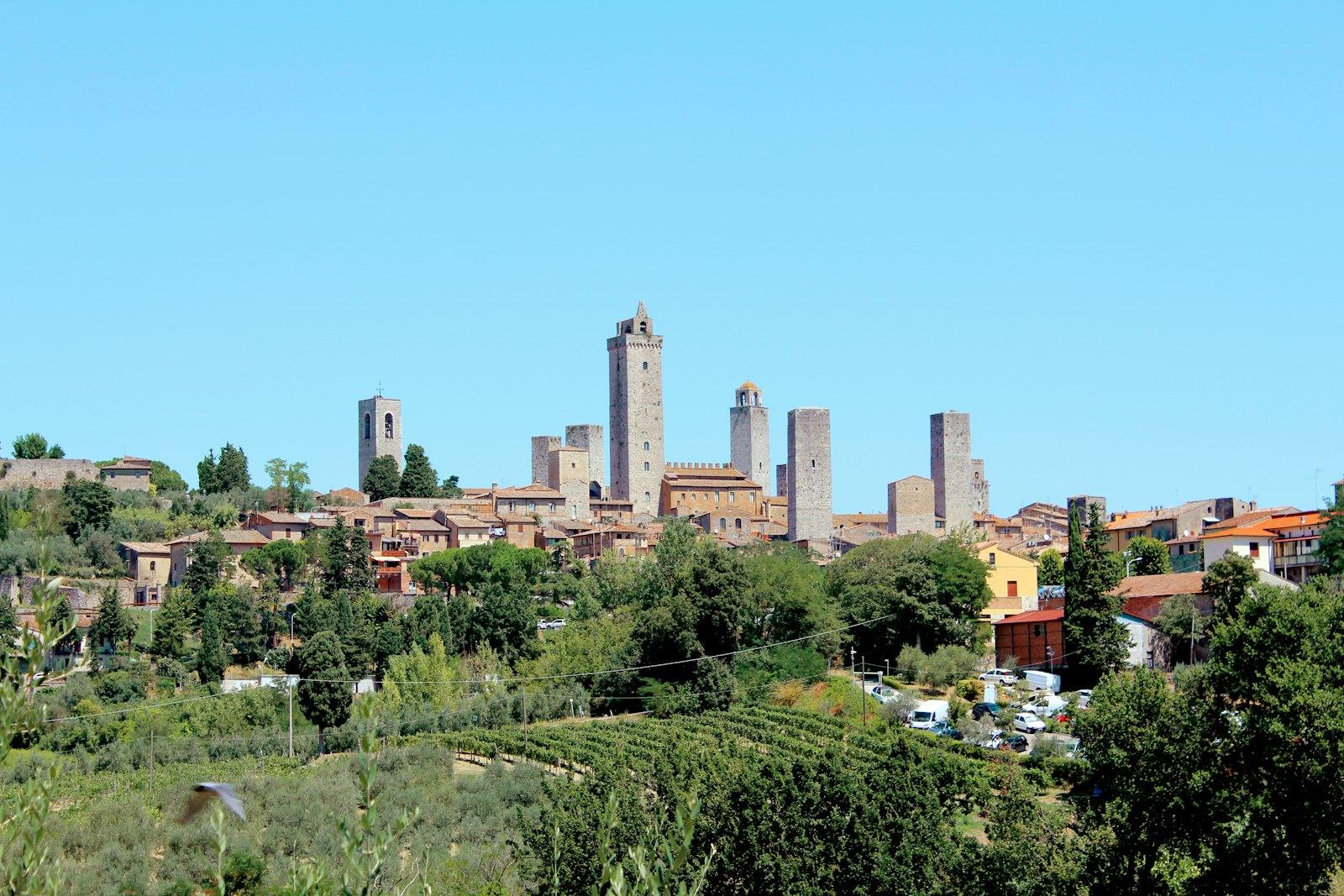
Tuscany's medieval tower town: skyline views over rolling vineyards, crisp Vernaccia wine, and fresco-filled churches that reward a slow overnight stay.
- Best time to visit: April to June and September to October
- Daily budget (budget traveller): $95 to $215 USD
- Ideal trip length: 2 days
Rising from a ridge in the Val d'Elsa, San Gimignano is one of the most recognisable hill towns in Italy, its skyline pierced by the surviving medieval towers that once signalled the wealth and rivalry of local families. Of the many towers that once stood, fourteen remain, and together with the compact historic centre they earned the town UNESCO World Heritage status in 1990. Most visitors arrive on a day trip from Florence or Siena and leave by late afternoon, which is exactly why the solo traveller is wise to stay overnight. Once the coaches depart, the lanes around Piazza della Cisterna and Piazza del Duomo turn quiet and golden, and a glass of local Vernaccia at a small enoteca becomes a very easy way to meet other travellers. The town is small enough to explore entirely on foot, safe after dark, and surrounded by vineyards, olive groves, and saffron fields that make for gentle walks beyond the walls.
San Gimignano sits on a ridge in the Val d'Elsa and looks like a stage set that someone forgot to strike. Fourteen of the original medieval towers survive, built by feuding merchant families who wanted to out-tall each other, and the whole town has been UNESCO-listed since 1990. Between about 11am and 5pm the lanes fill with tour groups from Florence and Siena, and Via San Giovanni moves at shuffle speed. That is the version most people see, and it is the least interesting one.
The trick is to sleep here. Around 5 or 6pm the coaches leave, the light turns honey-coloured, and Piazza della Cisterna becomes a place where you can nurse a €5 glass of Vernaccia, the town's crisp white DOCG, without being elbowed. The core sights are small and quick to cover: the Torre Grossa climb (54 metres, 218 steps), the Collegiata's frescoed walls, Gozzoli's Saint Augustine cycle at Sant'Agostino, then the Rocca di Montestaffoli for the view. By day two you are out in the vineyards, walking country roads to a cellar door with no crowd in sight.
For solo travellers the town is easy and safe, but it does reward a bit of logistics. There is no train station, so you ride a regional train to Poggibonsi-San Gimignano and finish on a local bus of roughly 25 minutes, and the last buses leave early. Prices drop sharply once you step off Via San Giovanni, and most restaurants are small, so book dinner even for one. Treat it as a base for two nights, or a slow week with day trips to Siena, Volterra and Certaldo, and it feels like a village rather than a postcard.
San Gimignano itinerary
Arrive, settle, golden hour on the Cisterna
Morning: Take a regional train from Firenze Santa Maria Novella to Poggibonsi-San Gimignano (about 1h to 1h15, roughly €9, some need a change at Empoli). Outside the station, board the Autolinee Toscane bus 130 for the 25-minute ride up.
Afternoon: Drop bags at your hotel (ask for luggage help, the ZTL and cobbles hate suitcases with wheels). Walk Via San Giovanni and pick up a porchetta or schiacciata sandwich. Sunset at the Rocca di Montestaffoli once the groups thin out.
Evening: Dinner at Osteria delle Catene on Via Mainardi, pici with wild boar ragu and a quartino of house wine. Aperitivo on the garden terrace at Le Vecchie Mura if you want the view.
Towers, frescoes and a quiet evening
Morning: Check the Palazzo Comunale, Pinacoteca and Torre Grossa opening hours before setting out, especially in winter (the complex is due to close from 11 January to 28 February 2027). Climb Torre Grossa first, then walk the Pinacoteca upstairs. Then the Collegiata (closed or limited on Sunday mornings) for the Last Judgment and the Old and New Testament cycles.
Afternoon: Lunch at Osteria del Carcere or a ribollita at a trattoria off the main drag. Sant'Agostino afterwards for Gozzoli's life of Saint Augustine. Check its midday closure before you walk up.
Evening: Gelato from Gelateria Dondoli on Piazza della Cisterna after the coaches leave, Crema di Santa Fina and a scoop of saffron. Dinner at Locanda di Sant'Agostino or a tavern in Via San Matteo.
Vineyards on foot
Morning: Walk out through Porta San Matteo on country roads to a Vernaccia estate such as Montenidoli or Panizzi (3 to 5km, book a tasting, about €15-30). Wear a hat, there is little shade.
Afternoon: Long lunch at the winery or return to town for pici and a salad. Siesta, then browse the saffron and ceramics shops, and buy a sealed jar of Zafferano di San Gimignano.
Evening: Splurge dinner at LINFA; reserve well ahead for weekends and high season. Or keep it simple with cheese and cured meats at a wine bar.
Siena day trip
Morning: Bus 130 or train via Poggibonsi to Siena (about 1h to 1h30). Piazza del Campo, then the Duomo with its Piccolomini Library. Climb the Torre del Mangia if the queue is short.
Afternoon: Lunch at Osteria Le Logge or a standing panino near Campo. Wander the Contrade streets and the Pinacoteca Nazionale if you like Sienese painting.
Evening: Check the last bus back before you commit to dinner. Easy dinner in San Gimignano, an early night after a full day on stone.
Volterra, the Etruscan hilltop
Morning: Go by taxi or rental car (about 35 to 45 minutes). Buses require changes at Poggibonsi or Colle, so a driver is much easier. Start at Piazza dei Priori and the Roman Theatre.
Afternoon: Etruscan finds in the Guarnacci Museum, then alabaster workshops on the main streets. Lunch on a local dish such as ribollita or a cinghiale stew.
Evening: Back in San Gimignano, a quiet Vernaccia flight with pecorino at a wine bar. Sleep early.
Certaldo Alto and the saffron fields
Morning: Train or bus from Poggibonsi to Certaldo (about 12 to 20 minutes), then the funicular to Certaldo Alto, the red-brick hill town where Boccaccio lived. Visit Casa di Boccaccio and Palazzo Pretorio.
Afternoon: Return to San Gimignano and walk the Via Francigena trail out of town for an hour or two, past olive groves. If it is late October, the saffron flowers are being picked.
Evening: Final dinner at Le Vecchie Mura or Osteria del Carcere. Last Vernaccia on the piazza.
Market, souvenirs, depart
Morning: Coffee at a bar counter, then browse the weekly Thursday market if you are here on the right day. Buy Vernaccia, saffron and pecorino to carry home.
Afternoon: Bus from the Porta San Giovanni area to Poggibonsi, then train to Florence or Siena. Add buffer time for connections.
Evening: Arrive in Florence or Siena for your onward journey, or carry on to Pisa airport if flying out.
Best neighbourhoods
- Piazza della Cisterna and Piazza del Duomo: The medieval heart of town, where two interlinked squares hold the 13th century well, the Collegiata, the civic palace, and the tallest towers, surrounded by cafes, gelaterie, and wine shops.
- Via San Giovanni: The main pedestrian artery running from Porta San Giovanni up to Piazza della Cisterna, lined with food shops, ceramics, wine bars, and the best people watching in town.
- Sant'Agostino and Porta San Matteo: The quieter northern side of the old town, where tourist numbers thin out, local residents go about their day, and you will find a fresco-rich church, small trattorias, and calm walking lanes.
- Rocca di Montestaffoli: The hilltop park around the ruins of a 14th century Florentine fortress, offering open views across the vineyards and an easy place to rest, picnic, or watch the sunset.
Must-do experiences
- Climb the Torre Grossa: Enter through the Museo Civico in Palazzo Comunale, admire its medieval and Renaissance paintings, then climb the town's tallest tower for a sweeping view over rooftops and the Tuscan countryside.
- Step inside the Collegiata: Visit the Romanesque collegiate church of Santa Maria Assunta, whose walls are covered with vivid 14th century Old and New Testament fresco cycles and a dramatic Last Judgment.
- Taste gelato in Piazza della Cisterna: Sit by the old stone well and try a famous local flavour such as Crema di Santa Fina, a creamy blend flavoured with saffron and pine nuts, from the renowned gelateria on the square.
- Wander the Rocca di Montestaffoli: Walk up to the ruined fortress park for open views across the valley, shaded benches, and a peaceful break from the busy main streets.
- Admire the frescoes of Sant'Agostino: Visit this quiet Gothic church to see the celebrated cycle of the life of Saint Augustine by Benozzo Gozzoli, and enjoy a calm moment away from the crowds.
- Taste Vernaccia di San Gimignano: Order a flight of the town's famous crisp white DOCG wine at one of the central enotecas, ideally paired with local cured meats and pecorino.
Hidden gems
- The medieval fountains just outside the Porta delle Fonti, a series of arched stone basins that once served the townspeople as public washhouses and watering places
- The twin Salvucci towers, a striking reminder of the family rivalries that shaped the medieval skyline, best admired from the lanes around Piazza delle Erbe
- The Romanesque church of Pieve di Cellole, a peaceful countryside church a short drive or long walk from town, set among fields and cypress trees
- The golden hour hush of the old town after the coaches leave, when the lanes empty out and the towers glow against the evening sky
Daily budget
- Accommodation: budget €30-50 / night (hostel bed or basic room), mid-range €110-190 (double inside the walls), splurge €300+ (La Collegiata or a vineyard estate). Beds are limited and book out in high season. Add a city tax of a few euro per person per night. Rooms in Poggibonsi cost half as much if you don't mind the bus.
- Food: budget €25-35 / day (schiacciata, ribollita lunch, supermarket dinner), mid-range €55-85 (pici dinner with wine at an osteria), splurge €150+ (a tasting-menu dinner with wine at the Michelin-starred LINFA). Expect a coperto of €2-3 per person at sit-down places. A bar-counter espresso is around €1.40, but double or triple that at a table on the piazza.
- Transport: budget €15-25 return from Florence (regional train plus bus), mid-range €30-50 (train, bus plus a taxi for a day trip), splurge €120-180 (private driver Florence to town). The town itself is walkable, so you only pay to get here and for day trips. A rental car is a hassle because of the ZTL and parking fees of about €2-2.50 an hour.
- Activities: budget €10-20 / day (Collegiata, free churches, Rocca park), mid-range €30-60 (Museo Civico with Torre Grossa, winery tasting), splurge €120+ (guided vineyard day with lunch or a farmhouse cooking class). The Musei Civici ticket, including Torre Grossa, is about €10. The San Gimignano Pass, including the Collegiata and civic museums, is about €15, plus an online booking fee. Check current church tickets and opening hours before visiting.
- Drinks & nightlife: budget €8-12 (a glass of Vernaccia or two), mid-range €20-35 (tasting flight with cured meats), splurge €60+ (cellar tasting of Vernaccia Riserva). This is not a nightlife town. Enoteche wind down by 11pm or midnight, and bigger evenings mean a taxi to Siena. The pleasure is a long, slow glass in the piazza.
Where to stay
- Social hostel in Porta delle Fonti (€30-50 / night): The town's hostel option near Via delle Fonti, a short walk from the centre, with shared rooms for solo budget travellers. Beds are scarce, so confirm availability and book early. A convent-style guesthouse such as Foresteria Monastero di San Girolamo is a quiet backup.
- Boutique hotel in Via San Matteo (€130-220 / night): L'Antico Pozzo, a 15th-century palazzo with beamed ceilings and a short stroll to Piazza della Cisterna. Quiet at night, and breakfast is a proper one.
- Apartment in Sant'Agostino quarter (€90-150 / night): Residential stone houses on the calm north side of town, ideal for a slow four-night stay. A small kitchen helps with market shopping and cheaper dinners.
- Splurge in Just outside Porta San Matteo (€280-500 / night): Hotel La Collegiata, a 16th-century convent turned five-star with gardens and a pool, or the nearby Relais Santa Chiara. Vineyard views at breakfast, and the walls are a short walk away.
What to eat
- Vernaccia di San Gimignano: the town's signature dry white wine, one of Italy's earliest DOC wines and now a DOCG, with a crisp, mineral finish that pairs well with light Tuscan dishes
- Pici with wild boar ragu: thick hand-rolled Tuscan pasta served with a slow-cooked sauce of cinghiale, a rustic classic of the region
- Zafferano di San Gimignano: locally grown saffron used in risottos, pastas, and desserts, and often sold in small jars as a lightweight edible souvenir
- Ribollita: a hearty Tuscan soup of day-old bread, cannellini beans, and cavolo nero, a comforting and budget-friendly choice for a solo lunch
Day trips
- Siena (About 40km, 1h to 1h30): Piazza del Campo, the striped Duomo with the Piccolomini Library, and the Contrade neighbourhoods. A big, lively city after the small-town quiet. Bus 130 direct, or train via Poggibonsi, roughly €5-8 each way. Check last return times before you go.
- Volterra (About 35km, 40 min by car): Etruscan walls, a Roman theatre, alabaster workshops and a brooding medieval skyline. Less polished and less crowded than San Gimignano. Taxi or rental car is easiest. By bus you need to change at Poggibonsi or Colle di Val d'Elsa, and the trip takes about 1h45 to 2h30, so check timetables.
- Certaldo Alto (About 20km, 30 to 45 min): Boccaccio's red-brick hill town, car-free and quiet, with Casa di Boccaccio, Palazzo Pretorio and a small funicular ride up from the lower town. Bus or train to Poggibonsi, then a short regional train to Certaldo (about 12 to 20 min). The funicular up costs about €2.
When to visit
- Spring (April to June): 14-26°C, green hills, occasional showers in April. Crowds: Building fast, heavy at weekends and around Easter. Poppies, long evenings and warm-but-not-hot cobbles. Book a room early, and look out for the medieval Ferie delle Messi festival in June.
- Summer (July to August): 29-36°C, dry, little shade on the stone. Crowds: Heaviest of the year, packed 11am to 5pm. Doable only if you sleep in town, start at 8am and hide in a cool church or cellar at midday. Room prices peak.
- Autumn (September to October): 16-27°C, golden light, first rains in late October. Crowds: Moderate, drops after mid October. The locals' pick. Grape harvest, saffron flowers in late October, cooler walking weather and easier restaurant tables.
- Winter (November to March): 1-12°C, fog and frost, some rain. Crowds: Very low. Cheapest rooms and empty lanes, but shorter opening hours, a few places closed in January and February, and reduced bus service.
Entry rules for your passport
Visa rules for Italy depend on the passport you travel on. Check the official source before you book: European Commission: Schengen visa policy
Getting there
San Gimignano has no railway station. The standard route is a regional train to Poggibonsi-San Gimignano station, then Autolinee Toscane bus line 130 up to town (about 25 minutes, roughly €3 to €4, but check the timetable at at-bus.it because services change). From Florence Santa Maria Novella the train takes about 1h to 1h15 and costs roughly €9, with some services changing at Empoli. From Siena the train to Poggibonsi is about 30 minutes, or take bus 130 direct for about 1h to 1h20. The nearest airports are Florence (FLR, about 1h15 by road) and Pisa (PSA, about 1h30). By car, the historic centre is a ZTL (restricted traffic zone), so park outside the walls at lots such as Montemaggio or Giubileo for about €2 to €2.50 an hour and walk in. Hotels in the ZTL can sometimes register your plate for unloading, so ask before you arrive. Buses stop near Porta San Giovanni, and the walk to Piazza della Cisterna is about five minutes uphill. Late arrival? A taxi from Poggibonsi is around €35-45, and it pays to pre-book.
Border checks: non-EU visitors (other than Swiss, Norwegian, Icelandic, Liechtenstein, Andorran, Monegasque, San Marinese and Vatican citizens, and holders of an EU residence permit or long-stay visa) are registered in the EU's Entry/Exit System (EES) instead of getting a passport stamp. On your first crossing, officers take your photo and/or fingerprints, so allow extra time at passport control. ETIAS, the planned travel authorisation, is not in operation yet, so don't pay any website for one.
Getting around
The historic centre is compact, largely pedestrian, and easy to cover entirely on foot, though the cobbled lanes are steep in places, so wear comfortable shoes. There is no railway station in the town itself. Most travellers take a train to Poggibonsi-San Gimignano station and continue by regional bus for roughly 20 to 30 minutes, while direct and connecting bus services also run from Siena and Florence. If you drive, be aware that the historic centre is a restricted traffic zone (ZTL) where unauthorised vehicles can be fined, so use the paid car parks just outside the walls and walk in. Taxis are limited, so arrange transfers in advance if you have luggage or are arriving late. Check current bus timetables before travelling, as evening and Sunday services are reduced.
Safety
San Gimignano is very safe for solo travellers, with low levels of violent crime and a relaxed atmosphere even in the evening. Petty theft such as pickpocketing can occur in the busiest squares during peak season, so keep your bag zipped and close. Summer afternoons can be very hot with little shade on the cobbles, so carry water, wear a hat, and refill bottles at public fountains. Steep, uneven stones can be slippery after rain. Drivers should watch for ZTL signs to avoid fines. The general emergency number across Italy and the EU is 112.
Solo travel tips
- Sleep inside the walls: Day trippers arrive from about 10am and are gone by 5 or 6pm. If you stay overnight you get the empty golden-hour lanes and a quiet breakfast, and you meet the other people who stayed.
- Order a quartino and sit at the counter: A quartino of house wine (a quarter litre) and a plate of pici is made for one person. Wine bars with a counter are the easiest places to chat with other travellers and the owners.
- Book dinner, even for one: Many places have fewer than 30 seats and fill by 8pm in season. Call or message in the morning, and ask for the bar or a small corner table. Staff will usually be relaxed about it.
- Plan your last bus before you plan your evening: Evening and Sunday services are thin, and the last buses down to Poggibonsi often leave before 9pm. Check the Autolinee Toscane timetable the day before, and keep taxi numbers saved. A late taxi from Poggibonsi costs around €35-45.
- Solo female travellers: Violent crime is rare and the lanes feel calm at night. The dark spots are the car parks and roads outside the gates after 10pm, so walk those with a charged phone, or arrange a taxi. Standard rules: watch your drink, keep your bag zipped in the busy squares.
- Find your tribe at a cellar door or on a trail: Small-group winery tours and farmhouse cooking classes pair solos up naturally. The Via Francigena stretch out of town is popular with walkers, and a one-hour walk is a good icebreaker.
Cultural etiquette
- Cover shoulders and knees for the Collegiata and Sant'Agostino, and don't use flash on the frescoes.
- Coperto of €2-3 per person is a cover charge, not a tip. Tipping is small: round up or leave €1-2 per person at a sit-down meal.
- Order coffee at the bar, standing, for about €1.40. Sitting at a table on the piazza costs two or three times more. Cappuccino is a morning drink.
- Lunch is 12:30 to 2:30pm and dinner starts around 7:30pm. Kitchens often close by 9:30pm, so don't show up at 10pm expecting pasta.
- Say buongiorno or buonasera when you enter a shop or enoteca. It matters more than any amount of English.
- Don't eat on the steps of the Collegiata, sit on the Cisterna well, or climb on monuments. Fines are possible.
- People live above the lanes. Keep your voice down after 11pm, and keep luggage wheels off the cobbles at night if you can.
Frequently asked questions
How do I get to San Gimignano from Florence or Siena?
There is no train station in San Gimignano itself. The usual route is to take a train or bus to Poggibonsi, then a regional bus for about 20 to 30 minutes up to the town. Direct or connecting bus services also run from Florence and Siena, with the journey typically taking between 1 and 2 hours depending on the connection. Always check current timetables before travelling.
How many days do I need in San Gimignano?
Two days is ideal. It gives you time to climb the Torre Grossa, see the Collegiata and Sant'Agostino frescoes, enjoy a wine tasting, and experience the quiet evening and morning atmosphere. A single day trip is possible if you are short on time.
When is the best time of year to visit San Gimignano?
April to June and September to October offer mild weather, green or golden landscapes, and manageable crowds. July and August can be hot and busy, while winter is quiet and atmospheric but some restaurants and shops keep shorter hours.
Can I use my credit card everywhere?
Cards are widely accepted in hotels, restaurants, and larger shops. Carry some euros in cash for small purchases such as coffee, gelato, bus tickets, and smaller family-run places, and some venues may have minimum card spends.
Is San Gimignano worth visiting as a day trip from Florence?
Yes, it is a popular day trip and manageable by public transport, but you will arrive with the crowds. Staying overnight lets you enjoy the town in the quiet early morning and evening and gives you time to explore the surrounding countryside without rushing for a bus.
What language is spoken in San Gimignano?
Italian is the official language. English is commonly spoken in hotels, restaurants, and tourist sites, though a few basic Italian phrases such as buongiorno, per favore, and grazie will be appreciated.
Is San Gimignano safe for solo female travellers?
Yes, it is considered very safe for solo female travellers, and the compact, well-lit centre is easy to navigate in the evening. Standard precautions apply, such as keeping an eye on your belongings in crowds, watching your drink, and arranging transport in advance if you arrive late.
What entry rules apply to travellers visiting Italy in 2026?
Italy is part of the Schengen Area. Citizens of the EU and Schengen countries can generally enter with a valid passport or national ID card. Citizens of countries such as the US, UK, Canada, and Australia can usually visit visa-free for short stays of up to 90 days within any 180-day period, subject to nationality-specific rules; non-EU visitors generally need a passport issued less than 10 years before arrival and valid for at least three months after leaving the Schengen Area. The EU's Entry/Exit System and the ETIAS travel authorisation are being introduced for visa-exempt travellers, so requirements may change. Always confirm the current rules with the official Italian government source or your own government's travel advice before you travel.
More about San Gimignano
Tours and activities in San Gimignano | San Gimignano in 2 days | San Gimignano in 3 days | San Gimignano in 4 days | San Gimignano in 5 days | San Gimignano in 7 days
Can't decide? Compare San Gimignano with...
Joy Plus home | Destinations | Itineraries | Activities | Flights | Budget planner | Calendar | Map | Blog | Lifetime access