Destinations / Europe
San Marino, San Marino travel guide
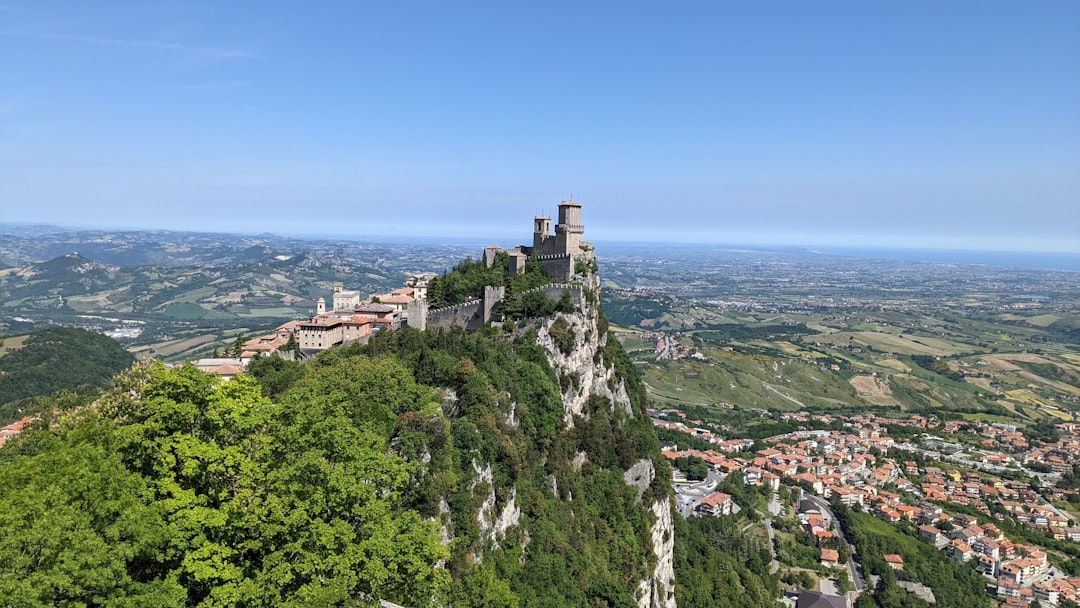
The world's oldest republic: three towers on a limestone crag above the Adriatic plain.
- Best time to visit: May-June and September
- Daily budget (budget traveller): $90 to $170 USD
- Ideal trip length: 1 to 2 days
San Marino claims to be the world's oldest surviving republic, founded in 301 AD, and its historic centre clings to the ridge of 739-metre Monte Titano above the Romagna plain. Three medieval towers link along a cliff-edge path, the view runs all the way to Rimini and the Adriatic, and the whole UNESCO-listed centre can be walked in an afternoon.
San Marino is a country you can see from the next country. The Republic sits on Monte Titano, a 749 metre limestone ridge that rises straight out of the Romagna plain, and on a clear morning you can trace the road all the way down to Rimini and the flat blue line of the Adriatic. The founding story dates it to 301 AD, when a stonecutter named Marinus fled Roman persecution and built a hermitage here. Whatever you make of the legend, the continuity is real: the Republic kept its independence through popes, warlords and Napoleon, who offered to enlarge its territory and was politely turned down. The centro storico and the Monte Titano ridge have been UNESCO-listed since 2008, and the three towers strung along the cliff edge are the image on every stamp, coin and fridge magnet.
The honest version: between about 10am and 4pm in summer, the main street (Contrada Omagnano and Via Basilicata) is a river of coach groups funnelling past perfume, crossbow and tobacco shops. Before 9:30am and after 5pm it is a different place. The cable car glides up from Borgo Maggiore in near silence, Guaita opens to a handful of people, the Passo delle Streghe path along the ridge is yours, and the stone lanes behind the Basilica go quiet enough to hear your own footsteps. That is the whole trick of San Marino. Sleep up on the ridge, be on the towers when they open, and treat the middle of the day as lunch, museums and wine.
It is also small enough to be generous. The whole country is about 61 square kilometres, so the vineyards of Montegiardino and Fiorentino, the Thursday market at Borgo Maggiore and the cheese counters below the ridge are all a short ride from your hotel. Food is Romagna through and through: piadina folded around squacquerone, passatelli in broth, a slab of Torta Tre Monti and a glass of local Sangiovese. Pair it with a day each in San Leo, Urbino and Rimini and you have a week that feels far larger than the map suggests. Use the euro, carry your passport for the souvenir stamp, and bring shoes that grip, because every street here is a staircase.
How many days in San Marino?
For San Marino, we recommend 1 to 2 days.
| Trip length | What you'll see | Itinerary |
|---|---|---|
| 2 days · Recommended | Ride up, first sunset on the ridge; The Three Towers at opening | San Marino in 2 days |
| 3 days | Adds: Cable car and Borgo Maggiore | San Marino in 3 days |
| 4 days | Adds: San Leo, the rival fortress | San Marino in 4 days |
| 5 days | Adds: Urbino and the Ducal Palace | San Marino in 5 days |
| 7 days | Adds: Rimini, Roman and Fellini | San Marino in 7 days |
San Marino itinerary
Arrive, ride up, first sunset on the ridge
Morning: Land at Rimini Fellini airport (RMI), bus 9 to Rimini station (about 15 minutes). Pick up the Bonelli Line 4 bus to San Marino, roughly 45 minutes, about €6. Drop bags at Hotel Titano on Contrada del Collegio.
Afternoon: Walk Piazza della Libertà and the Palazzo Pubblico, then the Basilica di San Marino. Pick up a piadina at a street counter and eat it on the Piazzale Domus Plebis walls.
Evening: Golden hour at the Guaita exterior walls, then dinner at La Terrazza. Walk the lit lanes after the last coach has left.
The Three Towers at opening
Morning: Be at the Guaita gate for opening (about 9am, earlier in summer). Walk the Passo delle Streghe to Cesta, and look at Montale from the outside. Combined Guaita and Cesta ticket is about €8.
Afternoon: Lunch at Nido del Falco. Then the Museo di Stato on Piazza Titano, followed by the tourist office on Contrada Omagnano for your €5 passport stamp.
Evening: Aperitivo on the terrace. Dinner of strozzapreti and a glass of local Sangiovese. Early night.
Cable car and Borgo Maggiore
Morning: Ride the funivia down to Borgo Maggiore (€4.50 return). On Thursday the weekly market fills the square, with local cheese, salumi and spring greens.
Afternoon: Taxi or bus to Montegiardino or Fiorentino for a Consorzio-run wine tasting and a vineyard lunch. Walk a section of the quiet rural lanes between the castelli.
Evening: Back up the cable car for the last light. Torta Tre Monti and a coffee on the ridge.
San Leo, the rival fortress
Morning: Bonelli bus to Rimini, collect a rental car near the station. Drive south on the SS258 to San Leo (about 45 minutes).
Afternoon: Forte di San Leo, where Cagliostro was jailed until his death in 1795. Then the Pieve and Duomo. Light lunch in the village.
Evening: Drive back to Rimini. Dinner at Osteria de Börg in Borgo San Giuliano.
Urbino and the Ducal Palace
Morning: Drive or take the Adriabus to Urbino (about 1h15 by car). Palazzo Ducale and its Galleria Nazionale delle Marche, around €10 to €12.
Afternoon: Casa Natale di Raffaello, then crescia sfogliata (the local flatbread) for lunch. Walk the walls for the view over the Montefeltro hills.
Evening: Back to Rimini. Seafood at the Pescheria quarter or a light dinner by the Ponte di Tiberio.
Rimini, Roman and Fellini
Morning: Ponte di Tiberio, Arch of Augustus, and the Tempio Malatestiano. Coffee on Piazza Cavour.
Afternoon: Fellini Museum (around €10) near Castel Sismondo. Then the beach, which is free to walk even if the lidos charge for loungers.
Evening: Fish dinner in Marina Centro, then a passeggiata along the seafront.
Slow morning, depart
Morning: Breakfast piadina or cornetto at a bar near the station. Last wander in Borgo San Giuliano and its murals.
Afternoon: Return the car, bus 9 to Fellini airport or a train north to Bologna.
Evening: Home with a bag of Torta Tre Monti, a bottle of Biancale and a Sammarinese stamp in your passport.
Best neighbourhoods
- Città di San Marino: The UNESCO centro storico on the ridge, home to the towers and palace.
- Borgo Maggiore: The market town below, linked by cable car, with a calmer local feel.
- Serravalle: The modern commercial hub and stadium area on the plain.
- Montegiardino & Fiorentino: Rural castelli with vineyards and quiet countryside walks.
- Domagnano: Residential village with valley views and cheaper accommodation.
Must-do experiences
- The Three Towers: Walk the Passo delle Streghe between Guaita and Cesta, then on to Montale.
- Palazzo Pubblico: See the seat of government and the changing of the guard in summer.
- Cable car to Borgo Maggiore: Ride the two-minute funivia for the ridge's best photo angle.
- State Museum: Trace 1,700 years of independence, coins, weapons and republic lore.
Hidden gems
- Staying overnight: the centro storico empties completely after the last coach.
- San Leo, a rival clifftop fortress 40 minutes away with a fraction of the crowds.
- The Cava dei Balestrieri crossbow ground and its September tournament.
- Passport stamps and Sammarinese stamps and coins for collectors at the state office.
Daily budget
- Accommodation: budget €30-45 / night (hostel dorm in Rimini) or €55-80 (guesthouse in Domagnano), mid-range €100-170 (Hotel Titano, ridge position), splurge €220+ (Grand Hotel San Marino, spa and panoramic suites). San Marino has almost no true hostels. Midweek in spring or late autumn, old-town doubles drop by a third.
- Food: budget €20-30 / day (piadina €4-6, pasta lunch €10-12, supermarket dinner), mid-range €45-70 (trattoria lunch plus a proper dinner, wine included), splurge €110+ (a chef's tasting menu). Expect a coperto (cover charge) of €2-3 per person. Pasta lunches at €10-14 are the best value on the ridge.
- Transport: budget €11-17 / day (Rimini bus return, cable car return), mid-range €30-45 (bus plus a taxi to a winery or a half-day car hire), splurge €90+ (private driver to San Leo and Urbino). Don't drive into the centro storico, it's closed to cars. Park in the numbered garages below and take the lifts.
- Activities: budget €10-18 / day (Guaita and Cesta combined ticket about €8, passport stamp €5), mid-range €25-45 (towers plus Museo di Stato and a wine tasting), splurge €90+ (private guide, vineyard lunch, crossbow session). The Basilica, the ridge walls and the viewpoints are free. Buy a combined ticket for the towers and museums if you plan to see more than two.
- Drinks & nightlife: budget €8-12 (coffee €1.50 at the bar, spritz €5-7), mid-range €20-35 (aperitivo plus wine with dinner), splurge €60+ (Rimini cocktail bar or club night, taxi back). Nightlife on the ridge is a terrace and a bottle of Sangiovese. For clubs, head to Rimini, 45 minutes by bus, last bus early.
Where to stay
- Social hostel in Rimini, Marina Centro (day-trip base) (€28-45 / night): San Marino itself has almost no real hostels. Rimini's hostel beds are 45 minutes away by Bonelli bus and put you among other solo travellers, with nightlife and beaches.
- Boutique hotel in Città di San Marino, Contrada del Collegio (€100-170 / night): Hotel Titano, a few steps from the Palazzo Pubblico, with a terrace over the plain. You wake up on the ridge and walk to the towers before the coaches arrive.
- Apartment in Borgo Maggiore or Domagnano (€60-95 / night): Quiet residential streets, local bakeries and cheaper rooms, with the cable car (Borgo) or a short bus ride (Domagnano) to the ridge. Best for 3+ nights.
- Splurge in Città di San Marino, Viale Antonio Onofri (€200-320 / night): Grand Hotel San Marino, a 4-star with spa, pool and panoramic rooms, right by the Funivia and Autostazione. Walk to the old town in minutes without the stair haul.
What to eat
- Piadina romagnola with squacquerone cheese
- Strozzapreti and passatelli in broth
- Torta Tre Monti layered wafer cake
- Sangiovese and Biancale di San Marino wines
Day trips
- San Leo (30 km, about 40 minutes by car): A fortress on a rock even more dramatic than Monte Titano, with a tiny village below. The Forte di San Leo held Cagliostro until his death in 1795, and it gets a fraction of San Marino's crowds. Hire a car for the day (€45-70) or take a taxi from San Marino. Public buses from Rimini are sparse and slow.
- Urbino (about 70 km, 1h15 by car): A UNESCO Renaissance town with the Palazzo Ducale of Federico da Montefeltro, Raphael's birthplace and a walkable hilltop old town. Try the local crescia sfogliata for lunch. Drive, or take the Adriabus from Rimini or Pesaro. Allow a full day, with 1h30 to 1h45 each way by bus.
- Rimini (25 km, 45 minutes by bus): Roman bridge and arch, the Tempio Malatestiano, the Fellini Museum, the old fishermen's quarter of Borgo San Giuliano and a long Adriatic beach. The easy gateway day. Bonelli Line 4 from the San Marino Autostazione to Rimini station, about €6 each way. Check the last return time before you leave.
When to visit
- Spring (April - June): 11-24°C on the ridge, fresh mornings, a few showers, clearest views in May. Crowds: Building, school groups on weekdays. The sweet spot. Green slopes, long light on the towers, and the Captains Regent investiture on 1 April if you want the full ceremony.
- Summer (July - August): 24-32°C, hazy plain, the ridge is a few degrees cooler than Rimini. Crowds: Heavy, coach groups from the Rimini beaches 10am to 4pm. Workable only if you stay overnight. Do the towers at 8am, hide in a museum at noon, come back at 7pm for the lit walls.
- Autumn (September - October): 14-25°C, crisp air, the best visibility of the year. Crowds: Moderate, thinning fast after mid-September. Locals' favourite. Festa di San Marino on 3 September, crossbow competitions, grape harvest, and the second Regency ceremony on 1 October.
- Winter (November - March): 0-9°C, frequent fog and low cloud, occasional snow. Crowds: Very low. Cheapest rooms and empty streets, but fog can erase the view completely. Check the webcam before you ride up, and go in December for the Christmas lights.
Entry rules for your passport
Visa rules for San Marino depend on the passport you travel on. Check the official source before you book: European Commission: Schengen visa policy
Getting there
San Marino has no airport and no train station. The standard route is via Rimini: fly to Rimini Fellini airport (RMI), take bus 9 to Rimini station (about 15 minutes), then the Bonelli Line 4 bus to San Marino, roughly 45 minutes and about €6 each way. From Bologna, take a regional train to Rimini (about 1h15, from around €10) or a Frecciarossa (55 minutes, from €15 or so), then the same bus. Bologna airport (BLQ) is the alternative for more flight options. If you drive, take the A14 to Rimini Sud, then the SS72 to the border, about 25 minutes. There are no border controls and you need no visa beyond what you'd need for Italy. Cars cannot enter the centro storico: park in the numbered garages below the walls (paid garages from about €1.50 per hour, some outer lots free) and take the lifts and escalators, or park at Borgo Maggiore and ride the funivia. Avoid driving at noon in summer when the approach roads clog.
Border checks: non-EU visitors (other than Swiss, Norwegian, Icelandic, Liechtenstein, Andorran, Monegasque, San Marinese and Vatican citizens, and holders of an EU residence permit or long-stay visa) are registered in the EU's Entry/Exit System (EES) instead of getting a passport stamp. On your first crossing, officers take your photo and/or fingerprints, so allow extra time at passport control. ETIAS, the planned travel authorisation, is not in operation yet, so don't pay any website for one.
Getting around
There is no airport or railway; most visitors come from Rimini, 40 minutes away by the frequent Bonelli bus, or drive from Bologna in about two hours. Cars cannot enter the centro storico, so park in the numbered garages below and take the lifts or the cable car from Borgo Maggiore. The old centre is entirely walkable but very steep, with constant steps and slopes.
Safety
San Marino is exceptionally safe with almost no violent crime, and the biggest hazards are physical: steep cobbles, unfenced cliff paths between the towers, and exposed drops in wind or rain. It is not in the EU or Schengen but has open borders with Italy and uses the euro. Tower paths can close in storms, and midday coach crowds make the ridge slow going.
Solo travel tips
- Sleep on the ridge, not in Rimini: A solo night in the centro storico is the whole upgrade. The coaches vanish by 5pm, the towers light up, and you walk the ramparts with maybe five other people. Rimini is the cheaper base, but you lose the one hour that makes San Marino special.
- Eat at the bar: Order a piadina, a spritz or a pasta lunch at a counter and you'll be talking to the owner in two minutes. It also dodges the coperto that sit-down tables add.
- Time your walk, not your sightseeing: Do the Passo delle Streghe at opening, or in the last hour before closing. The path is narrow, partly unfenced and slippery after rain, so it's far better with space around you.
- Watch the last bus: Bonelli's last Line 4 bus back to Rimini leaves in the evening, earlier in winter. If you miss it, a taxi to Rimini is €50 or more. Check the board at the Autostazione when you arrive.
- Solo female travellers: San Marino is one of Europe's safest places, with almost no street crime. The risks are physical: steep cobbles, loose stone on tower paths, and wet steps. Wear grip soles, stay off unfenced edges, and tell your hotel if you're hiking the slopes alone.
- Find your people at a tasting: A winery tasting at Montegiardino or Fiorentino is the easiest way to meet fellow travellers, usually a small mixed group. Book through your hotel or the tourist office, and ask for a driver if you plan to taste properly.
Cultural etiquette
- San Marino is not Italy. Call it a republic, not a region, and expect a small smile if you ask where in Italy you are.
- Cover shoulders and knees in the Basilica di San Marino, and keep your voice down during services.
- A coperto (€2-3 per person) appears on most restaurant bills. Tipping is optional: round up or leave a euro or two for good service.
- Do not climb on tower walls or lean over unfenced edges for photos. The drops are real and the guards do enforce it.
- If you watch the changing of the guard outside Palazzo Pubblico, stay behind the line and don't stand in front of the sentries.
- Lunch is 12:30 to 2:30pm, dinner from 7:30pm. Kitchens close in between, so a 4pm hunger needs a bar and a piadina.
- Duty-free shopping is real for tobacco, spirits and perfume, but main-street prices are not always better than a mainland supermarket. Compare before you buy.
Frequently asked questions
How many days do you need in San Marino?
One full day covers the Three Towers, Palazzo Pubblico, the museums and the cable car. Staying one night is the upgrade: the coach crowds leave by late afternoon and you get the ridge, the sunset and the lit towers largely to yourself.
Is San Marino worth visiting?
Yes, if you value views and curiosities over depth. It is the world's oldest republic, the centro storico is UNESCO-listed, and the cliff-edge tower walk is genuinely dramatic. It is also heavily commercialised on the main streets, so go early or late to see past the souvenir shops.
How do you get to San Marino?
There is no airport or train station. Most arrive from Rimini by the Bonelli bus, about 45 minutes and 6 euros each way, or drive from Bologna in roughly two hours. Cars must park in garages below the old town, connected by lifts and escalators.
Do you need a passport or visa for San Marino?
No border checks exist with Italy, so if you can enter Italy you can enter San Marino. It is not an EU or Schengen member but uses the euro. You can buy a souvenir passport stamp at the tourist office for a few euros.
What is San Marino famous for?
Being the oldest surviving sovereign republic, founded in 301 AD, its three towers on Monte Titano, its distinctive stamps and coins, duty-free shopping, and views stretching to the Adriatic coast on a clear day.
When is the best time to visit San Marino?
May to June and September for clear air, comfortable walking temperatures and lighter crowds. July and August are hot and busy with coach traffic. Late July brings the medieval festival (24 to 26 July in 2026, when it was renamed San Marino Antiqua), and winter can be foggy, which erases the view entirely.
Is San Marino expensive?
It is comparable to nearby Italy and cheaper than Venice or Florence. Budget $90 to $170 a day. A combined ticket for the towers and museums costs about 11 euros, the cable car 4.50 euros return, a piadina lunch under 10 euros, and hotels in the old town are reasonable midweek.
Tours and activities in San Marino | San Marino in 2 days | San Marino in 3 days | San Marino in 4 days | San Marino in 5 days | San Marino in 7 days
Joy Plus home | Destinations | Itineraries | Activities | Flights | Budget planner | Calendar | Map | Blog | Lifetime access