Destinations / Europe
San Vito Lo Capo, Italy travel guide
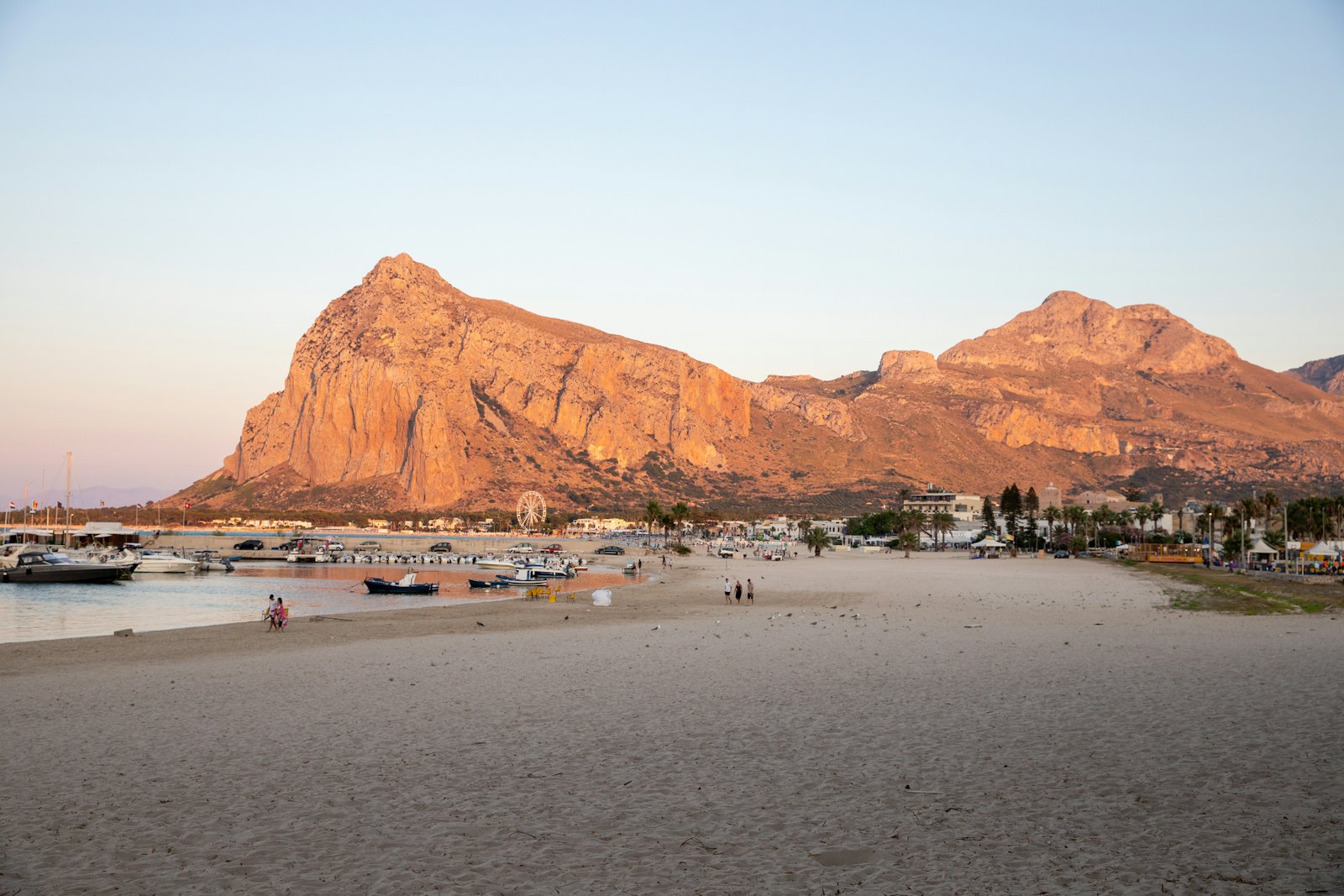
A small Sicilian beach town with a long arc of white sand under Monte Monaco. You come for the swimming, couscous made with fish broth and the wild Zingaro coast just down the road.
- Best time to visit: Late May to June and September to early October
- Daily budget (budget traveller): $95 to $325 USD
- Ideal trip length: 4 to 7 days
San Vito Lo Capo sits on a cape at the far northwest tip of Sicily, about 40km north of Trapani by road. It is a fishing town of under 5,000 people with low white houses, a fortress-like church in the middle and a curving beach of pale sand that looks almost Caribbean on a calm day. Behind it rises Monte Monaco, a bare limestone hump you can climb before breakfast. The town is known across Italy for couscous. Fish couscous is the local dish, and each September the Cous Cous Fest fills the seafront for ten days. Just to the southeast is the Zingaro Nature Reserve, Sicily's first protected area, with a coast path linking pebbly coves and clear water. In July and August the town is packed and loud, mostly with Italian families. Come in June or September and you get warm sea, open restaurants and space on the sand. There are no real hostels, but B&Bs, campsite bungalows, cheap bakeries and a free public beach make it workable on a solo budget. It is flat, compact and easy to walk around.
San Vito Lo Capo is a beach town first and foremost. Its bay of fine pale sand faces north, sheltered by Monte Monaco to the east and the cape to the west, and on calm days the water turns a shade of turquoise you do not expect in the Mediterranean. The town is small and easy to read: a grid of streets around the fortified Santuario, Via Savoia as the main strip, the lungomare along the sand and the lighthouse at the tip. Food matters here. Fish couscous, busiate with Trapani pesto and pane cunzato are everywhere, and the September Cous Cous Fest has made the town famous across Italy. San Vito is not a backpacker town. There are no real dorm hostels, and summer prices are high. But simple B&Bs, campsite bungalows, bakery lunches and free beach stretches make a cheaper version possible.
Getting here takes a little planning. Palermo is the bigger hub, with direct Autoservizi Russo buses taking about 2 hours for roughly €9-10. Trapani is closer, and AST buses cover the route in about 1 hour 20 minutes for around €4.60. From Trapani Birgi airport you change in Trapani. Base yourself in the centre if you are relying on your feet and buses, or in Macari or towards Calampiso if you have wheels and want quiet. Book a group boat trip for early in your stay, so you have spare days if the wind cancels it. Plan Zingaro for an early start on a cooler day, and arrange how you will get back before you set off.
Timing shapes the trip. June and September give you warm sea, long days and space on the sand. July and especially August bring crowds, traffic and peak prices, mostly from Italian families on holiday. The Cous Cous Fest runs from 18 to 27 September in 2026 and fills every bed in town. From November to March the town is almost closed, which suits walkers and climbers but not beach lovers. San Vito is safe and friendly, English is spoken in hotels and tour offices but less in bakeries and bars, and a few words of Italian go a long way. If you want nightlife, stay in Palermo. If you want a swim, a coastal hike and a plate of couscous in the same day, this is the place.
San Vito Lo Capo itinerary
Arrive and find your feet
Morning: Take a morning Autoservizi Russo bus from central Palermo (about 2 hours, roughly €9-10) or an AST bus from Trapani (about 1 hour 20 minutes, around €4.60). Sit on the right for sea views on the final stretch.
Afternoon: Check in, drop your bags and walk the length of the beach. Grab arancine at Pasticceria Capriccio and swim off a free stretch of sand.
Evening: Join the passeggiata on Via Savoia, then have pane cunzato or pizza for a cheap first dinner. Book a boat trip for day 4 at one of the harbour kiosks.
Town, beach and lighthouse
Morning: Breakfast of granita and brioche near the Santuario di San Vito, then look inside the fortress-like church. Rent a sunbed or claim a free spot before the beach fills.
Afternoon: Lunch on a panino from Salumeria Enoteca Peraino. Swim, nap in the shade and hire a scooter or e-bike for tomorrow.
Evening: Walk out to the lighthouse on the cape for sunset, then have fish couscous at Gna' Sara or Syrah.
Zingaro coast path
Morning: Leave by 7am for the north entrance, about 12km away. Pay the €5 entry (bring a card) and follow the coast path past Cala Tonnarella dell'Uzzo towards the Uzzo coves.
Afternoon: Swim in a cove, eat your picnic in the shade and turn back before the midday heat sets in properly. Carry at least two litres of water.
Evening: On the ride back, stop at the old Tonnara del Secco. Back in town, have a slow dinner and an early night.
Boat to Scopello
Morning: Half-day group boat trip from the harbour along the Zingaro coast to the Faraglioni di Scopello, with sea caves and two or three swim stops. Expect roughly €35-90.
Afternoon: Lunch back in town, then a lazy afternoon on the beach or a siesta out of the sun.
Evening: Aperitivo on the seafront. If you like company, a shared sunset boat with aperitivo is another easy way to meet people.
Monte Monaco and a slow day
Morning: Climb Monte Monaco at first light, which takes about an hour or two up with no shade. Take in the bay, the cape and Monte Cofano from the top.
Afternoon: Cassatelle and coffee in town as a reward, then a long beach afternoon. Look for Torre di Santa Crescenzia on a short walk at the south end of town.
Evening: Self-cater or eat a simple pizza to give your budget a rest, then gelato in the piazza.
Macari and Monte Cofano
Morning: Ride or drive to Macari and swim off the rocks at the Baia di Santa Margherita while the water is still calm.
Afternoon: Continue to the Monte Cofano reserve for a walk along the headland, then look at the stone hamlet inside Grotta Mangiapane near Custonaci.
Evening: Sunset dinner at Pocho in Macari if your budget allows, or head back to San Vito for a farewell couscous. Return your scooter.
Erice on the way out
Morning: Take an AST bus to Trapani (about 1 hour 20 minutes). Leave your bag at your accommodation or a left-luggage service, then head up to hilltop Erice by cable car or AST bus.
Afternoon: Wander Erice's stone lanes and castle viewpoints, and pick up almond pastries at Maria Grammatico.
Evening: Back down to Trapani for the AST airport bus (about €4.90) or an onward connection. Stay a night in Trapani if your flight leaves early.
Best neighbourhoods
- Centro and Via Savoia: The old grid of streets around the Santuario di San Vito. Via Savoia is the main strip, lined with restaurants, bakeries, gelato shops and souvenir stalls, and it turns into an evening passeggiata in summer. It is the most convenient base for a solo traveller, with everything a short walk away.
- The Lungomare and beach: The seafront road running along the sandy bay. The lidos sit here, with paid sunbeds and umbrellas, next to free public stretches. Rooms facing the sea cost more, but you can be in the water within a minute.
- Macari: A small village about 5km southwest of town, above the quiet Baia di Santa Margherita and the Isulidda coast. It suits people with a car or scooter who want calm evenings, rocky swimming spots and dinner with a view at Pocho.
- Castelluzzo: A farming village inland and further south, on the road to Trapani. It has a few cheaper rooms, local bakeries and an AST bus stop. Life here is quieter and more local, and the beach is a short ride away.
- Calampiso and the Tonnara del Secco road: The rocky coast east of town towards the Zingaro reserve, with the Calampiso holiday village and scattered rooms and apartments. Swimming is off rocks here and you will need wheels, but it is the closest base for early Zingaro starts.
Must-do experiences
- Walk the Zingaro coast path: The reserve's coastal trail runs about 7km between the north entrance near San Vito and the south entrance near Scopello, past a string of pebbly coves such as Cala Tonnarella dell'Uzzo. Entry is about €5. Start early, carry plenty of water and go as far as you like before turning back.
- Take a boat along the Zingaro and Scopello coast: Half-day trips leave from San Vito's harbour and run along the reserve to the sea stacks at Scopello, with swimming stops and sea caves on the way. Expect roughly €35-90 for a shared half day. Small boats with 12 people or fewer are easier for meeting others.
- Eat fish couscous: Couscous here is steamed and served with a rich fish broth, and it is the dish the town is built around. Try it at a sit-down place such as Gna' Sara or Syrah, and compare a few versions if you can.
- Climb Monte Monaco at dawn: The mountain behind town is a steady climb of an hour or two with almost no shade. Go at first light for views over the bay, the cape and on to Monte Cofano, then reward yourself with a cassatella in town.
- Watch the sunset by the lighthouse: Walk out to the cape at the north end of town, where the lighthouse stands over flat rocks. You cannot go inside, but it is a good spot for the sunset and a short evening walk away from the crowds.
- Visit the Santuario di San Vito: The fortified church in the middle of town is the heart of San Vito, and its squat, castle-like walls show how often this coast was raided. Step inside, then sit in the piazza with a granita.
- Go to the Cous Cous Fest: The 2026 edition runs from 18 to 27 September, with cooking contests, tasting stands and free concerts on the beach. Walking around is free. Book your room months ahead, because prices jump for these dates.
Hidden gems
- Tonnara del Secco, the shell of an old tuna fishery on the rocky coast east of town, quiet in the early evening and a good stop on the way back from Zingaro
- Torre di Santa Crescenzia, a small, odd stone building at the southern edge of town that most people drive past without noticing
- Salumeria Enoteca Peraino, a deli where you can get panini made up for a picnic on the coast path or a boat day
- The Baia di Santa Margherita below Macari, rocky and much calmer than the main beach in August
- Grotta Mangiapane near Custonaci, a huge cave at the foot of Monte Cofano with a little stone hamlet built inside it
Daily budget
- Accommodation: budget €50-90 / night (simple B&B room or campsite bungalow), mid-range €110-200 (small seafront hotel or nice apartment), splurge €250+ (Hotel Capo San Vito, sea-view suites). There are no dorm hostels. Solo travellers often pay close to the double-room price, so look for single rooms or small studios. August and Cous Cous Fest dates can double prices. A local tourist tax may be added per night.
- Food: budget €20-35 / day (bakeries, pane cunzato, pizza, a supermarket picnic), mid-range €45-75 (café lunch and a sit-down couscous dinner), splurge €100+ (seafood dinners with wine, Pocho in Macari). Arancine and pane cunzato cost a few euros each. Restaurants usually add a small coperto (cover charge). Couscous dishes typically cost around €15-25. Prices are rough guides, so check menus.
- Transport: budget €0-10 / day (walking, occasional AST bus), mid-range €25-50 (scooter or e-bike hire), splurge €60+ (hire car plus fuel and parking, or taxis). Buses run to Trapani (about €4.60 one way, €7.50 return) and Palermo (roughly €9-10). Beach parking is paid in summer. A private transfer from Trapani airport costs roughly €100 or more.
- Activities: budget €0-10 / day (beach, Monte Monaco, Zingaro at €5), mid-range €35-90 (shared half-day boat trip), splurge €100-150+ (full-day boat trip with lunch or private charter). Zingaro costs €5, and recent reports say the gate takes cards only. Group boat trips to Zingaro and Scopello range from about €35 to €90, and full days with lunch cost more. Lido sunbeds run roughly €20-40 in high summer.
- Drinks & nightlife: budget €5-15 (a spritz or beer in the piazza), mid-range €20-40 (aperitivo and drinks on the seafront), splurge €60+ (sunset boat with aperitivo, cocktails at a beach bar). Nightlife means the passeggiata, gelato, aperitivo and beach bars. A spritz costs roughly €6-10. The Cous Cous Fest brings free beach concerts in late September.
Where to stay
- Social hostel in Centro (€50-90 / night): San Vito has no real dorm hostels. The cheapest options are simple B&B rooms in the centre or a bungalow at a campsite such as Camping La Pineta, where you can meet other travellers and still walk to the beach.
- Boutique hotel in Lungomare (€120-220 / night): A small hotel on the seafront, such as Hotel Egitarso, puts you right on the sand, with sea views and the restaurants of Via Savoia a few steps away.
- Apartment in Centro or Macari (€70-140 / night): Self-catering studios and apartments are common and save money on meals. Choose the centre to go car-free, or Macari for quiet nights and rocky swimming if you have wheels.
- Splurge in Lungomare (€250-500+ / night): Hotel Capo San Vito sits right on the beach, with its own stretch of sand, sea-view rooms and a short stroll into town.
What to eat
- Cous cous di pesce: semolina steamed slowly and soaked in a spiced fish broth, the town's signature dish
- Busiate al pesto trapanese: hand-twisted pasta with a raw pesto of tomato, almonds, garlic and basil
- Pane cunzato: warm bread 'seasoned' with olive oil, tomato, cheese, anchovies and oregano, cheap and filling, from bakeries such as Panificio Plaia
- Cassatelle: pastries filled with sweetened ricotta, fried or baked, perfect with a morning coffee
- Arancine and cannoli from Pasticceria Capriccio, an easy cheap lunch or snack
- Granita with a brioche for breakfast on a hot day, from any café near the Santuario
Day trips
- Riserva dello Zingaro (About 12km to the north entrance, roughly 20 minutes by road): Sicily's first nature reserve, with about 7km of coastal path past pebbly coves and clear water, plus higher trails inland. The coves nearest the north entrance, such as Cala Tonnarella dell'Uzzo, are among the best. Scooter, car or a pre-arranged taxi to the north entrance (free parking there). Entry is €5, and recent reports say the gate takes cards only. Open daily from 7am in season. Alternatively, see the coast by boat from San Vito's harbour.
- Scopello (About 65km by road via the SS187, or a few hours there and back by boat along the coast): A tiny hilltop village with a famous old tuna fishery and the Faraglioni, rock stacks rising out of the sea. The village bakery's pane cunzato is a local favourite. The easiest way from San Vito is a boat trip, which shows you the Faraglioni from the water for roughly €35-90. By car, it is a long drive inland around the reserve. The old tonnara charges an entry fee, so check current prices.
- Erice and Trapani (About 40km to Trapani, 1 hour 20 minutes by bus): Erice is a medieval stone town on a mountain above Trapani, cool even in summer, with castle viewpoints and almond pastries at Maria Grammatico. Trapani has a lively old town and a harbour with ferries to the Egadi Islands. AST bus to Trapani (about €4.60), then the cable car or the AST bus up to Erice (about €2.90 one way). Check the last bus back to San Vito, as evening services are limited.
When to visit
- Spring (April - May): 18-25°C, mostly dry, sea still cool at around 17-20°C. Crowds: Low, with busier Easter and holiday weekends. Great for hiking Zingaro and Monte Monaco while the hills are green and flowering. Swimming is bracing until late May, and some places are still opening up.
- Summer (June - August): 27-33°C, hot and dry, sea 24-27°C. Crowds: Moderate in June, very busy in July and packed in August. June is excellent. July and August mean full beaches, high prices and hot trails, so book early, hike at dawn and avoid the week around 15 August if you can.
- Early autumn (September - October): 22-29°C, warm sea, the odd storm. Crowds: Moderate, but packed during the Cous Cous Fest. The best all-round window. The sea is at its warmest and the light is softer. Book far ahead for 18 to 27 September 2026, or come just before or after.
- Winter (November - March): 12-18°C, windy, with rain on and off. Crowds: Very quiet. Most hotels, lidos and restaurants close, and buses are thinner. It is fine for walkers and climbers who want empty trails and cheap rooms, but not for a beach holiday.
Entry rules for your passport
Visa rules for Italy depend on the passport you travel on. Check the official source before you book: European Commission: Schengen visa policy
Getting there
The nearest airports are Trapani Birgi (TPS), about 60km away, and Palermo Falcone Borsellino (PMO), roughly 1 hour 15 minutes away by car. Both have flights from around Europe, including low-cost routes, so check current schedules. From Palermo city, Autoservizi Russo runs a few direct buses a day to Via Piersanti Mattarella in San Vito, taking around 2 hours and costing roughly €9-10. Services are fewer on Sundays and in winter. From Palermo airport, you normally take a bus or train into the city first, then connect. From Trapani, AST buses run several times a day on weekdays, taking about 1 hour 20 minutes for around €4.60 one way or €7.50 return, with fewer on Sundays. From Trapani airport, take the AST bus into Trapani (about €4.90) and change there. The Terravision airport shuttle to San Vito has been suspended, so a private transfer at roughly €100 or more is the door-to-door option. A hire car from either airport gives you the most freedom. There is no railway station in San Vito.
Border checks: non-EU visitors (other than Swiss, Norwegian, Icelandic, Liechtenstein, Andorran, Monegasque, San Marinese and Vatican citizens, and holders of an EU residence permit or long-stay visa) are registered in the EU's Entry/Exit System (EES) instead of getting a passport stamp. On your first crossing, officers take your photo and/or fingerprints, so allow extra time at passport control. ETIAS, the planned travel authorisation, is not in operation yet, so don't pay any website for one.
Getting around
The town itself is flat and small, and you can walk from one end of the beach to the lighthouse in about 20 minutes. Parts of the centre are pedestrianised on summer evenings, and parking near the beach fills up and costs money in high season. For the wider area, wheels help. Scooters, e-bikes and bicycles are for hire in town, and a scooter is the easiest way to reach the Zingaro north entrance about 12km away, Macari and the Tonnara del Secco. There is no reliable bus to Zingaro, so if you do not drive or ride, ask your host about a taxi or transfer and agree a pickup time for the return. AST buses run between San Vito and Trapani via Castelluzzo and Custonaci, taking about 1 hour 20 minutes, for roughly €4.60 one way or €7.50 return, with fewer services on Sundays. Autoservizi Russo runs a few direct buses a day to and from Palermo. A hire car makes day trips to Erice, Scopello and Monte Cofano simple, but roads are narrow and twisty, and summer traffic into town can be slow.
Safety
San Vito is a safe, family-oriented town, and crime against visitors is rare. Watch your bag on the busy beach and during the Cous Cous Fest, and do not leave valuables on the sand while you swim. The main risks are heat and sun. Zingaro's paths have little shade, so start early, carry at least two litres of water and wear proper shoes on the stony trails. The 2020 wildfire showed how quickly fires spread here, so never smoke or light anything in the reserve, and respect closures on high-risk days. Check sea conditions and flags, because the scirocco and mistral winds can whip up waves and currents fast. Jellyfish appear some summers. Boats come close to swimming areas around the coves, so stay inside marked zones where they exist. Loggerhead turtles sometimes nest on the main beach, so keep away from any fenced-off nests. Riding a scooter on unfamiliar coast roads is risky, so wear a helmet and avoid riding after dark if you can. Emergency number: 112.
Solo travel tips
- Base yourself in the centre: Without a car, the centre is easiest. Bakeries, the beach, buses and dinner are all within a few minutes' walk, and the evening streets stay busy and well lit.
- Pick a small boat trip: Boats limited to about 12 people make it easy to chat at swim stops and over the aperitivo. Bigger catamarans are cheaper but less social.
- Plan your way back from Zingaro: There is no reliable bus to the north entrance, and walking the whole trail one way leaves you at Scopello, a long way by road from San Vito. Ride a scooter there and back, or agree a taxi pickup in advance.
- Avoid August and festival week if you are on a budget: Solo travellers often pay for a double room, and in mid-August or during the Cous Cous Fest that gets painful. June and early September give you better value and more choice.
- Safety for solo travellers: The real risks are heat on exposed trails, rough seas and scooter crashes. Start hikes at dawn, tell your host your plans, check the sea before swimming far out and wear a helmet.
- Learn a few words of Italian: English is fine in hotels and tour offices but patchy in bakeries and bars. Buongiorno, grazie and un cous cous, per favore get smiles. Download offline maps for Zingaro, where signal can drop.
Cultural etiquette
- Greet people with 'buongiorno' in the morning and 'buonasera' from mid-afternoon, and say 'grazie'. A greeting when you walk into a shop or bakery is expected.
- Cover up when you leave the beach. Walking around town or into the Santuario in swimwear or without a shirt is frowned upon.
- Dress modestly for churches, with shoulders and knees covered, and keep your voice down inside.
- Lunch runs roughly from 1pm to 3pm and dinner from 8pm. Many shops close for a few hours in the afternoon, especially outside peak summer.
- A coperto (cover charge) on the bill is normal and is not a tip. Cappuccino is mainly a morning drink, though nobody will refuse you one.
- Do not take shells, stones or plants from Zingaro, and take all your rubbish home. Fires and smoking in the reserve are strictly off limits.
- Respect fenced-off turtle nests on the beach and keep a distance from them, especially at night.
Frequently asked questions
How do I get to San Vito Lo Capo by public transport?
From Palermo, Autoservizi Russo runs a few direct buses a day from the city centre, taking around 2 hours and costing roughly €9-10. From Trapani, AST buses take about 1 hour 20 minutes and cost about €4.60 one way. If you land at Trapani Birgi airport, take the AST airport bus into Trapani (about €4.90) and change there. A direct shuttle from the airport has been suspended, so a private transfer of roughly €100 or more is the only door-to-door option. Sunday and winter timetables are thinner, so check before you travel.
How many days do I need in San Vito Lo Capo?
Four to five nights gives you a beach day, a Zingaro hike, a boat trip with a spare day for bad weather and a dawn climb of Monte Monaco. A week lets you add Macari, Monte Cofano and Erice at an easy pace. A day trip from Palermo is possible, but the bus times make it a long, rushed day.
When is the best time to visit San Vito Lo Capo?
Late May, June, September and early October are the sweet spots, with warm sea, open restaurants and fewer people. July and August are hot, crowded and expensive, especially around mid-August. From November to March the town is very quiet, and many hotels, lidos and restaurants close.
How much does the Zingaro reserve cost and when is it open?
A full ticket is €5, with reductions for some groups and free entry for children under 10. In 2026 the reserve has been open daily from 7am to 7pm in season, with shorter hours in winter. The north entrance near San Vito reopened on 9 May 2026 after works. Recent reports say tickets are sold at the gate by card only, so bring a card rather than relying on cash.
Do I need a car?
Not for the town itself, which you can walk. But Zingaro, Macari, Monte Cofano and Erice are much easier with your own wheels. A scooter or e-bike hired in town covers the nearby spots. For bigger day trips, hire a car for a day or two, or use boat tours and the AST bus to Trapani.
Is San Vito Lo Capo good for solo travellers?
Yes, though it is mainly a family and couples resort, so it is not a party town. Group boat trips, the coast path and the busy evening passeggiata on Via Savoia are the easiest ways to meet people. Eating alone is completely normal, and bakeries and pizzerias make cheap solo meals easy.
Is it safe for solo female travellers?
San Vito is generally very safe and relaxed, and the centre stays busy and well lit late into summer evenings. Use the usual precautions: watch your drinks, keep valuables out of sight on the beach and tell your host if you are hiking Zingaro or Monte Monaco alone. Avoid riding unlit coast roads late at night.
Is the beach free, and how much do sunbeds cost?
Yes, there are free public stretches along the main beach next to the paid lidos. In high summer a sunbed and umbrella at a lido is roughly €20-40 a day, and less in June and September. Arrive early in August if you want a good free spot, and bring your own shade.
More about San Vito Lo Capo
Tours and activities in San Vito Lo Capo | San Vito Lo Capo in 2 days | San Vito Lo Capo in 3 days | San Vito Lo Capo in 4 days | San Vito Lo Capo in 5 days | San Vito Lo Capo in 7 days
Joy Plus home | Destinations | Itineraries | Activities | Flights | Budget planner | Calendar | Map | Blog | Lifetime access