Destinations / Europe
Sarlat-la-Canéda, France travel guide
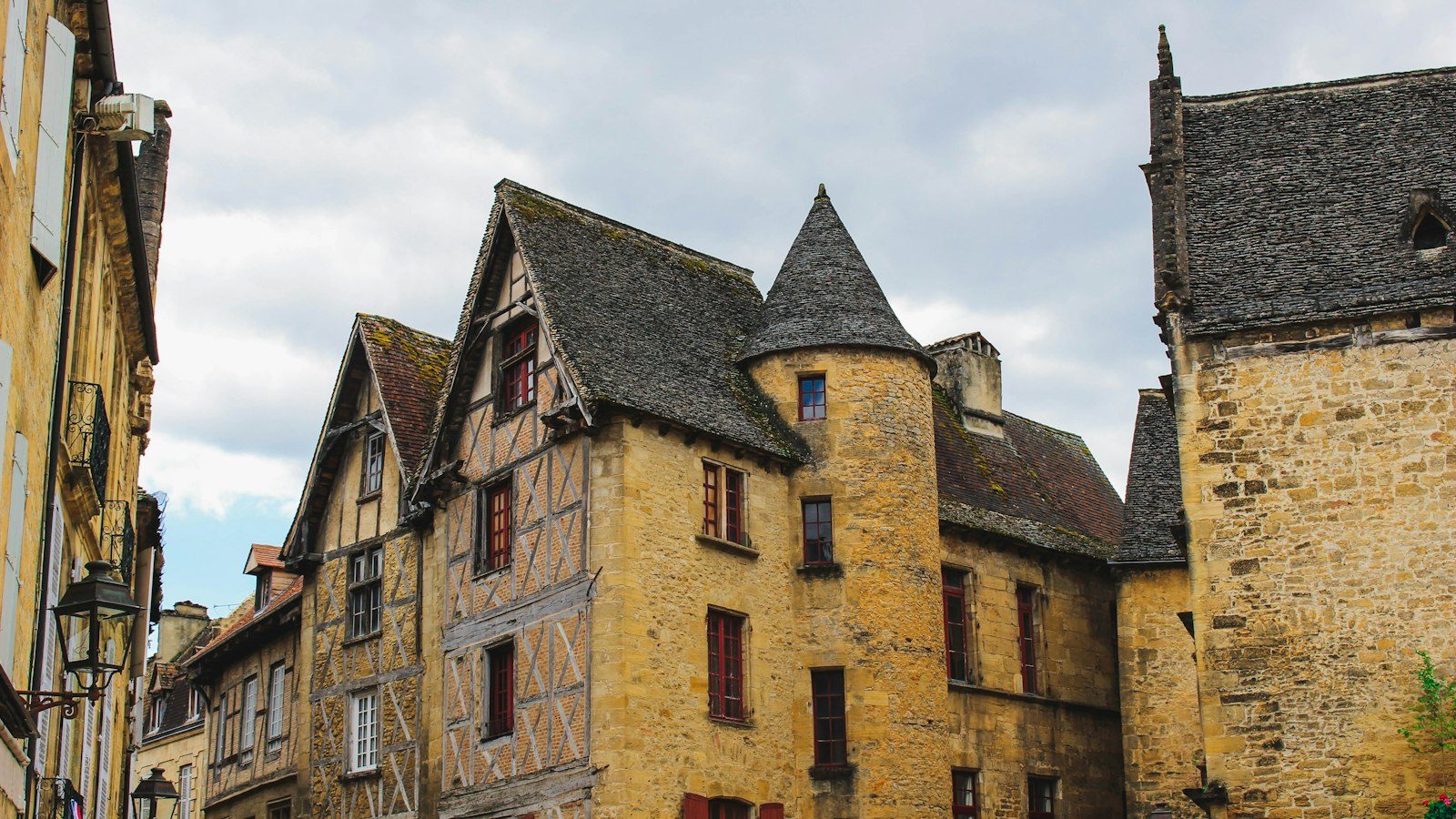
A golden-stone medieval town in the Périgord Noir, set above the Dordogne valley. You shop the Saturday market for walnuts and foie gras, ride a glass lift up a church bell tower and spend your days among castles, cliff villages and painted caves.
- Best time to visit: May to June and September to October
- Daily budget (budget traveller): $85 to $240 USD
- Ideal trip length: 3 to 5 days
Sarlat-la-Canéda is the main town of the Périgord Noir, the wooded, castle-studded corner of the Dordogne in south-west France. It is around two and a half hours from Bordeaux by direct train, and the Dordogne river runs about 10km to the south. The old town is one of the best-preserved in France. Its honey-coloured limestone mansions, stone-tiled roofs and stair towers date mostly from the 14th to the 17th centuries. It was the pilot project for the 1962 Malraux law, which protects historic town centres, and that is why it looks so complete today. The centre is largely pedestrianised and small enough to cross in 10 minutes. The big draw is the Saturday market, which fills the squares and lanes with stalls of duck, walnuts, cheese and, in winter, black truffles. Sarlat also makes a good base for the valley. La Roque-Gageac, Beynac, Castelnaud, the gardens of Marqueyssac and the Lascaux IV cave replica are all within half an hour by road. The town is packed in July and August, and there is no real hostel, so rooms cost more than in a big city. Even so, picnic lunches from the market, cheap set menus and free wandering keep a solo trip manageable.
Sarlat-la-Canéda is a town of about 9,000 people. It grew up around a Benedictine abbey and became a bishopric and a busy market town in the Middle Ages. Its golden limestone mansions survived largely because Sarlat later became a sleepy backwater, and in the 1960s they were restored under France's first conservation laws. The result is a remarkably complete old town of courtyards, stair towers and stone-tiled roofs, often used as a film set. Most visitors come for the Saturday market or stop for a couple of hours between castles. Stay a few nights and you get the better version: the squares empty at 8am, the cathedral quarter quiet after dinner, a picnic from the covered market and a day out among the cliffs and castles of the Dordogne. It is not a cheap place to sleep, but set lunches, market food and free sights help balance the cost.
Getting here without a car is easier than you might think. Direct TER trains from Bordeaux take about two and a half hours, with roughly four a day, and the nearest airports are Bergerac and Brive, each around an hour away by road. Once you arrive, walk. The old town is pedestrianised and small. Stay in the medieval centre to be close to everything, in the Quartier Ouest for quieter lanes, or around Avenue Gambetta if you have a car. For the valley, the realistic options are a hire car for a day or two, a minibus tour, a bike along the old railway path or the canoe companies' river shuttles in summer.
Timing shapes the trip. May, June, September and October bring warm days, open sites and room to breathe. July and August are hot and crowded, but they bring the long-running theatre festival, night markets and the best canoeing. From November to March, Sarlat is quiet and atmospheric, with truffle markets, wood smoke and cheap rooms, but some restaurants and village hotels shut, river activities stop and attractions open shorter hours. Sarlat is very safe, and shopkeepers expect a 'bonjour'. Evenings mean long dinners rather than nightlife. If you want clubs, go to Bordeaux. If you want duck, walnuts and a castle view, stay here.
Sarlat-la-Canéda itinerary
Arrive and find your feet
Morning: Take a morning train from Bordeaux (about 2.5 hours). Walk or take a taxi up from the station and drop your bag.
Afternoon: Wander the medieval centre: Place de la Liberté, the Maison de La Boétie and the cathedral. Then walk through the Jardin des Enfeus to the Lanterne des Morts.
Evening: Have an aperitif on a quiet terrace, then a set dinner of confit de canard and sarladaise potatoes.
Market morning and rooftop views
Morning: If it is Saturday, hit the market early. Otherwise, browse the covered market inside Sainte-Marie. Gather a picnic of cheese, bread and walnuts.
Afternoon: Ride the panoramic lift (about €5) for the view over the roofs. Then explore the Quartier Ouest, the Chapelle des Pénitents Blancs and the Cour des Fontaines.
Evening: Walk the lit lanes after dinner, when the day visitors have gone. Try a vin de noix in a wine bar.
Lascaux and the Vézère
Morning: Drive or join a tour to Montignac for your booked slot at Lascaux IV (€23). Allow about two hours for the visit.
Afternoon: Have lunch in Montignac. Add Lascaux II on the combined €29 ticket, or drive on to Les Eyzies to see the prehistory museum and the cliff shelters.
Evening: Back in Sarlat for a simple dinner and an early night.
Marqueyssac and La Roque-Gageac
Morning: Arrive at the gardens of Marqueyssac (€12.90) at opening and walk the clifftop path to the belvedere before the heat.
Afternoon: Go down to La Roque-Gageac, a village built against the cliff. Hire a canoe nearby, or take a short trip on a traditional gabarre boat.
Evening: Watch the cliffs turn gold from the riverbank, then drive back to Sarlat for dinner.
Castles of the Dordogne
Morning: Visit Castelnaud (€13.60, or €24.50 with Marqueyssac) and its medieval weapons and siege engines.
Afternoon: Cross the river to Beynac, climb up through the village to the castle and look back across at Castelnaud. Have a late lunch on the river.
Evening: Spend a quiet evening in town. Look out for summer concerts or the theatre festival in July and August.
Domme and the cycle path
Morning: Hire a bike and ride the old railway path south through the walnut orchards towards Carsac and the river.
Afternoon: Drive or cycle to Domme, a hilltop bastide with ramparts and a sweeping view over the valley. Allow time for a coffee on the square.
Evening: Have a farewell dinner in Sarlat, perhaps a tasting menu with foie gras and Monbazillac.
Slow morning and depart
Morning: If it is Wednesday, visit the morning market. Otherwise, have coffee on Place de la Liberté before the crowds.
Afternoon: Buy walnut oil, foie gras or cheese to take home, then walk down to the station for an afternoon train. Check times the day before.
Evening: Arrive in Bordeaux, or carry on to your next stop.
Best neighbourhoods
- Medieval centre and Place de la Liberté: The heart of Sarlat, east of Rue de la République. Here you have the cathedral, the Maison de La Boétie, the main square and most of the restaurants and shops. It is very pretty and close to everything, but the squares are noisy on summer evenings and on market mornings from early, so choose a room on a side lane.
- Quartier Ouest: The quieter half of the old town, west of Rue de la République, which cuts the centre in two. The lanes are steeper and less polished, with the Chapelle des Pénitents Blancs and bits of the old ramparts. Small guesthouses and apartments here give you old-town character with fewer crowds.
- Avenue Gambetta and the north: The 19th-century streets just north of the old town, around Place de la Petite Rigaudie. You will find several hotels, a few boutique places, cafés and car parks close by. It works well if you are driving, and the old town is two minutes away on foot.
- Station area and the south: The newer streets running down towards the railway station, about 1.5km south of the centre. It is less pretty, but chain hotels, supermarkets and parking are cheaper. Expect a 20 to 25 minute walk into town, uphill on the way back.
- The Dordogne villages: La Roque-Gageac, Vitrac, Beynac and Domme sit on or above the river, about 10 to 12km south. Staying here means canoe trips from the door and lovely evenings, but you need a car or bike, and many places close from November to March.
Must-do experiences
- Shop the Saturday market: From early morning, stalls spread across Place de la Liberté, Rue de la République and the squares around them, selling duck, walnuts, cheese, strawberries and wine. Go before 10am, when it is still easy to get around. A smaller market runs on Wednesday mornings.
- Ride the panoramic lift: The former Église Sainte-Marie now holds the covered market, with huge doors by the architect Jean Nouvel. Its bell tower hides a glass lift that rises about 35m for a 360-degree view over the stone roofs. Adults pay around €5, and visits take about 12 minutes.
- Walk the cathedral quarter: Visit the Cathédrale Saint-Sacerdos, then wander through the Jardin des Enfeus behind it to the Lanterne des Morts, a strange conical 12th-century tower. Opposite the cathedral stands the Renaissance Maison de La Boétie, birthplace of Montaigne's friend Étienne de La Boétie. Entry to all of them is free.
- See the Lascaux paintings: Lascaux IV at Montignac, about 25km north, is a full-size copy of the famous painted cave, and it is very well done. Adult tickets are €23 for 2026, or €29 combined with Lascaux II. Book a timed slot online, especially in summer.
- Walk the gardens of Marqueyssac: The hanging gardens at Vézac have about 150,000 clipped box bushes and paths that run along a cliff high above the Dordogne. Adults pay €12.90 from 7 February to 11 November 2026 and €10.90 in winter. The belvedere view over La Roque-Gageac is the highlight.
- Climb Castelnaud and Beynac: These two rival castles face each other across the river. Castelnaud has a museum of medieval warfare with full-size siege engines, and adults pay €13.60 in 2026, or €24.50 on a combined ticket with Marqueyssac. Beynac, on its cliff opposite, is barer inside but has the bigger view.
- Paddle the Dordogne: Hire a canoe or kayak at Vitrac, Cénac or Carsac and drift down past La Roque-Gageac and the castles. Most outfits drive you upstream and you paddle back. Expect roughly €20-35 for a half-day. The season runs mainly from May to September.
Hidden gems
- The Jardin des Enfeus, a small terraced garden of old burial niches behind the cathedral that most people walk straight past on their way to the Lanterne des Morts
- The Cour des Fontaines, a cool, mossy courtyard with a spring below the old town, especially calm on a hot afternoon
- The Quartier Ouest after dinner, when the lanes around the Chapelle des Pénitents Blancs are almost empty and the stone glows under the street lamps
- The covered market inside Sainte-Marie on a weekday morning, where you can buy picnic supplies without the Saturday crowds
- The old railway line south of town, now a flat cycle and walking path through the walnut orchards towards Carsac and the river
Daily budget
- Accommodation: budget €55-80 / night (budget hotel or simple chambre d'hôte), mid-range €100-170 (3-star hotel or old-town apartment), splurge €250+ (boutique 5-star in town or a château hotel). Sarlat has no real hostel, so single rooms are the budget option. Prices jump in July and August and on Saturdays. A small per-night tourist tax is added.
- Food: budget €20-30 / day (market picnic, bakery breakfast, one set lunch), mid-range €45-70 (café lunch and a three-course dinner), splurge €100+ (gourmet tasting menu with wine). Set menus with duck and sarladaise potatoes cost roughly €18-30. Lunch menus are cheaper than dinner. Prices are rough guides.
- Transport: budget €0-10 / day (walking, bike on the old railway path), mid-range €45-80 (car hire for a day plus fuel and parking), splurge €100+ (private driver or full-day guided tour). The Bordeaux train is about €20-40 each way. Old-town car parks charge in season. Book taxis ahead for early trains.
- Activities: budget €5-15 / day (panoramic lift at about €5, free churches and squares), mid-range €20-40 (Lascaux IV at €23, Castelnaud at €13.60, Marqueyssac at €12.90), splurge €200+ (hot-air balloon flight over the valley). The Castelnaud and Marqueyssac combined ticket is €24.50 from February to 11 November 2026. Lascaux IV with Lascaux II is €29. Canoe hire is roughly €20-35.
- Drinks & nightlife: budget €4-8 (a glass of Bergerac or a beer on a terrace), mid-range €15-30 (aperitifs and wine with dinner), splurge €50+ (a good bottle at a gourmet restaurant). A coffee costs about €2-2.50 and a glass of local wine €3.50-5. Nightlife means terraces and wine bars, and most places close by midnight.
Where to stay
- Budget hotel in Station area and the south (€55-80 / night): Chain hotels such as the ibis Sarlat and simple family-run hotels south of the old town have the cheapest single rooms in Sarlat. Parking is easy, and the centre is a 15 to 25 minute walk.
- Boutique hotel in Place de la Petite Rigaudie (€120-220 / night): Hotels on the northern edge of the old town, such as the Plaza Madeleine, combine historic buildings with a pool or terrace. The market, the restaurants and the car parks are all a few minutes away.
- Apartment in Medieval centre and Quartier Ouest (€90-160 / night): Apartments in old stone houses, such as those at La Villa des Consuls, give you a kitchen for market shopping and a quiet lane to come home to. Expect narrow stairs and no lift.
- Splurge in Avenue Gambetta (€300-550+ / night): Le Clos La Boëtie is a small, smart 5-star hotel with a pool, just outside the old town. Everything is on foot, but you get calm and comfort.
What to eat
- Pommes de terre sarladaises: potatoes sliced and fried in duck fat with garlic and parsley, served with almost everything and the town's signature side
- Confit de canard and magret: duck leg slow-cooked in its own fat, or seared duck breast, on nearly every set menu in town
- Foie gras: sold at the market and in specialist shops in tins and jars, and served at restaurants as a starter with fig or onion chutney
- Walnuts in every form: walnut cake, walnut oil, walnut bread and vin de noix aperitif made from the local AOP nuts
- Cabécou and Rocamadour: small, soft goat's cheeses from the nearby Quercy, good with a glass of local wine
- Bergerac and Cahors wines, plus sweet Monbazillac with foie gras, at a few euros a glass in the old-town bars
Day trips
- Lascaux IV and Montignac (About 25km north of Sarlat, 30 minutes by car): A complete full-size replica of the Lascaux cave, with its painted horses, bulls and deer, plus a modern exhibition on how the paintings were made. Montignac is a pleasant riverside town for lunch. Drive, take a taxi or join a minibus tour, as public buses are limited. Adult entry is €23 for 2026, or €29 with Lascaux II. Book a timed slot online.
- La Roque-Gageac and Marqueyssac (About 10 to 12km south of Sarlat, 15 to 20 minutes by car): A village tucked under a cliff on the Dordogne, with the box gardens of Marqueyssac on the ridge above. It is the classic valley view, and the river here is good for canoes and gabarre boat trips. Drive or cycle, or use a canoe company shuttle in summer. Marqueyssac costs €12.90 from 7 February to 11 November 2026, or €24.50 combined with Castelnaud.
- Castelnaud, Beynac and Domme (About 10 to 15km south of Sarlat): Two rival medieval castles face each other across the river, and the hilltop bastide of Domme looks over the whole valley. You can see all three in one long day. A car is easiest, as the sites are spread out and hilly. Castelnaud costs €13.60 for adults in 2026 and opens all year. Check winter hours for Beynac and the Domme shops.
When to visit
- Spring (April - May): 14-22°C, fresh mornings, some rain. Crowds: Low to moderate, busier at Easter and on May bank holidays. Lovely for walking, gardens and castles, with green countryside and sensible prices. The river is still cold, and canoe hire starts properly in May.
- Early summer (June): 22-27°C, long sunny days. Crowds: Moderate, rising towards the end of the month. Arguably the best month. Everything is open, the canoe season is under way and the old town is still pleasant at midday.
- High summer (July - August): 27-33°C, hot, with occasional storms. Crowds: Very busy, especially on Saturdays and in August. Great for river days, festivals and night markets, but rooms cost the most and car parks fill early. Book Lascaux and rooms well ahead, and sightsee early or late.
- Autumn and winter (September - March): September 20-26°C, cooling to 2-10°C in winter, with frosty mornings. Crowds: Moderate in September and October, quiet from November. September and October are the locals' pick, with walnut harvest and golden woods. Winter brings truffle markets and low prices, but expect closures and shorter opening hours.
Entry rules for your passport
Visa rules for France depend on the passport you travel on. Check the official source before you book: European Commission: Schengen visa policy
Getting there
There is no airport at Sarlat. The nearest are Bergerac Dordogne Périgord, about 75km and an hour and a quarter by road, Brive-Vallée de la Dordogne, about 50km and under an hour, and Bordeaux-Mérignac, about two and a half hours. Few public transport links serve the smaller airports, so plan on a hire car or a pre-booked transfer. By train, direct TER services run from Bordeaux Saint-Jean to Sarlat about four times a day. They take roughly 2 hours 15 minutes to 2 hours 35 minutes, and fares are typically €20-40 one way. Bordeaux has fast TGV links from Paris. Another option is a train from Paris Austerlitz to Brive or Souillac, then a regional coach to Sarlat, though timetables are limited. Sarlat station is about 1.5km south of the old town. If you drive, leave the car in the car parks around the old town, as the centre is largely pedestrianised. French motorways have tolls, so carry a card that works at the booths.
Border checks: non-EU visitors (other than Swiss, Norwegian, Icelandic, Liechtenstein, Andorran, Monegasque, San Marinese and Vatican citizens, and holders of an EU residence permit or long-stay visa) are registered in the EU's Entry/Exit System (EES) instead of getting a passport stamp. On your first crossing, officers take your photo and/or fingerprints, so allow extra time at passport control. ETIAS, the planned travel authorisation, is not in operation yet, so don't pay any website for one.
Getting around
Sarlat's old town is mostly pedestrianised and small, so you will walk everywhere within it. Allow about 10 minutes from end to end, plus a few steep lanes in the Quartier Ouest. The railway station is about 1.5km south of the centre. That is a 20 to 25 minute walk, or a short taxi ride if you have heavy bags. Getting out into the valley is harder without a car. Public buses to the castles, villages and Lascaux are few or seasonal, so most solo travellers hire a car for a day or two, join a minibus tour or use a bike. If you drive, leave the car in one of the paid car parks around the edge of the old town, or in the free ones further out. On Saturdays and summer days, arrive early. The old railway line has been turned into a flat cycle path heading south towards Carsac and the Dordogne, and bike hire is available in town. In summer, canoe companies often run shuttles between their river bases. Taxis are limited, so book them through your accommodation, especially for early trains.
Safety
Sarlat is very safe, and violent crime against visitors is rare. Keep an eye on your bag in the Saturday market crowds and on busy summer evenings around Place de la Liberté. The more likely risks are physical. The old town has uneven paving and slippery stone steps, and summer heat in July and August can be intense. On the river, wear the life jacket the canoe company gives you, keep away from the bridges and do not swim alone where the current is strong. Country roads in the valley are narrow and winding, with tractors, cyclists and tourists who stop suddenly to take photos, so drive slowly. Castle ramparts and the Marqueyssac cliff paths have steep drops in places. Tap water is safe to drink. The EU emergency number is 112, and 15 calls the French medical service. EU travellers should carry an EHIC and UK travellers a GHIC, and everyone else needs travel insurance with medical cover.
Solo travel tips
- Stay in the old town: You can walk to the market before breakfast and stroll home after dinner without thinking about cars or taxis. Pick a room on a side lane rather than on Place de la Liberté.
- Plan around market days: Saturday is the big market and Wednesday morning the smaller one. Build your week so you are in town on those mornings and in the valley on the others.
- Group your car days: Hire a car for one or two days and pack in Lascaux, the castles and Marqueyssac. Spend the rest of the trip on foot or by bike.
- Eat well at lunch: Set lunch menus are often much cheaper than dinner for the same cooking. Picnic from the covered market in the evening to balance it out.
- Safety for solo travellers: The main risks are hot days, narrow roads and the river. Wear the life jacket, tell someone your canoe route and drive slowly on the bends. Take a taxi after dark if your room is near the station.
- Meet people on a tour or at the market: Small-group tours to Lascaux and the castles are an easy way to meet people. Guided old-town walks from the tourist office and market tastings help too. Stallholders are happy to chat if you try a little French.
Cultural etiquette
- Say 'bonjour' when you walk into a shop, café or market stall and 'merci, au revoir' when you leave. Skipping the greeting comes across as rude.
- At the market, let the stallholder serve you rather than picking up produce yourself, and ask before taking close-up photos of people.
- Lunch is roughly 12 to 2pm and dinner from about 7.30pm. Outside the busiest tourist spots, kitchens rarely serve in between.
- Dress modestly in the cathedral and churches, and keep quiet if a service or funeral is under way.
- Many shops close on Sunday afternoons and Mondays, especially out of season, so plan your shopping.
- Service is included in French bills. Rounding up or leaving a euro or two for good service is appreciated but never expected.
- Keep noise down in the old town at night. Sound carries in the narrow stone lanes, and people live above the shops.
Frequently asked questions
How do I get to Sarlat and from the station to my room?
The simplest way is the direct TER train from Bordeaux Saint-Jean. About four run a day, the journey takes roughly 2 hours 15 minutes to 2 hours 35 minutes and fares are usually around €20-40 one way. From Paris, take a TGV to Bordeaux and change, or take a train to Brive or Souillac and connect by regional coach. Sarlat station is about 1.5km south of the old town. It is a 20 to 25 minute walk, or book a taxi in advance if you arrive late or have heavy luggage.
How many days do I need in Sarlat?
Two nights covers the old town, the market and the panoramic lift. Three to five nights lets you add Lascaux IV, Marqueyssac, a canoe trip and a castle or two. A week works if you want to slow down and also see Domme, Les Eyzies and perhaps Rocamadour.
When is the best time to visit Sarlat?
May, June, September and early October are the best months. The weather is warm, everything is open and the crowds are manageable. July and August are hot and very busy, though they bring the summer theatre festival and long canoe days. From November to March it is quiet and cheaper, with winter truffle markets, but some restaurants, river activities and village hotels close, and sites cut their hours.
Do I need a car in Sarlat?
Not for the town itself, but it helps for the valley. Buses to the castles, villages and Lascaux are rare or only run in summer. Many solo travellers stay car-free in town and hire a car for one or two days, or join a minibus tour to Lascaux and the castles. If you like cycling, the old railway path and quiet lanes reach the river, but the hills around the castles are steep.
When are the markets in Sarlat?
The big market is on Saturday, with food stalls in the morning and general goods spreading through the town all day. A smaller food market runs on Wednesday mornings. The covered market inside the former Église Sainte-Marie opens most mornings for much of the year. In winter, a truffle market runs on Saturday mornings, and the town holds a truffle festival in January.
How do I visit Lascaux?
The original cave has been closed to the public since 1963, so you visit replicas at Montignac, about 25km north. Lascaux IV is the most complete. For 2026, adults pay €23, or €29 with Lascaux II. Tickets are for timed slots, so book online in summer and at weekends. Lascaux IV closes for a few weeks in early winter and reopens in early February, so check dates if you travel in January. You will need a car, a taxi or a tour to get there.
Is Sarlat safe for solo female travellers?
Yes. It is a calm, friendly market town, and the old town stays lit and lively on summer evenings. Take normal care with drinks in bars and watch your bag in crowds. Off season the lanes empty early, so stick to the main streets late at night. If you are walking back to a room near the station after dark, take a taxi.
What entry rules apply to France in 2026?
France is in the EU and the Schengen area. Many non-EU visitors, including those from the UK, US, Canada and Australia, can stay visa-free for up to 90 days in any 180-day period across Schengen. The EU's Entry/Exit System has been fully running since April 2026 and records non-EU travellers' fingerprints and photos at the external border. The ETIAS travel authorisation has not started yet, and reports on its start date differ, so check before you travel. Confirm the rules on official EU and French government websites and check your own government's travel advice.
Tours and activities in Sarlat-la-Canéda | Sarlat-la-Canéda in 2 days | Sarlat-la-Canéda in 3 days | Sarlat-la-Canéda in 4 days | Sarlat-la-Canéda in 5 days | Sarlat-la-Canéda in 7 days
Joy Plus home | Destinations | Itineraries | Activities | Flights | Budget planner | Calendar | Map | Blog | Lifetime access