Destinations / North America
Sedona, United States travel guide
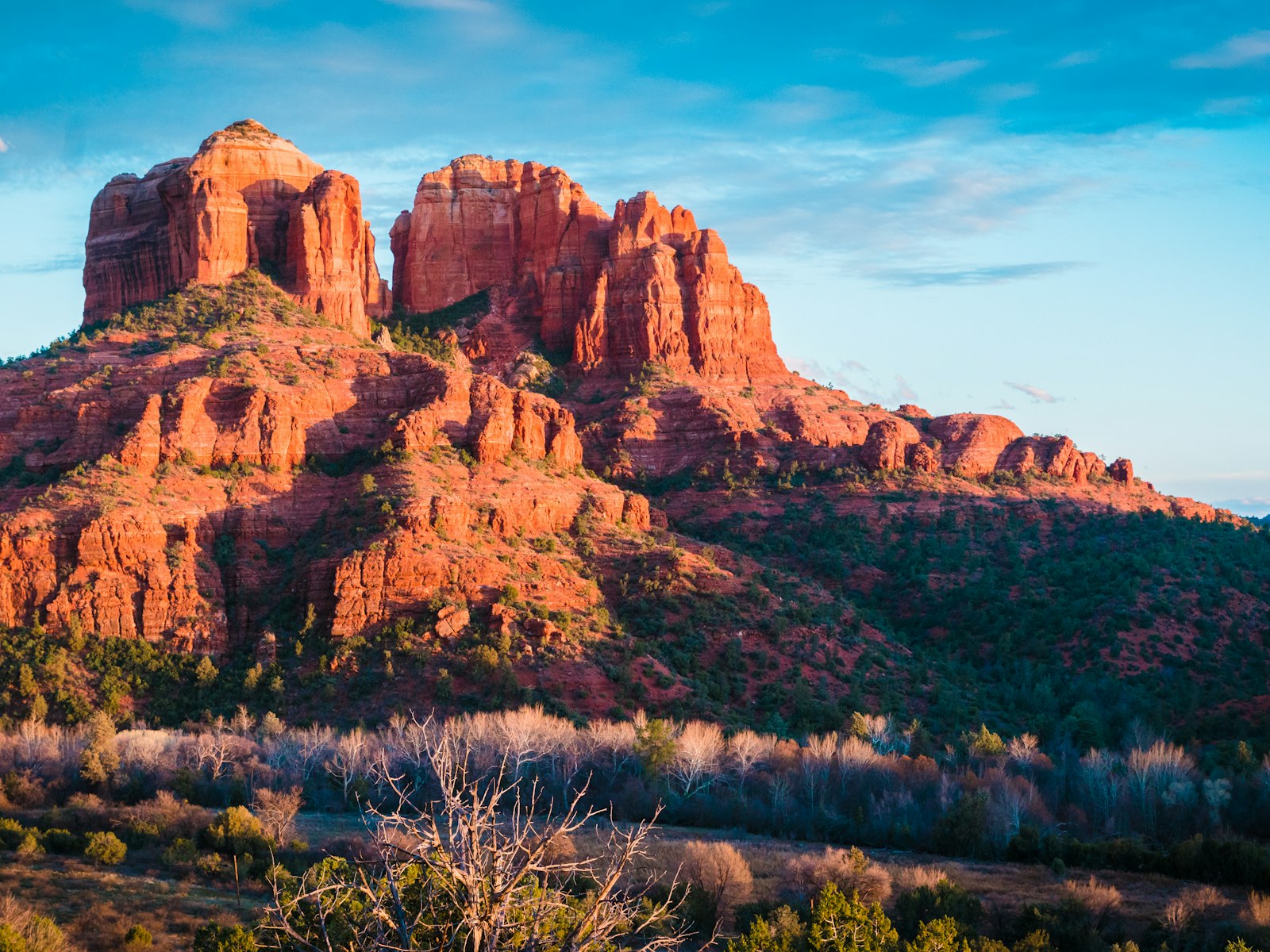
Arizona's red-rock wonderland: towering canyons, scenic hikes and spiritual energy.
- Best time to visit: March-May and September-November
- Daily budget (budget traveller): $160 to $300 USD
- Ideal trip length: 3 to 4 days
Surrounded by a cathedral of glowing red sandstone buttes, spires and canyons, Sedona is one of the most strikingly beautiful places in the American Southwest. Famous for its dramatic hikes, energy vortexes, wellness retreats and arts scene, it draws hikers, spa-goers and spiritual seekers alike. The high-desert light turns the rocks fiery at sunrise and sunset, while jeep tours, galleries and a relaxed small-town pace round out the appeal. Joy Plus times the hikes, vortexes and viewpoints around the desert light, heat and crowds.
Sedona is a town of about 10,000 people sitting at 4,350 feet in front of a wall of red sandstone, and it hosts roughly three million visitors a year. That ratio explains everything: the traffic at the Y, the 7am trailhead queues, the $5 Red Rock Pass, the spa resorts charging $700 a night. It also explains why it is still worth it. Cathedral Rock at first light, Bell Rock after a monsoon storm, Oak Creek Canyon in late October when the sycamores and maples turn yellow and orange against the cliffs. Nothing else in Arizona looks like this, and the rocks glow brightest at the two hours when the town is quietest.
Plan around light, heat and parking, in that order. Be on the trail at sunrise (or at least by 7am), retreat to a patio, pool or gallery from noon to 3pm, then go back out for the golden hour at Airport Mesa or Crescent Moon Ranch. You need a car, since Uber and Lyft are patchy and no public transit links the trailheads. The city's free Sedona Shuttle covers the worst-parking trails, including Cathedral Rock, so use it instead of circling a 20-car lot. The vortex sites (Airport Mesa, Bell Rock, Cathedral Rock, Boynton Canyon) are worth visiting whether or not you feel anything, because they double as the best viewpoints in town.
Sedona suits hikers, couples, spa people and anyone who wants big scenery without a backcountry permit. It does not suit anyone after nightlife: most kitchens close by 9pm and the town is a certified Dark Sky Community, so the main evening activity is looking up. Budget honestly. Sedona lodging runs 30 to 50 percent above Phoenix or Flagstaff, so many travellers sleep in Cottonwood, the Village of Oak Creek or Flagstaff and drive in. Give it three to four days: two for the big trails, one for Oak Creek Canyon, one for a jeep tour, galleries and a spa. Add a day trip to Jerome or the Grand Canyon if you have a week.
How many days in Sedona?
For Sedona, we recommend 3 to 4 days. With more time, add a day trip to Flagstaff or Grand Canyon South Rim.
| Trip length | What you'll see | Itinerary |
|---|---|---|
| 2 days | Bell Rock and Airport Mesa sunset; Cathedral Rock at dawn, Chapel and Tlaquepaque | Sedona in 2 days |
| 3 days · Recommended | Adds: Devil's Bridge and a jeep tour | Sedona in 3 days |
| 4 days · Recommended | Adds: Oak Creek Canyon: West Fork and Slide Rock | Sedona in 4 days |
| 5 days | Adds: Boynton Canyon, vortex and spa | Sedona in 5 days |
| 7 days | Adds: Day trip: Jerome and Cottonwood wine; Soldier Pass, ice cream | Sedona in 7 days |
Sedona itinerary
Arrive, Bell Rock and Airport Mesa sunset
Morning: Land at Phoenix Sky Harbor, pick up the rental, take I-17 north to exit 298 and the Red Rock Scenic Byway (AZ-179). Buy a Red Rock Pass at the first trailhead machine.
Afternoon: Check in, then walk the Bell Rock Pathway loop from the Bell Rock Vista lot. Easy, flat and a good warm-up for altitude.
Evening: Be at Airport Mesa Overlook 90 minutes before sunset to get a space. Dinner at Elote Cafe in Kings Ransom Plaza, arrive at 4:45pm for the 5pm opening or you will wait.
Cathedral Rock at dawn, Chapel and Tlaquepaque
Morning: Hike Cathedral Rock at sunrise (1.2 miles round trip, a real scramble). Use the free Sedona Shuttle from the Yavapai Vista park-and-ride if the trailhead lot is full. Check current hours on the city website.
Afternoon: Chapel of the Holy Cross opens at 9am and is free. Then wander Tlaquepaque Arts & Shopping Village (336 AZ-179) and lunch on a courtyard patio.
Evening: Golden hour at Crescent Moon Ranch (about $11 per car) for Cathedral Rock reflected in Oak Creek. Dinner at Mariposa in West Sedona, reserve the terrace.
Devil's Bridge and a jeep tour
Morning: Devil's Bridge by 6:30am (about 4 miles round trip). Park at the Dry Creek Road lot or the Mescal Trailhead if it is full. Breakfast at Coffee Pot Restaurant (101 omelet options).
Afternoon: Rest through the midday heat, then take a 2-hour Pink Jeep Broken Arrow tour or Red Rock Western Jeep Tours over the slickrock.
Evening: Book a stargazing tour (Sedona is a Dark Sky Community). Light dinner in Uptown, then head out of town lights.
Oak Creek Canyon: West Fork and Slide Rock
Morning: West Fork Trail at opening (about $12 per car, roughly 6.5 miles round trip with creek crossings). In late October the canopy is the best foliage in Arizona. Check flood and fire notices first.
Afternoon: Lunch at Indian Gardens Cafe & Market, then Slide Rock State Park for the natural rock slide. Entry runs about $20 to $30 per vehicle, higher in summer.
Evening: Back in Sedona for a beer at Oak Creek Brewery & Grill in Tlaquepaque.
Boynton Canyon, vortex and spa
Morning: Boynton Canyon Trail (Subway Cave side trail, about 6 miles round trip), or the shorter Boynton Vista loop. Start at 7am before the Enchantment Resort lot fills.
Afternoon: Book a spa treatment at Mii amo (from about $200) or soak at your hotel pool. Browse galleries on Hwy 179.
Evening: Dinner at Cress on Oak Creek at L'Auberge de Sedona, creekside terrace, tasting menu.
Day trip: Jerome and Cottonwood wine
Morning: Drive AZ-89A through Cottonwood and up Mingus Mountain (about 50 minutes) to Jerome. Browse galleries and the Jerome State Historic Park (Douglas Mansion).
Afternoon: Lunch at Mile High Grill, then Old Town Cottonwood for wine tasting at Caduceus Cellars or Arizona Stronghold ($15 to $25 for a flight).
Evening: Dinner at Merkin Osteria in Cottonwood, then drive back to Sedona and sit under the stars.
Soldier Pass, ice cream, depart
Morning: Sunrise at Soldier Pass Trail to Devil's Kitchen sinkhole (parking is about 14 cars, so be early or use the shuttle). Final cup of coffee at a West Sedona cafe.
Afternoon: Black Cow Cafe ice cream in Uptown for a last scoop. Drive to Phoenix (about 2 hours) via I-17.
Evening: Return rental and fly out of PHX. Leave Sedona by 11am for an evening flight.
Best neighbourhoods
- Uptown Sedona: The main tourist hub, shops, restaurants and galleries with red-rock views and trail access.
- West Sedona: The more local, residential side with everyday dining, lodging and major trailheads.
- Village of Oak Creek: A quieter area south of town near Bell Rock and the Chapel of the Holy Cross.
- Oak Creek Canyon: The lush, scenic canyon north toward Flagstaff, home to Slide Rock State Park.
- Tlaquepaque: A charming arts and shopping village styled after a traditional Mexican town.
Must-do experiences
- Hike a classic red-rock trail: From the famous Devil's Bridge arch to Cathedral Rock and the Bell Rock loops.
- Visit the Chapel of the Holy Cross: A striking modernist chapel built into the red rocks with panoramic views.
- Take a jeep tour: Bounce over the backcountry rocks for thrilling access to remote canyons and viewpoints.
- Experience an energy vortex: Sites like Airport Mesa, Bell Rock and Cathedral Rock are said to hold spiritual energy, and stunning views.
- Watch sunset over the red rocks: Airport Mesa overlook and Cathedral Rock glow spectacularly as the sun drops.
Hidden gems
- Sunrise at Cathedral Rock before the trailhead and parking fill up.
- Cooling off at Slide Rock State Park's natural rock waterslide in Oak Creek Canyon.
- The West Fork Trail, a lush creek-side canyon hike, stunning in autumn.
- Stargazing, Sedona is a certified Dark Sky community.
Daily budget
- Accommodation: budget $35-55 / night (Flagstaff hostel dorm) or $28-30 (USFS campsite), mid-range $250-420 (boutique or a well-located motel on a peak weekend), splurge $600-1,500+ (L'Auberge de Sedona, Enchantment Resort, Mii amo). Sedona has almost no hostels. Cottonwood and the Village of Oak Creek are the best value if you want to stay close.
- Food: budget $35-50 / day (grocery breakfast, deli lunch, one taco or burger dinner), mid-range $80-120 (Coffee Pot breakfast, patio lunch, dinner at Elote Cafe or Mariposa), splurge $200+ (Cress on Oak Creek tasting menu, wine pairing). Most kitchens close by 9pm. A deli sandwich at Indian Gardens or a Safeway picnic is the cheapest red-rock lunch.
- Transport: budget $55-80 / day (economy rental car, gas, Red Rock Pass), mid-range $90-130 (SUV rental, gas, parking and Groome airport transfer split over the trip), splurge $250+ (private driver from Phoenix, or helicopter transfer). You need wheels. Rent at Phoenix Sky Harbor. A Red Rock Pass is $5 a day or $15 for a week, and the Sedona Shuttle is free.
- Activities: budget $5-30 / day (free trails, Chapel of the Holy Cross, Slide Rock entry per car), mid-range $130-190 (Pink Jeep Broken Arrow tour, stargazing tour), splurge $300+ (sunrise hot air balloon, Mii amo spa treatment). The best things in Sedona are free. Slide Rock charges per vehicle (about $20 to $30) so go with a carload.
- Drinks & nightlife: budget $8-15 (a beer on a patio, wine at the lodge), mid-range $25-45 (Oak Creek Brewery flights, Verde Valley wine tasting), splurge $80+ (prickly pear margaritas and a sunset terrace at L'Auberge). Sedona goes quiet early. For real wine culture, drive 25 minutes to Old Town Cottonwood tasting rooms.
Where to stay
- Social hostel in Downtown Flagstaff (45 min north) or Oak Creek Canyon camping ($35-55 dorm bed, $28-30 campsite): Sedona has almost no true hostels. Motel Dubeau Inn & Hostel in Flagstaff has dorm beds and a social crowd. Cave Springs Campground in Oak Creek Canyon is the creekside alternative if you have a tent.
- Boutique hotel in Tlaquepaque / SR 179 corridor ($250-420 / night): El Portal Sedona is a Craftsman-style inn beside Tlaquepaque. Quiet, walkable to restaurants and galleries, with rooms that actually feel designed. Sky Ranch Lodge on Airport Mesa is the sunset-view alternative.
- Apartment in Village of Oak Creek or West Sedona ($170-280 / night): A condo or casita with a kitchen, quieter streets, and Bell Rock on your doorstep. Best value for 4+ nights, and groceries cut your food bill sharply.
- Splurge in Boynton Canyon or Oak Creek riverside ($600-1,500+ / night): Enchantment Resort sits inside Boynton Canyon with its own trailheads, and Mii amo is its all-inclusive spa wing. L'Auberge de Sedona puts you on the creek with the best terrace dining in town.
What to eat
- Southwestern and Tex-Mex cuisine
- Prickly pear margaritas and desserts
- Farm-to-table and wellness-focused dining
- Local Arizona wines from the Verde Valley
Day trips
- Jerome and Cottonwood (28 miles, about 50 minutes by car): A cliffside copper-mining ghost town turned artist village, with the Jerome State Historic Park and bars like the Spirit Room. Add Old Town Cottonwood for Verde Valley wine tasting and Tuzigoot National Monument (about $10). Drive AZ-89A west through Cottonwood, then climb to Jerome. The road is curvy, so go slowly.
- Flagstaff (28 miles, about 45 minutes by car): A cool mountain college town with Lowell Observatory (about $25 to $30), a walkable Route 66 downtown, breweries and cheaper beds. The drive itself through Oak Creek Canyon is a highlight. Drive AZ-89A north through Oak Creek Canyon. Stop at Oak Creek Vista overlook for views of the switchbacks.
- Grand Canyon South Rim (110 miles, about 2 hours 15 minutes by car): The big one. Mather Point, then Desert View Drive for fewer crowds. Entry is $35 per vehicle, and non-US residents pay an extra $100 per person from 2026, so check nps.gov before you go. Drive AZ-89A to Flagstaff, US-180 north, then AZ-64 into the park. Leave by 7am and stay late for sunset.
When to visit
- Spring (March - May): 62-86°F (17-30°C), cool mornings, windy in March, wildflowers on the lower trails. Crowds: Heavy, spring break peaks in March and April. Great hiking weather but the busiest stretch. Book lodging 2 to 3 months out and be at trailheads by 6:30am.
- Summer (June - August): 95-102°F (35-39°C) in town, afternoon monsoon storms from July. Crowds: Moderate, lots of Phoenix weekenders escaping to the cooler elevation. Hike only from 5am to 9am. Slide Rock and the creek are the saviours, and flash floods are real, so check forecasts before any canyon.
- Autumn (September - November): Highs fall from 90°F in September to 65°F by late November. Crowds: Heavy in October, easing after Thanksgiving. The best window overall. Warm days, cool nights, and peak foliage in Oak Creek Canyon and West Fork from mid-October to early November.
- Winter (December - February): 52-60°F (11-16°C) days, near-freezing nights, occasional snow dusting on the red rocks. Crowds: Low, except for the Christmas week. The locals' pick. Cheapest rooms, empty trails and snow-on-red-rock photos, but bring layers and check icy conditions on Cathedral Rock.
Entry rules for your passport
Visa rules for the United States depend on the passport you travel on. Check the official source before you book: U.S. Department of Homeland Security
Getting there
Sedona Airport (SEZ) handles private and charter flights only, so fly into Phoenix Sky Harbor (PHX), about 115 miles and 2 hours south. Drive I-17 north to exit 298, then AZ-179 (the Red Rock Scenic Byway) into Sedona. Rental cars run about $45 to $90 a day, and gas is around $3.30 to $3.70 a gallon. Groome Transportation runs shuttles from PHX to Sedona for roughly $65 to $80 each way if you do not want a car, though you will want one on arrival. Flagstaff Pittsburgh Airport (FLG) is 45 minutes north via AZ-89A through Oak Creek Canyon, with limited flights from Phoenix, Dallas, Denver and LA. Las Vegas is about 4.5 hours by car. Allow extra time at the Y roundabout between 4pm and 6pm, when traffic backs up on 179.
Getting around
Sedona is spread out and essentially requires a car or rideshare to move between trailheads, viewpoints and the two town centres. Because popular trailheads (like Devil's Bridge and Cathedral Rock) fill early and parking is very limited, the free Sedona Shuttle (Thursday to Sunday) serves several key trails, use it to avoid the parking crush. A Red Rock Pass is needed to park at many recreation sites. Jeep tours handle the rough backcountry routes.
Safety
Sedona's main risks are environmental rather than crime, which is low. The desert heat is serious, so hike early, carry far more water than you think you need, wear sun protection and avoid strenuous midday trails in summer. Some hikes (like Devil's Bridge) involve exposure and steep drop-offs, so wear proper shoes, watch your footing, check trail conditions, and be alert for flash floods in canyons after rain.
Solo travel tips
- Hike smart when you are solo: Cell service dies in canyons. Download offline maps (AllTrails or Gaia), tell your hotel your route, carry 3 litres of water and start at dawn. Popular trails like Cathedral Rock and Devil's Bridge are busy by 7am, which is good company.
- Book a shared jeep or vortex tour: Pink Jeep and Earth Wisdom put you in a vehicle with strangers, so it is the fastest way to meet people. A vortex or sunrise group session works the same way, even if you are sceptical of the energy.
- Eat at the bar: Elote Cafe and most Uptown restaurants fill up at 6pm. Singles are often seated sooner at the bar, and bartenders are the best source of trail conditions.
- Basecamp in Flagstaff or Cottonwood: True hostels are rare in Sedona. Motel Dubeau Inn & Hostel in downtown Flagstaff (45 minutes north) has dorm beds, and Cottonwood has cheap motels with a short drive in. Campsites at Cave Springs in Oak Creek Canyon are about $28 and book on recreation.gov.
- Solo female travellers: Crime is low but trailhead car break-ins happen. Leave nothing visible in the car, tell someone your route, and do not hike alone at dusk. Sedona nights are dark, so carry a headlamp even for sunset hikes.
- Use the sunset crowd: Airport Mesa at sunset is the one place where 200 strangers share the same view. Bring a layer, arrive early, chat to the person next to you. It is the easiest social moment in town.
Cultural etiquette
- Stay on marked trails. The dark crust on the red soil is living cryptobiotic soil and takes decades to recover from one footprint.
- Do not stack rock cairns or leave crystals and offerings at vortex sites. Land managers discourage it and it damages the habitat.
- Respect archaeological and Native American sites such as Palatki and Honanki. Do not touch petroglyphs or pictographs, and follow reservations and rules.
- Keep your voice down at vortex sites and the Chapel of the Holy Cross. People are meditating or praying, so treat it like a quiet room.
- Tipping is 18 to 22% at sit-down restaurants, $1 to $2 per drink at a bar, and 15 to 20% for tour guides.
- Hikers going uphill have right of way. Step aside for faster hikers and keep dogs leashed.
- Drones are banned in wilderness areas around Sedona and most trailheads. Use a regular camera and light-pollution-friendly red lights at night.
Frequently asked questions
How many days do you need in Sedona?
Three to four days is ideal. That lets you hike several classic red-rock trails, visit the Chapel of the Holy Cross, take a jeep tour, experience an energy vortex and catch sunrise and sunset over the rocks, with time for the galleries, wellness scene or a day trip to the Grand Canyon.
Is Sedona safe for solo travellers?
Yes, crime is low and Sedona is a popular, welcoming destination. The real risks are environmental: intense desert heat, sun exposure, steep drop-offs on some trails and flash floods in canyons after rain. Hike early, carry plenty of water, wear proper shoes and check trail and weather conditions.
When is the best time to visit Sedona?
Spring (March-May) and autumn (September-November) offer the most comfortable temperatures for hiking, plus autumn colour in Oak Creek Canyon. Summers are very hot (hike at dawn), while winters are mild and quieter by day, occasionally dusting the red rocks with snow for a striking contrast.
Do you need a car in Sedona?
Yes, effectively. Sedona is spread out with no comprehensive public transit, so a car or rideshare is needed to reach trailheads, viewpoints and the town centres. Because trailhead parking fills fast, use the free Sedona Shuttle (Thursday to Sunday) for popular trails and get a Red Rock Pass for parking at recreation sites.
What is a Sedona vortex?
A vortex is a site believed to have concentrated spiritual or healing energy, drawing those interested in meditation and wellness. The best-known are Airport Mesa, Bell Rock, Cathedral Rock and Boynton Canyon. Whether or not you feel the 'energy', they're all stunning viewpoints and rewarding hikes in their own right.
What are the best hikes in Sedona?
Top trails include Devil's Bridge (to a natural sandstone arch), Cathedral Rock (a short but steep scramble with iconic views), the Bell Rock and Courthouse Butte loops, and the lush West Fork Trail in Oak Creek Canyon. Start early to beat the heat and the competition for limited parking.
Is Sedona expensive?
It's a relatively pricey resort town, with higher lodging, dining and spa costs. Save by visiting in the shoulder seasons, staying in nearby Cottonwood or Flagstaff, focusing on the abundant free or low-cost hiking, using the Red Rock Pass and shuttle, and packing picnics for the trails.
Do foreign visitors pay more at US national parks?
At 11 of the busiest, yes. Since 1 January 2026, visitors who are not US residents and are aged 16 or over pay US$100 per person on top of the normal entrance fee at Acadia, Bryce Canyon, Everglades, Glacier, Grand Canyon, Grand Teton, Rocky Mountain, Sequoia and Kings Canyon, Yellowstone, Yosemite and Zion. A US$250 annual pass for non-residents covers that fee for everyone in one vehicle, and is usually cheaper for a group or for more than one park.
Do I need a visa or an ESTA to visit the United States?
Travellers from the 42 Visa Waiver countries, including most of the EU, the UK, Japan and Australia, do not need a visa for stays of up to 90 days but must get an ESTA online before travelling. It costs about $40 since 30 September 2025 and is valid for two years or until your passport expires. Apply at least 72 hours ahead on the official site, esta.cbp.dhs.gov, and avoid lookalike sites that charge more.
Tours and activities in Sedona | Sedona in 2 days | Sedona in 3 days | Sedona in 4 days | Sedona in 5 days | Sedona in 7 days
Can't decide? Compare Sedona with...
Joy Plus home | Destinations | Itineraries | Activities | Flights | Budget planner | Calendar | Map | Blog | Lifetime access