Destinations / Asia
Seoul, South Korea travel guide
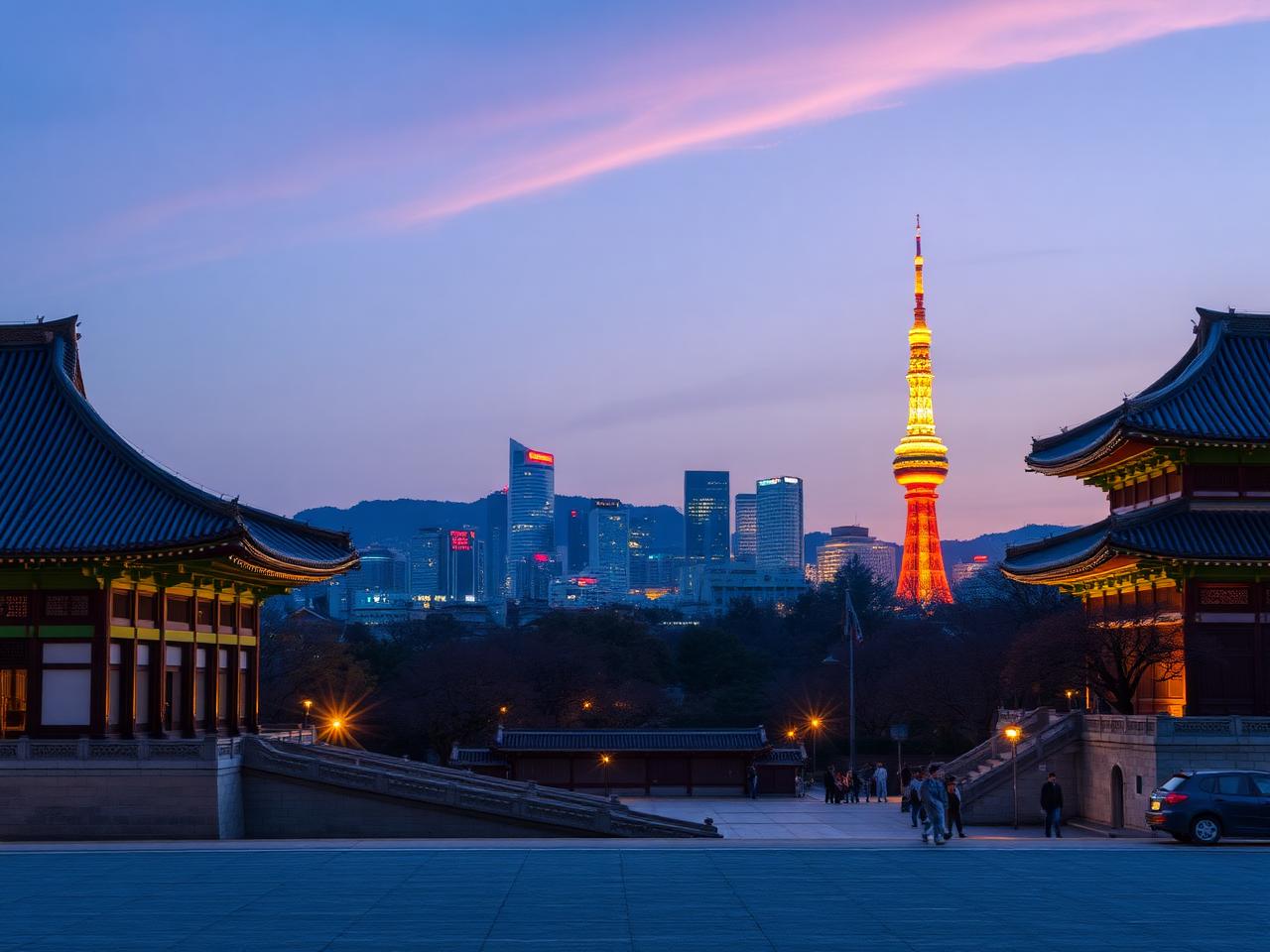
24-hour city of K-beauty, BBQ, palace walks, and the best café culture in Asia.
- Best time to visit: April-May (cherry blossom in early April) and October-November (autumn foliage)
- Daily budget (budget traveller): $50 to $95 USD
- Ideal trip length: 4 to 6 days
Seoul never sleeps. You'll eat Korean BBQ at midnight, visit a palace at sunrise, shop in a subterranean mall at 2am, and still find a café open for pour-over. Joy Plus routes your days by district (Gangnam, Hongdae, Insadong, Bukchon) so you're not spending hours on the subway.
Seoul is two cities split by the Han River. North of it sit the palaces, hanok alleys, markets and the old city wall. South of it sit Gangnam's glass towers, K-beauty megastores and polished cafés. The subway links them in 20 to 40 minutes, but your feet won't, so plan each day around one area. A morning at Gyeongbokgung and Bukchon, an afternoon in Insadong, and a night at Gwangjang Market all sit within a 25-minute walk of each other. Crossing the river three times in one day is how people burn a whole trip on Line 2.
Eating here is a serious project, and cheaper than you'd expect. A gukbap or kalguksu lunch is ₩9,000 to ₩13,000 with unlimited banchan, a samgyeopsal dinner is ₩16,000 to ₩20,000 a portion, and a triangle kimbap from any convenience store is ₩1,500. The rhythm is Korean: dinner at 7pm, a second round at a pub, then maybe a coin noraebang room at midnight. The night belongs to you. The subway stops around midnight, but owl buses, 24-hour jjimjilbang and taxis that start at ₩4,800 fill the gap, and Seoul is among the world's safest big cities after dark.
Timing matters more than anything else you'll plan. Early April cherry blossom and late October foliage are gorgeous and very busy, so book rooms two months out. In 2027, Seollal falls on 6 to 9 February and Chuseok on 14 to 16 September, and both empty the city of locals and shut many restaurants. Before flying, check whether your passport needs a K-ETA (about ₩10,000), since many nationalities have been temporarily exempt - if you are, submit the free e-Arrival Card at e-arrivalcard.go.kr before you land. Download Naver Map or KakaoMap on day one, because Google Maps will not give you walking directions here. Then set aside one night for a jjimjilbang, because you will not understand Seoul until you have slept on a heated floor in a borrowed uniform.
How many days in Seoul?
For Seoul, we recommend 4 to 6 days. With more time, add a day trip to DMZ and Imjingak or Suwon Hwaseong Fortress.
| Trip length | What you'll see | Itinerary |
|---|---|---|
| 2 days | Hongdae and a Han River picnic; Palaces, Bukchon and Gwangjang Market | Seoul in 2 days |
| 3 days | Adds: Seongsu-dong, the Brooklyn of Seoul | Seoul in 3 days |
| 4 days · Recommended | Adds: Gangnam, K-beauty and the Banpo fountain | Seoul in 4 days |
| 5 days · Recommended | Adds: DMZ half-day tour | Seoul in 5 days |
| 7 days | Adds: Itaewon, Namsan and a BBQ night; Naksan, a jjimjilbang | Seoul in 7 days |
Seoul itinerary
Arrive, Hongdae and a Han River picnic
Morning: Land at ICN, take the all-stop AREX to Hongik Univ (about 55 min, about ₩5,000). Drop bags at your Hongdae guesthouse and buy a T-money at the CU in the station.
Afternoon: Walk the Gyeongui Line Forest Park through Yeonnam-dong, an old rail bed turned strip of cafés. Pour-over at Anthracite Coffee Roasters in Hapjeong, a converted shoe factory.
Evening: Line 2 to Dangsan, Line 9 to Yeouido, 10 minutes to the river. Cook cup ramyeon in the GS25 machine at Hangang Park, order chicken delivered to your mat, and stay until the bridge lights come on.
Palaces, Bukchon and Gwangjang Market
Morning: Gyeongbokgung Station, Line 3 exit 5, for the 9am opening (₩3,000, closed Tuesday). See the 10am guard ceremony at Gwanghwamun, then lunch at Tosokchon for samgyetang (about ₩20,000).
Afternoon: Walk through Samcheong-dong to Bukchon Hanok Village, visible 10am to 5pm only, and keep your voice down. Finish at Ssamziegil in Insadong with tea at a traditional tea house.
Evening: Jongno 5-ga, Line 1 exit 8, for Gwangjang Market after 6pm. Share bindaetteok and mayak gimbap, then walk 15 minutes to see Zaha Hadid's Dongdaemun Design Plaza after dark.
Seongsu-dong, the Brooklyn of Seoul
Morning: Seongsu Station, Line 2 exit 3. Pastries at Onion Seongsu (opens 8am) in its old factory shell. Wander the red-brick lanes and indie labels.
Afternoon: Lunch and a gallery browse at Daelim Changgo, then walk or ride one stop to Seoul Forest for a slow loop around the deer enclosure and wetland paths.
Evening: Dinner along Yeonmujang-gil, Seongsu's restaurant lane. Pick a place with an open kitchen and eat at the counter.
Gangnam, K-beauty and the Banpo fountain
Morning: Bongeunsa Temple, Line 9 Bongeunsa exit 1, at 7am while the monks are chanting and the towers are still quiet. Then the Starfield Library at COEX (Samseong, Line 2 exit 5, opens 10:30).
Afternoon: Garosu-gil from Sinsa Station, Line 3 exit 8, for cafés and boutiques. Hit Olive Young for K-beauty and ask for tax-free at checkout with your passport.
Evening: Banpo Bridge Moonlight Rainbow Fountain at about 8pm (April to October), then jazz at All That Jazz in Itaewon, Korea's oldest jazz club.
DMZ half-day tour
Morning: Meet at Myeongdong or Seoul Station at 7:30 for a half-day DMZ tour (₩60,000 to ₩90,000, passport required). The Third Tunnel, Dora Observatory and Imjingak all fit in one trip.
Afternoon: Back by 2:30pm. Lunch at Hadongkwan, the old Myeongdong gomtang house, then wander the cathedral and the 12 floors of Daiso.
Evening: Nanta show in Myeongdong (about ₩60,000), then street food at the stalls: tornado potatoes, egg bread, grilled cheese skewers.
Itaewon, Namsan and a BBQ night
Morning: War Memorial of Korea at 9:30am (Samgakji, Line 4 and 6 exit 12, free, closed Monday). Then browse the Itaewon antique alleys and Haebangchon's hillside cafés.
Afternoon: Cable car from Myeongdong up Namsan, about ₩15,000 round trip. Walk up the last stretch, enter N Seoul Tower, and time it for golden hour.
Evening: Dinner at Maple Tree House in Itaewon, marinated galbi and soju. Later, craft beer at Magpie or dancing at Cakeshop.
Naksan, a jjimjilbang and depart
Morning: Hyehwa Station, Line 4 exit 2, up to Naksan Park and Ihwa Mural Village before 10am. Walk a section of the Seoul City Wall and coffee in Hyehwa after.
Afternoon: 24-hour Sparex in Good Morning City at Dongdaemun History & Culture Park, two stops from Hyehwa on Line 4. Soak, steam and nap on the heated floor, with a snack from the spa's snack bar.
Evening: AREX Express from Seoul Station to ICN, or check in at the City Air Terminal if your airline uses it. Leave at least 3 hours before departure.
Best neighbourhoods
- Hongdae: Youth culture, live music, street food, the most energetic nightlife.
- Gangnam: Luxury shopping, K-beauty megastores, sleek cafés, the 'rich' Seoul.
- Insadong & Bukchon: Traditional tea houses, antique shops, hanok alleys, palace views.
- Itaewon: International, diverse food scene, craft beer, late-night bars.
- Seongsu-dong: The Brooklyn of Seoul. Converted factories, indie brands, best coffee.
Must-do experiences
- Gyeongbokgung Palace at 9am (Tuesday closed): Watch the changing of the guard, then walk Bukchon Hanok Village right after. Rent a hanbok nearby and palace entry is free.
- Korean BBQ at Maple Tree House or 678: Book ahead. Order the marinated galbi and soju.
- N Seoul Tower at sunset: The city lights up like a circuit board. Lock your love on the fence.
- Jjimjilbang (Sparex, Dongdaemun): 24-hour sauna, sleeping floors, the most Korean experience you can have. Check it is open before you go.
- Late-night street food in Myeongdong and Gwangjang: Gwangjang Market for bindaetteok and live octopus, Myeongdong for tornado potatoes and egg bread. Seoul eats late, so go hungry after dark when the stalls are in full swing.
Hidden gems
- Ihwa Mural Village - street art and city views most tourists miss.
- Gwangjang Market for bindaetteok (mung bean pancakes) and live octopus.
- Seonyudo Park - a former water treatment plant turned garden island on the Han River.
- Bongeunsa Temple at dawn, surrounded by Gangnam skyscrapers.
Daily budget
- Accommodation: budget ₩25,000 to ₩45,000 / night (hostel dorm bed), mid-range ₩120,000 to ₩200,000 (boutique double), splurge ₩450,000+ (Four Seasons Gwanghwamun, Rakkojae hanok). Hongdae and Jongno give the best value. Prices spike around cherry blossom and Chuseok, and a jjimjilbang bed is ₩15,000 to ₩20,000 in a pinch.
- Food: budget ₩25,000 to ₩40,000 / day (gukbap, kimbap, Gwangjang Market), mid-range ₩60,000 to ₩100,000 (one BBQ dinner for two portions), splurge ₩300,000+ (La Yeon or Jungsik tasting menu). Lunch sets run ₩9,000 to ₩13,000 with free banchan refills. Most BBQ grills need a two-portion minimum, so ask '1 inbun ganeunghaeyo?' at lunch.
- Transport: budget ₩5,000 to ₩8,000 / day (T-money, about ₩1,550 per ride), mid-range ₩10,000 to ₩20,000 (subway plus Kakao T taxis from ₩4,800), splurge ₩200,000+ (private driver for the day). Buy a T-money card at any CU or GS25 and top it up with cash. Owl buses run all night for about ₩2,500.
- Activities: budget ₩5,000 to ₩15,000 / day (Gyeongbokgung ₩3,000, free museums, Han River), mid-range ₩30,000 to ₩60,000 (Changdeokgung and Huwon ₩8,000, Seoul Sky, Nanta show), splurge ₩150,000+ (DMZ and JSA tour, cooking class, hanbok photoshoot). The ₩10,000 integrated palace ticket covers four palaces and Jongmyo for three months. The National Museum and War Memorial are free.
- Drinks & nightlife: budget ₩8,000 to ₩15,000 (convenience-store soju at ₩2,000, canned beer on the Han), mid-range ₩25,000 to ₩50,000 (Hongdae pub round, craft beer at Magpie, noraebang), splurge ₩100,000+ (Charles H. cocktails, club table in Itaewon). Drinking comes in rounds. BBQ first, a pub second, then noraebang, and pubs expect you to order a dish with your drinks.
Where to stay
- Social hostel in Hongdae (₩25,000 to ₩45,000 / night): Kimchee Hongdae Guesthouse or Zzzip Guesthouse, steps from Hongik Univ (Line 2, AREX). Mixed dorms, privates, and a street-food-and-live-music scene outside the door.
- Boutique hotel in Insadong / Anguk (₩120,000 to ₩200,000 / night): Nine Tree Premier Insadong or similar. Walk to Gyeongbokgung, Bukchon and Changdeokgung, and Anguk (Line 3) is the nearest station.
- Apartment in Seongsu-dong or Yeonnam-dong (₩90,000 to ₩160,000 / night): A licensed studio or serviced apartment with a kitchen and washer. Korean law limits Airbnb-style rentals, so book licensed listings. Best for 5+ nights.
- Splurge in Gwanghwamun / Bukchon (₩450,000 to ₩900,000 / night): Four Seasons Hotel Seoul next to Gyeongbokgung, or a private hanok stay at Rakkojae. Palace views, Charles H. cocktail bar downstairs, and a quiet room on heated floors.
What to eat
- Samgyeopsal (pork belly BBQ) at any local joint
- Bibimbap at Gogung (Myeongdong)
- Tteokbokki and sundae at Gwangjang Market
- Bingsu (shaved ice) at Sulbing
Day trips
- DMZ and Imjingak (1 to 1.5 hours by tour bus): Walk through the Third Tunnel, scan North Korea from Dora Observatory, and stand at the end of the line at Dorasan Station. The JSA at Panmunjom is a separate, pricier tour that sometimes pauses. Half-day tours leave Myeongdong or Seoul Station at 7:30 to 8am, ₩60,000 to ₩90,000, passport required. JSA tours ₩100,000 to ₩130,000, book 2 to 4 weeks ahead and check they're running.
- Suwon Hwaseong Fortress (55 min by Line 1): A UNESCO fortress wall of about 5.7 km with gates, watchtowers and a royal palace. Walk the wall at sunset, then eat whole fried chicken (tongdak) at a place like Jinmi Tongdak. Line 1 from Seoul Station to Suwon, about ₩2,000 to ₩2,500. Taxi to Paldalmun ₩4,000 to ₩5,000 or walk 25 min. Fortress entry about ₩1,000 to ₩2,000.
- Nami Island (1 hour by ITX-Cheongchun): A tree-lined river island with ginkgo and metasequoia avenues, best in late October. Cycle the loop, then eat dakgalbi in nearby Chuncheon if you have time. ITX-Cheongchun from Yongsan or Cheongnyangni to Gapyeong, about ₩9,000 each way. Taxi 10 min to the wharf (₩5,000 to ₩7,000). Ferry and entry about ₩16,000.
When to visit
- Spring (March to May): 3 to 22°C, cherry blossom peaks late March to mid April, occasional yellow dust days. Crowds: Heavy at blossom peak, easing in May. Gorgeous but pricey in early April. Walk the Yeouido Yunjung-ro blossom road on a weekday morning, and pack a KF94 mask for dust days.
- Summer (June to August): 23 to 33°C, very humid, monsoon (jangma) from late June to late July. Crowds: Moderate, the Han River parks fill up after dark. Hot and sticky, but cheaper flights and a great night life. Plan for air-conditioned cafés, museums, jjimjilbang and Han River picnics at 8pm.
- Autumn (September to November): September 20 to 28°C, October and November 3 to 20°C, dry and bright. Crowds: Heavy in late October and early November, quiet mid September. The best window. Foliage peaks late October to early November at Changdeokgung's Huwon, Namsan and Bukhansan. Avoid Chuseok, 14 to 16 September in 2027.
- Winter (December to February): -10 to 4°C, dry and sunny, sharp cold snaps. Crowds: Low, except around Seollal (6 to 9 February in 2027). Cheapest hotels and shortest queues. Heated floors, BBQ, hotteok and jjimjilbang make the cold a feature, but bring a proper down coat.
Entry rules for your passport
Visa rules for South Korea depend on the passport you travel on. Check the official source before you book: Korea's K-ETA site (Ministry of Justice)
Getting there
Incheon (ICN) is about 50 km west of the centre. The AREX Express runs non-stop to Seoul Station in about 45 min for ₩13,000 (a little less with online discounts). The all-stop AREX takes about 60 min to Seoul Station and 53 min to Hongik Univ for about ₩5,000, and runs from about 5:20am to roughly midnight. Limousine buses cost ₩17,000 to ₩18,000 and stop at major hotels in Myeongdong, Gangnam and elsewhere. A taxi to the centre is ₩70,000 to ₩90,000 plus tolls. After midnight take a night bus or a taxi. Gimpo (GMP) handles short hops to Tokyo Haneda and Osaka Kansai, linked by Line 5, Line 9 and AREX. Check K-ETA requirements for your passport (about ₩10,000) before you fly; if you are exempt, submit the free e-Arrival Card at e-arrivalcard.go.kr in the three days before you land.
Getting around
T-money card on the subway and buses. The subway is extensive and signs are in English. Taxis are cheap and Uber works. Walking within neighbourhoods is great; crossing the city is a 30-45 minute subway ride.
Safety
One of the safest cities in the world. Solo female travellers regularly report walking home at 3am without concern. The only 'risk' is drinking too much soju and ending up in a jjimjilbang.
Solo travel tips
- Eat at the counter, ask for 1 portion: Gukbap, kalguksu and kimbap places are built for one diner. Myeongdong Kyoja serves a fast bowl of kalguksu for about ₩12,000. For BBQ, say '1 inbun ganeunghaeyo?' at lunch, or accept paying for two portions and wrapping leftovers.
- Hostel pick: Hongdae guesthouses: Kimchee Hongdae Guesthouse or Zzzip Guesthouse put you near Hongik Univ station (Line 2, AREX). Dorm beds run ₩25,000 to ₩40,000, and the common rooms make it easy to find someone for a late-night chicken run.
- Take the free English palace tour: Gyeongbokgung offers free English tours at around 11am, 1:30pm and 3:30pm. Check times at the gate. A guide turns an empty courtyard into a story, and you'll meet other solos in the group.
- Use owl buses and Kakao T after midnight: The subway stops around midnight. Owl buses (N-series) run on your T-money for about ₩2,500. Kakao T or Uber Taxi are safe and start at ₩4,800, with a night surcharge of 20 to 40%.
- Solo female travellers: Seoul is one of the safest cities in the world for women alone. Standard rules apply: watch your drink in Hongdae and Itaewon clubs, ignore club promoters, and share your taxi plate number if you're out late. Jjimjilbang baths are single-sex, but the lounges and sleeping halls are mixed.
- Find your tribe on the Han River or at a language exchange: Evening picnics at Yeouido or Banpo are friendly and loose. Meetup language exchanges in Sinchon and Itaewon are full of solos, and Saturday's Hongdae Free Market is an easy place to start a conversation.
Cultural etiquette
- Use two hands when giving or receiving anything from an elder, and turn your head slightly away when drinking in front of someone older.
- Take your shoes off at hanok, guesthouses, jjimjilbang and any restaurant with floor seating. Look for the step up and the shoe rack.
- Never stand chopsticks upright in rice. Use the spoon for rice and soup, and leave your bowl on the table rather than lifting it.
- No tipping, anywhere. Press the call button on the table, or say 'jeogiyo' to get staff attention. Don't wave or shout.
- Keep your voice low on the subway, take calls quietly, and leave the pink and priority seats empty for pregnant and elderly riders.
- In Bukchon, people live in the houses. Visit 10am to 5pm only, stay quiet, and don't block doorways. Fines for breaking the red-zone rules are ₩100,000.
- Dress modestly and speak softly in temples like Bongeunsa. Carry your own trash, because public bins are rare.
Frequently asked questions
How many days do you need in Seoul?
Four days for the highlights, six if you want to add a DMZ day trip, explore Seongsu-dong deeply, and do a full jjimjilbang night.
Is Seoul expensive?
Mid-range. Hotels $70-200/night, meals $8-30, subway $1-2 per ride. BBQ for two runs $40-80. It's cheaper than Tokyo, more expensive than Bangkok.
Is Seoul easy to get around without Korean?
Very. The metro is cheap, spotless and fully signed in English, and a T-money card covers trains and buses. Translation and map apps fill the rest, though Google Maps is limited, use Naver or KakaoMap instead.
What's the best area to stay in Seoul?
Myeongdong and Jongno for first-timers near the palaces and shopping, Hongdae for youthful nightlife and live music, or Gangnam for upscale and modern. All sit on the metro, so location is flexible.
When is the best time to visit Seoul?
Spring (April-May, with cherry blossom in early April) and autumn (October-November) for crisp air and foliage are ideal. Summers are hot, humid and rainy; winters are cold and dry but light on crowds.
How much does a trip to Seoul cost?
Budget around $50 to $95 USD per person per day, covering a hostel bed or simple room, local transport, two or three meals out and an activity or entry ticket. You can go lower with markets and free walking tours, or far higher with boutique hotels and private guides.
Is Seoul safe for solo female travellers?
Seoul is generally a comfortable place to travel solo, including for women, as long as you use normal city sense. One of the safest cities in the world. Solo female travellers regularly report walking home at 3am without concern. The only 'risk' is drinking too much soju and ending up in a jjimjilbang.
How do you get around Seoul?
T-money card on the subway and buses. The subway is extensive and signs are in English. Taxis are cheap and Uber works. Walking within neighbourhoods is great; crossing the city is a 30-45 minute subway ride.
Do I need a visa or a K-ETA for South Korea?
Travellers from most visa-free countries, including the EU, the UK, the US, Canada and Australia, can visit without a visa. The K-ETA travel authorisation is waived until 31 December 2026 only for a set list, including the UK, the US, Canada, Australia and many EU states; other visa-free passports, such as Ireland, Portugal, Greece and Czechia, need an approved K-ETA (KRW 10,000, only at k-eta.go.kr) at least 72 hours before boarding. Visitors without a K-ETA must fill in an arrival card, either free online at e-arrivalcard.go.kr in the three days before arrival or on paper when they land; travellers with an approved K-ETA need no arrival card.
Tours and activities in Seoul | Seoul in 2 days | Seoul in 3 days | Seoul in 4 days | Seoul in 5 days | Seoul in 7 days
Can't decide? Compare Seoul with...
- Tokyo vs Seoul
- Taipei vs Seoul
- Seoul vs Busan
- Seoul vs Osaka
- Seoul vs Bangkok
- Kyoto vs Seoul
- Seoul vs Jeju
- Seoul vs Hong Kong
- Seoul vs Shanghai
- Seoul vs Singapore
Joy Plus home | Destinations | Itineraries | Activities | Flights | Budget planner | Calendar | Map | Blog | Lifetime access