Destinations / Europe
Sifnos, Greece travel guide
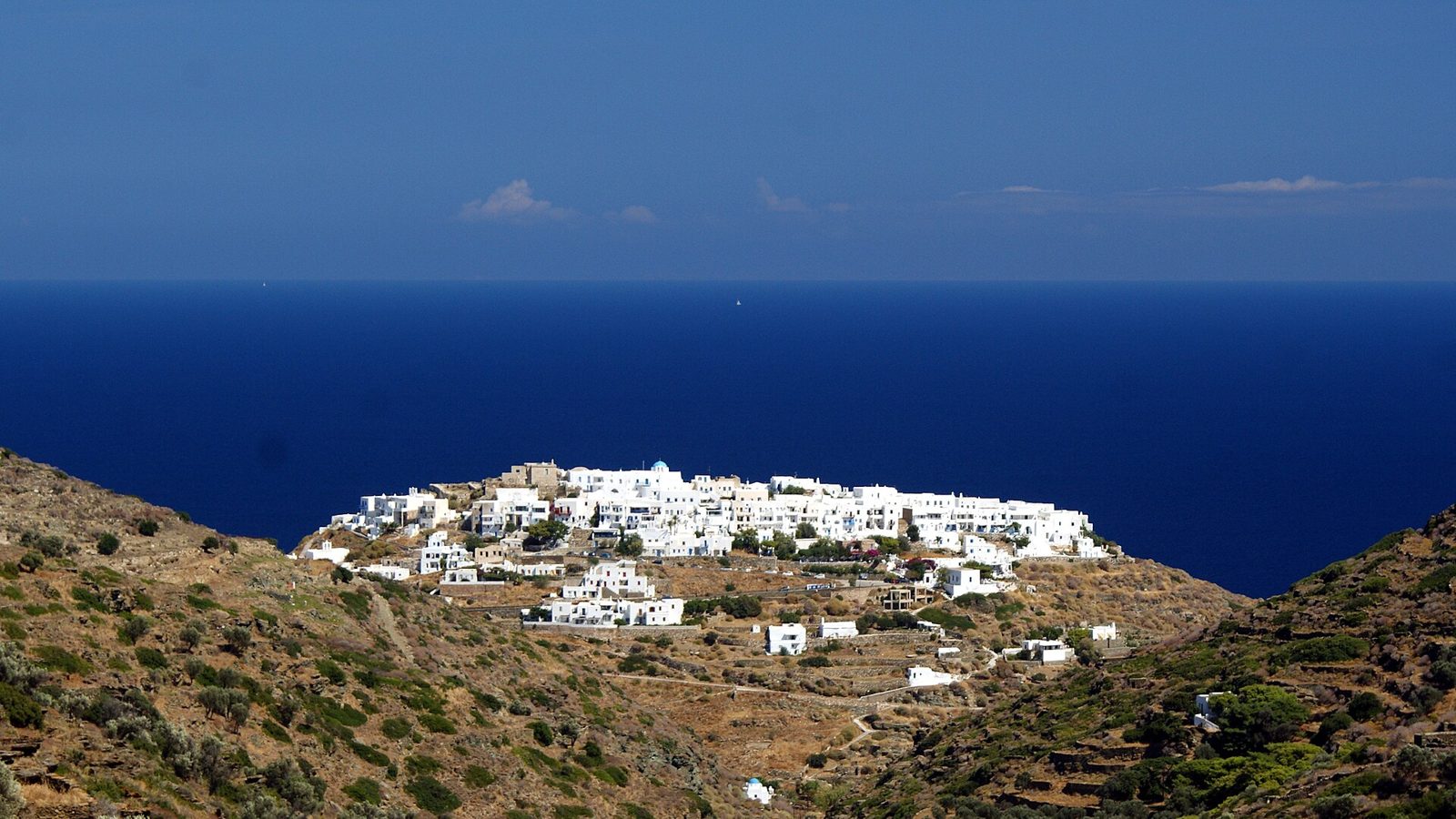
A small, hilly island in the western Cyclades, known across Greece for its food and pottery. You walk old footpaths between white villages, swim below a monastery on a rock and eat slow-baked chickpeas from a clay pot.
- Best time to visit: May to June and September
- Daily budget (budget traveller): $85 to $270 USD
- Ideal trip length: 4 to 7 days
Sifnos is a small island in the western Cyclades, about two and a half hours from Athens by fast ferry. There is no airport, so everyone arrives by boat at Kamares, the port on the west coast. From there, a road climbs to Apollonia and Artemonas, two joined villages on the central plateau that make up the island's main town. Sifnos is quieter and greener than Mykonos or Santorini. It has terraced hills, more than 200 white chapels and a network of waymarked footpaths that link the villages, beaches and monasteries. It is also the island Greeks talk about for food. The famous cookbook writer Nikolaos Tselementes came from here, and local cooks still bake chickpeas and lamb overnight in clay pots made by island potters. The classic sights are close together: Kastro, a medieval village on a cliff above the sea; Chrysopigi, a monastery on a rocky islet; and the long sandy bay at Platis Gialos. August is busy, mostly with Greek visitors, and rooms are not cheap. But cheap local buses, free beaches, good walking and short hops to Serifos and Milos make it a rewarding island for a solo traveller.
Sifnos is a small island of about 2,500 people in the western Cyclades, between Serifos and Milos. It is greener and hillier than many of its neighbours, with terraced slopes, dovecotes, windmills and hundreds of small white chapels. For centuries, the island was rich from silver and gold mines, and later from pottery. Today it is famous in Greece for its cooking and is popular with Athenians who come for long weekends. Many visitors only manage a couple of days. Stay longer and you get the better version: Kastro empty at sunrise, a morning walk on an old stone path, a swim at Vathi and a late dinner on the Steno in Apollonia. It is not a cheap island, but simple rooms, cheap buses and free beaches keep the costs manageable.
Getting here is simple, as long as you plan around the ferry. Boats leave Piraeus every day in season. High-speed ferries take about 2.5 to 3 hours, and conventional ferries about 5 hours, with fares from around €40. All arrive at Kamares on the west coast. Once on the island, the KTEL buses run from Apollonia to the port, the southern beaches, Kastro and the north, at €2.20 for most rides and €3.50 for the longer runs from the port. Stay in Apollonia for buses and nightlife, Platis Gialos for the beach, or Kamares for cheaper rooms and easy ferries. Use your feet for the rest, as the trails are the best way to see the island.
Timing shapes the trip. May and June bring wildflowers, cooler walking weather and warming seas. The big Chrysopigi festival takes place on Ascension Day, 40 days after Orthodox Easter. July and August are hot and windy, with full buses, full tavernas and the highest room prices, especially around 15 August. September is warm and quieter. From November to March, Sifnos is peaceful, but many places close, buses run only a few times a day and ferries are fewer. The island is very safe and most people in tourism speak English. Nightlife means bars on the Steno rather than clubs. If you want to walk, eat well and swim in clear water, this is one of the best islands in the Cyclades to do it alone.
Sifnos itinerary
Arrive and find your feet
Morning: Take a morning fast ferry from Piraeus (about 2.5 hours). Catch the bus from Kamares up to Apollonia and drop your bag.
Afternoon: Wander Apollonia and Artemonas, past the mansions and windmills. Have a slow lunch and an almond sweet from a pastry shop.
Evening: Walk the Steno after 9pm, have dinner at a taverna in the lanes and a drink on a terrace.
Kastro and the east coast
Morning: Walk the waymarked path from Apollonia down to Kastro (about an hour) in the cool. Visit the Archaeological Museum (€5, closed on Tuesdays).
Afternoon: Walk down the steps to the Seven Martyrs and swim off the rocks, or walk north to Poulati for deep, clear water.
Evening: Watch the light change over Kastro, then take the bus back to Apollonia for dinner.
Chrysopigi and Platis Gialos
Morning: Take the bus to Faros, then walk the coast path to Chrysopigi monastery while it is quiet. Cover your shoulders and knees.
Afternoon: Swim at Apokofto, then carry on along the path to Platis Gialos for lunch and a lazy afternoon on the sand.
Evening: Visit a pottery workshop near the beach, have a sunset drink, then take the bus back.
Agios Andreas and Vathi
Morning: Go early to the Mycenaean acropolis of Agios Andreas (about €3) for the views and the small museum. Check the opening days first.
Afternoon: Take the bus to Vathi for a swim in the calm bay and a long taverna lunch by the Taxiarchis church.
Evening: Catch one of the last Vathi buses back. If it is the weekend, ask in the morning about revithada for the next day.
Day trip to Milos or Serifos
Morning: Take a fast boat to Milos (40 minutes) or Serifos (20 minutes). Check the return boat before you buy your ticket.
Afternoon: On Milos, see Plaka and the white rocks at Sarakiniko. On Serifos, climb up to the Chora and swim at Livadakia.
Evening: Take the ferry back to Kamares and eat by the harbour before the bus up the hill.
High trail and slow food
Morning: Start at dawn to hike up to Profitis Ilias, the island's highest point. Take plenty of water, as there is no shade.
Afternoon: Rest, then go for a late lunch of mastelo or revithada at a traditional taverna. Have a siesta in the heat.
Evening: Watch the sunset over Kamares bay and have one last walk along the Steno.
Slow morning and depart
Morning: Have a last swim at Kamares and buy capers, honey or a clay pot for home.
Afternoon: Take an afternoon ferry to Piraeus or on to another island. Check the sailing the day before, in case wind changes the timetable.
Evening: Arrive in Athens, or carry on island hopping.
Best neighbourhoods
- Apollonia and Artemonas: The island's main town, built along the central ridge. Apollonia has the bus hub, the shops, the banks and the Steno, a narrow lane of bars and tavernas that fills up after dark. Artemonas, joined to it on the north side, is quieter, with grand old mansions and pastry shops. It is the best base if you want to use the buses and walk to dinner.
- Kamares: The port village on a deep bay on the west coast, with a sandy beach, waterfront cafés, a few pottery workshops and the cheapest rooms on the island. It is handy for early or late ferries and has a good sunset. Buses run up to Apollonia in about 15 minutes, but evenings are calmer than in the main town.
- Platis Gialos: The longest sandy beach on Sifnos, on the south coast, lined with tavernas, sunbeds and small hotels. It is the place to stay if you want to swim every day. Chrysopigi monastery and Faros are a short walk along the coast path, and the main bus line links it with Apollonia and the port.
- Kastro: The old capital, a medieval village wrapped around a hill above the east coast, with whitewashed lanes, Venetian-era houses and the Archaeological Museum. A few rooms and studios rent here, and staying overnight means you have it almost to yourself after the day visitors leave. Expect steps everywhere and few shops.
- Vathi: A sheltered, almost round bay on the south-west coast with a calm sandy beach, a few tavernas, pottery workshops and the little Taxiarchis church at the water's edge. It is the most peaceful base on the island. The bus runs only a few times a day, so it suits slow days and travellers with a car.
Must-do experiences
- Walk through Kastro to the Seven Martyrs: Wander the lanes of the old capital, then take the steps down to the Church of the Seven Martyrs on a rock above the sea. It is free and best at sunrise or late afternoon. The small Archaeological Museum in Kastro costs €5 and opens 08:30 to 15:30, closed on Tuesdays.
- Visit Chrysopigi monastery: The island's best-known church sits on a rocky islet joined to the shore by a little bridge, between Platis Gialos and Faros. Entry is free, but cover your shoulders and knees. Swim off the flat rocks nearby or at the small beach at Apokofto next door.
- Hike one of the marked trails: Sifnos has a network of numbered, waymarked footpaths, many of them old stone mule tracks. A good first walk is Apollonia to Kastro, or the coast path from Faros past Chrysopigi to Platis Gialos. Start early, carry water and use the bus to get back.
- Climb to the acropolis of Agios Andreas: A Mycenaean hilltop fortress south of Apollonia, with restored walls, a small modern museum and one of the best views on the island. Entry is about €3. It opens in the morning only, and the days it closes vary, so check before you go.
- Spend an evening on the Steno: Apollonia's narrow main lane comes alive after about 9pm, with cocktail bars, sweet shops and tavernas in old houses. It is the island's social hub, safe and easy to enjoy alone. Bus times matter if you are staying at the beach, so check the last one.
- Watch a potter at work: Sifnos has made pottery for centuries, and workshops still run in Kamares, Vathi, Platis Gialos and Artemonas. Many welcome visitors to watch. A small bowl or a clay pot for revithada makes a good souvenir, and prices start at a few euros.
- Swim at Vathi: The south-west bay is round, shallow and sheltered, so the water stays calm when the north wind is blowing elsewhere. The beach is free, with a few sunbeds and tavernas. Take a morning bus, swim, have lunch by the sand and catch one of the afternoon buses back.
Hidden gems
- The walk to Profitis Ilias, the island's highest peak at about 680m, where a fortified monastery looks over most of the western Cyclades
- Poulati, a swimming spot below the monastery of Panagia Poulati north of Kastro, with deep, clear water and steps into the sea
- The little Taxiarchis church on the sand at Vathi, which looks its best from the water late in the afternoon
- Cheronissos, a tiny fishing and pottery hamlet at the far northern tip, reached by a long, empty road and worth it for fish lunch by the boats
- The ancient towers dotted across the island, such as Aspros Pyrgos near Platis Gialos, part of a chain of Classical watchtowers linked to the old mines
Daily budget
- Accommodation: budget €45-80 / night (simple room or studio), mid-range €110-200 (boutique hotel or sea-view studio), splurge €350+ (Elies Resort in Vathi or Verina Astra). There are no hostels. Prices roughly double in August. A Climate Resilience Fee is added per room per night, from €2 for rented rooms in summer up to €15 at 5-star hotels.
- Food: budget €25-35 / day (bakery breakfast, gyros, revithokeftedes, supermarket picnic), mid-range €45-70 (café lunch and a taverna dinner), splurge €100+ (fish by the kilo, wine, dessert). Taverna mains are roughly €12-22. Revithada and mastelo cost about the same as a standard main. Fish is priced per kilo, so ask first. Prices are rough guides.
- Transport: budget €2-7 / day (walking, local buses), mid-range €25-45 (scooter hire or a few taxis), splurge €50-80 (car hire in August). Most bus rides are €2.20, and Kamares to the beaches or Kastro is €3.50. The Piraeus ferry costs from about €40 on a slow boat to around €70-110 on a fast one.
- Activities: budget €0-8 / day (beaches, trails, Agios Andreas at about €3), mid-range €10-25 (Kastro museum at €5, pottery, a sunbed), splurge €50+ (boat trip, cooking class or private tour). The Kastro Archaeological Museum costs €5, or €3 reduced, and is closed on Tuesdays. Opening days at Agios Andreas vary, so check before you go. Monasteries are free.
- Drinks & nightlife: budget €5-10 (a beer or local wine at a taverna), mid-range €20-35 (a few drinks on the Steno), splurge €50+ (cocktails at a sunset bar). A coffee costs about €3-4.50 and a cocktail €10-14. Nightlife is mostly in Apollonia's bars, and things get going late.
Where to stay
- Budget room in Kamares (€45-80 / night): Simple rented rooms and studios near the port are the cheapest beds on the island, and Makis Camping also has rooms. You are near the ferries, the beach and the bus up to Apollonia.
- Boutique hotel in Apollonia (€130-250 / night): Small hotels such as Petali Village sit on the slope just above the main town, with views over the island. The Steno and the bus hub are a short walk away.
- Apartment in Platis Gialos (€90-170 / night): Studios with a kitchenette by the long sandy beach let you swim every day and cook some meals. The main bus line and the coast path to Chrysopigi are on the doorstep.
- Splurge in Vathi (€350-700+ / night): Elies Resort sits above the quiet bay at Vathi, with a pool, a good restaurant and stylish rooms. It is peaceful but remote, so plan on a car or taxis.
What to eat
- Revithada: chickpeas baked slowly overnight in a clay pot in a wood oven, traditionally eaten on Sunday. Many tavernas serve it at weekends, so ask in the morning
- Mastelo: lamb or goat cooked in red wine with dill in a clay pot, the island's festival dish
- Revithokeftedes: crisp chickpea fritters, a cheap and filling starter in almost every taverna
- Manoura and mizithra: Manoura is a local sheep's and goat's cheese aged in wine lees. Fresh mizithra goes into sweet cheese pies
- Melopita and amygdalota: honey cheese pie and almond sweets from pastry shops in Apollonia and Artemonas, such as Theodorou
- Capers, thyme honey and grilled fish at a waterfront taverna in Kamares, Vathi or Cheronissos. Fish is sold by the kilo, so ask the price first
Day trips
- Milos (About 40 minutes by fast boat, up to 1.5 hours or more by conventional ferry): A volcanic island with strange white rock formations at Sarakiniko, colourful fishing villages and the hilltop village of Plaka. It feels bigger and busier than Sifnos. Take a ferry from Kamares to Adamas. Fares start at about €6.50 on slow ferries and reach €40 or more on fast boats. Check the return times first, then use the Milos buses or a hire car.
- Serifos (About 20 minutes by fast boat): Sifnos's rugged northern neighbour, with a dramatic white Chora on a hill, quiet beaches and old mining relics. It is wilder and less polished. Ferries run most days for most of the year, from about €6. The bus runs from the port at Livadi up to the Chora, or you can walk the old stepped path.
- Kimolos (About 40 minutes by boat): A tiny, quiet island with one main village, empty beaches and very few visitors. It is a good day out if you want the Cyclades at their simplest. Take a direct ferry from Kamares on days when the timetable allows a same-day return, or go via Milos. Sailings are fewer outside summer.
When to visit
- Spring (April - May): 17-24°C, sunny and fresh, sea still cool. Crowds: Low, busier at Easter and around Ascension Day. The best time for hiking, with green hills and wildflowers. Swimming is bracing until late May. Some places are only just opening, and buses are limited.
- Early summer (June): 24-29°C, sunny, sea around 21-23°C. Crowds: Moderate, rising towards the end of the month. Arguably the best month. Long days, warm water and room to breathe on the beaches. Walk early, as the heat builds by midday.
- High summer (July - August): 27-32°C, hot, often windy with the meltemi. Crowds: Busy, very busy in the first half of August. Great for beaches and late nights, and buses run until after midnight. But rooms cost the most, ferries sell out and the wind can disrupt fast boats. Book everything early.
- Autumn and winter (September - March): September 23-28°C, then cooling to 12-16°C in winter, with wind and rain. Crowds: Moderate in September, very quiet from November. September is the locals' pick, with warm sea and calm villages. Winter is peaceful and cheap, but many hotels and tavernas close, and ferries and buses are fewer.
Entry rules for your passport
Visa rules for Greece depend on the passport you travel on. Check the official source before you book: European Commission: Schengen visa policy
Getting there
There is no airport on Sifnos, so everyone arrives by sea at Kamares. The nearest airports are Athens and, in season, Milos, about 40 minutes away by fast boat. From Piraeus, at least one ferry runs every day in season. High-speed boats take about 2.5 to 3 hours and usually cost around €70-110. Conventional ferries take about 5 hours, with fares from about €40. From Athens airport, take the X96 bus or the metro to Piraeus, and allow plenty of time to find the right gate. Sifnos is well connected to its neighbours. Serifos is about 20 minutes away, Milos and Kimolos about 40 minutes by fast boat, and in summer there are boats to Paros, Folegandros and other islands. Book ahead in July and August, especially for fast boats and weekend sailings. In winter, fewer and slower ferries run, and bad weather can cause cancellations. If you bring a car, book a vehicle space early, but most solo visitors are better off hiring one locally.
Border checks: non-EU visitors (other than Swiss, Norwegian, Icelandic, Liechtenstein, Andorran, Monegasque, San Marinese and Vatican citizens, and holders of an EU residence permit or long-stay visa) are registered in the EU's Entry/Exit System (EES) instead of getting a passport stamp. On your first crossing, officers take your photo and/or fingerprints, so allow extra time at passport control. ETIAS, the planned travel authorisation, is not in operation yet, so don't pay any website for one.
Getting around
Sifnos is small, and nowhere is more than about 30 minutes' drive from Apollonia, which is the hub for the local KTEL buses. Most rides cost €2.20, and the longer runs from Kamares to Platis Gialos, Vathi, Kastro, Faros or Cheronissos cost €3.50. In the peak timetable, from early July to the end of August, buses between Kamares, Apollonia, Artemonas and Platis Gialos run from early morning until after midnight. The Vathi line runs about seven times a day. In May, June and September, there are fewer buses and the last ones leave earlier. In winter, there may be only two or three a day. Check the current timetable on sifnos.gr or at the stops. There are only a handful of taxis, so book ahead, especially for early ferries. Car and scooter hire is easy in Kamares and Apollonia, but the roads are narrow and winding. If you stay in Apollonia, Kamares or Platis Gialos, you can manage without a car. The waymarked trails are the best way to get between villages, monasteries and some beaches. In summer, small boats run to beaches such as Vroulidia and Fikiada.
Safety
Sifnos is very safe, and crime against visitors is rare. The real risks come from the sun, the wind and the terrain. Trails are rocky and have almost no shade, so walk early, wear proper shoes and carry more water than you think you need. The meltemi, the strong summer north wind, can make the sea rough on exposed beaches and cancel fast ferries, so leave a spare day before an international flight. The steps down to the Seven Martyrs and around Kastro are steep and have no railings. Roads are narrow with blind bends, so take care on a scooter and wear a helmet. Watch for sea urchins on rocky entry points. Most people drink bottled or filtered water, so ask your host about the tap water. There is a health centre in Apollonia, and serious cases are transferred off the island. The EU emergency number is 112. EU travellers should carry an EHIC and UK travellers a GHIC, and everyone else needs travel insurance with medical cover.
Solo travel tips
- Stay on the bus line: Apollonia, Kamares and Platis Gialos all sit on the main route. You can skip car hire, walk to dinner and still reach most beaches and the port cheaply.
- Walk early: The trails are the highlight, but they are hot and exposed. Set off by 8am, carry water and finish before noon, then use the bus to get back.
- Leave room for the wind: The meltemi can cancel or delay fast ferries in summer. Do not book a tight connection, and keep a spare day before an international flight.
- Eat the clay-pot dishes: Revithada and mastelo are the island's signature dishes and cost no more than other mains. Weekend lunch is the best time to find them.
- Safety for solo travellers: The main risks are heat, steep steps at Kastro and the Seven Martyrs and walking remote trails alone. Tell someone your route, keep your phone charged and do not hike after dark.
- Meet people at the table: Book a cooking class or a guided walk, or sit at the bar on the Steno. Summer village festivals (panigyria) are friendly, and locals often invite visitors to join in.
Cultural etiquette
- Greet people with 'kaliméra' (good morning) or 'kalispéra' (good evening), and say 'efcharistó' (thank you). It goes a long way in the villages.
- Cover your shoulders and knees in monasteries and churches, including Chrysopigi. Some have shawls at the door, but bring your own.
- Do not walk through the villages or into shops in swimwear. Put on a top and shorts when you leave the beach.
- Keep noise down in the lanes of Kastro and Artemonas at night. These are homes, not just sights.
- At a panigyri (village festival), join in, but follow local cues. Food is often shared, and a donation to the church is welcome.
- Put toilet paper in the bin, not the toilet. Island plumbing cannot cope, and you will see signs asking for this.
- Rounding up or leaving 5-10% for good table service is appreciated, though not compulsory.
Frequently asked questions
How do I get to Sifnos and from the port to my room?
Take a ferry from Piraeus, the port of Athens. High-speed boats take about 2.5 to 3 hours and usually cost around €70-110, and conventional ferries take about 5 hours, with fares from about €40. Book ahead in summer. All boats dock at Kamares. Local buses wait near the port and run up to Apollonia, where most routes meet, for €2.20, or on to the beaches for €3.50. Taxis are few, so ask your host to book one if you arrive late or have heavy luggage.
How many days do I need on Sifnos?
Three nights covers Kastro, Chrysopigi, Apollonia's evening scene and a couple of beaches. Five nights lets you add a proper hike, Agios Andreas, Vathi and a slow food day. A week works well if you want to walk more trails or add a day trip to Serifos or Milos.
When is the best time to visit Sifnos?
May, June and September are the best months. It is warm enough to swim from June, the hills are still green in May, and walking is comfortable. July and August are hot, windy and busy, especially in mid-August, when rooms cost the most. From November to March, many hotels and tavernas close, buses and ferries thin out and the island feels very quiet.
Do I need a car on Sifnos?
Not if you stay in Apollonia, Kamares or Platis Gialos, which are all on the main bus line. Buses cost €2.20-3.50 and run late in high summer. A car or scooter helps if you stay in Vathi or Kastro, travel outside July and August when buses are fewer, or want to reach remote beaches and Cheronissos easily.
Is Sifnos good for hiking?
Yes. It is one of the best walking islands in the Cyclades, with a network of numbered, waymarked paths, many of them old stone mule tracks. Popular routes link Apollonia with Kastro, Faros with Chrysopigi and Platis Gialos, and the villages with Profitis Ilias. Spring and autumn are ideal. In summer, start at dawn, as there is little shade.
Can I visit other islands from Sifnos?
Yes, easily. Serifos is about 20 minutes away by fast boat, with fares from about €6 on slower ferries. Milos takes 40 minutes by fast boat or up to 1.5 hours or more by conventional ferry, from about €6.50. Kimolos is also close. In summer, there are several sailings a day, but day trips depend on the timetable, so check the return boat before you go.
Is Sifnos safe for solo female travellers?
Yes. It is a calm, family-oriented island, and locals are used to visitors. Villages are busy and well lit in the evenings in summer. Take normal care with drinks, tell someone your route when hiking alone and do not walk remote trails after dark.
What entry rules apply to Greece in 2026?
Greece is in the EU and the Schengen area. Many non-EU visitors, including those from the UK, US, Canada and Australia, can stay visa-free for up to 90 days in any 180-day period across Schengen. The EU's Entry/Exit System now records non-EU travellers' fingerprints and photos at the external border. ETIAS, the €20 travel authorisation, had no confirmed start date as of late October 2026, so check before you travel. Confirm the rules on official EU and Greek government websites and check your own government's travel advice.
Tours and activities in Sifnos | Sifnos in 2 days | Sifnos in 3 days | Sifnos in 4 days | Sifnos in 5 days | Sifnos in 7 days
Can't decide? Compare Sifnos with...
Joy Plus home | Destinations | Itineraries | Activities | Flights | Budget planner | Calendar | Map | Blog | Lifetime access