Destinations / Europe
Sighișoara, Romania travel guide
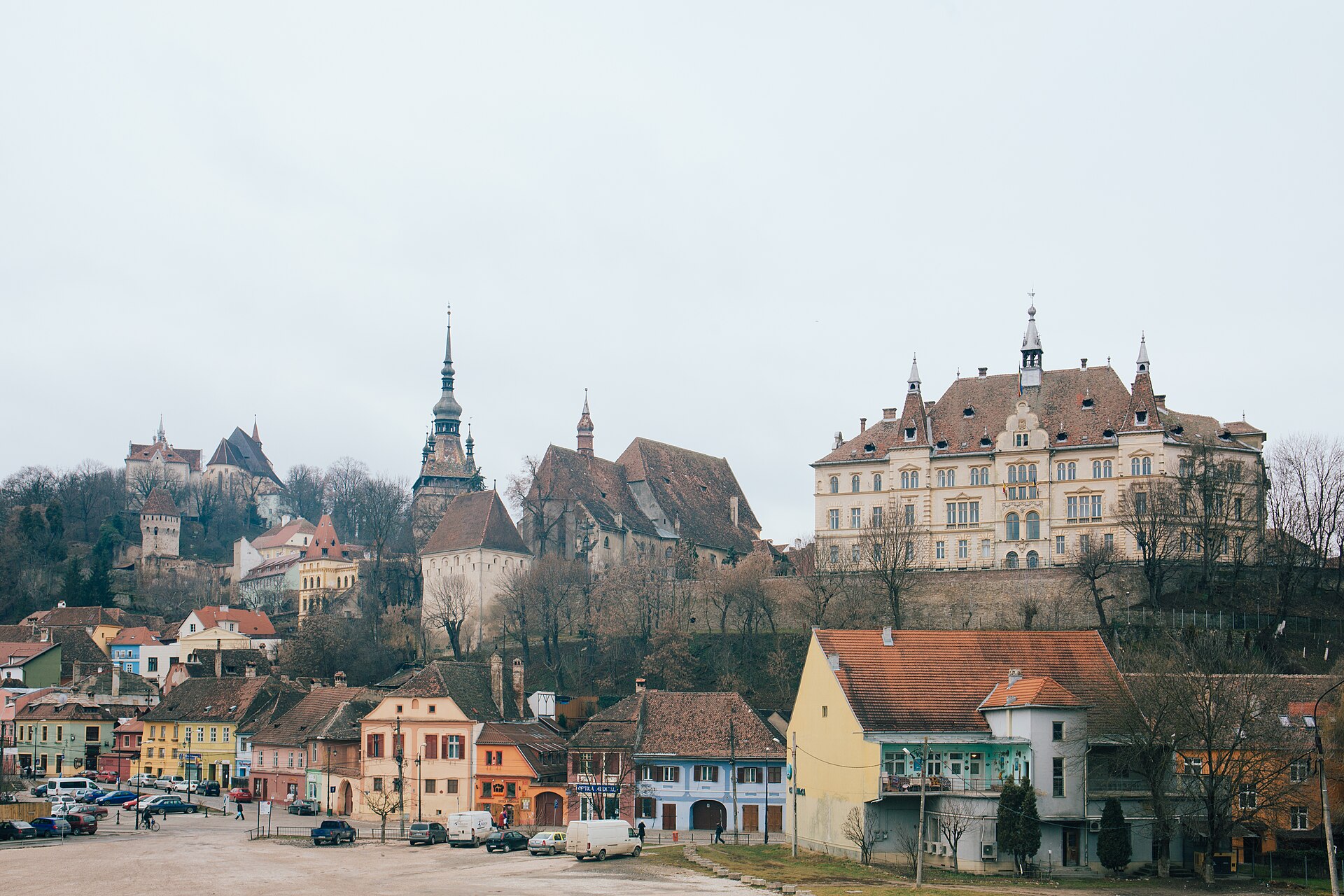
A lived-in medieval citadel on a hill above the Târnava Mare, with a painted clock tower, a covered wooden stairway and Saxon fortified churches in the villages all around.
- Best time to visit: May to early October
- Daily budget (budget traveller): $55 to $200 USD
- Ideal trip length: 3 to 7 days
Sighișoara is a small town of about 25,000 people in Mureș County, in the middle of Transylvania. The reason to come is the citadel, a walled upper town on a hill that Saxon merchants and craftsmen built from the 12th century onwards. People still live in it. It has been a UNESCO World Heritage Site since 1999. The Clock Tower guards the main gate, and nine of the old guild towers still stand along the walls. A covered wooden stairway climbs to a Gothic church and a quiet Saxon cemetery among the trees. Vlad Dracul, father of the Vlad who inspired Dracula, lived in a house just off the main square. Most visitors arrive on a coach tour, stay two hours and leave. Stay a few nights and you get the citadel empty at dusk, quiet cobbled lanes in the morning and easy trips to Biertan, Saschiz and Viscri, where fortified churches stand over the villages. Prices are lower than in Western Europe. The town is safe and small, and it is easy to manage on foot.
Sighișoara grew up as a Saxon trading town. German-speaking settlers arrived in the 12th century, and the guilds built the walls and towers and paid for their upkeep. The upper town, known as the citadel, still has people living in it. Children walk to the old school on the hill, washing hangs from windows painted mustard, pink and green, and church bells mark the hours. Day-trippers fill Citadel Square from late morning to mid-afternoon, then the coaches leave and the lanes go quiet. This is when the town is at its best. You can see the main sights in a day: the Clock Tower, the Covered Stairway, the Church on the Hill and the house where Vlad Dracul lived. The bigger reward comes from staying longer and using the town as a base for the Saxon villages, where fortified churches still guard the hay meadows.
Getting here is simple but slow. CFR trains run from Bucharest Nord in roughly 6-7 hours, and from Brașov in roughly 3.5-4 hours, while the line is upgraded. Buses from Brașov often take under 2 hours. Târgu Mureș airport is about 55km away. Stay inside the walls for atmosphere, or in the lower town for cheaper rooms and supermarkets. The village trips need planning. Biertan, Viscri and Mălâncrav are much easier with a driver or a hire car, and their churches keep short hours with a lunch break, so carry cash and start early.
Timing shapes the trip. May to September brings warm days, open churches and long evenings. Late July is festival time, when the Medieval Festival fills the citadel and every bed in town. September and early October are the locals' pick, with harvest light on the hills and fewer coaches. Winter is cold and quiet, and many village churches open only on request. Romanian is the main language, and you will hear Hungarian and some German too. Younger people and hospitality staff usually speak English. Sighișoara is safe and relaxed, and it closes fairly early. Come for history, walks and long dinners rather than nightlife.
Sighișoara itinerary
Arrive and see the citadel at dusk
Morning: This plan assumes you arrive on a Monday. Take a morning bus from Brașov (about 1 hour 45 minutes), or an early train from Bucharest Nord (roughly 6-7 hours).
Afternoon: Walk 15 minutes from the station across the Târnava Mare, check in inside the walls and buy water and snacks in the lower town. The Clock Tower is closed today, so just look around.
Evening: Walk the empty citadel lanes after the coaches leave, then have dinner on Citadel Square or somewhere cheaper below the Clock Tower. Early night.
Clock Tower, stairway and the hill
Morning: Be at the Clock Tower when it opens (9am Tuesday to Friday in summer). The combined ticket is about 70 lei. Then look into the Monastery Church next door.
Afternoon: Climb the Covered Stairway to the Church on the Hill (roughly 10-15 lei), then wander the Saxon cemetery. Walk the walls past the guild towers and see the Old Ladies' Passage.
Evening: Look in at Casa Vlad Dracul, then have a terrace drink. Find Ducklings' Square once it is quiet.
Biertan fortified church
Morning: Take a taxi or driver to Biertan, about 30km south-west, at an agreed price. Climb to the church inside its three rings of walls. Entry is about 20 lei, cash only.
Afternoon: Lunch in the village, then wander lanes lined with old Saxon houses. The church closes for a break at lunchtime, so plan around it.
Evening: Back in Sighișoara, have a simple dinner in the lower town and walk over the Târnava footbridge to see the Holy Trinity Church lit up.
Breite oaks and the lower town
Morning: Walk up to the Breite plateau south of town to see its ancient oaks and big skies. Allow 3-4 hours return, with water and proper shoes.
Afternoon: Picnic among the oaks, then come back down for a late lunch of ciorbă and papanași in the lower town.
Evening: Rest your legs. Then catch the sunset from behind the Church on the Hill, and have a quiet dinner inside the walls.
Saschiz and Viscri
Morning: Go by driver, hire car or small-group tour to Saschiz, about 20km east. See the UNESCO church tower and walk up to the old peasant fortress on the hill.
Afternoon: Continue to Viscri for the whitewashed fortified church, which charges a small fee. Have a late lunch at a village guesthouse if one is serving.
Evening: Drive back at golden hour. Have a lighter dinner, then start planning the next day's route.
Mălâncrav frescoes and Criș castle
Morning: Head west to Criș to see the Bethlen castle, a crumbling Renaissance manor. Opening is irregular, so check locally before you go.
Afternoon: Continue to Mălâncrav, whose church holds some of the best medieval frescoes in Transylvania. Ask in the village about access, and bring cash for the fee.
Evening: Have a farewell dinner on Citadel Square. Confirm your train or bus times and buy any snacks for the journey.
Last morning and onward travel
Morning: Have coffee in the quiet citadel, then make a last loop of the walls or go back up to the cemetery while it is empty.
Afternoon: Walk or take a taxi to the station. Take a train to Brașov, Bucharest or Cluj, or a bus to Târgu Mureș for a flight.
Evening: Connect onwards. If your train leaves late, wait in the lower town rather than at the station.
Best neighbourhoods
- The Citadel (Upper Town): The walled old town on the hill, with Citadel Square, the Clock Tower, the guild towers and the Church on the Hill. Hostels, guesthouses and small hotels sit inside the walls. It is touristy at midday but calm in the evening, and it is the best base for a first visit.
- Lower Town: The streets below the Clock Tower around Piața Hermann Oberth and Strada 1 Decembrie 1918. This is where locals shop and eat, and you will find supermarkets, pharmacies, ATMs and cheaper cafés. Rooms here cost less, and the citadel is a few minutes' climb away.
- Târnava riverside: The strip along the Târnava Mare, with the footbridge and the Orthodox Holy Trinity Church. It is good for evening walks and views back up to the citadel, and it sits between the old town and the station.
- Station area (north bank): The area around the train and bus stations, about 15 minutes' walk from the citadel. It is plain and practical, but handy if you arrive late or leave on an early train. There are a few simple guesthouses here.
- Saxon villages nearby: Villages such as Saschiz, Biertan and Viscri have guesthouses in restored Saxon farmhouses. They are very quiet and very rural, with fields, horse carts and fortified churches. They suit slow travellers, but you will need a car or a driver.
Must-do experiences
- Climb the Clock Tower: The 64m tower over the citadel gate houses the History Museum, the old clock figures and a wooden gallery with views over the tiled roofs. The town hall's 2026 tariff lists 50 lei for adults, or 70 lei for a combined ticket that adds the Weapons Collection and the Torture Room. It is closed on Mondays.
- Walk up the Covered Stairway to the Church on the Hill: The 17th-century wooden Scholars' Stairway has about 175 steps and is free. At the top is the Gothic Church on the Hill, which charges a small fee of roughly 10-15 lei, and the old school beside it. Go early or late to avoid the tour groups.
- Wander the Saxon cemetery: Behind the Church on the Hill, German gravestones lean among the trees on the slope. It is free, shady and very quiet. Keep to the paths and keep your voice down, because it is still a working cemetery.
- Circle the walls and guild towers: Nine of the original towers survive, each built and defended by a guild. Walk the loop past the Shoemakers', Tailors', Tinsmiths' and Ropemakers' towers in about an hour. The Blacksmiths' Tower holds a small museum.
- See Biertan's fortified church: Biertan, about 30km south-west, has one of the largest Saxon fortified churches in Transylvania. It has three rings of walls and a huge carved altar. Entry has been about 20 lei, cash only, with a midday break.
- Walk to the Breite oak plateau: This nature reserve on the hills just south of town is a wood pasture of ancient oaks, some of them several hundred years old. It makes a half-day walk with a picnic. Wear proper shoes and carry water.
- Visit Saschiz and Viscri: Two UNESCO-listed fortified church villages east of town. Saschiz has a church tower that echoes Sighișoara's Clock Tower and a peasant fortress on the hill behind. Viscri is a whitewashed fortified church at the end of a dusty village street.
Hidden gems
- The Old Ladies' Passage (Culoarul Bătrânelor Doamne), a narrow covered lane in the citadel that is easy to walk past
- The Ropemakers' Tower beside the cemetery, still lived in by the cemetery caretaker, so look but do not knock
- The footbridge over the Târnava Mare at dusk, with the Holy Trinity Church lit up and the citadel rising behind it
- Ducklings' Square (Piața Rățuștelor), a small quiet square inside the walls, away from the coach crowds in Citadel Square
- The ridge path behind the Church on the Hill, where you get wide views over the lower town with almost nobody else around
Daily budget
- Accommodation: budget 70-120 lei / night (dorm bed in the citadel), mid-range 250-450 lei (guesthouse or small hotel inside the walls), splurge 600-1,000+ lei (boutique hotel on the citadel square). Prices roughly double on the Medieval Festival weekend. Rooms in the lower town cost less than those inside the walls. Check whether breakfast is included.
- Food: budget 80-130 lei / day (bakeries, supermarket, one cheap hot meal), mid-range 150-250 lei (café lunch and a sit-down dinner), splurge 300+ lei (long dinners with wine on Citadel Square). Soups cost roughly 20-35 lei and mains 40-80 lei inside the citadel. Lower town places are cheaper. Prices are rough guides, so check.
- Transport: budget 0-30 lei / day (walking, the odd bus), mid-range 100-200 lei (shared taxi or bus trips to villages), splurge 400-700+ lei (private driver for a full village day). A Brașov bus is roughly 30-40 lei, and the train from Bucharest roughly 120-150 lei in second class. Agree taxi prices for village trips in advance.
- Activities: budget 20-50 lei / day (church fees, free walks), mid-range 70-120 lei (Clock Tower combined ticket plus a village church), splurge 300+ lei (guided small-group tour of the Saxon villages). Clock Tower 50 lei, or 70 lei combined (2026 tariff). The Church on the Hill is roughly 10-15 lei and Biertan about 20 lei. Village churches are often cash only.
- Drinks & nightlife: budget 15-30 lei (a beer or two in the lower town), mid-range 50-90 lei (wine with dinner, a terrace drink), splurge 150+ lei (cocktails and bottles of Romanian wine). A local beer costs roughly 12-20 lei, more on Citadel Square. Nightlife is low-key, with terraces and a few bars that close fairly early.
Where to stay
- Social hostel in The Citadel (70-120 lei / night (dorm), 180-280 lei (private)): Burg Hostel sits inside the walls, close to the Church on the Hill. It is simple, good value and popular with backpackers, and there is a courtyard for meeting people.
- Boutique hotel in The Citadel (400-700 lei / night): Casa Wagner is a restored historic house on Citadel Square, with old beams, a cellar restaurant and the main sights on the doorstep.
- Apartment in Lower Town (200-400 lei / night): Self-catering flats in the lower town cost less than rooms inside the walls and are close to supermarkets and the riverside. The Clock Tower is a five-minute climb away.
- Splurge in The Citadel (700-1,200+ lei / night): Fronius Residence is a small, restored Saxon house near the Covered Stairway, with antique-style rooms and a quiet courtyard. Casa cu Cerb, the Stag House, is another option on the square.
What to eat
- Ciorbă: sour soups such as ciorbă de burtă (tripe) or ciorbă de perișoare (meatball), served with sour cream and chilli, a cheap and filling lunch
- Sarmale: cabbage rolls stuffed with pork and rice, served with mămăligă (polenta) and sour cream
- Mici: small grilled sausages of mixed minced meat, eaten with mustard and bread, best with a cold beer
- Papanași: fried doughnuts with sour cream and jam, big enough to share
- Hanklich: a flat Saxon cake with a sweet curd or cream topping, found in village bakeries and some cafés
- Dinner at Casa Vlad Dracul or Casa cu Cerb on Citadel Square for the setting, though cheaper and more local plates are in the lower town
Day trips
- Biertan (About 30km south-west, 35-45 minutes by car): A large Saxon village under a hilltop fortified church ringed by three walls. Inside are a huge carved altar and a sacristy door with an elaborate old lock. Taxi or private driver, agreeing a return price with waiting time. On public transport, take a bus or train towards Dumbrăveni, then a local taxi. Entry is about 20 lei, cash only.
- Saschiz and Viscri (Saschiz about 20km east, Viscri about 45km south-east): Two UNESCO-listed fortified churches. Saschiz has a tall clock tower and a ruined peasant fortress on the hill above. Viscri has a whitewashed church in a village of pastel Saxon houses and dirt lanes. Saschiz is on the Brașov road and served by some buses. For Viscri you need a car, a driver or a small-group tour. Combine both in one day, and bring cash for the church fees.
- Mălâncrav and Criș (About 25-40km west and south-west): Mălâncrav's church holds some of the finest medieval wall paintings in Transylvania. Nearby Criș has the crumbling Renaissance Bethlen castle, which has seen little restoration and has very few visitors. Car or private driver. Access to both can be irregular, so ask your guesthouse to check who holds the keys and when they open before you set off.
When to visit
- Spring (April - May): 10-20°C, fresh and green, with some rain. Crowds: Low to moderate, rising around Easter and the late-May Carnival in the Citadel. A good, cheap window. The meadows turn green, and the village churches start longer summer hours from around May. Pack layers for cold evenings.
- Summer (June - August): 22-30°C, warm and sunny, with occasional thunderstorms. Crowds: Busy, peaking at the Medieval Festival on the last weekend of July. The longest museum hours and the easiest village trips. Book well ahead for festival weekends, and visit the citadel early or late to avoid coach groups.
- Autumn (September - October): 12-22°C, dry, golden light and cool mornings. Crowds: Moderate, falling quickly after mid-September. The locals' pick. The light is good for walks on the Breite plateau and drives to the villages. Opening hours shorten after mid-September.
- Winter (November - March): -5 to 5°C, frost, some snow and icy cobbles. Crowds: Very quiet outside Christmas. Atmospheric and cheap, but the Clock Tower closes in the mid-afternoon and many village churches open only on request. Wear boots with grip.
Entry rules for your passport
Visa rules for Romania depend on the passport you travel on. Check the official source before you book: European Commission: Schengen visa policy
Getting there
Sighișoara is on Romania's main rail line from Bucharest via Brașov towards Cluj and Hungary, run mainly by CFR Călători. Direct trains from Bucharest Nord take roughly 6-7 hours, and a second-class ticket costs roughly 120-150 lei. From Brașov, trains take roughly 3.5-4 hours while parts of the line are upgraded. Buses from Brașov are often quicker, at about 1 hour 45 minutes, and cost roughly 30-40 lei. Trains from Cluj-Napoca take around 3-4 hours. Night trains on the international route also call here, arriving at odd hours. The bus and train stations are next to each other on the north bank, about 15 minutes' walk from the citadel. The nearest airport is Târgu Mureș (TGM), about 55km away and connected by bus or taxi. Sibiu (SBZ), Cluj (CLJ) and Brașov-Ghimbav (GHV) airports have more flights, and Bucharest Otopeni (OTP) has the most. Romania is in Schengen, so non-EU travellers should check Entry/Exit System and ETIAS rules before they fly.
Border checks: non-EU visitors (other than Swiss, Norwegian, Icelandic, Liechtenstein, Andorran, Monegasque, San Marinese and Vatican citizens, and holders of an EU residence permit or long-stay visa) are registered in the EU's Entry/Exit System (EES) instead of getting a passport stamp. On your first crossing, officers take your photo and/or fingerprints, so allow extra time at passport control. ETIAS, the planned travel authorisation, is not in operation yet, so don't pay any website for one.
Getting around
Sighișoara is small enough to walk everywhere. The citadel, the lower town and the riverside are all within 10 minutes of each other. The train and bus stations sit next to each other on the north bank, about 15 minutes' walk from the citadel. Taxis wait outside the station, and a ride into town costs roughly 15-25 lei. The citadel lanes are steep and cobbled, so wheeled cases are hard work and good shoes help. Cars are restricted inside the walls. For the villages, public transport is thin. Some buses and minibuses run towards Saschiz and Dumbrăveni, but Biertan, Viscri and Mălâncrav are much easier with a taxi, a private driver or a small-group tour. A taxi to Biertan and back with waiting time costs very roughly 250-400 lei, so agree the price first. Car hire is easiest from Târgu Mureș, Sibiu or Brașov. Village roads are narrow, and some are unpaved in places.
Safety
Sighișoara is safe, and serious crime against visitors is rare. The main risks are slippery cobbles, especially in rain and winter ice, and the steep steps up to the Church on the Hill. Keep an eye on your bag in Citadel Square when coach groups are in, and on night trains. Use official taxis with a visible meter, or agree the price before you get in. In the countryside, large sheepdogs guard flocks. Do not approach them, and back away slowly if one comes towards you. Brown bears live in Transylvania's forests. Do not hike alone at dusk, and never leave food out. Check for ticks after walks in the meadows and woods. EU visitors should carry an EHIC or GHIC card, and everyone should have travel insurance. The emergency number is 112.
Solo travel tips
- Sleep inside the walls: The citadel is at its best after 6pm. Staying inside means a short, safe walk home after dinner and the lanes to yourself in the morning.
- Share a driver for the villages: Village days are the main extra cost. Ask your hostel or guesthouse whether other guests want to split a driver for Biertan or Viscri, which can halve the price.
- Avoid Monday for museums: The Clock Tower museum is closed on Mondays. Use Monday for arriving, walking the walls or going to the Breite plateau instead.
- Carry cash for churches: Village churches are often cash only and may have someone with a key rather than a ticket desk. Small notes make life easier.
- Safety for solo travellers: The real risks are icy cobbles, steep steps and large sheepdogs in the countryside. Do not walk forest trails alone at dusk, because bears live in the region. Use metered taxis and tell your host your plans for the hills.
- Meet people on a walking tour: A small-group tour of the citadel or the villages is the easiest way to meet other travellers. Hostel common rooms and festival weekends are the most social times. Download offline maps for patchy village signal.
Cultural etiquette
- Say 'bună ziua' (good day) when entering shops and 'mulțumesc' (thank you) when leaving. A greeting goes a long way, especially in the villages.
- Cover your shoulders and knees in churches, and keep your voice low. Orthodox churches may ask women to cover their hair, and there are often scarves at the door.
- The citadel is a place where people live. Do not peer into courtyards, climb on walls or block front doors for photos.
- Keep the Saxon cemetery quiet. Do not sit on graves, and stick to the paths.
- In the villages, ask before photographing people, especially older residents and families with horse carts.
- Tipping about 10% in restaurants is normal if service was good. Round up taxi fares.
- Do not lead with Dracula jokes. Locals are proud of the town's Saxon and Romanian history, and the vampire angle can feel tired to them.
Frequently asked questions
How do I get to Sighișoara?
By train, Sighișoara is on the CFR line from Bucharest via Brașov towards Cluj and Hungary. Direct trains from Bucharest Nord take roughly 6-7 hours, and trains from Brașov roughly 3.5-4 hours, because parts of the line are being upgraded. Buses from Brașov are often faster, at about 1 hour 45 minutes. The nearest airport is Târgu Mureș, about 55km away, and Sibiu, Cluj and Brașov airports are within a few hours.
How many days do I need in Sighișoara?
One night gives you the citadel at dusk and the Clock Tower in the morning. Three days add Biertan and the Breite oaks. Five to seven days let you see Saschiz, Viscri, Mălâncrav and the Criș castle at a slow pace, which is the real draw of the area.
How much does the Clock Tower cost in 2026?
The town hall's 2026 tariff lists 50 lei for an adult Clock Tower ticket and 70 lei for a combined ticket with the Weapons Collection and the Torture Room. Many older blogs still quote 12-20 lei, so expect the higher price. The museum is closed on Mondays and closes in the mid-afternoon from mid-September to mid-May.
When is the Sighișoara Medieval Festival?
It is held on the last weekend of July. The 2026 edition ran from 24 to 26 July with free entry, parades, music and combat shows in the citadel. Beds sell out early that weekend, so book months ahead or stay in Târgu Mureș.
Can I reach the fortified church villages without a car?
Partly. Some buses run towards Saschiz, and for Biertan you can take a bus or train to Dumbrăveni and then a taxi. Viscri and Mălâncrav are hard to reach on public transport. Most solo travellers hire a driver for the day, join a small-group tour or rent a car in Târgu Mureș or Sibiu.
Do I need cash in Sighișoara?
Hotels, restaurants and the Clock Tower usually take cards, but village churches such as Biertan are often cash only, and so are small shops and some taxis. ATMs are in the lower town. Carry 200-300 lei in small notes before you head into the countryside.
Is Sighișoara safe for solo female travellers?
Yes, it is a calm, small town and the citadel is pleasant to walk in the evening. Normal precautions apply: use metered or pre-booked taxis, watch your drink in busy bars on festival weekends and tell your host if you plan to walk the hills alone. Staying inside the walls means a short walk home after dinner.
What are the entry rules for Romania in 2026?
Romania has been a full Schengen member since January 2025, so Schengen rules apply. Many non-EU visitors, including those from the UK and the US, can stay visa-free for up to 90 days in any 180. The EU's Entry/Exit System registers non-EU travellers at the external border, and ETIAS is due to follow, so check the official EU and Romanian government sites before you book.
Tours and activities in Sighișoara | Sighișoara in 2 days | Sighișoara in 3 days | Sighișoara in 4 days | Sighișoara in 5 days | Sighișoara in 7 days
Joy Plus home | Destinations | Itineraries | Activities | Flights | Budget planner | Calendar | Map | Blog | Lifetime access