Destinations / Africa
Sossusvlei, Namibia travel guide
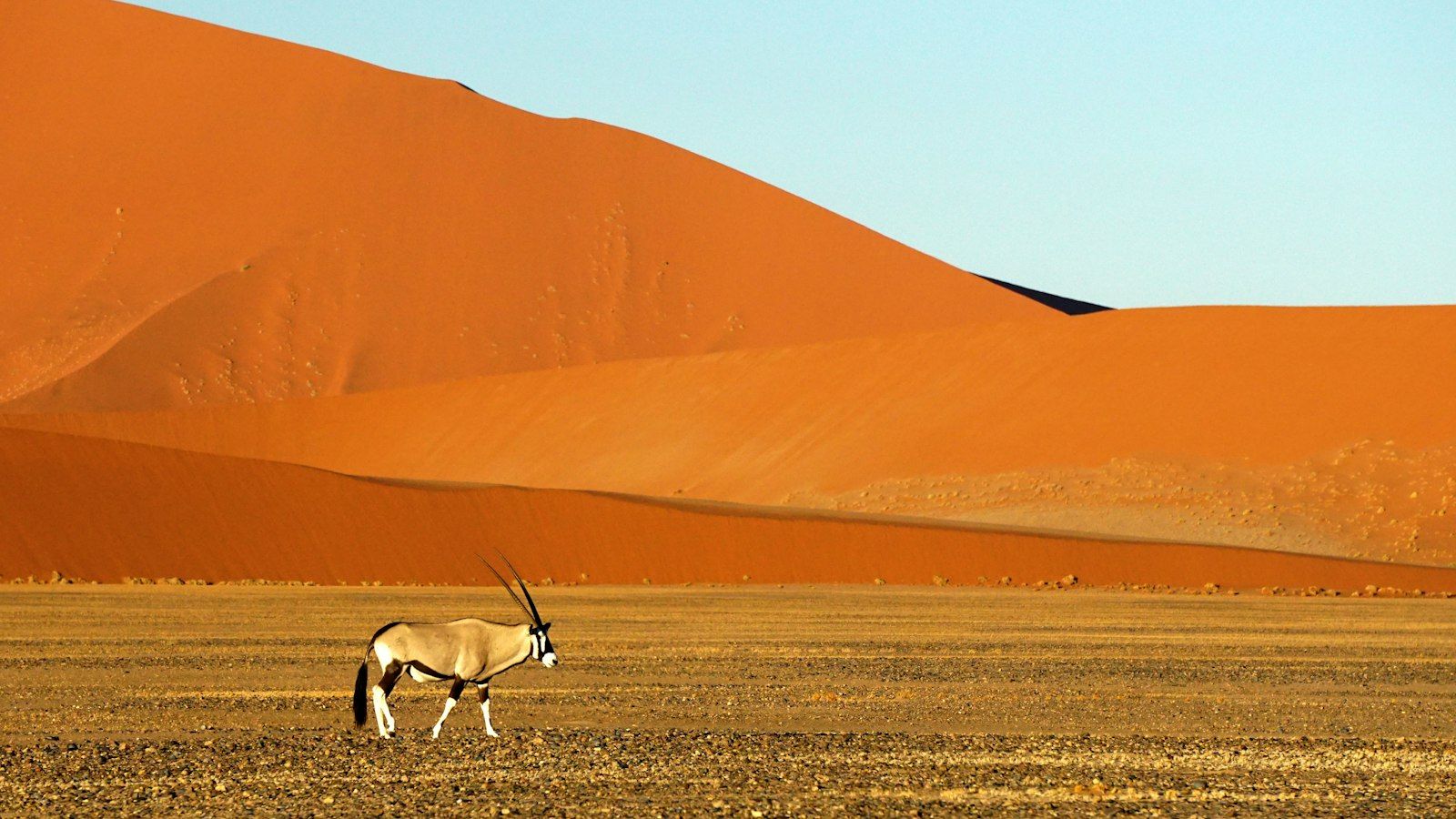
Rust-red star dunes, a white clay pan studded with dead camel thorn trees and some of the darkest night skies on Earth, at the end of a long gravel road through the oldest desert on the planet.
- Best time to visit: April to October
- Daily budget (budget traveller): $140 to $440 USD
- Ideal trip length: 3 to 7 days
Sossusvlei is a clay pan deep inside the Namib-Naukluft National Park, but the name now covers the whole dune field around it: Deadvlei, Big Daddy, Dune 45, Hiddenvlei and the gateway settlement of Sesriem. These are some of the tallest dunes on Earth. Big Daddy rises about 325 metres above the pan, and the surrounding Namib Sand Sea is a UNESCO World Heritage Site. There is no town here, no public transport and no nightlife. You get a fuel station, a park office, a few campsites and lodges, and a 60km tar road that runs west from Sesriem into the sand. Solo travellers arrive either on a small-group camping safari from Windhoek or on a self-drive trip, and self-drive lets you reach the sand at first light. Each day follows the same pattern: up before dawn, dunes until the heat bites around 11am, shade and a pool in the afternoon, sunset from Elim Dune, then a sky packed with stars. Getting here is expensive. Once you arrive, it is fairly cheap, especially if you camp.
Sossusvlei is a place, a pan and a shorthand all at once. Strictly, it is one clay pan where the Tsauchab River dies in the dunes. In practice, people use the name for the whole dune corridor west of Sesriem: Dune 45, Big Daddy, Deadvlei, Hiddenvlei and the pan itself. Everything runs off a single 60km tar road from the Sesriem gate. Once you are here, there is not much to spend money on, and that is the appeal. Getting here is where the cost goes. A hire car, fuel and a park permit that rose to 280 NAD per person per day in April 2026 add up quickly when you travel alone. This guide shows where you can save and where it is worth paying more.
For solo travellers the big decision is self-drive or join a group. Self-drive gives you control of sunrise, which is the reason to come, but you carry the full cost of the car and the risk of driving gravel alone. A 3-day budget camping safari from Windhoek takes the driving off your hands and puts you around a campfire with other travellers. If you drive, the second decision is which side of the gate to sleep on. Sesriem Campsite, Sossus Dune Lodge and Dead Valley Lodge are the only places inside the outer gate, and only their guests can pass the inner gate an hour before sunrise. The campsite gets you the same early access as the lodge for a fraction of the price.
Timing shapes every day. Get into the dunes at dawn and out by 11am, before the sand becomes too hot to walk comfortably. Rest through the middle of the day, then go out again for sunset. The cool months from May to September are easiest, with cold nights and mild days. October and April are quieter shoulder months. Midsummer is fierce, and the balloon company closes from mid-January to mid-February. Sesriem has little phone signal and nothing to do after dark except look at a sky with almost no light pollution. Bring a good head torch, a warm layer and some patience.
Sossusvlei itinerary
Land in Windhoek and gear up
Morning: Land at Hosea Kutako International (WDH), about 45km east of the city. Collect your hire car, check both spare tyres and the jack, buy an MTC SIM and withdraw Namibian dollars.
Afternoon: Stock up in Windhoek: at least 10 litres of water, braai meat, biltong, fruit and a cool box. Download offline maps for the whole route.
Evening: Game platter or kapana at Joe's Beerhouse, then an early night at Chameleon Backpackers. Do not start the drive south after dark.
Over the escarpment to Solitaire and Sesriem
Morning: Leave by 7am. Take the B1 to Rehoboth and then the C24, or the more scenic C26 and D1275 over the Spreetshoogte Pass. Allow 5 to 6 hours to Sesriem with stops, and keep to 80km/h on gravel.
Afternoon: Fuel up and eat apple crumble at Moose McGregor's Desert Bakery in Solitaire, then take the C19 south to Sesriem, about 80km. Check in and buy your permit at the NWR office (280 NAD plus vehicle fee, valid 24 hours).
Evening: If you are camping inside the gate, watch sunset from Elim Dune, 5km in. Buying the permit around 4pm means it also covers tomorrow's sunrise. Braai at camp under the stars.
Deadvlei and Big Daddy at first light
Morning: Go through the inner gate an hour before sunrise. Drive 60km of tar to the 2x4 car park, then take the shuttle (about 200-260 NAD return) or drive the 5km sand track in a proper 4x4. Climb Big Daddy (about an hour) and run down into Deadvlei.
Afternoon: Walk on to the Sossusvlei pan, then leave the dunes by late morning before the sand gets dangerously hot. Shade, a nap and the pool.
Evening: Buffet dinner at Sossusvlei Lodge by the gate or a braai at camp. Lights out early.
Dune 45, Hiddenvlei and Sesriem Canyon
Morning: New permit day. Sunrise climb up Dune 45, 45km down the tar road, then walk about 4km from the 2x4 car park to Hiddenvlei following the marker poles. Splurge option: the dawn Namib Sky balloon flight (10,720 NAD, no flights 15 January to 15 February).
Afternoon: Rest through the heat. Around 4pm drive to Sesriem Canyon, a few kilometres from the gate, and walk the shaded floor of the gorge.
Evening: Sundowner on the canyon rim, then pack the car for an early start.
Naukluft Mountains and the Olive Trail
Morning: Leave at 6am for Naukluft Camp, about 100km away on gravel. Report at reception and start the 10km Olive Trail (4 to 5 hours) by 8am.
Afternoon: Cross the chain traverse along the canyon wall near the end of the loop, then cool off in the natural rock pools near camp.
Evening: Overnight at Naukluft Camp, which has 21 campsites and six en-suite rooms (book ahead). Look for Hartmann's mountain zebra on the slopes at dusk.
Waterkloof rock pools, on to Solitaire
Morning: Walk the first stretch of the Waterkloof Trail along the Naukluft River to the rock pools, then turn back. Fit hikers with a spare day can do the whole 17km loop (6 to 7 hours) and stay a second night.
Afternoon: Drive to Solitaire, allowing roughly 1.5 to 2 hours. Fuel up and order a second slice of crumble.
Evening: Sleep at Solitaire Country Lodge or its campsite and watch the sun drop over the gravel plains.
Gaub and Kuiseb passes to the coast
Morning: Head north on the C14, stopping at the Tropic of Capricorn sign, then wind down through the Gaub and Kuiseb passes. Allow 4 to 5 hours to Walvis Bay with stops.
Afternoon: Look for flamingos on the Walvis Bay lagoon, then drive about 35km up the coast road to Swakopmund.
Evening: Fresh fish for dinner in Swakopmund, cool sea air and a long shower to wash off a week of dust.
Best neighbourhoods
- Inside the gate (Sesriem): The only beds between the outer and inner gates are at Sesriem Campsite, Sossus Dune Lodge and Dead Valley Lodge. Staying here lets you through the inner gate an hour before sunrise, so you reach the dunes before the day visitors.
- Sesriem junction: The cluster right outside the main gate, with Sossusvlei Lodge, the Sossus Oasis campsite and fuel station, a small shop and the NWR permit office. It is the most practical base if you cannot get a spot inside.
- D826 east of the gate: A few kilometres from the gate, Desert Camp and Desert Quiver Camp offer self-catering units with braai stands, pools and views of Elim Dune. They are good value for self-drivers who bring their own supplies.
- Solitaire: A tiny roadside stop about 80km north of Sesriem, known for its bakery, fuel pumps, rusting car wrecks and a country lodge. It is a handy overnight between Windhoek, the coast and the dunes.
- C19 and C27 farm lodges: Guest farms and lodges scattered 20 to 60km from Sesriem, including Little Sossus and Desert Homestead. They are quieter and often cheaper than the gate options, but you face a longer, darker drive to reach the dunes at opening time.
Must-do experiences
- Walk into Deadvlei at first light: Cross the sand from the 4x4 car park to the white clay pan, where black camel thorn trees, dead for centuries, stand against orange dunes. Arrive early, before the light flattens and the crowds arrive.
- Climb Big Daddy: Slog up the tallest dune in the Sossusvlei area, about 325 metres, in roughly an hour. Then run straight down the steep face into Deadvlei. Start at dawn and carry at least two litres of water.
- Catch sunrise from Dune 45: This easy-access dune sits 45km down the tar road from Sesriem. Walk the knife-edge ridge while the shadows are still long, before the tour vans arrive.
- Walk the floor of Sesriem Canyon: The Tsauchab River has cut a narrow gorge about 30 metres deep, a few kilometres from the gate. It is shaded, cool and a good use of the hot hours.
- Watch sunset from Elim Dune: This is the closest big dune to Sesriem, about 5km inside the gate. Climb it in the late afternoon for long views over the gravel plains and the Naukluft Mountains.
- Eat apple crumble in Solitaire: Moose McGregor's Desert Bakery is the traditional fuel-and-cake stop on the C19 and C14. Arrive hungry and expect a queue at lunchtime.
- Fly over the dunes at dawn: Namib Sky Balloon Safaris has flown here since 1991. A flight lasts about an hour and ends with a champagne breakfast in the desert. It is pricey and closes in midsummer, so book ahead.
- Hike the Olive Trail in the Naukluft: This 10km loop through dolomite mountains about 100km from Sesriem takes in wild olive trees, quiver trees and a chain traverse along a canyon wall. Look out for Hartmann's mountain zebra on the slopes.
Hidden gems
- Hiddenvlei, a quieter clay pan about 2km on foot (4km return) from the 2x4 car park along marker poles. It gets far fewer visitors than Deadvlei, so go early and carry water
- A late-afternoon permit trick: a permit bought around 4pm is valid for 24 hours, so it covers that evening and the next morning's sunrise run
- The rock pools at the start of the Waterkloof Trail at Naukluft Camp, roughly 50 minutes' walk up the Naukluft River
- Stargazing from NamibRand Nature Reserve, an International Dark Sky Reserve south of Sesriem, where several lodges run evening sky sessions
- The Sossusvlei pan itself, which most people skip after Deadvlei. In rare good rain years it holds water and draws birds
Daily budget
- Accommodation: budget 610-700 NAD / person (Sesriem Campsite or other campsites), mid-range 2,000-2,800 NAD (solo self-catering unit at Desert Quiver or Desert Camp), splurge 7,000-25,000+ NAD (Sossus Dune Lodge high season, NamibRand lodges). Lodge rates are usually per person sharing, and solo travellers often pay a single supplement. Book the inside-the-gate options months ahead for July to October. Rates rise each year, so confirm when booking.
- Food: budget 250-400 NAD / day (self-catering braai, supermarket supplies), mid-range 600-1,000 NAD (lodge breakfast and buffet dinner), splurge 1,500+ NAD (full board at a luxury lodge). Stock up in Windhoek because shops near Sesriem are small and pricey. Self-catering camps lend out cooking kits for a refundable deposit. Allow for a slice of cake in Solitaire.
- Transport: budget 1,000-1,500 NAD / day (2WD or small SUV hire plus fuel), mid-range 2,200-3,500 NAD (4x4 with camping kit plus fuel), splurge Scenic or fly-in light aircraft charters, quoted per trip. Car hire is the main solo cost, so check one-way fees if you finish in Swakopmund. The shuttle from the 2x4 car park costs roughly 200-260 NAD return. A 3-day budget camping safari from Windhoek runs about US$740-845, with transport, camping and park entry wrapped in.
- Activities: budget 330-350 NAD / day (park permit plus vehicle fee), mid-range 1,500-2,500 NAD (guided Sossusvlei excursion from a lodge, rough guide, check), splurge 10,720 NAD (Namib Sky balloon flight, July 2026 to June 2027 rate). The park permit is 280 NAD per person per day for foreign visitors since April 2026 and lasts 24 hours from entry. Sesriem Canyon and Elim Dune are covered by the same permit. Naukluft day trails need no advance booking, but report at reception.
- Drinks & nightlife: budget 40-80 NAD (a Windhoek Lager from a shop, one at the bar), mid-range 200-400 NAD (sundowners at a lodge bar), splurge 800+ NAD (wine with a lodge dinner, bush sundowner drive). There is no nightlife. Lodge bars close early and evenings revolve around braais and stars. Bar prices are approximate and vary by lodge.
Where to stay
- Social hostel in Inside the gate, Sesriem (610-700 NAD / person): There are no hostels at Sossusvlei. The closest equivalent is NWR's Sesriem Campsite, inside the outer gate, where fellow self-drivers share fire pits and swap tips on the sand track. Hire a car with a rooftop tent, or come on a budget camping safari that uses the site.
- Boutique hotel in Sesriem junction (2,400-4,700 NAD / person): Sossusvlei Lodge sits right beside the main gate, so you can be first in the sunrise queue. It has a pool, a restaurant and a buffet dinner that saves cooking after a long day.
- Apartment in D826, east of the gate (2,000-2,800 NAD / night (single)): Desert Quiver Camp has 24 self-catering units with kitchenettes, private patios, braai stands and a pool facing Elim Dune, a few minutes from the gate. Cook your own food and keep the daily spend down.
- Splurge in Inside the gate or NamibRand (7,000-25,000+ NAD / night): Sossus Dune Lodge, the only lodge inside the inner gate, gives you pre-dawn access from a chalet with a dune view. For deeper silence and dark-sky stargazing, look at the luxury lodges in NamibRand Nature Reserve.
What to eat
- Apple crumble from Moose McGregor's Desert Bakery in Solitaire: dense, warm and buttery, the reward after a long gravel drive
- Braai: a Namibian barbecue of boerewors sausage, lamb chops or game steaks over wood coals, cooked at your campsite or bought at lodge buffets
- Oryx or kudu steak: lean game meat that turns up on most lodge menus, usually served medium-rare with pepper sauce
- Kapana: street-grilled beef cut into strips and dipped in chilli salt, best eaten in Windhoek before you head south
- Biltong and droëwors: air-dried spiced meat and sausage, the classic road-trip snack from any Windhoek supermarket
- Potjiekos: a slow-cooked stew of meat and vegetables in a three-legged cast-iron pot, served at some lodges and campsites
Day trips
- Naukluft Mountains (About 100km from Sesriem on gravel, around 2 hours): A rugged dolomite range in the Naukluft section of the park, created as a refuge for Hartmann's mountain zebra. The 10km Olive Trail includes a chain traverse along a canyon wall, and the 17km Waterkloof Trail passes rock pools. Self-drive to NWR's Naukluft Camp. The day trails need no advance booking but report at reception first. Stay overnight to avoid driving back in the dark.
- Solitaire and the C14 north (About 80km north of Sesriem on the C19): A desert crossroads with a bakery, fuel and photogenic car wrecks. Continue north on the C14 to the Tropic of Capricorn sign and the Gaub and Kuiseb passes if you are heading to the coast. Self-drive only. Fill up at Solitaire and allow extra time for photo stops on the passes.
- NamibRand Nature Reserve (Roughly 1 to 2 hours south of Sesriem depending on the lodge): A huge private reserve and International Dark Sky Reserve of red dunes, grassy plains and fairy circles. Day visitors cannot roam freely, so this is about guided drives and stargazing. Book a night or a guided activity through a NamibRand lodge. The gravel roads along its edge make a scenic drive in their own right.
When to visit
- Hot summer (December - February): 32-40°C+ by day, warm nights, occasional afternoon thunderstorms. Crowds: Busy over Christmas and New Year, quiet afterwards. Only for heat-tolerant early risers. Be on the sand at dawn and off by 10am. Balloons do not fly from mid-January to mid-February.
- Autumn (March - May): 25-35°C by day, cooling nights, clear skies after late rains. Crowds: Low to moderate, an Easter bump. A strong pick, especially April and May. The heat eases, the light is soft and lodges have space. Rains upcountry occasionally put water in the pans.
- Winter (June - August): 20-27°C by day, nights near freezing, occasional hot, dusty east winds. Crowds: Peak in July and August with European holidays. The most comfortable hiking and dune-climbing weather, but book campsites and cars months ahead. Sunrise comes late, around 7:40am in late June, so the gates open later. Pack a proper sleeping bag.
- Spring (September - November): 27-38°C, rising heat, windy afternoons, very clear air. Crowds: Moderate in September and October, quieter in November. Long days and sharp light. September and October are excellent. By November you will want to finish climbing by 9am.
Getting there
Fly into Hosea Kutako International Airport (WDH), about 45km east of Windhoek. Most long-haul travellers connect via Johannesburg or Cape Town on Airlink, via Doha on Qatar Airways, via Addis Ababa on Ethiopian, or fly direct from Frankfurt on Eurowings Discover. Since April 2025, many nationalities, including UK, US and most EU citizens, need a visa. Apply online through the official e-Visa system or get one on arrival; the fee for non-African nationals is typically 1,600 NAD. From Windhoek, Sesriem is roughly 330 to 360km away, 5 to 6 hours mostly on gravel, via Rehoboth and the C24 or over the Spreetshoogte Pass to Solitaire and then the C19 south. There are no buses. Self-drive hire cars are available at the airport and in Windhoek. Guided camping safaris pick up from Windhoek accommodation. Upmarket lodges can arrange light-aircraft transfers to their own airstrips. Fuel is available at Sesriem and Solitaire.
Getting around
There is no public transport to Sossusvlei. You either self-drive, join a guided camping safari from Windhoek, or fly in by light aircraft to a lodge airstrip. Windhoek to Sesriem is roughly 330 to 360km and takes 5 to 6 hours, mostly on gravel. Keep to 80km/h on gravel, drive only in daylight, and fill up at Solitaire and Sesriem. Inside the park, a 60km tar road runs from the Sesriem gate to the 2x4 car park. The final 5km to Deadvlei and Sossusvlei is deep sand. Ordinary cars must stop at the 2x4 car park, where a 4x4 shuttle runs to the pans for roughly 200 to 260 NAD return. The rules on who may self-drive that sand stretch changed several times in 2026, so ask your lodge or the NWR office the day before. Elim Dune, Dune 45 and Sesriem Canyon can all be reached on tar or good gravel.
Safety
The biggest risk here is the road. Rollovers on loose gravel are the most common serious accident for visitors, so keep to 80km/h or less and slow right down for corners, dips and corrugations. Do not drive at night, when oryx, springbok and cattle wander onto the road. Carry two spare tyres if you can, and know how to change one. Heat is the second risk. Summer days can pass 40°C on the dunes, so climb at dawn, wear a hat, drink three to four litres a day and get off the sand by late morning. Phone signal is weak or absent across most of the park, so download offline maps and tell your lodge where you are heading. Sesriem itself has very little crime, but lock your car and keep valuables out of sight at car parks. In Windhoek, use registered taxis after dark and do not walk alone at night. Stay on marked paths in Deadvlei, never climb or touch the dead trees, and do not fly a drone without a permit.
Solo travel tips
- Sleep inside the gate on the cheap: Only guests at Sesriem Campsite, Sossus Dune Lodge and Dead Valley Lodge get through the inner gate before sunrise. The campsite gives you exactly the same early access for a fraction of the lodge price. Book it as soon as your dates are fixed.
- Join a group if you would rather not drive alone: Gravel roads, flat tyres and no phone signal are a lot to manage solo. A 3-day budget camping safari from Windhoek, such as Chameleon Safaris' trip ending in Swakopmund, covers the driving, cooking and permits, and you get campfire company.
- Time your permit: The permit lasts 24 hours from entry, with no refunds. Buy it in the late afternoon and you can do a sunset and the next sunrise on one ticket. Two separate mornings mean paying twice.
- Climb at dawn, hide at noon: Be on the sand at sunrise and back in the shade by 11am. Carry two litres of water for a Big Daddy climb, wear proper shoes rather than sandals, and do not attempt it in the midday heat.
- Drive the gravel like a local: Keep to 80km/h, slow for every dip and bend, and never brake hard on loose stones. Fill up at every pump you pass, and park before dusk because wildlife crosses the road at night.
- Safety for solo travellers: Sesriem is quiet and friendly, and lodge staff look out for solo guests. Tell reception where you are going each day, keep offline maps, and in Windhoek use registered taxis after dark. Women travelling alone report few problems here beyond the usual city caution.
Cultural etiquette
- Greet before you ask. A 'good morning' or 'hello, how are you?' before any question is expected in Namibia, whether at a fuel station, a shop or a reception desk.
- English is the official language, and you will also hear Afrikaans, German, Oshiwambo and Nama-Damara. A few words of Afrikaans, like 'dankie' (thanks), go down well.
- Tip fuel attendants who fill your tank and clean your windscreen. A few Namibian dollars is normal, more if they check your tyres and oil.
- Ask before photographing people, especially in rural areas and Windhoek's informal markets, and accept a polite no.
- Do not climb on, lean against or touch the dead trees in Deadvlei. Stick to existing footprints across the pan, as the clay crust scars easily.
- Drones are not allowed in the national park without a permit, and rangers do enforce this.
- Leave no trace: take all rubbish out of the park, never feed wildlife, and keep campsite noise down after dark, when sound carries for kilometres.
Frequently asked questions
How do I get from Windhoek airport to Sossusvlei?
Hosea Kutako International Airport (WDH) is about 45km east of Windhoek. Most visitors collect a hire car at the airport, spend a night in Windhoek, then drive about 5 to 6 hours to Sesriem the next morning, mostly on gravel. Without a car, join a guided camping safari such as Chameleon Safaris' 3-day budget trip, or book a lodge package with a fly-in transfer. There are no scheduled buses.
Do I need a 4x4 for Sossusvlei?
Not for most of it. Any ordinary car can reach Dune 45, Elim Dune, Sesriem Canyon and the 2x4 car park on tar or good gravel. The last 5km to Deadvlei and Sossusvlei is deep sand and needs a proper 4x4 with low range and deflated tyres. Without one, take the shuttle from the 2x4 car park for roughly 200 to 260 NAD return. The self-drive rules for that sand stretch changed during 2026, so confirm locally before you go.
How much does it cost to enter the park?
Since 1 April 2026, foreign visitors pay 280 NAD per person per day to enter the Namib-Naukluft National Park, plus a vehicle fee of around 50 to 60 NAD (sources differ). Permits are sold at the NWR office at Sesriem and last 24 hours from entry, with no refunds. Fees rose sharply in 2026, so check the current rate before you budget.
How many days do I need at Sossusvlei?
Two nights at Sesriem is the minimum. That gives you one full sunrise at Deadvlei and Big Daddy, plus a second morning for Dune 45 or Hiddenvlei and an afternoon at Sesriem Canyon. Allow five to seven days to add the Naukluft Mountains and Solitaire and finish on the coast at Swakopmund.
When is the best time to visit Sossusvlei?
May to September is the most comfortable, with warm days and cold, clear nights, although July and August are busy. April and October are excellent shoulder months. November to March is very hot, often above 35°C, with occasional storms, and the balloon flights pause from mid-January to mid-February. Sunrise comes around 6am in midsummer and about 7:40am in late June, so plan your gate times around it.
Can I pay by card, and how does fuel work?
Cards are accepted at most lodges, the NWR office and larger fuel stations. Still carry Namibian dollars for shuttles, small shops, tips and fuel attendants. South African rand are accepted at par. Fuel is available at Sesriem and Solitaire, but stations can run short, so fill up whenever you pass a pump.
Is Sossusvlei safe for solo female travellers?
Yes. The Sesriem area is quiet, and lodge and campsite staff are used to solo guests. The real risks are heat, isolation and driving. Never drive at night, tell someone your plans, carry plenty of water, and in Windhoek use registered taxis after dark rather than walking. Joining a small-group safari takes away most of the driving stress if you would rather not self-drive alone.
What entry rules apply to travellers visiting Namibia in 2026?
Since 1 April 2025, nationals of many countries that previously entered visa-free, including the UK, the US, Germany, France, Canada and Australia, need a visa. It can be obtained on arrival at designated entry points or in advance through the official e-Visa system. The fee for non-African nationals is typically 1,600 NAD. You will usually need a passport valid for at least six months with blank pages, plus proof of onward travel and accommodation. Rules, fees and eligible nationalities change, so always confirm on the official Namibian Ministry of Home Affairs, Immigration, Safety and Security website and check your own government's travel advice before you book.
Tours and activities in Sossusvlei | Sossusvlei in 2 days | Sossusvlei in 3 days | Sossusvlei in 4 days | Sossusvlei in 5 days | Sossusvlei in 7 days
Joy Plus home | Destinations | Itineraries | Activities | Flights | Budget planner | Calendar | Map | Blog | Lifetime access