Destinations / Africa
Stellenbosch, South Africa travel guide
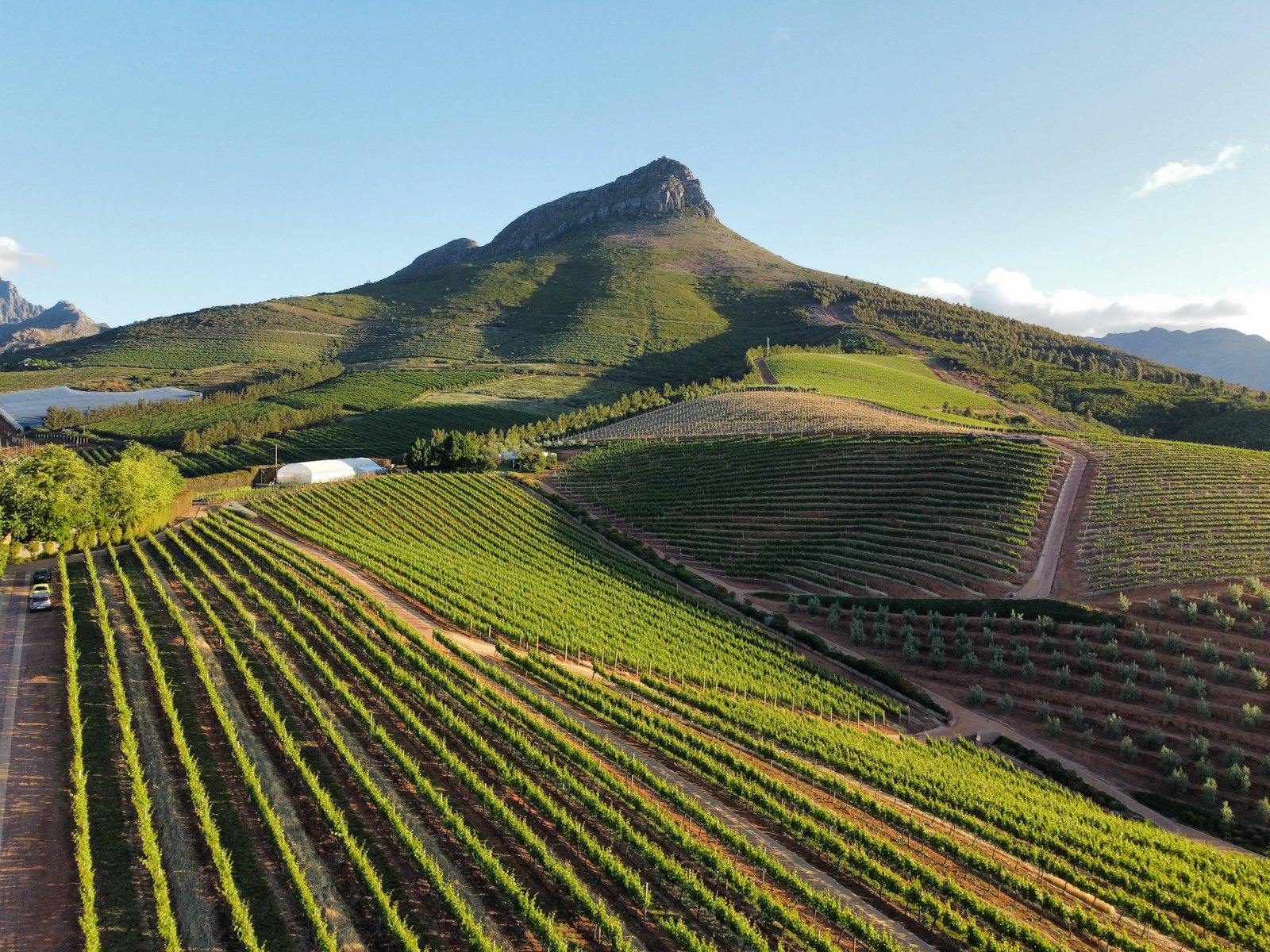
An old Cape Dutch university town with oak trees, mountains on three sides and wine farms you can reach by hop-on minibus. Spend your days tasting, hiking and browsing the Saturday market.
- Best time to visit: March to May and September to November
- Daily budget (budget traveller): $65 to $250 USD
- Ideal trip length: 3 to 7 days
Stellenbosch is about 50km east of Cape Town and around 35 minutes by road from Cape Town International Airport. Simon van der Stel founded it in 1679, which makes it South Africa's second-oldest town after Cape Town. Its nickname is Eikestad, the city of oaks. The centre is small and flat and easy to walk. You get whitewashed Cape Dutch houses along Dorp Street, the old village green at Die Braak and a large university that keeps the cafés and bars busy in term time. Mountains surround the town, and some of South Africa's best-known wine farms sit around it. Most of the tasting rooms are a short drive from town. You don't need a car, though. The Vine Hopper minibus runs set routes between farms, and app taxis are cheap by European standards. Stellenbosch isn't a backpacker town, but it can be done on a budget. There is a long-running hostel, tastings often cost less than a main course, and the Saturday Slowmarket and the Jonkershoek trails cost little or nothing. At night it is quieter and less carefree than it looks by day, so a little planning keeps a solo trip easy.
Stellenbosch is a university town of oak-shaded streets with the Simonsberg, Jonkershoek and Stellenbosch mountains around it. Simon van der Stel founded it in 1679 on the banks of the Eerste River, and the old centre still has whitewashed gables, irrigation furrows along the streets and the village green at Die Braak. The university brings tens of thousands of students and keeps the town busy outside the long summer break. Most visitors come for wine. There are around 150 farms in the district, from big historic estates like Spier to smaller family cellars. You'll find you don't need to spend much to enjoy them. A tasting often costs less than lunch, the Vine Hopper does the driving, and the Saturday Slowmarket and the Jonkershoek trails cost little or nothing. A hostel bed, a hop-on ticket, three tastings and a market lunch make a full, cheap day.
Getting here is easy. Cape Town International Airport is about 35 minutes away by Uber or Bolt, usually R400-600. From central Cape Town, the Metrorail Northern Line runs on weekdays for about R14. It takes roughly 1.5 to 2 hours and doesn't run at weekends. Base yourself in the historic centre if you don't have a car. You can walk to the museums, restaurants and Vine Hopper pickups, and app taxis cover the rest. Plan your trip around the set days: Vine Hopper routes run on particular weekdays, the Slowmarket is Saturday only and some museums close early at weekends.
Timing shapes the trip. Harvest runs roughly from late January to April, when the farms are busy and the vines turn gold in autumn. Spring, from September to November, brings blossom and fynbos flowers to Jonkershoek. Summer is hot and dry and fills up with holidaymakers from December to January, while winter is cool, green and rainy, with fires in the tasting rooms and lower prices. English is widely spoken alongside Afrikaans and isiXhosa. Like the rest of South Africa, Stellenbosch is a place of deep inequality. Die Vlakte, part of the centre, was cleared under apartheid-era forced removals, and the township of Kayamandi sits on the edge of town. Keep that context in mind, take app taxis after dark, and you'll get a relaxed, sociable stay.
Stellenbosch itinerary
Arrive and walk the old town
Morning: This plan assumes you arrive on a Thursday. Land at Cape Town International and take an Uber or Bolt to Stellenbosch, about 35 minutes and R400-600.
Afternoon: Check in near the centre. Walk Die Braak and Dorp Street, browse Oom Samie se Winkel and stop for coffee on Church Street.
Evening: Have an early dinner at a casual spot on Church or Bird Street, then take an app taxi back if you're staying out of the centre. Early night.
Vine Hopper northern loop
Morning: Join the Vine Hopper (about R450-490) from your guesthouse or the central pickup. The northern loop has run on Mondays, Wednesdays and Fridays. Start at Simonsig for Cap Classique.
Afternoon: Hop off at Delheim or Warwick for lunch and a tasting, then finish at Beyerskloof for pinotage. Pace yourself and use the spittoons.
Evening: Back in town by about 5pm. Picnic dinner from the supermarket, plenty of water and a quiet evening.
Slowmarket Saturday
Morning: Walk or take a short ride to the Slowmarket at Oude Libertas, open from 9am to 2pm. Have breakfast at the stalls, and taste cheese, bread and small-producer wines.
Afternoon: Take an app taxi up the Jonkershoek road to Lanzerac for a tasting under the mountains, then come back for a rest.
Evening: Term-time Saturdays are lively around the student bars in the centre. Have a drink, then take an app taxi home rather than walking late.
Jonkershoek hike and Root44
Morning: Start early at Jonkershoek Nature Reserve (about R80 day access, free with a Wild Card). Walk the valley towards the waterfalls. Book your return ride in advance.
Afternoon: Head to Root44 Market at Audacia on the R44, which opens at weekends, for a late lunch, live music and a glass of wine.
Evening: Cook in the hostel kitchen or have something simple in town. Plan tomorrow's ride to Franschhoek.
Day trip to Franschhoek
Morning: Take an app taxi over Helshoogte Pass to Franschhoek, about 40 minutes and roughly R350-500. Board the Franschhoek Wine Tram, choosing one of its lines.
Afternoon: Hop between farms on your chosen line, with tastings paid at each stop. Leave time to walk Franschhoek's main road and the Huguenot Monument.
Evening: Have an early dinner in Franschhoek, then take an Uber back over the pass. Book it before dark.
Museum morning and Helshoogte views
Morning: Visit the Village Museum (about R110) and the Moederkerk, then walk the university's botanical garden on Neethling Street.
Afternoon: Take an app taxi up Helshoogte Pass to Tokara for a tasting and views back over the valley. Stop at the Dylan Lewis Sculpture Garden if it is open (closed on Sundays and Mondays, about R260).
Evening: Watch the sunset from the Delaire Graff terrace with a single glass, then take a ride back to town for a farewell dinner on Dorp Street.
Spier and fly out
Morning: Pack, check out and take a 15 minute Uber to Spier. Do a tasting on the lawns and see the art.
Afternoon: Lunch at Spier, then carry on to Cape Town International, around 30 minutes by road. Leave plenty of time for check-in.
Evening: Fly out, or stay a night in Cape Town before your onward flight.
Best neighbourhoods
- Historic centre (Dorp, Church and Bird streets): The oldest part of town, with oak-lined Dorp Street, Die Braak and Church Street's cafés and galleries. Oude Werf Hotel, Oom Samie se Winkel and Bertus Basson's restaurants are all here, and Stumble Inn is close by on Market Street. It is the best base if you don't have a car, because Vine Hopper pickups and most dinners are a walk away.
- University quarter (Ryneveld and Victoria streets): The streets around the main campus. You'll find the Village Museum, the Moederkerk, the university's botanical garden, cheap student cafés and bars. It is lively during term time and quieter in the long summer break from December to January.
- Uniepark and Mostertsdrift: Leafy residential areas east of the centre, with guesthouses and self-catering flats. It is a 15 to 25 minute walk into town, quieter at night and on the way to the Jonkershoek road. Take an app taxi back after dark.
- Jonkershoek Valley: A green valley running east from town into the mountains. Lanzerac, Stark-Condé and Neil Ellis are along the road, and Jonkershoek Nature Reserve is at the end. It is beautiful and peaceful, but you'll need taxis or a car to get anywhere.
- Helshoogte Pass and Banhoek: The road over the mountains towards Franschhoek. Tokara, Delaire Graff and Thelema are up here, with some of the best views in the Winelands. It is a splurge base for lodges and long lunches, and it is not walkable.
Must-do experiences
- Ride the Vine Hopper between wine farms: Hop-on, hop-off minibus loops visit five or six farms each, and tickets cost about R450-490, with tastings extra. Each route runs on set days. For example, the northern loop has run on Mondays, Wednesdays and Fridays past Simonsig, Delheim and Warwick, so check the timetable.
- Walk Dorp Street and Die Braak: Start at the old village green, Die Braak, then wander down Dorp Street, past gabled houses and the old general dealer Oom Samie se Winkel. It is free, flat and best in the early morning before the heat.
- Hike in Jonkershoek Nature Reserve: Fynbos, waterfalls and big mountain views about 9km from town. CapeNature lists day access at about R80 per adult, and Wild Card holders get in free. Go early in summer and carry plenty of water.
- Spend Saturday morning at the Slowmarket: Over 100 food, wine and craft stalls set up under the oaks at Oude Libertas every Saturday from 9am to 2pm. Entry is free. Have breakfast and lunch here and you'll save on restaurants.
- Visit the Village Museum: Four restored houses from about 1709 to the mid-1800s, each furnished for its era, with honest displays on the history of slavery at the Cape. International visitors have recently paid about R110. Allow an hour.
- Taste at a farm on Helshoogte Pass: Tokara and Delaire Graff sit high on the pass, with views over the valley to Table Mountain on clear days. A tasting is a cheap way to enjoy places where lunch is very expensive.
- Spend a slow afternoon at Spier: One of the oldest farms in the area, just south of town. It has easy tastings, picnic lawns and art, and it is a good last stop on the way to the airport.
Hidden gems
- Dylan Lewis Sculpture Garden, outside town, where large animal and figure bronzes stand in a mountain garden, about R260 entry, closed on Sundays and Mondays
- Stellenbosch University Botanical Garden on Neethling Street, a small, shady garden with succulents, a fernery and a tea garden, a short walk from the centre
- Oom Samie se Winkel on Dorp Street, an old-fashioned general dealer full of jams, sweets, biltong and odd curios
- The Rupert Museum on Stellentia Road, a calm, rarely crowded gallery of South African art that makes a good break from tasting
- Mooiberge farm stall on the R44, known for its scarecrows, with pick-your-own strawberries in season, roughly spring to early summer
Daily budget
- Accommodation: budget R350-450 / night (dorm at Stumble Inn), mid-range R1,000-2,000 (guesthouse or self-catering flat), splurge R7,000+ (Lanzerac, Delaire Graff Lodges). Private rooms in the hostel cost more than dorms. Book December to January and harvest weekends early. Guesthouses often include breakfast, which helps a solo budget.
- Food: budget R250-400 / day (self-catering, market lunches, takeaways), mid-range R500-900 (café lunch and a dinner out), splurge R1,500+ (wine farm lunch or a tasting menu). Supermarkets are well stocked. Café breakfasts cost about R90-150 and casual mains about R150-250. Fine dining is good value by European standards but still adds up. Prices are rough guides.
- Transport: budget R80-200 / day (walking plus app taxis), mid-range R450-600 (Vine Hopper day plus taxis), splurge R2,500+ (private driver or guide for the day). Airport rides cost about R400-600. The Cape Town train costs about R14 but runs on weekdays only. Hire cars cost roughly R400-700 a day plus fuel. Never drive after tastings.
- Activities: budget R0-150 / day (Dorp Street, Slowmarket, Jonkershoek), mid-range R300-600 (two or three tastings, museum entry), splurge R1,000+ (food-paired tastings, guided hikes). Jonkershoek is listed at about R80 for adults, and Wild Card holders enter free. The Village Museum has recently cost about R110 for international visitors and the Dylan Lewis Sculpture Garden about R260. Tastings cost roughly R80-250.
- Drinks & nightlife: budget R50-120 (a local beer or two), mid-range R200-400 (wine bar evening), splurge R600+ (cocktails and a long dinner). Wine is cheap in bottle shops and on farms. Student bars fill up in term time, while restaurants are the evening option out of term. Sundays are quieter, and bottle stores have restricted hours.
Where to stay
- Social hostel in Historic centre (Market Street) (R350-450 / night (dorm)): Stumble Inn Backpackers Lodge has been running since 1994. It has dorms, private rooms, a pool, communal kitchens and a bar, and it is a short walk from Dorp Street and the Vine Hopper pickups.
- Boutique hotel in Historic centre (Church Street) (R2,500-4,500 / night): Oude Werf Hotel is one of the oldest hotels in the country, on a café-lined street in the centre. It suits solo travellers who want character and want to walk everywhere.
- Apartment in Uniepark and Mostertsdrift (R900-1,600 / night): Self-catering flats and garden cottages in quiet streets, 15 to 25 minutes on foot from the centre. A kitchen saves money for longer stays, but take app taxis back after dark.
- Splurge in Jonkershoek Valley or Helshoogte Pass (R8,000-25,000+ / night): Lanzerac Hotel & Spa is a historic estate at the mouth of the Jonkershoek Valley. Delaire Graff Lodges sit high on Helshoogte Pass with views across the Winelands.
What to eat
- Bobotie: spiced minced meat baked under a savoury egg custard, served with yellow rice and chutney, a Cape Malay classic you'll find on many farm menus
- Waterblommetjie or lamb bredie: a slow-cooked Cape stew, best in winter when the waterblommetjies (water hawthorn flowers) are in season
- Biltong and droëwors: air-dried spiced beef and sausage, sold everywhere and good hiking food for Jonkershoek
- Koeksisters and melktert: syrup-soaked plaited doughnuts and cinnamon milk tart, good with coffee at the Slowmarket
- Boerewors roll from a braai stall: a coiled farm sausage in a bun with tomato relish, a cheap market lunch
- Pinotage and Méthode Cap Classique: South Africa's own grape and its traditional-method sparkling wine, which Simonsig pioneered locally. Try both on the northern loop
Day trips
- Franschhoek (About 30km, 35 to 45 minutes over Helshoogte Pass): A small valley town founded by French Huguenots, with a pretty main road, the Huguenot Monument and wine farms all around. The Franschhoek Wine Tram runs hop-on, hop-off lines between estates. There is no train. Take an Uber or Bolt (roughly R350-500 each way) or hire a car. Tram tickets have recently started from around R350, depending on the line, with tastings extra. Book ahead in summer.
- Hermanus (About 110km, 1 hour 20 minutes to 1 hour 45 minutes by road): A seaside town on Walker Bay, known for watching southern right whales from the cliffs, roughly June to November and best around September and October. The cliff path is free and easy to walk. There is no practical public transport. Hire a car for the day or join a tour from Stellenbosch or Cape Town. The coastal R44 via Gordon's Bay is the more scenic route.
- Cape Town (About 50km, 45 to 60 minutes by road): Table Mountain, the V&A Waterfront, Bo-Kaap and the city's museums. If you're flying home from Cape Town, it makes sense to finish your trip there. Take the Metrorail Northern Line on weekdays for about R14, allowing about 1.5 to 2 hours and travelling in daylight. An Uber or Bolt costs roughly R500-800. Plan your return before evening.
When to visit
- Summer (December - February): 26-35°C, dry, hot afternoons and strong south-easterly winds. Crowds: Busy at Christmas and New Year, with local holidaymakers. Long evenings and outdoor tasting, but the heat is tiring. Hike at dawn and book rooms early for the festive season. Harvest starts in late January.
- Autumn (March - May): 18-28°C, mostly dry, cooler nights. Crowds: Moderate, with an Easter bump. The best all-round window. The harvest is in full swing, the vines turn gold and the weather is settled. Hiking is comfortable.
- Winter (June - August): 7-18°C, cold fronts with heavy rain. Crowds: Low. Cheaper rooms and quiet tasting rooms with fires. Pack a rain jacket. It is whale season in Hermanus from about June, and some trails get muddy.
- Spring (September - November): 12-25°C, fresher days with occasional showers. Crowds: Low to moderate, with more visitors in November. The locals' favourite. Fynbos flowers in Jonkershoek, blossom and new leaves in the vineyards, whales still off Hermanus and fair prices.
Entry rules for your passport
Visa rules for South Africa depend on the passport you travel on. Check the official source before you book: South Africa Department of Home Affairs
Getting there
Most international visitors fly into Cape Town International Airport (CPT), which has direct flights from Europe, the Middle East and Africa and connections through Johannesburg. Stellenbosch is about 35km from the airport, roughly 30 to 45 minutes by road. Uber and Bolt both pick up at the airport, and a ride usually costs around R400-600. Guesthouse shuttles and airport car hire are other options. From central Cape Town, the trip is about 50km. Allow 45 to 60 minutes by car, longer in rush hour, with an Uber usually costing about R500-800. Metrorail's Northern Line runs from Cape Town station to Stellenbosch on weekdays only. A single costs about R14, and the journey takes roughly 1.5 to 2 hours, sometimes with a change at Eerste River. The last weekday train back leaves Stellenbosch around 18:27, and there are no weekend trains. Travel in daylight, sit in busy carriages and keep valuables hidden. Many nationalities can enter South Africa visa-free for up to 90 days, but check the current rules for your passport before you travel.
Getting around
The centre is compact and flat, so you can walk to most sights within 15 minutes. For wine farms, the Vine Hopper is the easiest option. Tickets cost about R450-490 for a day, you can be collected from central guesthouses, and tastings are paid at each farm. Routes run on set weekdays, so check the timetable before you plan. Uber and Bolt both work well. Short hops in town cost about R40-80, rides to nearby farms about R80-200, and a ride from Cape Town International Airport about R400-600. Metrorail's Northern Line links Stellenbosch with Cape Town on weekdays only. A single costs about R14, but the trip takes roughly 1.5 to 2 hours, sometimes with a change at Eerste River, and the last weekday train back leaves Stellenbosch around 18:27. There are no weekend trains to Stellenbosch. Hire cars cost roughly R400-700 a day and make Helshoogte, Hermanus and remote farms easier. Traffic drives on the left. The legal blood alcohol limit is low and roadblocks are common, so don't drive after tastings. Use spittoons, or book a tour or a driver instead. Minibus taxis serve local routes, but they are confusing for visitors and best avoided.
Safety
The centre of Stellenbosch is busy and comfortable by day, and most visits pass without trouble. Petty theft and opportunistic muggings do happen, though, especially at night on quiet streets and along the edges of town. After dark, take an Uber or Bolt even for short trips, and keep your phone out of sight on the street. Don't leave bags visible in cars. Car guards in yellow vests are normal, and a small tip of about R5-10 is expected. Hike Jonkershoek and other trails in daylight, ideally with others or on busy routes, and tell someone your plan. On the train, travel in daytime, sit in busy carriages and keep valuables hidden. Summer heat can top 35°C, so carry water and sun protection, and check for wildfire closures. Tap water is safe to drink. Power cuts have been rare recently, but they can come back, so carry a power bank. Private hospitals in Stellenbosch and Cape Town are good, but expensive, so travel insurance with medical cover matters. In an emergency, dial 112 from a mobile or 10111 for the police.
Solo travel tips
- Stay in the historic centre: You can walk to the cafés, museums, Vine Hopper pickups and dinner, which means fewer late taxis. Stumble Inn and Oude Werf Hotel are both a few minutes from Dorp Street.
- Use the Vine Hopper to meet people: Shared minibuses and tasting tables make it easy to talk to other travellers. Many people end up hopping off together, and the driver takes care of getting you home.
- Book weekend tastings: Popular farms fill up on Saturdays and holidays. Booking a slot online gets you a seat at the bar rather than a long wait, and solo bookings are rarely a problem.
- Plan around the set days: Trains to Cape Town run on weekdays only, Vine Hopper routes have set days, the Slowmarket is Saturday only and some museums close early at weekends. Check them all before you fix your plan.
- Safety for solo travellers: Take an Uber or Bolt after dark, even for short trips, keep your phone out of sight on the street and hike on busy trails in daylight. Pre-book rides back from Jonkershoek and remote farms, because signal can drop.
- Pace your tastings: Several tastings a day add up quickly. Use spittoons, drink water between farms, eat lunch and keep at least one wine-free day for hiking or the museums.
Cultural etiquette
- Greet people before asking anything. 'Hello' works everywhere, while 'goeie môre' (good morning) and 'dankie' (thank you) in Afrikaans, or 'molo' and 'enkosi' in isiXhosa, are warmly received.
- Spitting at tastings is normal and expected. Use the spittoon or pour away what you don't want, and no one will mind.
- Tip around 10-15% in restaurants, R10-20 for petrol attendants and R5-10 for car guards. Tasting room staff appreciate a small tip for good service.
- Don't drive after drinking. The legal limit is low, roadblocks are common and the courts take it seriously.
- Remember the history. Die Vlakte in central Stellenbosch was cleared by forced removals under apartheid, and inequality is still visible. If you visit Kayamandi, go with a local guide and ask before photographing people.
- Dress is relaxed and casual on farms and in town, but cover up a little for church services and smarter restaurants.
- Many tasting rooms close by 5pm and some shut on Sundays or public holidays. Check opening hours and book ahead at weekends.
Frequently asked questions
How do I get from Cape Town airport to Stellenbosch?
Cape Town International Airport is roughly 35km away, about 30 to 45 minutes by road. Uber and Bolt both pick up at the airport, and a ride usually costs around R400-600 depending on demand. Many guesthouses can arrange a shuttle, and car hire desks are in the arrivals hall. There is no train from the airport.
How many days do I need in Stellenbosch?
Three days covers the old town, one Vine Hopper route and a morning in Jonkershoek. Five days lets you add the Saturday Slowmarket and a day in Franschhoek. A week gives you time for a second wine route, Hermanus in whale season and some slow afternoons.
When is the best time to visit Stellenbosch?
March to May brings the harvest, golden vines and warm, settled days. September to November has spring flowers and blossom. December to February is hot and busy, with temperatures that can top 35°C. June to August is cool and rainy but cheaper, and tasting rooms light their fires.
Do I need a car in Stellenbosch?
No. The centre is walkable, the Vine Hopper covers several wine routes on set days, and app taxis are cheap for short trips between farms. A car helps for Hermanus, the far side of Helshoogte and early hikes, but drink-driving laws are strict, so plan who drives on tasting days.
Is Stellenbosch safe for solo female travellers?
Generally yes, by day and in the busy centre. The main precautions are practical ones. Use app taxis after dark, even for short distances. Keep your phone and bag out of sight, and hike on busy trails in daylight. Wine farms and tours are relaxed, sociable places to be alone, and staff will happily call you a ride.
How much do wine tastings cost and do I need to book?
Most tastings cost roughly R80-250 for a set of four to six wines. Premium or food-paired options cost more. Walk-ins usually work on weekdays, but book ahead for weekends, public holidays and well-known farms. Vine Hopper passengers sometimes get a set tasting at certain farms.
How do I visit Jonkershoek Nature Reserve?
Jonkershoek is about 9km from town along Jonkershoek Road, so take a car or an app taxi, and arrange your ride back in advance because signal can drop. CapeNature lists day access at about R80 per adult, and Wild Card holders enter free. Numbers can be capped, so book online on busy days, start early and carry water.
What entry rules apply to South Africa in 2026?
Visitors from the UK, the EU, the US and many other countries can usually stay visa-free for up to 90 days. Your passport should be valid for at least 30 days beyond your departure and have at least two blank pages. You may also be asked for proof of onward travel. Rules vary by nationality and South Africa has been rolling out electronic systems, so check the Department of Home Affairs website and your government's travel advice before booking.
Tours and activities in Stellenbosch | Stellenbosch in 2 days | Stellenbosch in 3 days | Stellenbosch in 4 days | Stellenbosch in 5 days | Stellenbosch in 7 days
Can't decide? Compare Stellenbosch with...
Joy Plus home | Destinations | Itineraries | Activities | Flights | Budget planner | Calendar | Map | Blog | Lifetime access