Destinations / Asia
Sumba, Indonesia travel guide
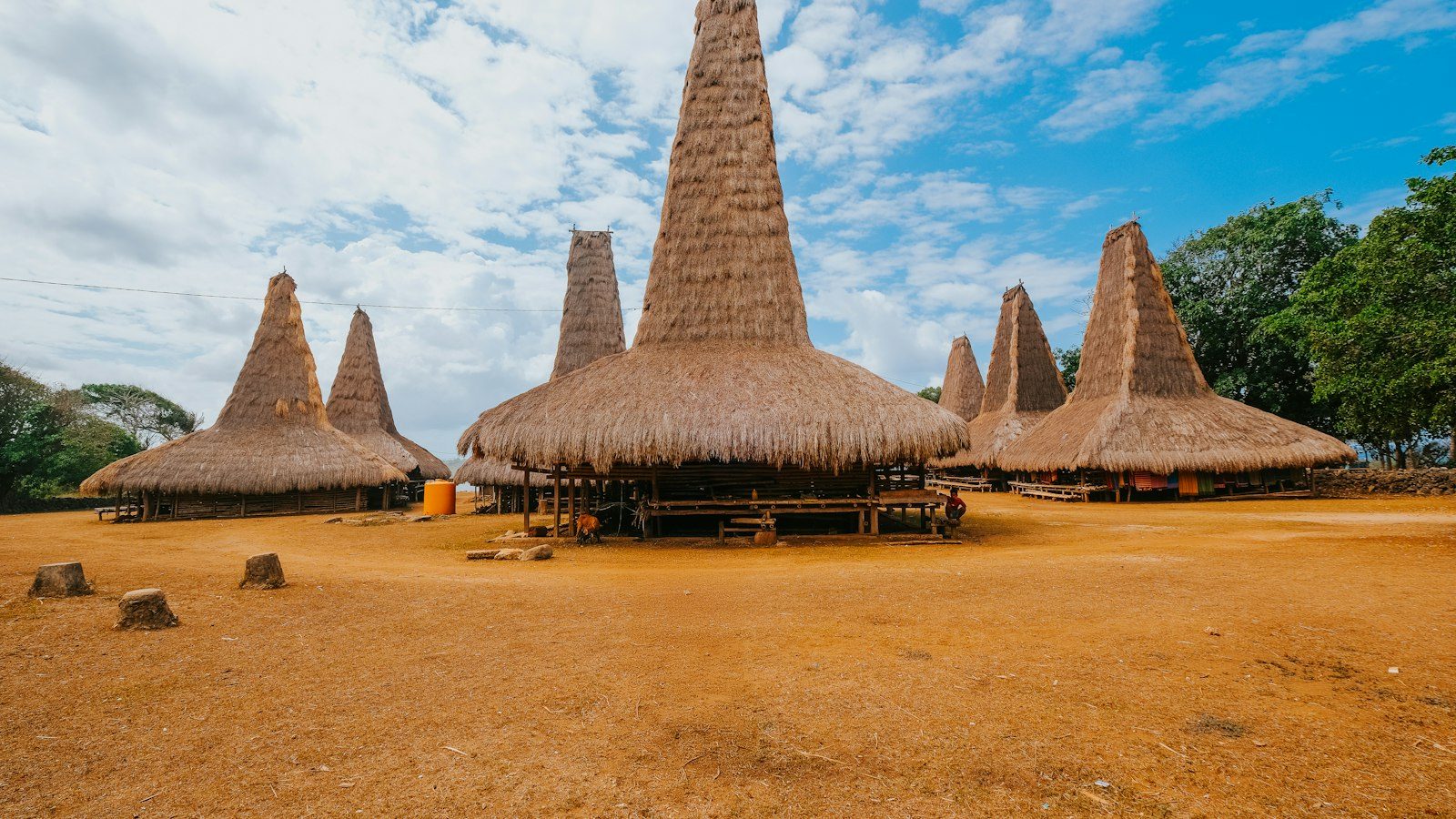
A big, dry island an hour's flight east of Bali, with clifftop villages under tall thatched roofs, stone tombs and long empty beaches. You swim in a clear sea lagoon, watch the sun set over bare savanna hills and learn how ikat cloth is woven.
- Best time to visit: May to October
- Daily budget (budget traveller): $50 to $180 USD
- Ideal trip length: 5 to 8 days
Sumba lies in East Nusa Tenggara, south of Flores and roughly 400km east of Bali. It is twice the size of Bali but has a fraction of the visitors, and it feels very different. Many Sumbanese still follow Marapu, the ancestral religion, and live in villages of high-roofed clan houses set around carved stone tombs. Horses graze on the savanna, men wear ikat wraps and carry a parang (machete) as part of everyday dress, and the Pasola, a mounted spear-throwing ritual, takes place in the west each February or March. The west is green, with the famous villages, the Weekuri lagoon and the surf coast. The east is drier and opener, with rolling hills, a deep river canyon and the best ikat weaving. There is no Grab, no Gojek and almost no useful public transport, and the sights are far apart on slow roads. Most people hire a car with a driver or ride a scooter, and that cost is the biggest part of the budget. Sumba is not a backpacker scene. There are few hostels and fewer travellers to share costs with. It rewards solo travellers who plan the route and carry cash, and who like quiet places more than parties.
Sumba is one of the largest islands in Indonesia's Lesser Sundas, yet it gets only a small share of the visitors who crowd Bali next door. It is best known for its traditional villages, where clan houses with tall, peaked thatched roofs stand around stone tombs, some of them centuries old and some still in use. The Marapu faith, which centres on ancestors, horses and ritual, still shapes daily life alongside Christianity. Most visitors fly in for a resort stay or a few nights in the west. Stay longer and cross the island and you see more: the dry savanna and canyon country of the east, weavers dyeing ikat thread in Prailiu and evenings at Walakiri with no one else on the beach. Sumba is not cheap for a solo traveller, because transport is private and there are few hostels to share costs. Even so, homestays, warung meals and a mix of driver and scooter days keep it manageable.
Getting here means flying. Batik Air, Nam Air and Sriwijaya Air link Bali with Tambolaka in under an hour. Since July 2026, Wings Air has also flown from Labuan Bajo three times a week, which makes a Komodo and Sumba trip easier. Waingapu in the east is reached from Lombok, Kupang and a few other cities. Slow ferries also link Sumba with Sumbawa and Flores. Plan to arrive at one airport and leave from the other, so you cross the island once. On the ground, a car with a local driver is the usual way to get around. A scooter suits short hops near your base. Stay on the Kodi coast or in Tambolaka for the west, in Waikabubak for the middle and in Waingapu for the east.
Timing shapes the trip. The dry season from May to October brings clear lagoons, easier roads and the most reliable flights. The east gets very dry and dusty by September. From December to March, rain turns the hills bright green but cuts off some side roads, and flights are more likely to be cancelled. The Pasola falls in February and March, on dates set only weeks ahead. Outside the towns, English is limited, so a driver who speaks some English is worth paying extra for, and a few words of Indonesian go a long way. ATMs exist only in the main towns, and many village fees are informal, so carry plenty of cash in small notes. Sumba is quiet and has very little nightlife. You come for the landscapes, the villages and long evenings on the coast.
Sumba itinerary
Arrive and swim at Weekuri
Morning: Fly from Bali to Tambolaka (under an hour). Collect cash at an airport or town ATM and buy a Telkomsel SIM.
Afternoon: Transfer to your guesthouse on the Kodi coast, then head to the Weekuri lagoon (about IDR 20,000) for a late swim after the crowds leave.
Evening: Sunset over Mandorak Beach next door, then dinner at your hotel.
Kodi villages and coast
Morning: Visit Ratenggaro (about IDR 50,000) in the cooler morning light. Walk among the tombs and down to the river mouth.
Afternoon: Look across the river at Wainyapu village, then rest during the heat. Have a swim back at Weekuri if the sea is rough elsewhere.
Evening: Watch the fishing boats come in at Pero, then have grilled fish for dinner.
Waikabubak and Praijing
Morning: Drive inland to Waikabubak. Walk up to Kampung Tarung in the centre of town, then browse the market.
Afternoon: Visit Praijing village (about IDR 50,000), starting at the viewpoint and walking down through the houses.
Evening: Stay in a simple Waikabubak guesthouse. Have nasi campur at a warung.
Lapopu and the south coast
Morning: Drive to Lapopu waterfall in the national park, crossing the bamboo bridge, and swim in the lower pools.
Afternoon: Head down to the south coast at Wanokaka or Lamboya for rice terraces, surf beaches and the Pasola fields.
Evening: Back to Waikabubak, or treat yourself to a night on the south coast if your budget allows.
Across the island to the east
Morning: Leave early on the main road east, stopping in small markets and villages along the way.
Afternoon: Continue through the drier hills of Central and East Sumba. The full drive takes about 4 to 5 hours.
Evening: Watch the sunset at Wairinding before the last stretch into Waingapu, then eat at the harbour night stalls.
Tanggedu and Walakiri
Morning: Drive about 46km to Tanggedu and walk 30 minutes down to the canyon pools. Pay the small village fee.
Afternoon: Return to Waingapu for lunch and a rest, then check the tide times for the evening.
Evening: Watch the sunset at Walakiri Beach as the mangrove silhouettes appear at low tide.
Ikat weavers and depart
Morning: Visit Prailiu to watch weavers dyeing and tying thread. Buy directly from the family if a cloth catches your eye.
Afternoon: Fly out of Waingapu via Lombok or Kupang. Check flight times the day before, as schedules change often.
Evening: Arrive in Lombok, Bali or your next stop.
Best neighbourhoods
- Tambolaka: The fast-growing town around the main airport in Southwest Sumba. It has ATMs, minimarkets, warungs and the widest choice of mid-range rooms. It is not pretty, but it is the easiest first night after a flight and about an hour from the Weekuri lagoon and the Kodi coast.
- Kodi coast and Pero: The far west, with the Ratenggaro and Wainyapu villages, Mandorak Beach, the Weekuri lagoon and the fishing village of Pero. Beach hotels and simple surf lodges line the shore. It is the best base for sunsets and the village circuit, but evenings are very quiet and you need transport for everything.
- Waikabubak: The cool hill town that serves as West Sumba's capital, with Kampung Tarung village right in the middle of town and Praijing a short ride away. It has a lively market, cheap guesthouses and banks. It is practical rather than charming, and it is central for Lapopu waterfall and the south coast.
- South-west coast (Lamboya and Wanokaka): Big surf beaches, rice terraces and the main Pasola fields, along with Nihi Sumba and several other high-end resorts. Budget rooms are scarce, so most people visit on a day trip. If your budget allows, this is the most beautiful stretch to wake up on.
- Waingapu and East Sumba: The island's largest town, on the north coast of the dry east. It has the second airport, the harbour, night food stalls and Prailiu, a royal village known for its ikat weavers. It is the base for Tanggedu canyon, the Wairinding hills and Walakiri Beach, and rooms are cheaper than in the west.
Must-do experiences
- Swim in the Weekuri lagoon: A clear saltwater lagoon divided from the Indian Ocean by a coral rock wall, with water that comes in through gaps in the rock. Locals usually ask around IDR 20,000 (about $1.20) for entry or parking. Go early in the morning, before the day visitors arrive, and bring small notes.
- Visit Ratenggaro village: Clan houses with roofs up to about 20m high stand above old megalithic tombs on a clifftop near the sea. Foreign visitors usually pay around IDR 50,000 (about $3). Come late in the afternoon for the light, and walk down to the beach where the river meets the sea.
- See Praijing village: A hillside village of thatched houses on terraces near Waikabubak, best seen from the viewpoint at the top before you walk down. Entry is around IDR 50,000. Some families sell ikat and will show you inside their houses if you ask.
- Swim under Lapopu waterfall: A wide, stepped waterfall in the forest of Manupeu Tanah Daru National Park, reached by a short path and a bamboo bridge. There is a small entry fee paid to locals. The pools are best in the late dry season, when the water is clear rather than brown.
- Watch sunset at Wairinding: Rolling grass hills beside the main road between Waikabubak and Waingapu, green after the rains and gold in the dry season. Local children will show you the paths for a tip. Stop on your way east and time it for the last hour of light.
- Walk out at Walakiri Beach: East of Waingapu, low tide reveals a long, flat beach scattered with small mangrove trees that look like dancers in silhouette at sunset. Locals usually charge a small entry fee. Check the tide times, as the trees stand in water at high tide.
- Hike down to Tanggedu canyon: About 46km from Waingapu, a river cuts through layered rock into a series of turquoise pools. Leave your driver in the village and walk about 30 minutes down to the water. The village charges a small fee, and you should bring water and shoes with grip.
Hidden gems
- Kampung Tarung, a traditional village on a hill right in the centre of Waikabubak, quieter than the famous coastal villages and easy to visit on foot
- Waimarang waterfall in East Sumba, a hidden turquoise pool in a small gorge that most tours skip
- The Puru Kambera savanna north-east of Waingapu, where horses graze on open grassland that runs down to the sea
- Tarimbang, a small surf beach on the south coast of East Sumba with a couple of simple lodges and almost no one else
- The weavers' porches in Prailiu, where you can watch women dye thread with indigo and morinda root and buy ikat directly from the family that made it
Daily budget
- Accommodation: budget $20-35 / night (homestay or basic guesthouse), mid-range $60-120 (beach bungalow or town hotel), splurge $1,000+ (Nihi Sumba or another luxury resort). Single rooms are rarely discounted, and there are almost no dorms. Prices rise in July, August and during the Pasola. Many beach places include breakfast.
- Food: budget $8-15 / day (warung meals, market fruit, night stalls), mid-range $20-35 (hotel restaurant dinners and cafés), splurge $60+ (resort dining with wine). A warung plate costs about IDR 25,000-50,000. Hotel restaurants on the Kodi coast cost more because there is little else nearby. Alcohol is pricey.
- Transport: budget $9-15 / day (scooter plus fuel), mid-range $40-90 (car with driver), splurge $100+ (4WD with English-speaking driver-guide). Bali to Tambolaka flights cost about $50-110 one way. Airport transfers to the coast cost roughly $25-50. Confirm whether fuel and the driver's meals are included.
- Activities: budget $3-10 / day (village and lagoon fees), mid-range $15-40 (guide, waterfall tips, ikat purchase), splurge $100+ (surf lessons, horse riding, Pasola tour). Weekuri is about IDR 20,000, and Ratenggaro and Praijing about IDR 50,000 each. Fees are often informal, so bring small notes. A good ikat cloth costs from about $30 to several hundred dollars.
- Drinks & nightlife: budget $2-5 (coffee, coconut or soft drink), mid-range $8-15 (a couple of Bintangs at a beach hotel), splurge $30+ (cocktails at a resort bar). There is no real nightlife. Evenings mean sunset drinks at your hotel. Beer is sold in minimarkets in town, but not everywhere.
Where to stay
- Homestay in Waikabubak and Waingapu ($20-35 / night): Family-run guesthouses in the two towns are the cheapest beds on the island and close to markets, ATMs and warungs. Hosts can arrange drivers and scooters and often introduce you to people in nearby villages.
- Hotel school in Near Tambolaka ($90-150 / night): The Sumba Hospitality Foundation runs a small eco hotel where young Sumbanese train in hospitality. The rooms are well kept and the food is good, it is close to the airport, and your money supports local training.
- Beach bungalow in Kodi coast ($60-120 / night): Simple beach hotels such as Mario Beach Hotel and Oro Beach Houses put you close to Weekuri, Mandorak and Ratenggaro, with sunset over the sea from your terrace. Meals are taken on site.
- Splurge in South-west coast ($1,000+ / night): Nihi Sumba is one of Indonesia's best-known resorts, with private surf breaks, horse riding and villas above a long beach. It is very expensive, but for a special stay there is nowhere quite like it.
What to eat
- Ikan bakar: grilled fish with sambal and rice, cheapest and freshest at the night stalls by the old harbour in Waingapu
- Nasi campur: rice with a few vegetable, egg and meat dishes from a warung, a filling lunch for IDR 25,000-50,000
- Sate and grilled pork: most Sumbanese are Christian or Marapu, so pork is common at local warungs and village feasts
- Manggulu: a small East Sumba sweet of banana and peanut wrapped in a dried banana leaf, sold at markets and good for long drives
- Kopi Sumba: strong local coffee grown in the hills, served sweet in warungs and sold in bags at markets
- Fresh young coconuts at beach stalls, plus mie goreng or nasi goreng when you are tired and far from town
Day trips
- Weekuri lagoon and Mandorak Beach (About 45km north-west of Tambolaka, 1 to 1.5 hours by car): Sumba's most famous swim, a calm turquoise lagoon behind a coral wall, with the small cliff-framed cove of Mandorak a few minutes away. Ratenggaro fits into the same day. Hire a driver from Tambolaka, or ride a scooter if you are confident on narrow roads. Entry is about IDR 20,000, and bring small notes for parking and inflatables.
- Tanggedu canyon (About 46km north-west of Waingapu, 1.5 hours by car plus a 30-minute walk): A river gorge with layered rock walls and turquoise pools, often called Sumba's Grand Canyon. Facilities are basic, and signal disappears once you start the walk down. Hire a driver in Waingapu, as the last stretch of road is rough. Pay the small community fee in the village. Go in the dry season, early in the day.
- Wairinding and Puru Kambera (Wairinding about 25km south-west of Waingapu, Puru Kambera about 25km north-east): Two sides of East Sumba's open landscape: soft, rolling hills at Wairinding and wide savanna with grazing horses running down to the sea at Puru Kambera. Easiest by car with a driver on a half-day loop from Waingapu, or by scooter on the main roads. Visit Wairinding at sunset and leave a small tip for any children who guide you.
When to visit
- Early dry season (April - June): 26-32°C, rain easing, hills still green. Crowds: Low. A lovely time to go. Green landscapes, fuller waterfalls, mostly dry roads and easy room availability. April can still bring a few heavy showers.
- Peak dry season (July - September): 25-31°C, dry and sunny, cool breezy nights in the hills. Crowds: Moderate, busiest in July and August. The most reliable weather, the clearest water and the best surf on the south-west coast. Book flights, drivers and beach rooms a few weeks ahead.
- Late dry season (October - November): 28-34°C, hot, the east brown and dusty, rain starting in late November. Crowds: Low. Quiet and good value, with golden savanna and clear waterfall pools in the west. The heat in the east can be intense, so plan early starts.
- Wet season (December - March): 25-31°C, humid, heavy afternoon rain. Crowds: Low, except around the Pasola in February and March. Very green, but side roads can wash out and flights are cancelled more often. Worth it for the Pasola if you can stay flexible for a week or two.
Entry rules for your passport
Visa rules for Indonesia depend on the passport you travel on. Check the official source before you book: Indonesia Directorate General of Immigration
Getting there
Sumba has no international flights, so everyone connects through another Indonesian airport. Bali is the usual gateway. Batik Air and Nam Air each fly Denpasar to Tambolaka daily, and Sriwijaya Air adds flights on some days. The flight takes 50 to 60 minutes and costs about $50-110 one way. Nam Air also runs a through service from Jakarta via Bali, and Surabaya has a direct flight to Tambolaka. Since July 2026, Wings Air has linked Labuan Bajo and Tambolaka three times a week, a short hop from Komodo. Waingapu in the east is served from Lombok and Kupang, including by Wings Air and TransNusa, so it is easiest to fly into Tambolaka and out of Waingapu, or the other way round. Flights are small, often delayed and sometimes cancelled, especially in the rainy season, so leave buffer time. By sea, ferries from Sape on Sumbawa reach Waikelo near Tambolaka in about 8 to 9 hours for around IDR 70,000-120,000, and slower boats link Waingapu with Flores. Check schedules locally, as they change often.
Getting around
Sumba is about 200km long, and the main sights are spread across both ends of the island. Roads are mostly sealed between the towns but narrow, winding and unlit, and the side roads to villages and beaches can be rough, especially after rain. There is no Grab or Gojek and the bemo minibuses are slow and irregular, so most travellers hire a car with a local driver. Published rates run from about IDR 650,000 to 1,450,000 a day ($40-90), usually including fuel. For multi-day trips you may also pay for the driver's meals and room, so check what is included. As a solo traveller, you pay the full rate yourself, so arrange a driver for the long days and use cheaper options in between. Scooters cost about IDR 150,000-200,000 a day ($9-12). They work well for short trips around Tambolaka or the Kodi coast if you are an experienced rider, but they are tiring and risky for the long cross-island drive. Pick-up and drop-off are usually in the same town. From Tambolaka to Waingapu takes about 4 to 5 hours by car. Hotels can book airport transfers and drivers, and so can local Facebook and Instagram pages. Fix the price in advance.
Safety
Sumba is generally safe for visitors, and violent crime against tourists is rare. The parang that many men carry is a traditional tool and part of their dress, not a threat. The real risks are the roads and the sea. Avoid driving or riding after dark, watch for animals, potholes and loose gravel, and always wear a helmet on a scooter. Many beaches face the open Indian Ocean with strong rips and heavy surf, so swim only where locals do, or stick to the lagoon and waterfall pools. At some popular sites, children and adults ask for money or unofficial 'parking' fees. Pay the standard fee, ask for a receipt if one exists and stay calm. Malaria is present on Sumba, so speak to a travel clinic about prophylaxis and use repellent and a net. Do not drink the tap water. Medical care is basic, and serious cases go to Bali, so get travel insurance that covers evacuation. Dial 112 for emergencies, 110 for the police and 118 or 119 for an ambulance.
Solo travel tips
- Mix driver and scooter days: Pay for a driver on the long days, such as the trip across the island or Tanggedu, and rent a scooter for short loops around your base. It can cut your transport costs by half without risking long rides.
- Leave a spare day: Flights to and from Sumba are often delayed or cancelled, particularly in the rainy season. Never book a tight connection in Bali on the same day you fly out.
- Carry small notes: Village fees, parking, coconuts and waterfall guides are almost all paid in cash, and change is scarce. Withdraw money in Tambolaka, Waikabubak or Waingapu and break big notes at minimarkets.
- Go early and late: Weekuri and Ratenggaro are busiest in the middle of the day. Mornings are cooler and calmer, and late afternoons bring the best light in the villages and at the sunset spots.
- Safety for solo travellers: Do not drive after dark, swim only in sheltered spots and keep someone informed of each day's route. Pay standard fees calmly. If something feels off, get back in the car and move on.
- Meet people through your driver and hosts: There are few other travellers, so your driver and homestay family are your best company. Ask them to introduce you in villages, and you will be welcomed rather than simply charged.
Cultural etiquette
- Learn a few words of Indonesian: 'selamat pagi' (good morning) and 'terima kasih' (thank you) are always welcome.
- When you visit a village, greet the elders first, sign the guest book if there is one and pay the entry fee or donation. Bringing betel nut (sirih pinang) as a small gift is a traditional courtesy.
- Always ask before photographing people, and ask before flying a drone, as some villages charge extra or refuse.
- Do not sit or climb on the stone tombs. They are graves, not viewpoints, and some still receive new burials.
- Only enter a clan house if you are invited. Parts of the house and the high roof space are sacred in the Marapu faith.
- Dress modestly in villages and towns, with shoulders and knees covered. Save swimwear for the beach and lagoon.
- Agree on prices for drivers, guides and purchases before you start. Bargain politely for ikat, as the work behind a good cloth takes months.
Frequently asked questions
How do I get to Sumba and from the airport to my room?
Most people fly from Bali to Tambolaka in West Sumba. Batik Air and Nam Air each fly the route daily, and Sriwijaya Air flies on some days of the week. The flight takes 50 to 60 minutes, and one-way fares are usually about $50 to $110. Waingapu in the east is reached from Lombok, Kupang and some other cities, but there is no regular direct Bali flight at the moment. There are no ride-hailing apps, so ask your hotel to arrange a pick-up. Transfers to the Kodi coast or the south coast take 1 to 1.5 hours. Flights are often delayed or cancelled, so leave a spare day before any international connection.
How many days do I need in Sumba?
Three or four days covers the main sights in West Sumba: Weekuri, Ratenggaro, Praijing and a waterfall. Seven days lets you cross the island and add Wairinding, Tanggedu, Walakiri and the weaving villages around Waingapu. Add a spare day for flight delays, and more if you want surf or the Pasola.
When is the best time to visit Sumba?
The dry season, roughly May to October, is the most reliable, with sunny days, clear lagoon water and passable back roads. July and August are the busiest and prices are highest, though Sumba never feels crowded. The east turns brown and dusty late in the dry season. From December to March, rain can wash out side roads and flights, but the hills are green, and the Pasola takes place in the west in February and March.
Should I hire a driver or ride a scooter?
For long days and the trip across the island, hire a car with a driver. Rates are roughly $40-90 a day, depending on the car and what is included. A scooter costs about $9-12 a day and is fine for short trips near Tambolaka or along the Kodi coast if you already ride confidently. Roads are unlit, signs are rare and some village tracks are rough, so do not ride after dark. Your travel insurance may not cover you without a valid motorbike licence.
Where can I swim safely in Sumba?
The Weekuri lagoon is the safest and most popular sea swim, because the rock wall breaks the waves. Waterfall pools at Lapopu, Tanggedu and Waimarang are also good in the dry season. Many open beaches, including Mandorak at high swell and the south coast, have strong currents and dumping waves. Ask locals before you go in, and never swim alone on an empty surf beach.
Can I see the Pasola festival?
Yes, if your timing is flexible. The Pasola is a ritual battle on horseback in West Sumba, held in Kodi, Lamboya, Wanokaka and Gaura in February and March. It follows the lunar calendar and the arrival of the nyale sea worms, and village priests usually confirm the dates only a few weeks ahead. Book a driver and a room early, plan to stay one or two weeks around the expected dates and watch from a safe distance, as spears really do fly.
Is Sumba safe for solo female travellers?
Generally yes, and locals are usually curious and welcoming. Dress modestly away from the beach, especially in villages. Use a driver recommended by your hotel rather than one who approaches you at the airport, and avoid travelling after dark. Attention at popular sites tends to mean requests for money rather than harassment. The bigger concerns are remote roads, rough seas and basic medical care, so keep someone informed of your plans each day.
What entry rules apply to Indonesia in 2026?
Many nationalities, including UK, US, EU, Canadian and Australian citizens, can get a visa on arrival or e-VOA for IDR 500,000. It is valid for 30 days and can be extended once for 30 more. In August 2026, immigration proposed raising the fee to IDR 750,000 online and IDR 1,000,000 on arrival, so check the official evisa.imigrasi.go.id site before you fly. Everyone must complete the free All Indonesia arrival card within the three days before landing. If you enter through Bali, you also pay the IDR 150,000 Bali tourist levy. Your passport needs at least six months' validity, and you need an onward ticket. Check your own government's travel advice too.
More about Sumba
- Solo Travel Southeast Asia Itinerary 2026: 2, 3 and 4 Week Overland Routes
- Best Coworking Spaces in Bali 2026: Prices, Areas and Visas
Tours and activities in Sumba | Sumba in 2 days | Sumba in 3 days | Sumba in 4 days | Sumba in 5 days | Sumba in 7 days
Joy Plus home | Destinations | Itineraries | Activities | Flights | Budget planner | Calendar | Map | Blog | Lifetime access